The Healer Crosses to Cozumel
Classic period Maya, c. 600-900 CE · Yucatan coast and the island of Cozumel, Mesoamerica
Contents
A Maya healer-woman of the Classic period makes the sea crossing to Cozumel to consult the oracle of Ixchel, goddess of the moon and medicine, before a birth she fears she cannot manage alone. What the oracle tells her — and whether she can trust it — is the whole story.
- When
- Classic period Maya, c. 600-900 CE
- Where
- Yucatan coast and the island of Cozumel, Mesoamerica
She leaves at dusk because dusk is the right time.
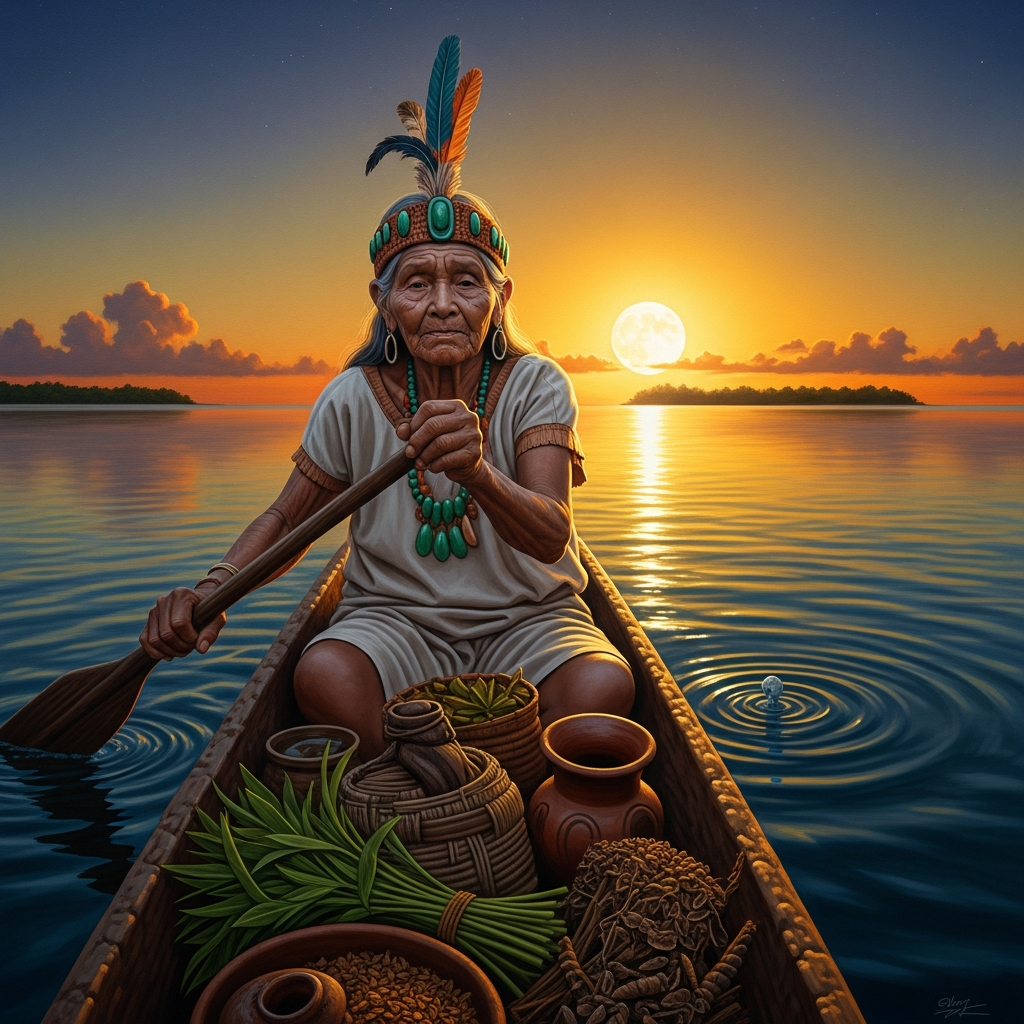
The crossing from the Yucatan coast to Cozumel is eighteen kilometers of open water, and the wind off the channel is never entirely friendly to a dugout canoe, but the healer-woman who is making this crossing has done it twice before and knows its moods. She leaves at dusk because the moon rises ahead of her, over the island, and because the moon is Ixchel, and to paddle toward the moon’s rising is to make the journey in the right direction, with the goddess’s face in front of you the whole way. You do not turn your back on the one you are going to consult.
Her name the Popol Vuh does not record. The Classic period does not give us names of healers, only kings and lords. She is the healer of a small city on the coast, a city whose name is also lost, and she has been sent — or has sent herself, which amounts to the same thing — because there is a woman three days from her time whose child is not turning. The head is up when it should be down. The healer has seen this before. She has lost a mother to it. She has, with great difficulty and much prayer, saved two others. But this woman is the wife of a lord, and a lord’s wife dying in childbirth is a catastrophe with political dimensions, and the healer has reached the edge of what she knows, and Ixchel is where you go when you reach that edge.
She paddles. The channel is dark green going black, phosphorescent where her paddle breaks the surface.
Ixchel is old. Ixchel is young. This is the first thing you must understand if you are going to her for medicine.
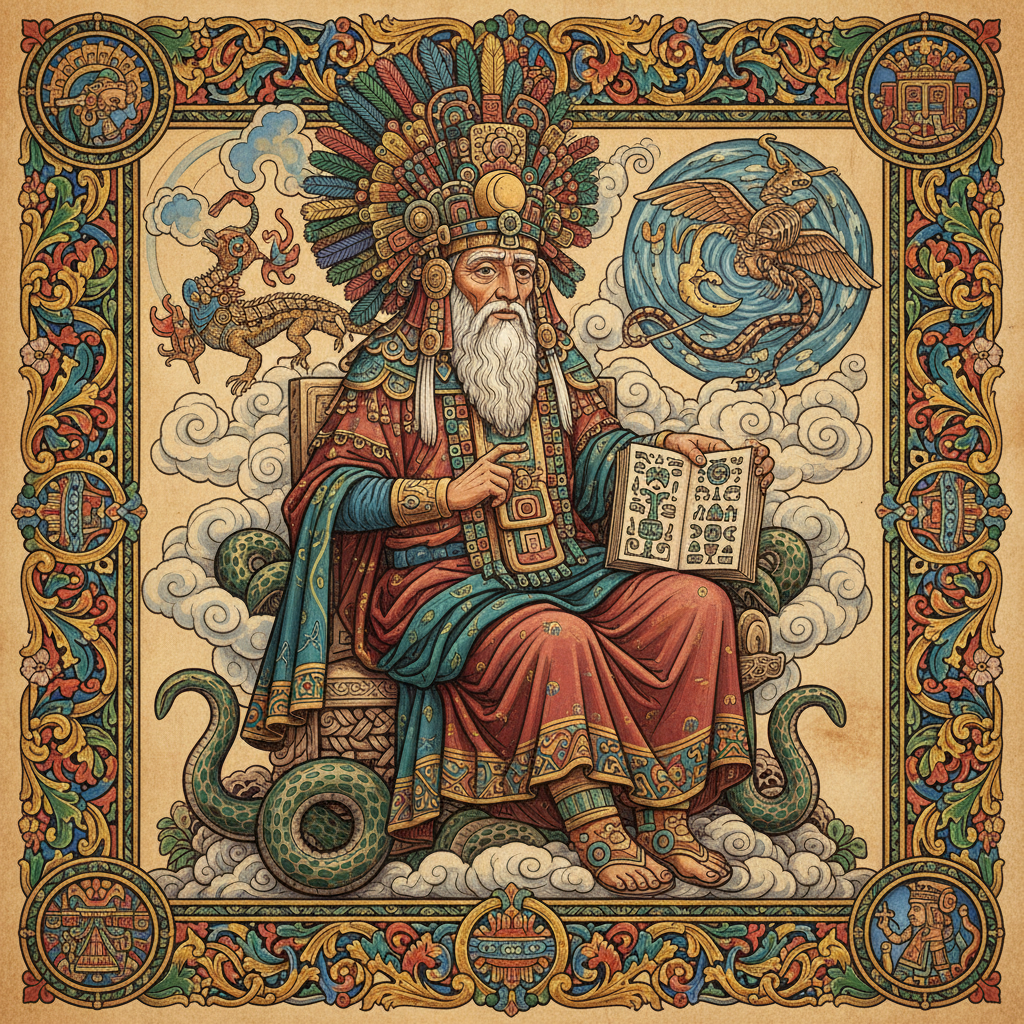
She appears in the codices as an old woman — the moon when it is waning, when it has given its fullness and begun to retreat. Serpent headdress, jaguar-pawed skirts, a clay vessel tipped forward so the water pours out endlessly, endlessly. She is the flood as well as the cure. She is the weaver who made the first cloth; she is the midwife who has handled more births than any human will see in a hundred lifetimes; she is the goddess of medicine who knows which plants stop bleeding and which plants start it, which words carry fever out of the body and which words call it in. She is married to Kinich Ahau, the sun — the blaze-faced lord who burns so hot that the moon must sometimes flee him.
This is why the moon hides. Kinich Ahau beats her, in the version Diego de Landa will record centuries later from informants who remember. She flees to the underworld, and the sky goes dark, and the crops and the tides wait, and eventually she returns, young again — the crescent waxing back to fullness, the old woman renewing herself. This is the medical lesson: even the goddess of medicine is subject to the body’s cycles. Even the healer is sometimes the one who flees. Even the moon goes below the horizon and comes back.
The healer knows this story. It is why she is paddling toward the rising.
The island receives her in darkness. There are priests at the landing — this is a managed pilgrimage site; Cozumel’s oracle has been drawing boats across the channel for longer than anyone’s grandmother’s grandmother remembers, and the logistics are practiced. They take her canoe. They bring water and food, which she accepts because it would be rude not to, though she is too focused to be hungry.
In the morning she goes to the shrine.
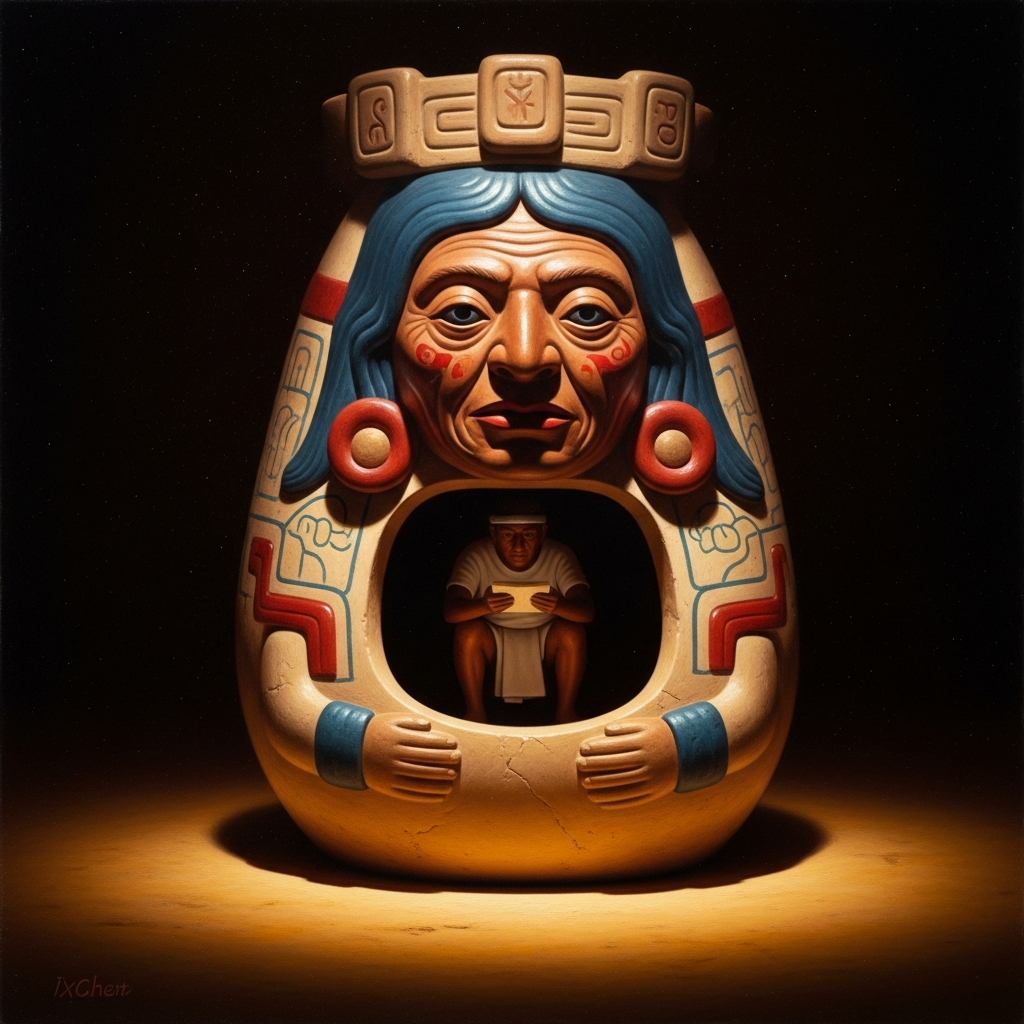
The temple of Ixchel sits on a raised platform at the island’s center, and the idol inside it is hollow — this is the detail that Spanish chroniclers will later record with a mixture of horror and fascination, because it seems to them a proof of deceit rather than a mode of divine speech. A large clay figure of the goddess, painted blue and red and white, seated on a throne inside the dim stone room, and behind it — inside it — a space large enough for a priest to crouch. When the pilgrim speaks, the priest listens. When the goddess answers, the priest’s voice comes out through the idol’s clay mouth, shaped by the curving interior of the figure into something that is not quite a human voice and not quite anything else.
The healer has been thinking about what to ask the whole way across the channel. She has been a healer long enough to know that the oracle’s answer is only as useful as the question is precise. She knows what she wants to know: what to do with the child who will not turn. She knows she cannot simply ask that, because the answer to a medical question delivered through a clay idol is never a recipe. It is a direction.
She kneels. She makes her offerings — copal incense, jade beads, a small figure woven from bark paper. She states her name and her city and her purpose. The shrine smells of resin and wet stone.
What does Ixchel say, she asks, to the woman whose child faces the wrong way? What does the moon say to the body that will not open?
The silence is not empty. It is the silence of the priest inside the idol composing the goddess’s answer, but it is also — the healer has been here twice before and believes this — the silence of the moon considering its response. She does not think these are mutually exclusive. She is a healer, not a philosopher. She has seen enough births to know that the gap between what medicine knows and what happens is wide, and something lives in that gap, and she calls it Ixchel because that is what everyone calls it.
The clay mouth moves. The voice that comes out is lower than a human voice and resonates in the stone room in a way that makes it impossible to locate the source.
The river does not push the stone, the voice says. The river finds the way the stone has already made. Ask the body where it is going, not where you want it to go.
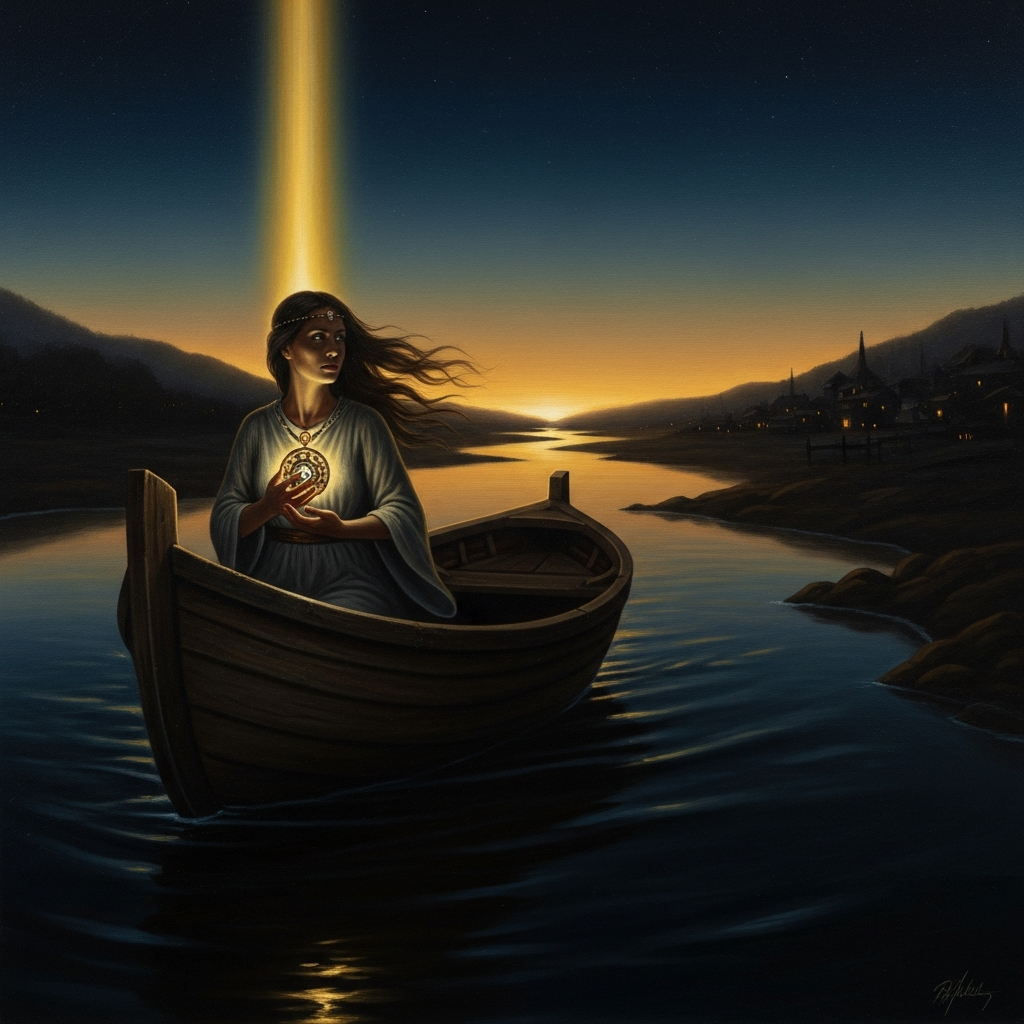
This is the answer she carries back across the channel. Eighteen kilometers of open water in a dugout canoe, the moon going down ahead of her now, Ixchel setting behind the Yucatan coast as the sun rises at her back.
She turns the words over and over in the rhythm of her paddling.
Ask the body where it is going. She has been trying to turn the child, pressing the woman’s belly with her hands, trying to move the head down by force. The moon is saying something different. Not push. Listen.
She is home by midmorning. The woman whose child will not turn is still three days from her time. The healer sits with her through the afternoon and puts her hands on the drum of her belly — not pushing, pressing, directing, but listening, the way you put your ear to the ground to hear what is moving underground. She feels the child’s position. She feels the way the body is organized around the position, the way the uterus has already accommodated the breach. She spends four hours in this listening, and at the end of it she has found the way the body has already made.
She turns the child by following what is already there. The head rotates. The woman gasps, then goes quiet.
Three days later the child is born head-first, ordinary, crying.
The healer does not record whether this was Ixchel or mechanics. She does not have the category for this distinction. The oracle at Cozumel said: find the way the body has already made. She found it. The child is here. This is what medicine is — the knowledge of how to ask the question correctly, and the pilgrimage to wherever the better question lives.
She makes offerings to Ixchel every month at the new moon. She goes back to Cozumel once more before she dies. The oracle says something different that time, something she doesn’t tell her students. The Spanish will arrive in 1519 and will spend years trying to abolish the pilgrimage to Cozumel, and will fail, and will eventually give up and build a church on top of the temple platform instead.
The moon still rises over the channel at dusk. The crossing is still eighteen kilometers of open water.
Ixchel hides every month and comes back. The healer makes the crossing and comes back. The child goes in one world and comes out another. The goddess of medicine is also the goddess of the flood — she knows that the same water that destroys is the water the body is mostly made of. This is what the oracle teaches that no recipe ever can: that the question is older than the answer, and the answer is only as good as the silence in which it is received.
Scenes
A healer-woman paddles a dugout canoe across the channel from the Yucatan coast toward Cozumel at dusk, the moon rising ahead of her over the water
 Generating art…
 The hollow clay idol of Ixchel in her shrine at Cozumel, old-woman face painted blue and red, the priest crouched inside ready to give the oracle's answer
 Generating art…
 The healer returns across the channel before dawn, the oracle's answer held inside her, the birth waiting on the other shore
 Generating art…
 Echoes Across Traditions
Entities
- Ixchel
- Kinich Ahau
Sources
- Diego de Landa, *Relacion de las Cosas de Yucatan* (c. 1566, trans. Alfred Tozzer, 1941)
- Karl Taube, *The Major Gods of Ancient Yucatan* (1992)
- Mary Miller and Karl Taube, *An Illustrated Dictionary of the Gods and Symbols of Ancient Mexico and the Maya* (1993)
- Michael D. Coe and Stephen Houston, *The Maya* (9th ed., 2015)
- Vera Tiesler and Andrea Cucina (eds.), *New Perspectives on Human Sacrifice and Ritual Body Treatments in Ancient Maya Society* (2007)