The Jade Emperor's Complaint Department
Chinese popular religion · institutionalized form c. Tang dynasty (618-907 CE), codified through Song dynasty (960-1279 CE) · The thirty-three heavens of the celestial court · and every kitchen in China
Contents
The heavenly court of Chinese popular religion mirrors the imperial bureaucracy exactly — with ministries, ranks, promotions, annual performance reviews, and a reporting system that reaches all the way down to the Kitchen God in every household. On New Year's Eve, Zao Jun rises to heaven to brief the Jade Emperor on the family's conduct for the year. The family, before he leaves, applies honey or sticky rice candy to his clay mouth to ensure the report is sweet.
- When
- Chinese popular religion · institutionalized form c. Tang dynasty (618-907 CE), codified through Song dynasty (960-1279 CE)
- Where
- The thirty-three heavens of the celestial court · and every kitchen in China
The Jade Emperor runs heaven the way a Tang emperor ran China.
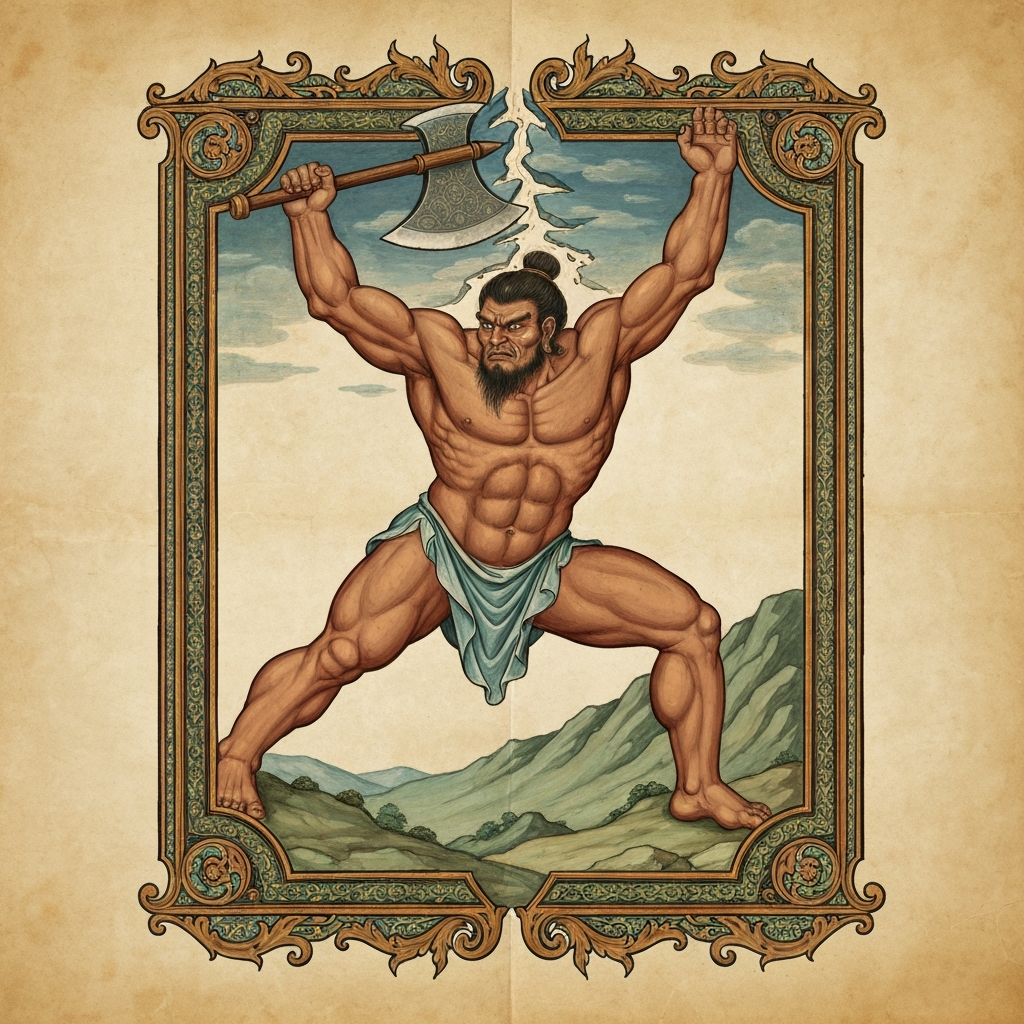
This is not a metaphor, or rather it is a metaphor that has been taken so seriously for so long that it has ceased to function as a metaphor and become a structural principle. The heavenly court of Chinese popular religion has a throne room, a cabinet, a civil service examination system for spirits who want promotion, a system of judicial review for gods who have exceeded their mandate, and a filing department that receives annual performance reports from every local divine official in the hierarchy. The Ministry of Thunder handles atmospheric events and the punishment of unregistered demons. The Ministry of Fire handles fire — its prevention, its deployment in appropriate punitive contexts, and the coordination of the fire gods stationed at local levels. There are gods of specific mountains, gods of specific rivers, gods of specific cities, and gods of specific households. The household gods report to the city gods, who report to the mountain and river gods of the region, who report upward through the celestial prefectural system to the court of the Jade Emperor himself.
The annual audit begins on the twenty-third day of the twelfth lunar month, when every Kitchen God in China rises to heaven to file his report.
Zao Jun has been watching your family all year.
He lives above the stove, which in a traditional Chinese household is not incidental — the stove is the center of domestic life, the place where food is prepared, where warmth is generated, where the family’s material survival is maintained. Zao Jun observes from this position. He has a wife, sometimes depicted beside him on the altar, whose role in the domestic reporting varies by region: in some traditions she keeps a separate record; in others she annotates his. He is present at every meal, every argument conducted in the kitchen, every transaction of food or money that passes through the household’s economic center.
His altar is a small painting or a clay figure, set in a niche or on a shelf above the stove, with a dish in front of it. The dish holds whatever the household can afford for his offerings throughout the year — sticks of incense, small cups of wine or tea, paper money burned to send value to the spirit world. On the twenty-third of the twelfth month, the dish holds something specific: sticky rice candy, or honey, or both, applied directly to the painted mouth of the Kitchen God’s image.
The application of honey to Zao Jun’s mouth is one of the most analyzed small rituals in the Chinese religious tradition. Western observers in the nineteenth century took it as evidence of rural credulity — the peasant bribing a clay god with candy. Chinese scholars and practitioners have historically understood it differently: as a reasonable response to the fact that annual reports, like all official communications, benefit from framing. Zao Jun will tell the truth. The honey does not make him lie; it makes his true report pleasant in its delivery. The distinction between accurate and favorable is maintained. The mechanism is acknowledged.
The Jade Emperor receives reports.
The scale of the celestial administrative apparatus is suggested by the simple arithmetic: there is a Kitchen God for every household in China, a City God for every administrative city, an Earth God (Tu Di Gong) for every neighborhood or village. In a Tang dynasty China of fifty or sixty million people, the household-level report alone would number in the millions annually. The celestial court processes these through its ministries, and the processing determines a range of outcomes for the year ahead: what blessings will be extended to which households, which local officials will be promoted or demoted, which regions will receive favorable weather reports from the Ministry of Thunder, which city gods are due for review.
The City God is the model for what can happen to a divine official who mismanages his portfolio. A City God who allows his city to suffer excess crime, famine, or natural disaster without adequate protection can be demoted — removed from his post and assigned to a lower district, or retired entirely and replaced by a more effective divine administrator. The process is not quick, and it requires petitions from the mortal population (who file them at the City God’s temple, where the paperwork is received and transmitted upward) and review by the celestial court. But it happens. There are historical records of communities formally requesting and receiving the demotion of an ineffective City God and his replacement by a new appointee, whose identity was determined by divination.
The system is not designed for the comfort of the gods who inhabit it. It is designed for the maintenance of order in the world they administer.
Promotion is also possible.
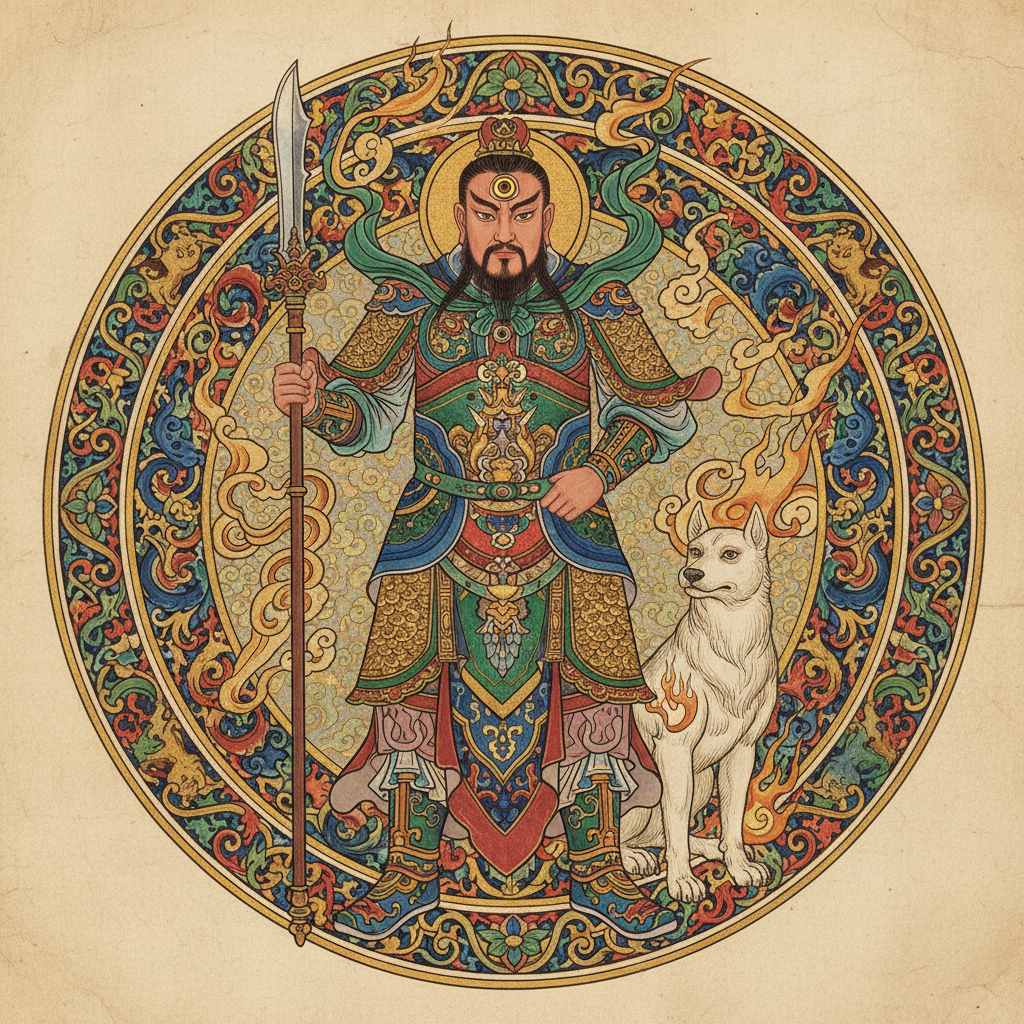
The path from minor local deity to celestial official with a named portfolio is open in principle, and the tradition preserves examples. The sea goddess Mazu began as a young woman in Fujian province who was said to have the power to calm storms; after her death she was recognized as a local spirit, then petitioned upward through the celestial bureaucracy across several dynasties until she held an imperial title equivalent to a celestial ministry post and was worshipped across the entire Chinese maritime world. The God of War, Guan Yu, was a historical general of the Han dynasty who died in 220 CE and was promoted through the celestial ranks at roughly two-hundred-year intervals, acquiring increasingly elaborate titles with each promotion, until by the Qing dynasty he held a title that exceeded in length and grandeur the titles of most mortal emperors.
The mechanism of promotion is prayer, popularity, and demonstrated efficacy. A local god who is believed to be answering prayers at a high rate will receive more petitions, which generates more prayers, which generates more reported efficacy, which generates petitions upward through the administrative system for recognition of his higher status. The celestial bureaucracy, in this sense, is responsive to its constituency in a way that imperial bureaucracies famously are not.
The Jade Emperor reviews the petitions. He makes the final determinations. He signs the decrees, which are then transmitted downward through the celestial prefectural system.
The Kitchen God returns on New Year’s Day, or New Year’s Eve, or the first day of the first month — the timing varies by region and tradition, which is a small scandal that the celestial filing system apparently tolerates.
His paper image is burned on the twenty-third. This is his departure — the burning is the vehicle, converting him from physical to spiritual form for the journey. A new image is installed for the new year. In some households the new image is bought from the New Year’s market; in others it is the old image reprinted. He arrives back at his post with the new year’s mandate, which may include specific blessings granted by the Jade Emperor’s court based on the previous year’s report.
What exactly the report said, the family does not know. The honey was applied. The report went up. The Jade Emperor reviewed it in the context of all the other reports from all the other kitchens in all the other houses in all the other cities in the empire. The new year began.
The architecture of this heavenly court is the architecture of a world in which moral conduct is not simply a private matter between a person and the absolute. It is a matter of record. The Kitchen God above the stove is not a comfort; he is an audit mechanism. The honey is not a comfort either — it is an acknowledgment that you know the audit is happening, that you take it seriously enough to attempt reasonable mitigation, and that you understand the difference between the report and the reality without trying to collapse the two.
Every family in China has had a Kitchen God. Every Kitchen God has filed a report. The Jade Emperor has received more annual reports than any administrator in any religious tradition anywhere. The celestial filing system is presumably enormous.
None of the reports have ever been made public. This is, in the logic of the tradition, as it should be. The audit is between the family, the god, and the court. The honey is between the family and the god. The rest is paperwork.
Scenes
The Jade Emperor on his celestial throne, the thirty-six heavenly generals arrayed before him, the ministries of Thunder, Fire, Water, and the Five Mountains represented by their department heads
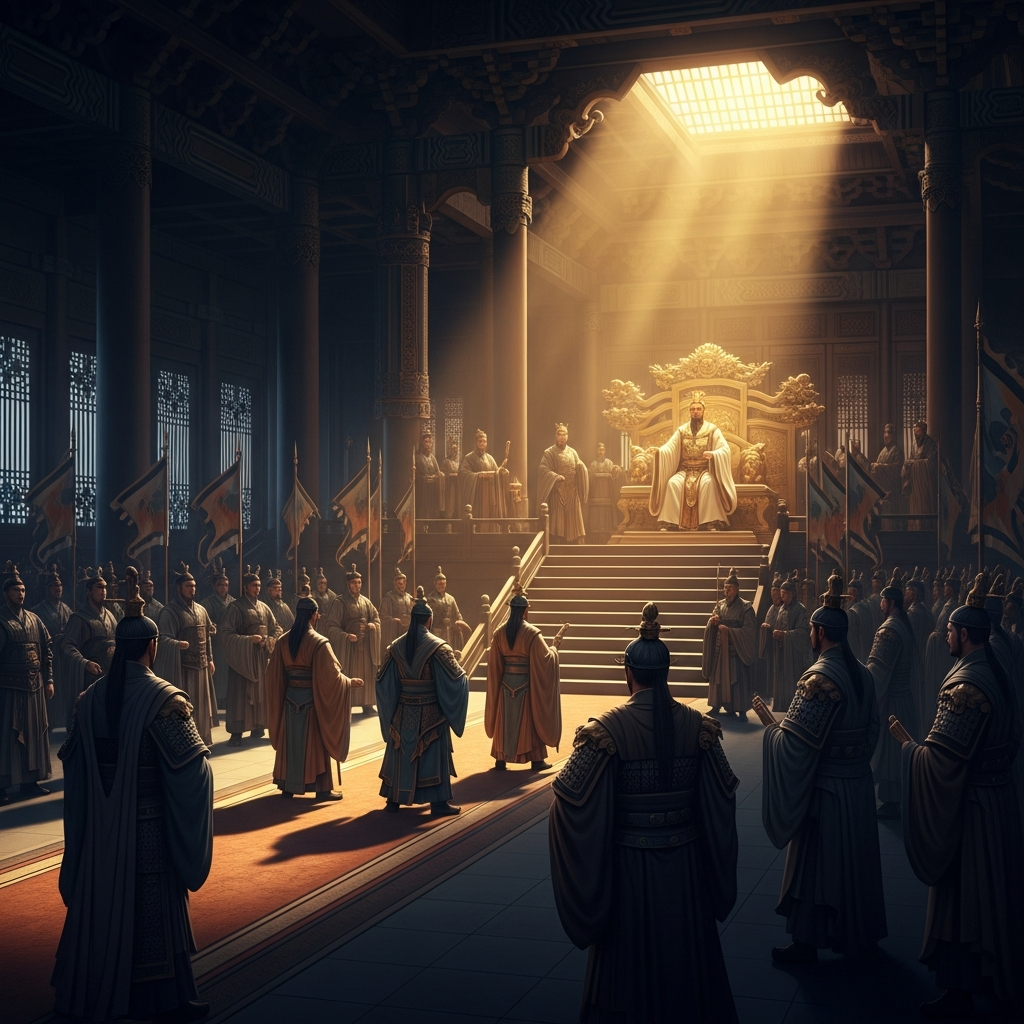 Generating art…
 The Kitchen God's altar above the stove in a Song dynasty household — a small painting or clay figure of Zao Jun and his wife, flanked by paper horses for his journey, a dish of sticky rice candy set before him on New Year's Eve
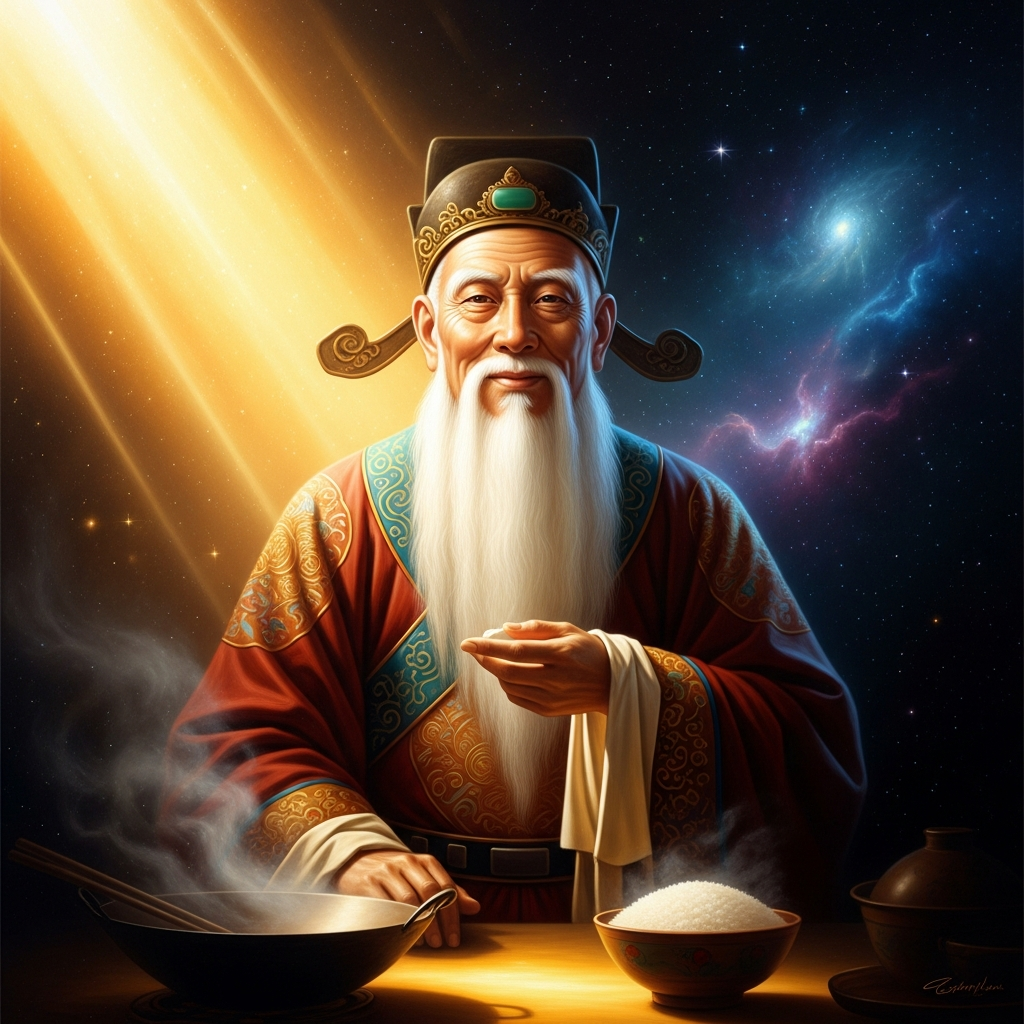 Generating art…
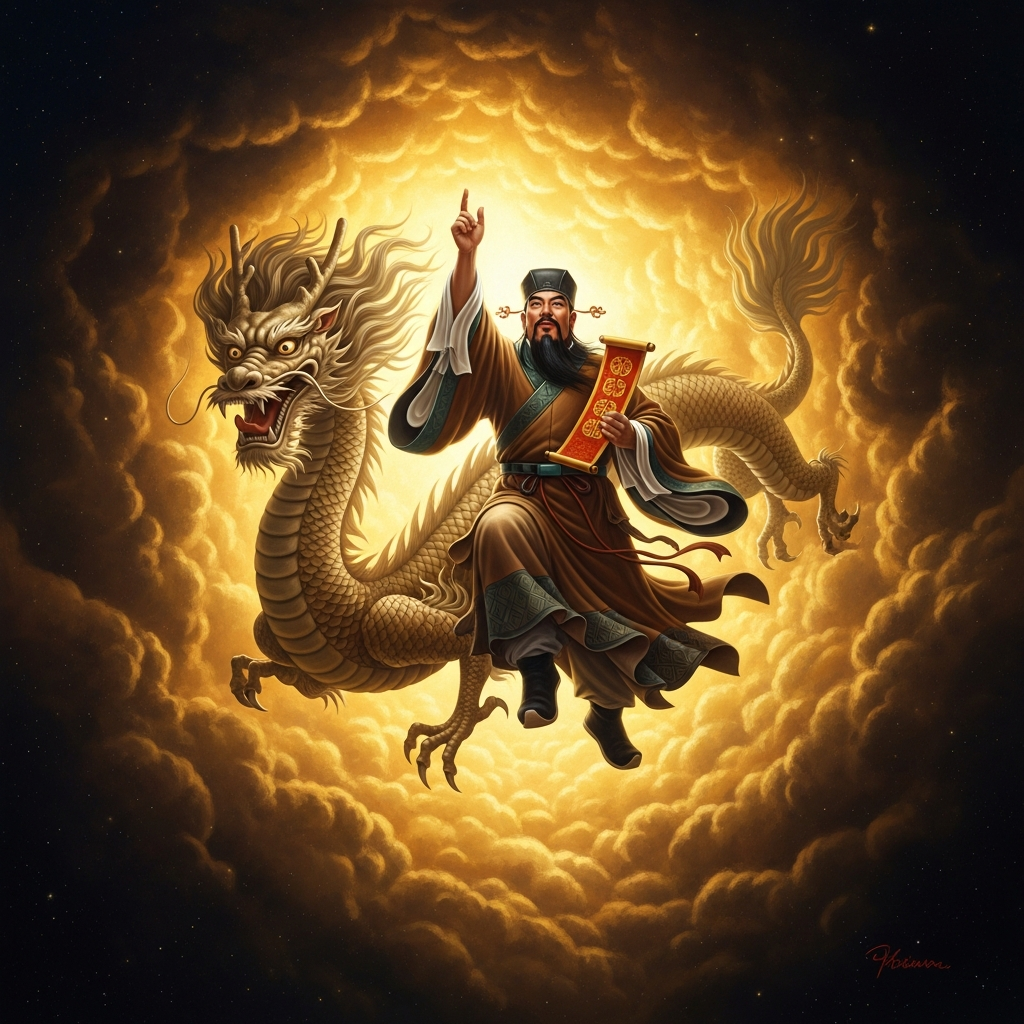
 Zao Jun ascending on New Year's Eve, riding his paper horse through cloud, a scroll of the year's domestic events under his arm
 Generating art…
 Echoes Across Traditions
Entities
- Jade Emperor
- Zao Jun
- the City God
- the Earth God
- the Ministry of Thunder
Sources
- Wolfram Eberhard, *A Dictionary of Chinese Symbols* (Routledge, 1986)
- Jordan Paper, *The Spirits are Drunk: Comparative Approaches to Chinese Religion* (SUNY Press, 1995)
- C.K. Yang, *Religion in Chinese Society* (University of California Press, 1961)
- Clarence Burton Day, *Chinese Peasant Cults: Being a Study of Chinese Paper Gods* (Shanghai, 1940)
- Anne Birrell, *Chinese Mythology: An Introduction* (Johns Hopkins University Press, 1993)