Key Khusrow and the Cup of the World
Shahnameh of Ferdowsi, c. 977–1010 CE; the Jam-e Jam myth also in *Divān* of Hafez · The Persian royal court; the Alborz mountains; the white beyond
Contents
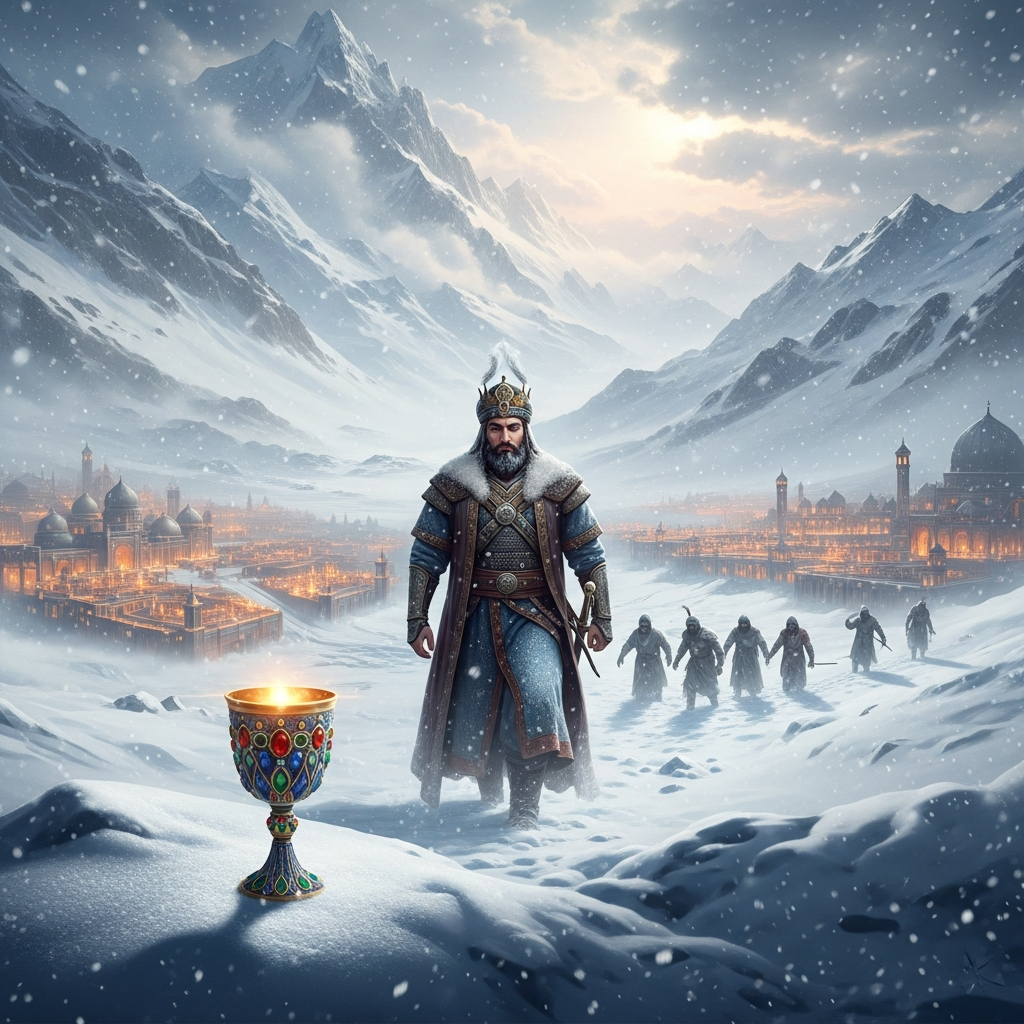
Key Khusrow, the greatest king of Persian legend, possesses the Jam-e Jam (Cup of Jamshid) — a cup in which all of existence can be seen. At the height of his power, having avenged his father and united the world, Key Khusrow chooses to abdicate and walk into the mountain snow rather than wait to be corrupted by power. He is last seen walking into the white with seven heroes who follow him. They are never seen again.
- When
- Shahnameh of Ferdowsi, c. 977–1010 CE; the Jam-e Jam myth also in *Divān* of Hafez
- Where
- The Persian royal court; the Alborz mountains; the white beyond
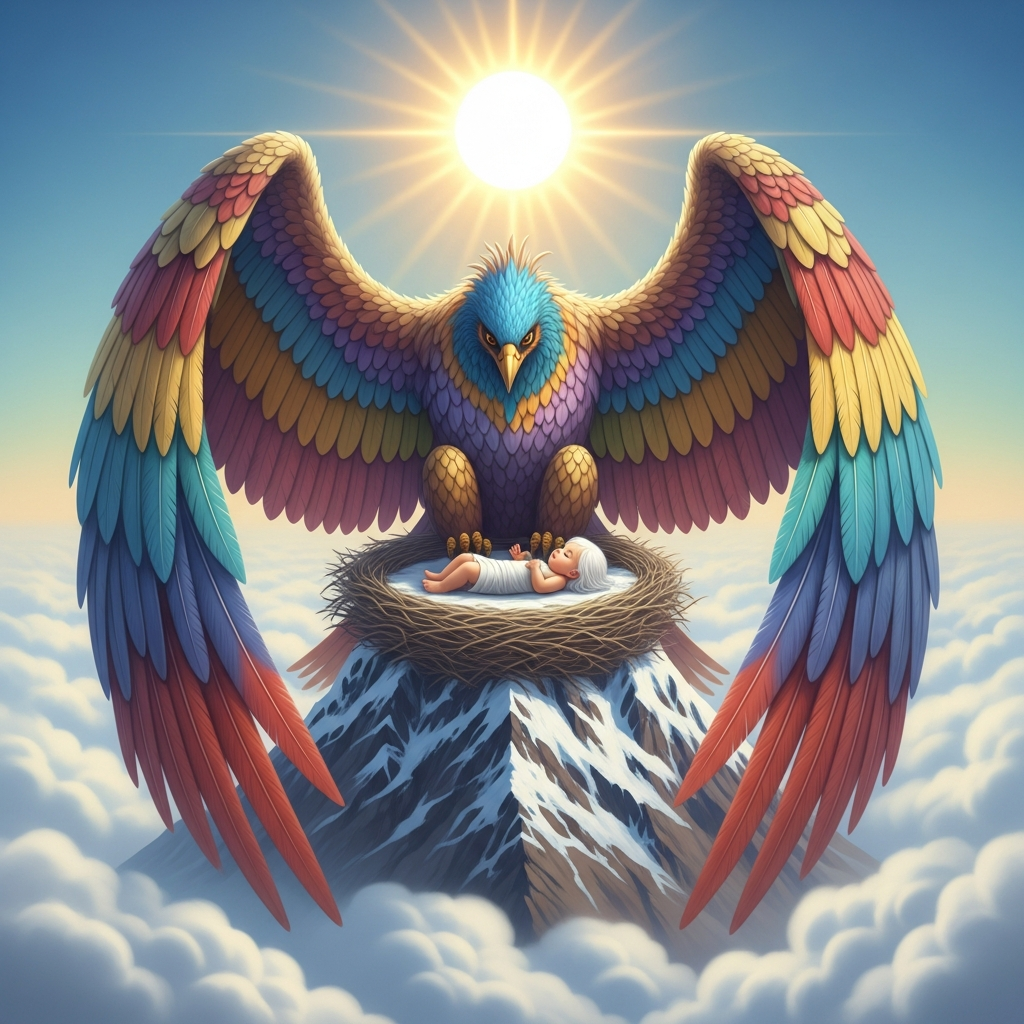
The cup was made for Jamshid, and it is older than the dynasty that possesses it.
Jamshid was the first great king of the world — the figure who taught humanity to make iron, to weave cloth, to build ships. He ruled for seven hundred years. His throne was carried through the air by demons who served him; on the day he first had his throne lifted into the sky, the world celebrated, and that day became Nowruz — the Persian New Year, which is still celebrated. Then pride destroyed him: he claimed divinity, and the divine fire (xvarnah) that had made him great left him, and Zahhak came with his serpent-shoulders and his thousand years of tyranny.
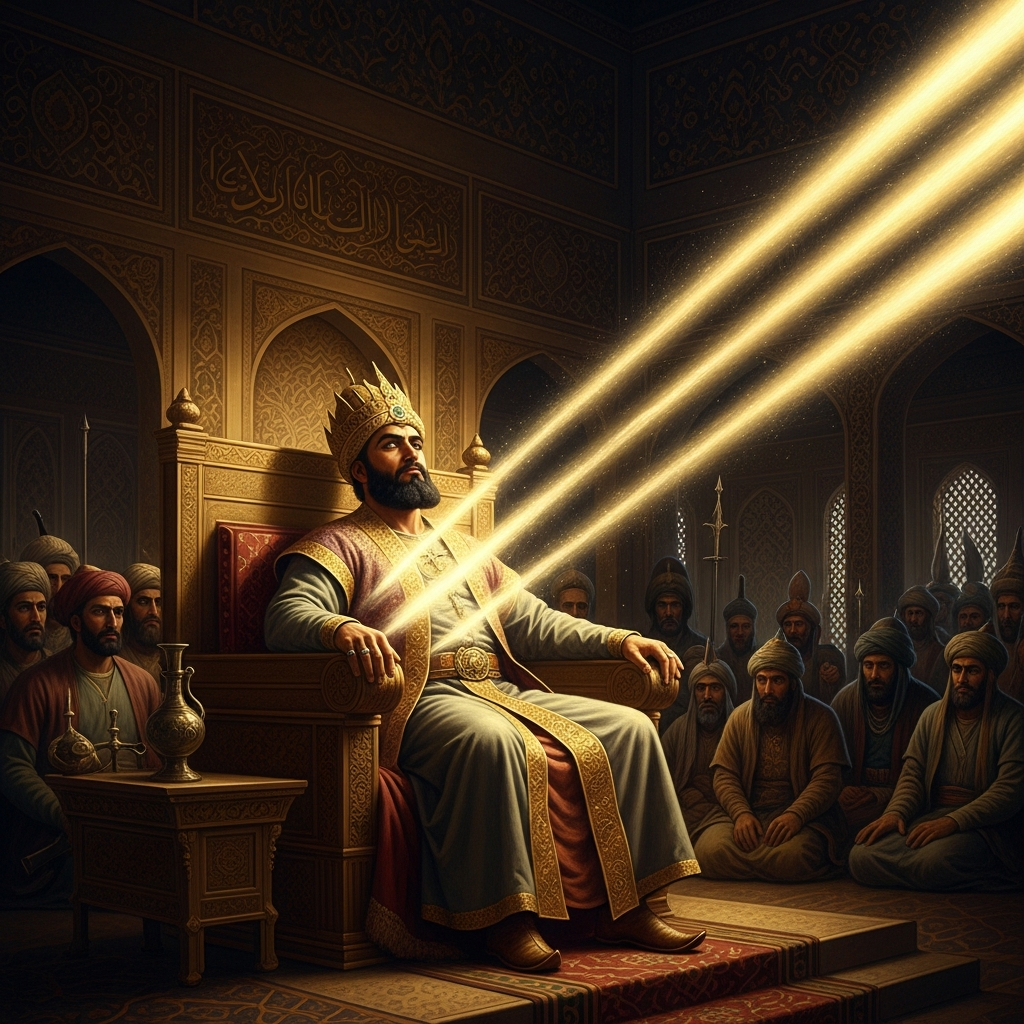
The cup survived Jamshid. It passed through generations of kings. It is called the Jam-e Jam or the Jaam-e Jahan-Nama — the Cup that Shows the World. When you look into it correctly, you can see everything: every territory, every secret, every event happening at this moment anywhere on earth. It is not a future-telling instrument, strictly. It is a present-seeing instrument, which is more powerful: a total transparency of the now, with no limits of distance or wall or night.
Key Khusrow inherits it at the height of his dynasty.
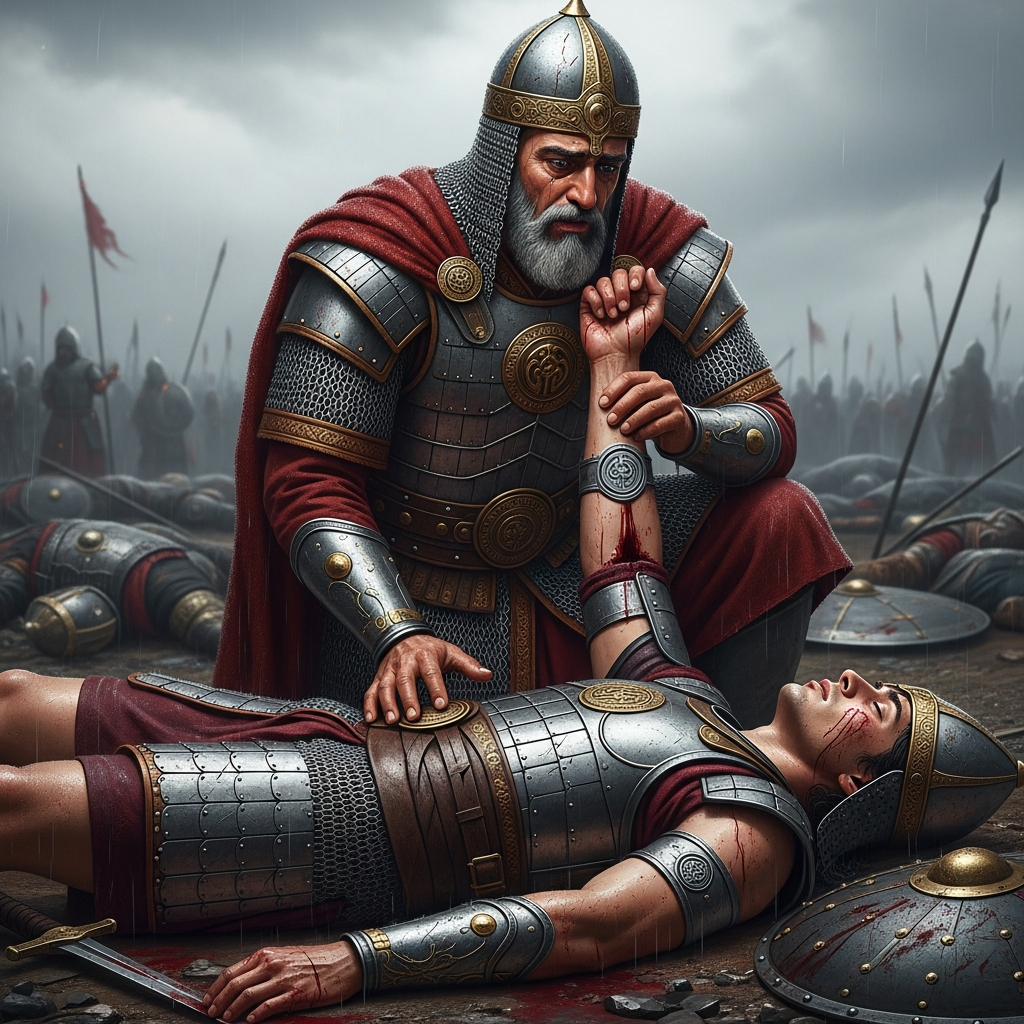
He is the king that Persia was born to produce. His father was Siyavash — a prince so pure and incorruptible that he walked through fire to prove his innocence and was murdered by Afrasiab of Turan for being too good to be politically useful. His mother was Farangis, a Turanian princess, which makes Khusrow the living synthesis of the two peoples who have been destroying each other for centuries.
He was hidden as a child, raised in obscurity, brought to Persia in stages of increasing danger by the hero Giv, whose decades-long search for him is one of the great adventure sequences of the Shahnameh. He came to the Persian throne not by succession but by destiny.
He is a genuinely great king: just, clear-sighted, militarily brilliant, administratively exact. He reunites the Persian world. He avenges his father’s murder, driving Afrasiab to his death after a final terrible chase across frozen lakes. The cycle of loss and revenge that has run through the Kayanian dynasty is completed.
He has the cup. He has the throne. He has won.
He looks into the cup and is troubled by what he sees.
The sources are not specific about what the cup shows him. The Shahnameh is indirect here, in the way it is always indirect about the inside of a king’s mind: we see the decisions, not the reasoning. What we know is that Key Khusrow, at the peak of his achievement, with everything resolved and no visible crisis on any horizon, calls his court together and announces that he is leaving.
He is going to abdicate. He is going to appoint a successor. He is going to walk into the mountains.
The reaction is the reaction you would expect. His greatest generals — Gudarz, the ancient patriarch of the warrior families; Giv, who spent years searching for him; Bizhan, the young champion — are stricken. Gudarz argues with him. Giv weeps. The court does not understand. What is there to leave? What could possibly be beyond what he has?
Khusrow’s answer, in Ferdowsi’s rendering, is the answer that comes from the cup: I have seen what I will become if I stay. He does not elaborate. He does not need to elaborate. The cup has shown him the world’s present, and somewhere in the world’s present is the image of what power does to the man who holds it after the work is done. He is not afraid of enemies. He is afraid of himself.
I would rather leave as what I am, he says, than remain as what I will become.
He distributes the court offices. He appoints Luhrasp as his successor — a figure not from the inner circle of heroes, which creates resentment, but Khusrow explains that the great heroes of his generation have been too forged by war. Luhrasp comes from the other tradition: learning, administration, the peacetime arts that the next era will need.
He spends forty days in prayer and fasting, the preparation the Persian tradition requires before a significant departure. He gives away his personal treasury. He is not performing renunciation — he is not making a show of it — he is simply systematically removing the architecture of possession before walking away from the site.
On the appointed morning, he walks out of the palace in ordinary clothes.
Seven heroes follow him. They have refused to stay behind. They know, or suspect, that they will not return, but the decades of loyalty are not something they can put down at the palace gate. They are the last expression of the warrior generation — Gudarz, Giv, Bizhan, Faribarz, Gorazeh, Zangeh, and Rostam’s own son Fariburz — walking into the mountains behind a king who has told them he is not coming back.
They climb into the Alborz.
The path goes up through the permanent cold, past the treeline, past the snowline, into the altitude where the only sound is the wind and the crunch of snow under feet. Khusrow walks ahead. He does not look back frequently. When he does, the seven faces behind him are the faces of men who have understood something irreversible.
He speaks to them on the last night. He tells them to turn back in the morning. They will not survive what is ahead. He does not specify what is ahead — whether he is walking toward a specific destination or simply into the white until the white is everything. He says: You have served. That is complete. Go back to Persia and serve what comes next.
In the morning, he walks on.
They do not turn back. They follow until they cannot see him. Then they follow until their feet stop moving in the snow, and the cold takes them one by one, and the last thing each of them sees is the white ahead and the faintest possibility that something moves in it.
They are found the next spring — the Shahnameh is specific about this — frozen in the snow above the snowline, their faces pointing toward where he went. No one is found beyond them.
The cup stays in the tradition.
Hafez of Shiraz, writing his ghazals six hundred years after Ferdowsi, refers to the Jam-e Jam in poem after poem as the instrument of total vision — and identifies it with the Sufi heart, the interior organ of spiritual perception. The cup is no longer in any king’s hands; it has become a metaphor for the state of consciousness that sees everything as it is, without the distortions of ego and desire. Every human heart, in Hafez’s reading, is potentially the Jam-e Jam. Most of them are clouded by what we want to see.
Khusrow’s departure has also been read, in the Sufi tradition, as the model for the willing dissolution of the self at the height of its achievement — the moment when the mystic, having attained everything the ego sought, lets it go rather than clutch it. He walked into the white not despite the cup’s vision but because of it. To see everything is to understand exactly what holding power costs.
Mount Damavand still stands above the clouds. The permanent snowfields on its upper slopes are the permanent snowfields of a hundred myths. Climbers do not find palaces or cups or the frozen bodies of seventh-century heroes.
But every spring, when the Nowruz fires are lit and the world is reset, someone fills a cup and looks into it and sees — what? The world. All of it. The question is whether the looking improves you or only proves what you suspected.
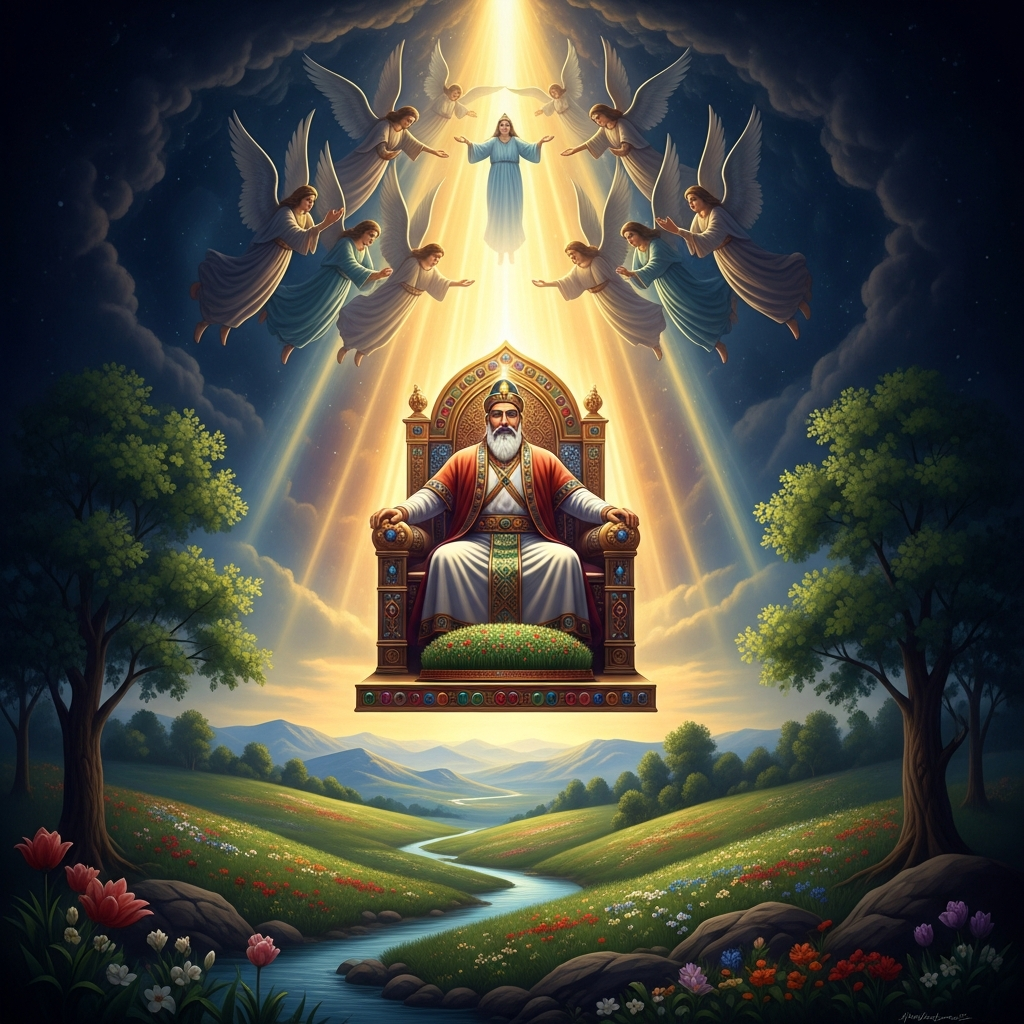
Key Khusrow saw, and left.
Echoes Across Traditions
Entities
- Key Khusrow (Kai Khusrau)
- the Cup of Jamshid (Jam-e Jam)
- Gudarz
- Giv
- Bizhan
Sources
- Abolqasem Ferdowsi, *Shahnameh* (Book of Kings), c. 977–1010 CE, trans. Dick Davis (Penguin, 2016)
- Hafez of Shiraz, *Divān* (14th century CE) — multiple ghazals reference the Jam-e Jam and Jamshid's cup
- Arthur Christensen, *Les Kayanides* (1931) — exhaustive study of the Kayanian cycle
- Prods Oktor Skjaervo, 'Jamshid' in *Encyclopaedia Iranica* (1999)
- A.V. Williams Jackson, *Zoroastrian Studies* (Columbia University Press, 1928)