Contents
On the vernal equinox — the precise moment when day and night are equal — the Iranian New Year celebrates not only the turning of the calendar but the original moment when King Jamshid's throne rose above the world and time itself began its annual renovation.
- When
- The vernal equinox — annually, and originally at Jamshid's first enthronement
- Where
- Persepolis — and every Iranian household since the mythic golden age
The throne rises.
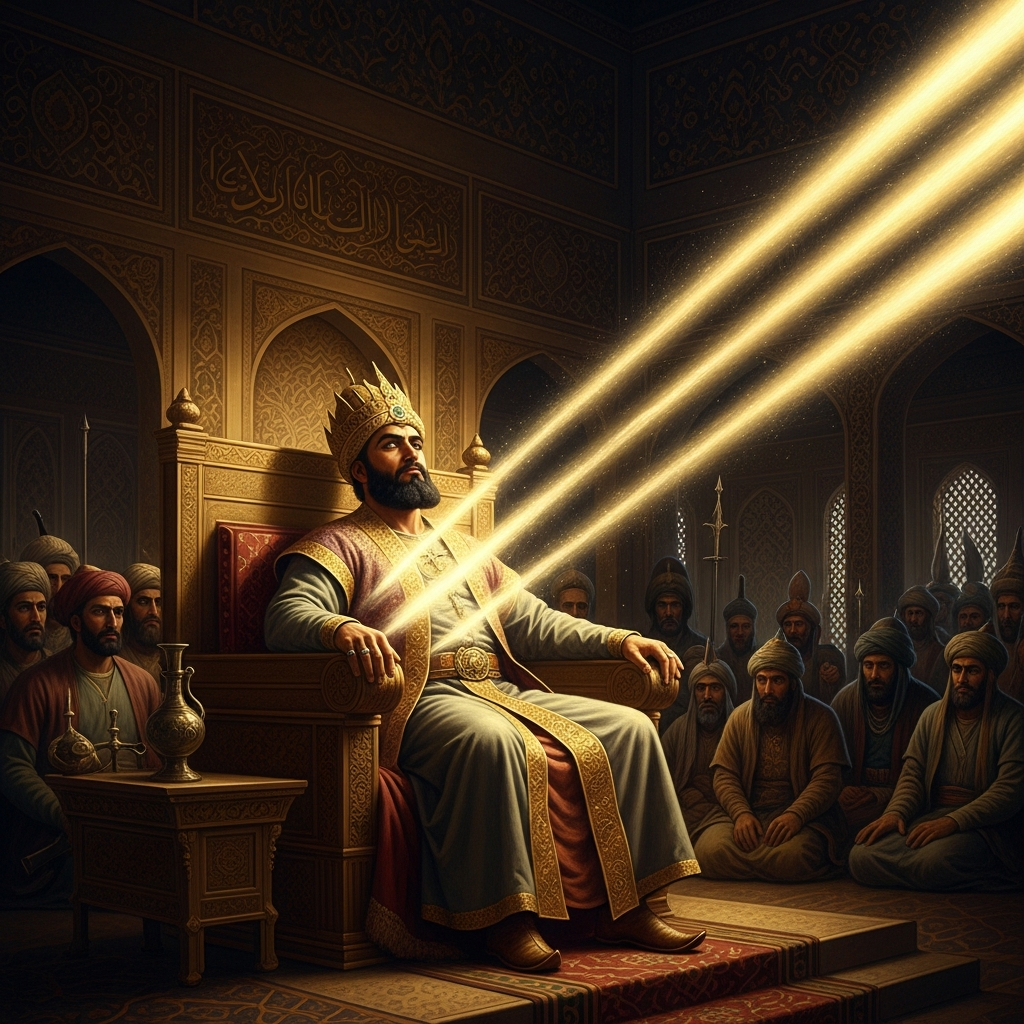
On the first day of spring — the day when day and night are precisely equal, when the sun crosses the celestial equator and the light begins to gain over the darkness — King Jamshid mounts his jeweled throne and commands it to rise. The throne, built by the divine craftsmen and lit by the gems that are set into it like captured stars, rises into the sky and carries the king above the world. The sun catches the gems and throws light in all directions.
The people below call it: Nowruz. New Day.
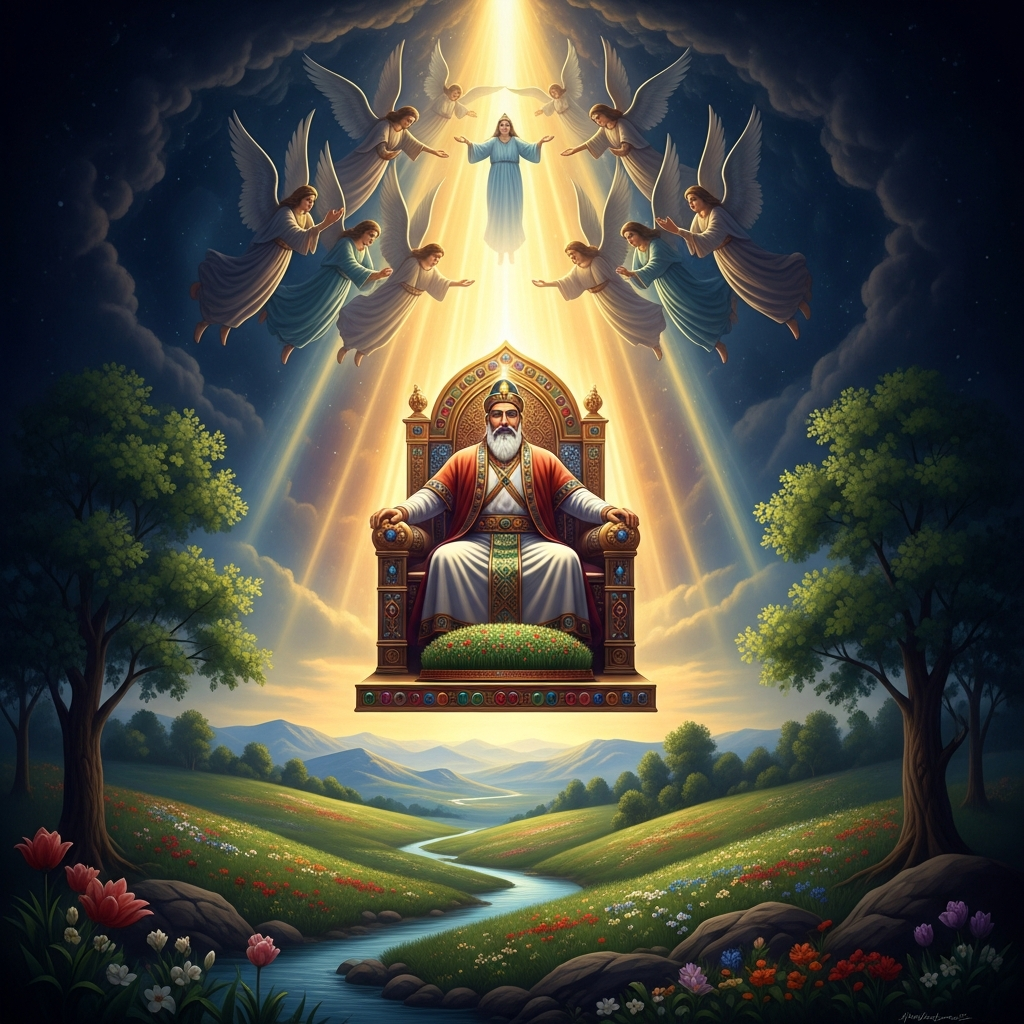
This is the mythological foundation of the Iranian New Year, as Ferdowsi records it in the Shahnameh: Nowruz is the day Jamshid’s divine glory blazed so brightly from his throne that it was visible from every part of the world, and the angels descended to worship, and the demons fled, and the world understood that it was being governed well. The celebration of Nowruz is the annual re-enactment of that throne-rising — the moment when the cosmic order is renewed, when the farr blazes as it was meant to blaze, when the world is aligned with its highest possibility.
The Zoroastrian theology underlying the festival is the theology of Spenta Armaiti and the fravashis.
In the five days before the vernal equinox — the Farvardegan, the festival of the fravashis — the guardian spirits of the righteous dead return from the spiritual realm to visit their families. Doors are opened. Food and water are set out. The family says: We remember you. The fire is burning. The water is clean. The garden is tended. You are welcome here. The fravashis receive this and are nourished by it.
Then Nowruz itself arrives.
The preparation is the Haft-Sin — the seven items whose names begin with the Persian letter s, arranged on the table as the symbolic expression of the world’s renewal: sprouts (sabzeh) for rebirth, sweet pudding (samanu) for power, dried jujube (senjed) for love, garlic (sir) for medicine, apple (sib) for beauty, sumac (somāq) for sunrise, and vinegar (serkeh) for patience and age. A mirror reflects the light. Candles (one for each child) burn. The Quran or the Shahnameh or the Divan-e Hafiz lies open. Coins for prosperity. Painted eggs for fertility. A goldfish in a bowl, alive, for the life that renews itself.
At the exact moment of the equinox — families gather around the Haft-Sin table and wait.
The moment arrives: the earth has completed another year of turning and arrives at the point of balance, and the spring begins. Some families fire guns or light fireworks. Some simply sit in the quiet of the house, the candles burning, the goldfish swimming, and feel the year turn.
The cleaning that precedes Nowruz — the khāneh-tekāni, the shaking out of the house — is itself a ritual act: to receive the new year properly, the house must be clean, just as the earth in spring shakes off winter’s darkness. The new clothes that are bought for Nowruz are the same theology: to enter the new year in the old year’s clothes is to refuse the renewal.
The thirteen days of Nowruz celebrate the arrival of spring in its full warmth.
On the thirteenth day — Sizdah Bedar, “Thirteen Out” — families go outside, to parks and rivers and the open countryside, because the thirteenth day has the accumulated energy of the festival’s twelve days and must be discharged in open air rather than closed spaces. The sprouts that were grown for the Haft-Sin table are thrown into running water, carrying the old year’s tangles away with them.
The throne has risen.
The world is renewed.
The fire that never went out in the fire temple has been fed its morning fuel by the white-robed priest, and the flame blazes the same color it blazed when Jamshid’s throne caught the sunlight and threw it across the world.
New Day.
The same day.
The first day.
Echoes Across Traditions
Entities
- Jamshid
- Haft-Sin Table
- Nowruz
- Farvardegan (the Feast of Fravashis)

Sources
- Ferdowsi, *Shahnameh*, 'The Reign of Jamshid'
- Massoume Price, *Iran's Diverse Peoples: A Reference Sourcebook* (ABC-Clio, 2005)
- Nooshin Hosseini-Shakib, *Nowruz: The Persian New Year* (various)
- Ehsan Yarshater, 'Nowruz,' *Encyclopædia Iranica* (2008)