Contents
Young Ferīdūn, hidden from birth to protect him from the tyrant Zahhāk, comes of age and leads a rebellion with the divine glory as his guide — toppling the snake-shouldered king and chaining him in a mountain cave until the end of time.
- When
- After a thousand years of Zahhāk's serpent-tyranny — the liberation of Iran
- Where
- The Iranian plateau — Ferīdūn's hidden birthplace in Alborz mountains, then Zahhāk's fortress-palace
The tyrant knows he will be overthrown.
This is Zahhāk’s misery, and it is a misery he brought on himself: the daevas who gave him his serpent-shouldered power also gave him the knowledge of his eventual defeat. He knows that a child named Ferīdūn will someday appear and destroy him. He does not know exactly when. He does not know exactly where. He knows enough to make himself sleepless, to send his agents through every province looking for the child who will undo him.
Ferīdūn’s father, Ābtīn, has already been caught.
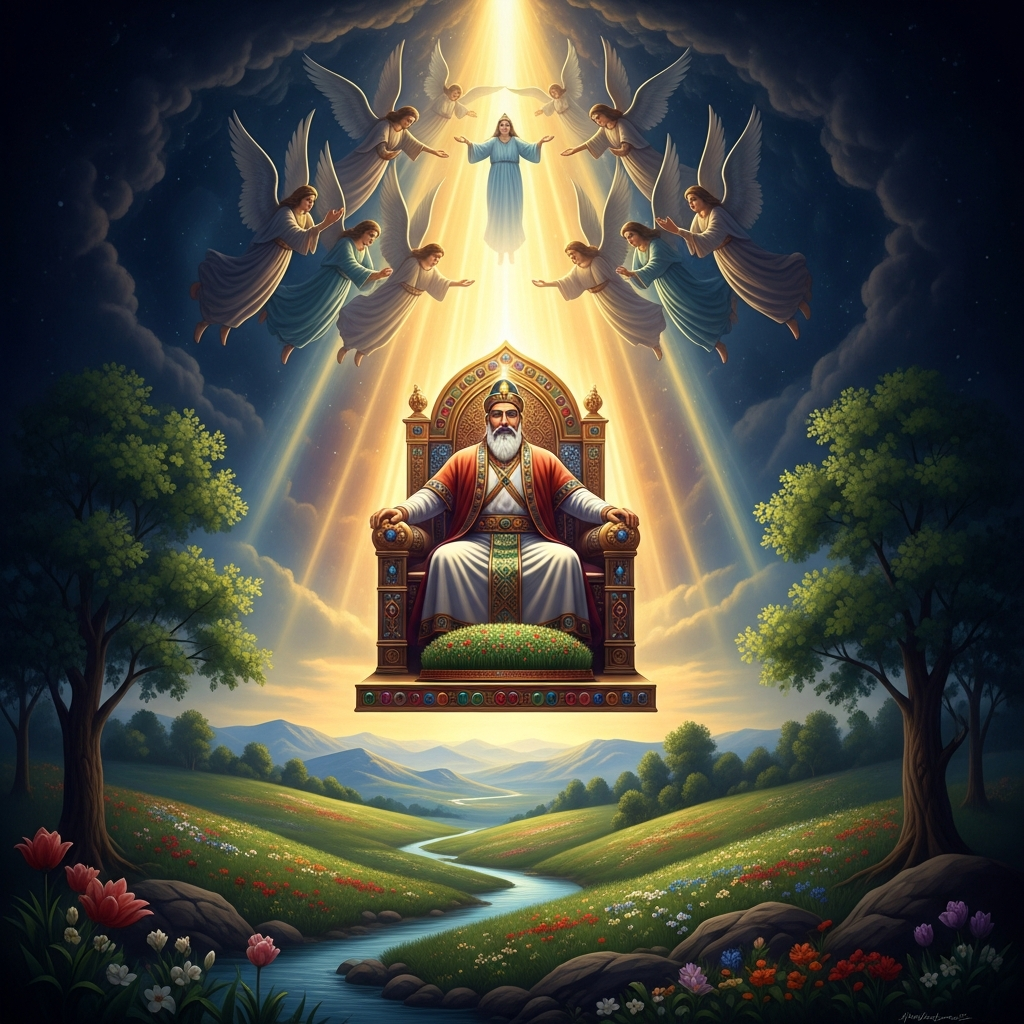
His brain — for Zahhāk’s two serpents eat a human brain each day, and the palace cooks have learned that the kindest substitute is ram brains mixed with the brains of very young men — has been fed to the monsters on his shoulders. Ferīdūn’s mother, Farānak, knows this. She takes the infant and runs north into the Alborz mountains, where she finds a miracle: a cow named Gavmayē whose coat is patterned like a bed of flowers and whose milk is so abundant and so pure that it sustains the child through his first three years in the mountains without any other food.
For three years Ferīdūn grows strong on divine milk in the wilderness, hidden by the peaks and the valleys.
Then Zahhāk’s agents find the cow. Farānak takes her son further into the mountains and leaves him with a holy man who lives on the high slopes. She goes to another king for protection and tells him the whole story: the serpents, the murdered father, the miraculous cow, the hidden child who will one day bring this all to account.
Ferīdūn grows to manhood on the mountain. He is sixteen when he comes down.
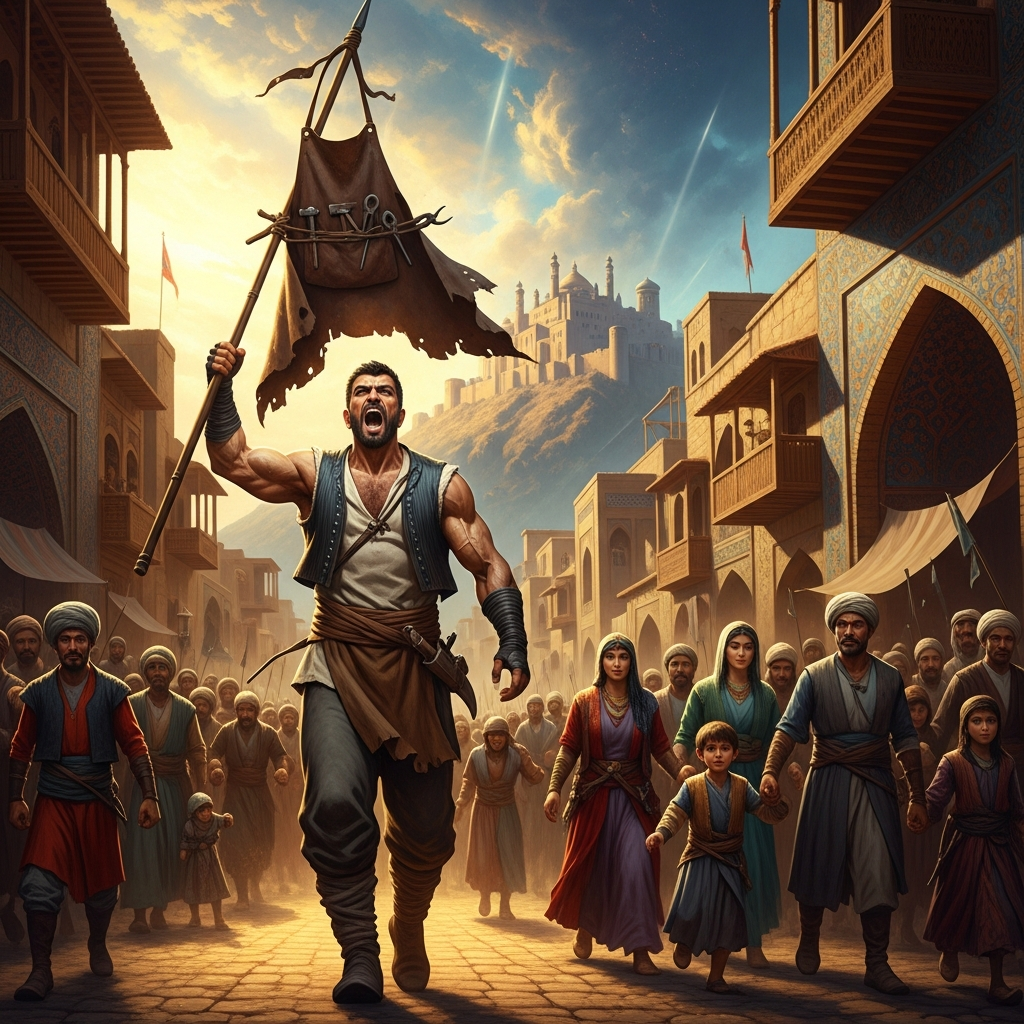
He has the farr — the portion that left Jamshid at his fall has found this boy in his rocky shelter and recognizes in him what it left Jamshid looking for. He descends into the lowlands at the moment when the blacksmith Kaveh raises his apron as a battle standard over the city, and the rebellion that had been simmering for a thousand years of brain-eating tyranny crystallizes around the divine brightness of the young man who was raised by a floral cow on a holy mountain.
He does not carry a sword to Zahhāk’s fortress. He carries a mace — the iron mace he forged himself, shaped at one end like the head of a bull. He crosses the sea. He rides toward the palace of the tyrant through a world that has been living under unnatural fear for a millennium: a world where parents have been waiting for the summons that will take their children to the serpents.
The angels fight with him.
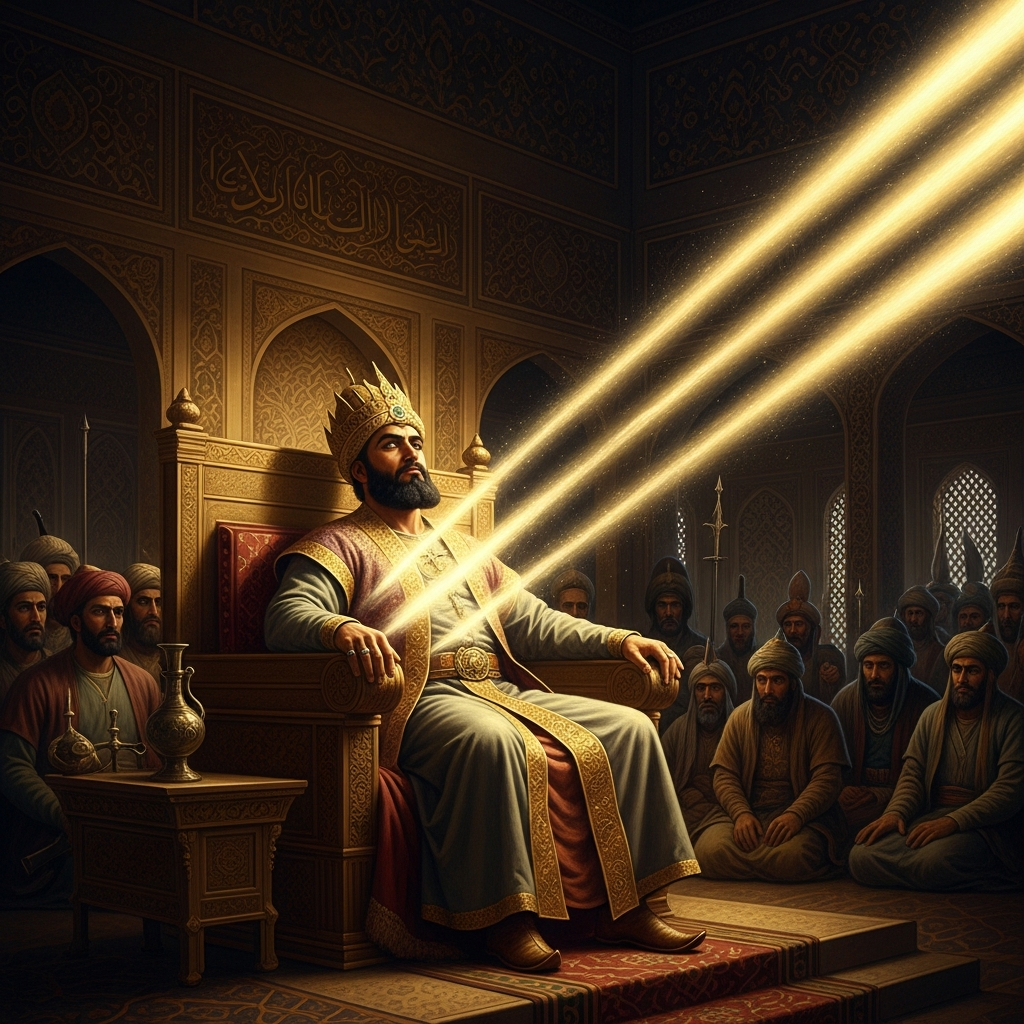
Sorush, the divine messenger, appears in a dream and tells him how to enter the fortress. He enters. He finds Zahhāk’s two wives — the daughters of Jamshid himself, taken as concubines by the tyrant — and releases them. He finds the great hall where Zahhāk sits and strikes him with the bull-headed mace.
The tyrant does not die.
This is the crucial point that the Shahnameh preserves from the older Avestan tradition: Zahhāk cannot be killed, because his destruction at this moment would release too much accumulated evil on the world at once. Sorush appears again and tells Ferīdūn to bind him instead — to take him deep into Mount Damāvand, the great volcanic peak of the Alborz, and chain him in a cave so deep that no one will find him.
Ferīdūn does this.
He chains Zahhāk in the mountain with chains that the monster cannot break, in a cave that the mountain conceals with its own weight. And Zahhāk is there still — this is what the tradition says, with the kind of calm urgency that means it does not want you to forget — still chained in the mountain, still alive, still hungry, fed by no one. He will be there until the end of time, when the chains will fail and he will emerge for the final battle, and Garshasb or some other hero will come to destroy him at last.
Ferīdūn rides back from the mountain and begins his reign.
It will last five hundred years, and it will not be perfect — he has three sons, and the story of those sons is the story of the first great tragedy in the Shahnameh, the story of Iraj who loved his brothers and was murdered by them for it. But that is later.
Now he rides through a world that is waking from a thousand-year nightmare, and the farr rides with him, and behind him the mountain holds the monster that will wait.
Echoes Across Traditions
Entities
- Ferīdūn (Thraetaona)
- Zahhāk (Azi Dahāka)
- Kaveh the Blacksmith
- Ābtīn
- Farānak
- Gavmayē (the miraculous cow)

Sources
- Ferdowsi, *Shahnameh*, 'The Reign of Zahhāk' and 'The Reign of Ferīdūn,' translated by Dick Davis
- Avesta, *Aban Yasht* and *Zamyad Yasht*
- Ehsan Yarshater, 'Iranian National History,' *Cambridge History of Iran* Vol. 3 (1983)
- Azar Nafisi, *The Republic of Imagination* — on the Shahnameh's political resonance