Contents
The old warrior Sām, haunted by the dream-reproaches of the white-haired son he abandoned on the mountain twenty years earlier, climbs to the Alborz to reclaim Zāl — and finds the Sīmorgh's nest and a young man more at ease in the heights than Sām will ever be again.
- When
- The heroic age of the Shahnameh — before Rostam's birth
- Where
- The slopes of Mount Alborz — the sacred mountain at the center of the Zoroastrian world
The dream is the same every night.
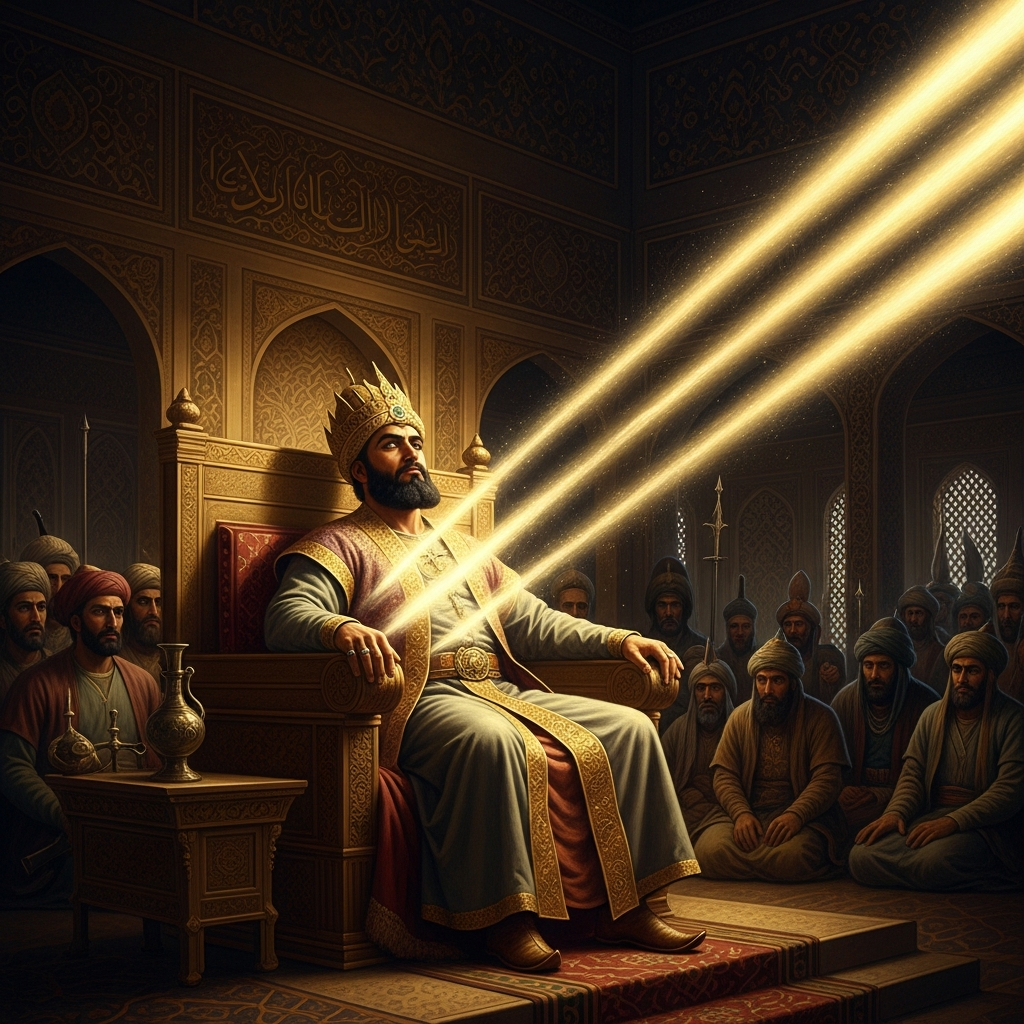
Sām, the greatest warrior of his generation, has been dreaming for months of a horseman in the mountains of India, and the horseman carries a standard that accuses him, and the accusation is always the same: you left your son on the mountain. Sometimes it is Zarathustra himself in the dream, or one of the prophets, riding the horse and pointing toward the Alborz. Sometimes it is simply the feeling of it, without figures — the accumulated weight of two decades of knowing he did wrong.
He goes to the priests. They tell him what the dream means, because the meaning is obvious: his son, whom he abandoned on the Alborz when the child was born white-haired, is alive. He has been alive for twenty years in the nest of the Sīmorgh. He must be reclaimed.
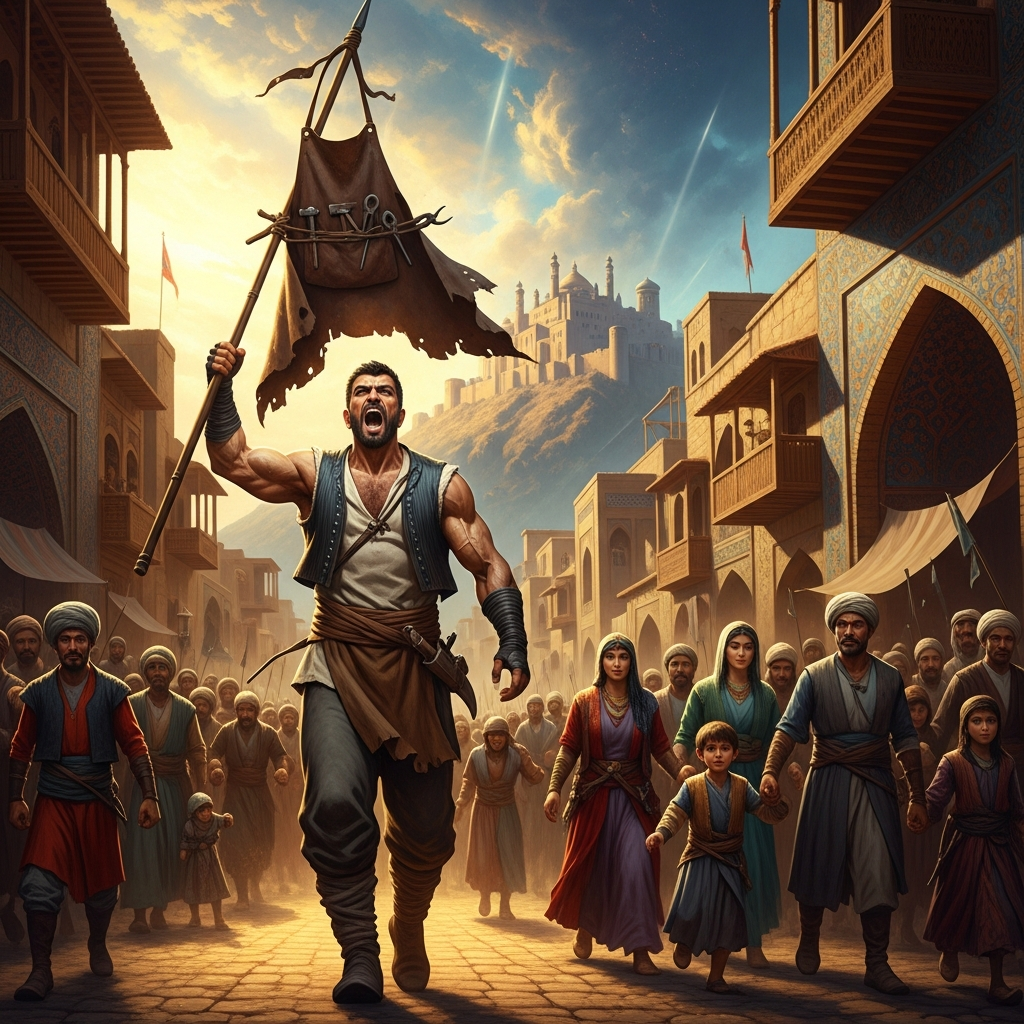
Sām assembles an expedition and begins the climb.
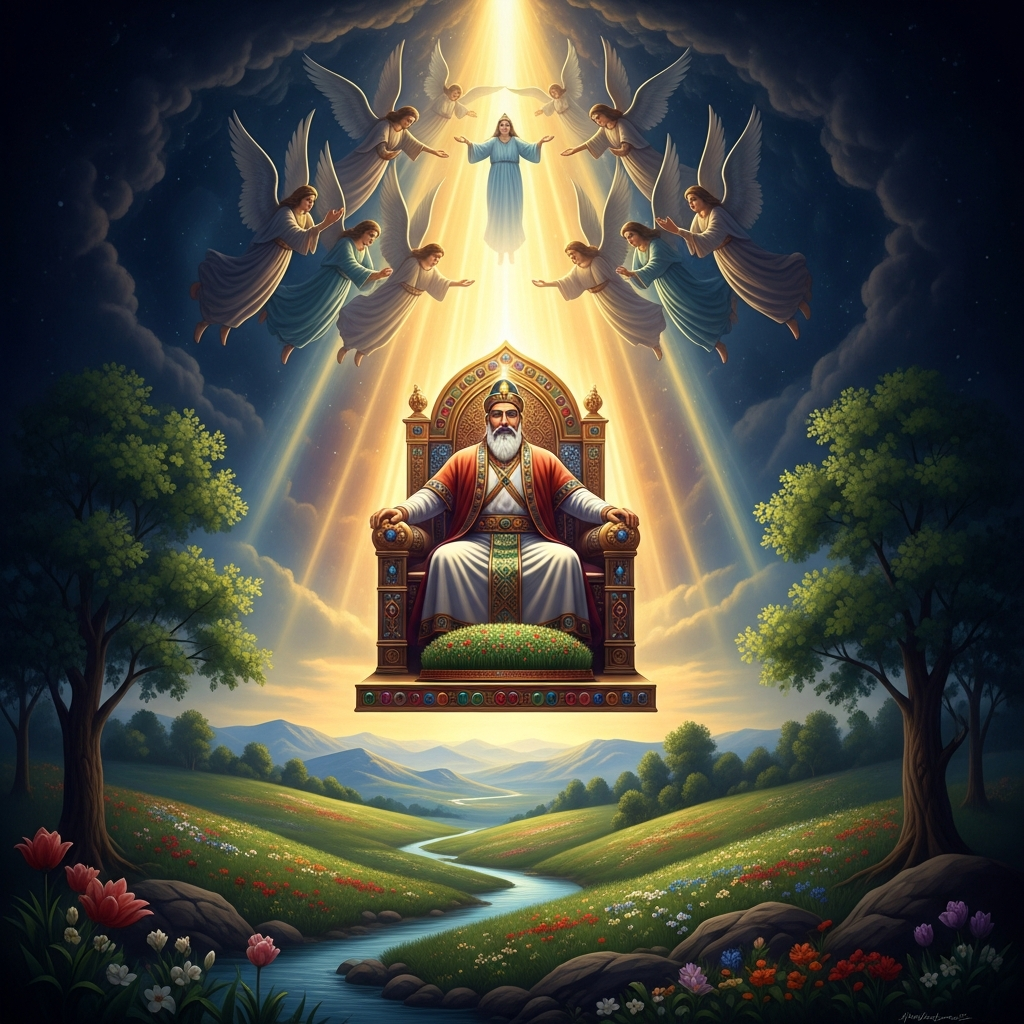
The Alborz is not a mountain you simply walk up. It is the cosmic mountain, the mountain from whose peak the entirety of the created world is visible, and it takes a serious climb to reach the Sīmorgh’s nest. The path is steep enough that the expedition loses men to the terrain.
Sām makes it.
He arrives at the base of the nest — visible from below as an enormous structure of ancient wood at the summit, the accumulated material of centuries — and looks up. There is a young man in the nest. He is white-haired, which Sām can see even from the distance of the mountain slope. He is standing at the edge of the nest, looking down at the expedition.
The young man has never seen people coming for him before.
The Sīmorgh understands immediately what is happening.
She calls Zāl to her and she tells him: your father has come. She tells him the things she has always known — that he was born for a human life, that the mountain nest was always a temporary home, that the time has come. She gives him her feathers. She tells him what they are for.
Zāl stands at the nest’s edge looking down at the man who left him here.
The Shahnameh does not give Zāl a speech of reproach. He has been raised by the Sīmorgh, who is ancient beyond reckoning and who does not carry resentment, and he has learned from her the perspective that comes from watching the whole human world from a great height. He has known who Sām is for some time — the bird who raised him is a knower, not a withholder of information. He has had years to decide how he feels about the man on the mountain slope.
He climbs down.
Sām opens his arms. The gesture costs him something — the warrior who abandoned a white-haired infant is now embracing a young man who is physically more at ease on a mountain than Sām has ever been anywhere, whose white hair is not shameful but strange and magnificent, who has the composure of someone raised without the constraints of shame.
Sām weeps.
He says what fathers say in these situations and the Shahnameh records it without irony: he says he was wrong, he says the grief of it has been with him for twenty years, he says he should have trusted his son’s divine nature rather than his advisors’ social anxieties.
Zāl accepts it.
He goes down the mountain with his father and rides to the court of Manuchehr Shah and is welcomed as the son of the great warrior Sām. He is a wonder at court: white-haired, mountain-raised, educated by the oldest creature in the world, in possession of feathers that can call that creature down in crisis.
He will need the feathers three times.
He is saving the last one.
The mountain where the Sīmorgh lives is visible on clear days from the Iranian plateau, its summit catching the light at an angle that makes it seem to glow. Sām, returning to the lowlands, does not look back at it. He is not the kind of man who looks back.
Zāl looks back.
Just once.
Echoes Across Traditions
Entities
- Sām
- Zāl
- Sīmorgh
- Manuchehr Shah
Sources
- Ferdowsi, *Shahnameh*, 'The Story of Zāl,' translated by Dick Davis
- Olga Davidson, *Poet and Hero in the Persian Book of Kings* (Cornell, 1994)
- A.Sh. Shahbazi, 'Sāma,' *Encyclopædia Iranica* (2009)