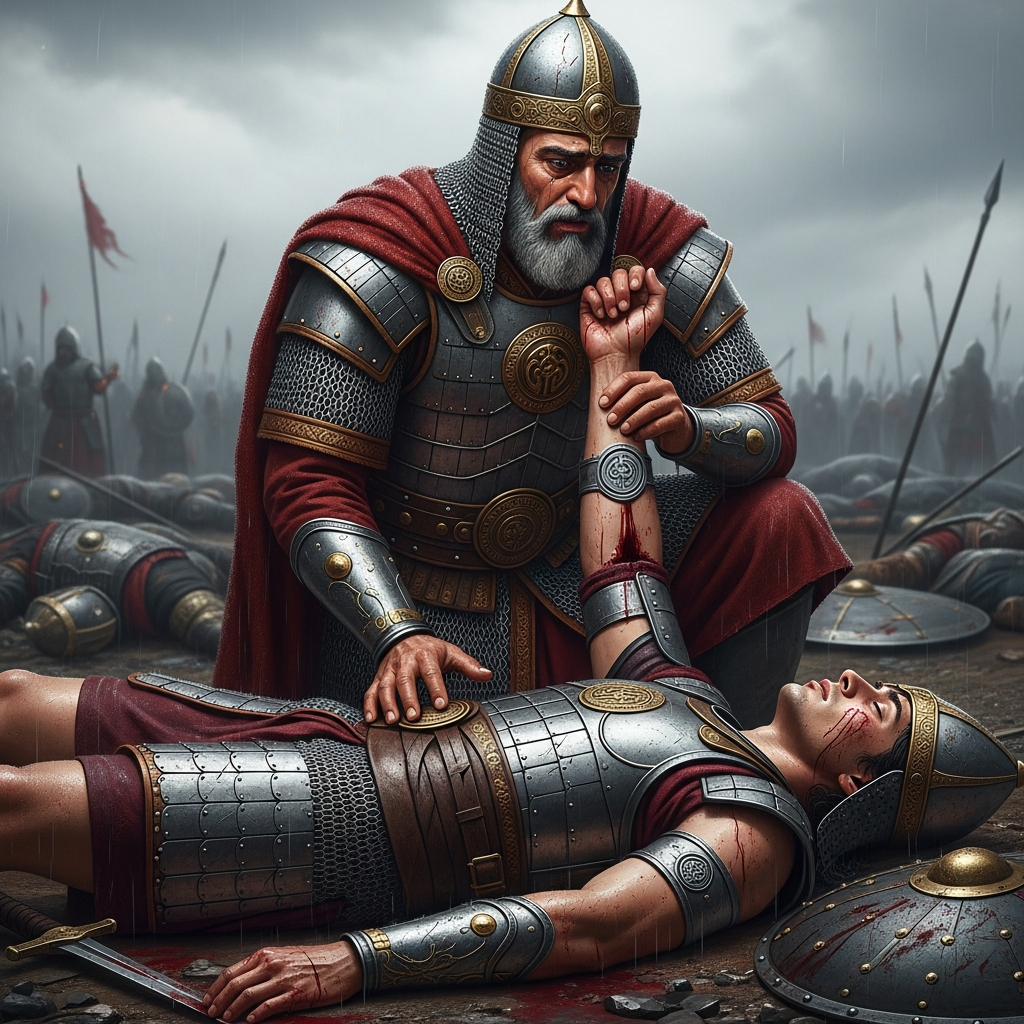
Rostam Kills His Son
Shahnameh of Ferdowsi, c. 977–1010 CE · The battlefield between Persia and Turan; the banks of the Oxus River
Contents
Rostam, the greatest hero of Persia, meets a young champion on the battlefield who fights with extraordinary skill. The young man is Sohrab — Rostam's own son, born of a forgotten love, come across the border to find his father. They do not recognize each other. Rostam kills him. As Sohrab is dying, he shows his father the seal Rostam gave his mother. The grief that follows is the deepest in Persian literature.
- When
- Shahnameh of Ferdowsi, c. 977–1010 CE
- Where
- The battlefield between Persia and Turan; the banks of the Oxus River
There was a night in Sistan, many years before the battle.
Rostam had ridden into Turani territory alone, separated from his horse Rakhsh in the night, and had been sheltered in the city of Samangan by its king. The king’s daughter was Tahmineh. She came to Rostam’s room in the dark and spoke simply: she had heard of him all her life. She wished to have a child by the greatest hero in the world. She asked for nothing beyond that.
Rostam agreed. In the morning he left her a seal — the amulet he wore on his arm — and told her: if the child is a son, tie this to his arm when he is old enough. Then he rode back to Persia and did not return.
The child was a son. He grew fast, the way the children of the great grow fast, as if they sense the shortness of the time allotted them. Tahmineh told him his father’s name but told him nothing else that might draw him into danger. He learned too quickly, grew too tall, developed a reputation in Turan before he was fully grown.
He crossed the border into Turan’s service under Afrasiab, looking for the one thing he could not find in Sistan: his father.
His plan — which was his own plan, formed before he was old enough to know how dangerous such plans are — was to fight his way to Rostam. They would meet on the battlefield, the two greatest warriors of their respective sides. There would be recognition. The recognition would produce the reunion that his mother’s story had withheld from his entire childhood.
He was fifteen.
Afrasiab gave him an army and sent him against the Persian border. Sohrab drove everything before him. There was no Persian champion who could stop him; one by one they fell or fled. The Persian king Kay Kavus, who had been making bad decisions for decades, sent for Rostam.
Rostam came late. He came with his usual unhurried confidence, the confidence of a man who has been Persia’s answer to every impossible question for two hundred years. He did not ask who the young Turani champion was. He had heard that the boy was exceptional, but he had faced exceptional opponents before.
He came to the Persian camp and dressed for battle.
On the morning of the duel, Sohrab looked across the field at the champion who had arrived on the Persian side, and something happened to him. Something that was not quite recognition — he had never seen Rostam, did not know his face — but a disturbance. A sense of the familiar in a stranger.
He sent a messenger to the old Persian general Hajir, whom he had captured, and asked directly: Is that Rostam?
Hajir, following Kay Kavus’s orders — the king had decided, for his own complex political reasons, that the two should not recognize each other — lied. No, Hajir said. That is not Rostam. Rostam is not here.
Sohrab went onto the field with the disturbance unresolved.
They fought the first day to a draw. They met again the second day. On the second day, Sohrab threw Rostam to the ground and had his knife at the old hero’s throat and then — this is the moment the myth turns on — Sohrab hesitated.
He was not weak. He was not foolish. He was applying the protocol of Persian single combat, in which a warrior who has thrown an opponent must wait for a second throw before making the kill. He lifted the knife. He let Rostam rise.
Rostam stood, composed himself, and told a lie: In our tradition, a man who is thrown must be thrown a second time before the kill is permitted.
There was no such tradition. Rostam invented it on his feet, in the way a man invents escape routes when his body tells him the alternative is death.
Sohrab believed him.
On the third day, Rostam got the better of the exchange.
He threw Sohrab to the ground. The young man did not lie about tradition. He lay on the ground with Rostam’s weight on him and Rostam’s knife out, and Rostam made the cut before anything could stop him.
The cut was mortal.
Rostam stood up. He looked down at the young man bleeding on the field. He looked at the extraordinary face — the face of someone who had been winning until the moment he wasn’t, a face that had something in it he had seen before, somewhere, in a place he couldn’t name — and he felt the first motion of the thing that was coming.
Sohrab said: My father will find you. When he hears that his son died at this battle, he will come. His name is Rostam.
The world stopped.
Rostam made a sound — the sources describe it as a sound beyond classification, neither weeping nor screaming but something that has both and precedes both. He fell to his knees. He took Sohrab’s arm — the arm the boy had been fighting with, the arm that had been a foot from cutting him down two days before — and he pushed back the sleeve.
The seal was there.
His own seal, on his own son’s arm, placed there by Tahmineh on his instructions, for exactly this moment of identification — which he had imagined as a moment of reunion and which had become, instead, a moment of arrival thirty years too late.
I am Rostam, he said.
Sohrab looked at him. Ferdowsi is precise about what Sohrab’s expression contained: not rage, not accusation. Something closer to recognition finally achieved. He had been looking for this face his entire short life. He had found it here, on the wrong side of a mortal wound, at the moment when finding no longer meant anything.
You are here, Sohrab said, or words that Ferdowsi renders as such.
He died.
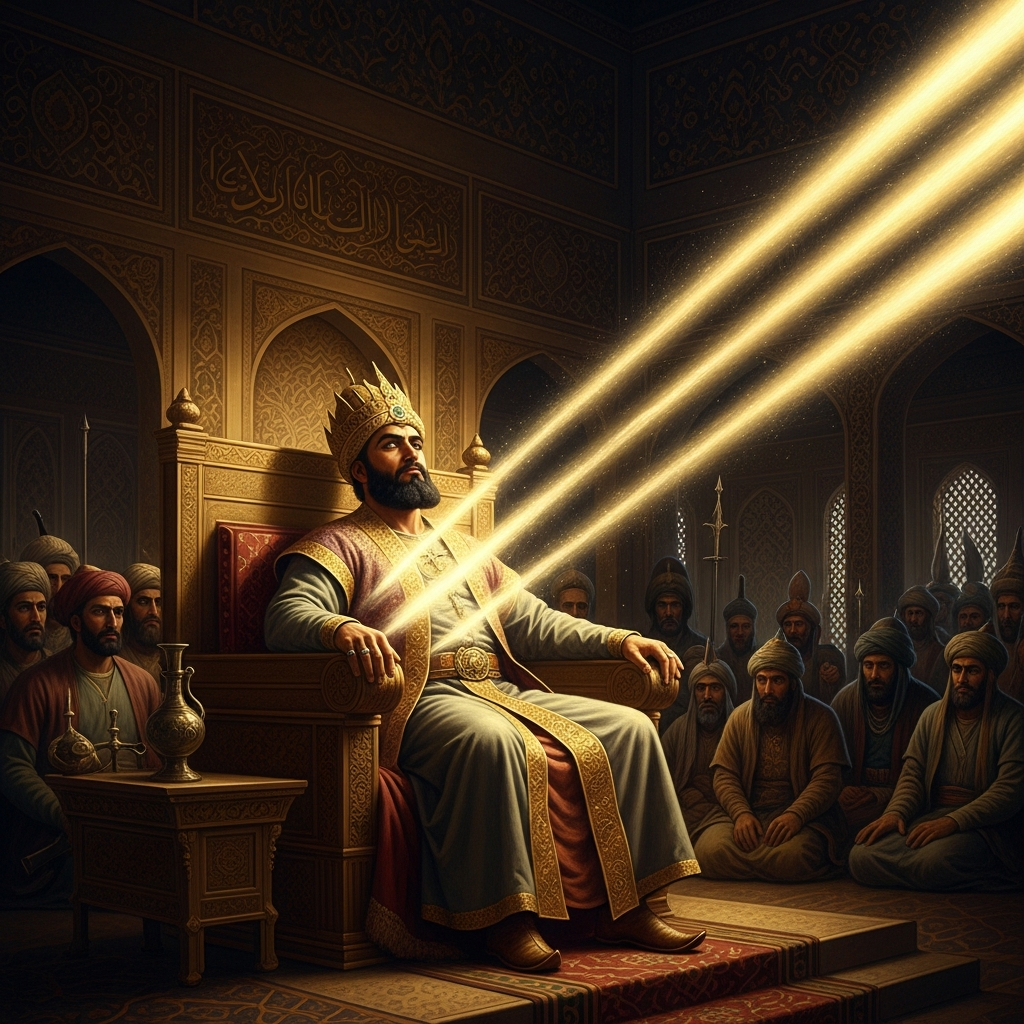
Rostam sent desperate riders to Kay Kavus. The Persian king possessed a medicine — nush darou, a life-renewing potion — that could in some versions of the myth save a man at the threshold of death. The riders rode through the night. Kay Kavus refused to send it; the political calculation of the court, as it so often does in the Shahnameh, overrode every human instinct. A young Turani champion with Rostam’s bloodline was not something Kay Kavus wanted walking around with his father’s loyalties undivided.
The medicine did not arrive.
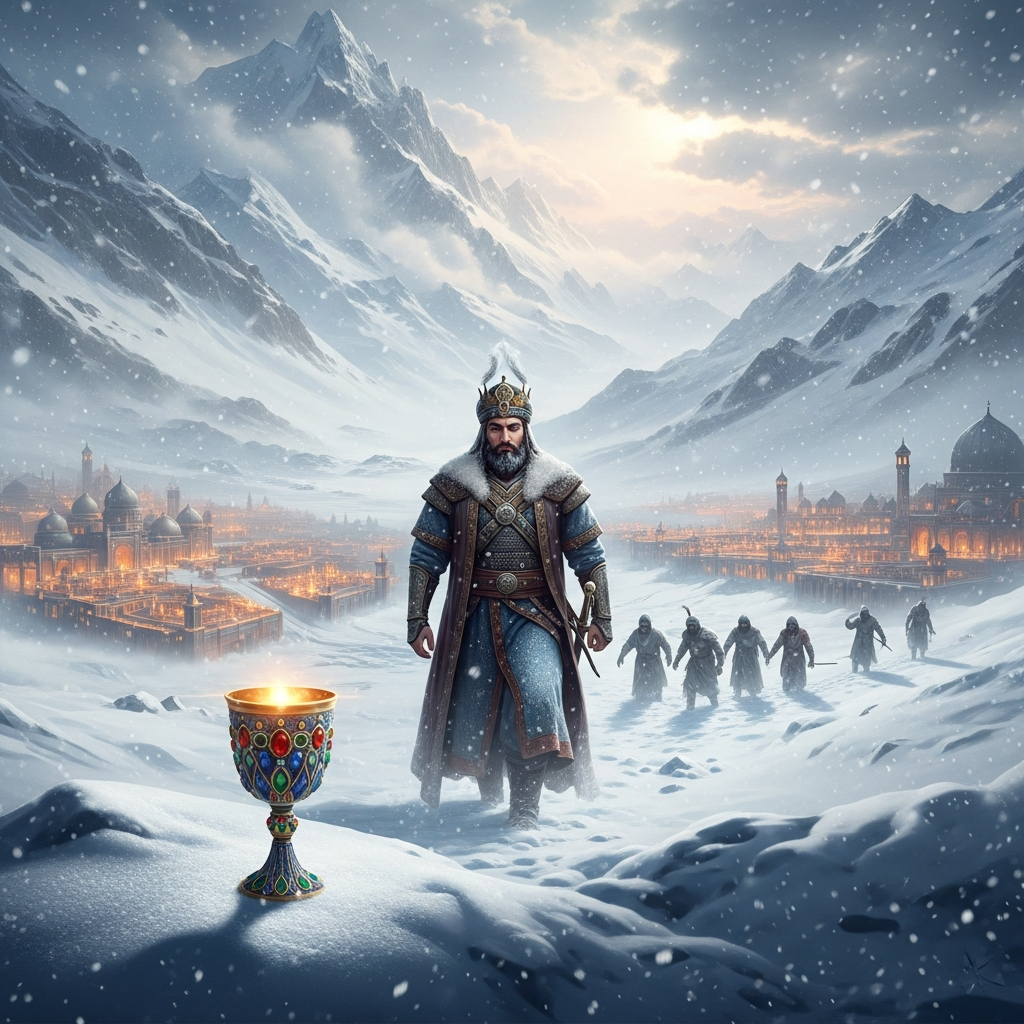
Sohrab’s body was wrapped in the cloth Rostam used for great occasions. Rostam carried his son back to Sistan himself, riding Rakhsh, the horse he had owned longer than most of the men he knew had been alive. He brought Sohrab home to the country where Tahmineh had raised him, and he burned the body according to the rites, and he sat in the ash for seven days.
The Shahnameh is not a comfortable text about the consequences of this grief. Rostam goes on. He fights more battles. He saves Persia more times. He carries Sohrab inside him like a wound that heals cleanly on the outside and never fully closes in the dark. The epic does not offer him a different ending. Fate does not revise itself.
There is a detail that Matthew Arnold, translating the story into English verse in 1853, added from his own imagination: the description of the Oxus at the end of the poem, the river that has watched everything and carries it all northward and away. It is not in Ferdowsi. But it is not wrong.
The Oxus runs.
Echoes Across Traditions
Entities
- Rostam (Rustam)
- Sohrab
- Tahmineh (Sohrab's mother)
- Kay Kavus (the Persian king)

Sources
- Abolqasem Ferdowsi, *Shahnameh* (Book of Kings), c. 977–1010 CE, trans. Dick Davis (Penguin, 2016)
- Matthew Arnold, *Sohrab and Rustum: An Episode* (1853) — influential Victorian retelling
- Jerome Clinton, *The Tragedy of Sohrab and Rostam* (University of Washington Press, 1987)
- Olga Davidson, *Poet and Hero in the Persian Book of Kings* (Cornell University Press, 1994)
- Encyclopaedia Iranica, s.v. 'Sohrab' (online edition)