Al-Khiḍr and the Water of Life
From before history to the present — Khiḍr is immortal and appears across all eras · The world's margins — rivers, crossroads, the Land of Darkness, wherever the lost need guidance
Contents
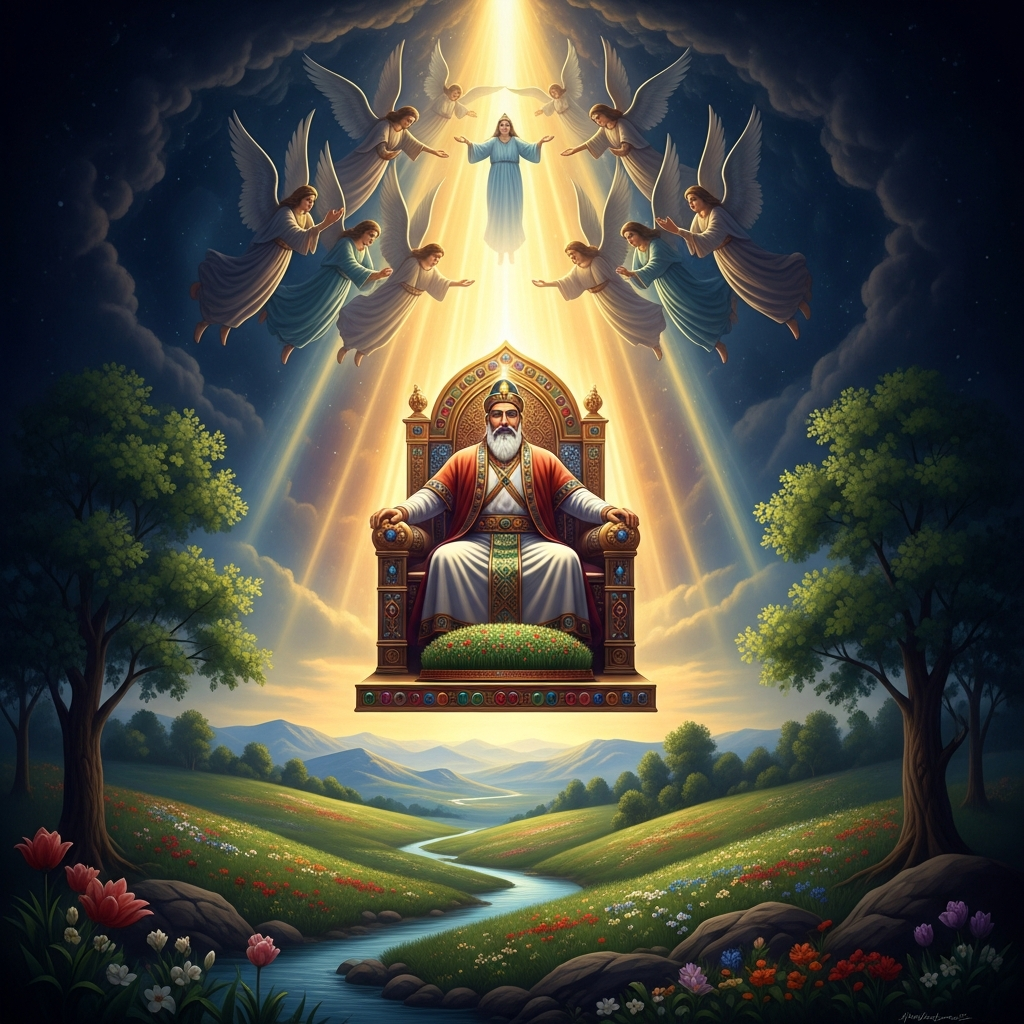
The immortal guide Khiḍr — the Green One, who drank the Water of Life in the Land of Darkness and wanders the world's edges forever — appears to the righteous in crisis, guides the lost, and represents the wisdom that persists at the margins of every tradition.
- When
- From before history to the present — Khiḍr is immortal and appears across all eras
- Where
- The world's margins — rivers, crossroads, the Land of Darkness, wherever the lost need guidance
He is always at the crossing.
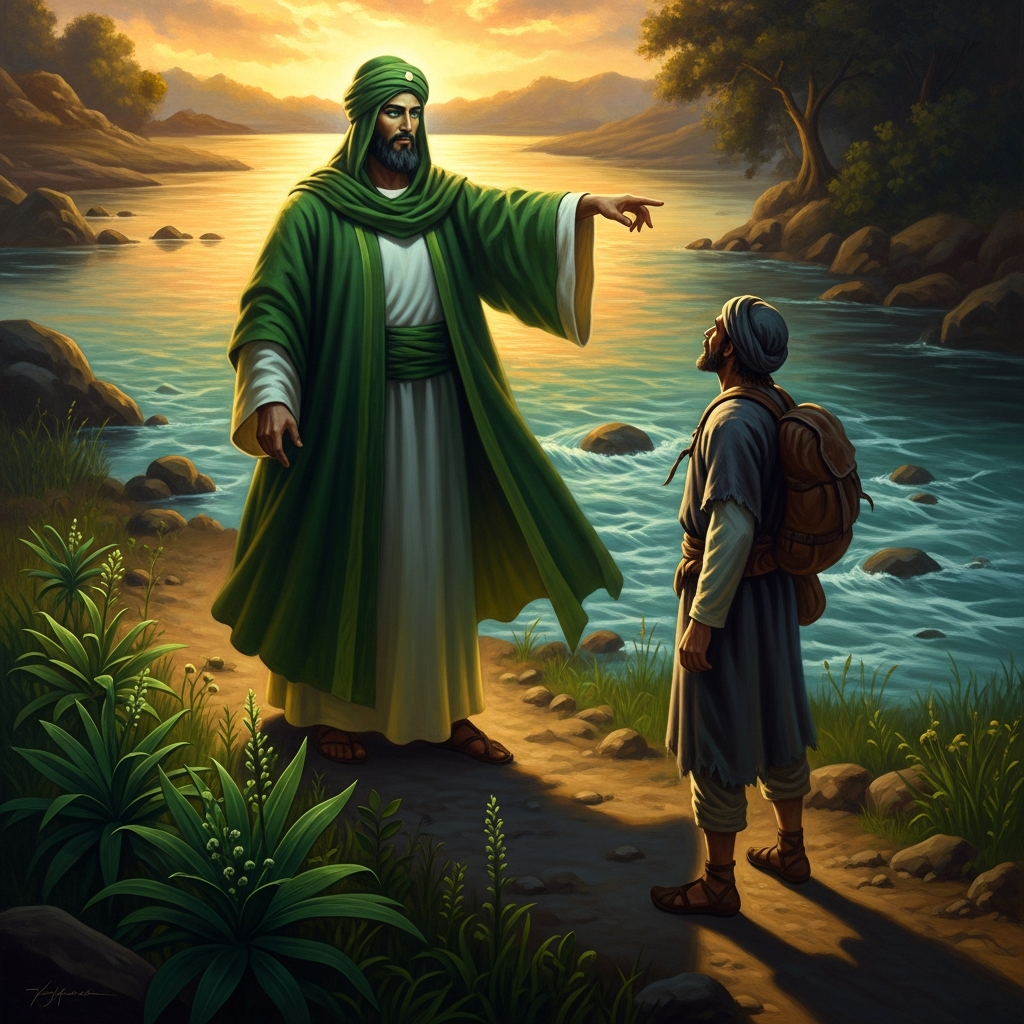
Not every crossing — not the crossroads where nothing has been decided yet, not the place where all paths are still open. The crossroads where the decision is already made and the traveler does not yet know it. The ford where the river is rising. The mountain pass where the weather is turning. The moment in a person’s life when what was working is no longer working and what should come next is not yet visible.
There, a stranger appears.
His name is Khiḍr — from the Arabic root meaning green, verdant, the color of living plants. He appears in different forms: sometimes as a young man, sometimes as an old one, sometimes as a traveler with a staff, sometimes as a fisherman, sometimes as a figure of light who is gone before the encounter can be analyzed. What he always brings is the thing the person in the crossing needs: directions that make no sense until the traveler has taken them, advice that seems cruel until its results are clear, silence that contains what all the speaking has failed to provide.
The Quran gives him his most famous encounter.
Moses, in Sura 18, insists on accompanying the servant of God (unnamed in the Quran, identified as Khiḍr in the commentarial tradition) on his journeys, despite the servant’s warning: you will not be able to be patient with me, and how can you be patient about things which your knowledge does not encompass? Moses insists. The servant agrees, on one condition: Moses must not question until the servant himself explains.
Three incomprehensible actions follow.
The servant damages a boat belonging to poor fishermen. He kills a young man. He repairs a wall in a town that refused them hospitality. Each time Moses cannot hold his patience and asks: why?
At the end, the servant explains.
The boat was damaged because a king was seizing all seaworthy vessels and the small damage would save the family’s livelihood. The young man was killed because he was corrupting his righteous parents with his wickedness and his death would be replaced by a better child. The wall was repaired because beneath it was a treasure belonging to two orphaned children, and if the wall had fallen their guardians would have taken it.
The servant’s knowledge extends beyond Moses’ into the hidden patterns of consequence that are invisible to the human present but apparent to the divine perspective.
Moses cannot stay in that perspective. No human can.
Khiḍr moves on.
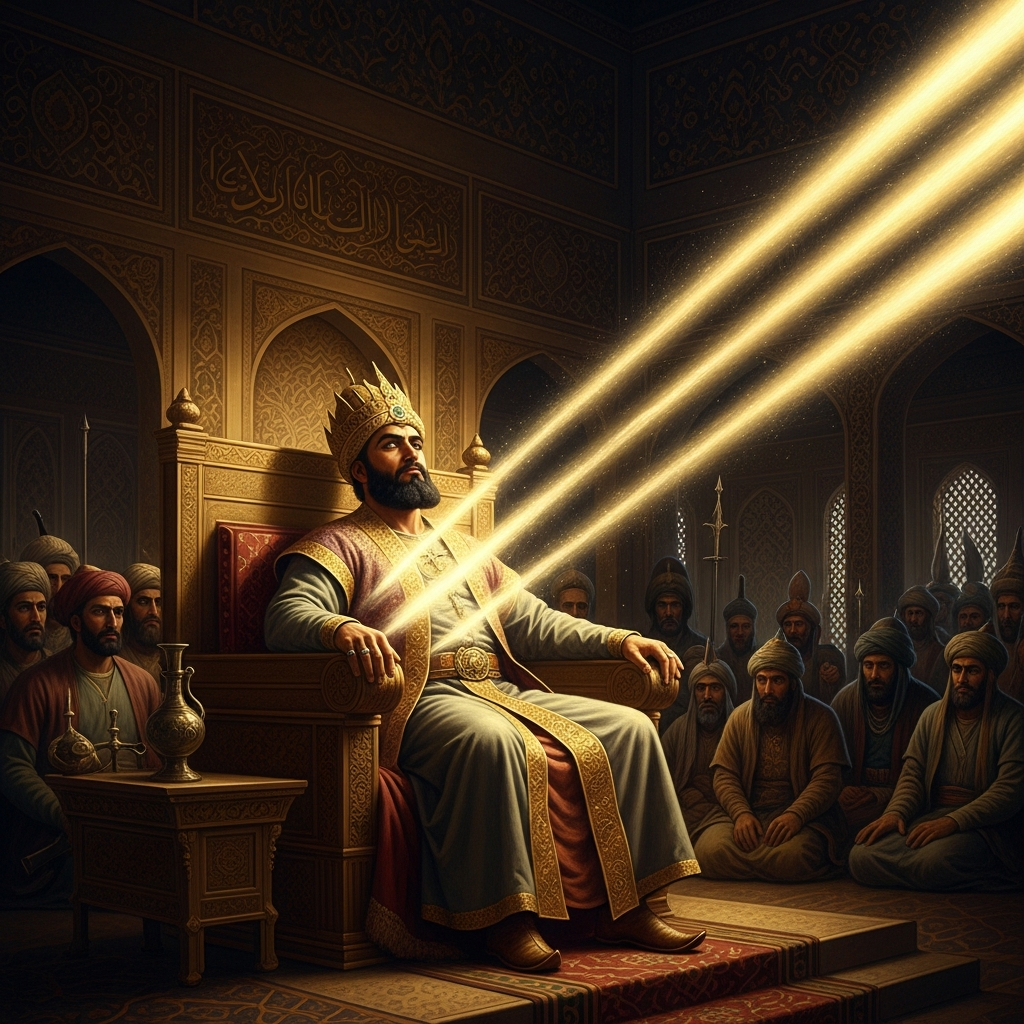
He is in the Persian tradition the guide who appears to Iskander in the Land of Darkness — who finds the Water of Life and drinks it while Iskander passes it by. He is the figure who appears in Sufi stories to the mystic who has reached the limit of what formal religious knowledge can provide, and who takes the mystic one step further.
He is the margin’s representative.
Every tradition has its formal center and its margin — the institution and the wanderer who has gone beyond the institution’s ability to contain what he has found. Khiḍr is the patron of the margin: the saint whose sainthood cannot be verified by any formal process, the guide whose guidance cannot be institutionalized, the wisdom that is only available outside the building.
He is said to appear most readily to the genuinely lost.
Not the lost who are merely confused about directions — any map can help them. The lost who have reached the edge of what their tradition, their community, their self-knowledge can tell them, and who find themselves at the ford with the water rising and no certainty about which bank they should be standing on.
He appears.
He says something that makes no sense.
They follow it anyway.
Later, when the consequences have worked themselves out, they understand.
He is gone by then.
He is already at the next crossing.
Echoes Across Traditions
Entities
- Al-Khiḍr (Khizr)
- Moses
- Iskander
- Elijah
- Water of Life
Sources
- Quran, Sura 18 (Al-Kahf), 60–82 — the unnamed 'servant of God' who guides Moses
- Nizami Ganjavi, *Iskandarnāma*, on Khiḍr and the Water of Life
- Annemarie Schimmel, *Mystical Dimensions of Islam* (UNC Press, 1975)
- Patrick Franke, *Begegnung mit Khidr* (Steiner, 2000)