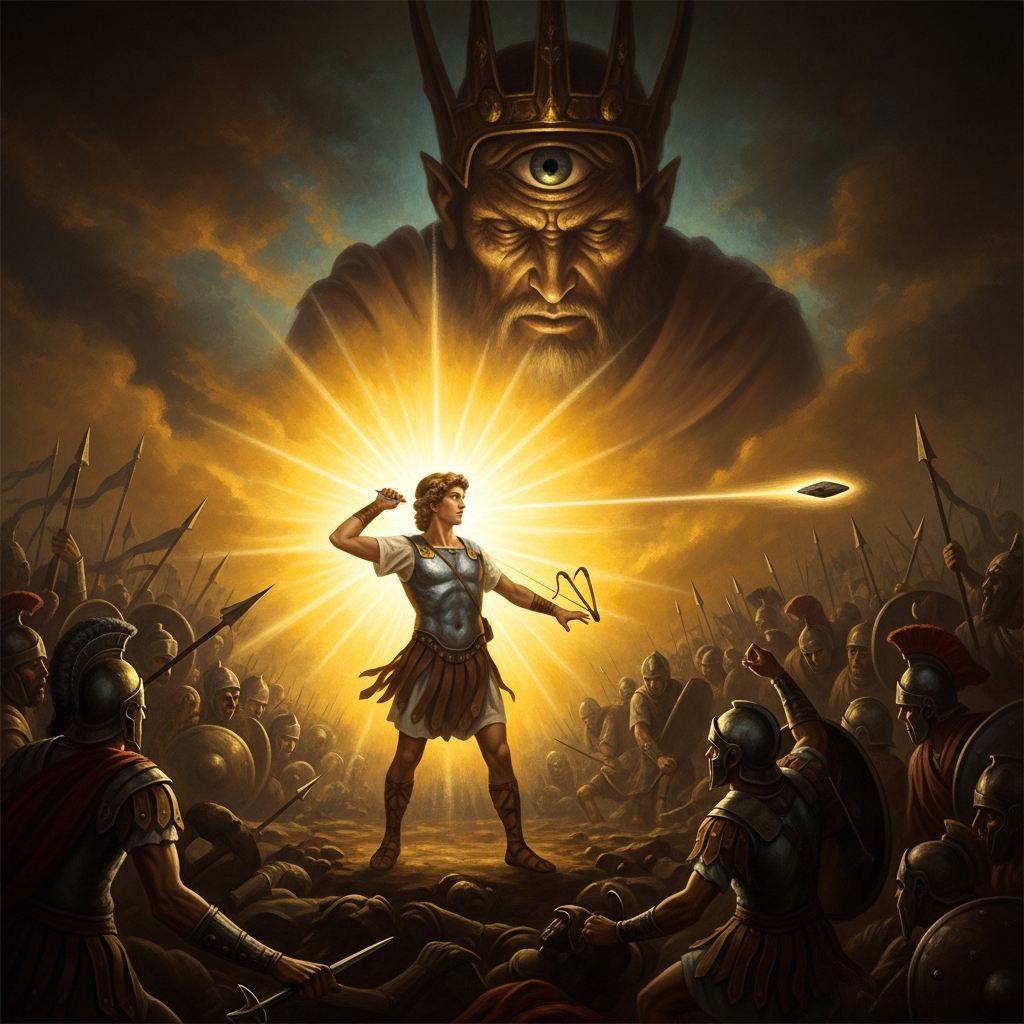
Lugh Kills Balor at Mag Tuired
mythic prehistory — the Second Battle of Mag Tuired · The plain of Mag Tuired, County Sligo, Ireland
Contents
At the Second Battle of Mag Tuired, the god of light faces his own grandfather — the Fomorian king whose single open eye destroys armies — and fulfills the prophecy that a grandson would kill him by driving a stone through the poisonous eye before it fully opens.
- When
- mythic prehistory — the Second Battle of Mag Tuired
- Where
- The plain of Mag Tuired, County Sligo, Ireland
The prophecy is the cause.
When Balor of the Fomorians is young, a druid tells him that he will be killed by his own grandson. This is the kind of prophecy that men with power try to prevent. Balor’s solution is thorough: he imprisons his only daughter Ethniu in a crystal tower on Tory Island, where no man can reach her. If no man reaches Ethniu, no grandchild is born. If no grandchild is born, the prophecy cannot be fulfilled.
The prophesied grandson is born anyway.
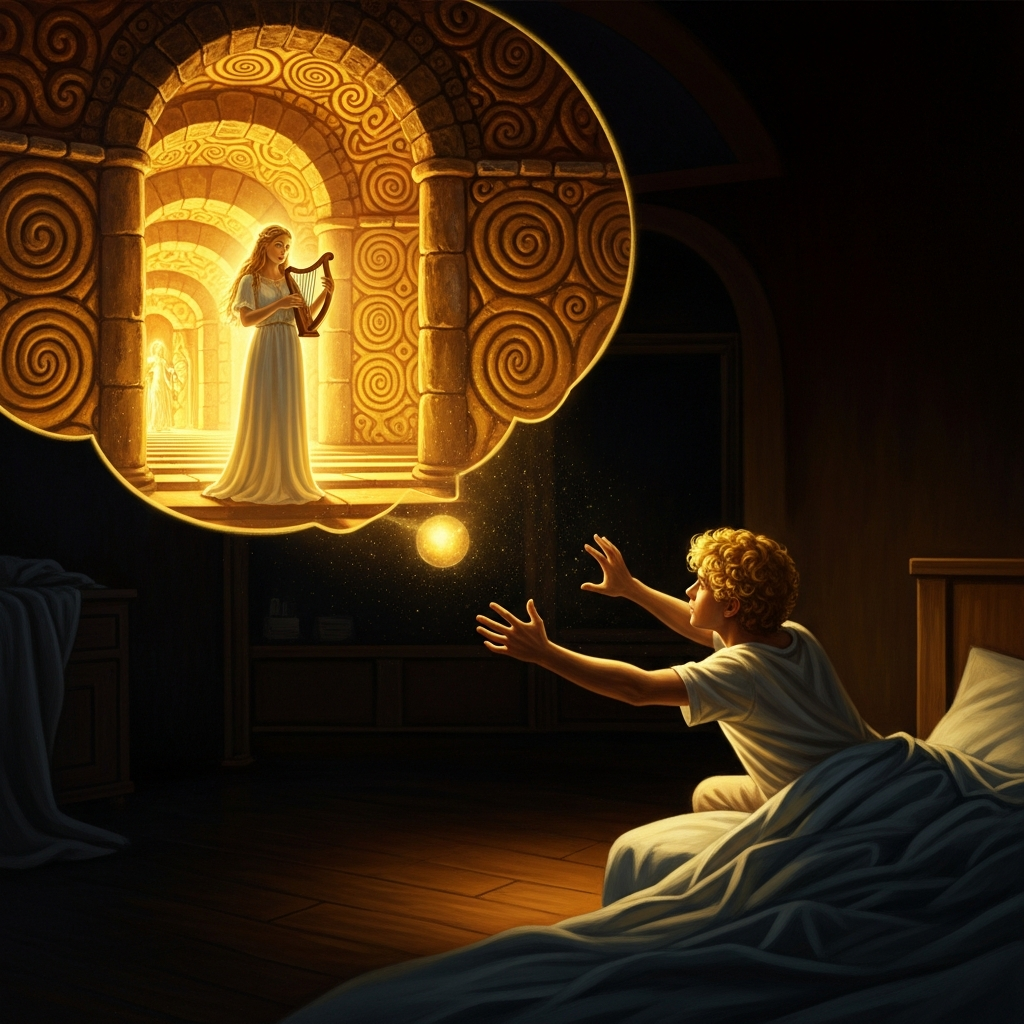
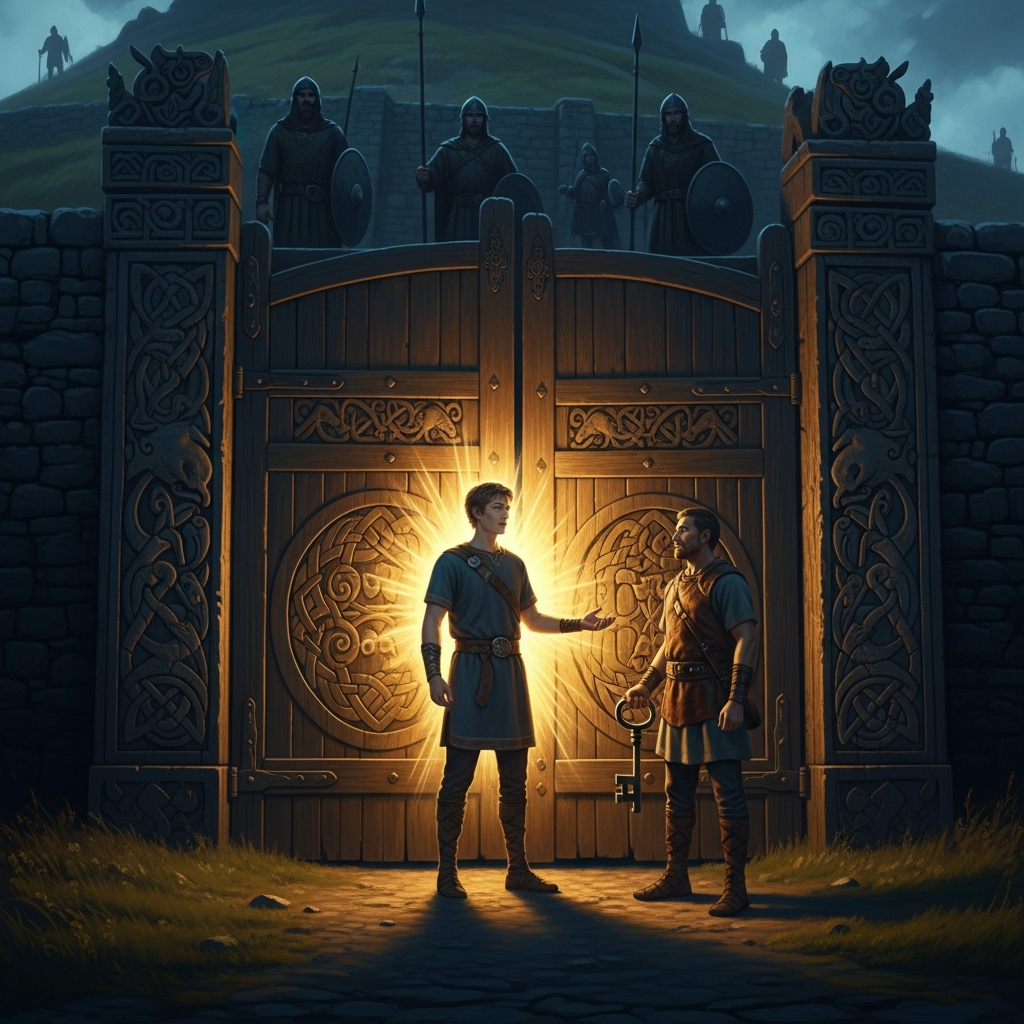
Cian of the Tuatha Dé Danann reaches Ethniu — by disguise, with the help of the druid-woman Birog — and Ethniu bears triplets. Balor takes the infants and drowns them. One child escapes, is rescued by Birog, and is given to the god Manannán Mac Lir to foster. This child becomes Lugh Lámhfhada, the Long-Armed, who arrives at Tara with the light around him that marks a divine being and a future. He is the god of every art, the polymath who walks through the gates of the king’s hall by listing every skill until he names the one no one else holds simultaneously.
The Second Battle of Mag Tuired brings Lugh face to face with Balor.
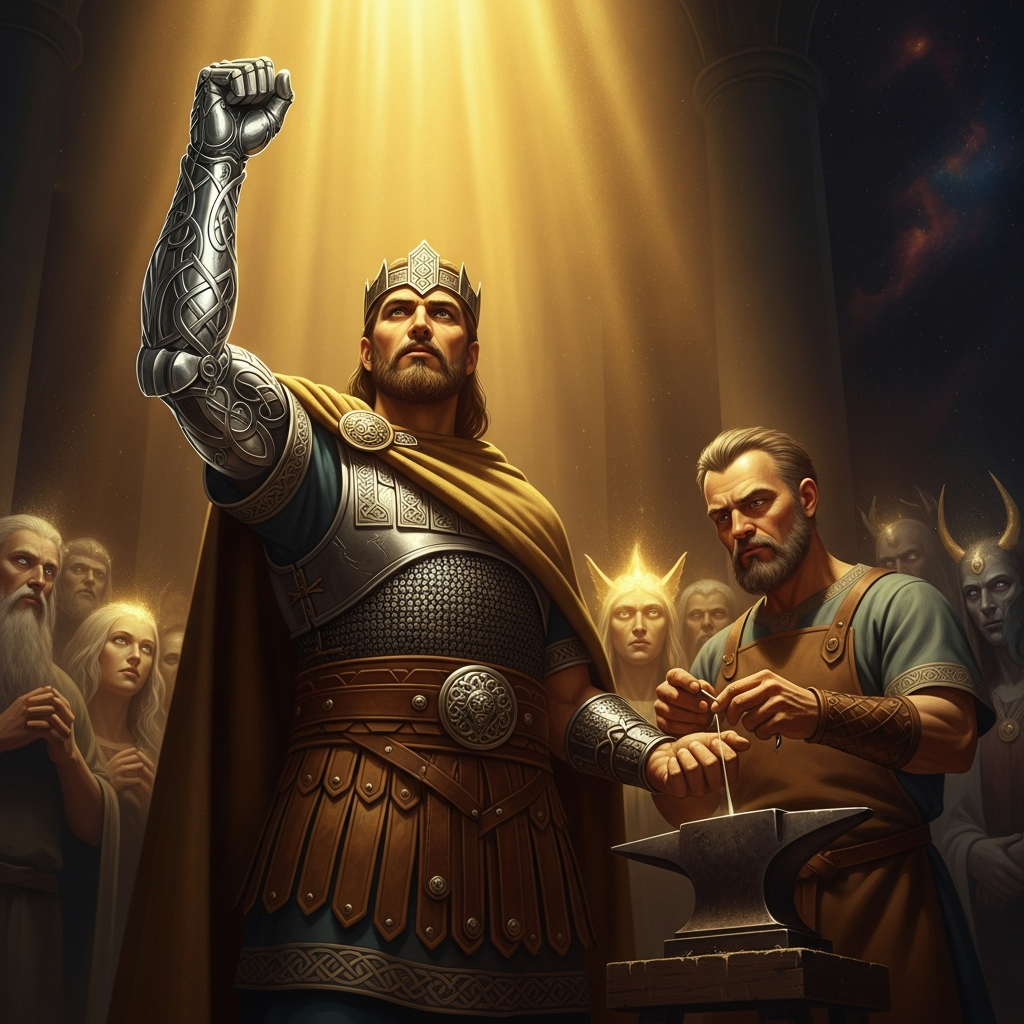
Balor’s eye is a weapon of terrible specificity: it is always closed, covered with seven layers of hide, because the sight of it kills. The story of how it became toxic is preserved in fragments — a cauldron of druid-poison that he looked into as a boy and the fumes rose into his eye and settled there, permanent, waiting for use. The eyelid is so heavy that it requires four men with iron hooks to lift it. When it opens, armies die.
Lugh meets Balor at the center of the battle.
Balor, seeing Lugh across the field, recognizes the grandson the prophecy named. He calls to his men to lift the eyelid. There is still confidence in this: he has killed men with the eye before, he will kill this one, the prophecy will be disproved.
The lid begins to lift.
Lugh’s sling-stone hits the eye before it fully opens.
The stone drives through the eye socket and carries the eye out through the back of Balor’s head. The eye, torn from its facing direction, falls among the Fomorian host behind Balor and the gaze sweeps across them as it goes and the Fomorians die of their own king’s eye.
The Fomorians break. The battle ends. The Tuatha Dé Danann hold Ireland.
What the story turns on is the timing. If Balor had opened the eye a moment sooner — if Lugh had taken an extra instant to aim — the prophecy would have gone the other way. The self-fulfilling disaster that the prophecy describes is only prevented by the speed of the god of light acting before the darkness can fully deploy itself.
This is what light does. It moves faster than what it opposes. The eye that had never opened fully, the poison that had never fully worked, the grandfather who had never fully killed the boy — everything Balor was built on was partial, and partial darkness cannot hold against a full strike.
Lugh closes the eye with a stone the size of his fist and walks back through the field of his victory. The prophecy is fulfilled. Balor is dead. The poison that lived in the Fomorian king’s eye has turned, at last, on the Fomorians themselves. This is the way prophesied grandsons tend to work: with the old man’s own instrument, pointed in the direction the old man never considered.
Echoes Across Traditions
Entities
- Lugh Lámhfhada
- Balor of the Evil Eye
- Ethniu
- Cian
- The Tuatha Dé Danann
- The Fomorians

Sources
- Elizabeth Gray, trans., *Cath Maige Tuired: The Second Battle of Mag Tuired* (Irish Texts Society, 1982)
- Proinsias Mac Cana, *Celtic Mythology* (Hamlyn, 1970)
- John Carey, *A Single Ray of the Sun: Religious Speculation in Early Ireland* (Celtic Studies Publications, 1999)