The Battle of Mag Tuired
mythic prehistory — the Second Battle of Mag Tuired, the defining battle of the Irish mythological age · Mag Tuired (The Plain of Pillars), County Sligo, Ireland
Contents
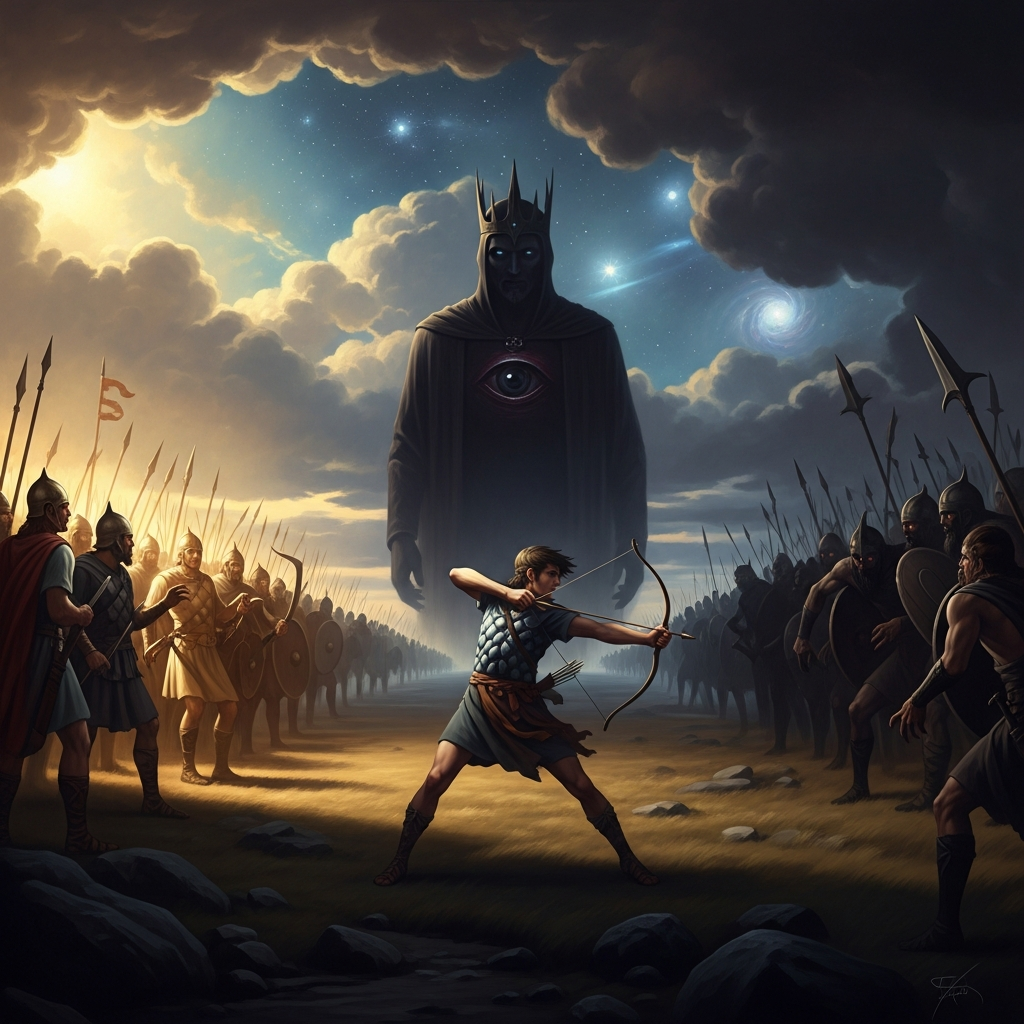
In the Second Battle of Mag Tuired, the gods of light and art — Lugh the polymath, the Dagda the abundant, Morrígan the fate-weaver — march against the Fomorians, the forces of chaos and dark, and the outcome determines whether Ireland will be a world fit for human life.
- When
- mythic prehistory — the Second Battle of Mag Tuired, the defining battle of the Irish mythological age
- Where
- Mag Tuired (The Plain of Pillars), County Sligo, Ireland
The plain of Mag Tuired is called the Plain of Pillars because of the standing stones that covered it after the battle.
Every warrior who fell there had a stone raised over him. The plain was covered with stones when it was done, and the stones are still there, the markers of the battle that established the ordered world of Celtic Ireland — the world in which the forces of craft and art and abundance hold against the forces of chaos, darkness, and entropy, at least for now, at least until the Morrigan’s prophecy comes due.
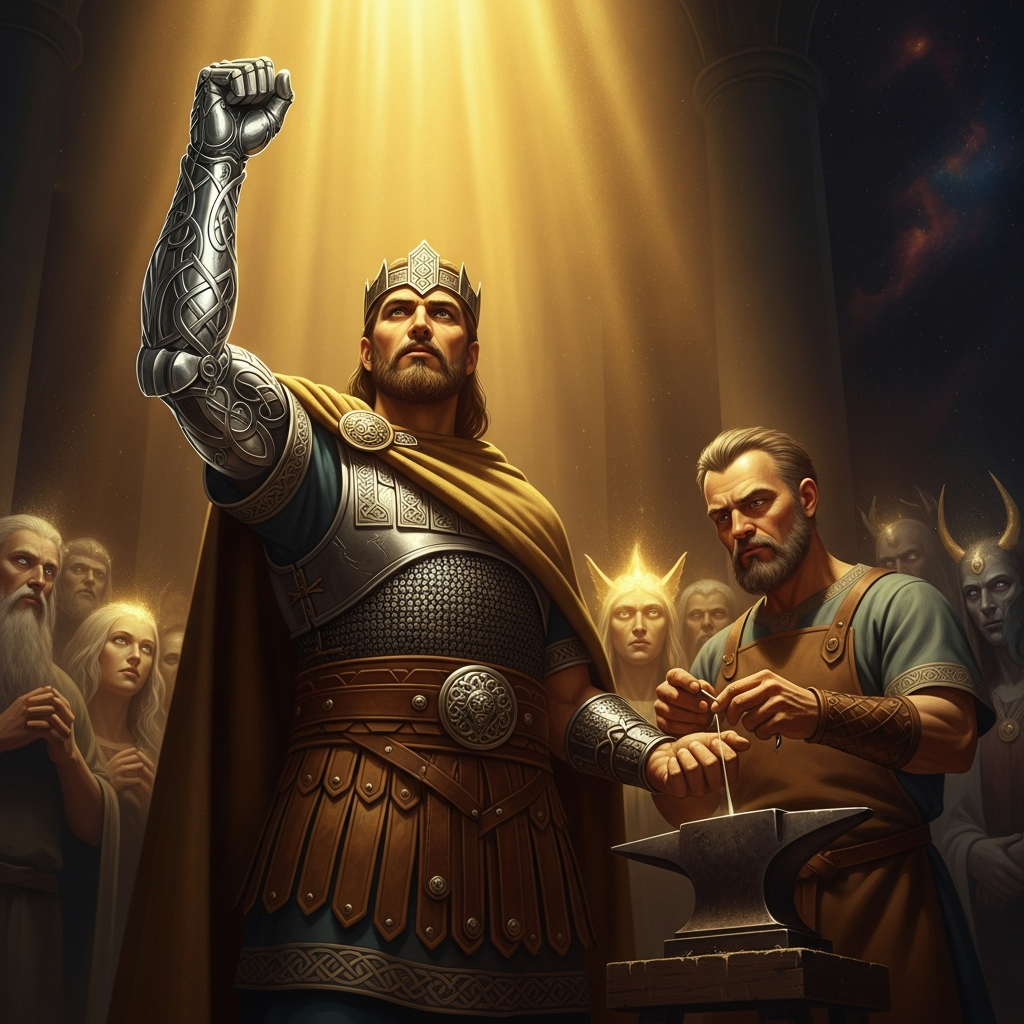
The preparations are catalogued in the oldest of Irish texts. Lugh goes to each craftsman before the battle and asks what they will contribute. The smith says: every spear he forges will be ready without further work, every wound it makes will be fatal. The physician says: every warrior who falls will rise healed the next morning if they are brought to his spring. The cup-bearer says: the armies will not want for drink. The druid says: the Fomorians’ urine will become stone, and the Tuatha Dé Danann’s wounded will be completely healed.
This is the battle plan: not tactics but craft, the systematic assembly of every specialty working together under the direction of the one man who holds all of them in mind simultaneously.
Lugh devises. The Dagda fights. The Morrigan holds the plain with the specific authority of a woman who has consecrated herself to its outcome: she makes love with the Dagda at the ford before the battle begins, and the coupling is the sovereignty rite that binds the earth-force and the battle-force together for what is coming.
Nuada dies early in the fighting. Balor’s eye sweeps the field and Nuada falls. This is the loss that makes the battle’s outcome uncertain: the king of the Tuatha Dé Danann is gone. Lugh takes the field.
The killing of Balor is the pivot — the sling-stone through the evil eye, the eye falling backward among the Fomorians, the death of the Fomorian king at his own grandson’s hand, the prophecy completing itself through the attempt to prevent it. The Fomorians break.
Bres, the Fomorian-descended king who had oppressed the Tuatha Dé Danann for seven years before the battle, is captured alive. He bargains for his life with information: he tells them the secrets of optimal plowing, sowing, and harvesting — the agricultural knowledge that transforms the land from a battleground into a provider. His life is spared for this knowledge.
Even in victory the Irish mythological imagination is practical: the defeated enemy’s knowledge is worth more than his death. What you need to eat this winter matters more than the satisfaction of revenge.
The Morrigan speaks twice from the peaks of Ireland when it is over: once to announce the victory, once to prophesy the dissolution of everything the victory established. Both speeches are true. The plain of pillars, covered in standing stones, records both of them.
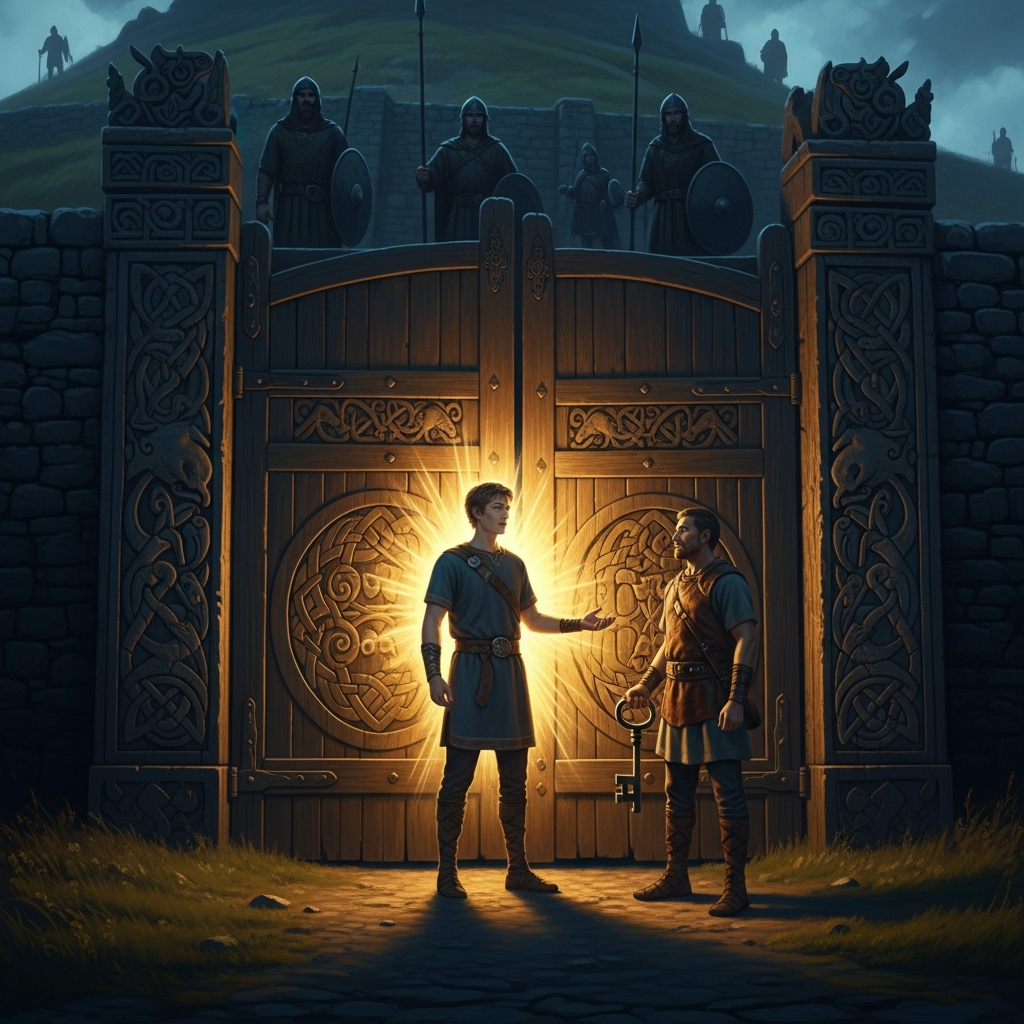
Lugh walks the field of Mag Tuired in the evening after the battle. He is the light-god, the polymath, the man who came to the gates of Tara and asked to be admitted on the basis of no single skill but all of them together. He has done what a polymath does in a war: held the overall shape of the thing in mind when every specialist could see only their part of it.
The plain is full of stones. The stones are standing. The world is ordered, temporarily, by the victory of the craftsmen.
Echoes Across Traditions
Entities
- Lugh Lámhfhada
- The Dagda
- The Morrigan
- Balor of the Evil Eye
- Nuada
- Indech
- The Tuatha Dé Danann
- The Fomorians


Sources
- Elizabeth Gray, trans., *Cath Maige Tuired: The Second Battle of Mag Tuired* (Irish Texts Society, 1982)
- John Carey, *A Single Ray of the Sun: Religious Speculation in Early Ireland* (Celtic Studies Publications, 1999)
- Proinsias Mac Cana, *Celtic Mythology* (Hamlyn, 1970)