Mani and His Twin Angel
Mani born 216 CE; first revelation c. 228 CE; public teaching from 240 CE; executed 274–277 CE · Mesopotamia (Seleucia-Ctesiphon, Babylonia); the Sassanid Persian Empire; spreading to China, Rome, North Africa
Contents
Mani, the 3rd-century prophet of Manichaeism, received his first revelation at age twelve from an angel he called 'al-Taum' — his Twin. The Twin returned when Mani was twenty-four and told him to go public with his teaching. Mani understood himself to be the Paraclete — the Comforter promised by Jesus — and also the final prophet after Zoroaster, the Buddha, and Jesus. He claimed to correct the errors of all three. He painted his own revelations. He was executed by the Zoroastrian high priest Kartir by being flayed or crucified. His religion survived for a thousand years.
- When
- Mani born 216 CE; first revelation c. 228 CE; public teaching from 240 CE; executed 274–277 CE
- Where
- Mesopotamia (Seleucia-Ctesiphon, Babylonia); the Sassanid Persian Empire; spreading to China, Rome, North Africa
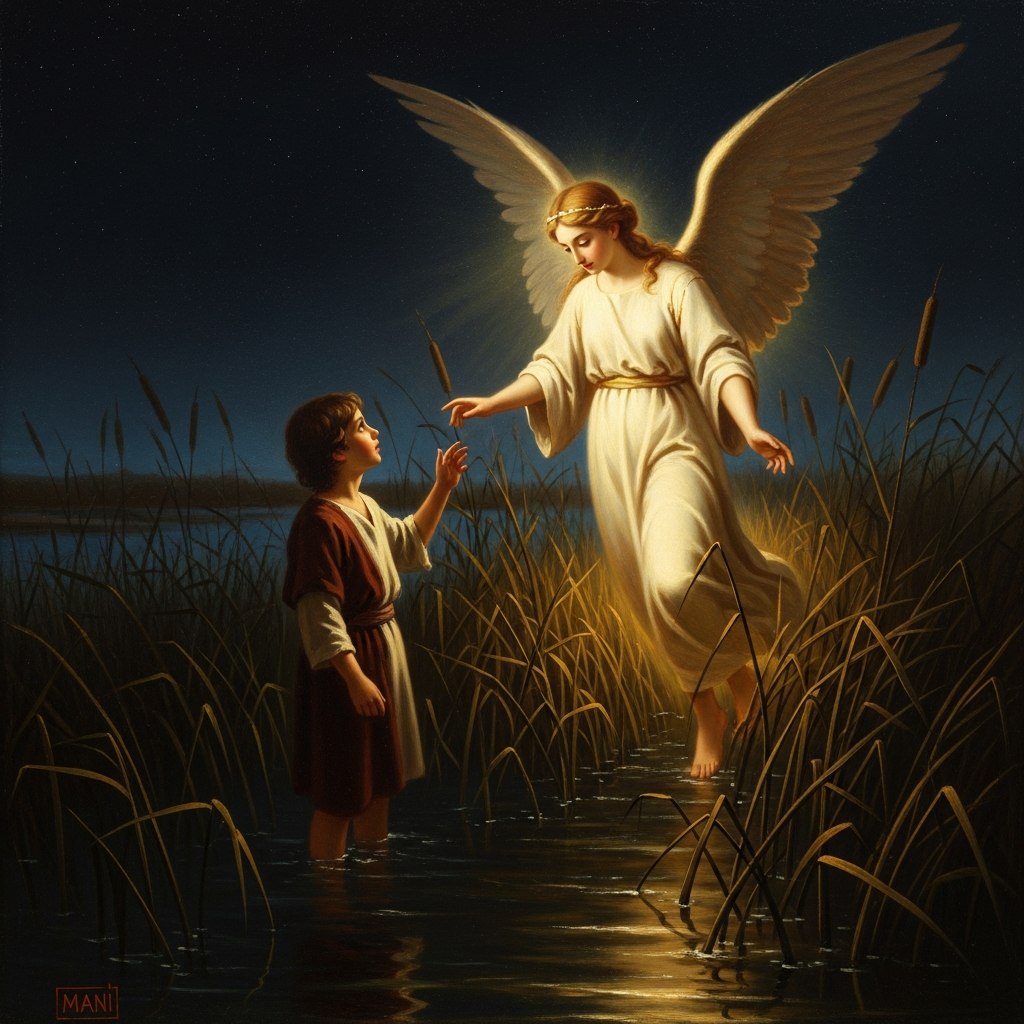
He was twelve years old when the angel first came.
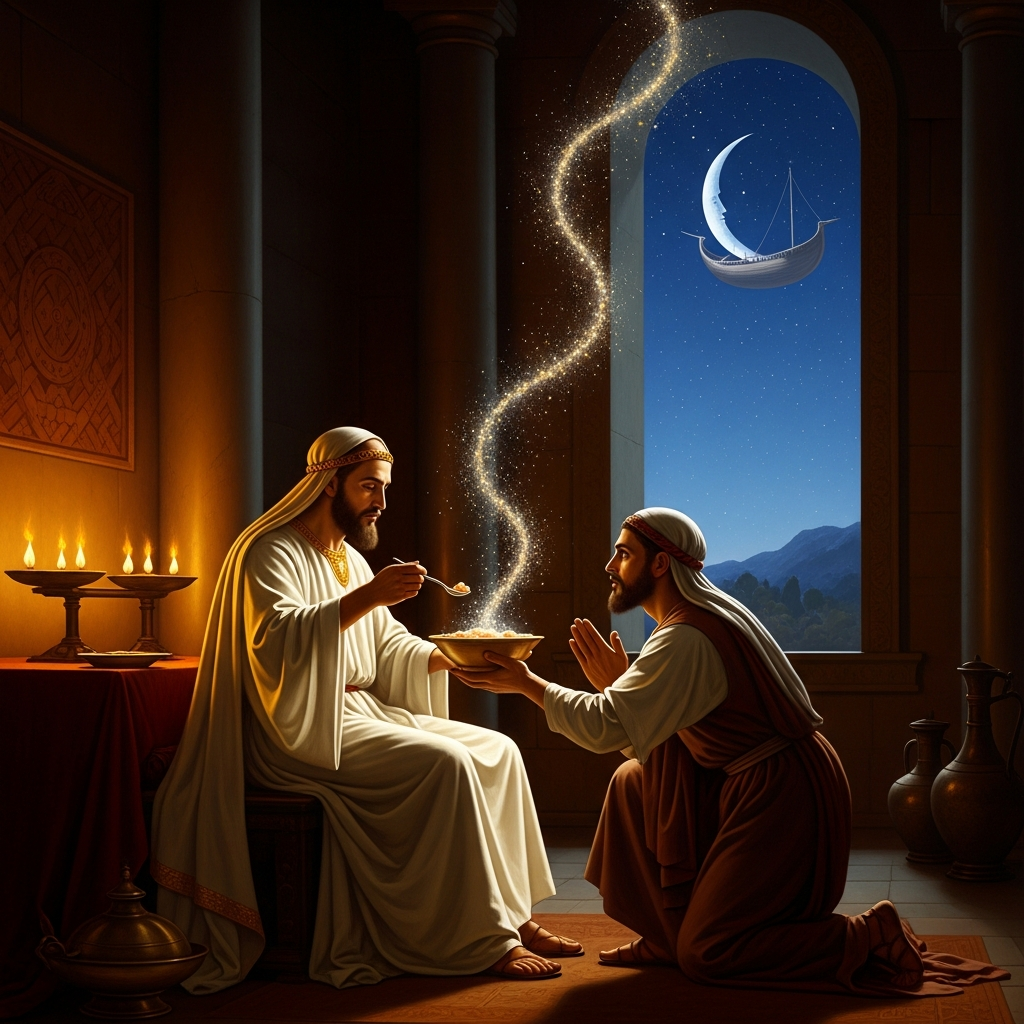
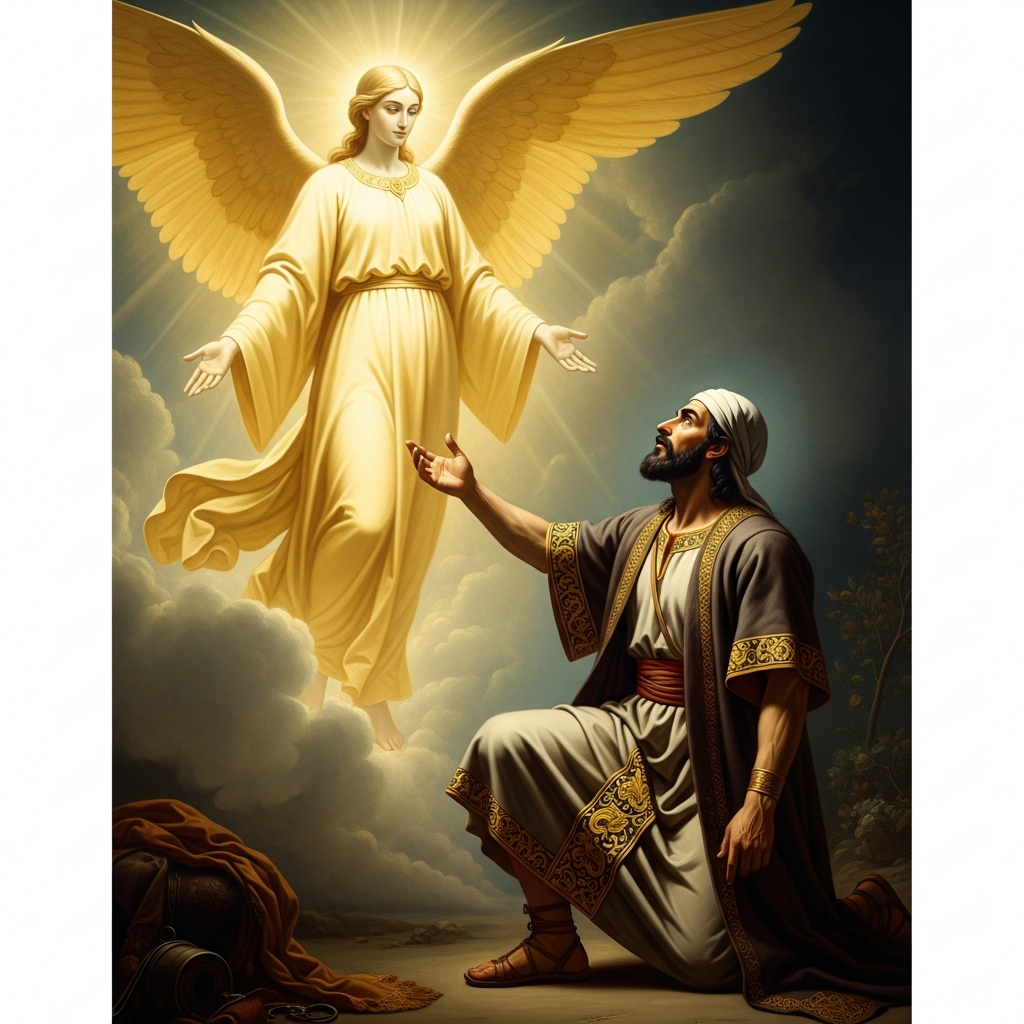
Mani — born in 216 CE in southern Babylonia to a father who had joined a Jewish-Christian baptismal community called the Elkasites — was living in that community when al-Taum appeared. The name means simply the Twin. In Mani’s own account, preserved in the Cologne Mani Codex, the Twin identified itself as Mani’s heavenly counterpart — the divine portion of his nature that had been waiting in the World of Light while the earthly portion lived in a body. The Twin told him: Do not yet come out openly. Your time has not yet come.
Mani kept the revelation for twelve years.
He lived in the Elkasite community. He observed their practices — ritual washing, vegetarian diet, careful purity regulations — and found them wrong. The Elkasites, he concluded, had distorted the original teaching of the prophets before them. They had made religion into a set of external observances when the real teaching was about the Light trapped in matter and the path by which it could return. He did not say this. He waited.
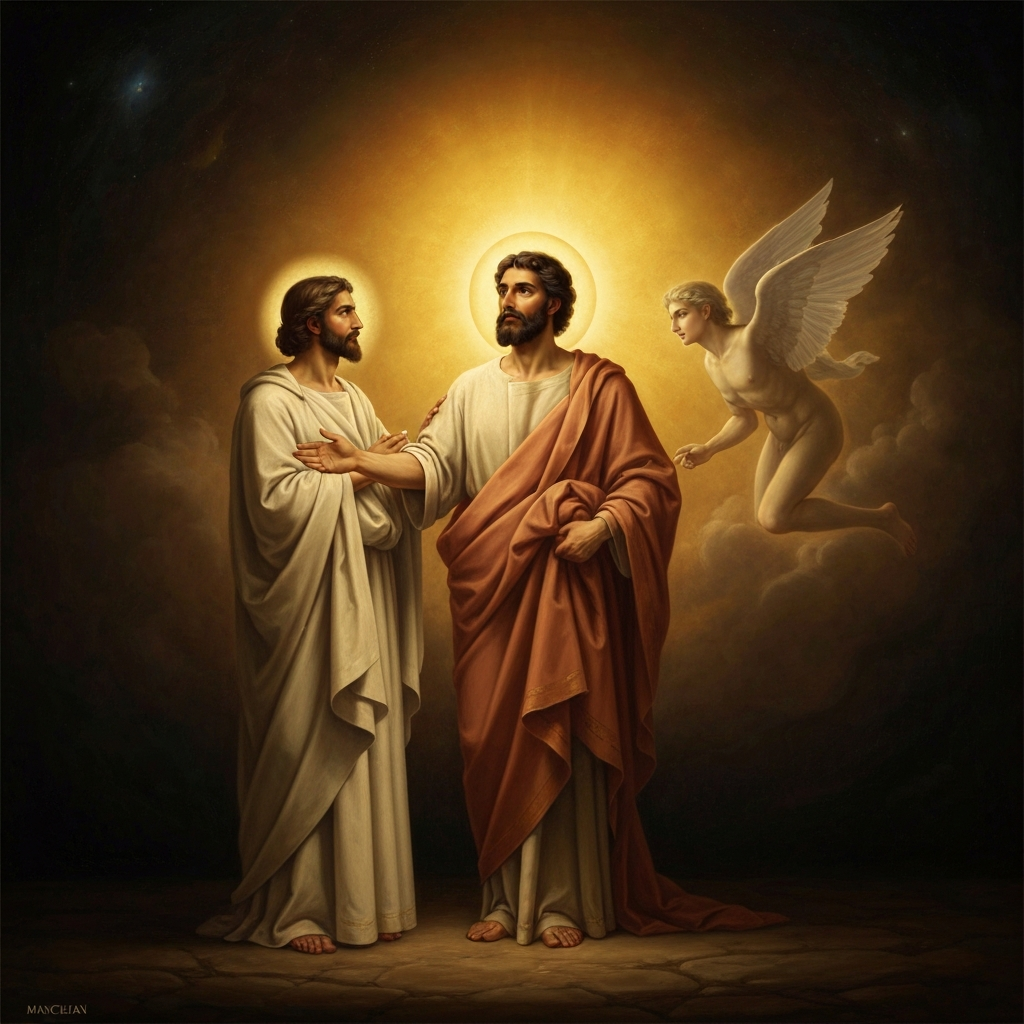
The Twin came again when Mani was twenty-four.
The year was 240 CE. The message this time was explicit: Now the time has come. Go public. Proclaim what I have given you. Mani left the Elkasite community. He preached first in the Sassanid court, where he found a patron in Crown Prince Shapur, who would become Shapur I — one of the great emperors of the Sassanid dynasty, a man who was expanding his empire in every direction and who recognized in Mani’s universal teaching something useful for a universal empire.
Shapur gave Mani freedom to travel and preach throughout the empire. For thirty years, under imperial protection, Manichaeism spread: through Persia, into Central Asia, west into the Roman Empire, east toward India. Mani himself traveled to India, where he encountered Buddhist ideas that he incorporated. He traveled to the edges of the empire and saw the diversity of the world’s religions.
His conclusion was systematic: every previous prophet — Zoroaster, the Buddha, Jesus — had received a genuine revelation but had transmitted it only to their own people, in their own language, and their teachings had therefore been distorted by the communities that preserved them. Mani would be different. He would write his own holy books himself, in his own lifetime, in multiple languages, with illustrations, to prevent the corruption that had overtaken every earlier revelation.
The cosmology Mani revealed is the most comprehensive dualist system ever constructed.
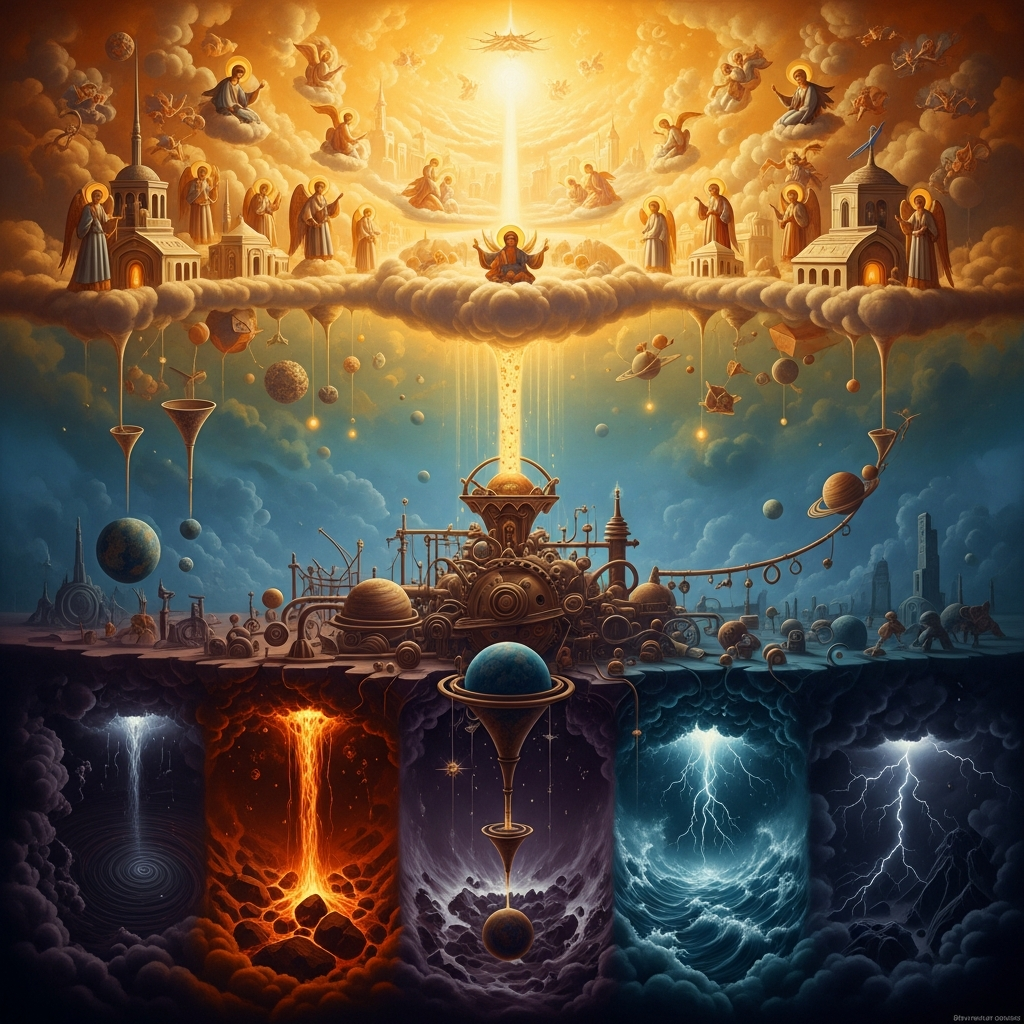
At the beginning, two eternal principles existed separately: the Realm of Light and the Realm of Darkness. The Realm of Light was ruled by the Father of Greatness; the Realm of Darkness by the Prince of Darkness, also called Matter. There was no conflict between them — until Darkness saw the Light and desired it.
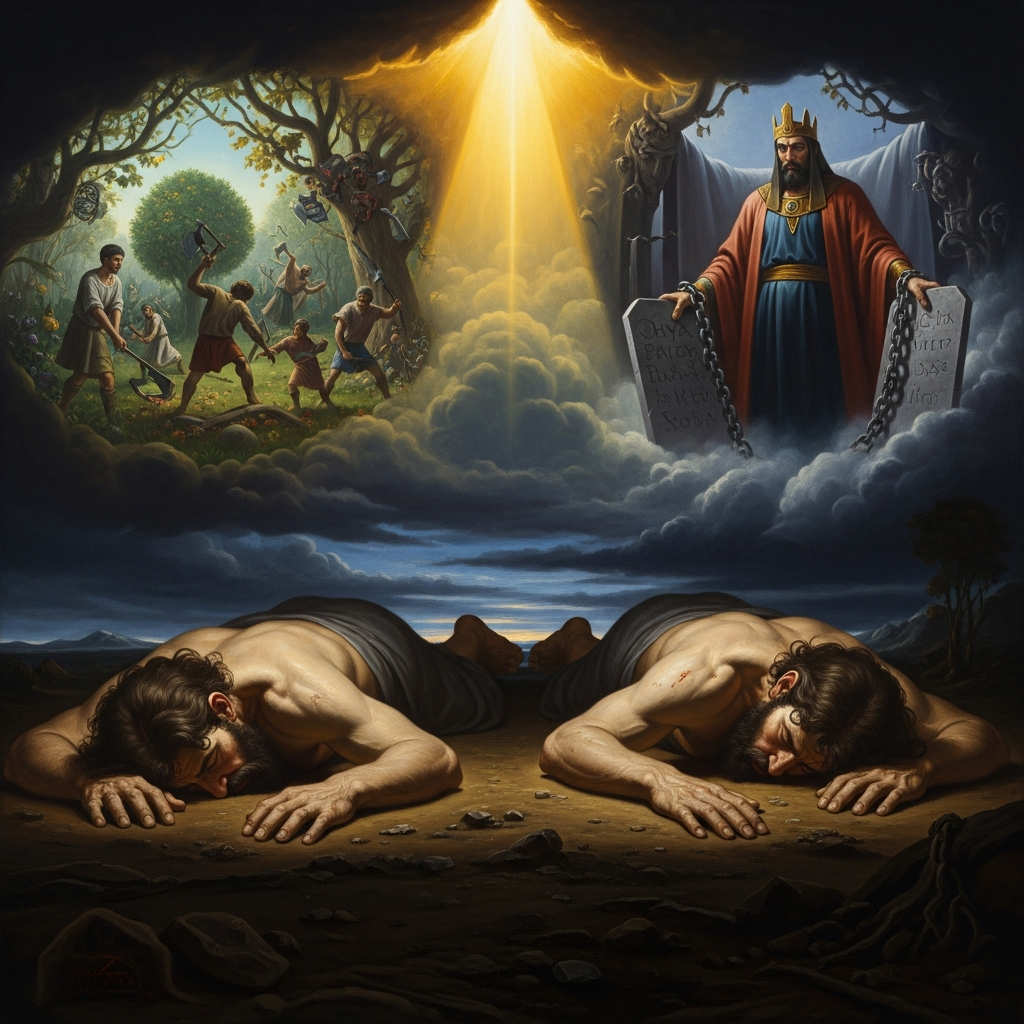
The Father of Greatness, in response, emanated a series of divine beings to defend the Realm of Light. The first, the Primal Man, descended to fight Darkness — and was defeated. He fell into the Realm of Darkness and was devoured. His divine armor — the five elements of Light — was swallowed by the forces of Darkness. The Primal Man lay unconscious in the depths of Matter.
The Father of Greatness then sent a second wave of emanations to rescue the Primal Man and recover the particles of Light. This recovery is still in progress. The universe we inhabit was constructed, according to Mani, specifically as a mechanism for extracting the Light particles from Matter — the sun and moon serve as vessels that carry rescued Light upward; plants absorb Light particles from the earth; animals eat plants and concentrate the Light; humans eat animals and concentrate it further; and the Manichaean elect, through perfect asceticism — no meat, no reproduction, no attachment to the material world — serve as the final extraction stage, releasing Light particles that ascend to the moon.
The human soul is not a spark of divinity trapped in matter by accident. It is a particle of Light embedded in matter deliberately, as part of a cosmic recovery operation.
Mani painted his revelations.
The Arzhang — also called the Erdigan, the Picture Book — was Mani’s illustrated gospel. He understood that sacred images could cross language barriers in ways that text could not, and he created a visual tradition that accompanied every Manichaean missionary community. The images described the cosmology: the Realm of Light, the fall of the Primal Man, the extraction of Light through the living world, the final return.
None of the original Arzhang images survive. We have fragments of later Manichaean manuscript illustration from Central Asia — extraordinarily beautiful illuminated texts found in the Turfan oasis in the early 20th century — and these give some sense of the visual tradition. The figures in the Manichaean images wear white. The faces are individualized. The Light particles appear as points of luminosity embedded in everything.
Mani claimed the ability to paint as a divine gift. He identified himself with the Paraclete — the Comforter promised in the Gospel of John — the one who would come after Jesus and lead humanity into all truth. He also identified himself as the final seal of the prophets: Zoroaster had come for Persia, the Buddha for India, Jesus for the West, and Mani for everyone.
Shapur I died in 270 CE.
His successors were less sympathetic. By 274 CE, Bahram I had taken the throne with the active support of Kartir — the Zoroastrian high priest who had been systematically suppressing every non-Zoroastrian religion in the empire for years. Kartir had already inscribed his achievements on rock faces across Persia, listing the religions he had suppressed: Jews, Buddhists, Brahmins, Nazarenes, Christians, Baptists, Manichaeans.
Mani was summoned to court. He was arrested. The accounts of his death vary — some say he was flayed alive, some say he was crucified, some say he was simply imprisoned and starved. The Manichaean tradition speaks of his martyrdom as a deliberate echo of Christ’s passion, and the parallel was probably intentional on both sides. Kartir needed to kill him publicly enough that the religion would lose its prophetic center.
He miscalculated.
Manichaeism survived its founder by more than a thousand years.
Missionaries carried it west into Egypt and North Africa; it was there that the young Augustine of Hippo joined the Manichaean community for nine years before his conversion to Christianity. Augustine never entirely left the Manichaean framework behind — the problem of evil that obsessed him for the rest of his life is the Manichaean problem, and his solution (evil as privation of good) is a response to the Manichaean answer (evil as positive cosmic principle) that he spent his entire theological career arguing against.
Missionaries carried it east along the Silk Road. By the 8th century, Manichaeism was the state religion of the Uyghur Khaganate in Central Asia. By the 10th century, it had reached China, where it survived as a semi-secret tradition until the 17th century. In southern Fujian province, a temple once devoted to Mani stood until recent decades; the statue inside had been relabeled as a Buddha to survive persecution.
The Twin spoke to Mani at twelve. The mission it described — the universal religion, the painting prophet, the cosmic recovery of trapped Light — spanned a thousand years and ten thousand miles.
The Twin knew the time had come.
Echoes Across Traditions
Entities
- Mani
- Al-Taum (the Twin Angel)
- The realm of Light
- The realm of Darkness
- Shapur I (Sassanid emperor who protected him)
- Kartir (the high priest who killed him)

Sources
- Cologne Mani Codex (*Concerning the Origin of His Body*), c. 400 CE
- Al-Biruni, *The Chronology of Ancient Nations* (1000 CE)
- Samuel N.C. Lieu, *Manichaeism in the Later Roman Empire and Medieval China* (1992)
- Iain Gardner and Samuel N.C. Lieu (eds.), *Manichaean Texts from the Roman Empire* (2004)
- Jason David BeDuhn, *The Manichaean Body* (2000)
- Mary Boyce, *A Reader in Manichaean Middle Persian and Parthian* (1975)