The Elect and the Hearers
From Mani's founding of the religion in 240 CE onward · Throughout the Manichaean world — from Mesopotamia to China
Contents
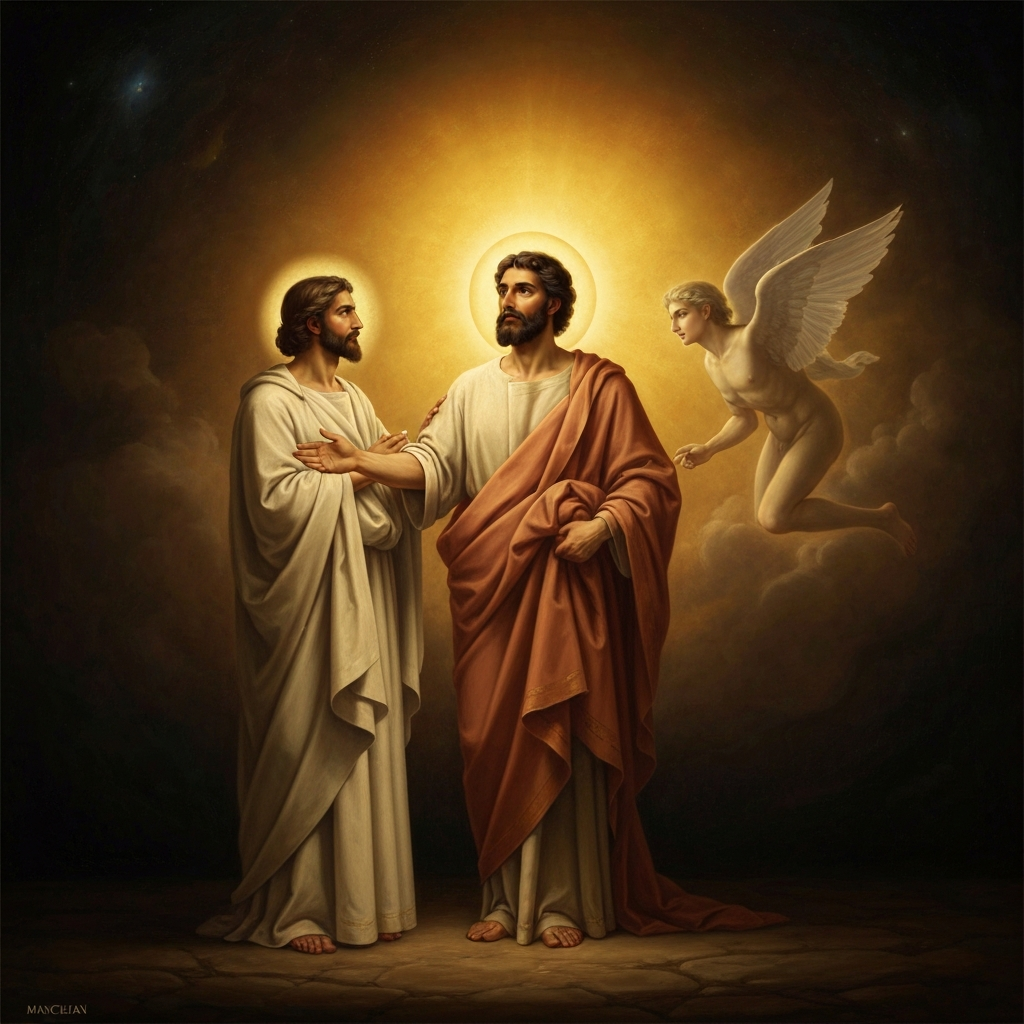
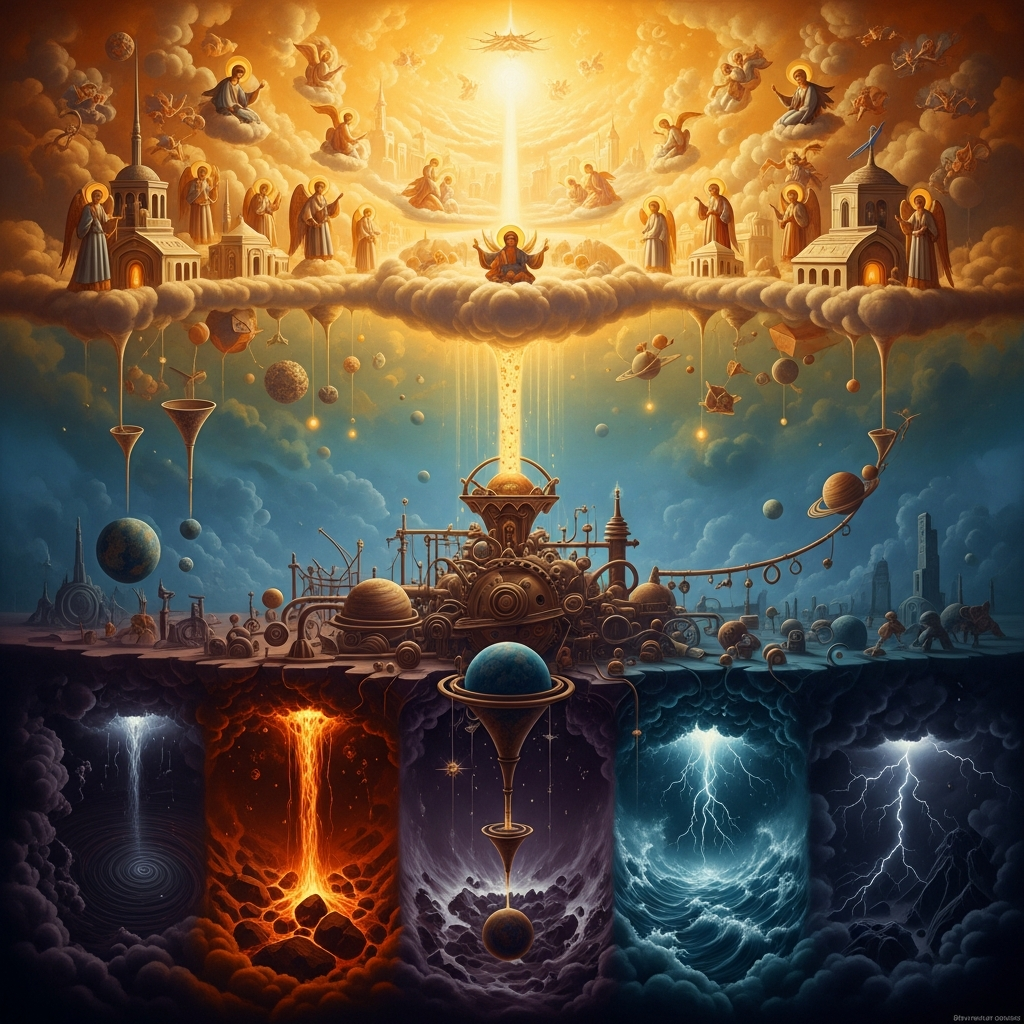
The Manichaean community is divided into two groups — the Elect who live in radical purity to liberate light particles through their bodies, and the Hearers who support them materially in hopes of a better rebirth — a two-tier system that extended Mani's light-liberation program across all of society.
- When
- From Mani's founding of the religion in 240 CE onward
- Where
- Throughout the Manichaean world — from Mesopotamia to China
The Elect do not eat meat.
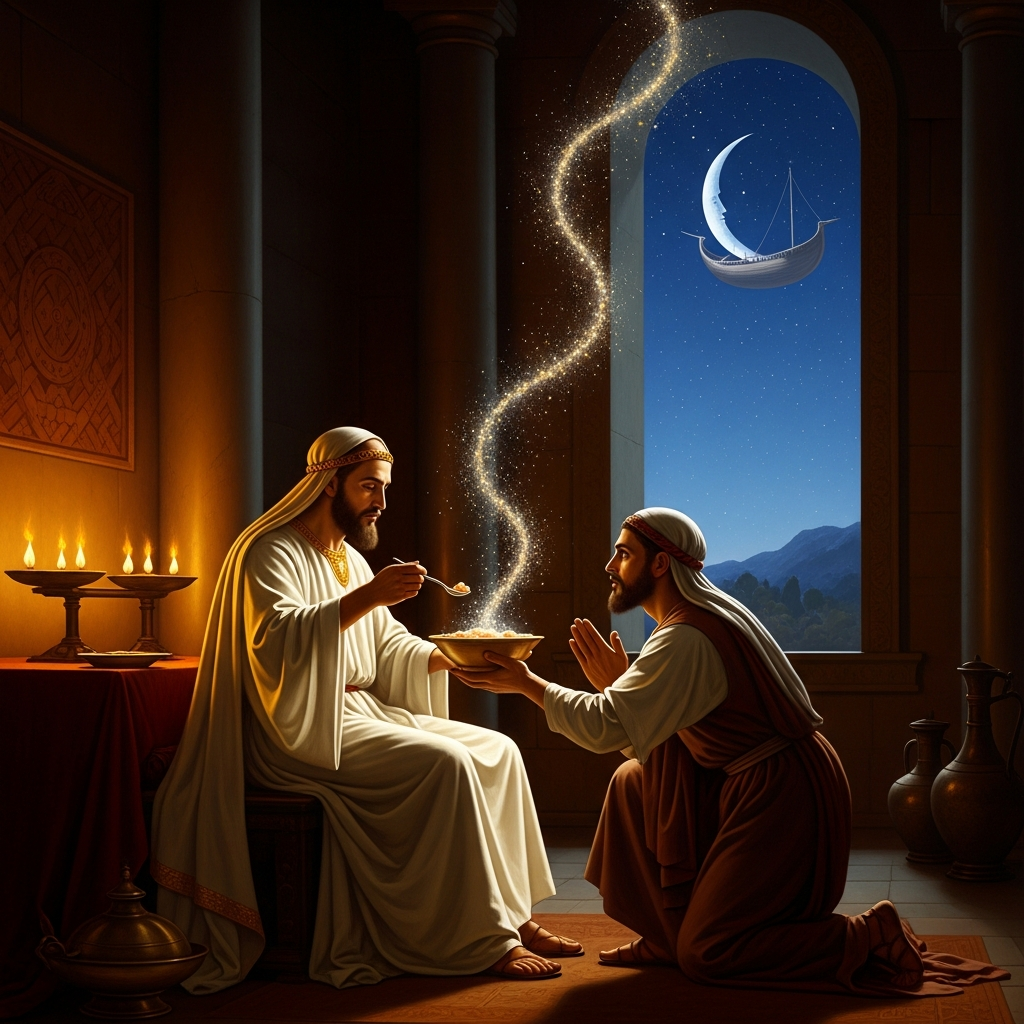
They do not drink wine or any fermented drink. They do not farm — because farming requires breaking the earth, and breaking the earth releases the light particles imprisoned in soil and kills them rather than liberating them properly. They do not marry or have children. They own nothing beyond the white robe they wear and the small amount they can carry. They pray seven times each day, facing the sun at the hours of light and the moon at night. They eat one meal per day, prepared by Hearers, blessed by the Elect’s chanting before it is consumed.
The meal is the cosmological event.
When an Elect eats a meal of vegetables and fruit — foods that contain the highest concentration of liberated light particles — the pure body of the Elect acts as a light-extraction mechanism. The digestive process separates the light from the material substrate. The liberated light rises toward the Moon Ship, which carries it to the Sun, which carries it to the Realm of Light. The material residue passes out of the body and returns to the earth.
This is not metaphor. This is Manichaean physics.
The Hearer who grows the vegetables and prepares the meal and sets it before the Elect is participating in the light-liberation project. Without the Hearer’s labor, the Elect cannot eat. Without the Elect’s pure body, the light in the vegetables cannot be properly liberated. The two groups require each other.
The Hearers live more like ordinary people.
They may marry. They may own property. They may work — including farming, though they are instructed to do it with minimal violence to the earth. They may eat meat, though vegetarianism is preferred. They fast on Sundays and on the Moon Day (Monday) each week and on the days of the Manichaean liturgical calendar. They pray four times each day rather than seven. They are required to give regularly to the Elect community, providing the food and shelter that the Elect cannot provide for themselves.
What the Hearers receive in return is a better rebirth.
They are not expected, in this lifetime, to achieve the purity that would allow their light particles to ascend directly to the Realm of Light at death. Their light, mixed too thoroughly with matter by a lifetime of ordinary living, will be reborn in another body. But with each lifetime of Hearer practice — each cycle of supporting the Elect, fasting, praying, avoiding the worst material entanglements — their light becomes progressively less mixed with darkness. Eventually, after some number of rebirths, they will be born as Elect and complete the liberation.
Augustine of Hippo spent nine years as a Hearer.
He later repudiated everything about his Manichaean period in terms of devastating theological criticism — the Confessions are partly an extended argument against his younger self’s Manichaean assumptions. But his most perceptive critics have noted that his deep concern with the problem of evil, his inability to locate evil’s source without implicating God, his eventual recourse to privatio boni (evil as the absence of good rather than a positive principle), are all the marks of someone who spent nine years thinking very hard about the Manichaean answer to that question and could not find a fully satisfying response.
He left the Hearers.
He remained, in some ways, always answering them.
The Elect walked through the world in their white robes, eating the single daily meal that their Hearers prepared, their bodies working on the cosmological project that was the entire point of material existence. The light rose from them each day and traveled toward the sun.
The sun was always full of it.
Echoes Across Traditions
Entities
- The Elect
- The Hearers
- Mani
- The Living Soul

Sources
- Jason BeDuhn, *The Manichaean Body: In Discipline and Ritual* (Johns Hopkins, 2000)
- Samuel Lieu, *Manichaeism in the Later Roman Empire and Medieval China* (Tübingen, 1992)
- Iain Gardner and Samuel Lieu, *Manichaean Texts from the Roman Empire* (Cambridge, 2004)
- Augustine of Hippo, *Against the Letter of Mani (Contra Epistulam Manichaei)* — from the perspective of a former Hearer