Mani and the Twin Who Taught Him
216–240 CE — Mani's childhood and young adulthood in the Elchasaite community · Mesopotamia — near Ctesiphon, the Sassanid capital, in the Elchasaite Baptist community
Contents
When Mani is twelve years old, a divine being he calls his Twin — al-Tawm, the double, his spiritual counterpart in the divine realm — appears to him for the first time, and their ongoing relationship over the next four years shapes the revelation he will proclaim.
- When
- 216–240 CE — Mani's childhood and young adulthood in the Elchasaite community
- Where
- Mesopotamia — near Ctesiphon, the Sassanid capital, in the Elchasaite Baptist community
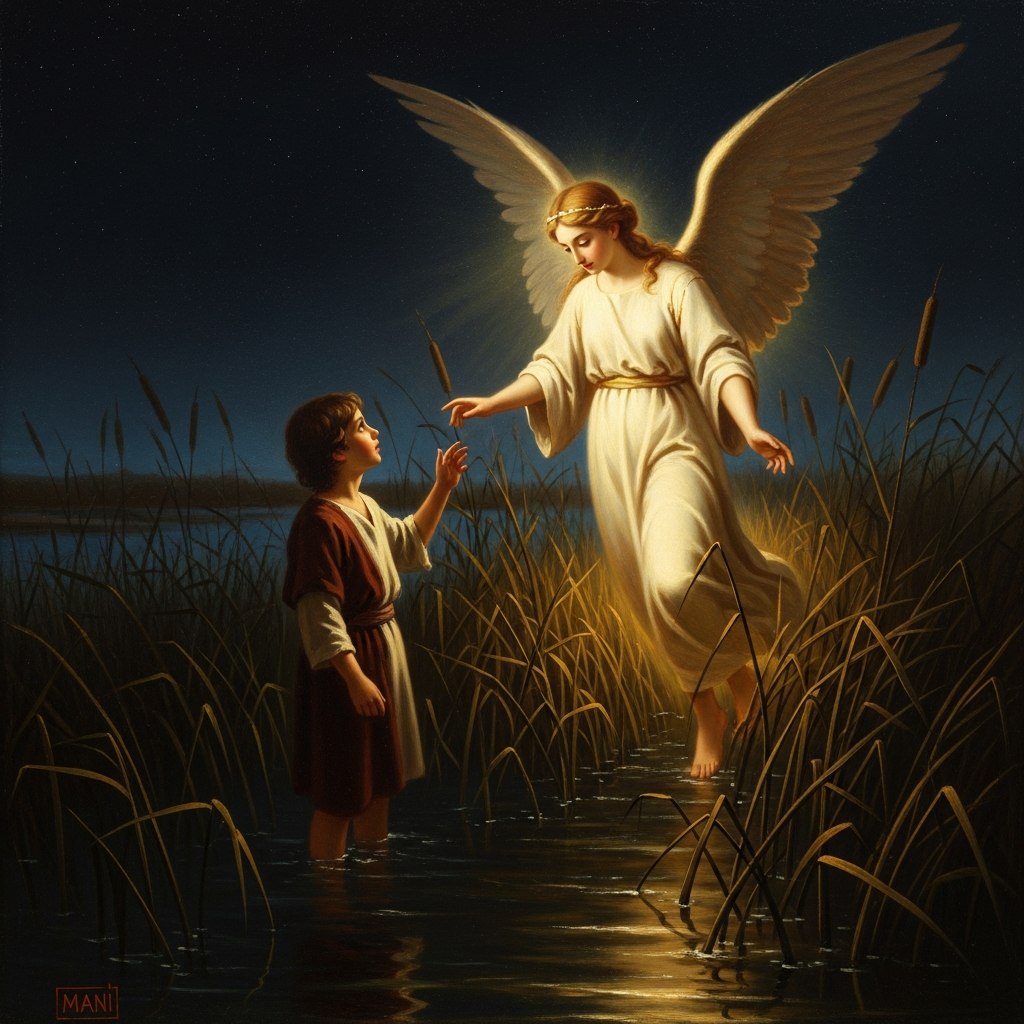
He is twelve years old when the Twin comes.
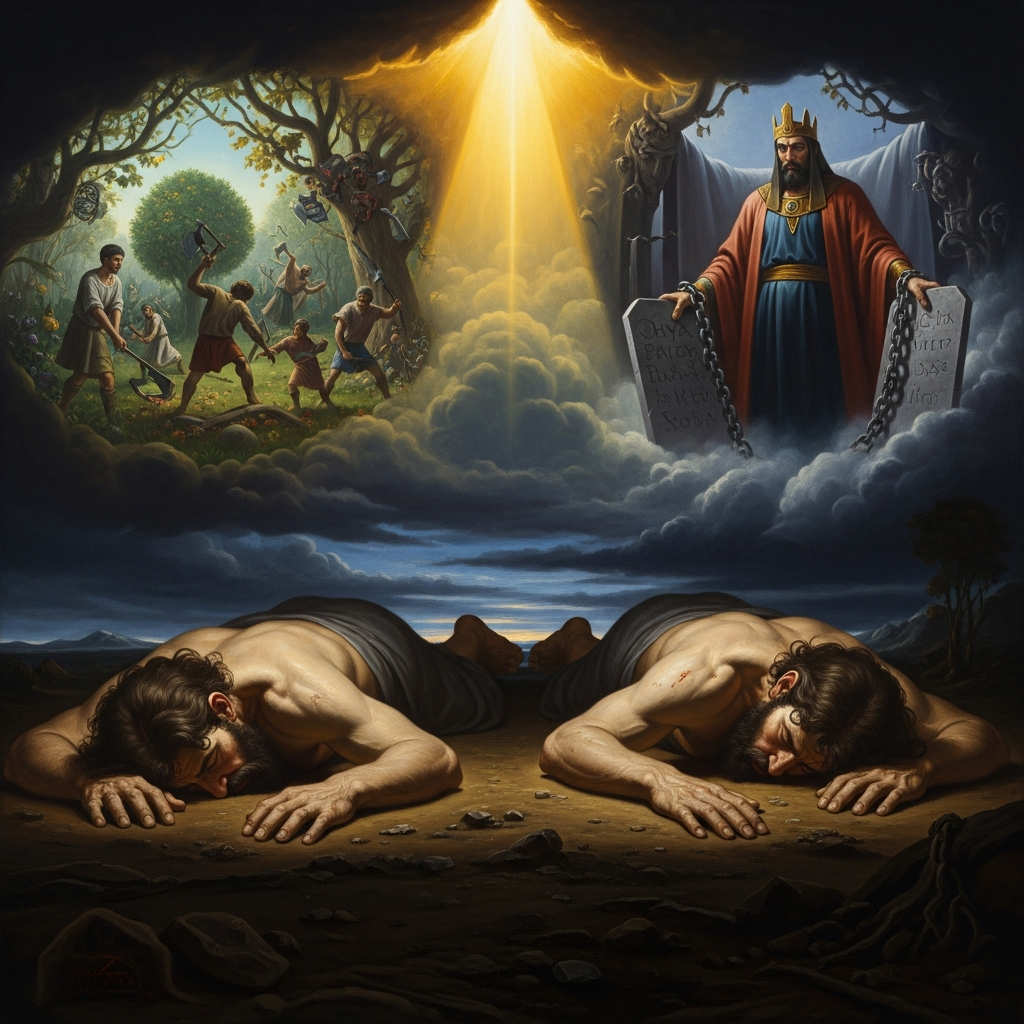
Mani has grown up in his father Patteg’s religious community — the Elchasaites, a Jewish-Christian Baptist sect living in the marshes of lower Mesopotamia near the Sassanid capital of Ctesiphon. They baptize daily, perhaps more than daily — ritual immersion as the purification of the body from the defilements of material existence. They are strict vegetarians. They attribute spiritual power to the water and the soil and the plants that are handled in farming, though Mani will later come to understand this attribution as confused.
He is obedient, within the community’s rules. He is also, from early childhood, aware of something they cannot explain: a presence that is not the group’s teaching, not his father’s practice, not anything the Elchasaite texts address. A presence that is his.
At twelve, it speaks.
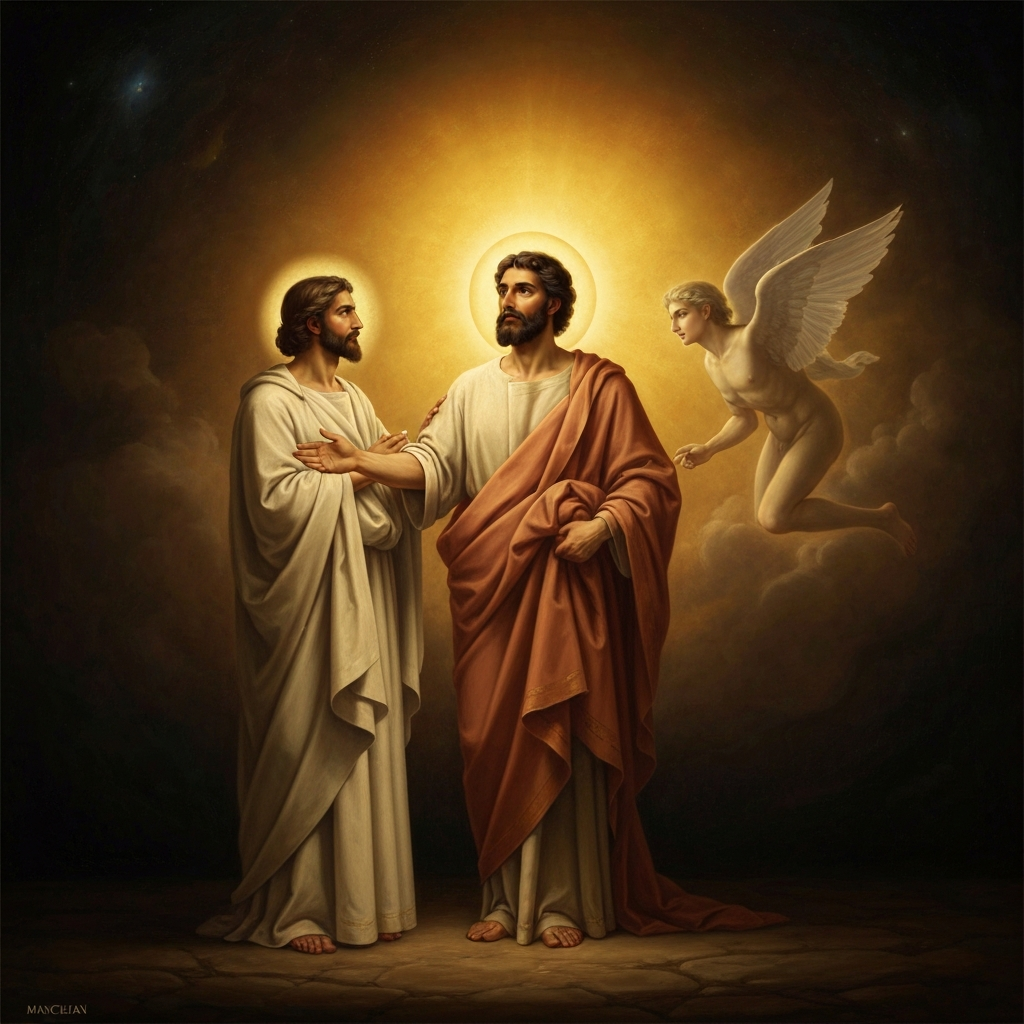
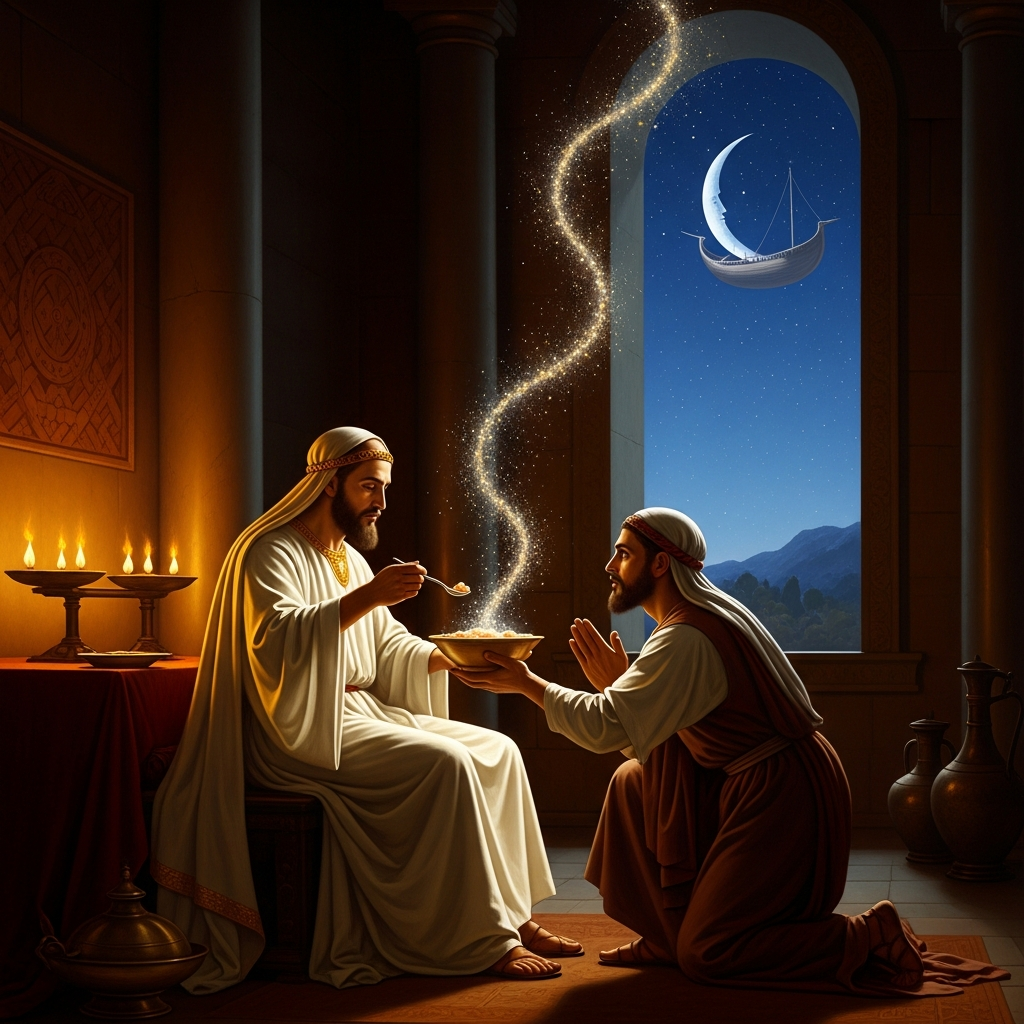
The Cologne Mani Codex — a Greek text from the fourth century that preserves Mani’s autobiographical account in his own voice, or at least close to it — records the first appearance of the Twin with startling directness: The al-Tawm, my companion, my double, my light, appeared to me. He said: Peace be with you, Mani. I am sent to you. The word al-Tawm is Arabic or Aramaic for the Twin — the counterpart, the double.
The Twin is not an angel in the conventional sense — not a being from another order of existence who descends to deliver a message and departs. He is Mani’s spiritual counterpart: the divine version of Mani that existed in the Realm of Light before Mani’s soul entered the material body it currently inhabits. He is what Mani is when matter does not interfere.
Their first conversation is about the Elchasaite community.
The Twin tells Mani that the community’s practices — the baptisms, the vegetable-handling restrictions, the ritual purifications — are not wrong in their orientation but incomplete in their theology. They are responding to the real situation of the world (matter contaminated by darkness) without having the complete map of that situation. Mani must stay in the community for now. He must not yet speak.
For twelve more years, Mani listens.
He participates in the Elchasaite rituals. He observes. He develops his systematic understanding of what the Realm of Light and Realm of Darkness actually are, how the mixture of light and matter happened, what the cosmic mechanism of liberation is. The Twin comes to him repeatedly, teaching and correcting and expanding. The Cologne Codex preserves fragments of these conversations — the Twin answers questions about creation, about the nature of the soul, about the dietary restrictions (they are correct but for the wrong reasons: it is not that vegetables are spiritually powerful, it is that the light particles trapped in vegetable matter can be liberated by a pure body eating them correctly).
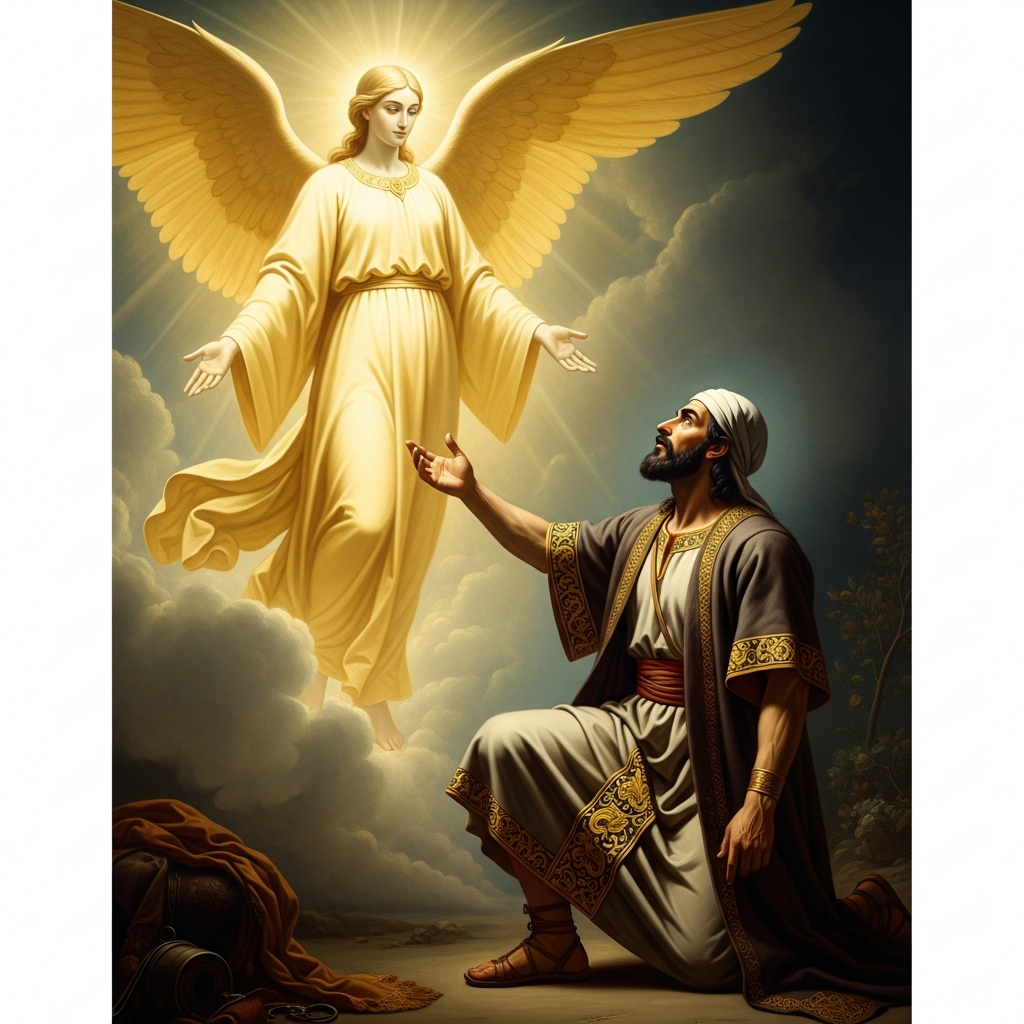
At twenty-four, the Twin says: now.
Now leave this community. Now proclaim the revelation I have given you. Mani leaves the Elchasaites and begins his ministry under the patronage of Shapur I, the Sassanid king who is interested in the theological diversity of his enormous empire. He travels. He preaches. He writes his seven canonical scriptures in his own hand — an innovation: previous prophets dictated to disciples. He paints the illustrations himself, using light-bearing colors to carry light-bearing content.
The Twin does not speak to him again after the proclamation begins.
The tradition does not say why. Perhaps the Twin’s function was completed: to teach Mani what he needed to know and then send him into the world to enact it. Perhaps the Twin is always present but no longer speaks because Mani has internalized everything the Twin had to say.
Or perhaps — this reading is also in the tradition — the Twin was always Mani’s truest self, the pre-existent divine spark, and the long years of instruction were not an angel teaching a student but a soul gradually remembering what it already knew.
The revelation that follows is Mani’s, and it is also his Twin’s.
There is no difference.
Echoes Across Traditions
Entities
- Mani
- Al-Tawm (The Twin)
- Patteg (Mani's father)
- Elchasaites (the Baptist sect)

Sources
- The Cologne Mani Codex (4th century CE), Greek text discovered 1969, edited by Henrichs and Koenen
- Jason BeDuhn, *The Manichaean Body* (Johns Hopkins, 2000)
- Iain Gardner and Samuel Lieu, *Manichaean Texts from the Roman Empire* (Cambridge, 2004)
- John Kevin Coyle, *Manichaeism and Its Legacy* (Brill, 2009)