Origen: The Theologian Who Was Too Brilliant
c. 185–253 CE (his life); 553 CE (posthumous condemnation) · Alexandria, Egypt — the catechetical school in the Greek quarter; later Caesarea Maritima in Palestine, where he founded a second school after his exile
Contents
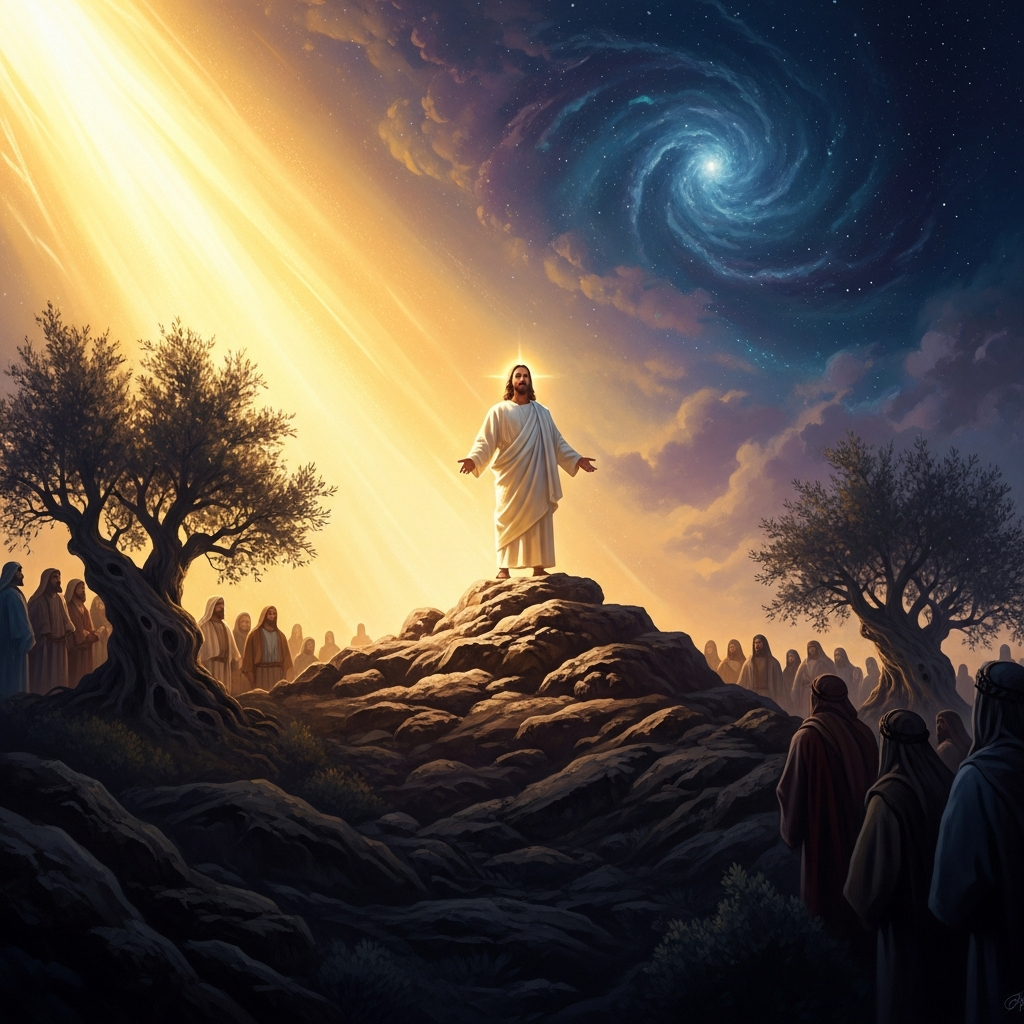
Alexandria in the early third century. A teenager named Origen, his father just executed by the Romans, takes over the catechetical school of the most cosmopolitan city in the Mediterranean and begins to write. He will write more than any Christian who has ever lived. He will reconcile Plato and Paul. He will be tortured almost to death. Three centuries after he is buried, the Second Council of Constantinople will condemn him as a heretic — and most of his books will be deliberately destroyed.
- When
- c. 185–253 CE (his life); 553 CE (posthumous condemnation)
- Where
- Alexandria, Egypt — the catechetical school in the Greek quarter; later Caesarea Maritima in Palestine, where he founded a second school after his exile
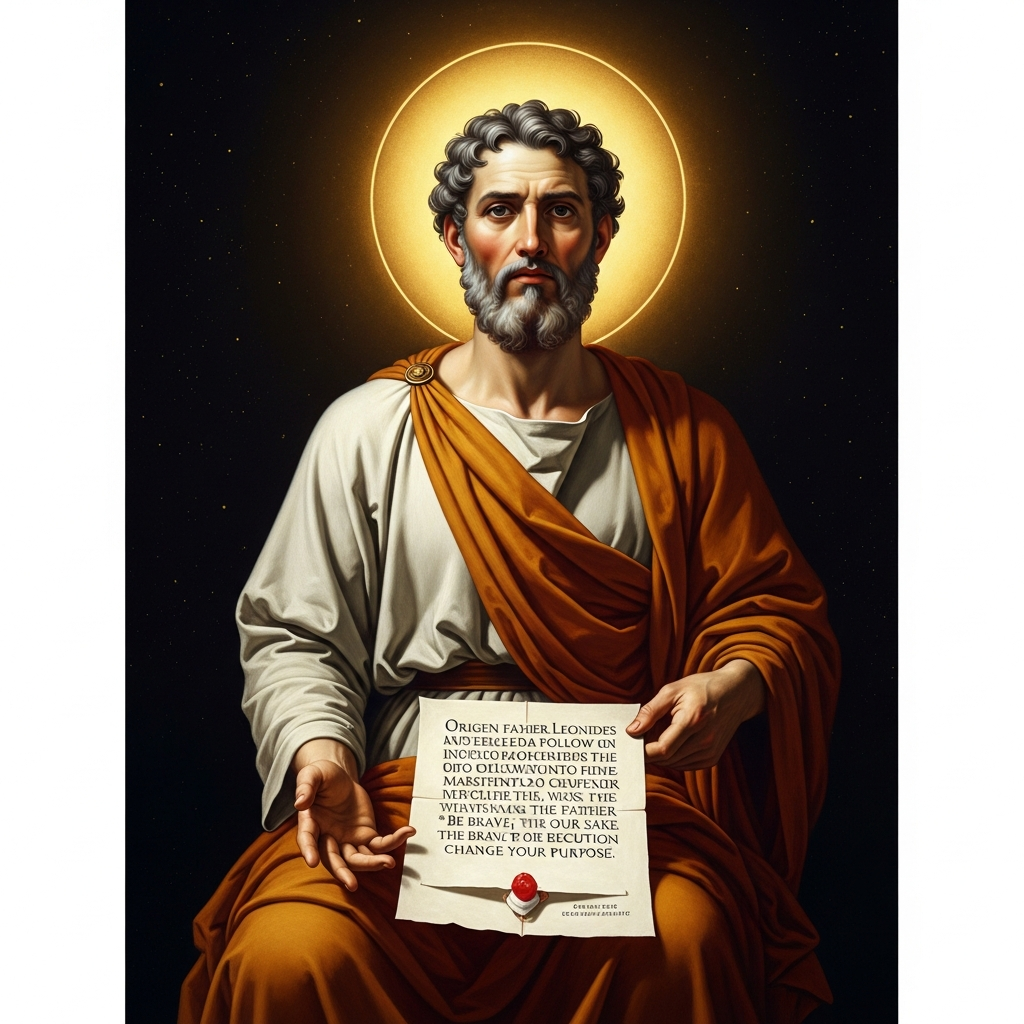
He is seventeen when his father is beheaded.
Leonides is a Christian intellectual in Alexandria — a teacher, a man of some property, a Roman citizen — and the persecution under Septimius Severus has decided to take him. Origen, the eldest son, watches his father’s arrest and announces immediately that he is going with him. He will be martyred too. He will not let his father die alone.
His mother hides his clothes.
This is the detail Eusebius preserves and it is not metaphorical. She physically removes his tunic and his cloak so that he cannot, naked, leave the house and walk to the prison. He is seventeen; he will not appear in the streets without clothes. She has stopped him with the only tool available to her, and she has stopped him just long enough that his father’s execution happens without him.
He writes his father a letter, smuggled into the prison.
Be brave. Do not, for our sake, change your purpose. The boy, hours before his father’s beheading, is encouraging the man to die well. The father reads it and dies well.
After the execution, the imperial fiscus seizes the family property. The widow and the seven children are destitute. Origen, the eldest, takes a job teaching grammar to feed them. A wealthy woman in Alexandria, recognizing the boy’s mind, offers to fund his higher studies. He accepts.
By eighteen he is teaching catechumens in the school the bishop runs. By twenty he has been appointed head of it. The catechetical school of Alexandria — the most cosmopolitan intellectual center in the Mediterranean, where Greek philosophy and Egyptian magic and Jewish scripture and Christian scripture all sit on the same shelves — is being run by a young man whose hair is still dark and whose father’s death is still recent.
He works the way no one else works.
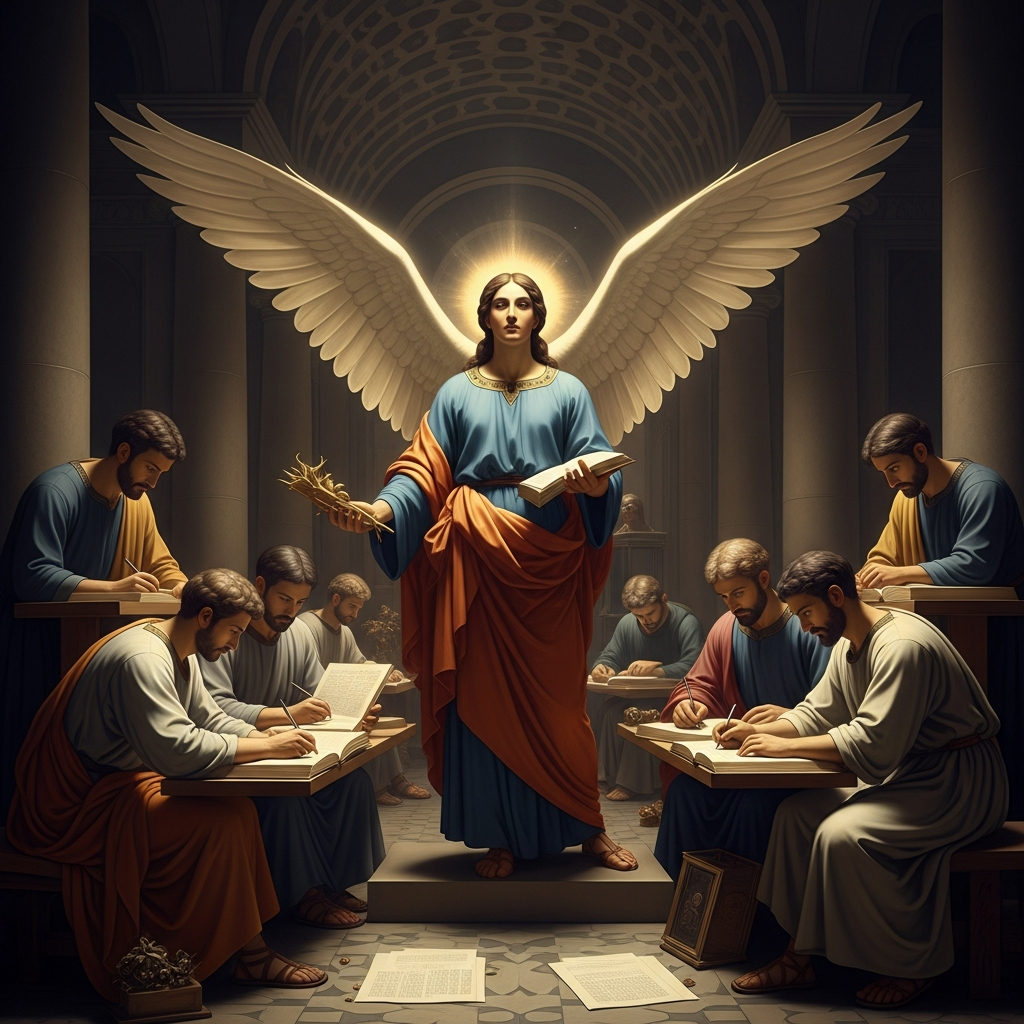
A wealthy convert named Ambrose, impressed by Origen’s reasoning, becomes his patron. Ambrose pays for stenographers — seven of them, working in shifts — and Origen begins to dictate. He dictates commentaries. He dictates homilies. He dictates the Hexapla, a six-column scholarly edition of the Old Testament: the Hebrew, the Hebrew transliterated into Greek letters, and four different Greek translations, all aligned verse by verse so the differences can be seen at a glance. The Hexapla fills around six thousand pages. He works on it for twenty-five years.
He writes a treatise called On First Principles — Peri Archon — and it is the first systematic theology in Christian history. Before Origen, there are apologetics, sermons, scriptural commentaries, occasional letters. Peri Archon is something else: a comprehensive, ordered, philosophically rigorous exposition of what Christianity claims about God, the Son, the Spirit, creation, fall, redemption, eschatology. Every later systematic theology — Augustine’s, Aquinas’s, Calvin’s, Barth’s — exists in a tradition that Origen invented.
He writes the Contra Celsum, an eight-book demolition of the most sophisticated pagan critique of Christianity. He writes commentaries on almost every book of the Bible, some of them many volumes long. He writes letters. He writes a treatise on prayer and a treatise on martyrdom. By the end of his life the surviving editions number, by some ancient counts, over two thousand titles.
The output is unprecedented. The output is not yet finished when the Roman Empire interrupts.
He has dangerous ideas.
Some of them are old by his time and become controversial only because of his stature. Some are entirely his own. The catalogue of what later Christians found alarming is long.
He argues that souls pre-exist their bodies. He thinks the soul is created at the beginning of the world, that it falls through degrees of attention away from God, and that bodies are assigned to souls in proportion to how far they have fallen. The soul becomes a human, an angel, or a demon depending on the trajectory of its prior choices.
He argues that purification continues after death. The soul does not arrive at its final state at the moment of bodily death. There is a process — refining fire, education, gradual healing — that may extend across what he sometimes calls multiple ages.
He argues, most dangerously, for apokatastasis — the final restoration of all things. At the end of all the ages, every rational creature, even the demons, even Satan himself, will be restored to God. Hell is real but not eternal. Punishment is medicinal, not vindictive. God’s love is finally irresistible, because it is the only thing that is finally true, and the rebellion against it cannot last forever because rebellion against the Real is itself an exercise in unreality.
He reads Matthew 19:12 — there are eunuchs who have made themselves eunuchs for the kingdom of heaven — and takes it literally. He castrates himself, probably as a young man, possibly to prevent scandal in his teaching of women catechumens. The later church is universally horrified by the gesture and rejects the literal reading. His own bishop, Demetrius, will later use this self-castration as one of the technical grounds for deposing him.
His method is allegorical.
When he reads the Old Testament — the herem of the Canaanites, the slaughter of the Amalekites, the laws about menstruation and slaughter and clean foods — he does not read it as a historical instruction manual. The literal layer is for the simple. Underneath is the moral layer, addressed to the soul that has begun to seek God. Underneath that is the spiritual layer, the mystery of Christ in every page of the Hebrew Bible. The whole text becomes a vast architecture of meanings, with the moral and spiritual senses being the real meaning that the literal narrative is the husk of.
This method is going to win. It will be the standard Christian way of reading scripture for fifteen hundred years. But Origen is the one who does it first systematically, and his applications of it sometimes scandalize even his admirers.
His own bishop turns against him.
Demetrius of Alexandria has been uneasy about Origen for years — about the fame, about the income from Ambrose, about the foreign travel. When Origen, on a trip to Caesarea in Palestine, is ordained a priest there by friendly bishops, Demetrius takes it as a violation of his episcopal authority. A synod is called. Origen is deposed from his Alexandrian position and stripped of his priesthood.
He moves to Caesarea Maritima.
He founds a second school there. He continues to write. The Caesarean library that grows up around him will become, in the next century, the great research library of the Eastern church — the place where Eusebius, decades later, will write his Ecclesiastical History.
He is now in his fifties. He is the most famous Christian intellectual alive. He is also, increasingly, in danger. The Decian persecution arrives in 250.
They want him to recant.
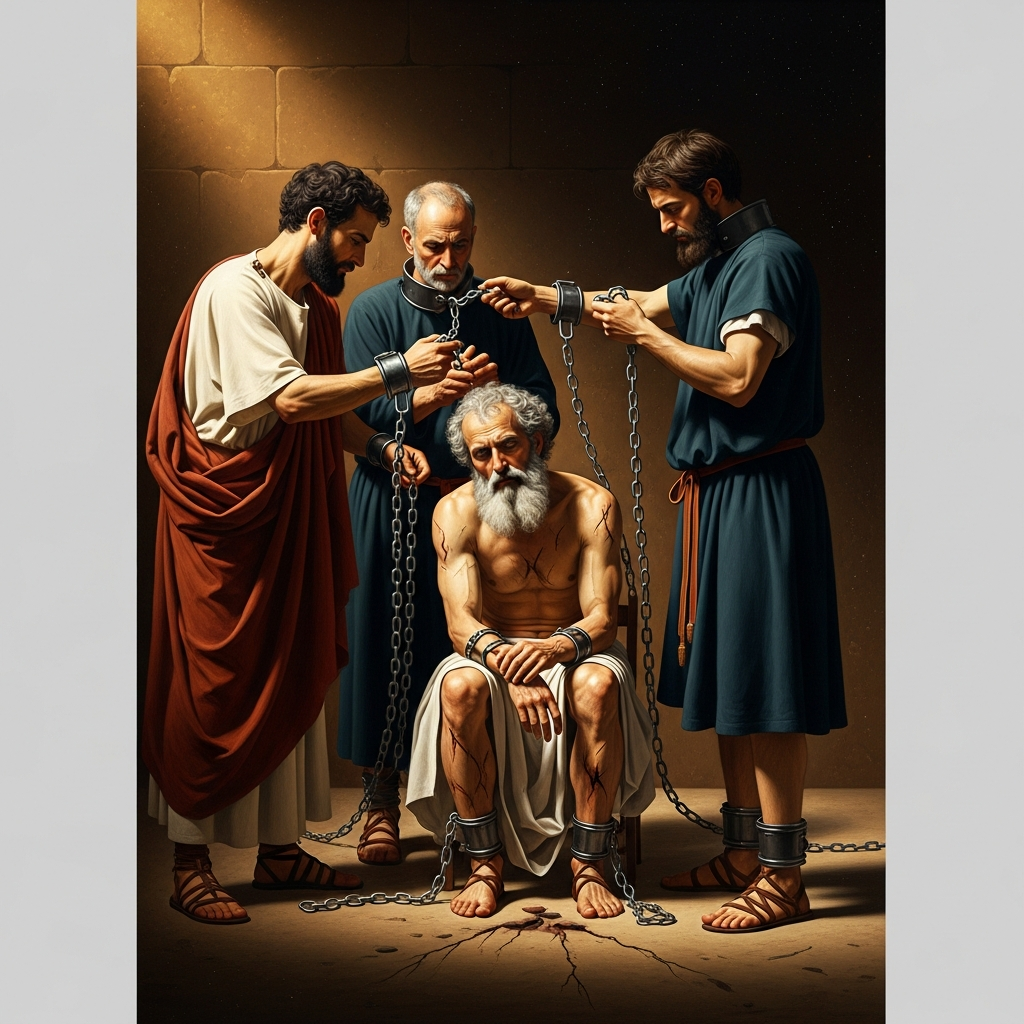
Decius’s persecution is unlike its predecessors. The emperor is not just suppressing meetings or executing leaders. He is requiring every citizen of the empire to make a public sacrifice to the gods and obtain a libellus — a certificate of compliance. Anyone without a libellus is liable to arrest. Anyone who refuses, when arrested, to perform the sacrifice is tortured until he does.
Origen is sixty-five when they arrest him.
The interrogators know who he is. The optics matter. If they can get the most famous Christian theologian in the empire to apostatize publicly, the propaganda value is enormous. They use the iron collar. They use the rack. They keep him in chains in a posture designed to break the body slowly. They threaten him with fire.
He does not apostatize.
He does not become a martyr in the technical sense — he is not executed — because Decius dies before the case is closed and the persecution slackens under his successor. Origen is released. But he has been broken in the prisons. The body that wrote two thousand books cannot recover. He lives a few more years, finishes some final letters, and dies in 253 or 254, probably at Tyre, of complications from his torture.
He is buried as a confessor — one who suffered for the faith without dying for it. The early church regards him as a saint.
Three hundred years later they come for his books.
The Second Council of Constantinople, in 553, under Justinian, condemns him posthumously. The condemnation lists fifteen anathemas. Pre-existence of souls. Apokatastasis. The final salvation of demons. The notion that the resurrection body is spherical. (Some of these views are arguably caricatures of what Origen actually said; others are accurate.) The council orders his works to be destroyed.
Most of them are.
The thousands of titles that the ancient catalogues record have largely vanished. What survives is a few major works in Greek, a handful of Latin translations made by Rufinus before the condemnation (Rufinus deliberately softened the most controversial passages, which infuriated Jerome at the time and frustrates scholars now), and many fragments quoted by his enemies in the course of refuting him. The scholars who reconstruct Origen’s thought are working from rubble.
But the rubble keeps influencing.
The allegorical method that he systematized becomes the operating system of patristic and medieval biblical interpretation. The systematic theology genre that he invented continues without him. The doctrine of apokatastasis, condemned in 553, resurfaces in Gregory of Nyssa (who was not condemned), in Maximus the Confessor (who was not condemned), in Isaac the Syrian (who was not condemned), in the Russian theologians of the twentieth century (Bulgakov, Florensky), in Hans Urs von Balthasar’s Dare We Hope That All Men Be Saved? of 1986. The condemned doctrine has never gone away. It keeps being almost-believed by Christians who quote scripture to support it and who, when pressed, can be shown to be quoting Origen even when they think they are not.
Origen worked harder than anyone has worked. He wrote more than anyone has written. He suffered as much as the Roman state could engineer for him. And then, three centuries after he was in the ground, an emperor erased most of what he had made.
The erasure was incomplete. The structure of his thought is in the foundations of every later Christian theologian, in the methods they use even when they think they are using something else. The doctrine that got him condemned — that God’s love is, in the last analysis, irresistible, and that nothing finally falls outside it — keeps surfacing in the people who think hardest about what Christianity is actually claiming.
The boy who wanted to die with his father at seventeen, whose mother hid his clothes, became the man whose books were burned because he could not stop being interested in what was true. The empire could destroy the books. It could not destroy the question they were asking. The question is still in the room.
Scenes
Origen at work in the catechetical school of Alexandria
Generating art… Origen at seventeen
 Generating art…
 The Decian persecution, 250 CE
 Generating art…
 Three centuries after his death, the Second Council of Constantinople condemns him
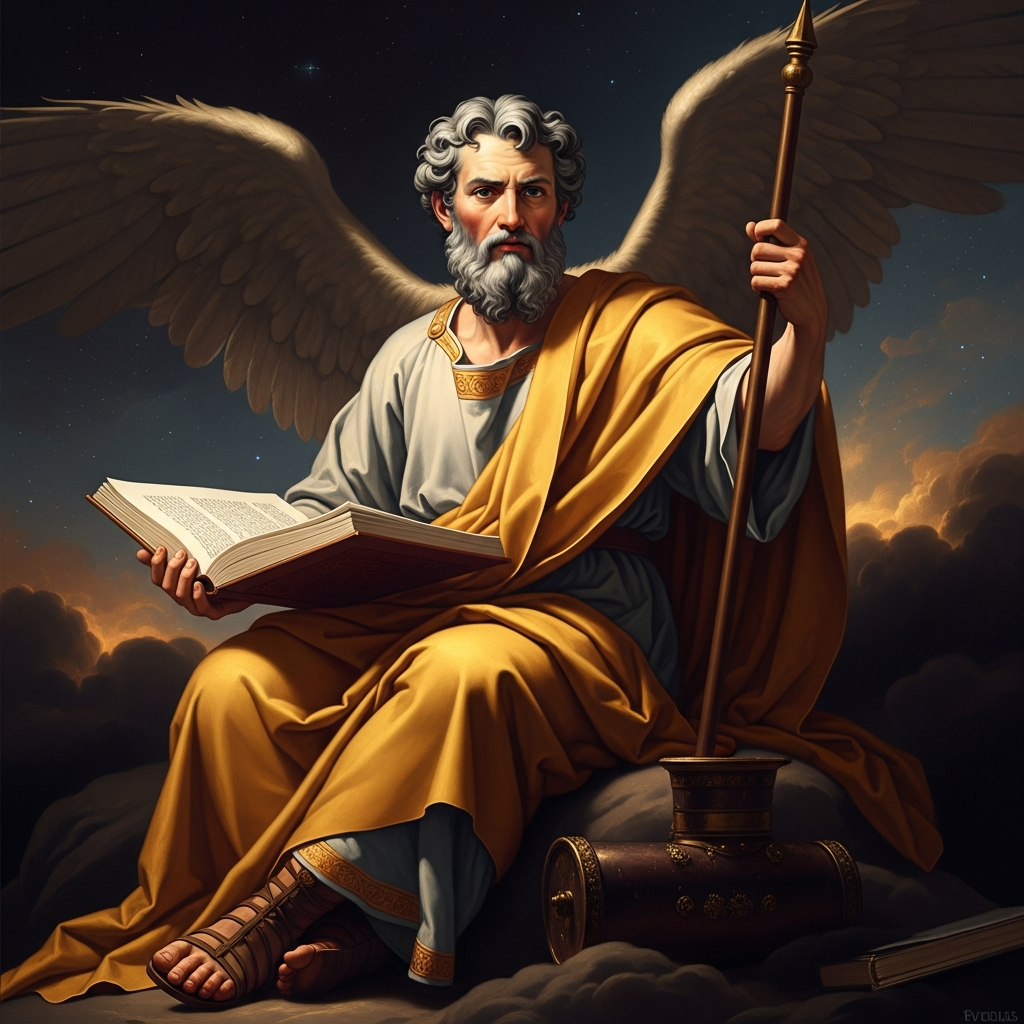 Generating art…
 Echoes Across Traditions
Entities
- Origen of Alexandria
- Clement of Alexandria
- Ambrose of Alexandria
- Demetrius of Alexandria
- the Second Council of Constantinople
Sources
- Origen, *On First Principles* (*Peri Archon*; trans. G.W. Butterworth, 1936)
- Origen, *Contra Celsum* (trans. Henry Chadwick, 1953)
- Eusebius of Caesarea, *Ecclesiastical History* VI
- Henri Crouzel, *Origen* (1989)
- Rowan Greer, *Origen* (1979)
- Mark Edwards, *Origen Against Plato* (2002)