Mani's Vision of the Two Principles
Early 3rd century CE — Mani's prophetic ministry, 240–276 CE · The Sassanid Empire — Ctesiphon, Babylon, the cosmopolitan crossroads of the ancient world
Contents
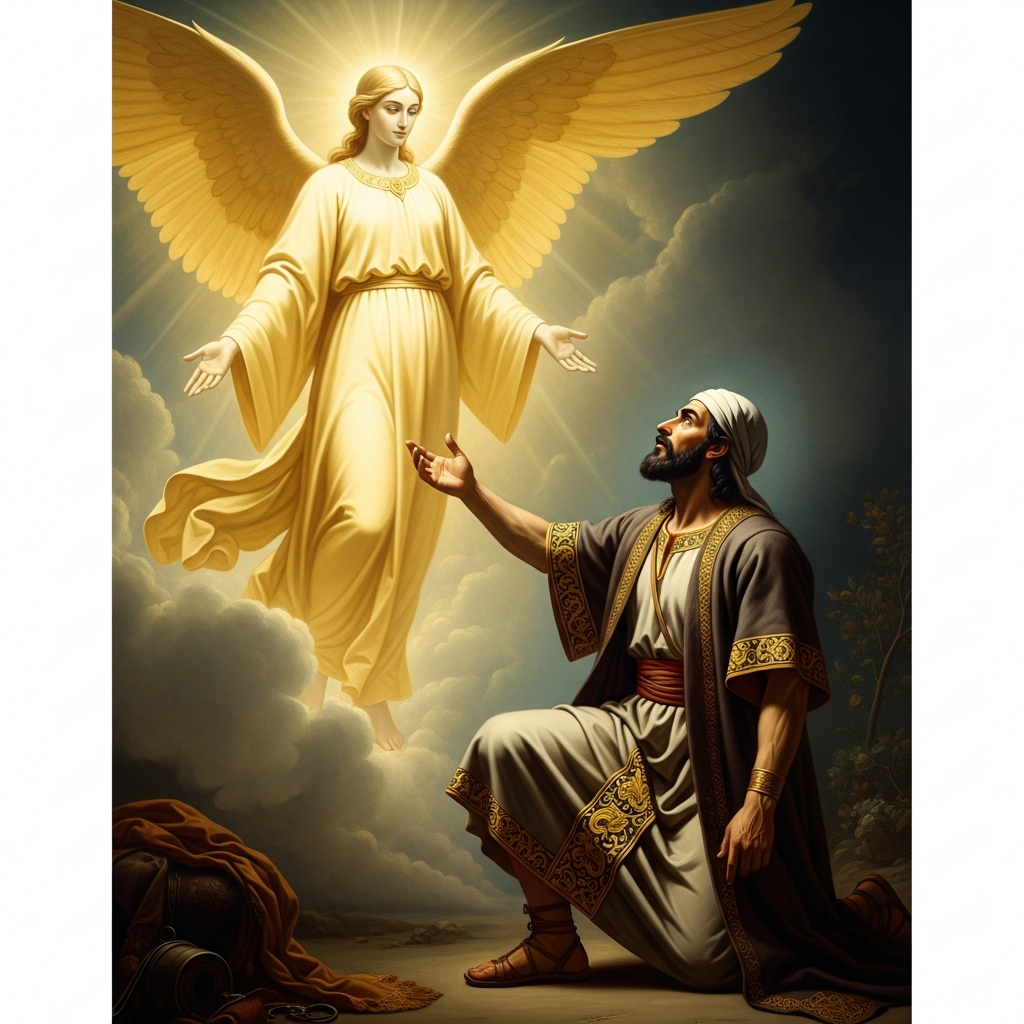
The prophet Mani receives his cosmic revelation: the universe is the site of a war between Light and Darkness, and the material world is a vast machine built by cosmic powers to gradually separate the trapped Light back out of matter and return it to its source.
- When
- Early 3rd century CE — Mani's prophetic ministry, 240–276 CE
- Where
- The Sassanid Empire — Ctesiphon, Babylon, the cosmopolitan crossroads of the ancient world
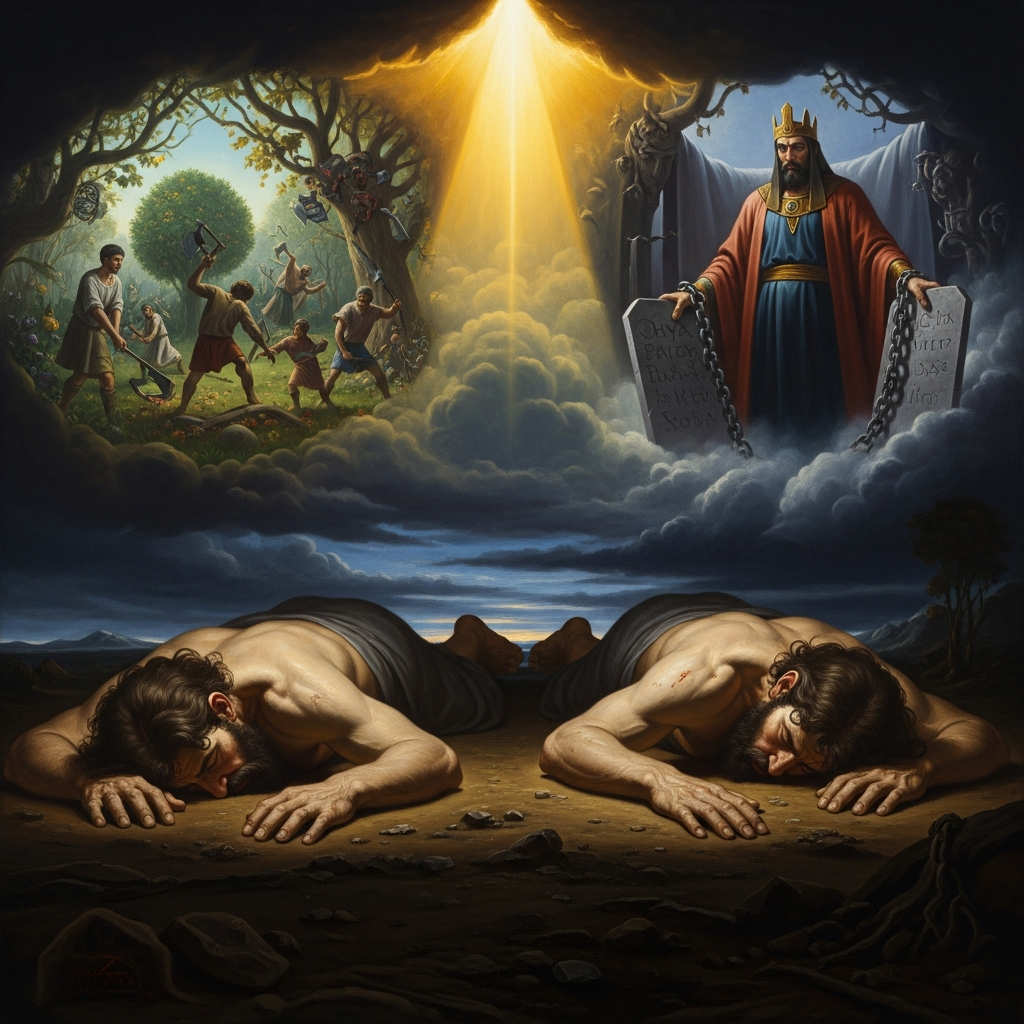
There are two principles, and they have always existed.
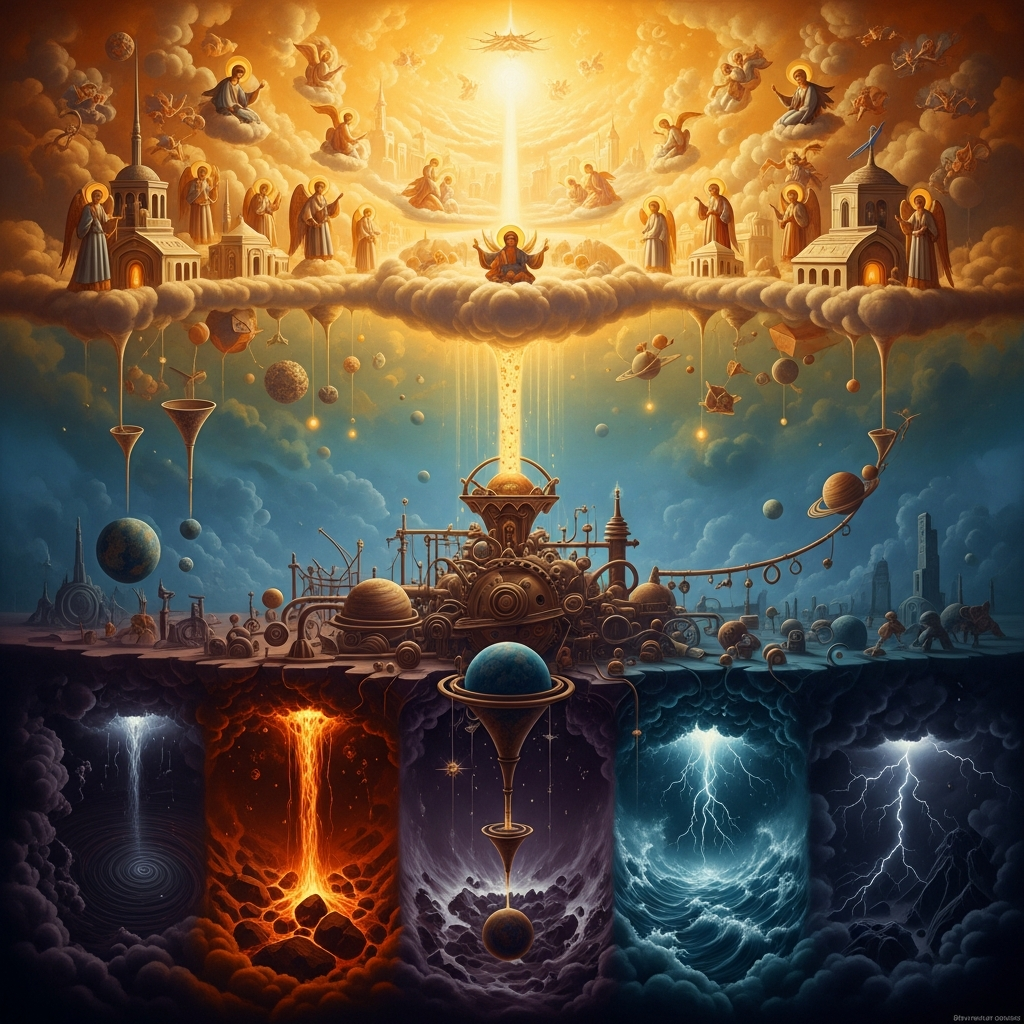
Mani is specific about this — he is systematic in ways that his religious predecessors were not, designing a cosmology that he intends to be complete and final, the synthesis that ends the need for further synthesis. In his cosmology, the Father of Greatness rules the Realm of Light in the north: infinite, peaceful, luminous, unmixed. The King of Darkness rules the Realm of Darkness in the south: chaotic, violent, hungry, composed of five dark elements — smoke, fire, wind, water, and darkness itself.
For an eternity, these two realms coexist without contact.
Then the Darkness becomes aware of the Light.
Not through any aggression on the Light’s part, not through any cosmic necessity, but through the Darkness’s own nature — which is aggressive, which hungers for what it does not have, which cannot contemplate a light it has not consumed. The King of Darkness leads his armies upward toward the border between the realms.
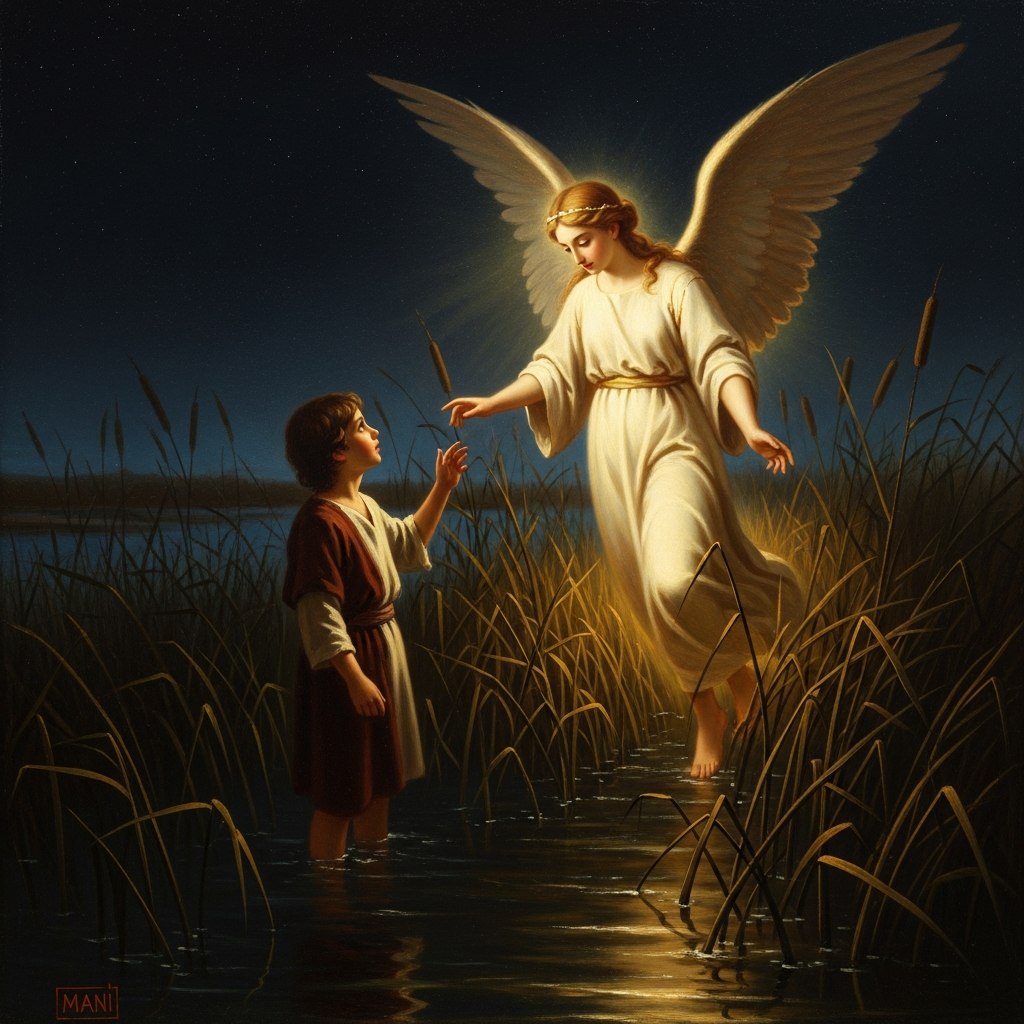
The Father of Greatness responds not by fighting directly but by sending an intermediary.
He calls into being the Mother of Life, and she calls into being the Primal Man. The Primal Man is not Gayōmard — this is not the Zoroastrian model, though the family resemblance is visible. The Primal Man arms himself with five light elements — gentle wind, cooling breeze, light, water, and fire — and descends to meet the Darkness at the border.
He loses.
The Darkness defeats the Primal Man and devours his light armor. This is the catastrophe at the center of Manichaean cosmology: the light that constituted the Primal Man’s armor is now mixed into the Darkness, distributed through the five dark elements. The material world — the physical universe that astronomy observes and physics measures — is built from this mixture. It is not the creation of a good god. It is the consequence of a cosmic battle that went wrong.
The Light imprisoned in matter must be extracted.
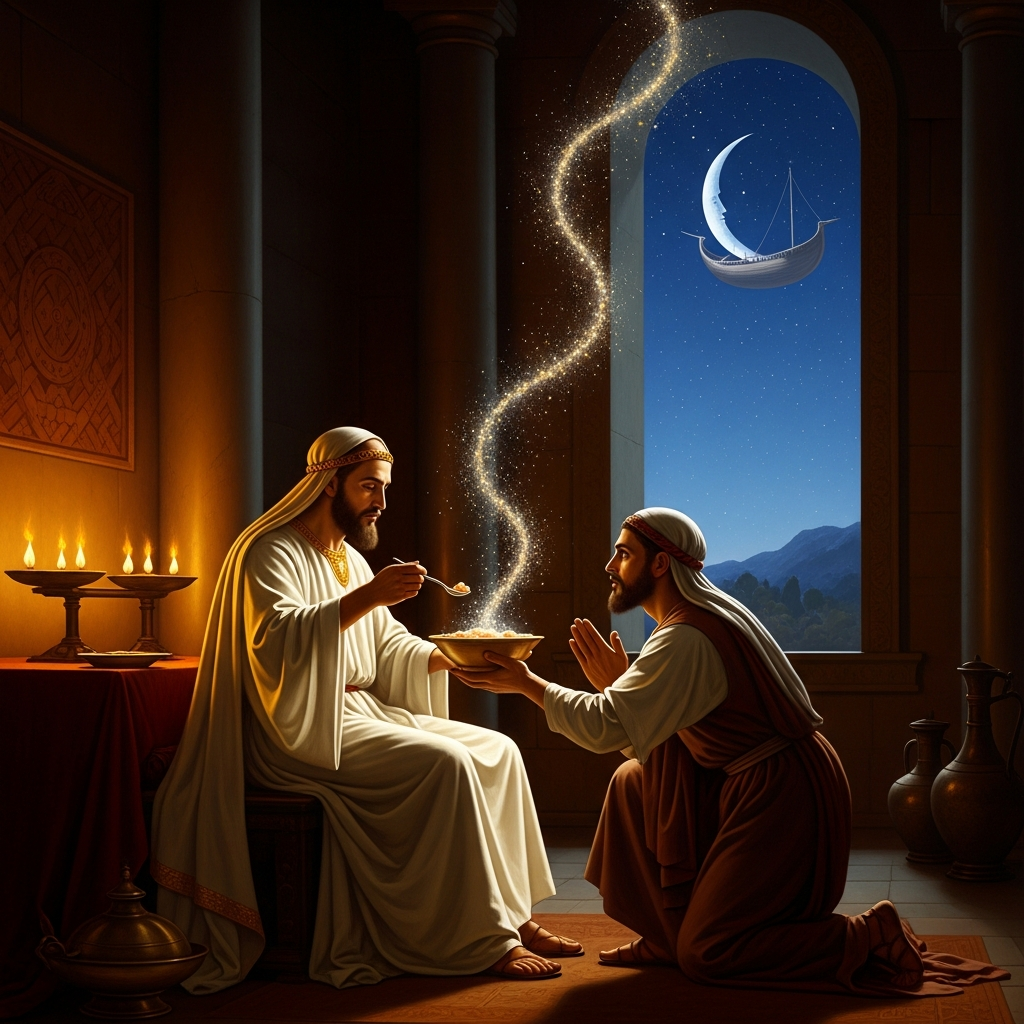
Everything that happens in the material world for the rest of cosmic time is the project of extracting the trapped light and returning it to the Realm of Light above. The stars and planets are light-extraction machines, designed by the cosmic powers who came to rescue the Primal Man. The sun is a ship that carries liberated light upward. The moon waxes as it fills with extracted light, then wanes as it empties the light into the sun for transport to the Father of Greatness.
Human beings are composed of both light and darkness.
The soul is a particle of the original light armor — a divine spark imprisoned in the dark material of the body. The religious life is the project of liberating that spark through right knowledge, right discipline, and right practice. The Elect — the fully initiated Manichaean monks and nuns — live so purely that the light in their bodies is fully liberated at death and returns immediately to the Realm of Light. The Hearers — the lay practitioners — live less purely and their light particles must cycle through several more material incarnations before liberation is complete.
Mani designed this religion to be received by everyone.
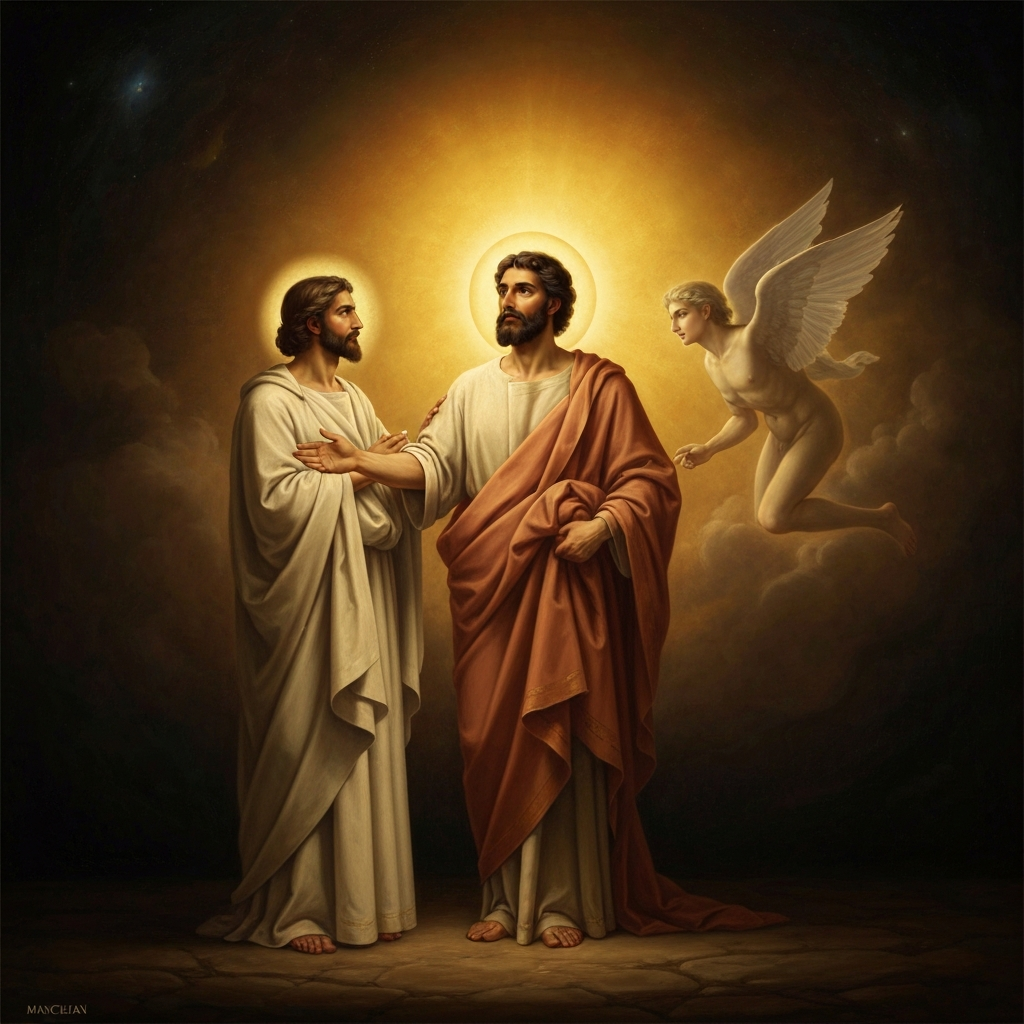
He wrote his scriptures himself — an innovation, because the founder-prophets before him had spoken and let others record. He illustrated them, making books of extraordinary visual beauty because light must be communicated in light-bearing forms. He sent missionaries east to India and China and west to Rome and North Africa. He claimed to be the Seal of the Prophets — the final revelation that completed Zarathustra, the Buddha, and Jesus.
He did not die peacefully.
The Sassanid king Bahram I, under pressure from the Zoroastrian priests, imprisoned him. The imprisonment was followed by something the tradition calls the Crucifixion of Light — Mani died in chains, his body destroyed in a way that his followers compared explicitly to the crucifixion of Jesus. His skin was displayed at the gate of the city as a warning.
The missionaries did not stop.
The light goes where it needs to go.
Echoes Across Traditions
Entities
- Mani
- The Father of Greatness
- The King of Darkness
- The Primal Man
- The Mother of Life


Sources
- Jason BeDuhn, *The Manichaean Body: In Discipline and Ritual* (Johns Hopkins, 2000)
- Samuel Lieu, *Manichaeism in the Later Roman Empire and Medieval China* (Tübingen, 1992)
- Iain Gardner and Samuel Lieu, *Manichaean Texts from the Roman Empire* (Cambridge, 2004)
- Peter Brown, *Augustine of Hippo: A Biography* (California, 2000)