The Book of Giants and the Watchers
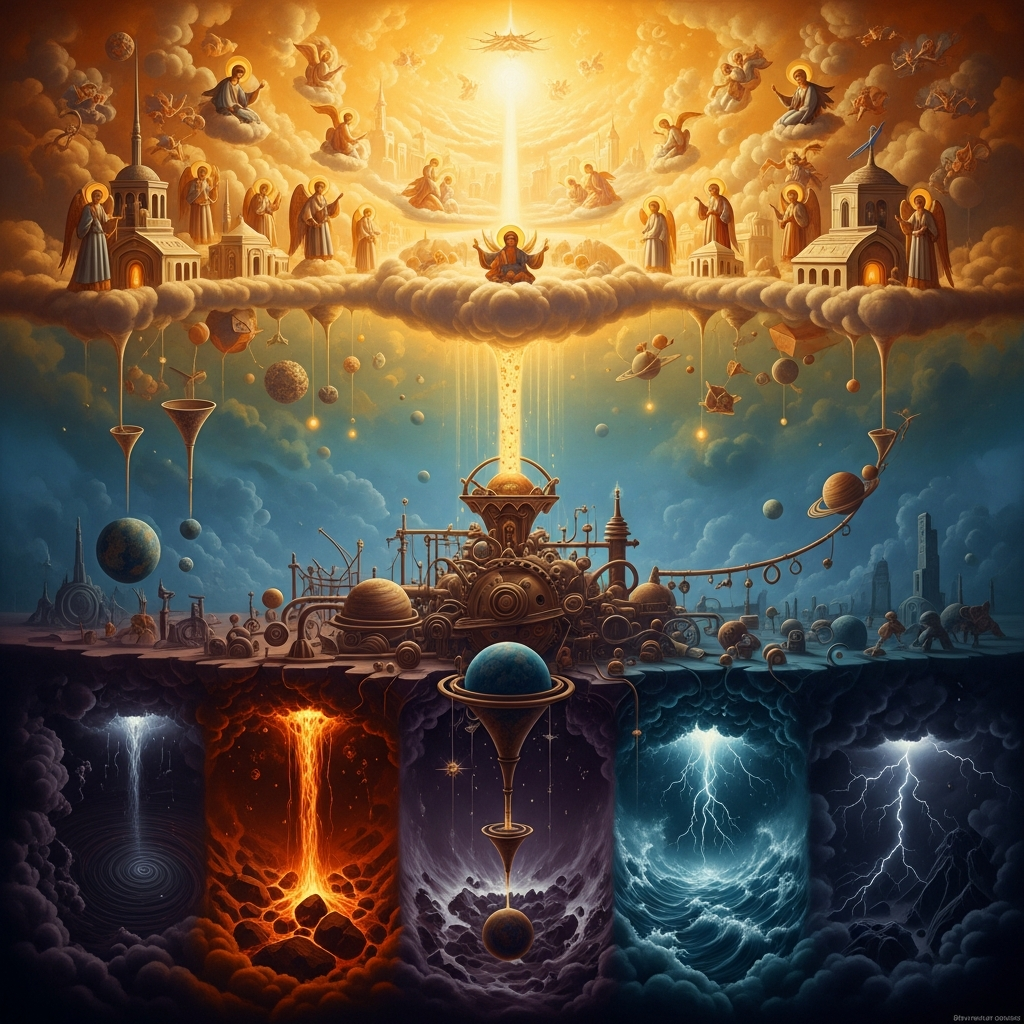
Before the Flood — the antediluvian era of the Watchers and Giants · The antediluvian earth — and the divine realm where Enoch receives the judgment
Contents
In Mani's retelling of the ancient Book of Giants, the fallen Watchers and their giant offspring receive cosmic nightmares that reveal the fate of evil — and the giants learn, too late, what their violence has cost the world.
- When
- Before the Flood — the antediluvian era of the Watchers and Giants
- Where
- The antediluvian earth — and the divine realm where Enoch receives the judgment
The giants dream, and their dreams are terrible.
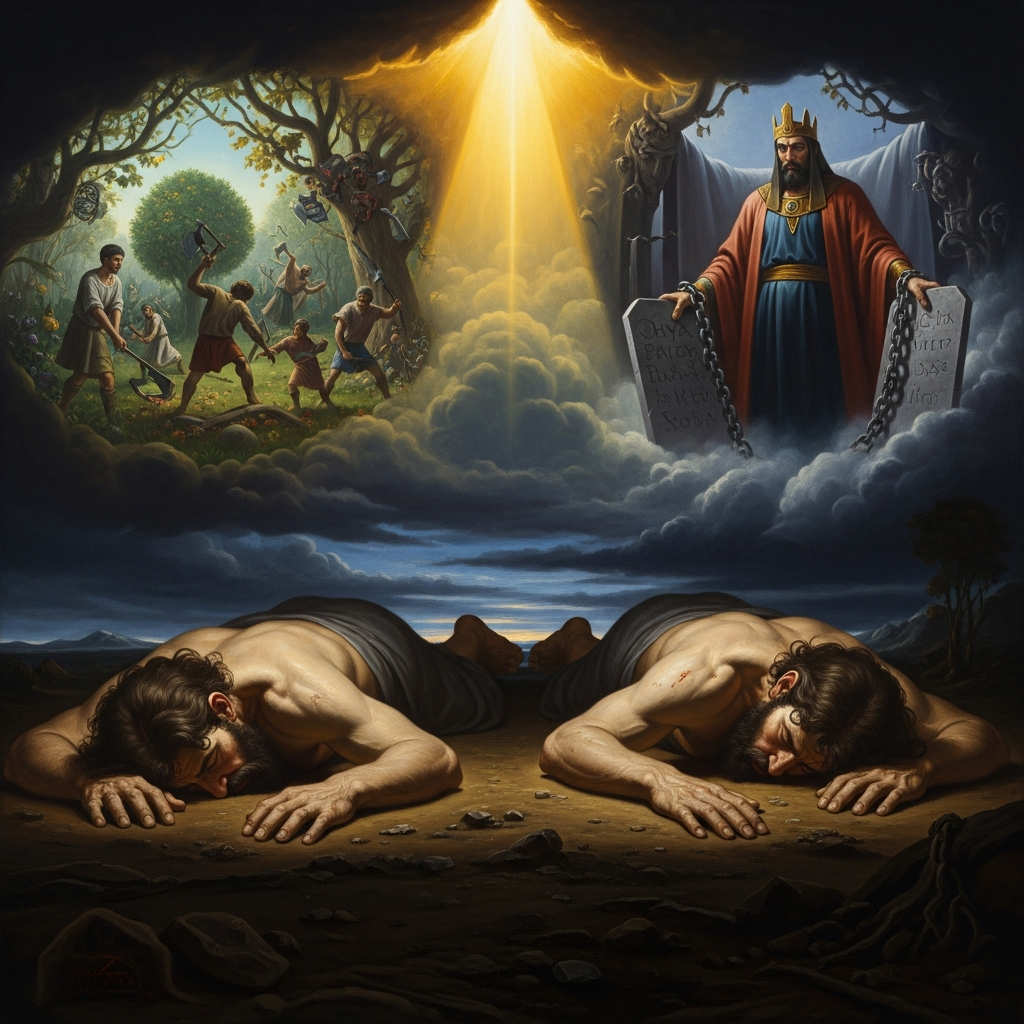
Ohya, the larger of the two giant brothers who are the sons of the fallen Watcher Shemihazah, wakes in the night with sweat on his enormous body and a vision he cannot shake. He has seen a garden — a beautiful garden, well-tended, full of trees — and then he has seen men coming with iron axes. The trees fall. All of them. The whole garden is reduced to stumps. Only one tree remains, and that tree has three roots, and it is tended by angels.
His brother Ahya has dreamed similarly: a great king has come to take record of everything, and the record is being taken with tablets and chains and instruments of measurement.
The giants are physically prodigious beings — the sons of the Watchers (the divine beings who descended to the material world and took human wives, against the cosmic order) and mortal women. They have inherited from their Watcher fathers a degree of the light that the Watchers carried when they descended, and from their mortal mothers the weight and appetite of material existence. They are, in Mani’s cosmological framework, beings in whom light is present but trapped under enormous material pressure — which is why they are violent, why they devour the earth and each other, why their existence is a catastrophe for the world around them.
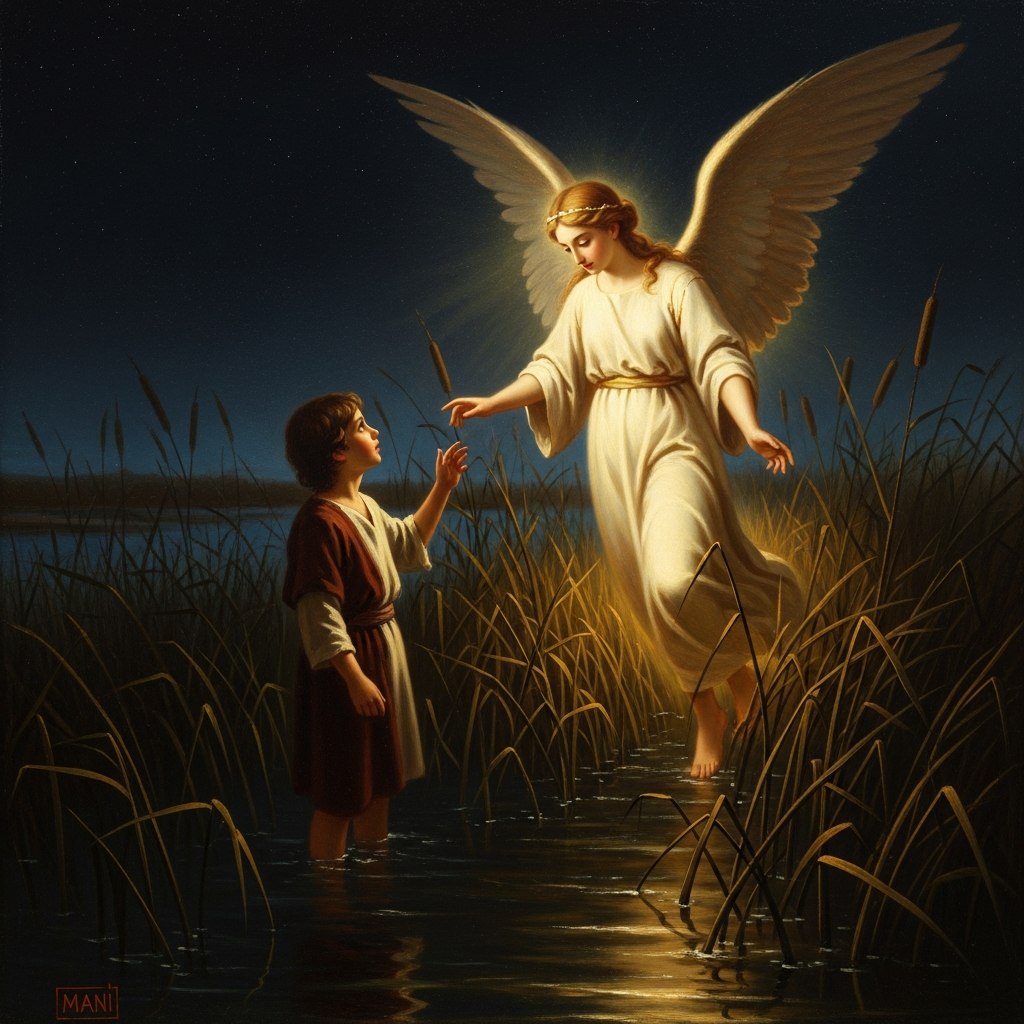
They go to the human wise man Mahaway and ask him to interpret the dreams.
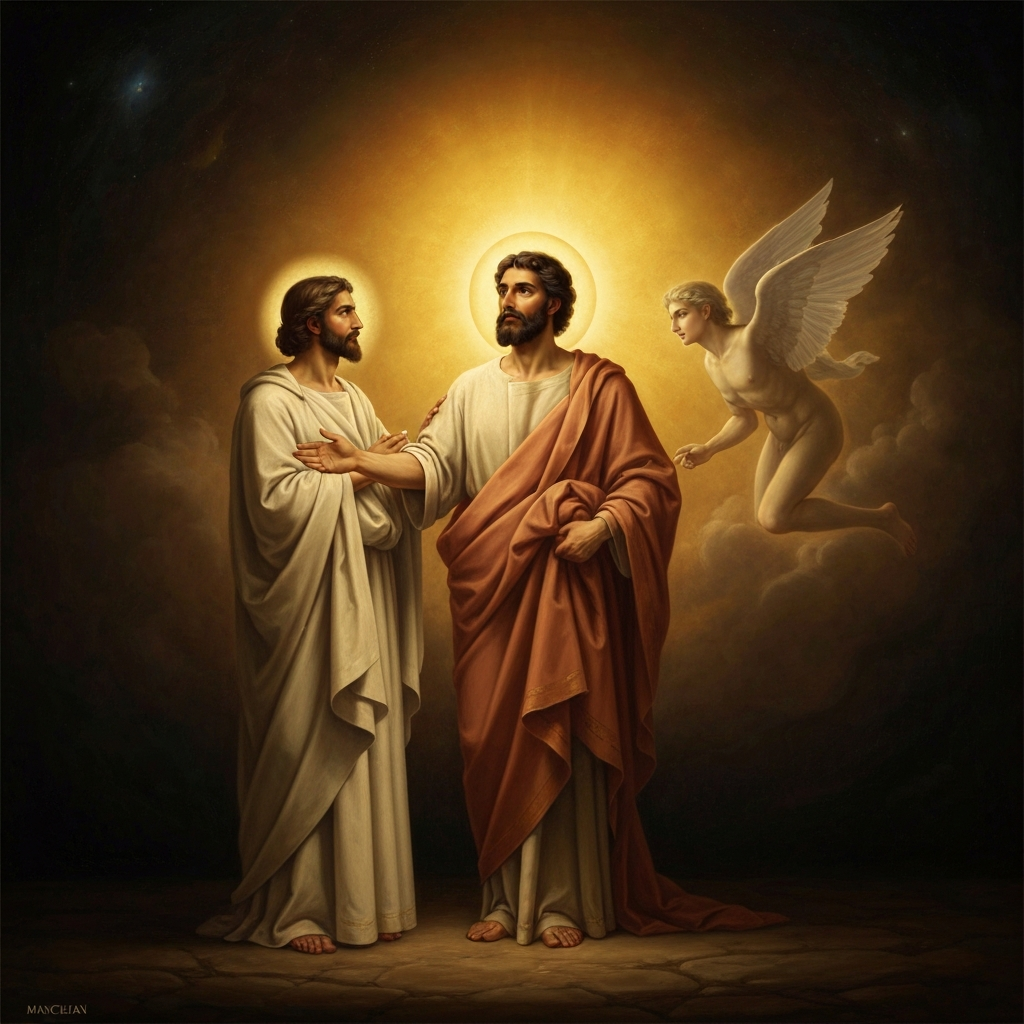
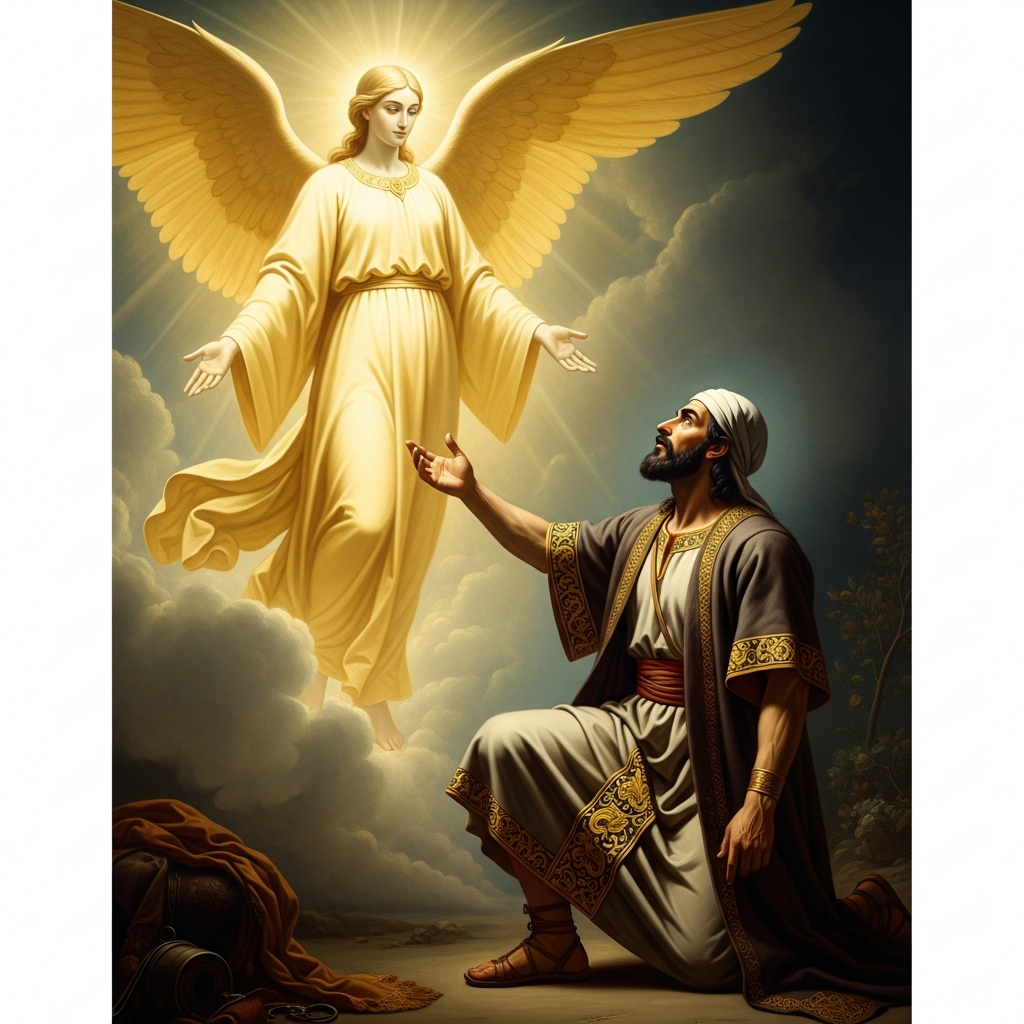
Mahaway is not the Manichaean Enoch directly — the text’s identifications are complex — but he functions as the connection between the giants’ material world and the cosmic realm where meaning resides. He goes to Enoch, who is in the divine realm, the only human in history to have ascended there alive. He brings the dreams to Enoch. He brings Enoch’s answer back.
Enoch’s interpretation is unsparing.
The garden is the world. The trees are the progeny of the Watchers — the giants, and everything they have produced. The men with axes are the divine judgment. The three-rooted tree that remains is Noah’s lineage, the continuity that will survive the flood. The dream of the tablets and chains is the record of the Watchers’ transgression being taken for judgment.
The judgment is coming, and it is coming because the violence of the giants — the way they have torn through the world, eaten its animals, eaten each other, eaten humans — has saturated the material world with exactly the wrong kind of darkness. Not the original, pure Darkness of the Realm of Darkness that is at least honest in its malice, but a confused, contaminated darkness: beings who contain light using that light to amplify destructive behavior rather than liberate themselves.
The flood, in Mani’s reading, is not merely a divine punishment.
It is a cosmological reset — the elimination of a particularly bad accumulation of mixed beings whose light could not be liberated because the material element was too overwhelming and too violent. The flood is the cosmos cleaning a wound that had become infected.
What makes Mani’s Book of Giants significant beyond its literary interest is the theological function it serves in the larger Manichaean system: the giants demonstrate what happens when the light within a material being is not cultivated, not sought, not aligned with the Realm of Light. The Elect of the Manichaean community are the opposite of the giants: beings who use every physical capacity in service of liberating the light particles that their pure bodies and careful diets extract from material existence.
The giants ate everything and liberated nothing.
Their dreams told them the truth about what they were doing.
They did not change.
The flood came.
Only the tree with three roots remained standing.
Echoes Across Traditions
Entities


Sources
- John Reeves, *Jewish Lore in Manichaean Cosmogony: Studies in the Book of Giants Traditions* (HUC Press, 1992)
- Loren Stuckenbruck, *The Book of Giants from Qumran* (Tübingen, 1997)
- Iain Gardner and Samuel Lieu, *Manichaean Texts from the Roman Empire* (Cambridge, 2004)
- W.B. Henning, 'The Book of the Giants,' *BSOAS* 11 (1943)