Nicolas Flamel and the Book He Could Not Read
Nicolas Flamel 1330–1418 CE; reported transmutation 1382 CE; Paris · Paris, France; the Rue de Marivaux; Santiago de Compostela, Spain; the tomb of Abraham the Jew (legendary)
Contents
Nicolas Flamel was a 14th-century Paris bookseller who bought a manuscript for two florins — an ancient book with pages that seemed to be made of bark, with strange diagrams and writing he could not identify. He spent twenty-one years trying to find someone who could read it, including a pilgrimage to Spain. A rabbi named Canches finally translated part of it for him. Shortly after, Flamel reported successfully transmuting mercury into silver, then gold. He became legendarily wealthy. He also built houses for the poor and paid for fourteen hospitals. The book was never found.
- When
- Nicolas Flamel 1330–1418 CE; reported transmutation 1382 CE; Paris
- Where
- Paris, France; the Rue de Marivaux; Santiago de Compostela, Spain; the tomb of Abraham the Jew (legendary)
He bought it for two florins.
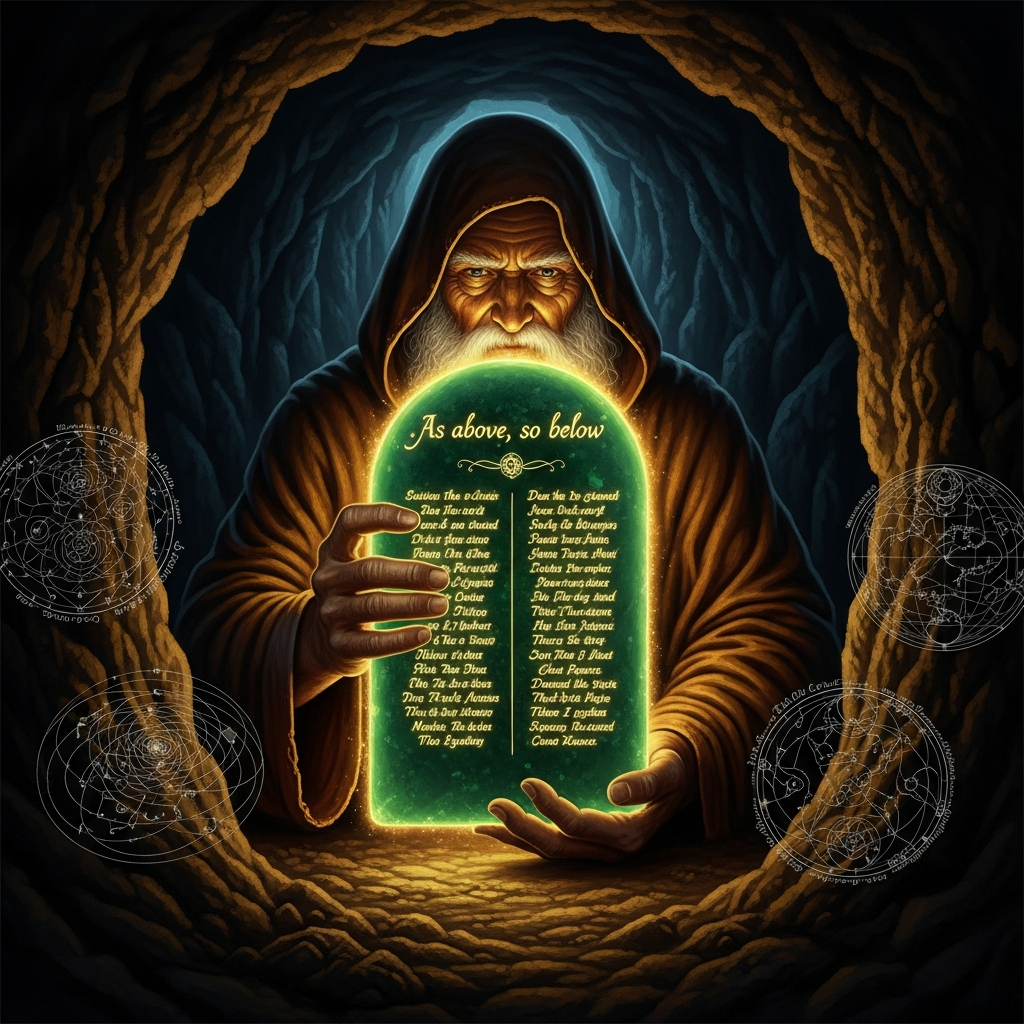
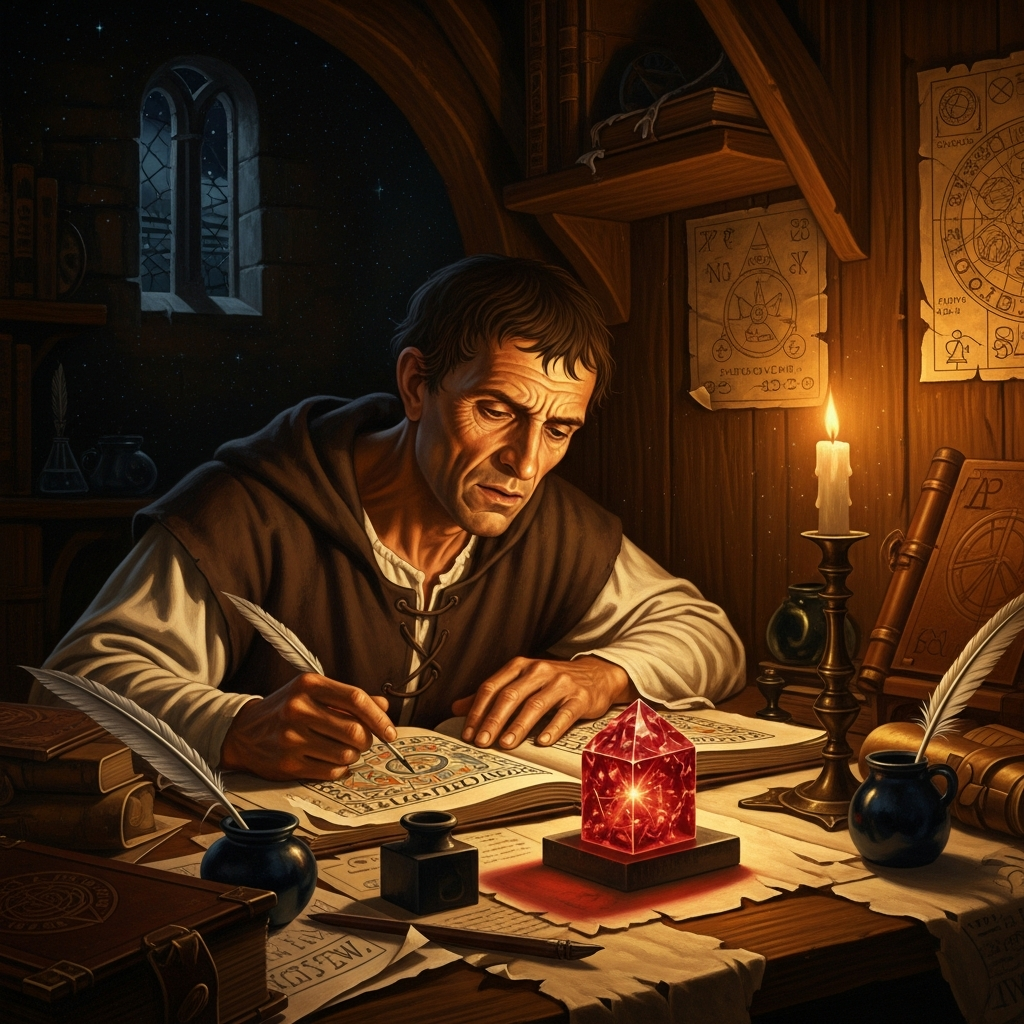
He was a bookseller. He knew manuscripts the way a carpenter knows wood — by handling hundreds of them, learning their textures, their inks, their binding structures. When the stranger came to his stall in Paris with this particular book, Flamel understood immediately that it was different. The pages were not parchment — they seemed to be made of young tree bark, or copper beaten very thin, or some material he could not identify. The covers appeared to be copper, engraved. The handwriting was not Latin or French or any European script he recognized.
He paid two florins. He carried it home. He opened it.
The book was attributed, in a frontispiece of sorts, to Abraham the Jew — identified as Prince, Priest, Levite, Astrologer, and Philosopher. It described itself as containing great secrets. The first pages were, Flamel would later write, reasonably clear to him: instructions for scribal practice, moral exhortations, nothing unfamiliar. But after those first pages came diagrams and images and writing that he could not make sense of at all.
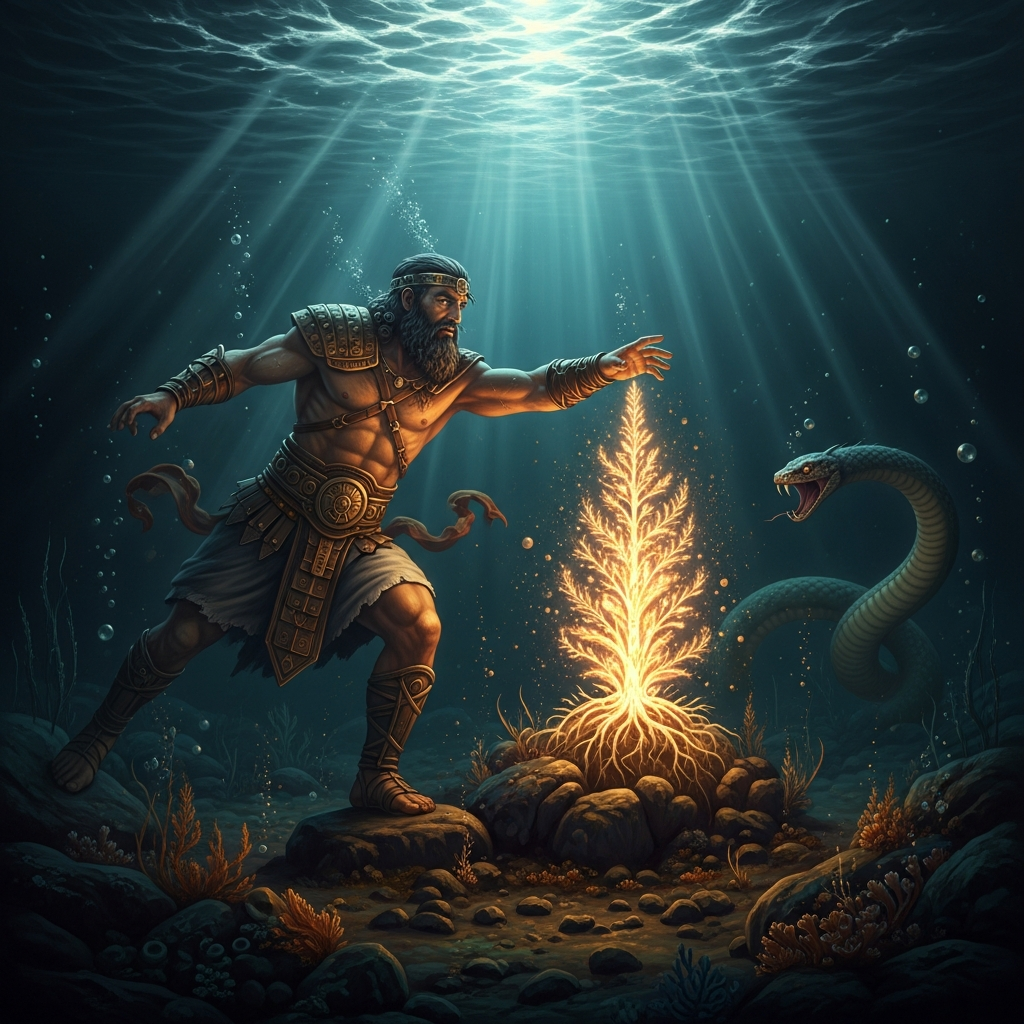
There were drawings: a serpent crucified on a cross, a desert with fountains, a man and woman and a fierce wind, a flower on a mountain-top, a rose tree in bloom beside a hollow oak, a figure identified as Mercury being attacked by men with scythes, and a king whose servants made him drink a cup of liquid, and a king murdering children while physicians collected the blood. The images were precise and clearly meaningful and completely opaque to him.
He spent the next several years showing the images to learned men in Paris. Clergymen, scholars, professors of medicine who had alchemical training. None of them could read it. The writing in the margins of the illustrations was identified variously as ancient Hebrew, Chaldean, or some other Semitic script, but no one Flamel consulted could read it fluently enough to make sense of the full context.
He had a copy of the illustrations made and kept the original safely locked away. The copy he showed around. No progress.
At some point — the exact date is lost, but Flamel places it around the 1360s — he decided to go to Spain.
Spain was where the three traditions met: the Jewish scholarly tradition with its Hebrew and Aramaic; the Arab scholarly tradition with its access to Hellenistic alchemical texts; and the Christian European tradition within which Flamel himself operated. The translation movement of the previous century had been centered in Toledo, where Christian, Jewish, and Muslim scholars had worked together to bring Arabic and Greek texts into Latin. Flamel believed, reasonably, that someone in Spain could read what no one in Paris could.
He made the pilgrimage to Santiago de Compostela — a legitimate religious pilgrimage, the one every devout French Catholic of the period had reason to make — and used the journey as cover for his actual mission: finding a scholar who could translate the book he had left at home.
He failed in Spain. He succeeded on the way back.
At León, on the return journey, a French merchant introduced him to an old Jewish physician named Canches. Canches had fled Spain sometime earlier — possibly one of the repeated expulsions and persecutions of Jewish communities in medieval Spain — and was living quietly in León as a physician. When Flamel showed him the copied illustrations, Canches recognized them.
He was trembling, Flamel wrote. He identified the original as a version of texts he knew from the tradition — ancient Hebrew alchemical material, related to what he called the work of Abraham the Jew. He translated what he could from memory and from Flamel’s copies, and then he agreed to return to Paris with Flamel to see the original.
Canches died on the journey. He died at Orléans, of illness, and was buried there, and was never seen in Paris.
Flamel returned to Paris with partial translations and worked for the next years applying what Canches had told him.
On January 17th, 1382 — he recorded the date precisely — he wrote that he had transmuted mercury into silver. On April 25th of the same year, he wrote, he and his wife Perenelle had transmuted mercury into gold. He described the process using the standard alchemical language of his day: the three operations, the Philosopher’s Stone, the red and white stages of transmutation.
We cannot know what he actually did in that laboratory.
What we can document is what followed. Nicolas Flamel became wealthy. Not moderately wealthy — he endowed fourteen hospitals. He built three chapels. He paid for construction work on seven churches in Paris. After his death, the documentation of his charitable foundations went on for another two centuries before the institutions he created finally dissolved. The Rue Nicolas Flamel still exists in Paris, near the Pompidou Center, because the houses he built in 1407 still stand on it.
The wealth could have come from alchemy. It could have come from exceptionally shrewd trade. It could have come from a network of wealthy clients and patrons that his growing reputation attracted. It could have come from activities we have no record of. Historians of science and of alchemy have argued all these positions.
What is beyond argument is that a man who started as a bookseller ended as one of the significant benefactors of late medieval Paris.
The book was never found.
When Flamel died in 1418, his house was searched almost immediately by people who believed the Philosopher’s Stone must be somewhere inside it. The house was torn apart, walls and floors opened, the garden excavated. Nothing alchemical was found. The original manuscript of Abraham the Jew — if it had ever physically existed — was gone.
Stories proliferated immediately after his death that he had faked his death and was still alive, still working, somewhere in Europe or the East or India. The immortality implied by the Philosopher’s Stone made his death suspicious to everyone who believed he had found it. The English alchemical tradition reported sightings of him in India in the 17th century. A traveler claimed to have met him at the Paris opera in 1761. He appeared in Arabian Nights adaptations. He became a figure in the legends attached to the Rosicrucians, the Freemasons, and eventually every later esoteric tradition that needed a medieval precursor.
He was a bookseller who bought the right book. He spent twenty-one years finding someone who could read it. The reader died before finishing. He worked with what he had.
The pattern is the pattern of every serious quest: the key comes from an unexpected direction, the key-holder dies before the work is done, and you proceed anyway with the partial knowledge you have managed to gather, which turns out to be just enough.
Echoes Across Traditions
Entities
- Nicolas Flamel
- Perenelle Flamel
- Canches the rabbi
- Abraham the Jew
- the Book of Abraham
Sources
- Nicolas Flamel, *Livre des figures hiéroglyphiques* (attrib., first published 1612 CE — two centuries after Flamel's death)
- Laurinda Dixon, *Nicolas Flamel: His Exposition of the Hieroglyphicall Figures* (1994)
- Barbara Obrist, 'Die Alchemie in der mittelalterlichen Gesellschaft' in *Die Alchemie in der europäischen Kultur- und Wissenschaftsgeschichte* (1986)
- Lawrence Principe, *The Secrets of Alchemy* (2013)
- Didier Kahn, *Alchimie et Paracelsisme en France à la fin de la Renaissance* (2007)