Rhiannon Falsely Accused
circa 500-700 CE — the mythic age of the Mabinogion · Arberth, Dyfed, Wales
Contents
When Rhiannon's infant son vanishes on his first night and the terrified maids smear her with blood and bones, she accepts six years of humiliating penance for a crime she never committed — with the patience of a woman who knows that truth eventually surfaces.
- When
- circa 500-700 CE — the mythic age of the Mabinogion
- Where
- Arberth, Dyfed, Wales
The maids wake to find the infant gone and Rhiannon sleeping beside an empty crib.
They are terrified — not of what they don’t know, but of what will happen to them when it is discovered that the baby of Dyfed’s queen has vanished on their watch. They act quickly, with the specific resourcefulness of people in danger who have made their decision before morning: they kill a puppy, smear the blood on Rhiannon’s hands and face while she sleeps, scatter the bones beside her.
When they wake her they are already weeping. “My lady — you destroyed your own child. We could not stop you.”
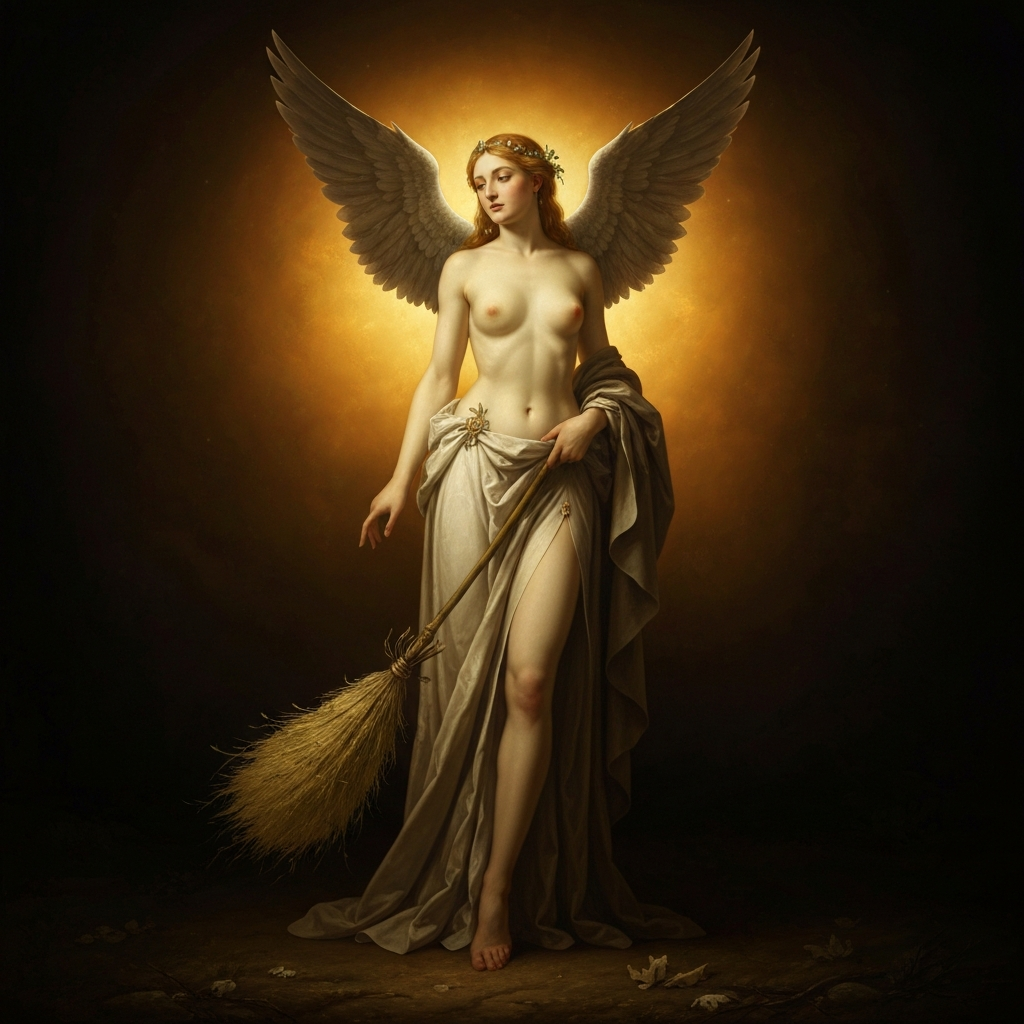
Rhiannon looks at her hands. She looks at the bones. She is an Otherworld woman of considerable power and perception, and she knows immediately that the blood on her hands is not human and the bones are not the bones she is being told they are. She tells the maids exactly this: tell the truth and I will protect you. The maids, who have already committed to the lie and are too frightened to reverse it, insist.
She goes to Pwyll. She tells him what she knows: she has been framed. He does not fully disbelieve her, but there are six witnesses and no alternative explanation, and the council of Dyfed must respond to the apparent evidence. Pwyll is not a bad man. He refuses to divorce her. But the penance the council imposes is severe: she will stand at the gate of the court for seven years and offer to carry visitors on her back to the hall, like a horse, telling her own story as she carries them — the story of how she destroyed her child.
She performs this penance for years without complaint. She carries strangers. She tells the story. She does not rage against the injustice publicly, because a rage that confirms what the accusers claimed would make the truth harder to find, not easier. She performs the guilty person’s role with the specific dignity of someone who knows the performance is temporary and the truth is not.
Meanwhile, on the same night as the disappearance, a man named Teyrnon Twryf Liant is keeping vigil in his stable against a creature that has been stealing his newborn foals. The creature reaches a clawed hand through the window. Teyrnon strikes the arm off at the elbow and opens the door to pursue — and on the threshold he finds a baby boy, wrapped in gold brocade.
He and his wife raise the boy. He grows with unusual speed, and as he grows he looks increasingly like the portraits of Pwyll. Teyrnon, an honorable man, puts the resemblances together eventually and brings the boy to Dyfed.
The boy is Pryderi. Rhiannon sees her son and the penance is ended. The maids confess. The truth that she maintained through six years of public humiliation has surfaced on its own schedule, and she did not need to force it, only to endure until the world caught up.
She names the child herself. She had named him before she lost him: Pryderi, meaning worry, anxiety, the thing she lost and then recovered. The name sticks. It is not a joyful name. It is an honest one, given by a woman who knows that the recovered thing carries the memory of having been lost.
Echoes Across Traditions
Entities
- Rhiannon
- Pwyll
- Pryderi
- Teyrnon Twryf Liant
- The maids
Sources
- Jeffrey Gantz, trans., *The Mabinogion* (Penguin, 1976)
- Sioned Davies, trans., *The Mabinogion* (Oxford World's Classics, 2007)
- Juliette Wood, 'Versions of Rhiannon: The Image of a Welsh Goddess,' *Folklore* 103 (1992)