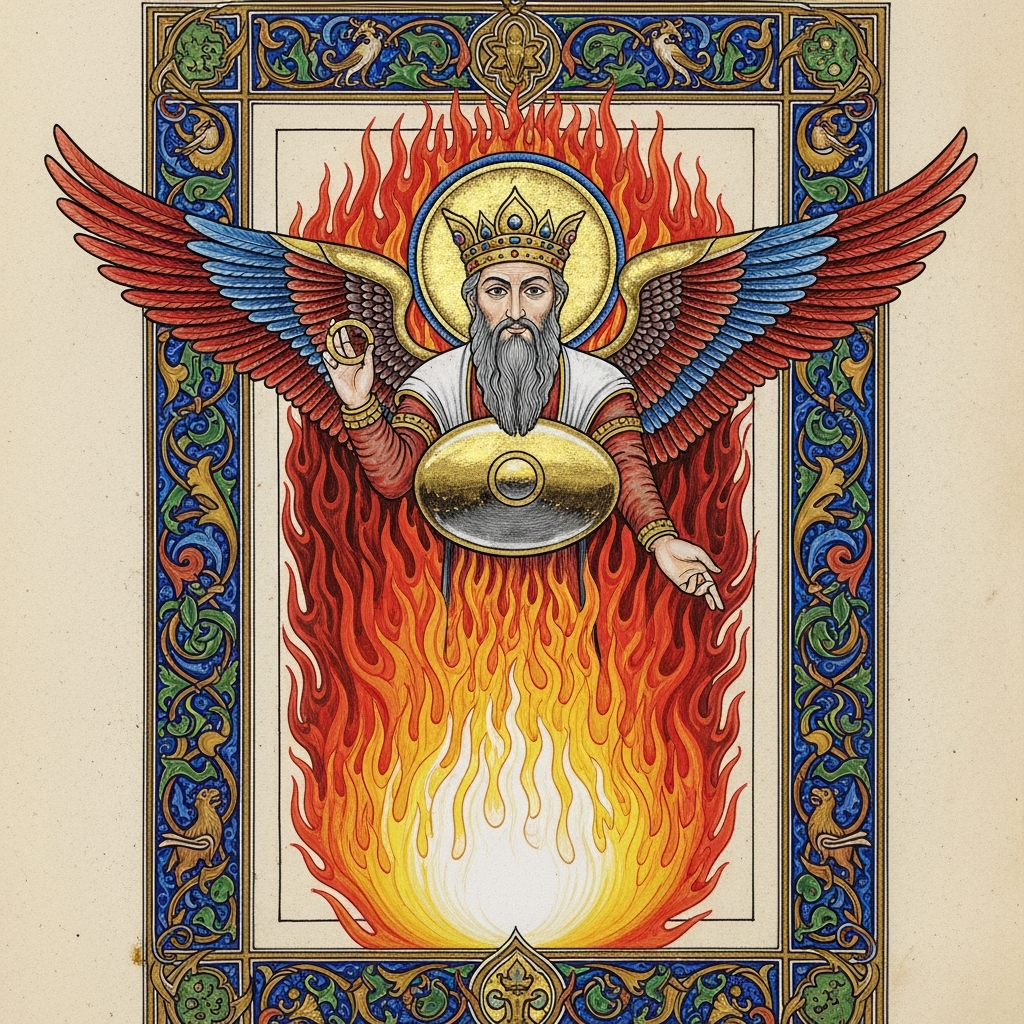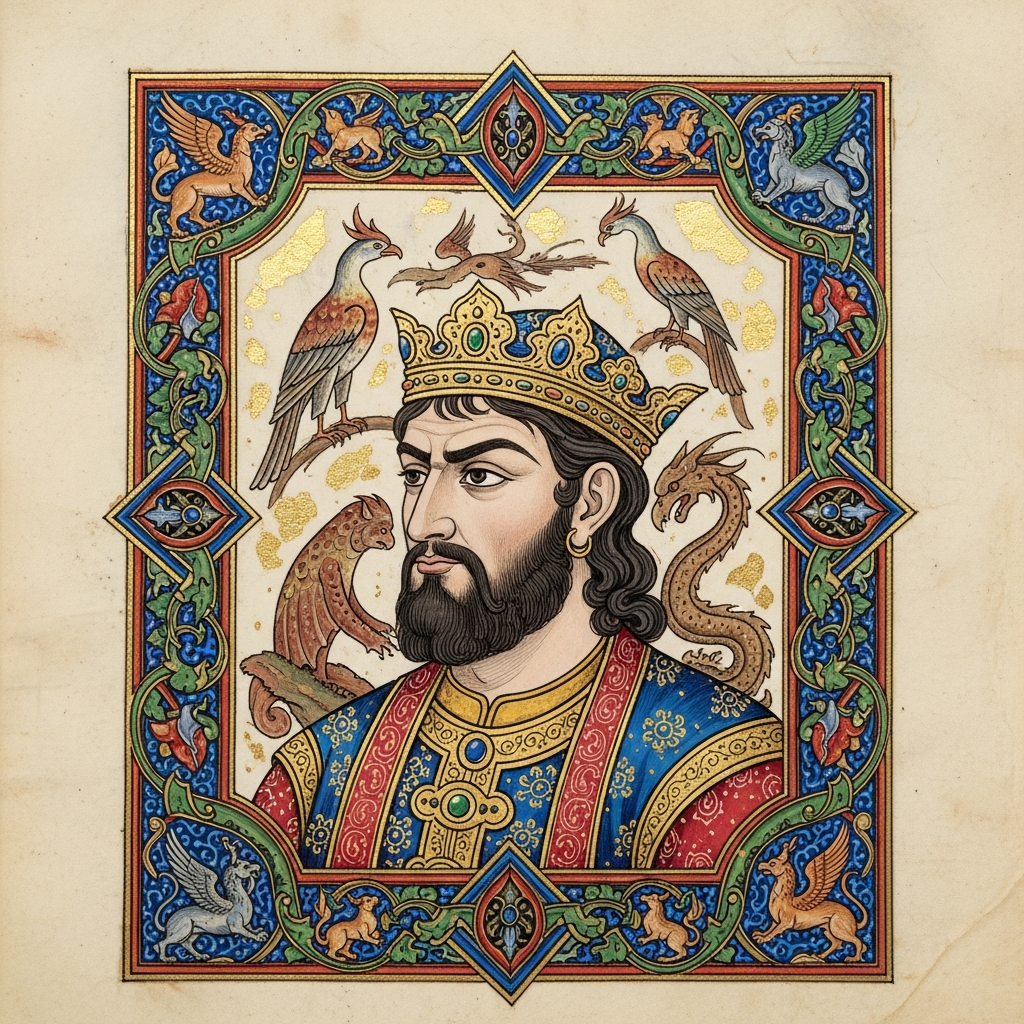
Rustam and Sohrab
1010 CE (Ferdowsi's Shahnameh composed) · Persia (modern Iran) — the legendary borderlands between Iran and Turan
Contents
The greatest hero of Iran spends two days in single combat with a young Turanian champion who has crossed the world looking for his father. On the third day, he wins. He has won his whole life. This time, winning kills his son.
- When
- 1010 CE (Ferdowsi's Shahnameh composed)
- Where
- Persia (modern Iran) — the legendary borderlands between Iran and Turan
The boy has been asking about his father since he learned to ask.
His mother Tahmineh told him what she knew: a hero named Rustam, lord of Zabulestan, the greatest warrior in Iran, the man whose horse Rakhsh is faster than wind and whose arrow split a millstone on a wager. She told him these things when Sohrab was three. When he was five. When he was ten and already taller than the men of the Turanian court. She put a seal on his arm — a birthmark pressed with a talisman his father had left — and said: If you find him, show him this. He will know you.
He grows up wanting only one thing. He grows up in the enemy camp.
The armies face each other across the plain at the Oxus. Sohrab has led the Turanian host into Iran not to destroy the Iranians but to find his father, pull him from the ranks, make him king, and rule together. He has told no one this. He searches the Iranian camp with his eyes and does not find Rustam’s banner among the standards because Rustam, in a fit of pique at the Persian king Kay Kavus, has stayed home.
So Sohrab does what heroes do when their mission stalls. He issues a challenge for single combat and waits.
Rustam hears about the young Turanian champion — enormous, lion-shouldered, fights like a man twice his age — and is stirred by something he cannot name. He volunteers for the duel without knowing who the boy is. He arrives at the arena on Rakhsh, his white leopard markings unmistakable across a field, and Sohrab goes still.
Is that Rustam? he asks his guide.
The guide, following orders, says: No. That is one of the captains.
Sohrab believes him. He has been trained to trust his elders.
The first day, they wrestle. They are evenly matched — which is the most terrible sentence in the Shahnameh, because Rustam is never evenly matched. He has fought demons, the White Div of Mazandaran, armies of ten thousand. He is sixty years old and still invincible. And now this boy is pushing him back.
Rustam throws him. Sohrab lands and gets up. Rustam claims a break, as the rules allow. He cannot understand it. His arms ache. His arms have not ached since before the boy was born.
The second day, they fight with weapons. Rustam’s lance bends. Sohrab’s sword chips on his armor. By evening they have not resolved it. Sohrab, confused and stricken by something he cannot name — a gravity in this man, a familiarity — offers him a pause.
Old warrior, Sohrab says. You fight like someone I have been searching for. Tell me your name.
Rustam says: I am nobody. I am one of the captains.
On the third day, Rustam kills him.
The spear goes in under the arm, where the armor does not reach. Sohrab goes down in the dust and the two armies, which have been silent, make a sound. Rustam stands over him. He is waiting for the surrender. In the rules of single combat, the fallen man yields and the duel is over.
Sohrab does not yield. He is dying, and he is still talking.
This will not stand, he says. My father is Rustam. He will find you. He will tear this plain up looking for who did this to his son.
The world goes quiet inside Rustam’s chest.
He asks the question he should have asked two days ago. He asks the question he was afraid to ask because he did not want to know the answer.
What proof do you have?
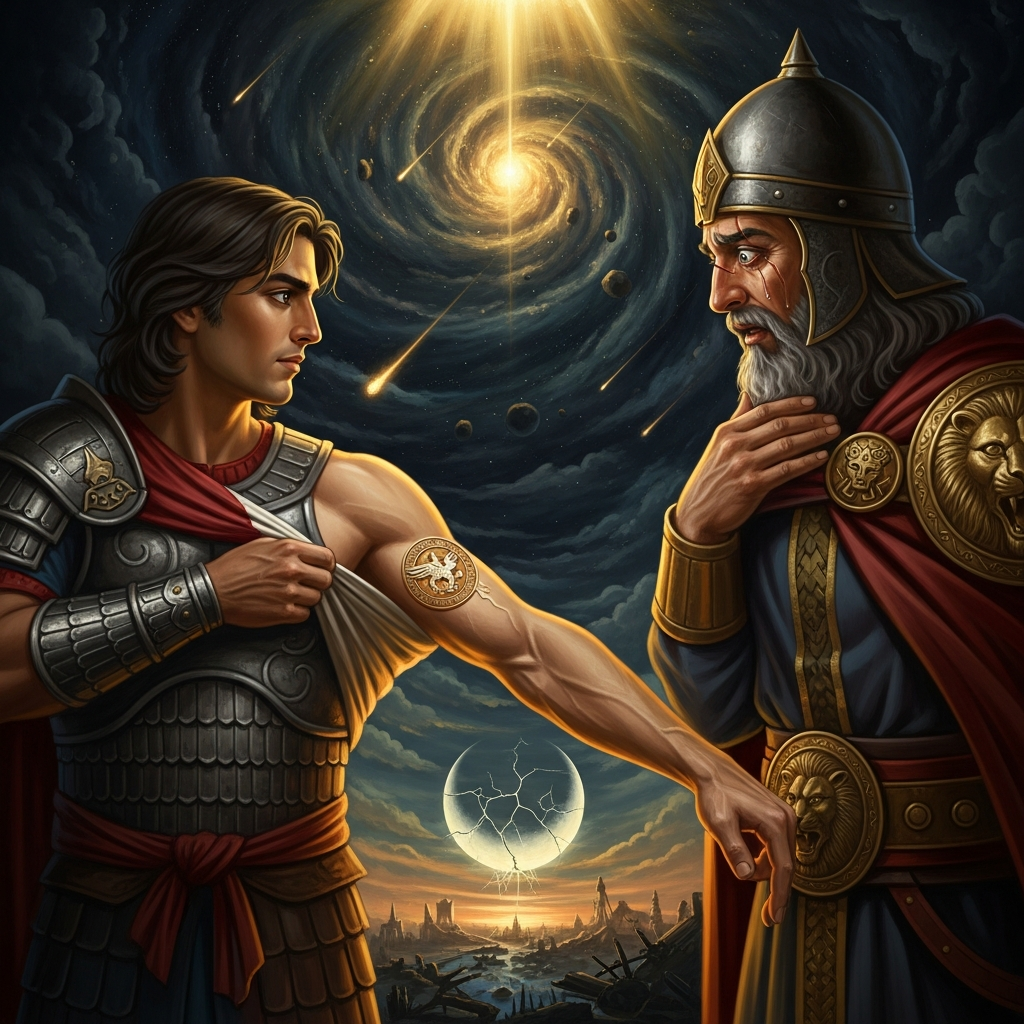
Sohrab pulls aside the armor over his arm. There is the seal. The talisman his mother pressed into his skin sixteen years ago in a Turanian bedroom while his father slept, not knowing a son was being made.
Rustam recognizes it.
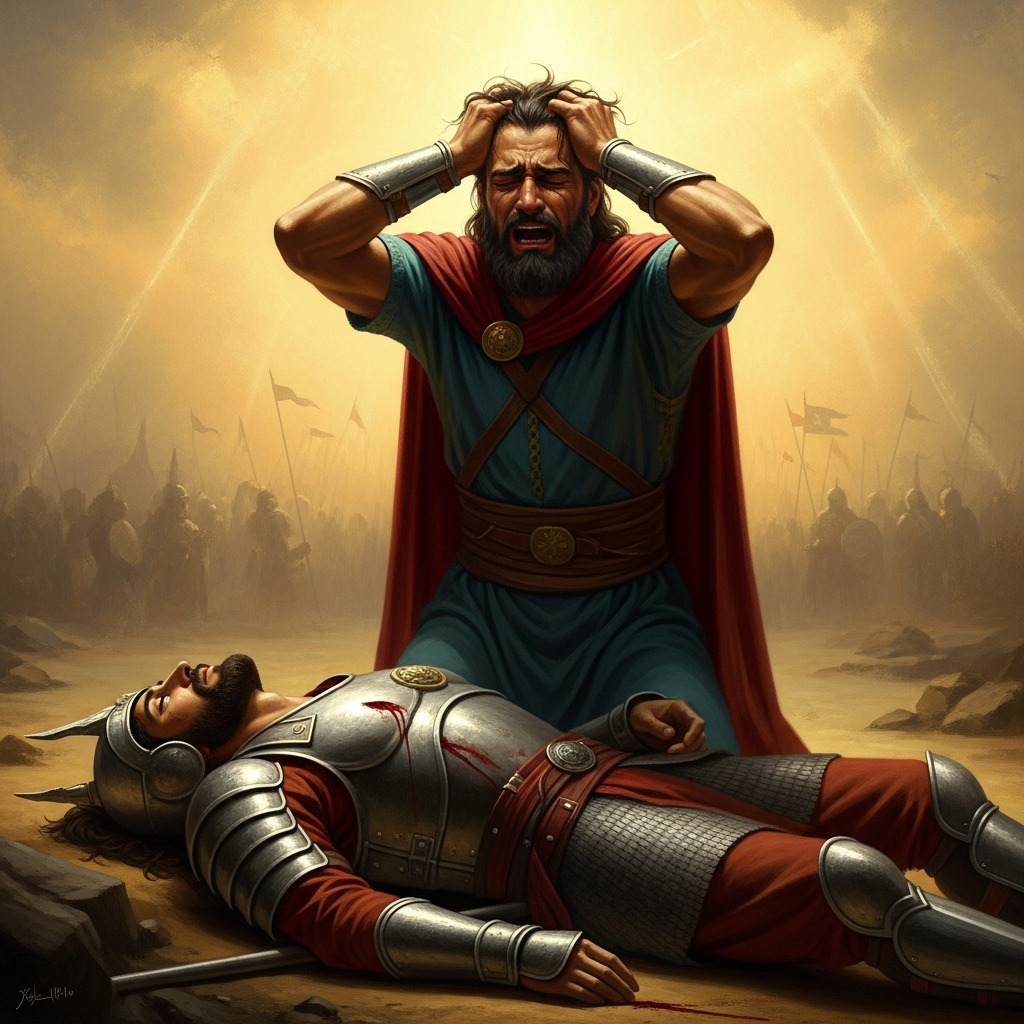
He tears his own hair. He tears his beard. These are not metaphors in the Shahnameh — Ferdowsi means it literally, the great hands that have killed demons grabbing fistfuls of gray hair and pulling until the blood comes. He takes off his own helmet and beats his head with it. The armies, both armies, Iranian and Turanian, are weeping. Even the enemy wept.
There is an antidote. Every Persian soldier knows about it. The Persian king Kay Kavus keeps it — a medicine that can pull a man back from the edge of death, a miracle stored in a box at the royal pavilion. Rustam sends riders. He does not go himself because he cannot leave Sohrab alone in the dust.
The riders reach the king. The king deliberates. His advisors say: if Sohrab survives, if Rustam has a son who fights like that, the two of them together will be unstoppable. What king wants to be ruled by his own army? The king takes his time. He deliberates very carefully. He weighs the options with great political wisdom.
By the time the antidote arrives, Sohrab is dead.
The Shahnameh is sixty thousand couplets long. It tells the story of Iran from the beginning of time to the Arab conquest. There are dragons and demons and world-spanning kings. Rustam himself appears in a hundred episodes — he is the spine of the whole Iranian mythological tradition, the hero who holds civilization together while the kings destroy it around him.
But this is the episode everyone remembers.
Not because it is the most spectacular. Because it is the truest. The greatest warrior in the world is not undone by a greater warrior. He is undone by a series of small delays: the guide who lied, the name he would not speak, the king who waited too long. The sword that killed Sohrab was not the spear. It was the pause between the riders reaching the pavilion and the pavilion deciding to act.
Ferdowsi writes Rustam’s lament in the voice of a man who understands this. What have I done with my own hands, Rustam cries, that heaven has done to me in return. He has spent a lifetime winning. He has never counted the cost of winning before.
He buries Sohrab in a hero’s tomb. He pours dust on his own head. He returns to Zabulestan.
He does not speak of it after. The Shahnameh does not give him a scene of reckoning or recovery. He simply continues — keeps fighting, keeps winning, keeps holding the line for a civilization that cannot hold the line for itself.
The tragedy of Rustam and Sohrab is not that a father kills his son. Fathers in myths kill their sons all the time. The tragedy is the delay — the deliberate, political, cowardly delay of the antidote. The spear was an accident. The king’s waiting was a choice. Ferdowsi knew which one was the murder.
He knew because he had spent thirty years writing about kings. He had seen enough of them by then to know exactly how they wait.
Scenes
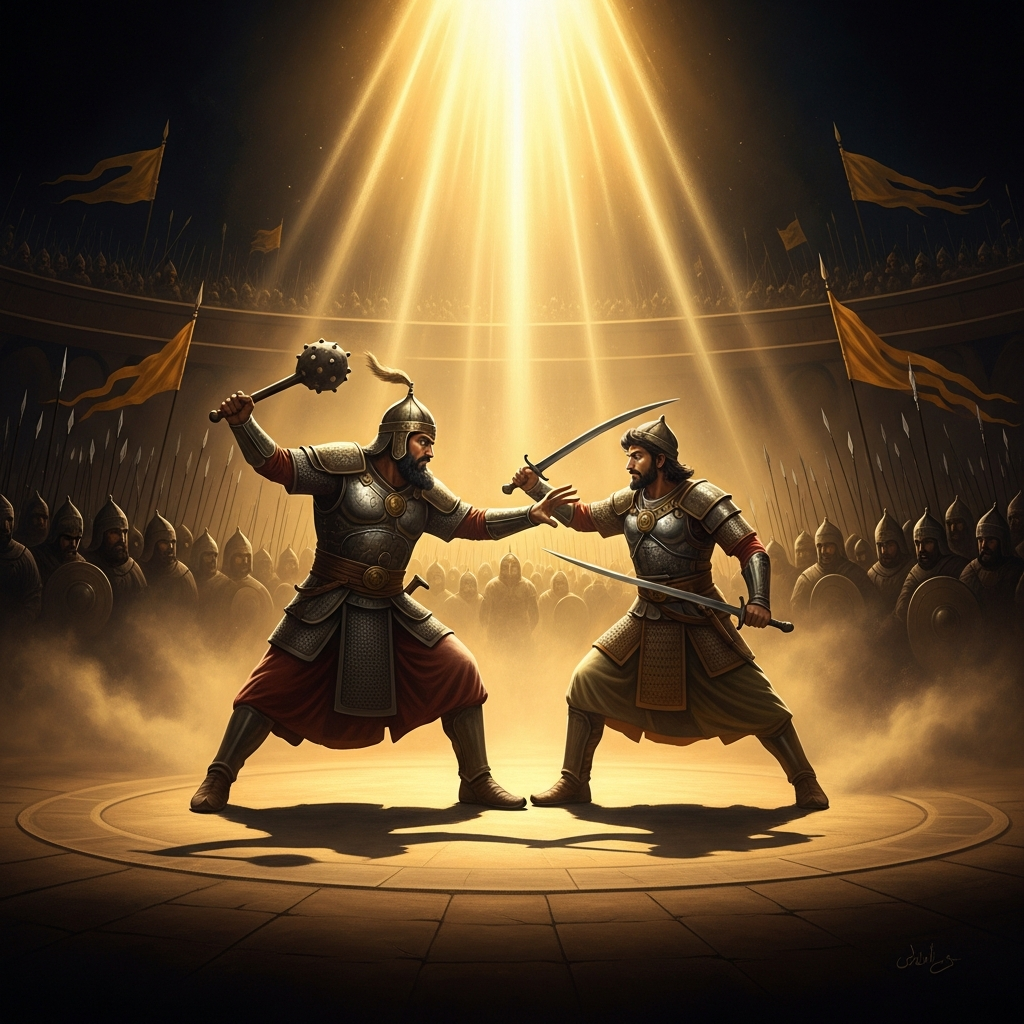
Two armies ring the dust of the arena while father and son, unknown to each other, fight for the fate of both nations — the greatest duel in Persian epic
 Generating art…
 Sohrab pulls aside his armor to show the seal his father left on his arm as an infant
 Generating art…
 Rustam tears his own hair and beard before the body of his son, the invincible hero broken by the one wound no armor could stop
 Generating art…
 Echoes Across Traditions
Entities


Sources
- Abolqasem Ferdowsi, *Shahnameh: The Persian Book of Kings*, trans. Dick Davis (Penguin, 2016)
- Dick Davis, *Epic and Sedition: The Case of Ferdowsi's Shahnameh* (University of Arkansas Press, 1992)
- Jerome W. Clinton (trans.), *The Tragedy of Sohrab and Rostam* (University of Washington Press, 1996)
- Ehsan Yarshater (ed.), *Persian Literature* (Bibliotheca Persica, 1988)