Samhain: The Night the Veil Thins
celebrated annually, mythic origin in the age of the Tuatha Dé Danann — October 31 · Ireland — particularly the fairy mounds, crossroads, and hilltops throughout the island
Contents
On the last night of October the fairy mounds of Ireland open, the dead walk the roads, and the two worlds that usually run parallel briefly overlap — which is simultaneously the most dangerous night of the year and the most sacred.
- When
- celebrated annually, mythic origin in the age of the Tuatha Dé Danann — October 31
- Where
- Ireland — particularly the fairy mounds, crossroads, and hilltops throughout the island
Between the last day of October and the first day of November there is a moment that is neither.
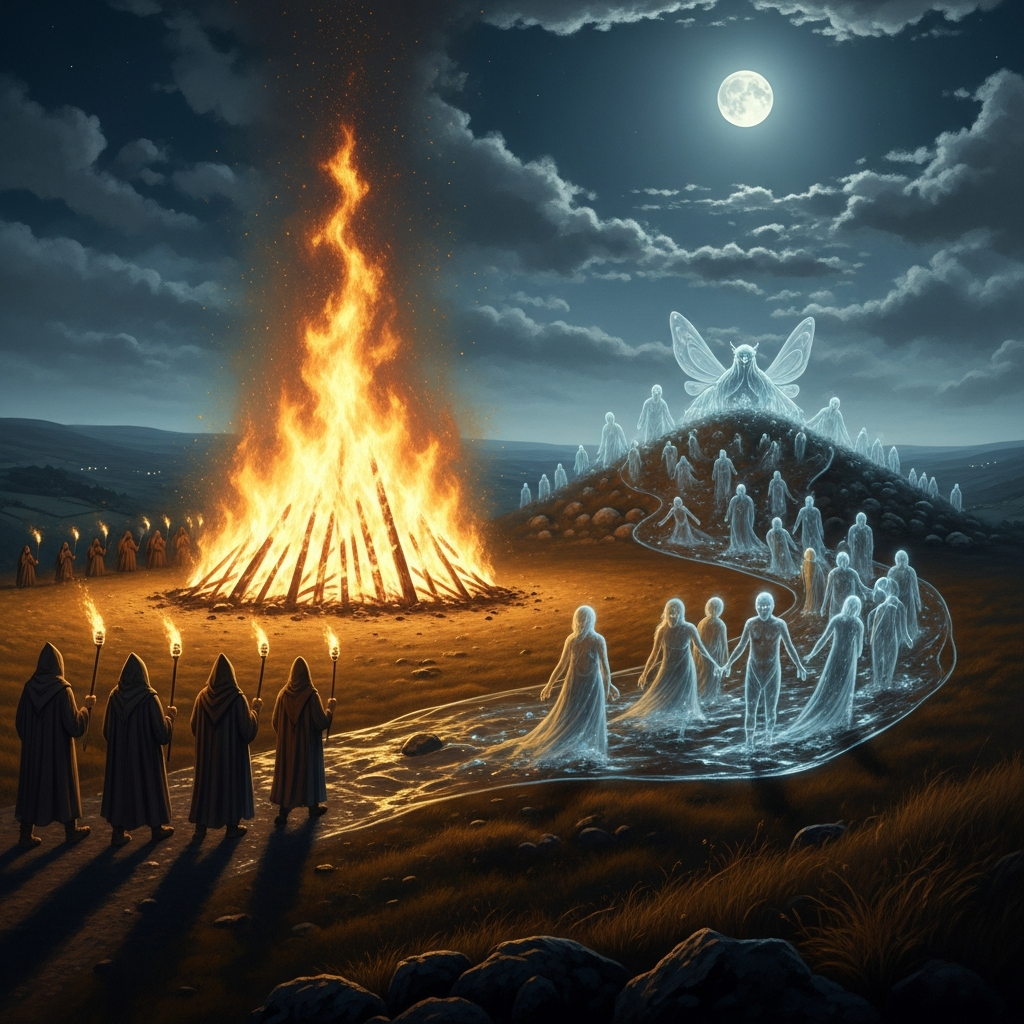
The Celts divide their year at Samhain and Beltane — the dark half beginning at Samhain, the light half at Beltane — and the year’s division point is where ordinary time cracks open. On the morning before Samhain the ordinary rules apply. On the night of Samhain itself, the fairy mounds are open. The Tuatha Dé Danann who live in those mounds come out and move across the surface of Ireland in the dark. The dead who have died in the past year walk the roads back to the houses where they lived.
The living build larger fires than usual.
This is not a metaphor about hospitality, though it becomes one. The fires are protective — iron and rowan and elder are protections from the Otherworld, and fire is a light that draws the dead toward hearths that want them, and repels whatever comes out of the mounds that should not be welcomed. A family on Samhain night sets a place at the table for the dead member of the household. They leave the door unlocked. They do not look too hard at the shadows in the corner of the room.
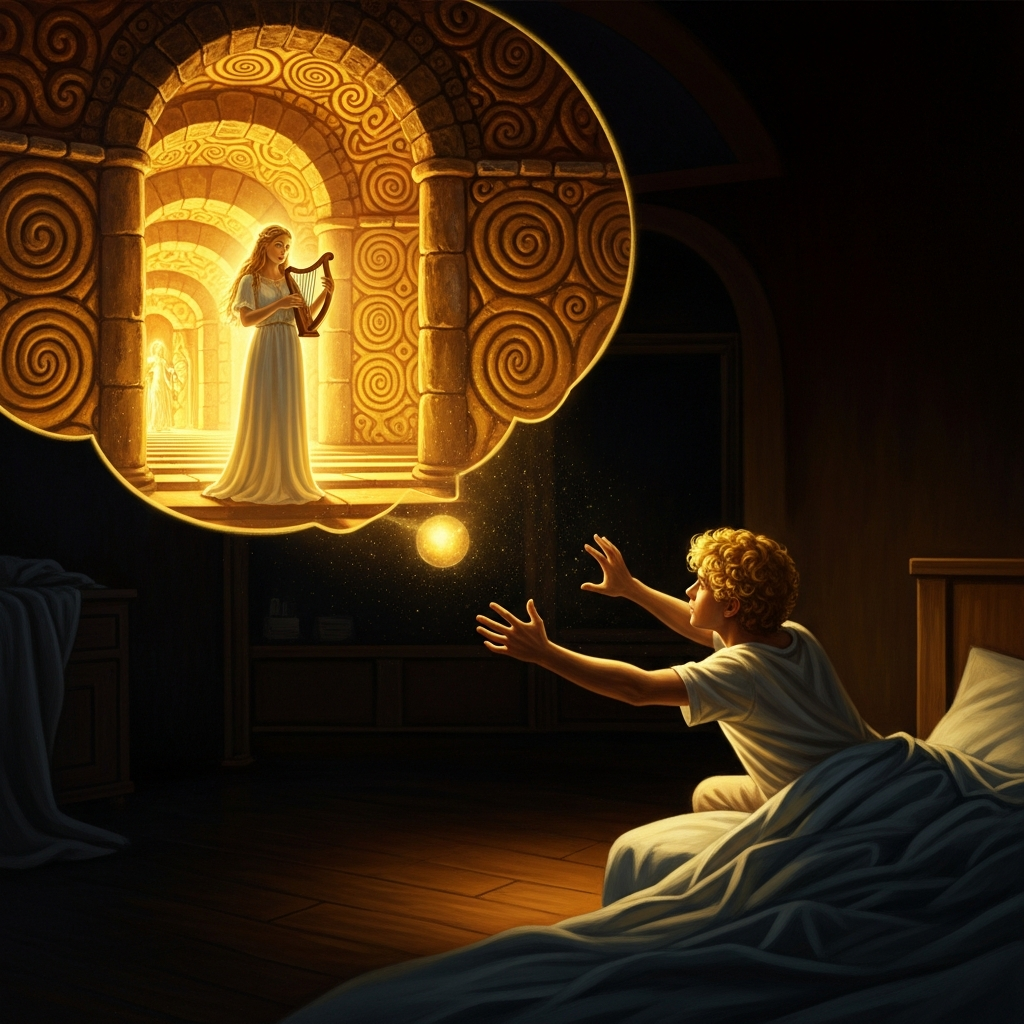
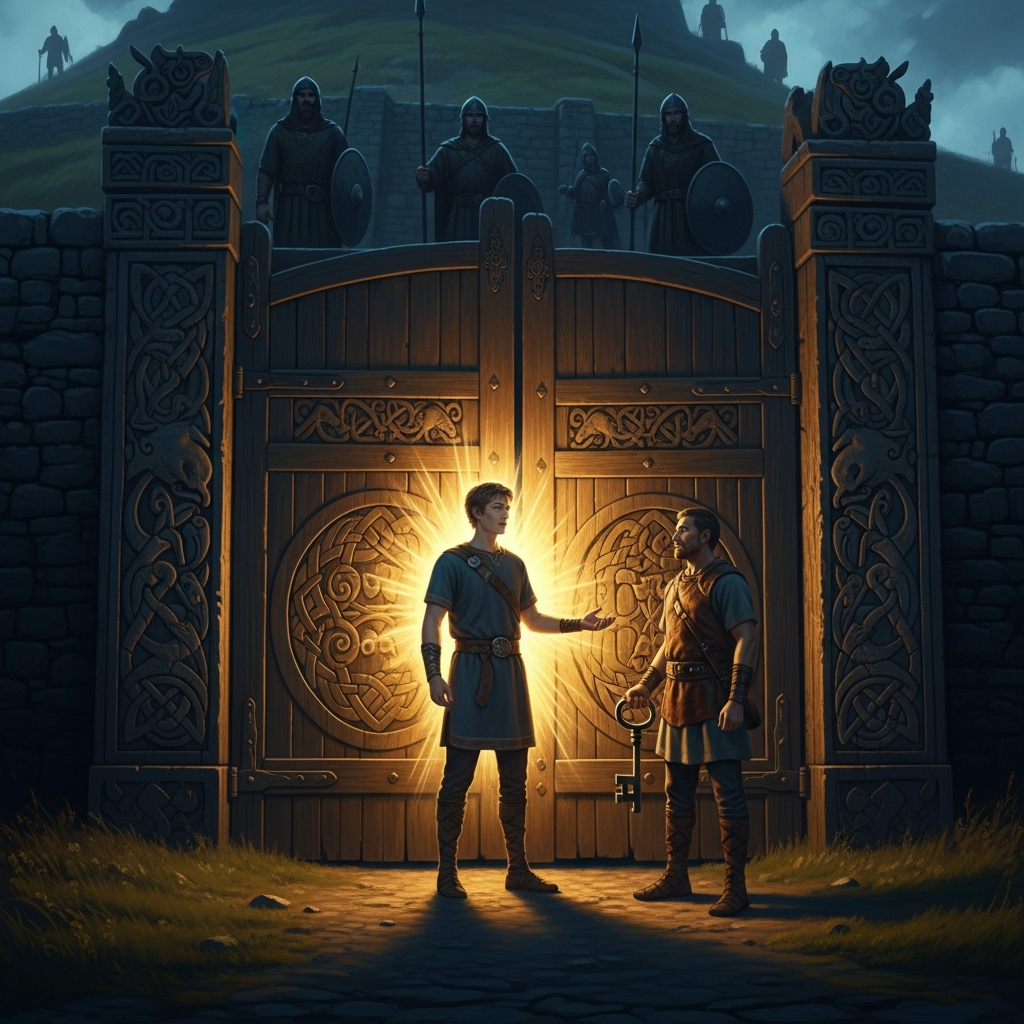
The stories told on Samhain are not comfortable stories. Aillen Mac Midhna came out of his mound every Samhain and burned Tara. The great cattle-raiding adventures always begin on Samhain night, when the mounds are open and the fairy folk can be encountered and challenged. The hero’s journey into the Otherworld — which requires a door between worlds — happens most naturally on Samhain, when the doors are already open.
What the night requires is not fear but attention. The Irish relationship with the Otherworld is not primarily one of terror but of proximity: the fairy folk are next-door neighbors, powerful and unpredictable but not essentially hostile, and Samhain is when the neighbors come over without knocking. A household that handles this correctly — the set place, the opened door, the respectful acknowledgment of the dead who return — has done what the ritual requires. A household that panics or pretends nothing is happening fails in a specific social obligation.
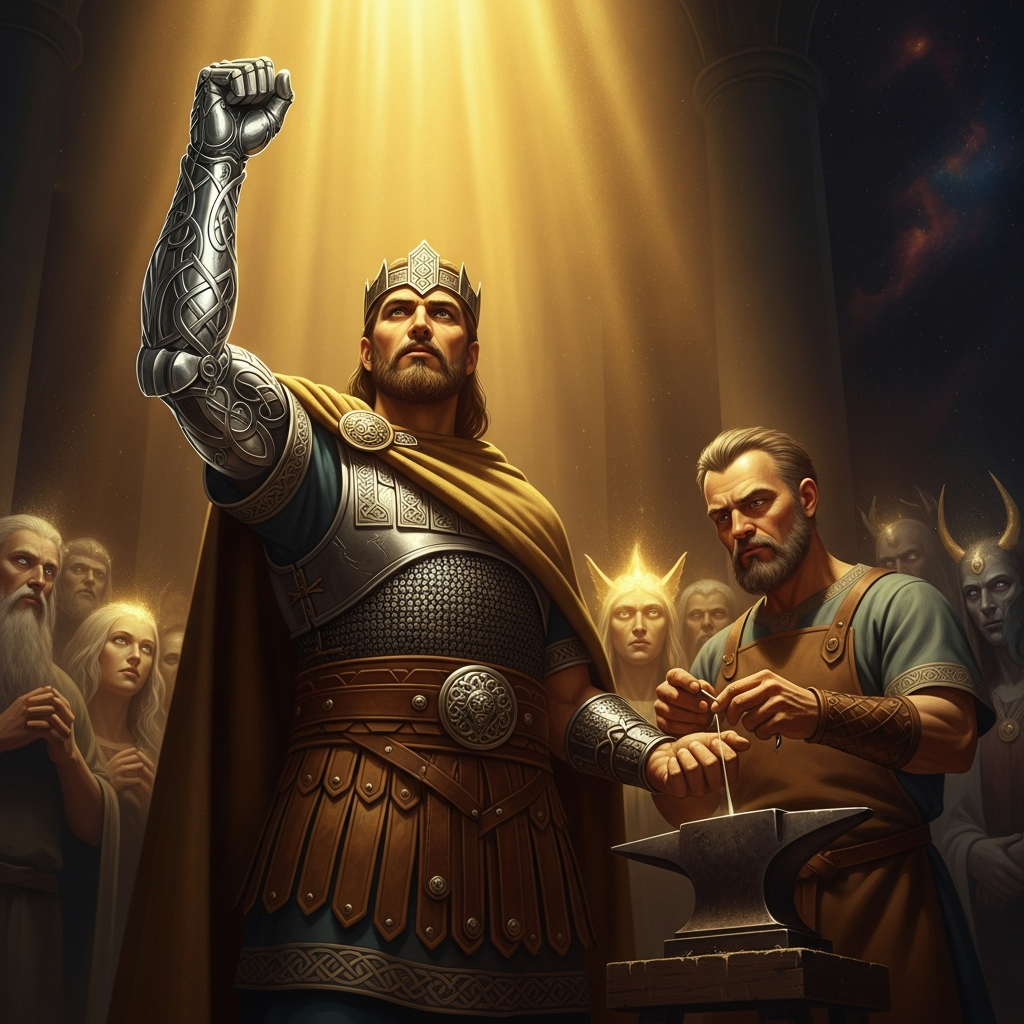
The Dagda makes love to the Morrigan on Samhain night at the ford of the River Unshin. This coupling — the father-god of abundance with the goddess of battle and fate — is the sovereignty rite that guarantees the coming year’s harvest will follow the fighting season. Samhain is the hinge: the dark half begins, the last harvest is in, the killing season of winter approaches. The rite between the Dagda and the Morrigan is the assertion that even on the night when the dead walk, life is still working out its arrangements.
The Christian calendar places All Saints’ Day on November 1 and All Souls’ Day on November 2. The placement is not accidental: the missionary church was skilled at positioning its observances at the latitude of existing sacred time. Halloween — All Hallows’ Eve — is the vigil of the saints’ feast, but its costumes and its Jack-o’-lanterns and its insistence on encountering the frightening thing rather than simply praying past it belong to the older night.
The mounds open every Samhain. The Tuatha Dé Danann come out. The dead walk home.
This is not a metaphor. The Irish tradition does not want it to be a metaphor. It wants it to be literally true, because a world in which the dead come home once a year is a world in which the dead are not entirely gone, and a world in which the dead are not entirely gone is a world with a different relationship to loss.
The larger fires help. They always have.
Echoes Across Traditions
Entities
- The Tuatha Dé Danann
- Aillen Mac Midhna
- The Dagda
- The dead
- Samhain

Sources
- Máire MacNeill, *The Festival of Lughnasa* (Oxford University Press, 1962)
- Ronald Hutton, *The Stations of the Sun: A History of the Ritual Year in Britain* (Oxford University Press, 1996)
- Proinsias Mac Cana, *Celtic Mythology* (Hamlyn, 1970)