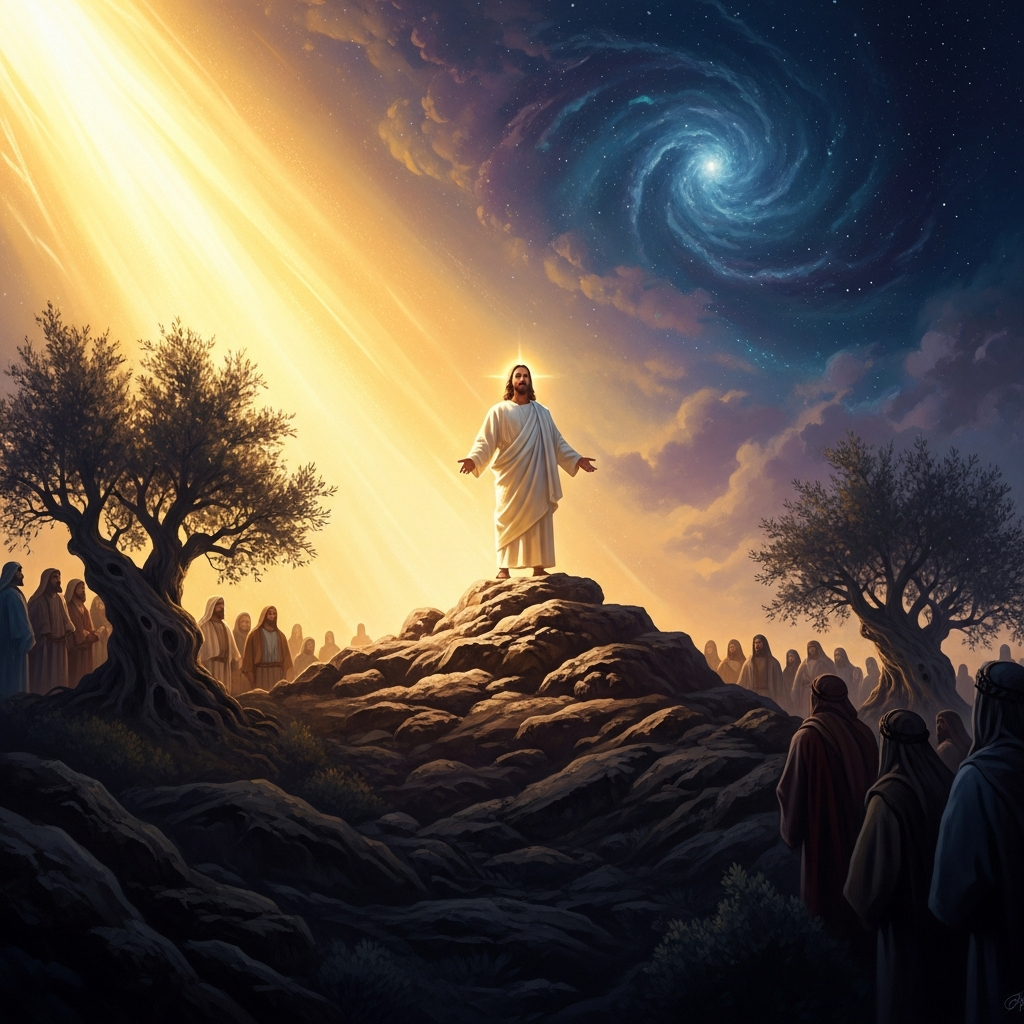
The Empty Tomb
~30 CE · Sunday after the crucifixion · The garden tomb, outside Jerusalem
Contents
On the Sunday after the crucifixion, three women carry spices to a sealed tomb to anoint a dead man — and find the stone rolled away, the body gone, and an angel's impossible announcement waiting in the dark.
- When
- ~30 CE · Sunday after the crucifixion
- Where
- The garden tomb, outside Jerusalem
The city is still dark when they leave.
Three women, carrying spices wrapped in cloth, moving through the alleys of Jerusalem before the merchants open their stalls, before the priests begin their morning prayers, before the soldiers on the wall have properly woken up. Mary Magdalene. Mary the mother of James. Salome. They buried the man they loved in a borrowed tomb two days ago, on the wrong side of sundown, before the Sabbath closed around the city and made everything illegal. They did not have time to anoint the body properly. They are going back now to do what was not finished.
They are not going because they believe he will be alive.
They are going because he is dead and the dead deserve to be honored with what they were promised.
On the road, one of them says it. “Who will roll away the stone for us?” It is a practical question. The stone is large — a rolling stone set in a groove, the kind that takes two strong men to move. They are three women with jars of spice. They know this. They go anyway.
This is the part no theology captures: they go anyway. They do not go in faith. They go in grief, which is its own kind of stubbornness. They will stand outside the sealed stone and weep if they have to. They will anoint what they can reach. They will not leave the task half done.
The sun is just breaking over the Mount of Olives when the garden comes into view.
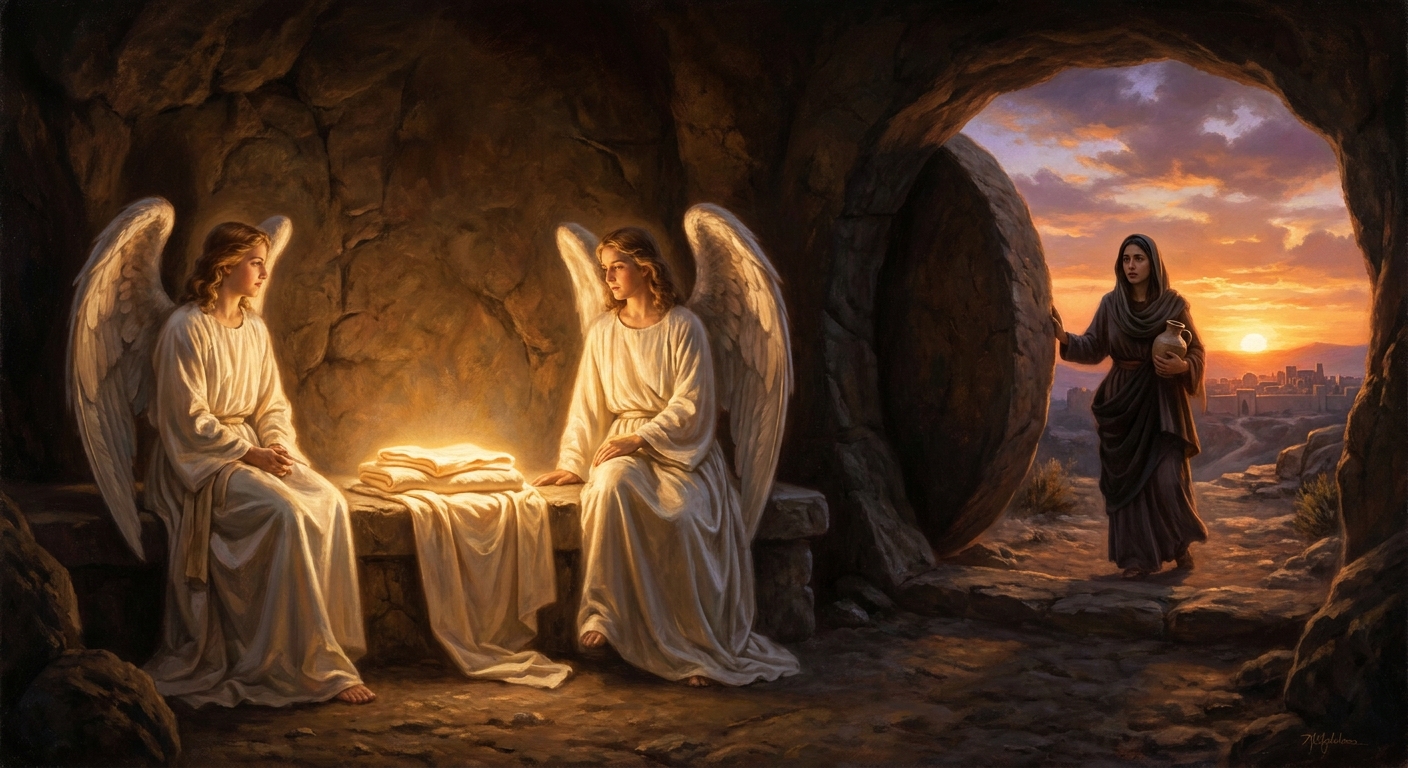
The stone is already rolled away.
They stop. Later, in their accounts, they will describe the feeling differently — Luke says they were perplexed, John says Mary weeps, Mark says they were alarmed — but the physical fact is the same in all four gospels: the stone is moved, the entrance is open, and the body of Jesus of Nazareth is not in the tomb.
Inside, an angel. Or two angels. The gospels differ on the number, the position, the words — but not on the message. “He is not here. He is risen. Look: the place where they laid him.”
The tomb is an exhibit now. Come and see the absence. Come and see the folded linen, the hollow in the stone where a body was three days ago, the spice they did not get to use. Come and see what a resurrection looks like from the outside: not fire, not thunder, not a burst of blinding light. Just a rolled stone and an empty shelf and a young man in white asking why they are looking for the living among the dead.
They run.
Mark says they say nothing to anyone, because they are afraid. Matthew says they run with great joy. Luke says they go back to the eleven disciples and are not believed. All four gospels agree on what happens next: Peter runs to the tomb to look for himself. John runs with him. They see the linen wrappings lying there, and they believe and understand nothing, and they go home.
Mary Magdalene does not go home.
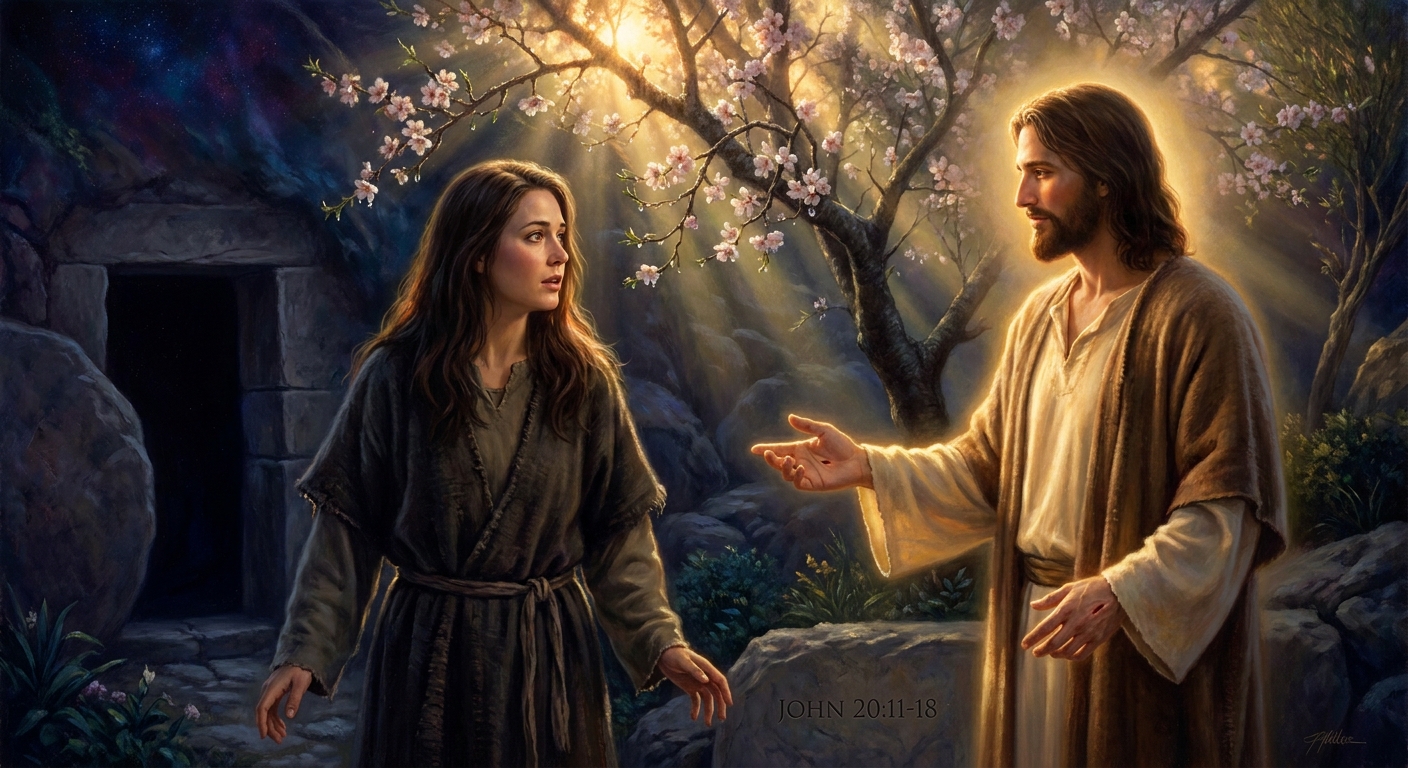
She stays. She stands outside the tomb weeping. She stoops to look inside one more time — and the angels are still there, and they ask her “Woman, why are you weeping?” — and she says “Because they have taken away my Lord and I do not know where they have laid him.” She turns around.
There is a man standing in the garden.
She thinks he is the gardener. John is precise about this: she supposes him to be the gardener. She asks him if he has moved the body and where she can find it. She is ready to carry it herself.
He says her name.
“Mary.”
One word. Her name in his voice. That is the entire recognition scene — the moment when the women who went to anoint a corpse becomes the first witness to the resurrection, the first person on earth to understand what has happened here. She turns and she says the only word she can find: “Rabboni.” Teacher. My teacher. The diminutive, the intimate form.
He tells her not to hold on to him. He is ascending. He sends her to tell the brothers. She goes.
The first witness is a woman.
This matters more than it is usually allowed to matter. First-century Jewish courts did not accept women’s testimony. A story invented to persuade skeptics would not have been written this way. The criterion historians call the criterion of embarrassment — if a detail is awkward for the tradition, the tradition probably did not invent it — points toward the women. No forger, no myth-maker, no early Christian propagandist choosing his hero would have chosen Mary Magdalene. She is chosen by the event. She is there because she stayed.
N.T. Wright spends three hundred pages on the historical arguments. Bart Ehrman, who does not believe in the resurrection, grants that Jesus was crucified and that his followers came to believe he was raised. Raymond Brown catalogs every textual divergence across the four accounts. The scholars argue about the empty tomb, the nature of the resurrection body, the sequence of appearances.
None of them can explain why she stays.
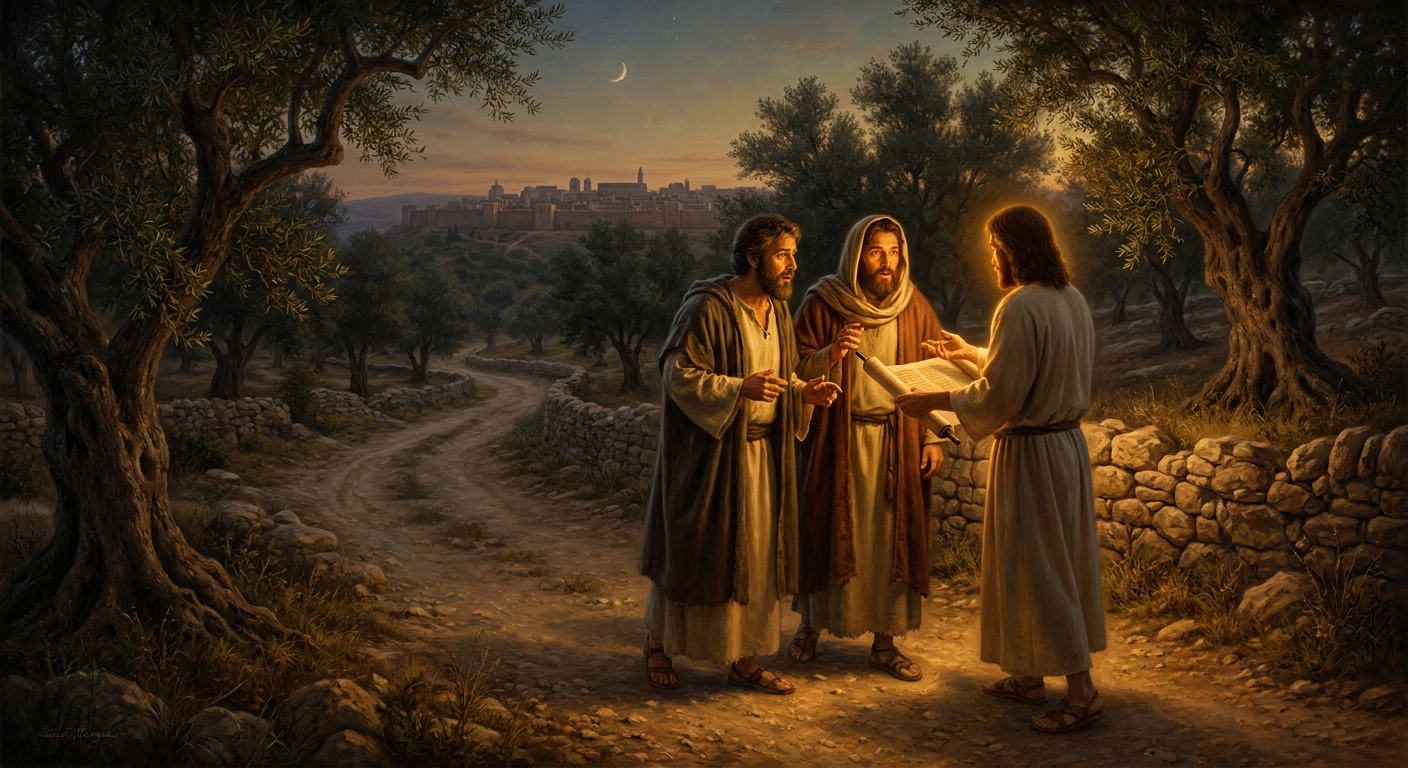
That same afternoon, two disciples are walking to the village of Emmaus, seven miles from Jerusalem, talking about everything that has happened. A stranger falls into step beside them. He asks what they are discussing. They stop walking. They look at him. “Are you the only stranger in Jerusalem who does not know the things that have happened?” He asks what things. They tell him — about Jesus of Nazareth, prophet and miracle-worker, handed over to be crucified, and now some women in their group are saying the tomb is empty and angels have told them he is alive.
The stranger says they are foolish and slow of heart. He opens the scriptures to them, from Moses through all the prophets, and explains everything.
They reach Emmaus at dusk. The stranger seems to be going on. They urge him to stay — “It is nearly evening; the day is almost over” — and he comes in and sits down to eat. He takes the bread. He blesses it. He breaks it. He gives it to them.
And they know him.
And he vanishes.
Christianity turns on this pivot. Not on the ethical teachings, not on the Sermon on the Mount, not on the parables. Those would make Jesus a remarkable rabbi and nothing more. It turns on the claim that three days after his execution, the tomb was empty and the man was alive in a form that could walk through locked rooms and vanish at a table but could also eat fish and be touched.
Paul writes it plainly in the first letter to the Corinthians, the earliest text in the New Testament: “If Christ has not been raised, your faith is futile. If Christ has not been raised, we are of all men most miserable.” He is not hedging. He is not offering a metaphorical resurrection, a spiritual awakening, a collective memory of a beloved teacher. He is staking everything on a bodily fact.
The women go to anoint a corpse. They come back with news that changes the world.
The pattern is old. A god descends into death. The earth holds him for three days — or four, or the number the tradition requires. Something happens in the dark that no witness sees. Then: return. The details shift across every tradition: Osiris reassembled by Isis, Inanna climbing back through the seven gates, Persephone ascending into spring, Quetzalcoatl rising as the morning star. The dying and rising god is the oldest story humanity tells about itself.
What the resurrection of Jesus adds to the pattern — what makes it unlike the others — is not the miracle. It is the witness. A specific woman, in a specific garden, on a specific morning, who mistakes a man for a gardener until he says her name.
Myth speaks in types. History speaks in names. The gospel does both.
Scenes
The stone is rolled away
Generating art… Mary turns to the man standing near the garden
 Generating art…
 That same afternoon, two disciples walk to Emmaus with a stranger who explains all the scriptures to them
 Generating art…
 Echoes Across Traditions
Entities
- Christ
- Mary Magdalene
- Mary mother of James
- Peter
- John
Sources
- Matthew 28
- Mark 16
- Luke 24
- John 20
- N.T. Wright, *The Resurrection of the Son of God* (2003)
- Bart Ehrman, *Did Jesus Exist?* (2012)
- Raymond Brown, *The Death of the Messiah* (1994)