Zhāng Guǒlǎo's Donkey That Folds Like Paper
Tang dynasty, reign of Emperor Xuanzong, c. 712-756 CE · The roads of Tang dynasty China between the Zhongtiao Mountains and the imperial capital Chang'an
Contents
The ancient immortal Zhāng Guǒlǎo rides a white donkey backward through the Tang dynasty countryside, and when he arrives at his destination, he folds the animal up like paper and puts it in his pocket.
- When
- Tang dynasty, reign of Emperor Xuanzong, c. 712-756 CE
- Where
- The roads of Tang dynasty China between the Zhongtiao Mountains and the imperial capital Chang'an
He rides backward because the road he is on has already happened.
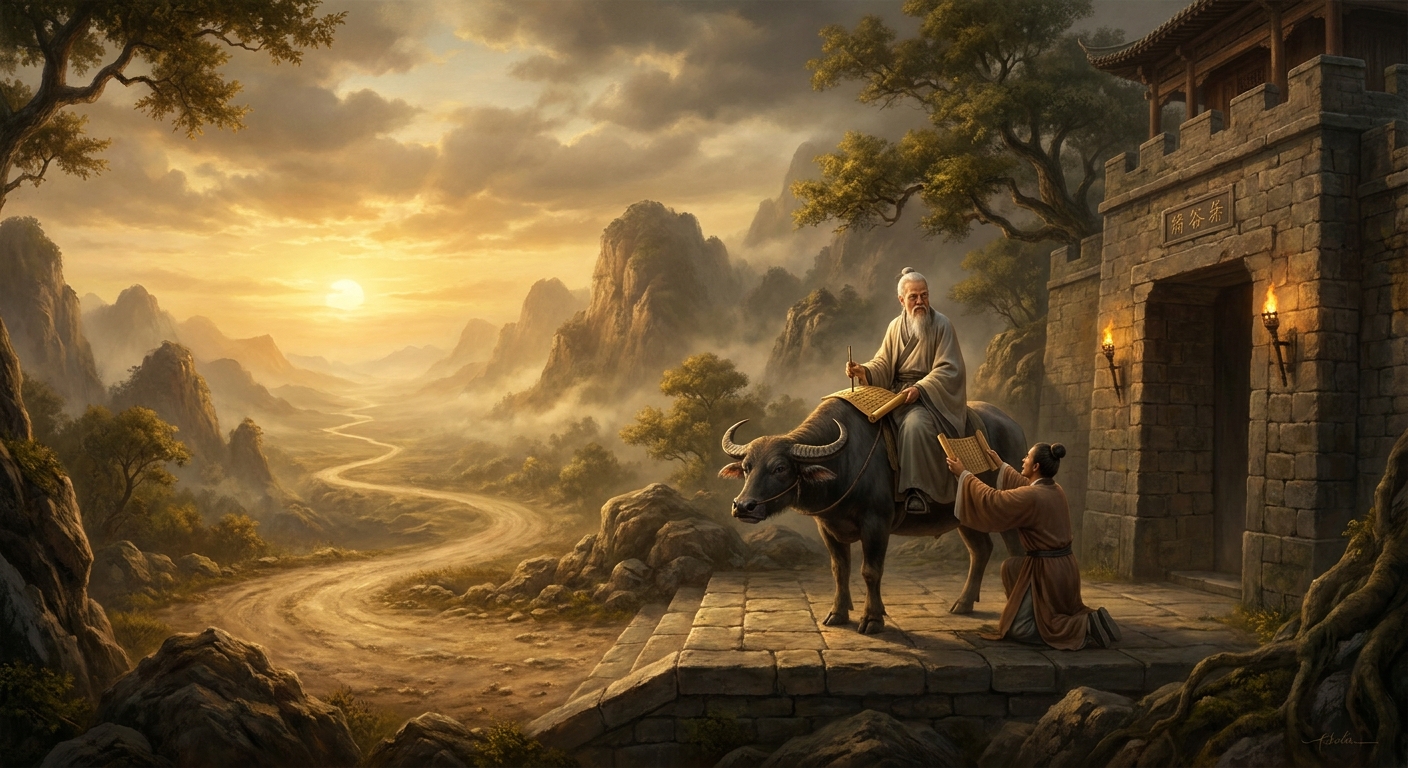
This is not a statement he makes. It is simply the posture he takes on the donkey — facing the direction the animal is coming from, his back to where it is going, watching the landscape recede as it presents itself. The people he passes on the road stare. He does not explain. Explanation would require him to face forward, and facing forward is what people do when they are trying to control the future, and he gave up trying to control the future during the reign of a dynasty whose name no one currently alive can quite remember.
The donkey is white and it covers a thousand li a day, which is not the speed of a donkey but the speed of a donkey that has been carrying an immortal long enough to have absorbed some of the immortal’s relationship with distance. When Zhāng Guǒlǎo arrives at his destination — a mountain, a village, the garden of someone he wants to speak to — he dismounts, takes the donkey, and folds it.
It folds like paper. The legs first, tucking under the body as a map folds along its creases. The body next, narrowing to a rectangle. The head, tucking along its own fold line. In a few moments there is a sheet of white paper in his hands the approximate size and weight of a good quality piece of Tang dynasty stationery. He puts it in his sleeve pocket. The pocket is deep. He has other things in the pocket but they are not visible.
When he needs the donkey again, he takes the paper out of his sleeve and spits water on it. The water activates the fold and the donkey unfolds in the reverse sequence — head first, then body, then legs, standing in the road with the patience of an animal that has been doing this long enough to find it unremarkable.
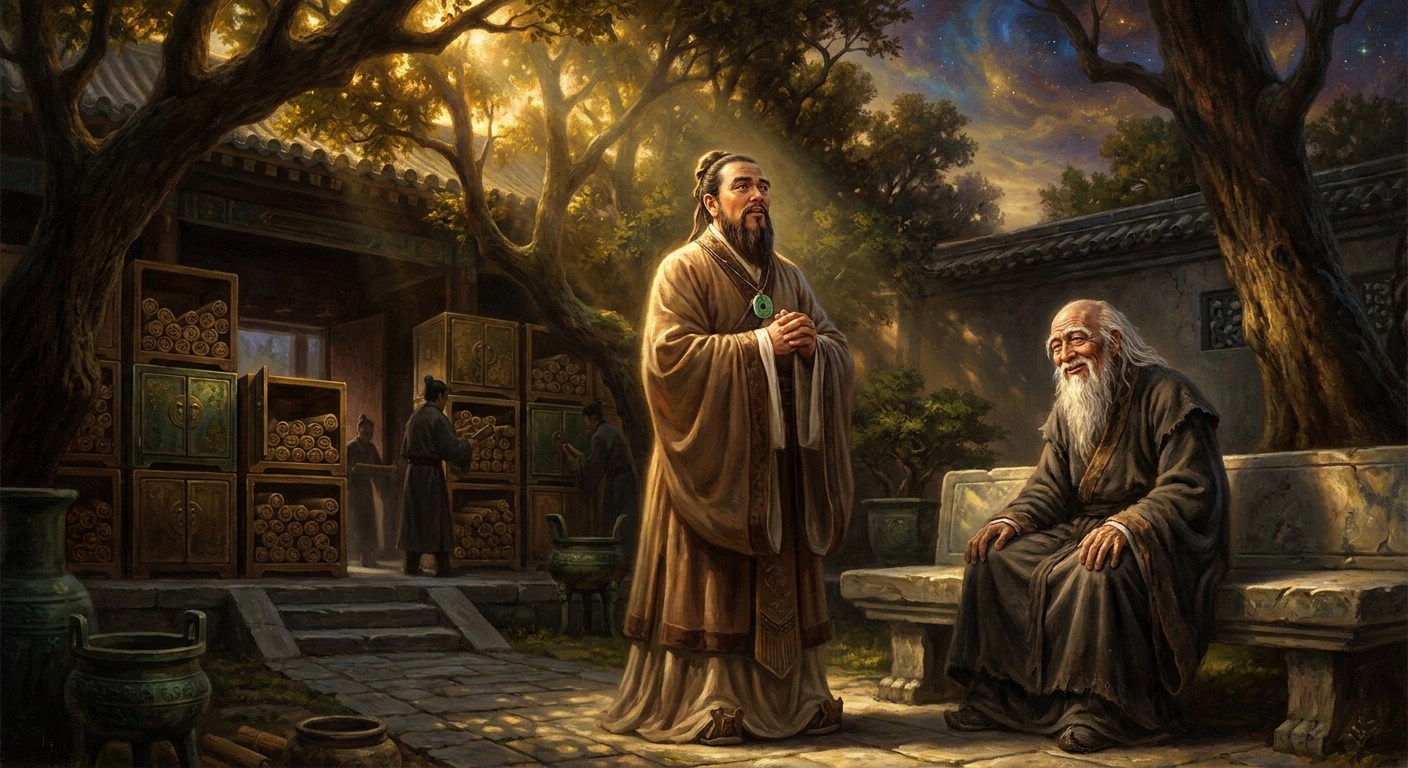
Emperor Xuanzong summons him.
This is the central episode of the texts that describe Zhāng Guǒlǎo. The Tang emperor, who is curious about everything including immortals, sends messengers to the Zhongtiao Mountains where the old man lives. The messengers come back with Zhāng Guǒlǎo. The emperor asks him his age. The old man cannot remember. He tries to calculate: the last clear date he has is a reign name from a dynasty that even the court historians have to look up. He shrugs.
The emperor asks him to perform the things the messengers described. Zhāng Guǒlǎo performs them. He drinks wine and offers it to the Daoist priest Ye Fashan — another immortal present at court — and the wine appears from nowhere in Ye Fashan’s cup. He reads the minister Zhang Guo’s future with the accuracy that comes from being older than the system he is predicting from. He folds his donkey and unfolds it.
The emperor asks him for the secret of his cultivation. Zhāng Guǒlǎo looks at him with the expression of someone who has been asked this question by a great many emperors. He says nothing for a long time. Then he says something that the texts record imprecisely — something about sitting quietly, about not moving when there is no reason to move, about the paper donkey being the same donkey as the live donkey because the material is less important than the pattern.
He declines the emperor’s gifts. He declines the offered title. He declines the offered residence in the capital. He takes his paper donkey out of his sleeve, spits water on it, and when it unfolds he mounts it backward and rides out of the capital through the southern gate.
The guards at the gate see him coming facing them — face forward from his perspective, which is to say facing back down the road he is riding away from — and they part to let him pass. He rides south toward the mountains, watching the city retreat behind him the way the past retreats from everyone, growing smaller and then indistinct and then finally disappearing around the curve of the road, which is always the last curve you remember.
Echoes Across Traditions
Entities
- Zhāng Guǒlǎo
- Emperor Xuanzong
- the white paper donkey
- Lü Dongbin
Sources
- New Tang Shu (新唐書) / New Book of Tang, biography section
- Taiping Guangji (太平廣記), compiled 978 CE — collects Tang dynasty immortal accounts
- Journey to the East (東遊記), Wu Yuantai, c. 1602
- Eva Wong, *Taoism: An Essential Guide* (Shambhala, 1997)