Contents
Temple I at Tikal — the Great Jaguar Temple, rising forty-seven meters above the Great Plaza — was built as the burial monument of Siyaj Chan K'awiil II, the king whose tomb at its base contains the richest single burial yet found in the Maya world.
- When
- c. 734 CE — construction of Temple I; Classic Maya period peak at Tikal
- Where
- Tikal, Guatemala — the Great Plaza, between Temple I and Temple II
From the jungle floor, you cannot see the pyramid until you are almost upon it.
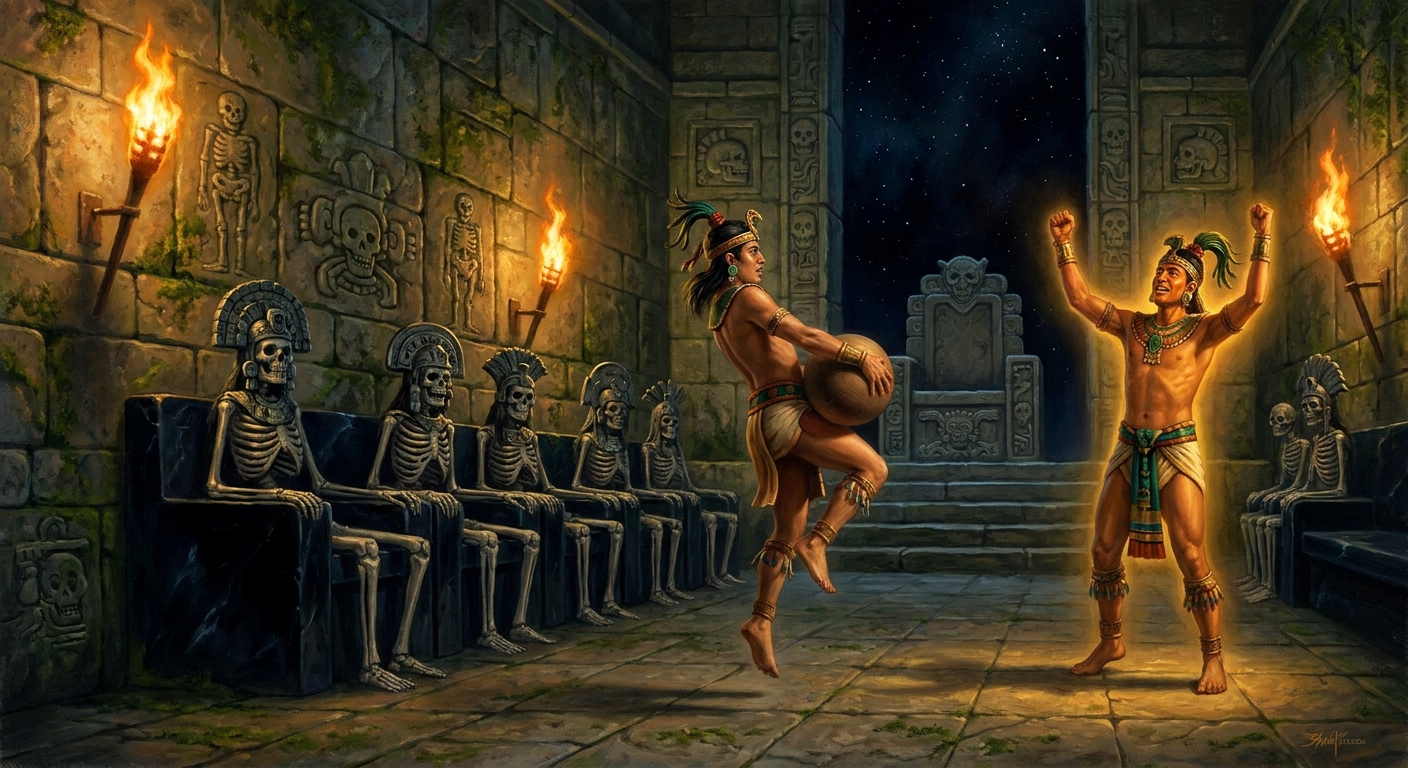
The tropical forest of the Petén grows to thirty meters, forty meters, and the pyramids of Tikal rise above the canopy like stone islands in a green sea, their limestone faces brilliant in the morning sun while the forest around them is still in shadow. Temple I — the Great Jaguar Temple — is forty-seven meters tall, its steep nine tiers of stone rising from the plaza floor to the small temple structure at its summit. The nine tiers are the nine levels of Xibalbá. The temple at the top is the thirteenth heaven.
The building is a cosmic axis.
At its base, in a tomb sealed with millions of kilograms of stone, lies the king who built it. Or more precisely: the king who built it is Jasaw Chan K’awiil I, who wanted a monument for his father Siyaj Chan K’awiil II. The tomb the archaeologists found in 1962 — Burial 116, the richest burial in Maya archaeology at the time of its discovery — contained the body of a single individual surrounded by a hundred and eighty ceramic vessels, fifty pieces of carved bone inscribed with mythological scenes, jade jewelry, obsidian objects, pyrite mirrors, and the remains of nine sacrificed companions.
The bones of the king lay at the center of all this.
Tikal rose to power in the Preclassic period and dominated the Maya lowlands for centuries. Its population in the late Classic period, when Temple I was built, is estimated between 50,000 and 100,000 people — a city of remarkable complexity, with multiple palace complexes, reservoirs managing the seasonal rains, causeways connecting the ceremonial centers to the residential areas, a market, workshops for specialists in jade and obsidian and ceramics and weaving.
The kings of Tikal presented themselves as intermediaries between the human city and the cosmic order.
Their iconography consistently placed them as the World Tree, the axis, the figure through whom the divine energy of the thirteen heavens passed down into the human community. When they died, they were buried not in peripheral cemeteries but under the city’s most prominent buildings, their tombs becoming the foundation of the architectural claims their successors made.
Temple I faces Temple II across the Great Plaza, the two buildings in a dialogue across the open space. Temple II is smaller, possibly built as the monument of Jasaw Chan K’awiil I’s queen. The plaza between them is the ball court of the world — the open space where the sun and moon, the lord and lady of the sky, face each other across the cosmic playing field.
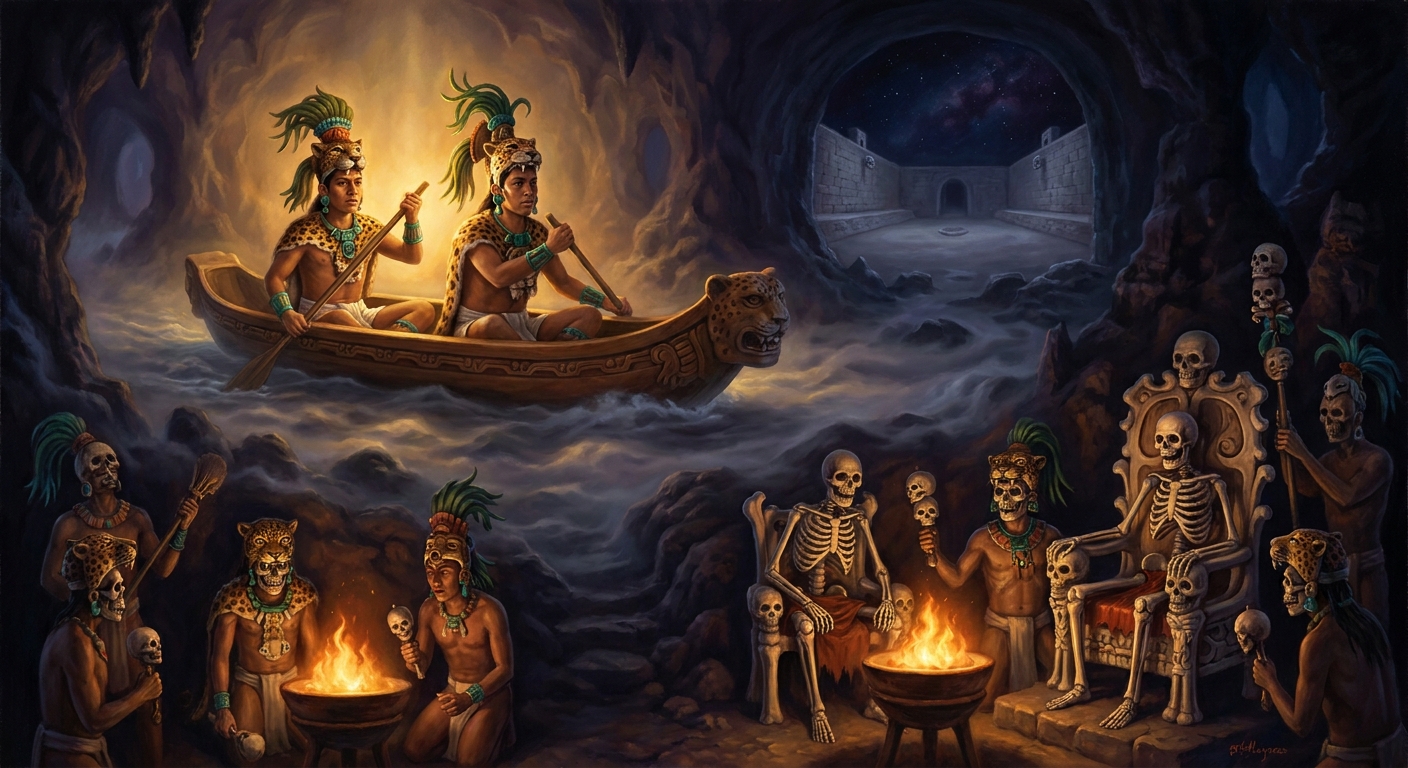
The nine inscribed bones from the tomb show the Maize God in a canoe.
The sequence of bones — each one an animal’s limb, each one incised with scenes from the underworld journey — depicts the Maize God paddled through the dark water by two paddler gods, the Stingray Paddler and the Jaguar Paddler, traveling to the place of resurrection. The journey is the king’s journey. The bones are the mythological script for the tomb’s narrative: this king, like the Maize God, is descending in order to ascend.
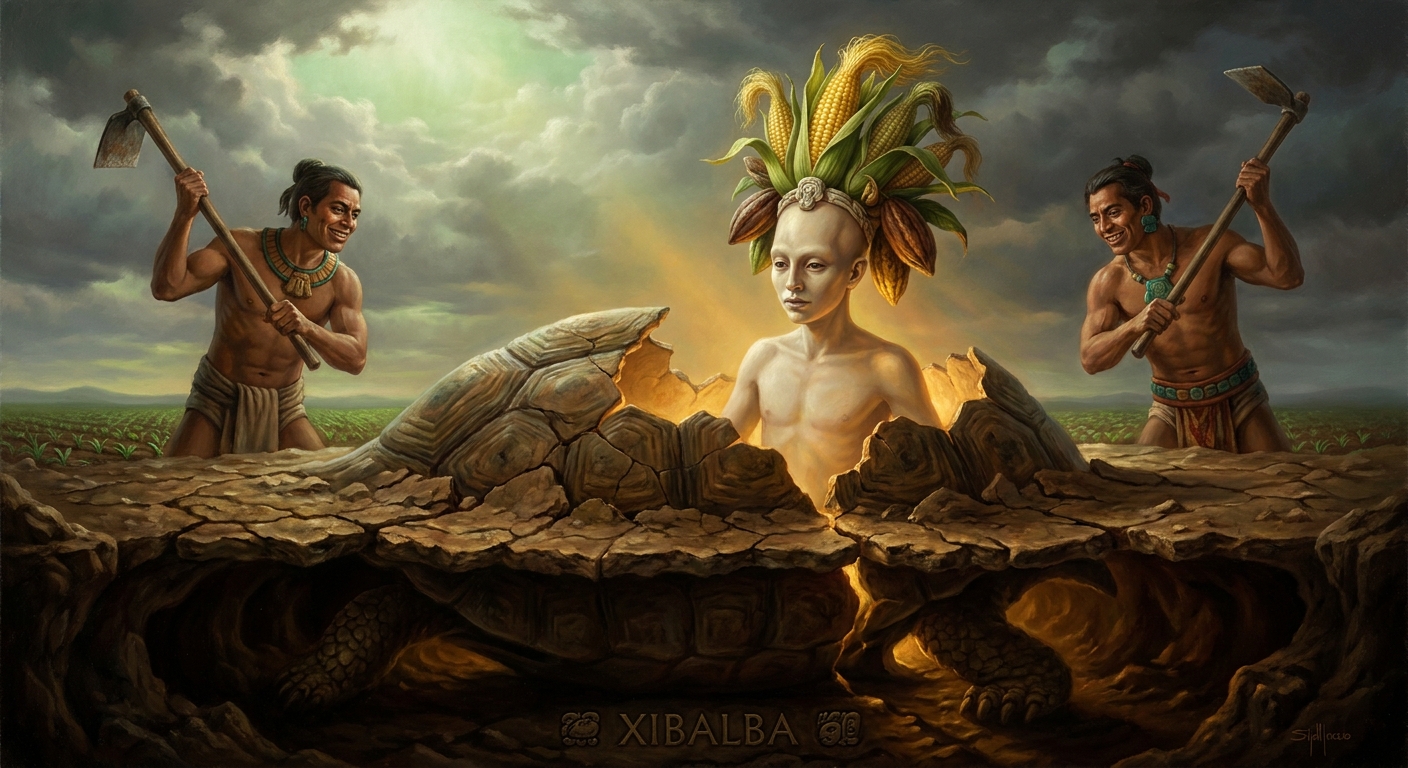
The Maize God will rise from the turtle’s back. The king will rise in the memory of his successor, in the stelae and the inscriptions, in the ceremonies performed at the temple that was built over his body.
Temple I has been standing in the jungle for 1,300 years.
The forest grew around it, over it, through it, and was cut back again by the archaeologists who restored it to visibility in the 1960s. For most of those 1,300 years it was invisible under vegetation — the stone face covered in roots and soil, the king inside in the dark, the Maize God paddle still, the nine levels of the pyramid folded into the hill.
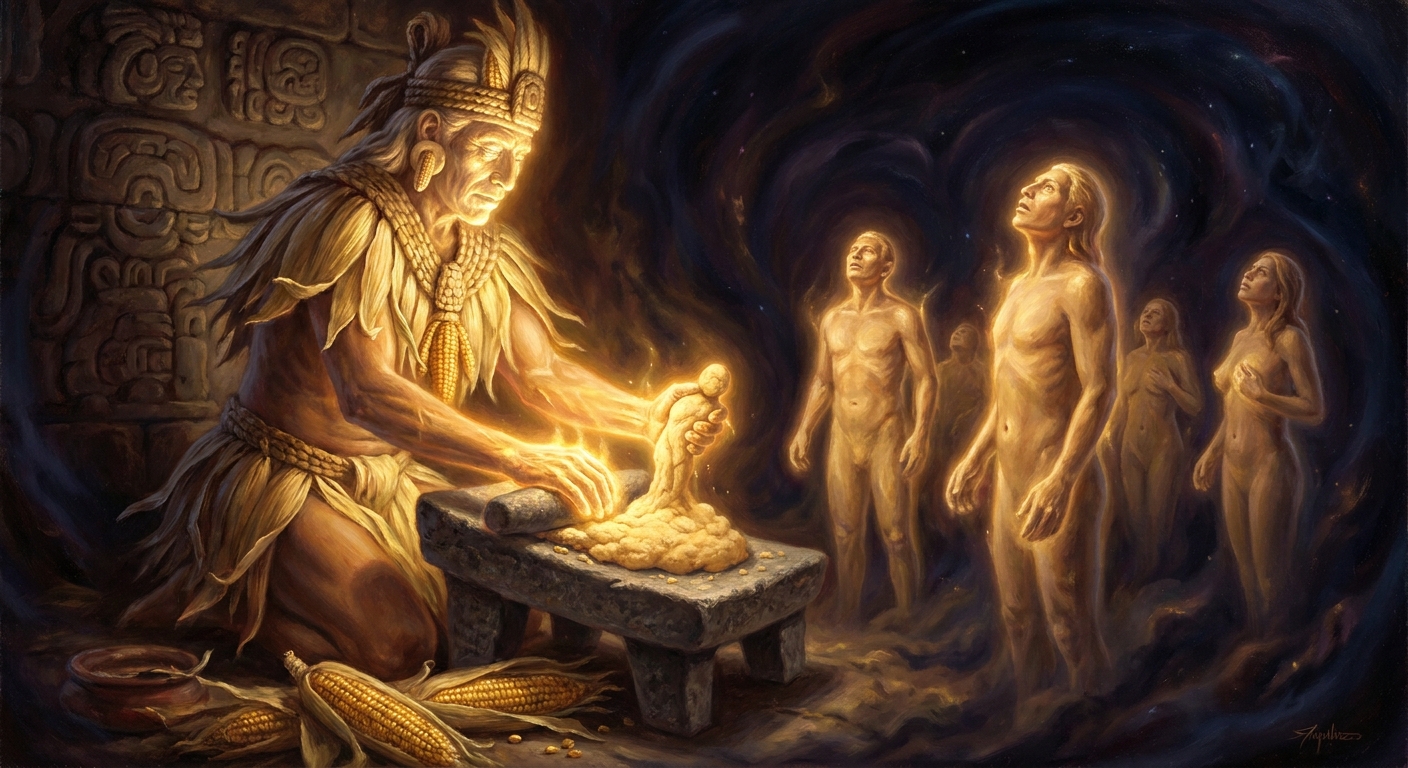
When the restoration teams cleared it, they found the original plaster still intact in places on the pyramid’s face. The color of the stone is the color of the limestone of the Petén, which in the right light is almost the color of corn dough — pale yellow-white, the color of the material the first people were made from.
The king is inside, still descending. The temple is above him, still rising. The jungle is outside, still growing.
Echoes Across Traditions
Entities
- Siyaj Chan K'awiil II
- Jasaw Chan K'awiil I
- the Tikal dynasty
Sources
- William Haviland, *Tikal Report 20: Excavations in Residential Areas of Tikal* (University of Pennsylvania Press, 1985)
- Simon Martin and Nikolai Grube, *Chronicle of the Maya Kings and Queens* (Thames & Hudson, 2000)
- Linda Schele and Peter Mathews, *The Code of Kings* (Scribner, 1998)