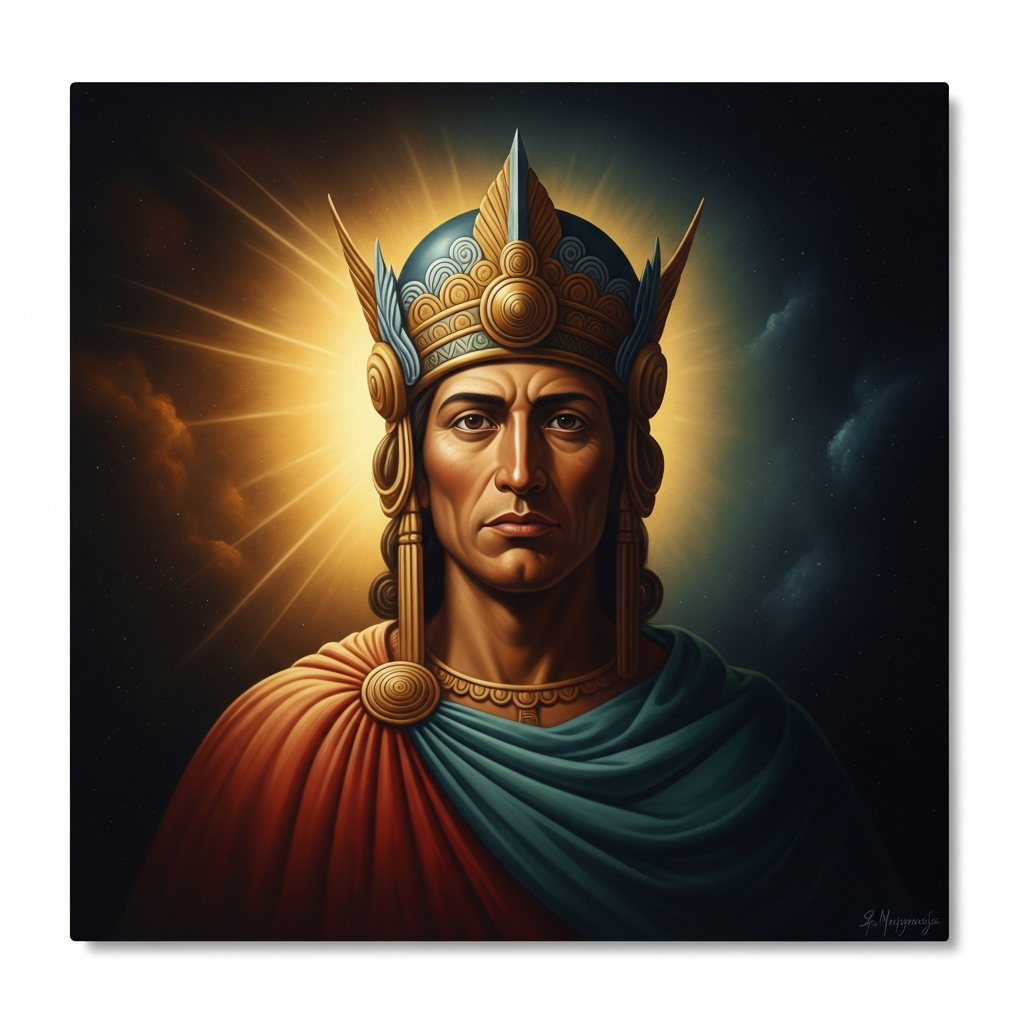
Combat Profile
Flood Judgment -
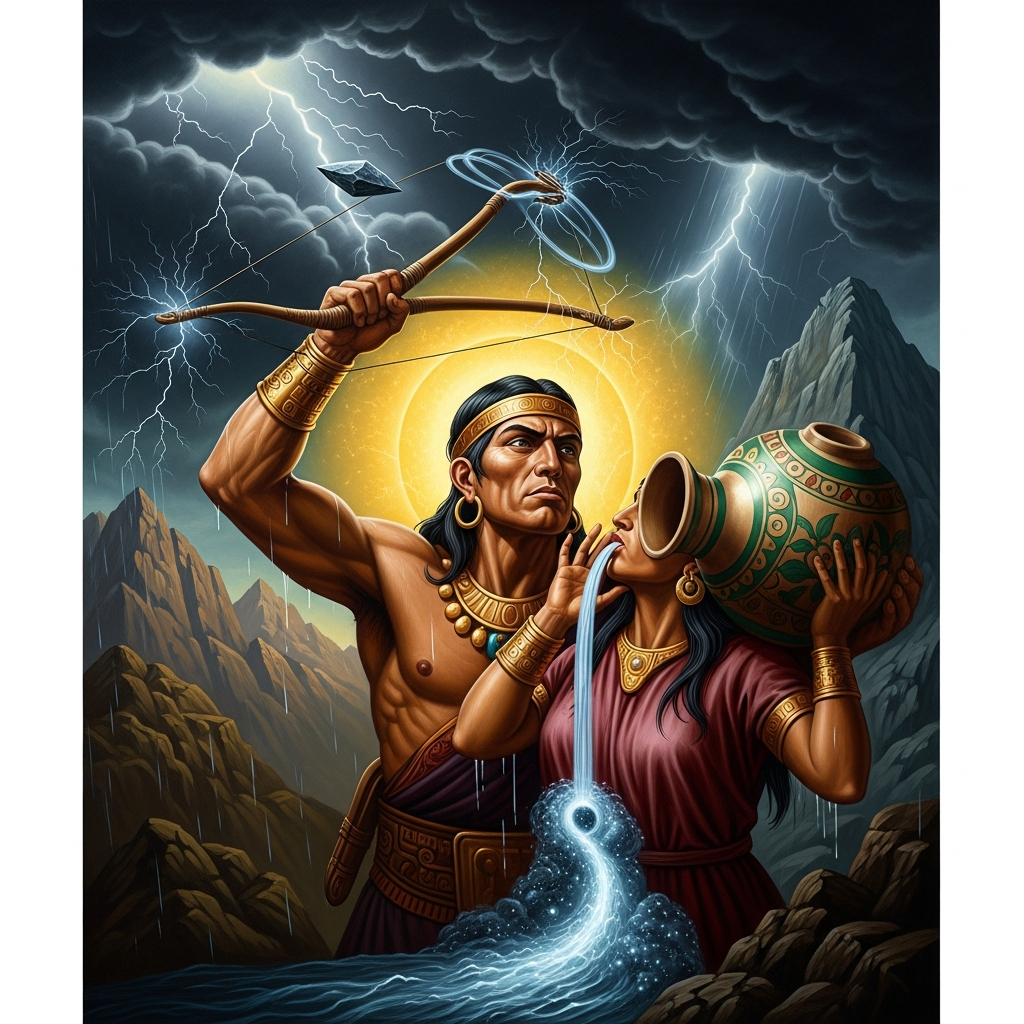
Pariacaca can summon a five-colored rainstorm that washes away settlements, armies, and entire civilizations; his flood is not random disaster but targeted judgment on those who have offended the proper order
Mountain-Born Authority -
Pariacaca draws power from the watershed he governs; the higher the peak he occupies, the stronger his storms; he is most powerful at altitude
His full mythology survives only in the *Huarochiri Manuscript* -- a single Quechua document from ~1608; outside Huarochiri regional tradition, his wider worship is uncertain
Lore: Pariacaca is known to us primarily through the Huarochiri Manuscript (~1608) — the extraordinary Quechua-language document commissioned by a Spanish extirpation official and written by an unnamed Andean informant, which is our single most important indigenous-authored source on pre-Columbian Andean religion. In that manuscript, Pariacaca is the protagonist of a heroic mythology more detailed and more dramatically satisfying than almost anything else in the surviving Andean canon.
He is born on the mountain that bears his name as five falcon-eggs. He hatches, transforms, and challenges the existing cosmic order: Huallallo Carhuincho, the older fire deity who has been demanding that the local people sacrifice one of their two children to him (limiting the population) and who breathes volcanic fire. Pariacaca defeats Huallallo in a battle between their elements: Huallallo erupts in fire, Pariacaca counters with the five-colored rain — a targeted, intelligent flood that pushes Huallallo’s fire back and drives him into exile in the eastern jungles. This is a genuine divine combat narrative of a type rare in the surviving Andean record.
His cultural contribution — the irrigation canal built through rock as a gift to a woman named Chuquisuso who gave him chicha and showed him hospitality — places him in the category of the culture hero as well as the nature deity. Canal irrigation is the technology that made Andean highland civilization possible (the dry-season agriculture depends entirely on stored water), and Pariacaca’s canal-building in the Huarochiri Manuscript is presented as the origin of both the technology and its associated social obligations: communities that benefit from his canal are required to maintain it and to offer worship at his mountain annually.
His judicial function is equally striking. Several episodes in the manuscript show Pariacaca punishing entire communities for failures of hospitality — a woman who did not offer him chicha finds her village flooded, its people turned into birds or stones. This places him among the world’s deities of hospitality-justice: the god who tests human communities by traveling incognito among them and punishes those who fail the test of generosity toward strangers. The biblical angels at Sodom and Gomorrah (Genesis 19), Greek Zeus and Hermes visiting Philemon and Baucis (Ovid, Metamorphoses 8), and the many trickster-tests of North American mythologies all follow this structural pattern.
Parallel: Pariacaca’s flood-victory over a fire deity parallels Mesopotamian Marduk’s defeat of the fire-breathing monster Tiamat, Norse Odin’s defeat of the frost giants using Midgard’s encircling ocean, and the general pattern of the younger storm god defeating the older chaos-deity in many mythological traditions. His birth as five eggs parallels the five Pandava heroes of the Hindu Mahabharata (born of divine parentage in unusual circumstances) and the Chinese mythological tradition of divine heroes born from eggs. His canal-building as culture hero parallels Mesopotamian Enki/Ea, the divine engineer who brought irrigation and civilization to humanity, and Egyptian Khnum, who shaped both humans and the Nile’s floods.
2 min read
Fire-based deities and the dry season; Huallallo Carhuincho (his principal rival, whom he defeated in the flood battle)
Salomon & Urioste (eds.), *The Huarochiri Manuscript* (~1608, trans. 1991) -- the primary and almost sole source; Rostworowski, *Estructuras Andinas del Poder*