The Story
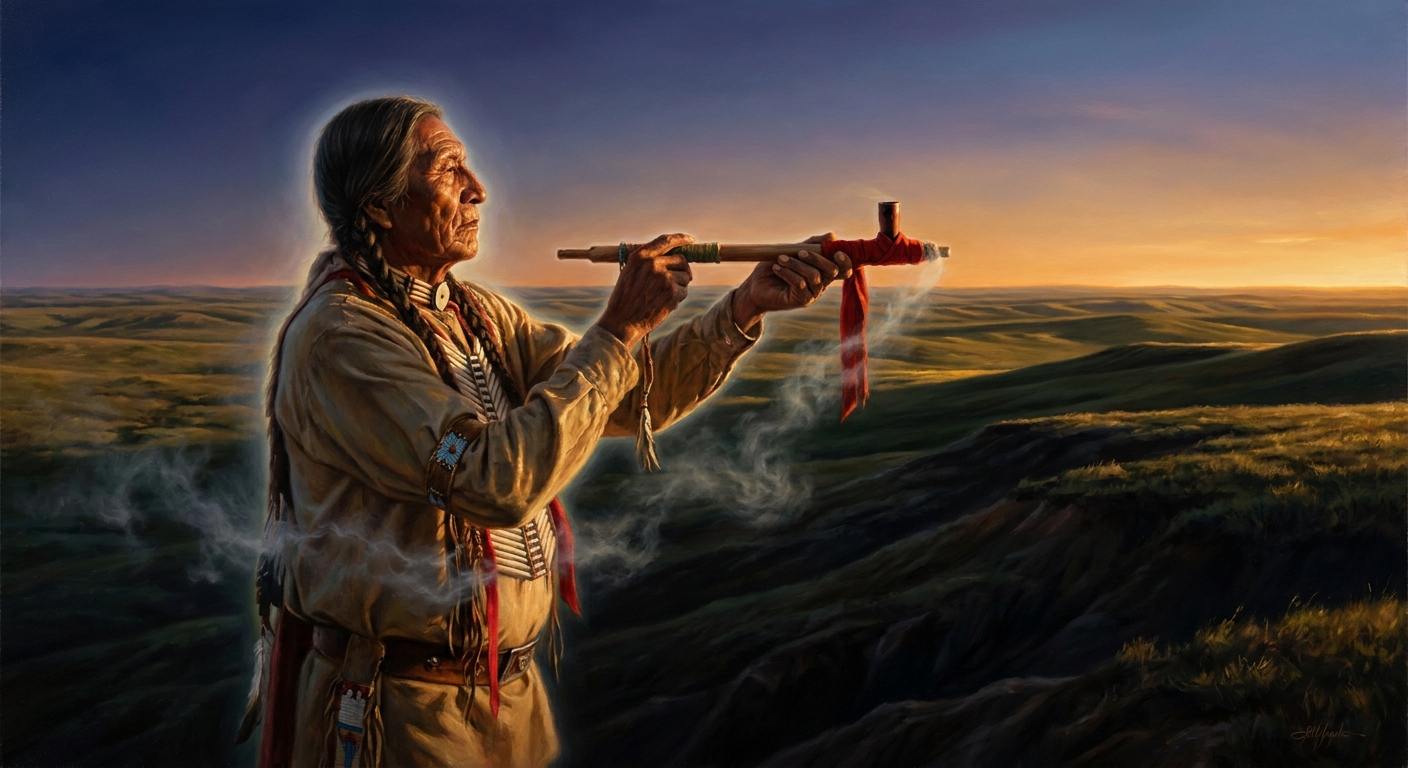
There is no “Native American religion.” There never was. Before 1492, 500 to 2,000 distinct nations spanned the two continents — Lakota, Navajo, Hopi, Cherokee, Iroquois, Inuit, Maya, Quechua, Mapuche, and hundreds more. Each spoke its own language, practiced its own ceremonies, held its own sacred geography. Collapsing them into one faith is as absurd as merging Catholicism, Islam, Hinduism, and Shinto. This file resists that collapse. It treats indigenous spirituality as a living federation of distinct traditions sharing patterns — relational cosmology, sacred land, ceremonial cycles, oral transmission, kinship with non-human persons — but no single creed.
The arc, with the appropriate caveats:
Pre-contact (deep time to 1492): Hundreds of sovereign nations practice fully developed spiritual traditions. The Lakota Sacred Pipe, the Navajo Blessingway, the Hopi katsina cycle, the Iroquois Great Law of Peace, the Mesoamerican calendrical systems, the Andean huacas, the Inuit relationship with Sedna — some thousands of years old — already exist when European ships arrive.
European contact (1492 onward): The catastrophe is biological. Smallpox, measles, and influenza kill an estimated 80-90% of indigenous populations within 150 years. Missionaries follow with forced conversion and land seizure — sacred lands, in traditions where the land itself is alive.
The boarding school era (1879-1970s): Captain Richard Henry Pratt’s Carlisle Indian Industrial School becomes the template for forced assimilation (Carlisle School founded 1879). Children are taken from families, forbidden their languages, beaten for practicing religion. Pratt’s motto — “Kill the Indian, save the man” — is literal policy. Canada’s Residential Schools are longer, worse. The goal: cultural erasure. Survivors live.
The Ghost Dance and Wounded Knee (1890): The Paiute prophet Wovoka receives a vision: the dance will restore the dead, the buffalo, the free land. The movement spreads across the Plains. Terrified, the Army reads uprising. On December 29, 1890, the Seventh Cavalry massacres roughly 250-300 Lakota — mostly unarmed women and children — at Wounded Knee (Wounded Knee Massacre, December 29, 1890). Symbolic end of the Plains Wars. Deepest wound in Lakota memory.
The legal vacuum (1890-1978): For a century, indigenous religion has no federal protection. Sun Dances banned (1883-1934). Sacred objects seized. Peyote prosecuted. The First Amendment doesn’t apply. August 11, 1978 — the American Indian Religious Freedom Act — finally affirms the right to practice indigenous religion (American Indian Religious Freedom Act, 1978). 1978. Within most readers’ parents’ lifetime.
Standing Rock (2016): The Standing Rock Sioux lead the largest pan-tribal gathering in modern history against the Dakota Access Pipeline. Delegations from 300+ tribes converge. Prayer and ceremony anchor the camp. Militarized police respond with dogs, water cannons, bullets. The pipeline is built. But indigenous solidarity reorganizes globally.
Today: Indigenous spiritual revival across the Americas — language restoration, ceremony renewal, NAGPRA repatriation, UNDRIP. Living traditions, still here after five centuries of attempted extermination.
Pivotal Events
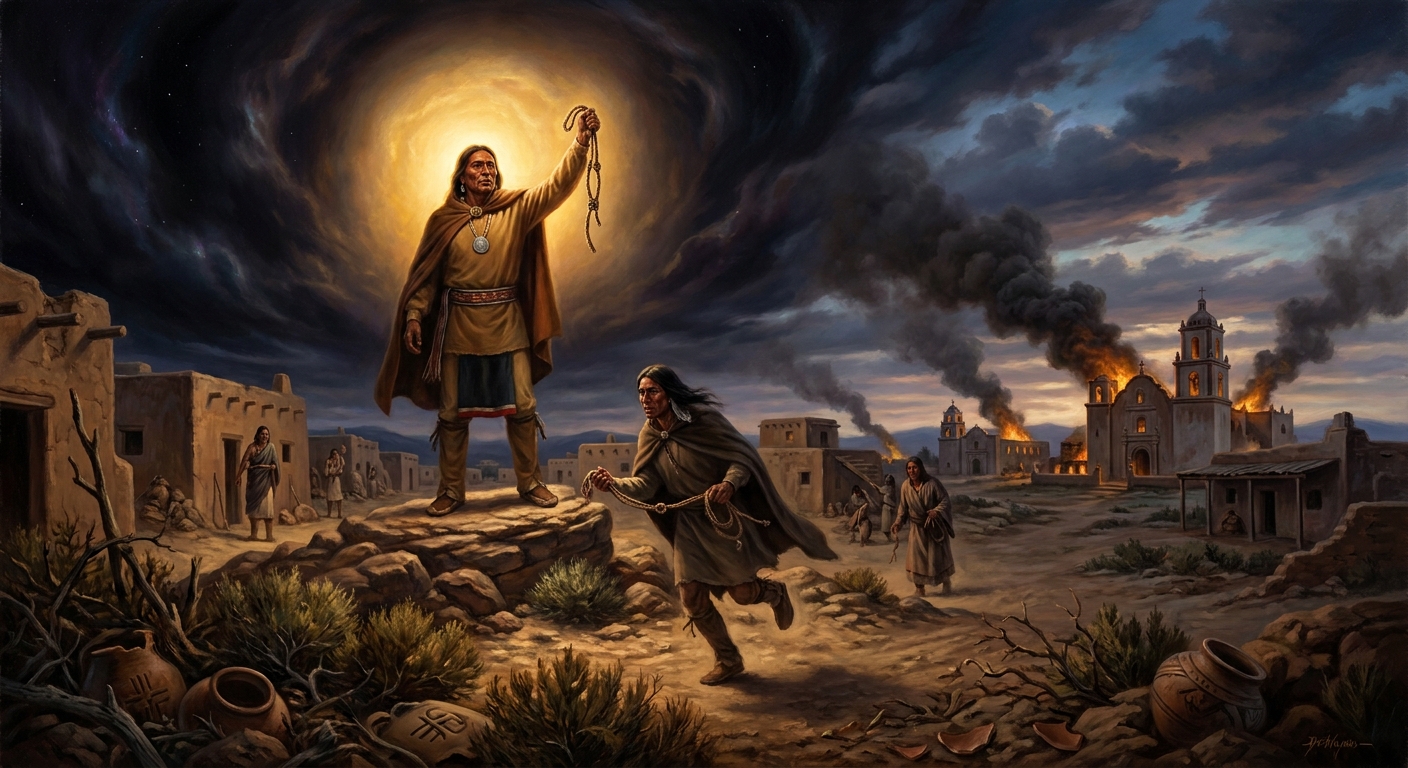
On August 10, 1680, coordinated Pueblo nations expelled Spanish rule from New Mexico for twelve years (Pueblo Revolt, August 10, 1680). Po’pay, a Tewa religious leader, organized the uprising in secret. Knotted cords runner-to-runner across mesas set the date. On the day, 2,000 warriors killed ~400 colonists (21 of 33 Franciscan missionaries), burned missions, reclaimed Santa Fe. Spain fled. The first successful indigenous resistance to European colonization in North America, explicitly fought as a religious war — for the right to practice Pueblo religion. When Spain returned (1692), it accommodated indigenous practice. The kivas survived. Still used today.
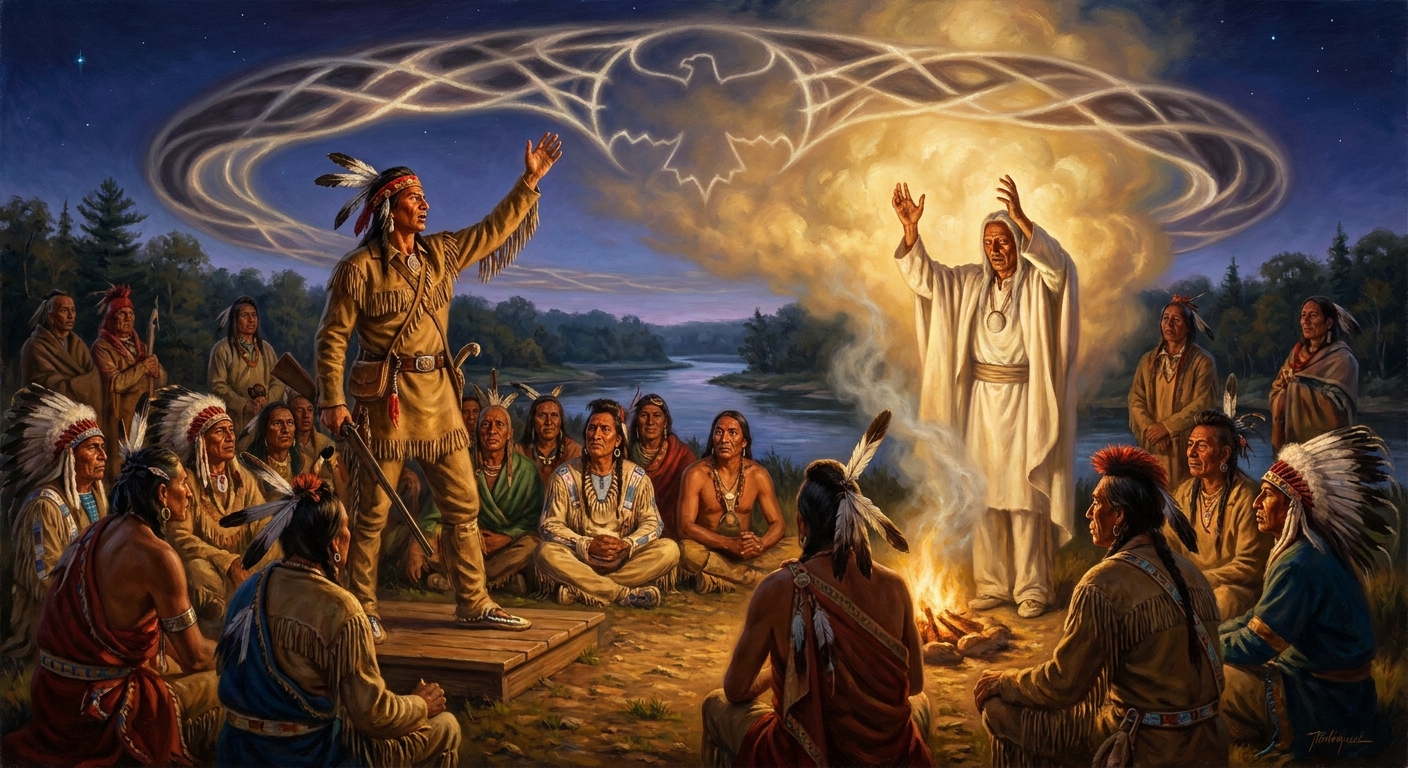
In 1805, Lalawethika — failed hunter, drunkard — collapsed near death. He woke with a vision from the Master of Life. Renamed Tenskwatawa (“the Open Door”), he preached pan-tribal spiritual revival: reject European goods, alcohol, Christianity; restore traditions; unite (Tenskwatawa’s vision, 1805). His brother Tecumseh built the political arm — a confederacy from Great Lakes to Gulf resisting westward dispossession. Tippecanoe (November 7, 1811) crushed the movement; Tecumseh died at the Thames (October 5, 1813). But the template — religious revival fueling pan-tribal unity — echoes from the Ghost Dance through Standing Rock.
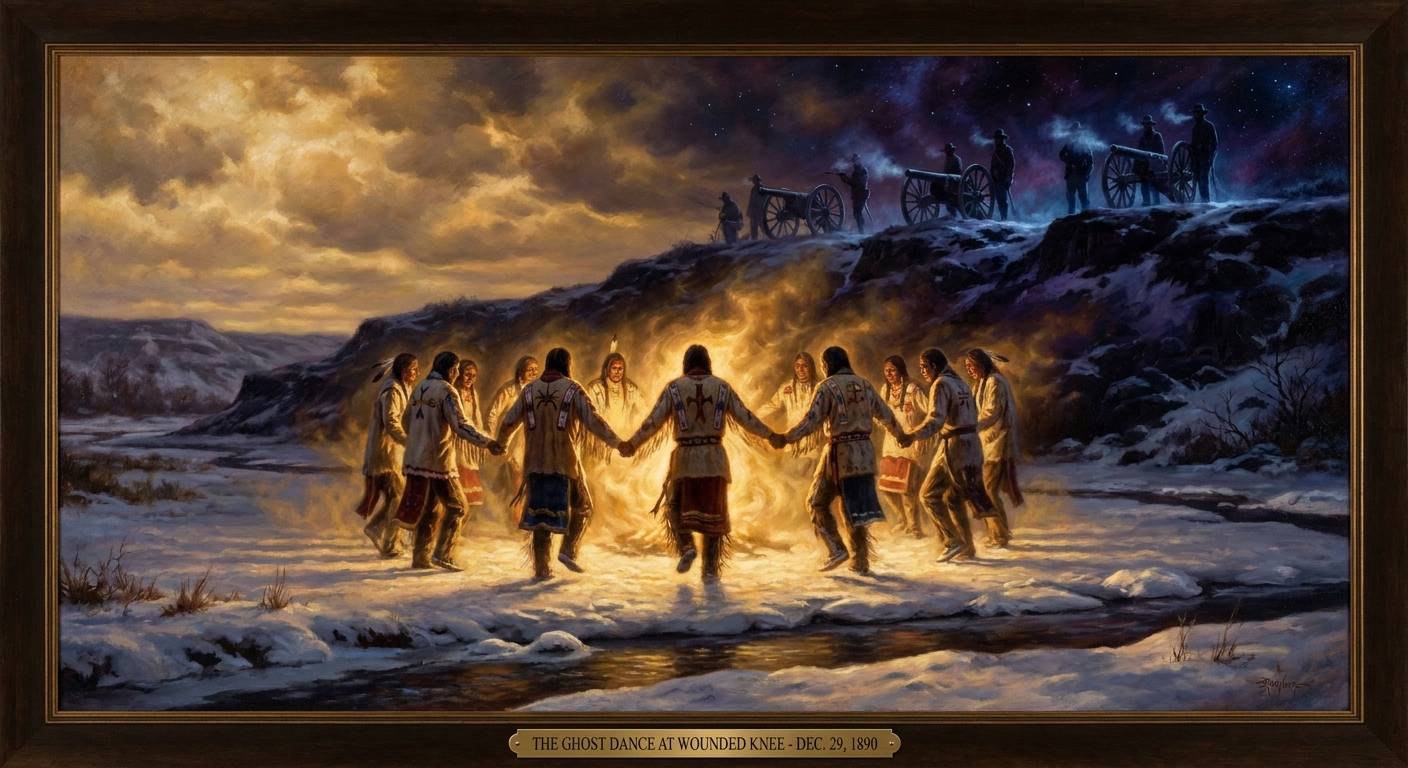
During a solar eclipse in January 1889, the Paiute prophet Wovoka received a vision: the dance will restore ancestors, buffalo, the dead, the land (Wovoka’s vision, January 1, 1889). The Ghost Dance spread across the Plains — Lakota, Arapaho, Cheyenne, Shoshone — each nation adapting. The Lakota added the Ghost Shirt, believed to stop bullets. Settlers panicked. Sitting Bull killed (December 15, 1890). Two weeks later, Seventh Cavalry surrounded Spotted Elk’s Lakota at Wounded Knee Creek. Gunfire ignited massacre: ~250-300 killed, mostly unarmed women and children (Wounded Knee Massacre, December 29, 1890). Twenty Medals awarded to soldiers. Deepest wound in Lakota memory.
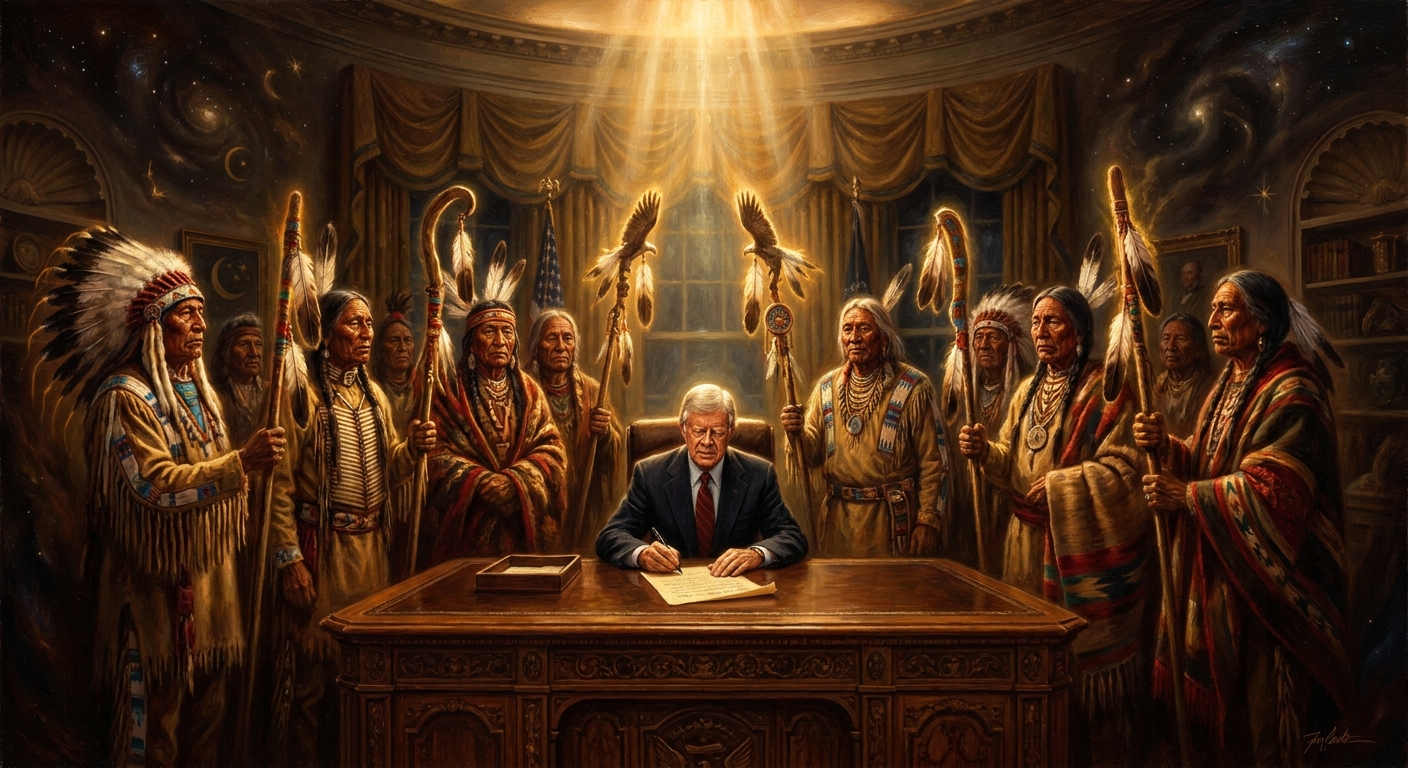
August 11, 1978: President Carter signed the American Indian Religious Freedom Act (American Indian Religious Freedom Act, August 11, 1978), affirming the right “to believe, express, and exercise” indigenous religions, including access to sacred sites and objects. The text is slight; the date is staggering. 1978 — 186 years after the First Amendment — before Native religious practice received federal protection. Until then: Sun Dances banned (1883-1934), sacred objects seized, peyote prosecuted, sacred sites denied. AIRFA was toothless (gutted by Lyng v. NICPA, 1988), strengthened later by NAGPRA (Native American Graves Protection and Repatriation Act, 1990) and peyote amendments (1994). But 1978 marks when the U.S. stopped legally prohibiting indigenous religion.
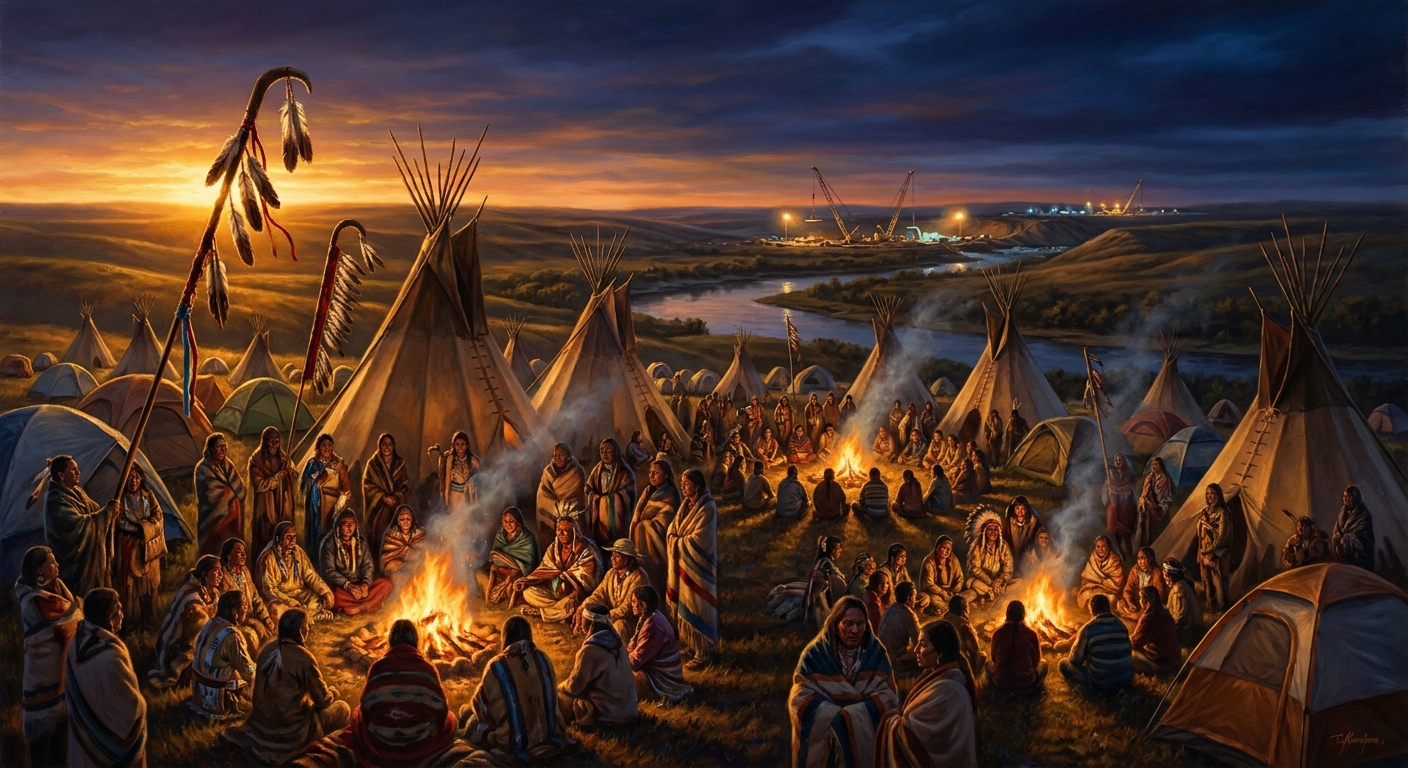
April 2016: Standing Rock Sioux established Sacred Stone Camp to oppose the Dakota Access Pipeline crossing the Missouri River upstream of the tribe’s water intake, through burial and sacred sites (Standing Rock, April 2016 - February 2017). Within months: largest pan-tribal gathering in modern history — 300+ federally recognized tribes, indigenous delegates worldwide. Prayer and ceremony anchored the camp. Mni Wiconi: Water is Life. Police responded with dogs, water cannons at subzero temperatures, rubber bullets. Obama paused the pipeline; Trump restarted it. The pipeline was built. But the gathering reorganized indigenous solidarity globally and demonstrated indigenous nations remain a serious political and spiritual force.
Timeline
| Era | Date | Event | Source |
|---|
| Deep time | pre-1492 | Hundreds of distinct sovereign nations develop spiritual traditions | oral tradition; archaeology |
| Iroquois Confederacy | ~1142 or ~1450 (contested) | Deganawida & Hiawatha unite Five Nations under the Great Law of Peace | Haudenosaunee oral tradition |
| Columbus arrives | 1492 | First sustained European contact; pandemic begins | Spanish records |
| Pandemic | 1492-~1650 | 80-90% mortality from Old World diseases across Americas | demographic studies |
| Mission systems | 1500s-1700s | Spanish, French, English missions suppress indigenous practice | colonial records |
| Pueblo Revolt | August 10, 1680 | Po’pay’s coordinated revolt expels Spanish from New Mexico | Spanish records |
| Spanish return | 1692 | Spain accommodates Pueblo religion; kivas survive | colonial records |
| Tenskwatawa’s vision | 1805 | Shawnee Prophet launches pan-tribal spiritual revival | contemporary accounts |
| Tippecanoe | November 7, 1811 | Revival movement crushed; Tecumseh south recruiting | military records |
| Tecumseh killed | October 5, 1813 | Battle of the Thames; Confederacy collapses | War of 1812 records |
| Indian Removal Act | May 28, 1830 | Andrew Jackson signs; forced westward removal follows | U.S. statute |
| Trail of Tears | 1838-1839 | Cherokee, Choctaw, Muscogee, Seminole, Chickasaw forcibly removed; thousands die | War Department records |
| Sand Creek Massacre | November 29, 1864 | Colorado militia slaughters Cheyenne and Arapaho | congressional inquiry |
| Carlisle School founded | 1879 | Pratt’s “Kill the Indian, save the man” template begins | school records |
| Wovoka’s vision | January 1, 1889 | Paiute prophet receives Ghost Dance during eclipse | contemporary accounts |
| Sitting Bull killed | December 15, 1890 | Lakota leader killed during arrest | U.S. Army records |
| Wounded Knee Massacre | December 29, 1890 | Seventh Cavalry slaughters ~250-300 Lakota | survivor testimony; Army records |
| Sun Dance banned | 1883-1934 | Federal Code criminalizes traditional ceremonies | BIA records |
| Citizenship Act | June 2, 1924 | U.S. citizenship extended to American Indians | U.S. statute |
| Indian Reorganization Act | June 18, 1934 | Reverses allotment; restores limited tribal sovereignty | U.S. statute |
| American Indian Movement | 1968 | AIM organizes Indian rights and treaty enforcement | AIM records |
| Wounded Knee occupation | February-May 1973 | AIM occupies Wounded Knee for 71 days | contemporary news |
| AIRFA | August 11, 1978 | First federal protection of Native religious practice | Public Law 95-341 |
| NAGPRA | November 16, 1990 | Graves Protection and Repatriation Act | Public Law 101-601 |
| Peyote amendments | 1994 | Federal protection of peyote ceremony | Public Law 103-344 |
| UNDRIP | September 13, 2007 | UN Declaration on Rights of Indigenous Peoples | UN General Assembly |
| Standing Rock | April 2016 - February 2017 | Largest pan-tribal gathering opposes Dakota Access Pipeline | contemporary news |
| Present | 2026 | Living traditions, hundreds of distinct nations | ongoing |
Native American Spiritual Traditions — The Living Earth
A note on sensitivity and respect. This section covers figures widely known in comparative mythology and scholarship. It does not claim to represent any specific nation’s complete spiritual tradition. There is no single “Native American mythology” — there are hundreds of sovereign nations, each with distinct languages, cosmologies, ceremonies, and sacred narratives. Many Native American spiritual practices are closed — meaning they are not meant to be shared with, practiced by, or commodified by outsiders. This document respects those boundaries.
What follows is drawn from widely published comparative mythology sources and focuses on figures that have entered the broader scholarly conversation through the work of indigenous scholars and collaborative ethnography. Even so, some of the beings described here are considered dangerous or taboo to discuss in their originating traditions. Where this is the case, it is noted explicitly.
The traditions described here are living faiths. They are practiced today. They are not relics. They are not curiosities. They are the spiritual inheritance of peoples who have survived five centuries of genocide, forced removal, boarding schools designed to “kill the Indian, save the man,” and systematic suppression of indigenous religion — which was not even legally protected in the United States until the American Indian Religious Freedom Act of 1978. That date bears repeating: 1978. Within living memory.
The resilience of these traditions is itself a sacred act.
flowchart TB
    subgraph COSMOS["THE LIVING EARTH -- Native American Spiritual Reality"]
        direction TB

        subgraph ABOVE["The Sky World / Upper World"]
            WAKAN["<b>WAKAN TANKA</b><br/>The Great Mystery<br/>Not a god but the totality<br/>of all sacred power"]
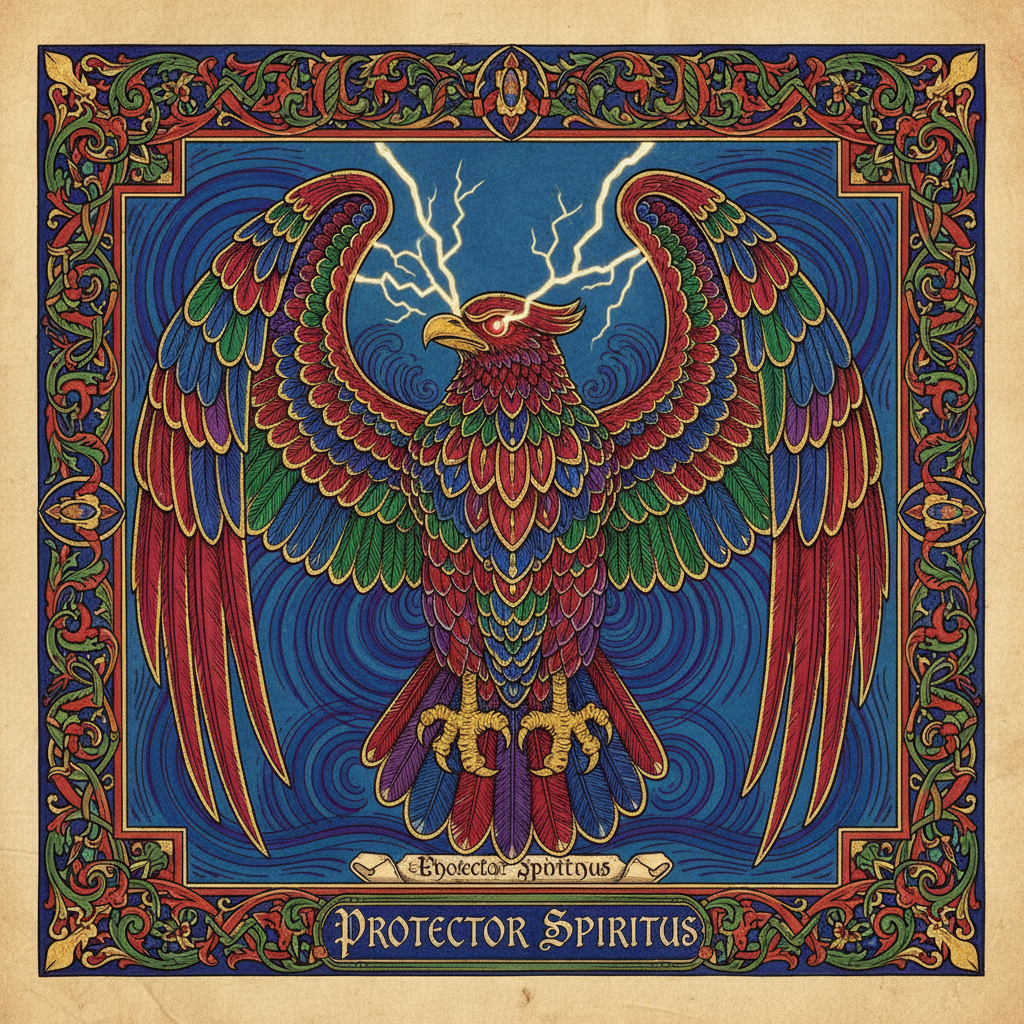
            THUNDER["<b>THUNDERBIRD</b><br/>Thunder from wings<br/>Lightning from eyes<br/>Sky protector"]
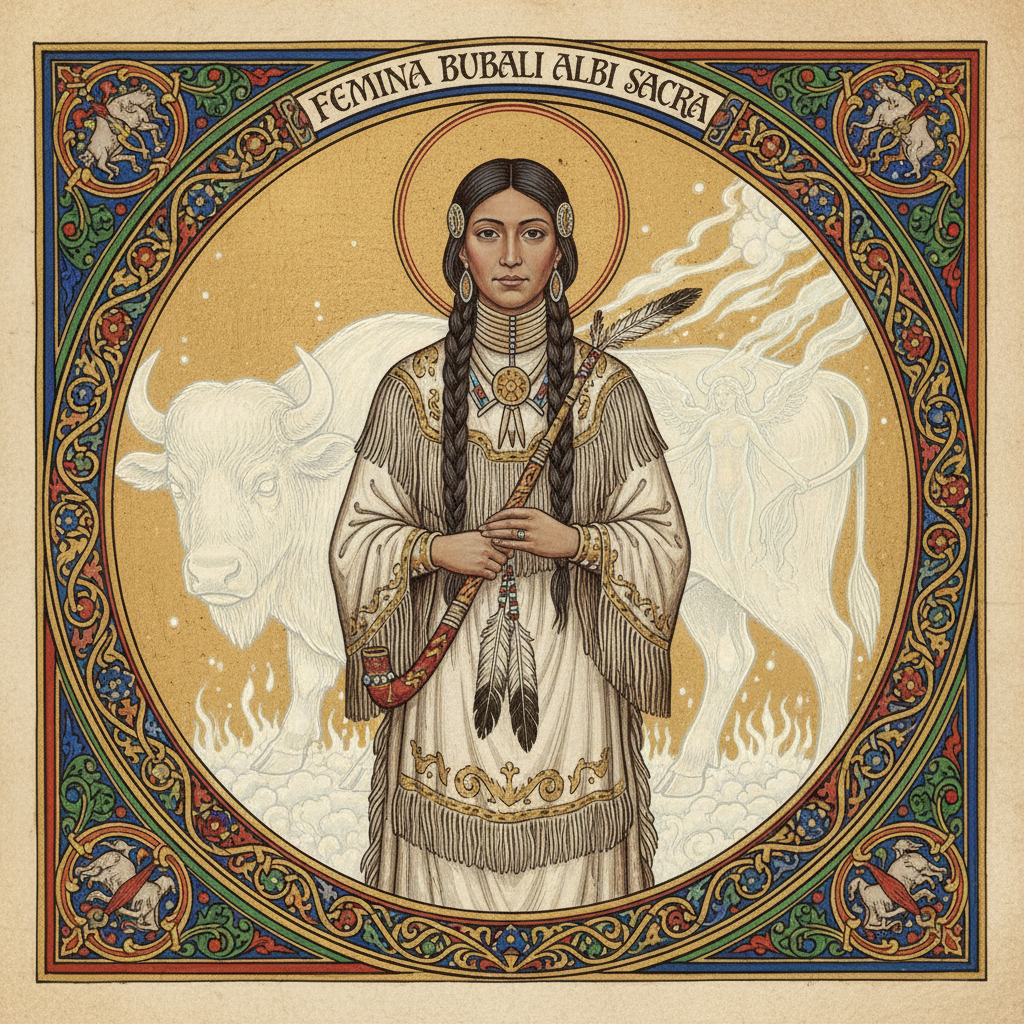
            WBCW["<b>WHITE BUFFALO CALF WOMAN</b><br/>Brought the Sacred Pipe<br/>and the Seven Rites"]
        end

        subgraph EARTH["The Middle World -- The Living Earth"]
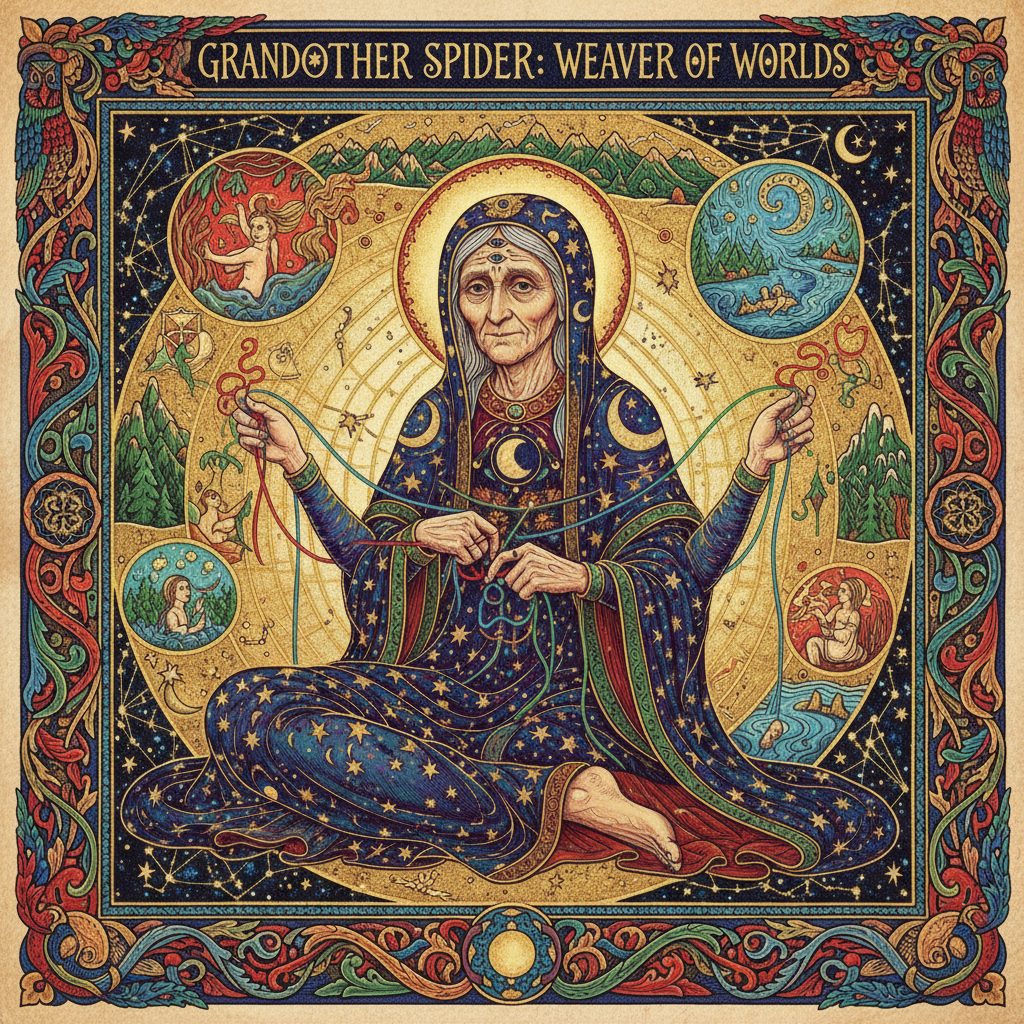
            SPIDER["<b>SPIDER WOMAN</b><br/>Wove the world<br/>Taught humanity"]
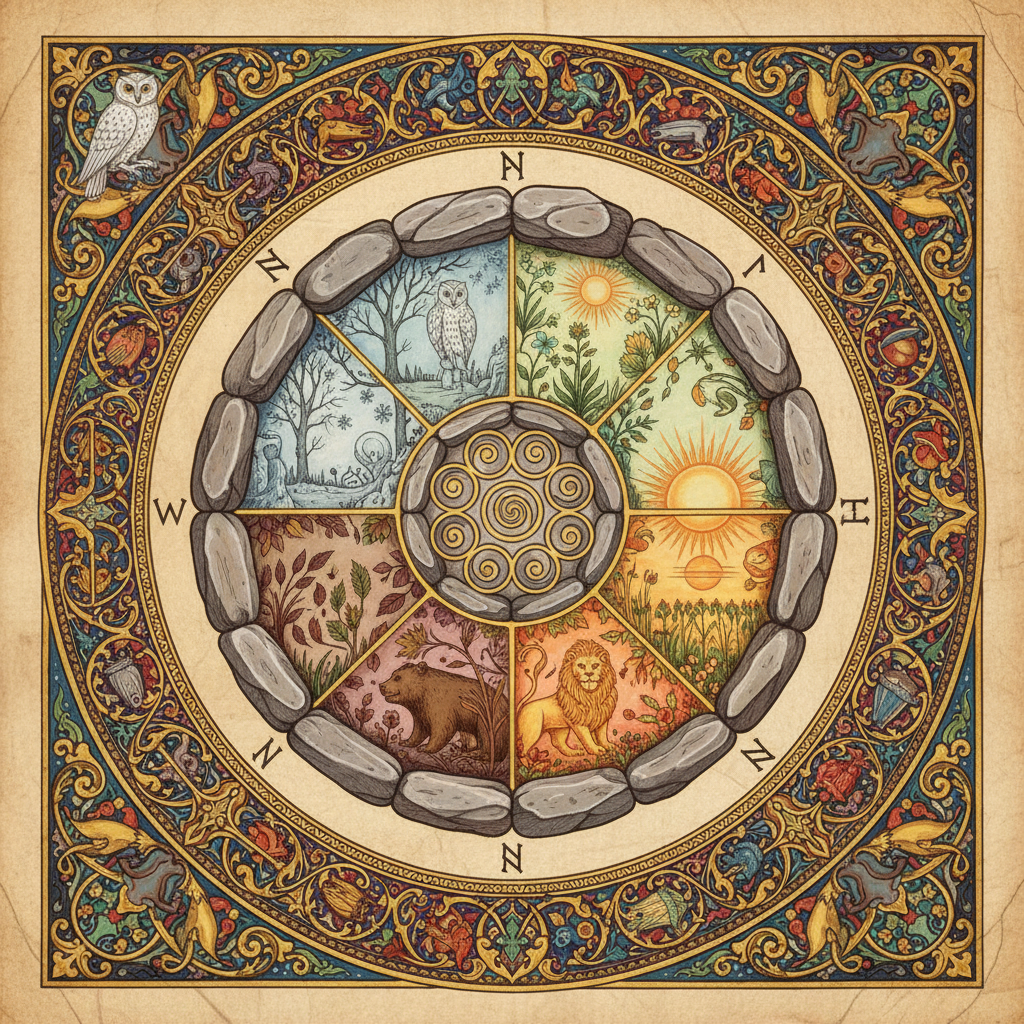
            WHEEL["<b>MEDICINE WHEEL</b><br/>Four directions<br/>Four seasons<br/>The sacred circle"]
            VISION["<b>VISION QUEST</b><br/>Fasting, isolation<br/>Seeking guidance"]
        end

        subgraph TRICKSTER["The Trickster Realm -- Between Worlds"]
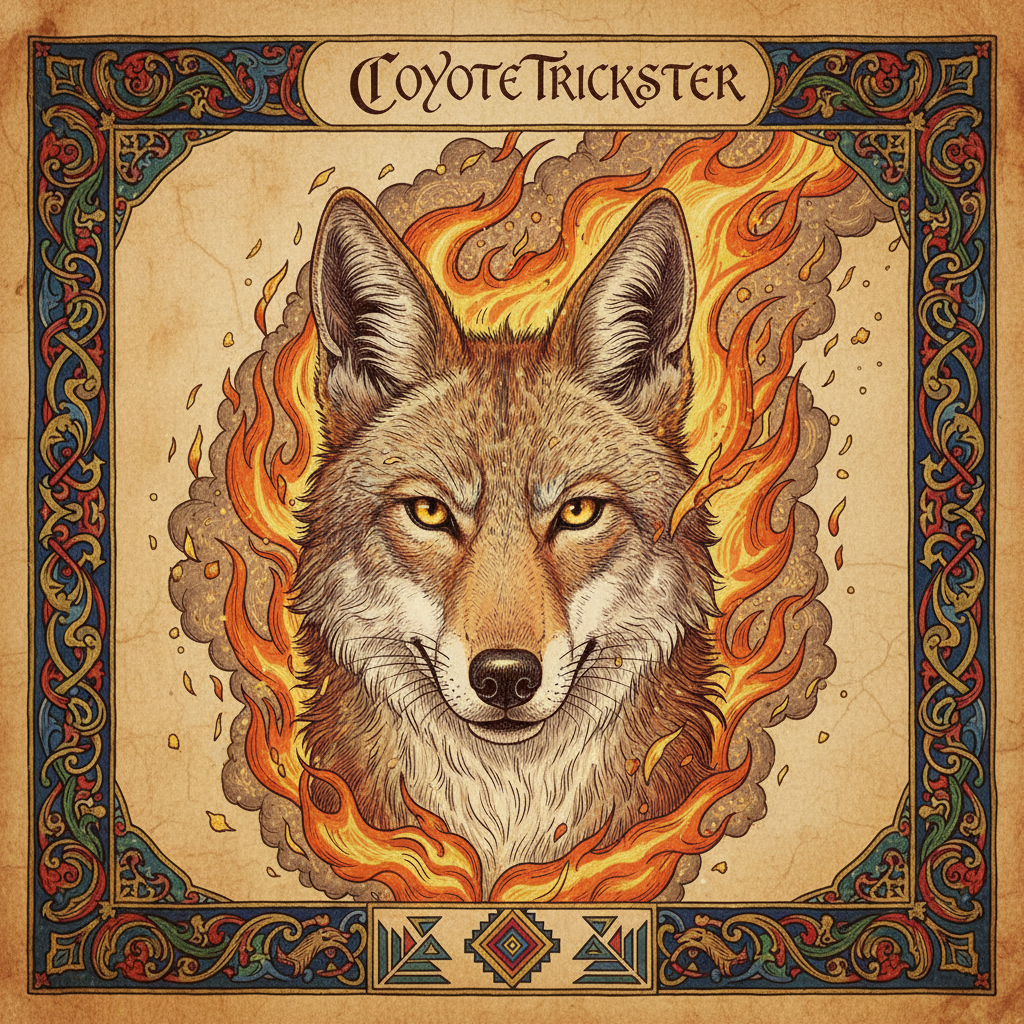
            COYOTE["<b>COYOTE</b><br/>Stole fire, created death<br/>Sacred fool, creator"]
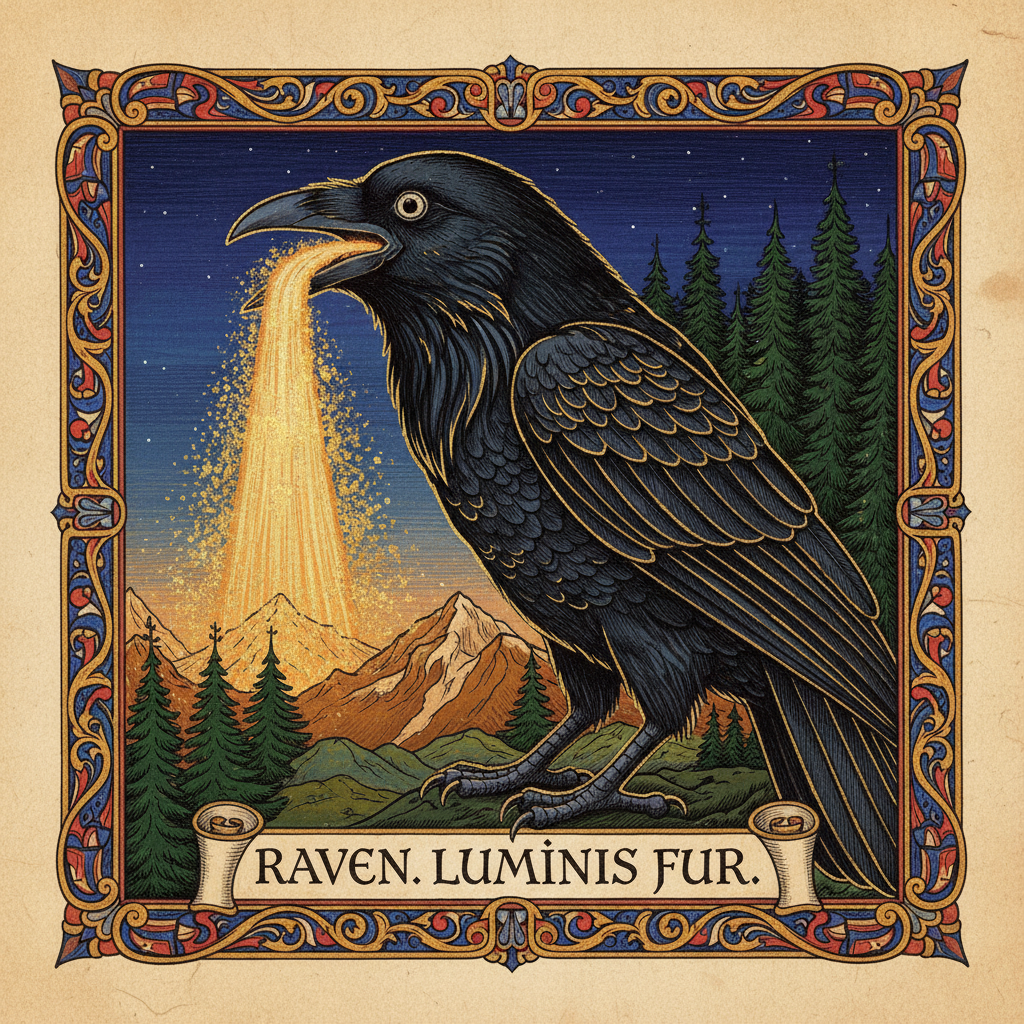
            RAVEN_NODE["<b>RAVEN</b><br/>Released the sun<br/>Light-bringer"]
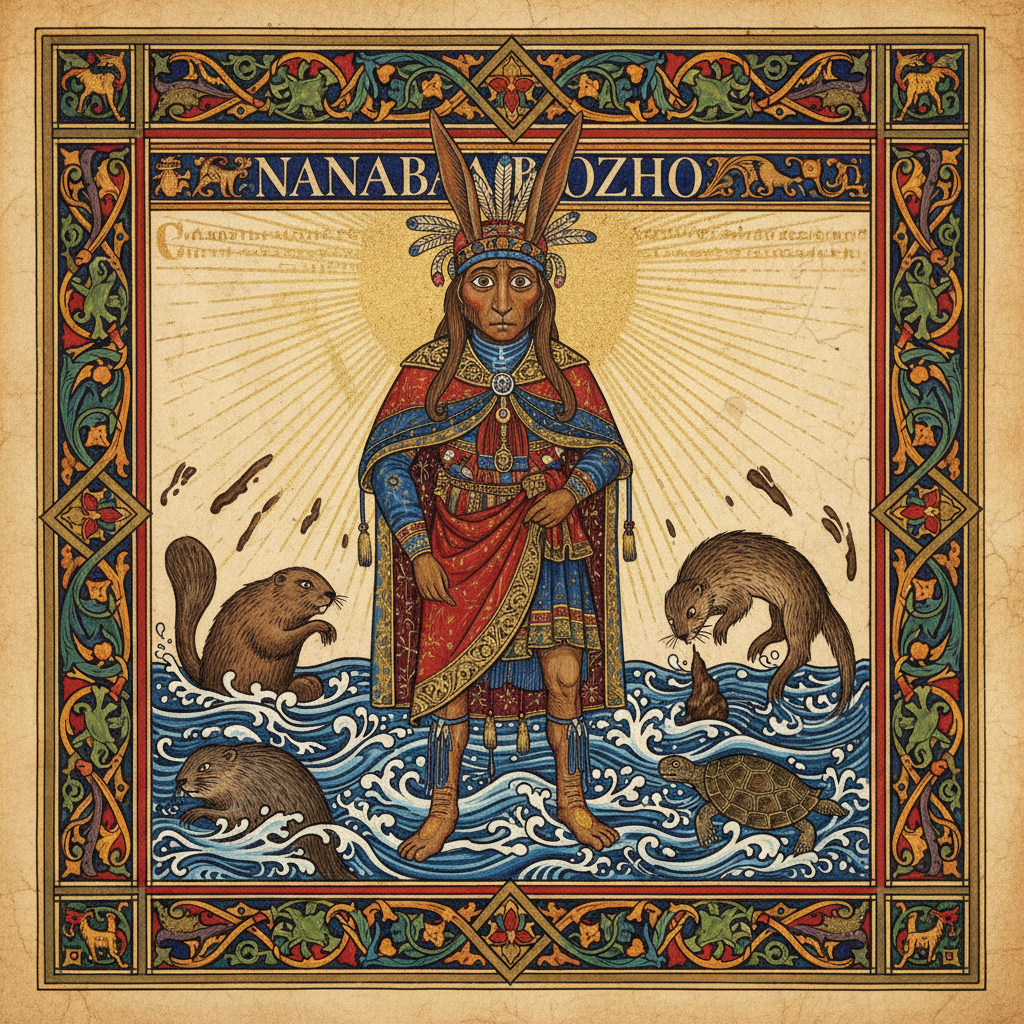
            NANABOZHO["<b>NANABOZHO</b><br/>Reshaped the world<br/>after the Flood"]
        end

        subgraph DARK["The Shadow World -- Powers to Be Feared"]
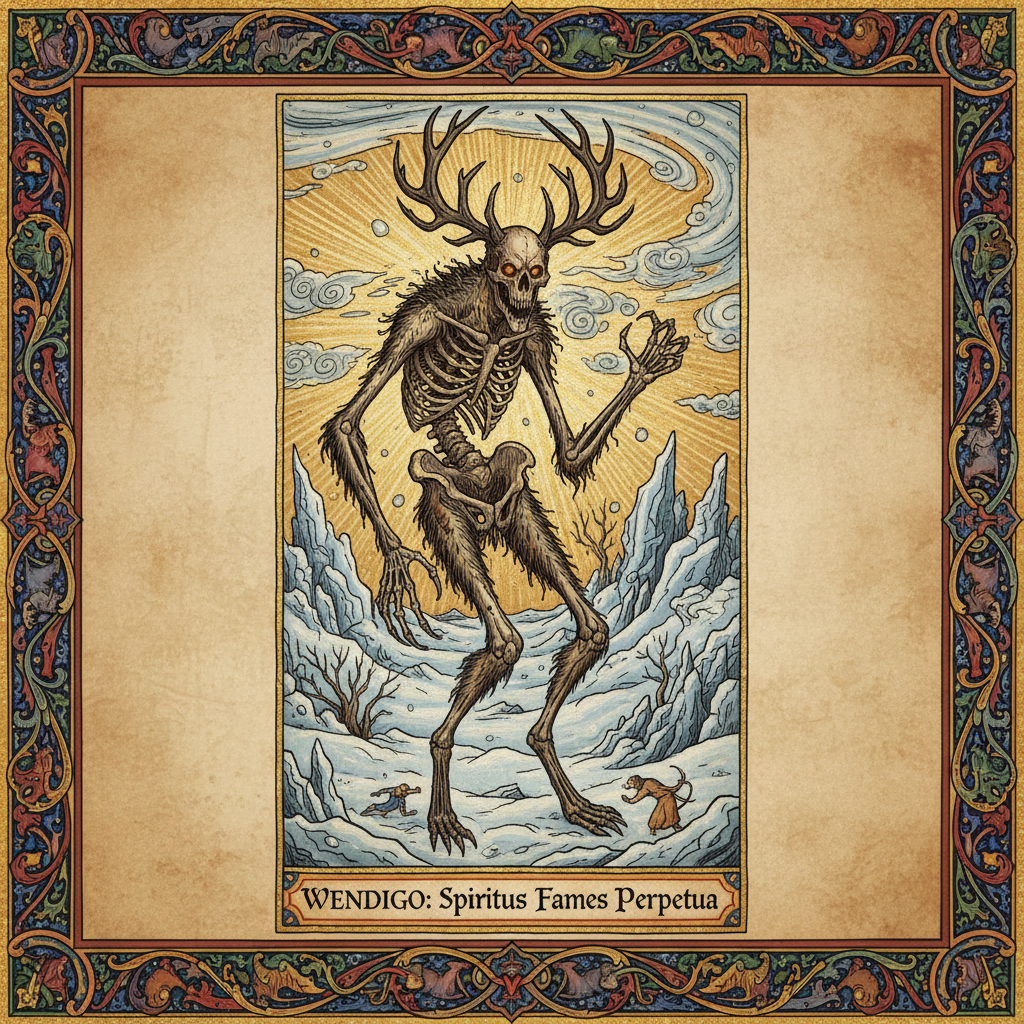
            WENDIGO["<b>WENDIGO</b><br/>Insatiable hunger<br/>The cannibal spirit"]
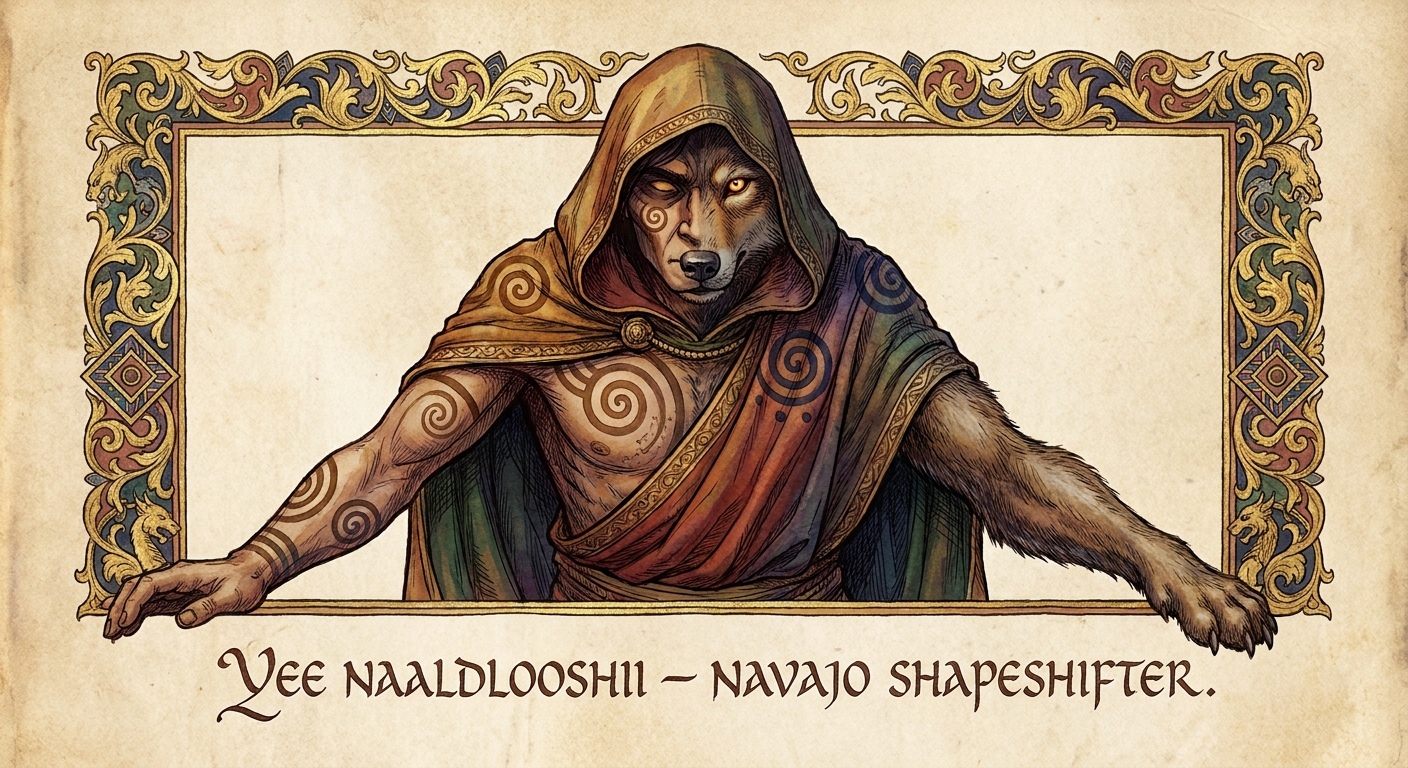
            SKINWALKER["<b>SKINWALKER</b><br/>yee naaldlooshii<br/>Taboo to discuss"]
        end
    end

    WAKAN -.->|"Pervades<br/>all things"| EARTH
    WBCW -->|"Brings sacred<br/>knowledge"| EARTH
    THUNDER -->|"Protects"| EARTH
    SPIDER -->|"Teaches"| TRICKSTER
    TRICKSTER -->|"Shapes the world<br/>through chaos"| EARTH
    COYOTE -.->|"Stole fire<br/>for humanity"| ABOVE
    WENDIGO -.->|"Consumes<br/>the desperate"| EARTH

    style COSMOS fill:#8B4513,stroke:#5C2D0E,color:#fff
    style ABOVE fill:#87CEEB,stroke:#4682B4,color:#000
    style EARTH fill:#228B22,stroke:#006400,color:#fff
    style TRICKSTER fill:#FF8C00,stroke:#CC7000,color:#000
    style DARK fill:#2F2F2F,stroke:#000,color:#fff
flowchart LR
    COYOTE_M["<b>COYOTE</b><br/>Native American"]
    RAVEN_M["<b>RAVEN</b><br/>Pacific Northwest"]
    NANABOZHO_M["<b>NANABOZHO</b><br/>Ojibwe"]

    LOKI["<b>LOKI</b><br/>Norse"]
    ESHU["<b>ESHU</b><br/>Yoruba"]
    HERMES["<b>HERMES</b><br/>Greek"]
    WUKONG["<b>SUN WUKONG</b><br/>Chinese"]
    MAUI["<b>MAUI</b><br/>Polynesian"]
    ANANSI["<b>ANANSI</b><br/>Akan"]
    PROMETHEUS["<b>PROMETHEUS</b><br/>Greek"]

    COYOTE_M ---|"Fire-bringer"| PROMETHEUS
    COYOTE_M ---|"Amoral chaos"| LOKI
    COYOTE_M ---|"Sacred fool"| ESHU
    RAVEN_M ---|"Light-bringer"| PROMETHEUS
    RAVEN_M ---|"Clever thief"| HERMES
    RAVEN_M ---|"Stole from<br/>the powerful"| MAUI
    NANABOZHO_M ---|"Flood survivor"| MAUI
    NANABOZHO_M ---|"World-shaper"| WUKONG
    ESHU ---|"Crossroads"| HERMES
    ANANSI ---|"Stories from<br/>the gods"| RAVEN_M

    style COYOTE_M fill:#FF8C00,stroke:#CC7000,color:#000
    style RAVEN_M fill:#2F2F2F,stroke:#000,color:#fff
    style NANABOZHO_M fill:#8B4513,stroke:#5C2D0E,color:#fff
    style LOKI fill:#228B22,stroke:#006400,color:#fff
    style ESHU fill:#8B0000,stroke:#4B0000,color:#fff
    style HERMES fill:#DAA520,stroke:#B8860B,color:#000
    style WUKONG fill:#FFD700,stroke:#B8860B,color:#000
    style MAUI fill:#006994,stroke:#004466,color:#fff
    style ANANSI fill:#4a2c6e,stroke:#2d1a45,color:#fff
    style PROMETHEUS fill:#DC143C,stroke:#8B0000,color:#fff
Centerpiece: The Trickster Across Continents
The trickster is arguably the only mythological archetype that appears in every human culture without exception. The table below maps the tricksters who have appeared throughout this compendium, revealing a pattern that is either evidence of cultural diffusion, deep evolutionary psychology, or — if you listen to the traditions themselves — proof that the sacred has a sense of humor.
| Trickster | Tradition | Key Feat | Nature | Consequence |
|---|
| Coyote | Native American (many nations) | Stole fire; created death | Amoral creative chaos — never learns, never reforms | Death entered the world; his own child was the first to die |
| Raven | Pacific Northwest (Tlingit, Haida) | Released the sun from its box | Clever, self-serving, but the world benefits | Light exists because of Raven’s appetite |
| Nanabozho | Ojibwe / Anishinaabe | Rebuilt the earth after the Flood | Grief-driven, creative, world-shaper | Turtle Island — the earth itself |
| Loki | Norse | Engineered Baldur’s death | Escalating darkness — pranks become atrocities | Ragnarok. The end of everything |
| Eshu | Yoruba | Guards the crossroads; delivers messages | Necessary intermediary — must be honored first | Without Eshu, no prayer reaches the gods |
| Sun Wukong | Chinese | Fought heaven, ate the peaches of immortality | Ego that must be tamed through suffering | Enlightenment — but only after 81 trials |
| Hermes | Greek | Stole Apollo’s cattle as a newborn | Charming diplomat — chaos domesticated | Became the messenger of the gods |
| Prometheus | Greek | Stole fire for humanity | Heroic rebel — suffering for his gift | Chained to a rock for eternity (until freed by Heracles) |
| Anansi | Akan / West African | Tricked all the world’s stories from the sky god | Wisdom through cunning — the small defeating the powerful | All stories belong to Anansi now |
| Maui | Polynesian | Fished up islands, lassoed the sun, sought immortality | Demigod benefactor — human ambition scaled to divine | Died trying to conquer death (entered Hine-nui-te-Po) |
| The Serpent | Biblical (Genesis) | Offered forbidden knowledge | Tempter or liberator (depends on tradition) | The Fall — or the beginning of consciousness |
| Set | Egyptian | Murdered Osiris, challenged Horus | Chaos necessary for cosmic balance | The desert exists because Set exists |
The Pattern: Every trickster in this table shares a common structure: they violate a boundary (fire belongs to the gods, light belongs to the chief, knowledge belongs to heaven), and in doing so, they create the conditions for human life. Without the trickster, fire stays with the gods and humanity freezes. Without the trickster, the sun stays in a box and the world is dark. Without the trickster, knowledge stays forbidden and humanity remains innocent but ignorant. The trickster is the engine of change. The trickster is what happens when the universe gets bored with perfection.
What varies is the tone. Coyote never faces permanent consequences; he dies and comes back, unchanged. Loki faces permanent consequences; he is bound until the end of the world. Prometheus suffers eternally for his gift. Hermes is rewarded and promoted. The trickster’s fate reveals what each culture fears most: the Lakota fear forgetting the lessons. The Norse fear that chaos will escalate beyond control. The Greeks admire the noble rebel but also the smooth operator.
Centerpiece: The Flood — Every Continent Has One
The flood narrative is the single most widespread story in human civilization. Below is every flood tradition referenced in this compendium, demonstrating a pattern that scholars have debated for centuries: coincidence, cultural diffusion, shared memory of real events (post-Ice Age sea level rise), or something deeper.
| Tradition | Survivor | Vessel | Signal/Animal | Cause | Resolution |
|---|
| Ojibwe (Nanabozho) | Nanabozho | Log / raft | Muskrat dives for mud | War with underwater spirits | Earth rebuilt on Turtle’s back |
| Cherokee | Water Spider | — | Water Spider retrieves fire | World covered in water | Animals bring up mud |
| Caddo | Medicine man | Hollow reed | — | People’s wickedness | Earth-diver recreation |
| Biblical (Genesis 6-9) | Noah | Ark | Dove returns with olive branch | Human wickedness | Rainbow covenant |
| Mesopotamian (Gilgamesh) | Utnapishtim | Ship | Dove, swallow, raven | Gods’ irritation with humanity | Utnapishtim made immortal |
| Greek (Deucalion) | Deucalion & Pyrrha | Chest/Ark | — | Zeus angered by human sacrifice | Repopulate by throwing stones |
| Hindu (Matsya Purana) | Manu | Boat, towed by fish | — | Cosmic dissolution (pralaya) | Manu becomes father of humanity |
| Chinese (Gun-Yu) | Yu the Great | — | — | Cosmic disorder | Yu channels the waters, becomes emperor |
| Polynesian (various) | Various heroes | Canoes | — | Gods’ anger or cosmic reset | Islands fished up from the sea |
| Norse (Bergelmir) | Bergelmir | Hollowed tree | — | The blood of slain Ymir | Giants survive to oppose the gods |
| Zoroastrian (Yima) | Yima | Vara (enclosure) | — | Terrible winter (Fimbulwinter parallel) | Humanity preserved in the Vara |
| Aboriginal Australian | Various | — | Rainbow Serpent | Violation of sacred law | Landscape reshaped |
The Question: Why does every culture have a flood story? The scholarly answers include:
- Memory of real events — post-Ice Age sea level rise (roughly 10,000-7,000 BCE) submerged vast coastal areas worldwide, and these stories may preserve genuine communal memory of those catastrophes
- Cultural diffusion — the Mesopotamian flood narrative may have spread through trade routes, influencing the Biblical version and others
- Independent invention — floods are universal natural disasters; every river-adjacent civilization experienced them
- Deep mythological structure — the flood represents the return to primordial chaos before a new creation, a narrative reset that allows the world to begin again, purified
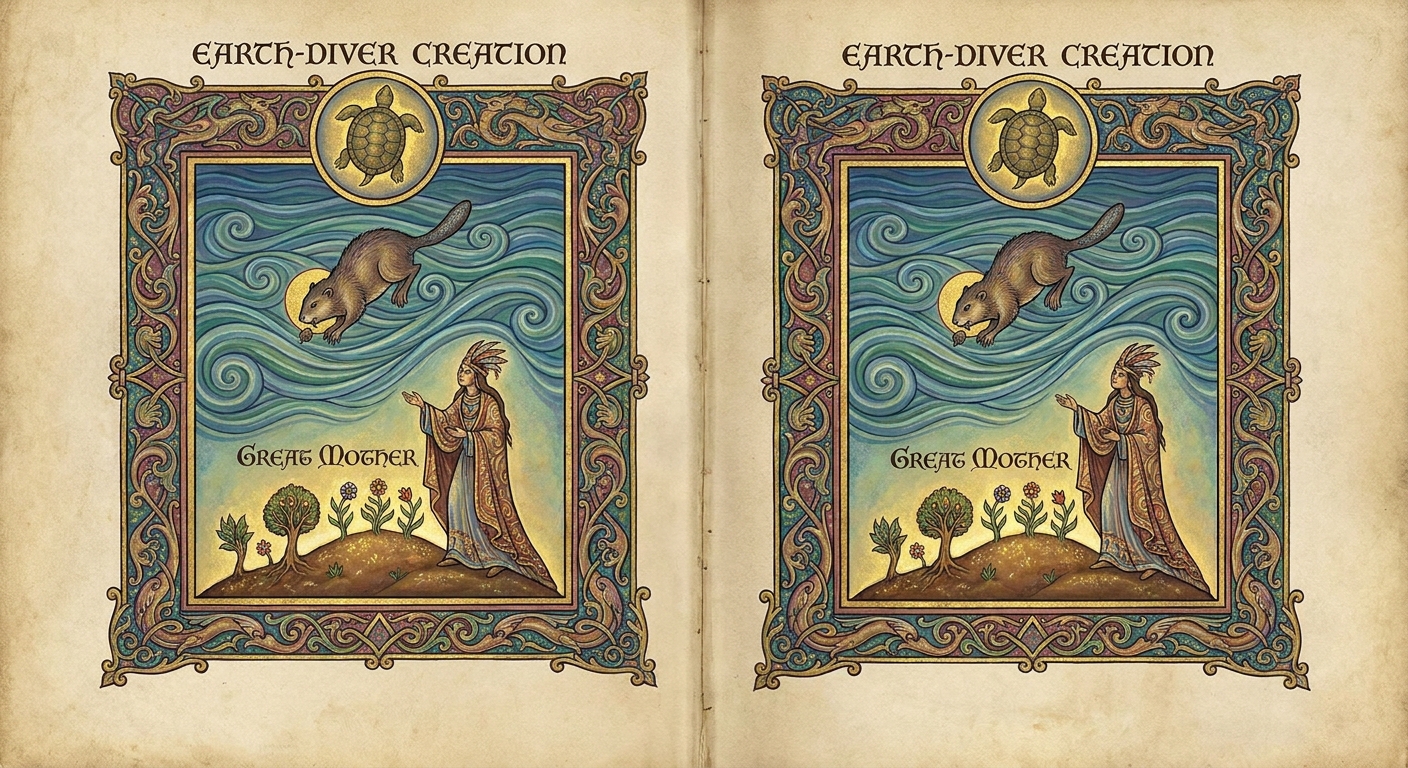
The Native American earth-diver traditions add a distinctive element found nowhere in the Near Eastern versions: the animal helper who dives to retrieve creation material. This motif connects to the broader indigenous understanding that animals are not subordinate to humans but are co-creators and elder relatives. In the Biblical flood, the dove is a scout. In the Ojibwe flood, the muskrat is a hero who dies to save the world. The theology is in the difference.
Cross-References to the Bestiary
The figures in this section connect to entities throughout the compendium:
flowchart TB
    subgraph NA["Native American"]
        WAKAN["Wakan Tanka"]
        COYOTE_CR["Coyote"]
        RAVEN_CR["Raven"]
        NANABOZHO_CR["Nanabozho"]
        SPIDER_CR["Spider Woman"]
        WBCW_CR["White Buffalo<br/>Calf Woman"]
        THUNDER_CR["Thunderbird"]
        WENDIGO_CR["Wendigo"]
    end

    subgraph OTHER["Across the Bestiary"]
        BRAHMAN["Brahman<br/>(Hindu)"]
        EINSOF["Ein Sof<br/>(Kabbalistic)"]
        TAO["The Tao<br/>(Chinese)"]
        PROMETHEUS_CR["Prometheus<br/>(Greek)"]
        LOKI_CR["Loki<br/>(Norse)"]
        ESHU_CR["Eshu<br/>(Yoruba)"]
        MOSES_CR["Moses<br/>(Biblical)"]
        GABRIEL_CR["Gabriel<br/>(Islamic)"]
        GARUDA_CR["Garuda<br/>(Hindu)"]
        PRETA["Hungry Ghosts<br/>(Buddhist)"]
        NOAH_CR["Noah<br/>(Biblical)"]
        SOPHIA_CR["Sophia<br/>(Gnostic)"]
    end

    WAKAN ---|"Impersonal<br/>ultimate"| BRAHMAN
    WAKAN ---|"Beyond<br/>naming"| EINSOF
    WAKAN ---|"The way that<br/>cannot be spoken"| TAO
    COYOTE_CR ---|"Fire-bringer"| PROMETHEUS_CR
    COYOTE_CR ---|"Sacred chaos"| LOKI_CR
    COYOTE_CR ---|"Trickster"| ESHU_CR
    RAVEN_CR ---|"Light-thief"| PROMETHEUS_CR
    NANABOZHO_CR ---|"Flood<br/>survivor"| NOAH_CR
    SPIDER_CR ---|"Creative<br/>wisdom"| SOPHIA_CR
    WBCW_CR ---|"Bringer<br/>of sacred law"| MOSES_CR
    WBCW_CR ---|"Divine<br/>messenger"| GABRIEL_CR
    THUNDER_CR ---|"Great bird vs.<br/>great serpent"| GARUDA_CR
    WENDIGO_CR ---|"Insatiable<br/>craving"| PRETA

    style NA fill:#8B4513,stroke:#5C2D0E,color:#fff
    style OTHER fill:#4682B4,stroke:#2E5A88,color:#fff
Sources & Further Reading
- Brown, Joseph Epes. The Sacred Pipe: Black Elk’s Account of the Seven Rites of the Oglala Sioux. Norman: University of Oklahoma Press, 1953. Primary source for Lakota sacred rites, as told by Black Elk.
- Bright, William. A Coyote Reader. Berkeley: University of California Press, 1993. Coyote stories from multiple traditions with linguistic analysis.
- Bringhurst, Robert. A Story as Sharp as a Knife: The Classical Haida Mythtellers and Their World. Vancouver: Douglas & McIntyre, 1999. Haida oral literature treated with the seriousness it deserves.
- Deloria Jr., Vine. God Is Red: A Native View of Religion. New York: Grosset & Dunlap, 1973. Foundational indigenous scholar on Native American spirituality and its philosophical framework.
- Erdoes, Richard & Alfonso Ortiz, eds. American Indian Myths and Legends. New York: Pantheon, 1984. The essential one-volume collection, compiled with indigenous collaboration.
- Gill, Sam D. Native American Religions: An Introduction. Belmont, CA: Wadsworth, 1982. Academic overview of the diversity of indigenous spiritual traditions.
- Johnston, Basil. Ojibway Heritage. Toronto: McClelland & Stewart, 1976. Written by an Ojibwe scholar and storyteller — indigenous voice, not colonial extraction.
- Lopez, Barry Holstun. Giving Birth to Thunder, Sleeping with His Daughter: Coyote Builds North America. New York: Avon, 1977. Coyote stories retold with literary grace and scholarly fidelity.
- Radin, Paul. The Trickster: A Study in American Indian Mythology. New York: Schocken, 1956. With commentaries by Karl Kerenyi and C.G. Jung. The foundational study of the trickster archetype.
- Thompson, Stith. Tales of the North American Indians. Cambridge: Harvard University Press, 1929. Reprint, Dover, 2000. Systematic classification of narrative motifs across traditions.
- Walker, James R. Lakota Belief and Ritual. Ed. Raymond J. DeMallie and Elaine A. Jahner. Lincoln: University of Nebraska Press, 1980. Ethnographic record of Lakota spiritual practice.
- Waters, Frank. Book of the Hopi. New York: Viking, 1963. Controversial (some Hopi dispute its accuracy) but widely referenced account of Hopi cosmology.
This section covers 12 entities and concepts from Native American spiritual traditions. It does not and cannot represent the full depth of any single nation’s spiritual life. For those seeking deeper understanding, the best path is to listen to indigenous voices — scholars, elders, storytellers, and communities who are the living carriers of these traditions. The stories belong to them.
 LEGENDARY
  LEGENDARY
  LEGENDARY
  LEGENDARY
  LEGENDARY
  RARE
RARE  RARE
RARE 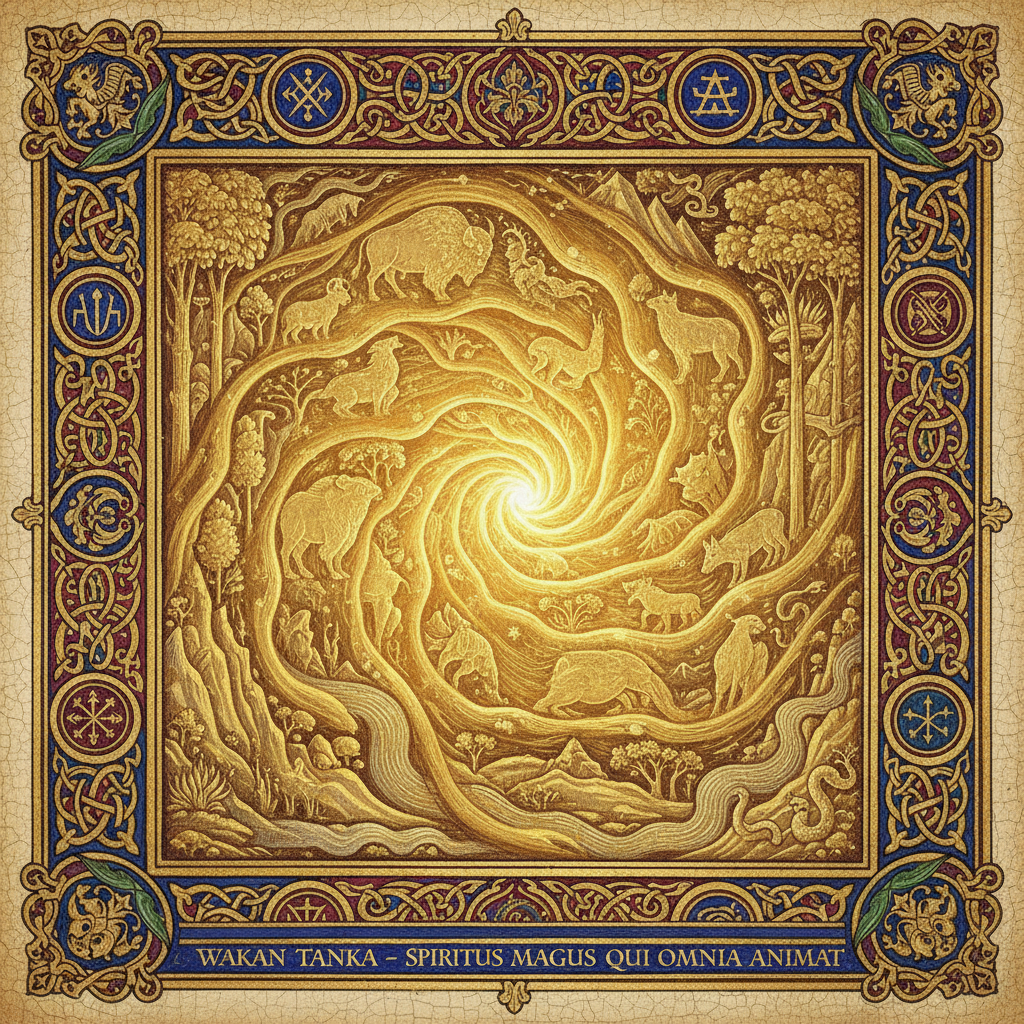 MYTHIC
  RARE
RARE