Iskander at the Threshold of Darkness
330–323 BCE — the Hellenistic period, reframed in Persian legendary historiography · The Land of Darkness — the mythological space at the world's edge where the Water of Life flows
Contents
Alexander the Great — transformed in Persian legend into Iskander the philosopher-king — journeys to the Land of Darkness to find the Water of Life, guided by Khiḍr, in a quest that reframes conquest as spiritual seeking.
- When
- 330–323 BCE — the Hellenistic period, reframed in Persian legendary historiography
- Where
- The Land of Darkness — the mythological space at the world's edge where the Water of Life flows
They call him Iskander in the east.
His mother, in Persian legend, was an Iranian princess given to Philip of Macedon in a diplomatic marriage — which makes him half-Iranian, half-Achaemenid, a descendant of the kings whose empire he will destroy. This genealogy was not invented by Persian nationalists; it was adopted by them from a story that served everyone’s purpose: the Macedonians wanted to legitimize their conquest, the Persians wanted to explain how their world was overthrown by making the overthrower one of their own.
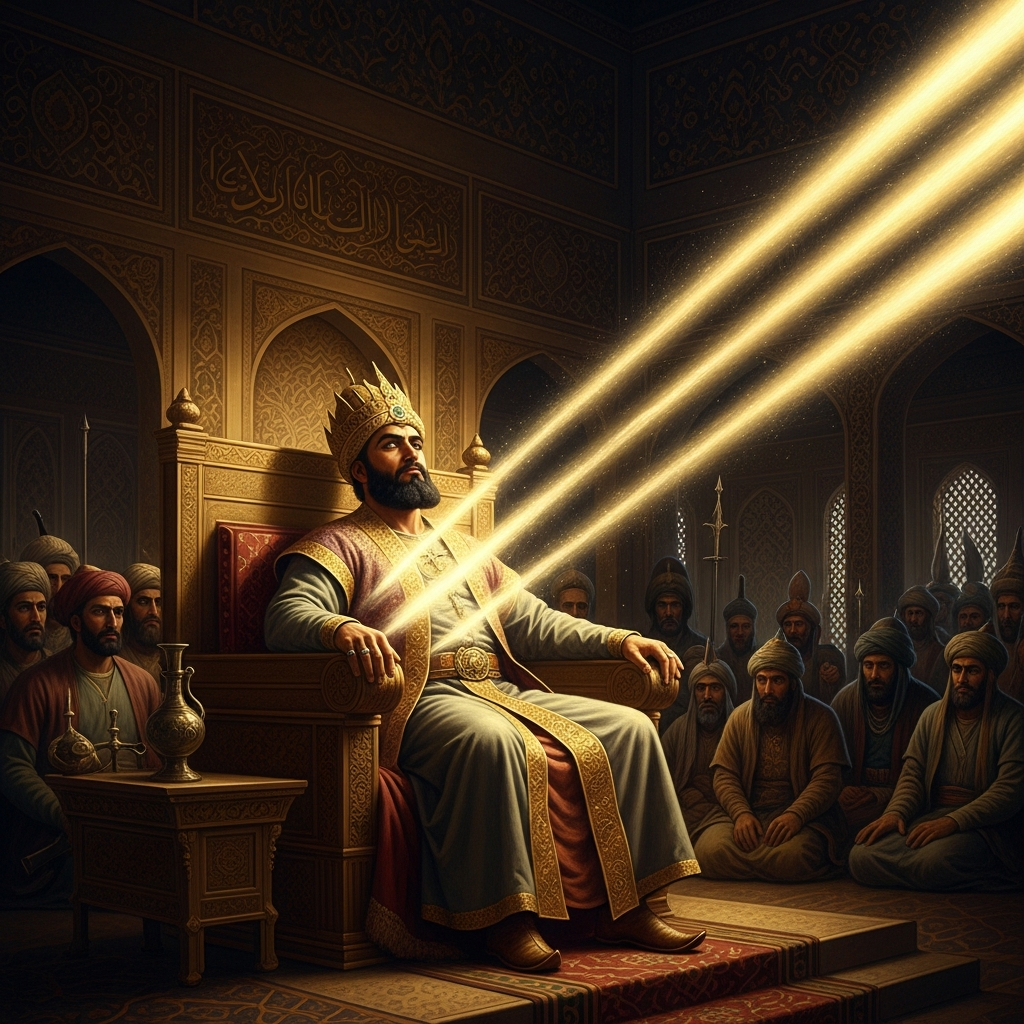
Ferdowsi treats this contradiction with characteristic honesty: Iskander is presented as a great man who does a terrible thing. He burns Persepolis. He kills the mobads — the Zoroastrian priests — because killing the priests is the same as burning the books, and what he burns cannot be replaced. The Shahnameh mourns this while simultaneously insisting Iskander is a hero. The contradiction is left intact because the history is left intact.
But the Persian imagination did not stop at the historical Iskander.
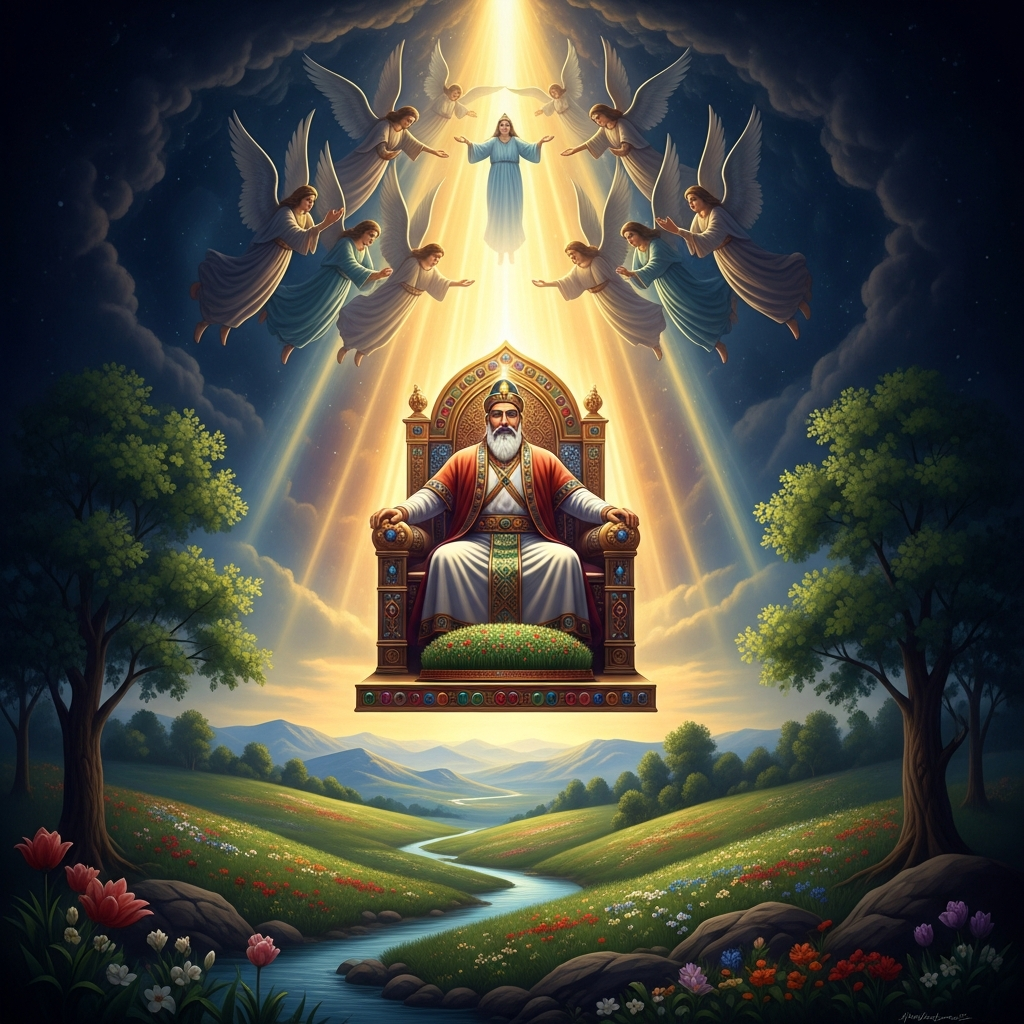
Nizami Ganjavi, writing his Iskandarnāma in the twelfth century, takes the conqueror on a different journey. In Nizami’s telling, Iskander grows increasingly uninterested in conquest as his armies subdue the world. He has defeated every human opponent. He has reached the eastern edge of the known world. He has consulted Aristotle, his teacher, who has instructed him in the philosophical traditions of every people. And he has learned, from a conversation with Khiḍr — the mysterious immortal guide who had drunk the Water of Life and now wandered the world’s margins — that the spring of immortality exists somewhere in the Land of Darkness, the unlit region at the world’s north where light never reaches.
He resolves to find it.
The journey into the Land of Darkness is described by Nizami with the imagery of mystical travel: each stage further into the darkness is a stage further from the known self, a stripping away of the categories by which conquest makes sense. The great army that accompanied Iskander to the edge of the world cannot follow him into the darkness — the horses cannot navigate, the soldiers cannot march. He goes with a small group. Then with Khiḍr alone. Then, at the innermost point, alone.
He finds the spring.
But he finds it in the dark, and he cannot see it clearly, and the tradition — Nizami is explicit — says that Khiḍr found it and drank it in the same place and at the same time, while Iskander passed it by. The immortal guide became immortal. The philosopher-king, who had everything and wanted everything, passed the one thing that could not be taken by force.
He walks back out of the darkness.
The Persian tradition preserves his question to Khiḍr afterward: How did you find it? Khiḍr’s answer varies by source — sometimes it is I was not looking for it, sometimes it is You were looking at it with the wrong eyes, sometimes it is simply The light that illuminates it is not the light you came with.
Iskander lives out his life in conventional human time, conquering, governing, consulting philosophers, writing letters to his mother — the epistolary tradition makes him a great letter-writer, as though after the Land of Darkness he tried to communicate everything he almost understood before it faded. He dies young in Babylon, and the Persian tradition gives him a funeral that is more like a philosophical dialogue than a mourning ritual.
The question he asked in the Land of Darkness is the question the Persian literary tradition will never stop asking.
What is the light that would have let him see it?
Echoes Across Traditions
Entities
- Iskander (Alexander)
- Khiḍr
- Aristotle
- Darius III
- Water of Life
Sources
- Ferdowsi, *Shahnameh*, 'Iskander,' translated by Dick Davis
- Nizami Ganjavi, *Iskandarnāma* (Book of Alexander), translated by Minoo Southgate (Columbia, 1978)
- A.B. Bosworth, *Conquest and Empire: The Reign of Alexander the Great* (Cambridge, 1988)
- Ehsan Yarshater, 'Alexander and Iran,' *Encyclopædia Iranica* (2005)