Ashoka After Kalinga
261 BCE · the Mauryan Empire · Kalinga (modern Odisha), then across the empire
Contents
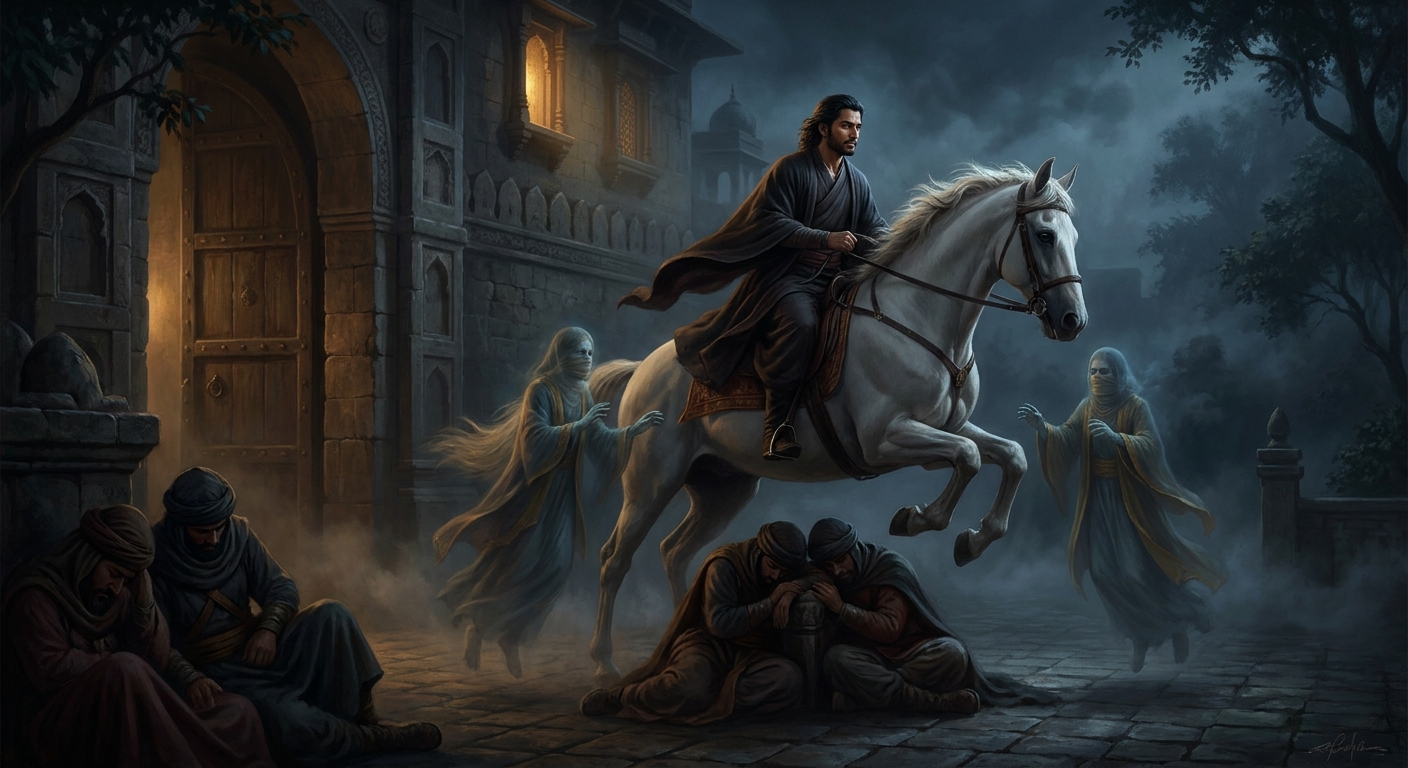
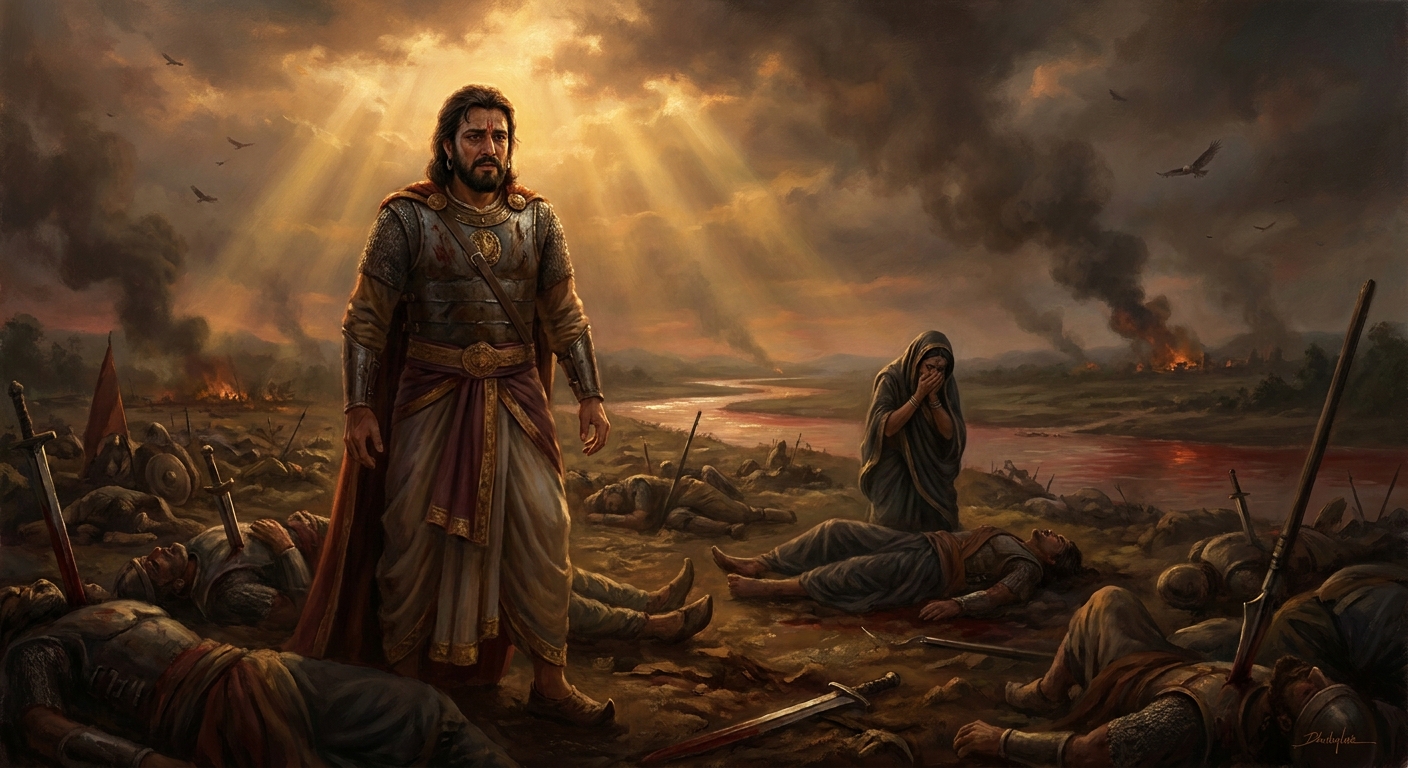
261 BCE. Ashoka, master of the greatest empire on earth, walks the field where 100,000 of his subjects lie dead. He weeps. He turns. What follows is the rarest thing in history — a conqueror who actually changes.
- When
- 261 BCE · the Mauryan Empire
- Where
- Kalinga (modern Odisha), then across the empire
He has won.
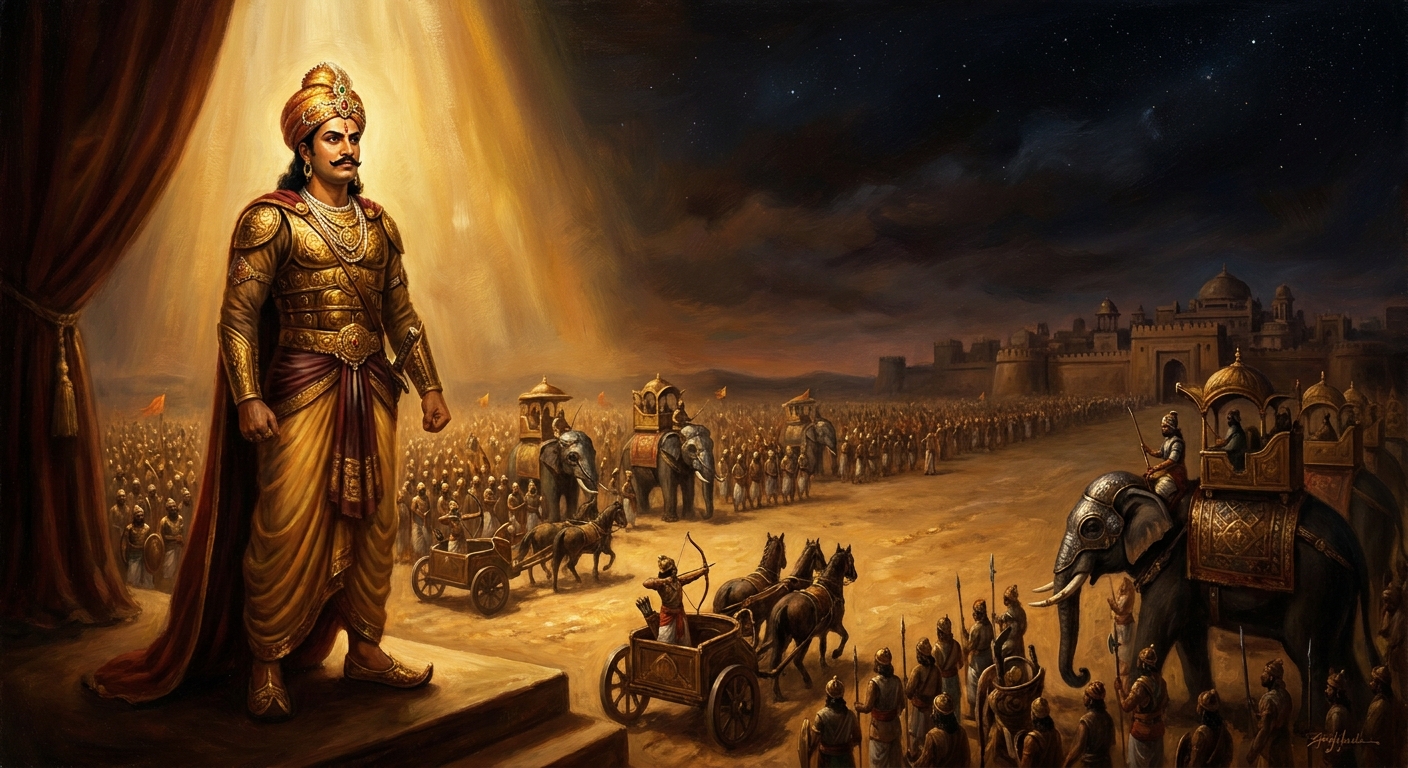
This is what winning looks like: fifty miles of the Daya River valley, stripped of everything that moves. The monsoon has not come yet. The heat holds the smell low and close to the ground. Ashoka, third emperor of the Maurya dynasty, grandson of Chandragupta who broke the back of Alexander’s successor kingdoms, walks the aftermath of his own army.
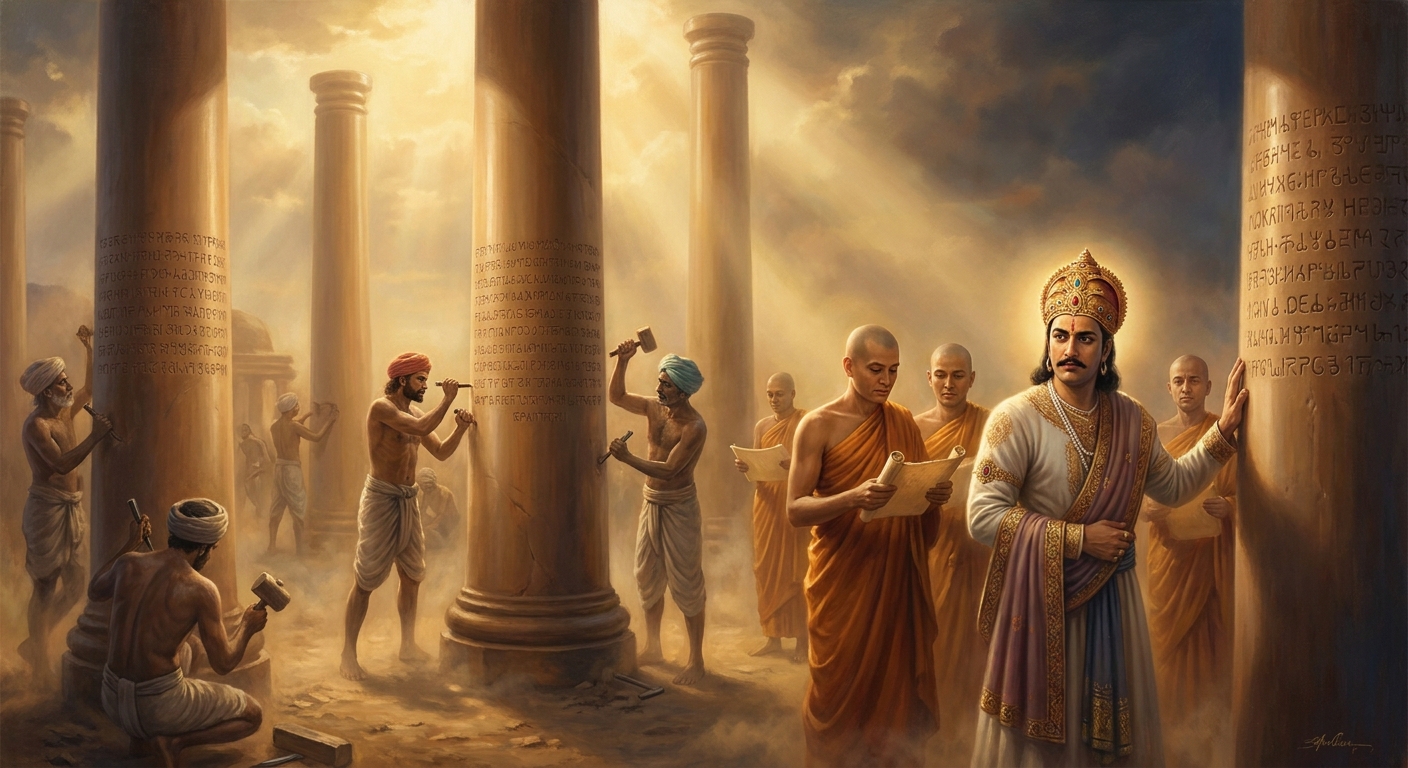
He has numbers. His administrators are good at numbers. One hundred thousand dead. One hundred and fifty thousand deported — marched in chains toward the imperial heartland to repopulate farmland that needed labor. Many times that number died of wounds, of famine, of the roads. Rock Edict XIII will record all of this, in Ashoka’s own words, in stone, for anyone who cares to read.
He is the one who carved it. He is also the one who wept first.
Kalinga had been the last holdout. Every other kingdom in the subcontinent had bent to the Mauryan wheel — either peacefully, through the administrative genius Ashoka inherited, or violently, through the army he deployed without hesitation for eight years. Kalinga alone refused. Kalinga, on the eastern coast, controlling the trade routes to Burma and the sea lanes south. Kalinga, whose forests and iron mines and port cities made it a prize worth the campaign.
He took it. He took it the way empires are taken: completely.
He is thirty-three years old. He has been emperor for eight years. He has never done anything that suggested he would feel this particular feeling on this particular morning. He is not, historically, a soft man. The Ashokavadana — a later Sanskrit text that may or may not be reliable in its particulars — describes him before Kalinga as Ashoka the Fierce, Chandashoka, a man who built a torture chamber for his enemies and ordered his own half-brothers killed to secure the throne. This is contested. Everything about Ashoka before the edicts is contested.
What is not contested is the edict itself, cut into granite at multiple sites across his empire, in his own voice:
“The Beloved of the Gods felt remorse.”
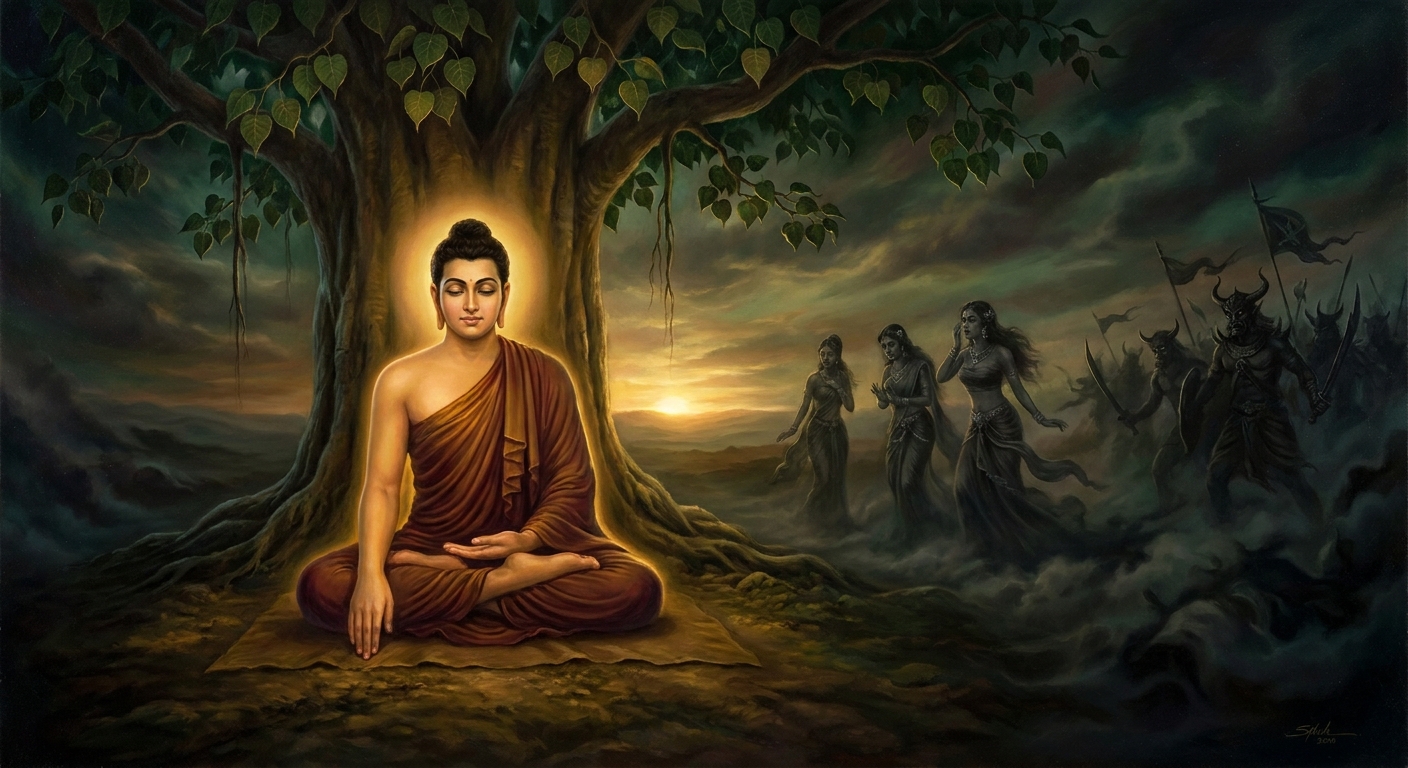
He has heard the teachings before. The Dharma — the Buddha’s path, the middle way between annihilation and excess, the recognition that suffering is real and that suffering has a cause and that the cause can be uprooted — has been circulating the Gangetic plain for two hundred years by the time Ashoka walks this field. He has had Buddhist advisors. He has offered patronage to monks. He is not ignorant of the tradition.
But there is a difference between knowing a thing and being broken open by it.
He walks until he cannot walk. He sits. Around him the field is doing what fields do after battles — the birds arrive first, then the insects, then the particular silence that is not silence at all but the sound of decomposition beginning its patient work. He has made all of this. He is the author of this. One hundred thousand people who got up in the morning and put on sandals and argued with their children and worried about the rains — he ended that, every one of them, for iron and timber and the geometry of trade routes.
The remorse in Rock Edict XIII does not read like propaganda. Propaganda would have stopped at the numbers and pivoted to justification. The edict does not justify. It says: “This is grievous to the Beloved of the Gods. This is considered even more deplorable.” It says: “Even those who are not carried off are affected — the friends, acquaintances, companions, relatives of those who were carried off.” He is counting the widths of the damage outward, ring by ring, the way you count the rings of a felled tree.
He is also a political genius and he knows exactly what he is writing and why. Both things are true. They are always both things.
What changes next is not incremental.
He does not reduce the army. He does not apologize and return to normal. He rebuilds the architecture of the empire around a different idea — the idea that a king’s first obligation is not territory but welfare, not tribute but protection, not the frontier but the village well and the hospital and the shady tree planted every half-mile along the royal road so that travelers do not suffer from the heat.
He calls this Dhamma — his version of the Dharma, applied to governance. The edicts that follow Kalinga are not victory inscriptions. They are policy documents written in the language of a man who has concluded, after sitting in a field for long enough, that there is something worse than defeat, and he has already done it.
He appoints Dhamma-mahamattas — ministers of righteousness — whose job is to travel the provinces and look for places where the elderly are neglected, where prisoners are being mistreated, where local officials have forgotten that the people in front of them are people. He builds hospitals for humans and for animals. He bans the sacrifice of animals at court. He plants medicinal herbs along the roads. He digs wells. He is doing this across an empire that runs from Afghanistan to Tamil Nadu, and he is doing it in writing, in at least four languages, because he wants it to last longer than he does.
Then he sends his children.
Mahinda, his son. Sanghamitra, his daughter. He dispatches them to Sri Lanka, to the court of King Devanampiyatissa, carrying the teachings and a cutting of the Bodhi tree under which the Buddha himself attained enlightenment. The Mahavamsa records the arrival — the king’s conversion, the founding of the Sangha on the island, the planting of the Bodhi cutting at Anuradhapura where it still grows, the oldest historically documented tree on earth.
He sends missionaries to the Greek kingdoms — to Antiochus II in Syria, Ptolemy II in Egypt, Antigonus in Macedonia, Magas in Cyrene, Alexander in Epirus. Rock Edict XIII names them. Whether any of the Greek kings converted is unclear. Whether any of the missionaries made it is unclear. What is clear is that Ashoka sent them, which means he looked at the map of the world as he understood it and thought: this teaching should not stop at my borders.
He is wrong about many things. The Mauryan Empire will collapse forty years after his death, partly because a king who spends on hospitals and wells and missionaries instead of on soldiers eventually has fewer soldiers. The Arthashastra, Chandragupta’s cold-blooded manual of statecraft, would not have approved. History is not a morality play and good intentions do not maintain empires. He knows this and does it anyway.
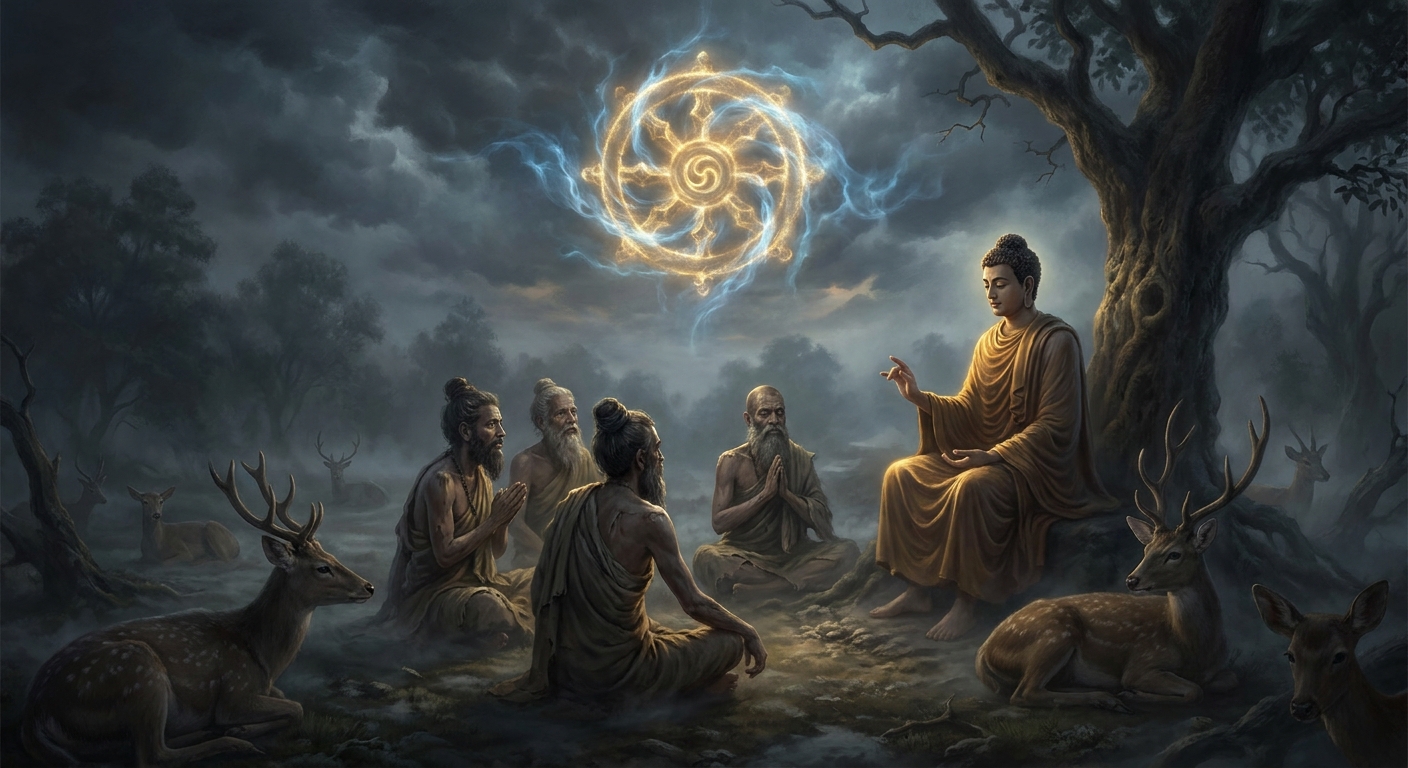
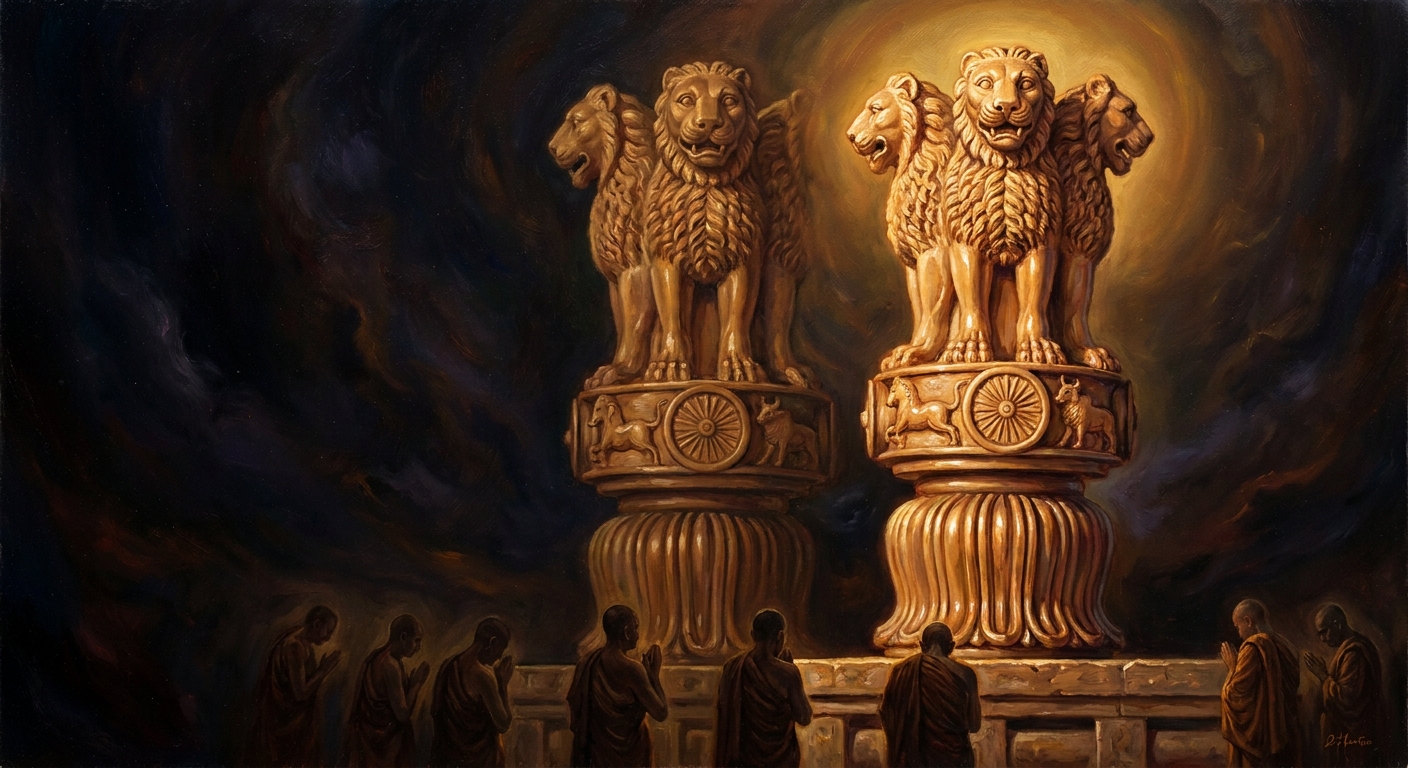
The Lion Capital he raises at Sarnath — the site of the Buddha’s first sermon, where the wheel of Dharma was first turned — shows four lions standing back to back, facing the four directions, watchful, presiding. Beneath them, the Dharma Wheel: twenty-four spokes, in motion. It is not a war monument. It is a compass rose for a different kind of navigation.
Two thousand three hundred years later, when the Republic of India needs an emblem, they take it from Ashoka. Not from the Vedas, not from the epics, not from any king who won. From the king who wept.
What Kalinga proves is not that war is wrong — every tradition has said that, and war continued regardless. What Kalinga proves is that it is possible for a conqueror to look at what he has made and be genuinely altered by it. This is rarer than enlightenment. It requires no mystical capacity — only the willingness to stand in the aftermath and refuse to look away.
The edicts will outlast the empire. The Bodhi cutting in Anuradhapura will outlast the edicts. The Lion Capital will outlast everything except the question it poses to every ruler who comes after: you have the power. What are you going to do with it now that you’ve seen what it costs?
Scenes
The killing field after Kalinga, 261 BCE
 Generating art…
 Stonemasons carve the rock edicts by torchlight across 36 known major and minor sites — from Kandahar in the northwest to Mysore in the south
 Generating art…
 The Lion Capital of Sarnath, erected at the site of the Buddha's first sermon
 Generating art…
 Echoes Across Traditions
Entities
- Ashoka
- Buddha
- Mahinda
- Sanghamitra
Sources
- *Edicts of Ashoka* — especially Rock Edict XIII (the Kalinga edict), Rock Edict I (prohibiting animal slaughter), and Pillar Edict VII (the final summation)
- *Mahavamsa* (The Great Chronicle of Sri Lanka) — Pali chronicle recording Mahinda's mission and the founding of Theravada Buddhism in Sri Lanka
- *Dipavamsa* (The Island Chronicle) — earlier Pali source on the third Buddhist council and the dispatch of missionaries
- Romila Thapar, *Ashoka and the Decline of the Mauryas* (1961, rev. 1997) — the definitive modern historical account
- Bhikkhu Sujato (trans.), *Suttas from the Pali Canon* — Suttacentral.net translations used for Dhamma references