Kisā Gotamī and the House With No Death
c. 5th century BCE · Savatthi, the capital of Kosala, northern India
Contents
A mother carries her dead child through the city of Savatthi asking for medicine to revive him. She is sent to the Buddha. The Buddha sends her to find a mustard seed from a house where no one has died. She knocks on every door in the city. She cannot return. What she cannot return with teaches her what no medicine could.
- When
- c. 5th century BCE
- Where
- Savatthi, the capital of Kosala, northern India
The child died this morning.
She does not fully know this yet. She knows that he is not breathing, that he is cold in the way the body gets cold when the fire has gone out of it, that he will not wake up when she holds him. But the part of her that knows this has not yet communicated with the part of her that believes something can still be done. She wraps the child in cloth. She picks him up. She goes out to find medicine.
She goes to the healers first, because that is the reasonable thing. They tell her what she already knows and cannot hear. She goes to other healers. She goes to the neighbors, who tell her what everyone in the city already knows, which is that the Buddha is teaching at Jetavana park and that he has done things no physician has done. She carries the child through the city to the park. She tells the Buddha that she needs medicine to revive her son.
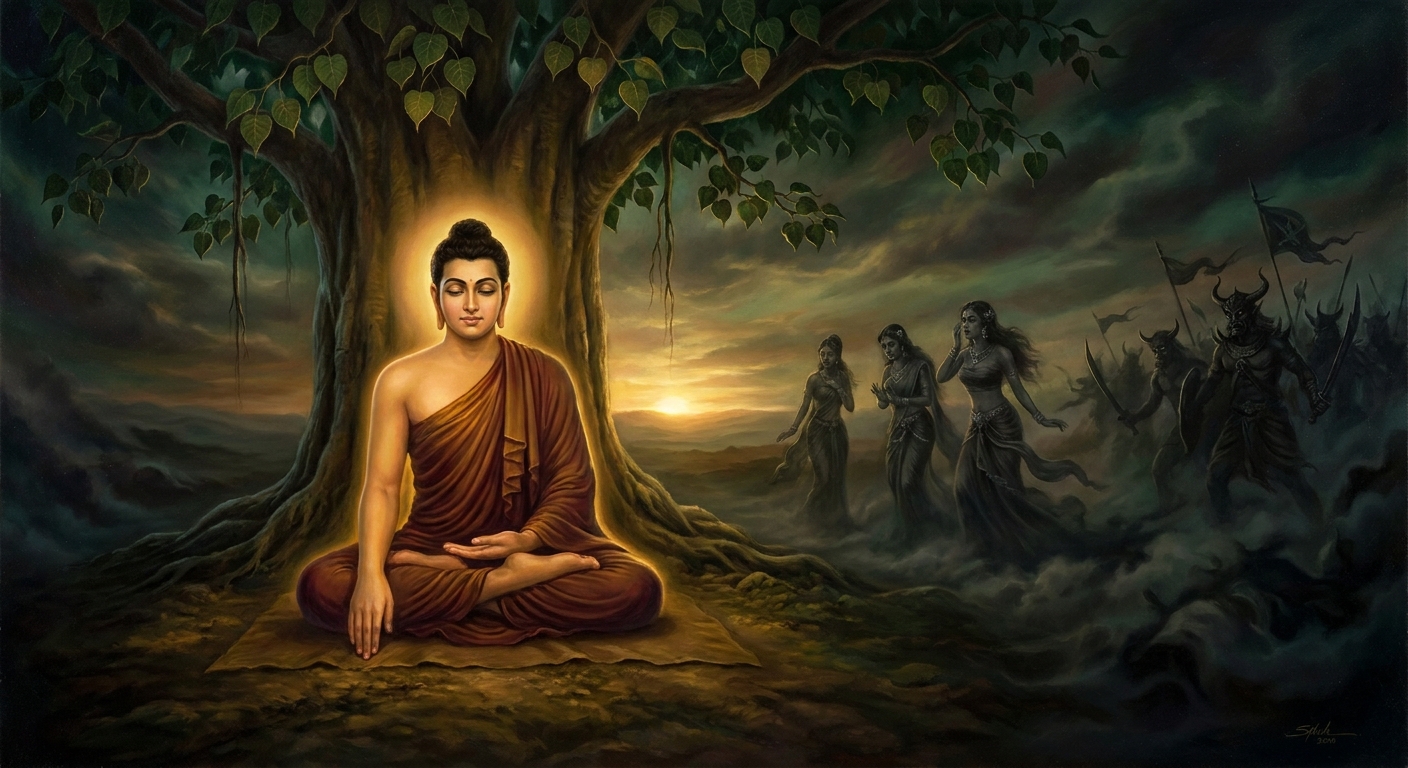
He says: yes. He says: I know of such a medicine. He says: you must bring me a mustard seed — a single mustard seed, the smallest of seeds, available in every household in the city — from a house where no one has ever died.
She thanks him. She goes to the nearest house.
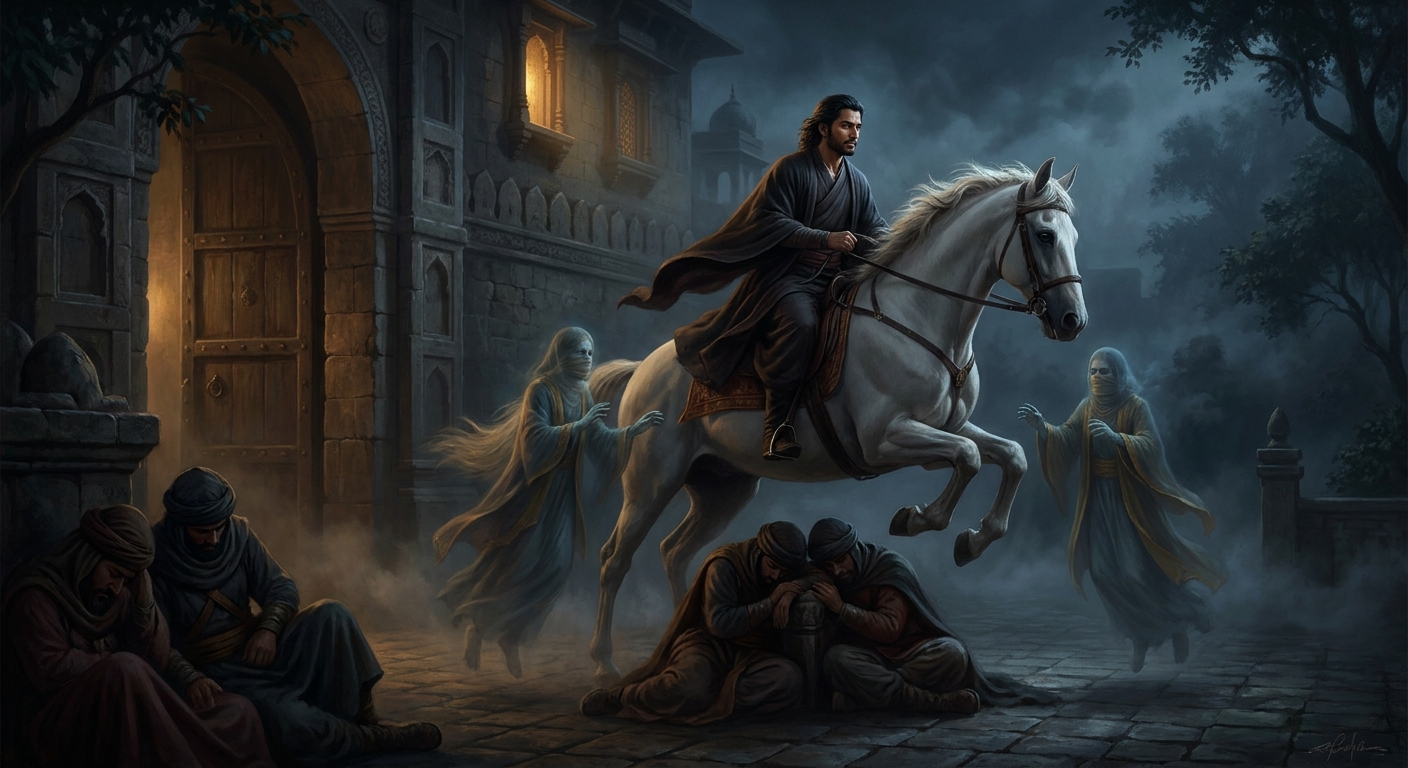
She knocks on the door and asks if the household has mustard seed. They do — mustard seed is a staple, every kitchen has it. She asks if anyone in the household has died. They look at her with the particular expression of people who are watching someone in grief and do not know what to say. They say: here my grandfather died. Here my husband. Here we lost a son in childhood. She thanks them and goes to the next door.
She knocks. They have mustard seed. She asks her question. They say: our mother died last year. She asks at the next house, and the next, and the pattern continues through the morning and into the afternoon, because she is thorough in the way that hope makes a person thorough, going street by street, quarter by quarter, the merchant district and the weavers’ street and the houses near the river where the fisherfolk live.
By late afternoon something has shifted.
Not a change of mind — a change of light. The stories she has been collecting are each separate, each belonging to a household and a name, but by late afternoon they have accumulated into something that is no longer a collection and is more like a terrain she is standing in. In every house: a father, a mother, a child, a husband, a wife, a servant, an elder, an infant. In every house the same movement from present to past tense, the same gesture of the hand toward the room or the courtyard where the absence lives.
She has not found her mustard seed. She is not going to find her mustard seed. She has understood this for the last hour but has kept knocking because the knocking is itself a kind of holding on, and the moment she stops she will have to stand in the silence.
She stops.
She stands at the edge of a street she has not yet walked down. The city is still making its city sounds — water, animals, the bell from a temple somewhere. The child is in her arms. She looks at him for a long time.
She carries him to the charnel ground, which is where the city takes its dead. She sets him down with the same care she has carried him with all day. She tells him, or tells the space he occupied, that she was looking for the medicine that would fix this and she knocked on every door and there was no house and she is very sorry that there was no house.
This is not recovery. Recovery is the wrong word for what is happening. What is happening is that the understanding she has been holding at arm’s length all day has finally arrived in the room, and the room is the charnel ground at dusk, and the arrival of the understanding is not comfort but it is the end of the particular additional suffering that comes from searching for the house that is not there.
She goes back to the Buddha and tells him she could not find the seed.
He says: you have found the teaching. Who in this city lives forever?
She asks to take the precepts. She is ordained. The Therigatha preserves the verses she wrote in old age — spare, unsentimental, fully present. She became one of the teachers of her generation. She sent students to knock on doors, though by then the doors were sometimes metaphors, and the mustard seed was sometimes the practice itself.
She is called Kisā Gotamī — the thin one, or the lean one, which her mother probably called her as a child, from her small frame, and which the tradition kept as a kind of precise physical notation. She was not a robust person. She was a thin woman with a dead child and a task she could not complete, and the impossibility of the task was its whole meaning.
The story travels. It goes into every tradition that Buddhism enters — China, Tibet, Japan, Southeast Asia, the American dharma centers of the twentieth century — and in each translation the mustard seed is the same, the door-knocking is the same, the house that does not exist is the same. The grief differs in its specifics. The knocking is constant. Every mother who has lost a child has knocked on every door, in one way or another, looking for the house. The question the Buddha sends them with is already in the knocking: do you understand yet what you are looking for?
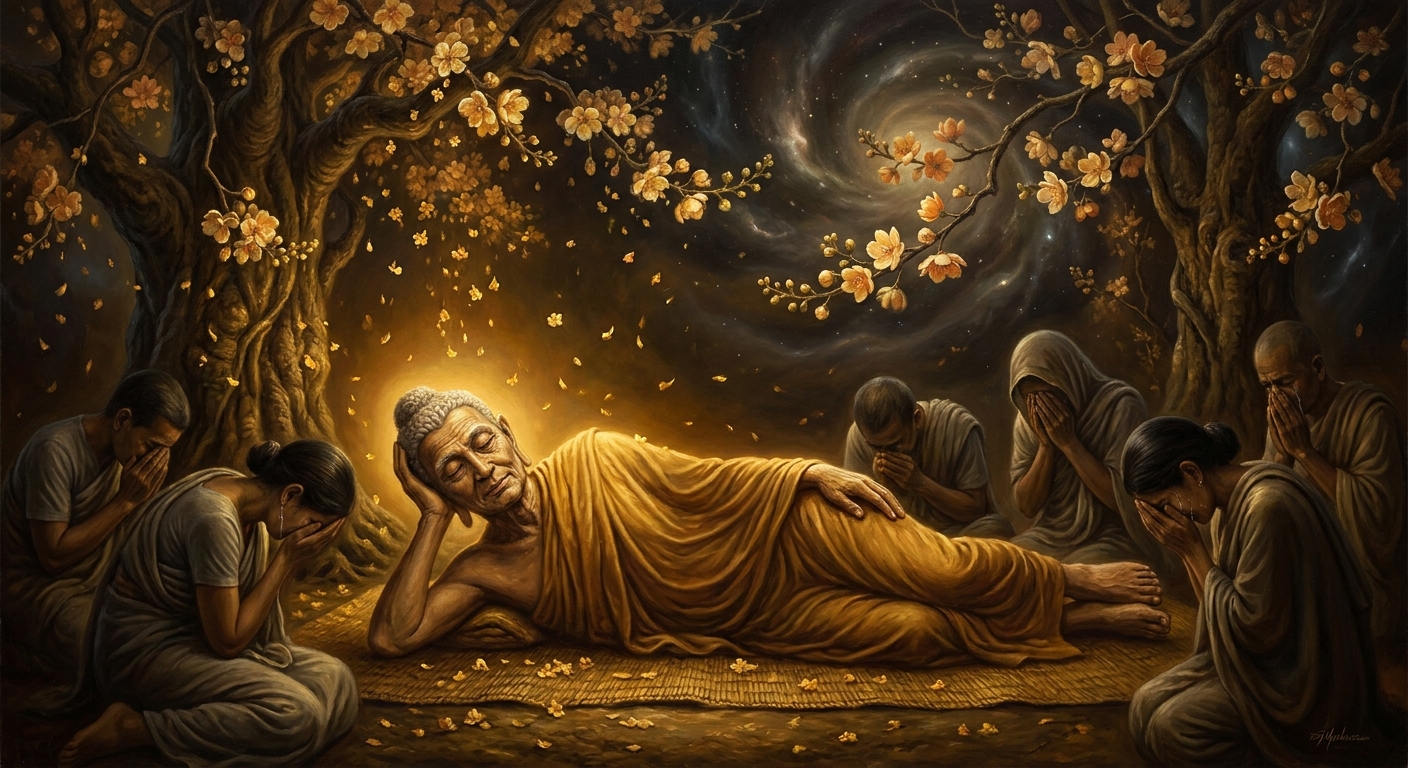
She set the child down on the ground of the charnel field and she spoke to him and she stayed until the light failed. Then she walked back through the city in the dark, going past the houses where she had knocked, each house quiet now, the cooking fires visible through the lattices, the families inside attending to their supper. Behind every closed door: the dead who were mourned, the living who would be mourned. She had asked at every door. She knew the inventory now. She walked through the city in the dark carrying nothing.
Scenes
The gate of Savatthi at midday
 Generating art…
 A domestic scene in Savatthi — a courtyard with a cooking fire, clay pots, a woman looking up from her work
 Generating art…
 The edge of the forest outside Savatthi at dusk
 Generating art…
 Echoes Across Traditions
Entities
- Kisā Gotamī
- The Buddha
Sources
- Bhikkhu Bodhi (trans.), *The Middle Length Discourses of the Buddha* (Wisdom Publications, 1995)
- K.R. Norman (trans.), *The Elders' Verses II: Therigatha* (Pali Text Society, 1971)
- Susan Murcott, *The First Buddhist Women: Translations and Commentary on the Therigatha* (Parallax Press, 1991)
- Thanissaro Bhikkhu (trans.), *Dhammapada* (Metta Forest Monastery, 1998)
- Bhikkhu Analayo, *Daughters of the Buddha* (Windhorse Publications, 2021)