Basilides and the 365 Heavens
Basilides active in Alexandria c. 117–138 CE; under Emperor Hadrian · Alexandria, Egypt; the Gnostic schools of the 2nd century CE
Contents
Basilides of Alexandria taught that between the unknowable God and our world lay 365 heavens, each ruled by a being called an Archon — and that the God of the Hebrew Bible was merely the lowest Archon, a demiurge who didn't know there was anything above him. He taught this in Alexandria around 120 CE. The Abraxas — the supreme being whose name in Greek numerology adds up to 365 — unified the cosmic year. Irenaeus called this teaching absurd. C.G. Jung named his most personal book *The Seven Sermons to the Dead* in the voice of Basilides. The Gnostics never really went away.
- When
- Basilides active in Alexandria c. 117–138 CE; under Emperor Hadrian
- Where
- Alexandria, Egypt; the Gnostic schools of the 2nd century CE
Basilides did not call himself a heretic.
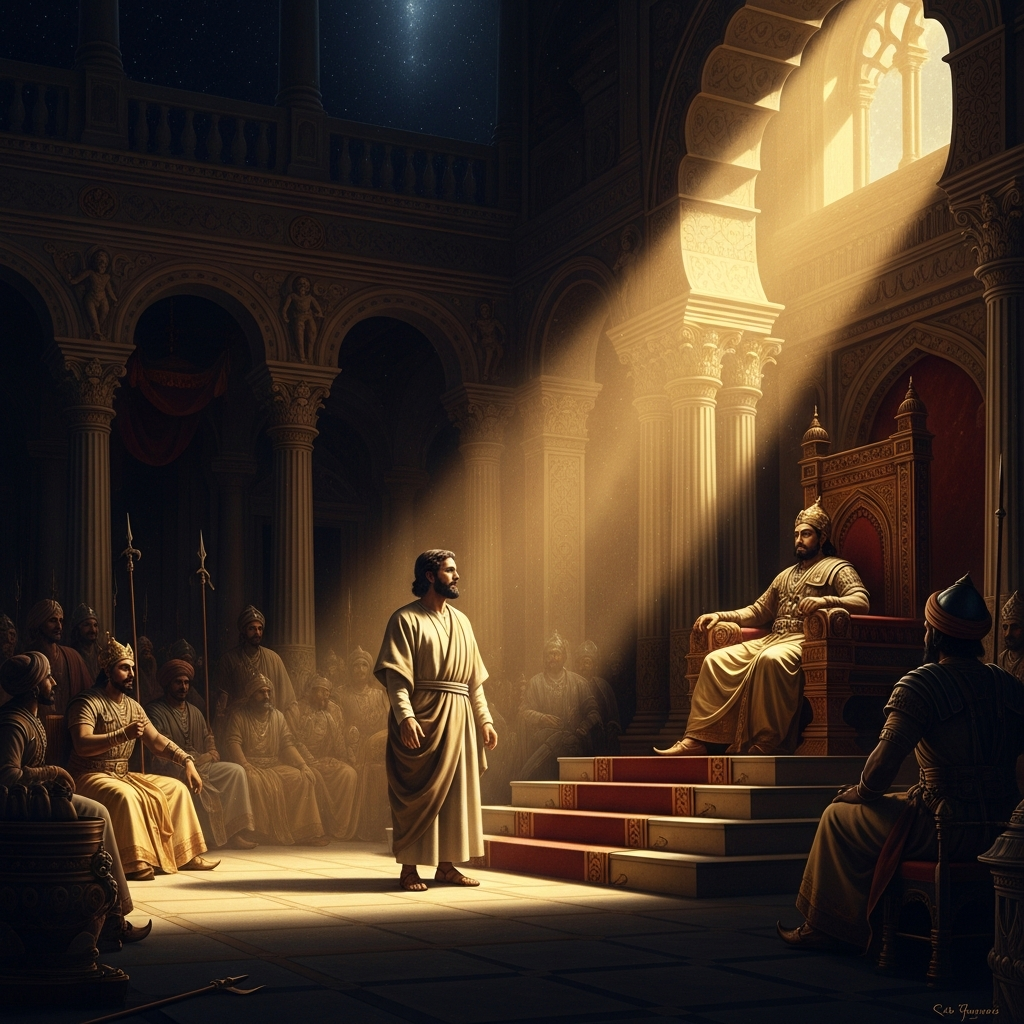
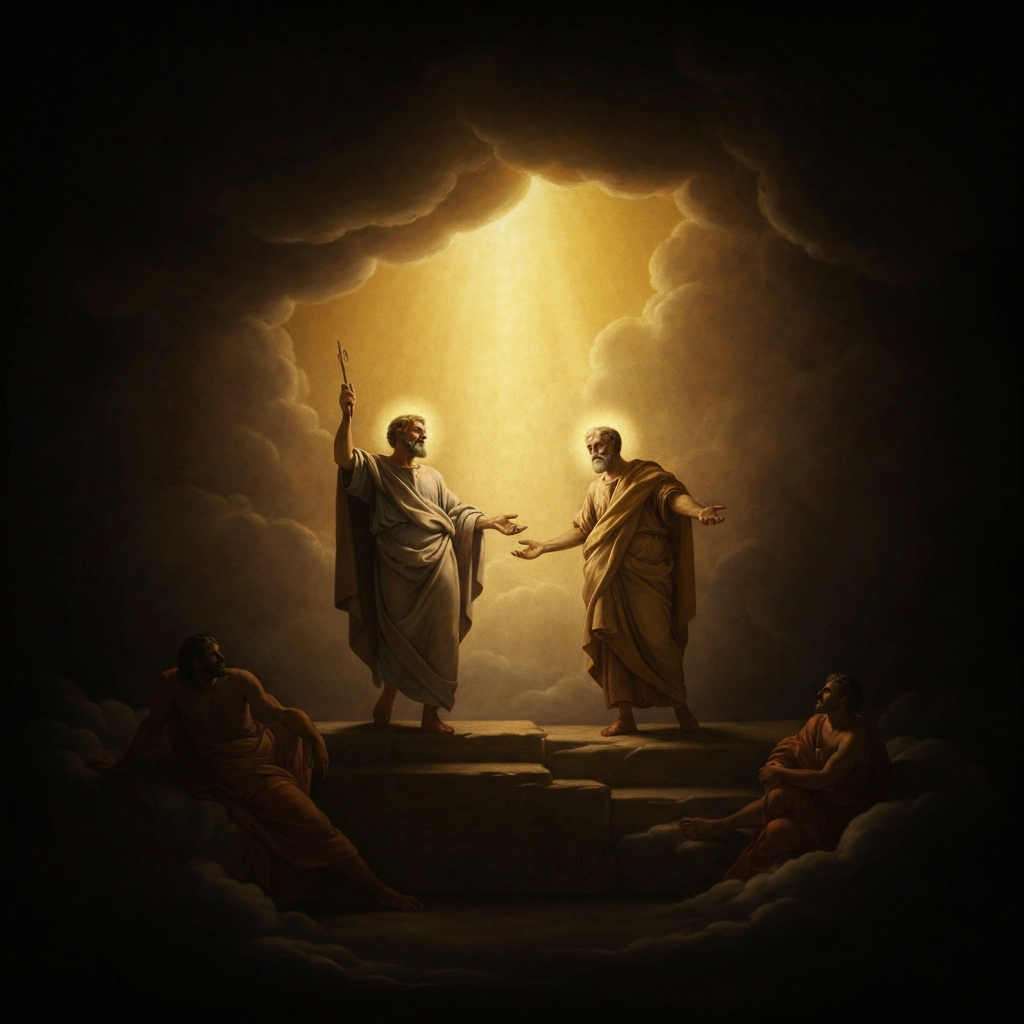
He called himself a disciple of Glaucias, the interpreter of Peter the Apostle. He taught in Alexandria, under the emperor Hadrian, in the second decade of the second century CE. He wrote twenty-four books of commentary on the Gospels — all lost. He wrote an ode — lost. He wrote letters and treatises — lost. We know what he taught almost entirely through the accounts of his enemies: Irenaeus of Lyon, who considered him dangerous; Hippolytus of Rome, who considered him absurd; and Clement of Alexandria, who seems to have found him interesting, which was its own kind of condemnation.
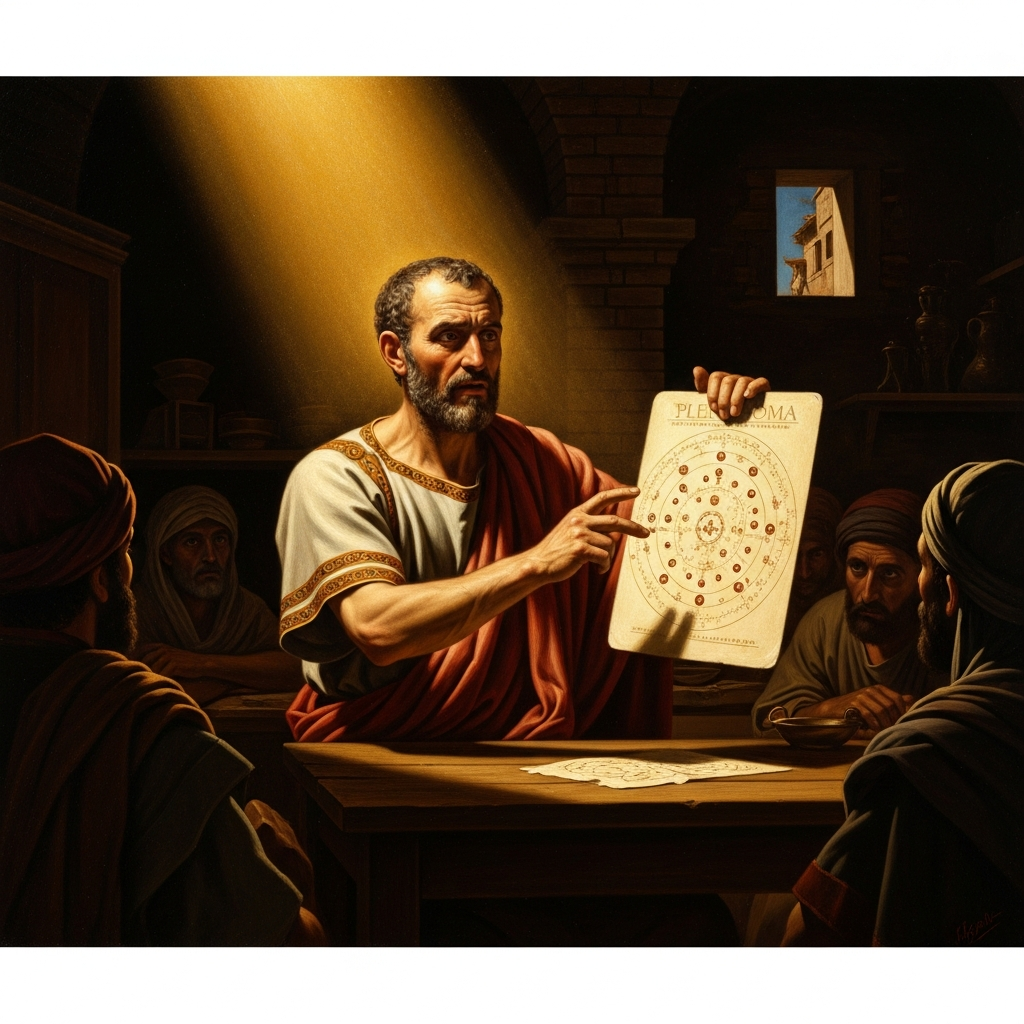
What Basilides taught, as best as the sources can reconstruct, was this:
At the beginning was a God so far beyond comprehension that no category applied — not being, not non-being, not knowing, not unknowing. This God had no name, because names imply limitation, and this God was unlimited. The God was, in Basilides’ term, ouk on — not-being, the unknowable that precedes existence.
From this God — or from the condition of its unmanifest potential — arose a divine seed containing all possibilities.
The seed unfolded.
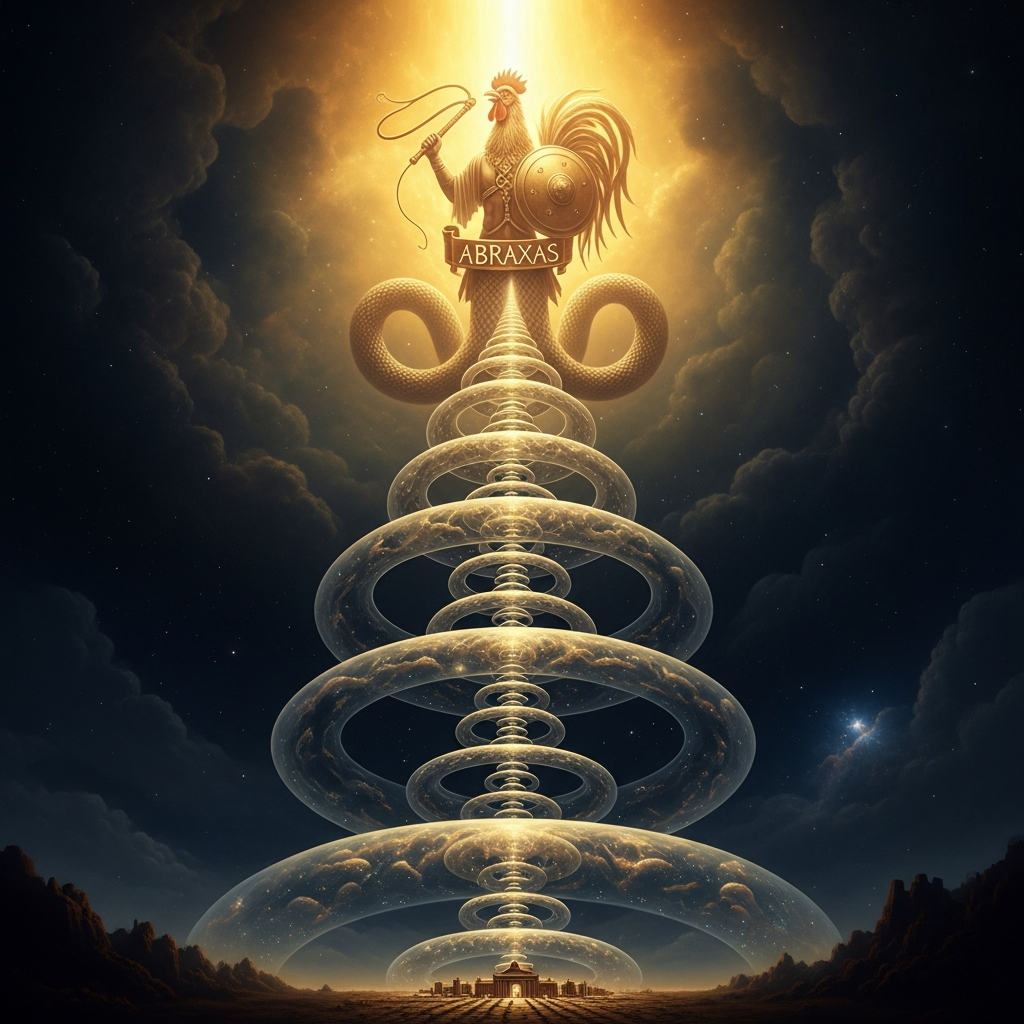
From the original not-being, in an act that Basilides described not as creation but as emergence, a cosmic structure came into existence containing 365 heavens arranged in descending order. Each heaven was ruled by its own Archon — a divine being who was the highest divinity of its own realm, who created the level below it, and who did not know, in most cases, that there was anything above it.
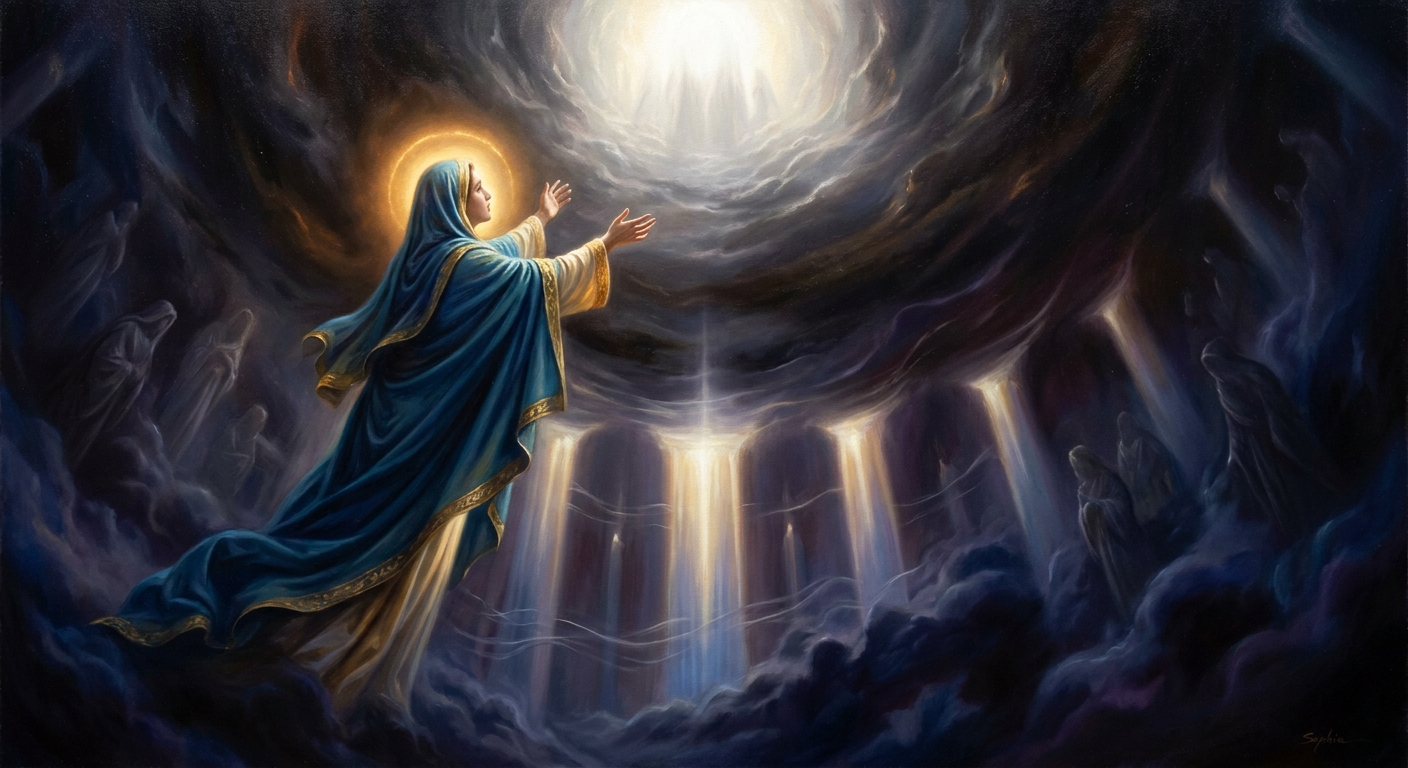
The topmost heavens were inhabited by beings of almost incomprehensible refinement — beings of pure thought, pure light, pure will, who existed in states that no human language can describe. As you descended through the 365 levels, the beings became progressively more limited, more material, more convinced of their own supremacy, and less aware of the immensity of what lay above them.
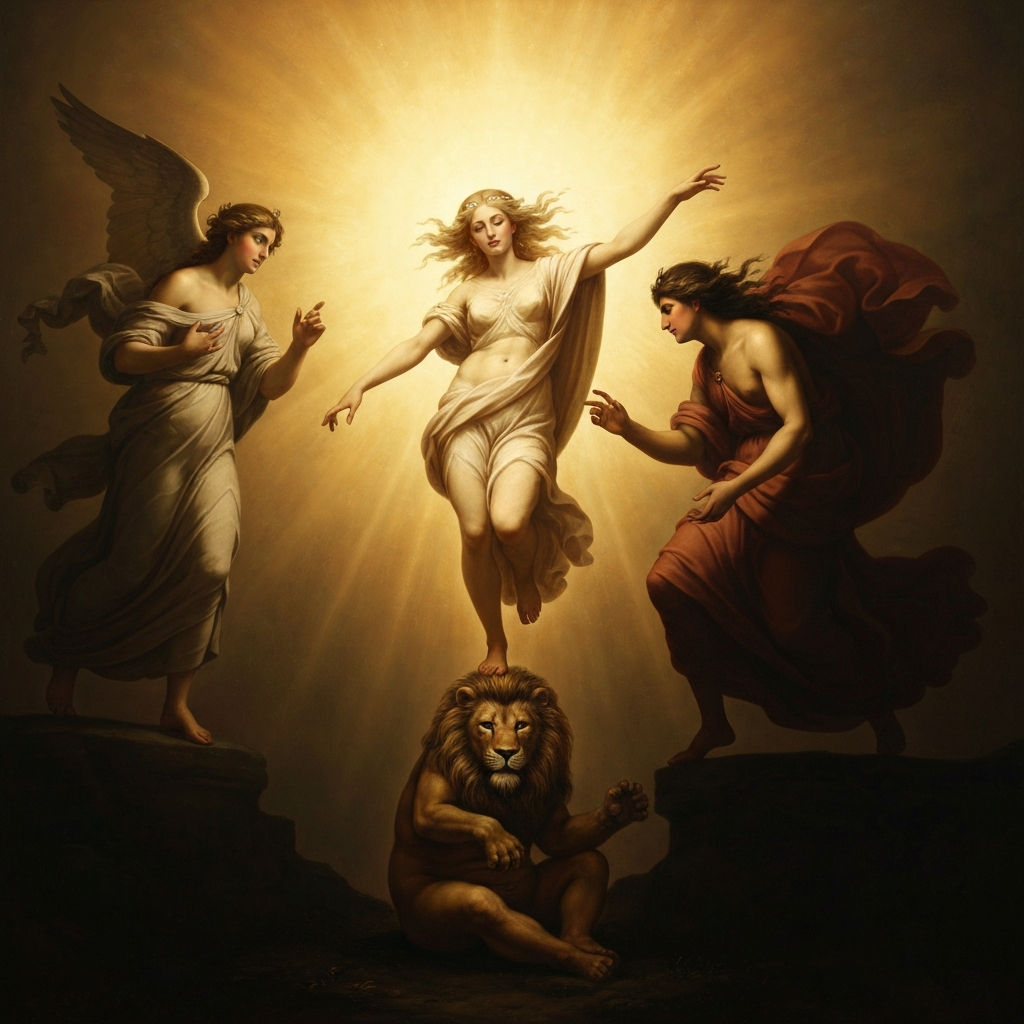
At the lowest level — the 365th heaven, the heaven directly above our visible world — sat the Archon who created the material universe. This Archon is the God of the Hebrew Bible. He is the God who made Adam, who spoke to Moses, who delivered the Law, who called himself jealous and wrathful and the Lord. He is a real being, with real power, and he is the highest being he knows of.
He does not know about the other 364 heavens above him.
He does not know about the not-being at the top.
He made the world in a condition of profound, sincere ignorance.
The name Abraxas is the key.
In Greek numerology (isopsephy), each letter has a numerical value. Alpha is 1, beta is 2, and so forth. Basilides arrived at the supreme being — not the unknowable God at the very top, but the first emanation from that God, the highest being that could be named — and gave it a name whose numerical value equaled 365: Abraxas, or Abrasax.
The calculation: A (1) + B (2) + R (100) + A (1) + X (60) + A (1) + S (200) = 365.
The year has 365 days. The heavens number 365. The name of the cosmic sovereign adds up to 365. The number is the lock; the name is the key; the year is the frame in which all human existence is trapped, cycling through its seasons under the governance of a being who is both temporal (one year) and cosmic (the whole structure of intermediary reality).
The magic of numerology — the belief that the hidden structure of reality is mathematical — is ancient. What Basilides did was unusually precise: he attached the cosmological number to a name, and attached the name to a figure who was simultaneously astronomical, theological, and magical. Abraxas became one of the most common figures in ancient amulets. The name appears on hundreds of surviving gems and stones from the 2nd through 4th centuries CE — sometimes with the figure of a man with a rooster’s head and serpents for legs, which seems to be a visual encoding of the same symbolic system.
Irenaeus was not subtle about his opinion.
In Against Heresies, written around 180 CE, Irenaeus devotes considerable space to Basilides and expresses something between contempt and disbelief. The 365 heavens are, in Irenaeus’s framing, an elaborate absurdity — the product of a mind that has lost contact with the simplicity of the Gospel. God is God. The world is created good. The Law is the word of the same God who sent the Messiah. Any teaching that divides these things is the work of the Devil.
Irenaeus’s refutation was successful in one sense: it preserved enough of Basilides’ teaching that we know roughly what Basilides said. But the refutation did not end the tradition. The Gnostic insight — that the God who claims authority over your life may not be the final authority, that the creator and the redeemer are different beings, that there is something beyond the deity who speaks loudest — kept returning, in different forms, for the next eighteen centuries.
It returned in the Cathars, who divided the world into the God of Light and the God of this world. It returned in Eckhart, who distinguished between God (the personal deity humans address) and the Godhead (the abyss beyond personhood). It returned in the Kabbalists, who placed Ein Sof — the infinite, the without-end — above all the names and attributes of God. It returned in William Blake’s Urizen, the blind creator-god who forges chains. It returned in C.G. Jung.
In the winter of 1913–1916, Carl Gustav Jung was in the middle of what he later called his confrontation with the unconscious.
He had broken with Freud. He was seeing visions — or what he described as visions — of floods covering Europe, of mountains of bodies, of blood running across the land. The First World War was beginning, and Jung interpreted the visions retrospectively as premonitory. He was also producing, in notebooks, the material that would eventually become the Red Book — a private work of visionary encounters with figures from the depths of his own unconscious.
In 1916, he wrote a brief text called Seven Sermons to the Dead. He wrote it in three evenings. He attributed it to Basilides of Alexandria.
The first Sermon begins: The dead came back from Jerusalem, where they found not what they sought. They prayed to be allowed in with us, and thus I began my instruction.
The Abraxas who appears in the Sermons is not the Abraxas of the amulets or even the Abraxas of the heresiologists. He is the force that unites God and Devil — the being in whom all opposites are held without resolution. Abraxas is the sun and at the same time the eternally yawning abyss of emptiness, of the diminisher and dissolver, the devil.
Jung circulated the text privately for decades. He did not publish it under his own name until Memories, Dreams, Reflections appeared in 1962.
The Gnostics, he said, had encountered the unconscious directly. They had mapped it. They had named it Abraxas, and they had understood that the real conflict is not between good and evil in any simple sense — it is between the partial deity who claims dominion and the unnameable totality that the partial deity does not know exists.
Basilides, in Alexandria, in the year 120 CE, reached the same conclusion. He counted the heavens — 365 of them — and placed the unknowable above the last one. He gave a name to the cosmos that added up to the year. And he left everything he wrote to be destroyed or buried or refuted until someone with a different vocabulary came along and recognized what he had seen.
Echoes Across Traditions
Entities
- Basilides
- Abraxas (the supreme being)
- The 365 Archons
- The unknowable Father above them all
- Glaucias (his claimed source, Peter's interpreter)
Sources
- Irenaeus of Lyon, *Against Heresies* I.24 (c. 180 CE)
- Hippolytus of Rome, *Refutation of All Heresies* VII.2–15 (c. 230 CE)
- Clement of Alexandria, *Stromata* II.3, IV.12 (c. 200 CE)
- C.G. Jung, *Seven Sermons to the Dead* (1916, privately circulated; published in *Memories, Dreams, Reflections* 1962)
- Birger Pearson, *Gnosticism and Christianity in Roman and Coptic Egypt* (2004)
- Roelof van den Broek, 'Basilides', in *Dictionary of Gnosis and Western Esotericism* (2005)