Cihuacoatl Weeping Through Tenochtitlan
c. 1517–1519 CE — the years of omens before the Spanish arrival · attested in *Florentine Codex* Book 12, Sahagún ~1580 CE; Diego Durán ~1579 CE · Tenochtitlan — island city, lake of Texcoco
Contents
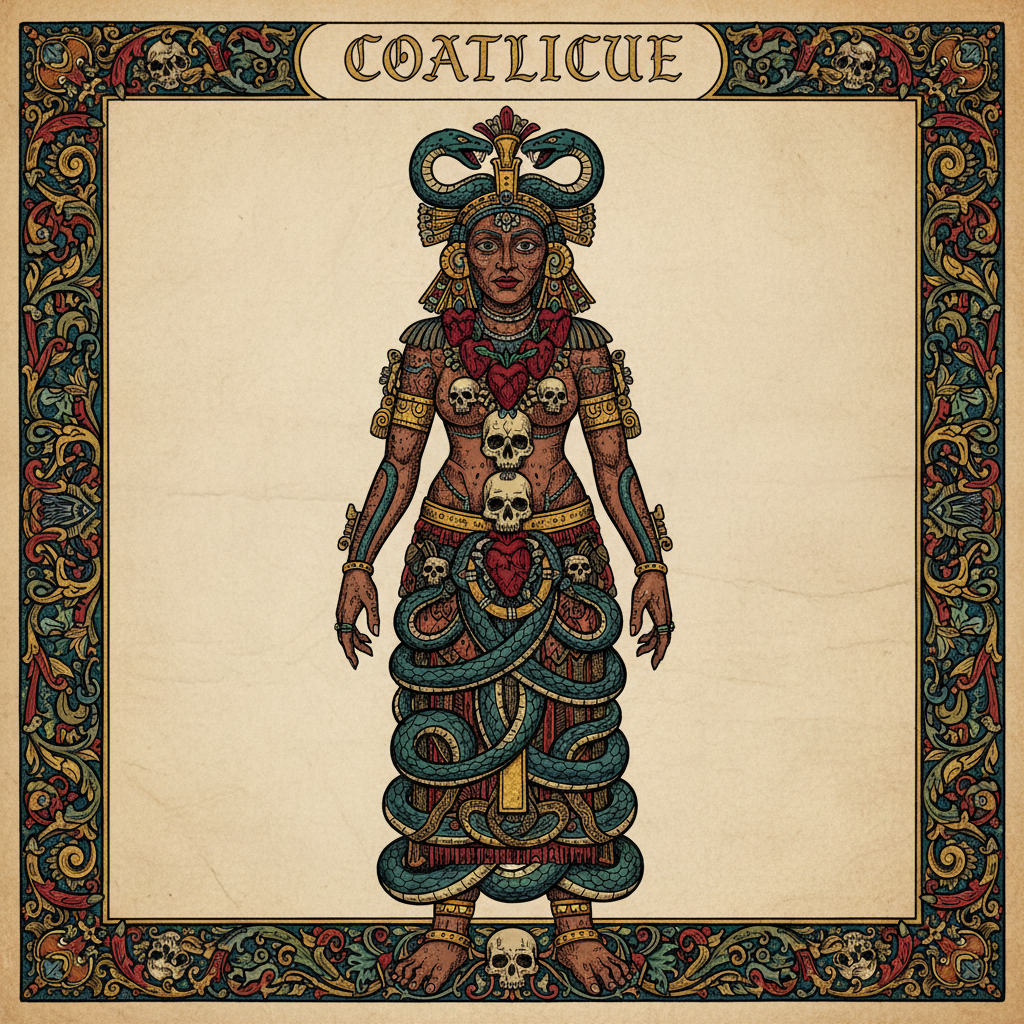
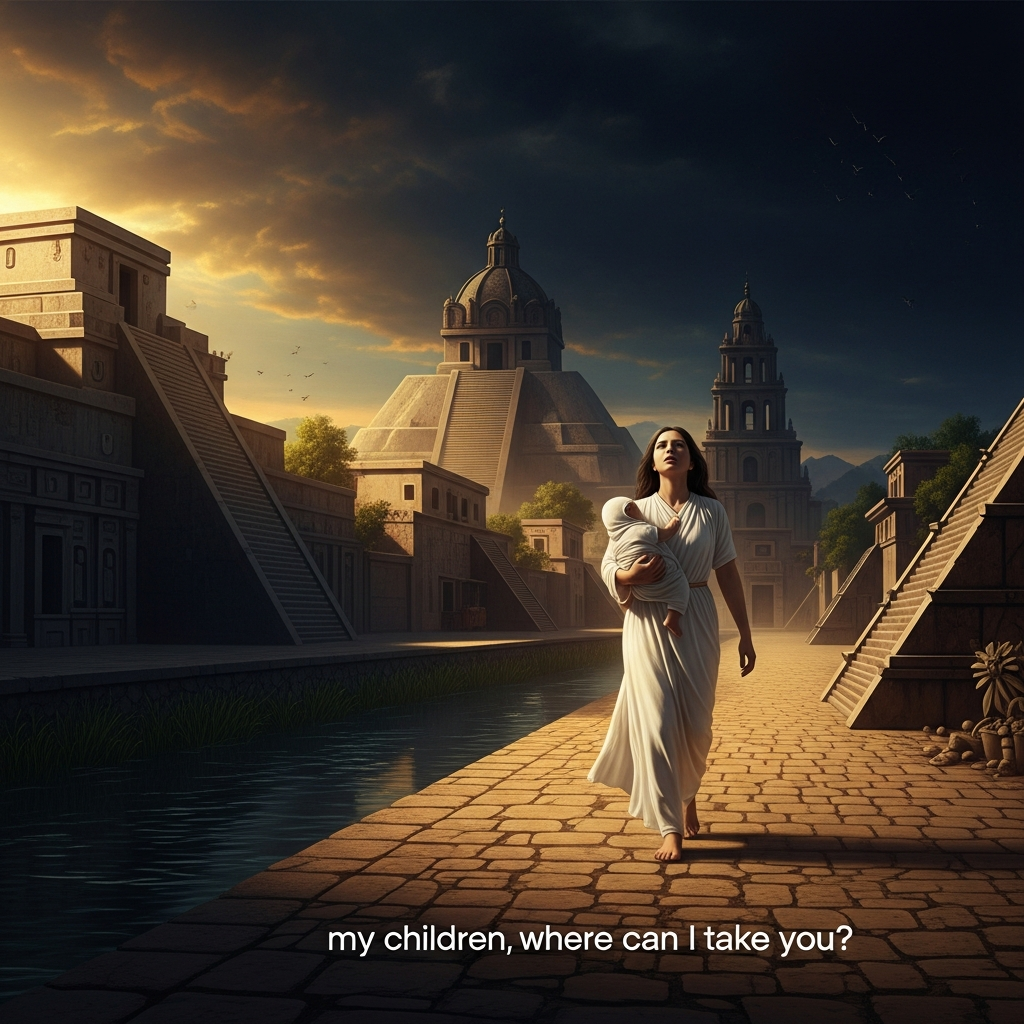
In the nights before the Spanish conquest, a woman dressed in white walks the streets of Tenochtitlan crying out: my children, we must flee — where can I take you? She is Cihuacoatl, the Woman Serpent, the divine midwife, the goddess who is present at every birth and every death. She can see what is coming. She cannot say it in words. She can only cry.
- When
- c. 1517–1519 CE — the years of omens before the Spanish arrival · attested in *Florentine Codex* Book 12, Sahagún ~1580 CE; Diego Durán ~1579 CE
- Where
- Tenochtitlan — island city, lake of Texcoco
She walks the streets of Tenochtitlan at night, in the years before the ships arrive.
The Florentine Codex records her among the eight omens that precede the conquest — the comet seen by day, the temple fire that could not be extinguished, the lightning that struck without thunder, the lake that boiled in calm weather, the strange birds caught and brought to Moctezuma with mirrors on their heads that showed, when he looked into them, armies. Among these omens is the woman in white, heard at night, moving through the city on a route that the Florentine Codex does not specify but that the city’s geography implies: along the canals, through the market district, past the temple precinct, out to the causeways that connect the island city to the mainland. She cries as she walks. The cry is specific, the Florentine Codex records the words: My children, we must flee. Where can I take you?
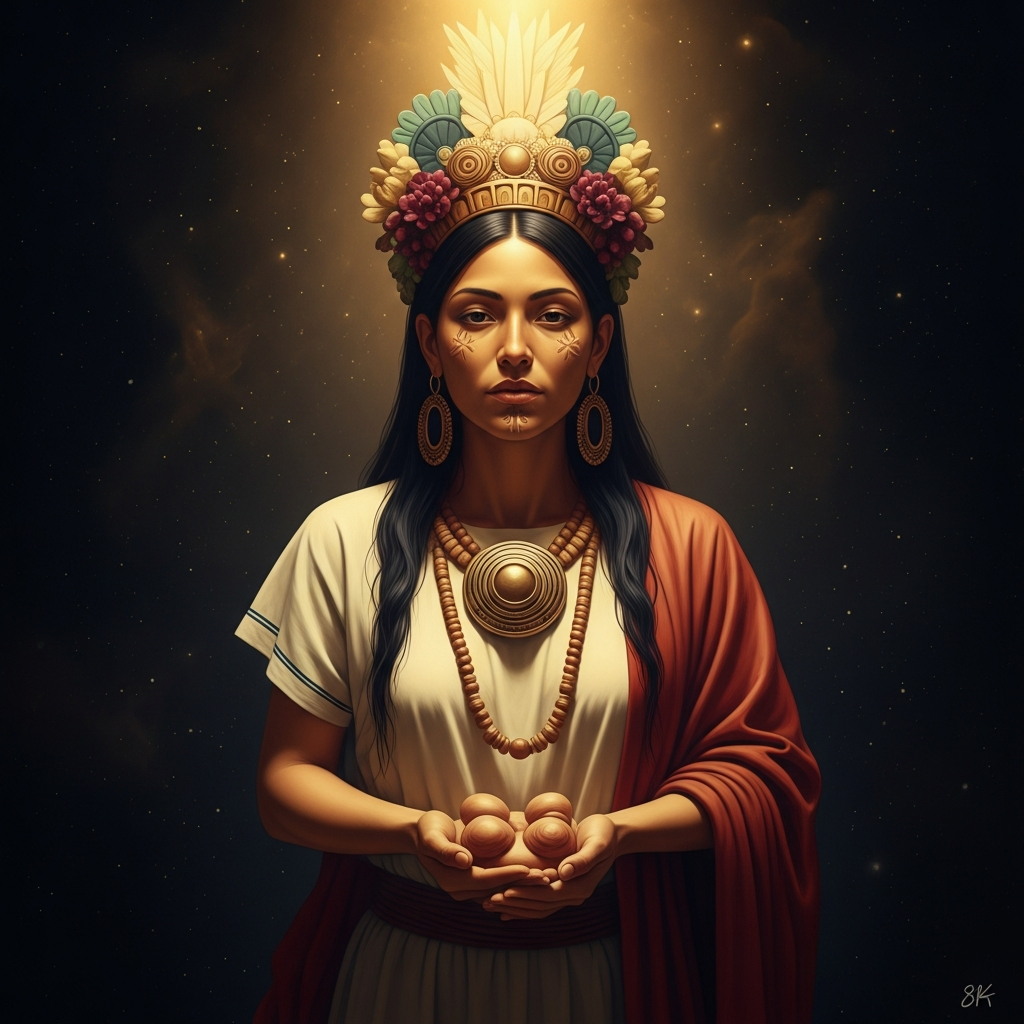
This is Cihuacoatl. The Woman Serpent. One of the oldest goddesses in the Valley of Mexico, pre-dating the Aztecs themselves, worshipped at the city of Colhuacan before Tenochtitlan was founded, her cult absorbed into the Aztec religious system with the care that the Aztecs gave to assimilating the gods of the peoples they conquered or allied with. She is the divine midwife, the goddess who is present at every birth, who speaks the words of welcome to the newborn — the words that tell the child whether it has entered the world as a warrior or a captive, as a noble or a slave, as someone whose life will be spent in the sun or underground. She knows, at the moment of birth, what each life is for.
She is also the goddess of women who die in childbirth.
The Florentine Codex is precise about this: women who die in labor become cihuateteo, divine women, warrior-spirits who accompany the sun on the afternoon half of its journey west. They are honored as fallen warriors, because dying in childbirth is, in the Aztec theology, the same category of death as dying in battle: the body that has given everything it has in a struggle for something larger than itself. Cihuacoatl presides over this transition. She is there when the birth succeeds and she is there when it fails and she remains as the goddess of the ones the failure took.
She knows what death costs because she has been collecting its price since before the Aztecs were a people. She is ancient. She is the midwife and the widow simultaneously, the hands that receive new life and the arms that hold what the receiving cost.
This is the goddess who walks through Tenochtitlan in the years before 1519, crying.
She cannot say what she knows in words.
This is the thing that makes her omen different from a prophecy. A prophecy gives information: in such-and-such a year, this will happen, prepare thus. Cihuacoatl’s cry is not a prophecy. It is grief made audible, the emotional register of a cosmic event that has not yet occurred but that she, who is present at every birth and every death, can already feel pressing through the membrane of time toward the present. She knows. She cannot say it as information. She can only say it as sound.
My children, we must flee.
She has been midwife to Tenochtitlan for two centuries — present at the birth of every person who has lived and died in the city since its founding, present at the arrival of every alliance and conquest that made the empire. She knows this city’s children. She has held each of them at the threshold of life. She knows what is coming for them and she cannot stop it and she cannot explain it and all she can do is what she does: walk the streets in white, in the dark, asking the question that has no good answer.
Where can I take you?
Moctezuma hears the reports.
He collects the omens with the systematic attention of a man who takes cosmological signals seriously, which is to say he takes them the way an Aztec emperor must: as information that the calendar-priests and the diviners must interpret, as data to be fed into the ritual apparatus of a civilization that has been reading the sky and the earth for signs of cosmic alignment for centuries. The comet, the temple fire, the boiling lake — these are documented and brought to him and discussed. The woman in white is documented and brought to him and discussed.
The Florentine Codex records his response to the accumulation of omens: he is frightened. Moctezuma, the tlatoani, the Speaker, the man who sits at the pinnacle of the most powerful political structure in Mesoamerica and who presides over the ritual maintenance of the cosmic order — he is frightened in the way that a man is frightened when the systems he has spent his life administering begin to show signs of a failure he cannot diagnose.
He sends additional sacrifices to the temple. He consults the calendar. He waits.
The woman in white does not stop.
In 1519 the ships come from the east.
By 1521 Tenochtitlan is rubble. The causeways are blocked. The canals are filled with bodies and the bodies of buildings, the stone of the temple complex broken down by the conquering army and their indigenous allies for use as building material. The lake has been cut off and drained. The island city is an island no longer. Over the rubble the colonial city rises: the Cathedral on the site of the Templo Mayor, the viceregal palace where the palace of Moctezuma stood, the grid of colonial streets laid over the grid of Aztec avenues, the new city on top of the old one like a new skin.
Cihuacoatl survives the destruction in the way that gods survive the destruction of the civilizations that worship them: she goes underground, into the folk tradition, into the stories that the people carry with them when the temples are gone and the priests are dead and the codices are burned. She becomes a story told beside rivers. She becomes the warning sound heard near water at night in the dark. She becomes the white figure, the weeping woman, the cry that means something terrible has either happened or is about to happen and cannot be prevented.
She becomes La Llorona.
La Llorona — the Weeping Woman — is one of the most widely distributed figures in Latin American folk tradition, told from Mexico to Colombia, from the colonial period to the present, in hundreds of versions that share the same core: a woman in white, weeping, near water, calling for children she has lost. The details of how she lost them vary across regions and centuries. The cry does not vary. The white dress does not vary. The water does not vary.
What does not vary is the question she asks, the question Cihuacoatl has been asking since the years before the ships came, the question that is still heard near the canals where the city drained the lake and built its streets over what used to be water, the question that has outlasted the empire and the colonial period and every subsequent transformation of the place where Tenochtitlan stood: where can I take you — where is there left to take you — where, when everything has already been destroyed, do I bring the children I cannot save?
Scenes
The white-clad woman moves through the dark streets of Tenochtitlan before the fifth great death
 Generating art…
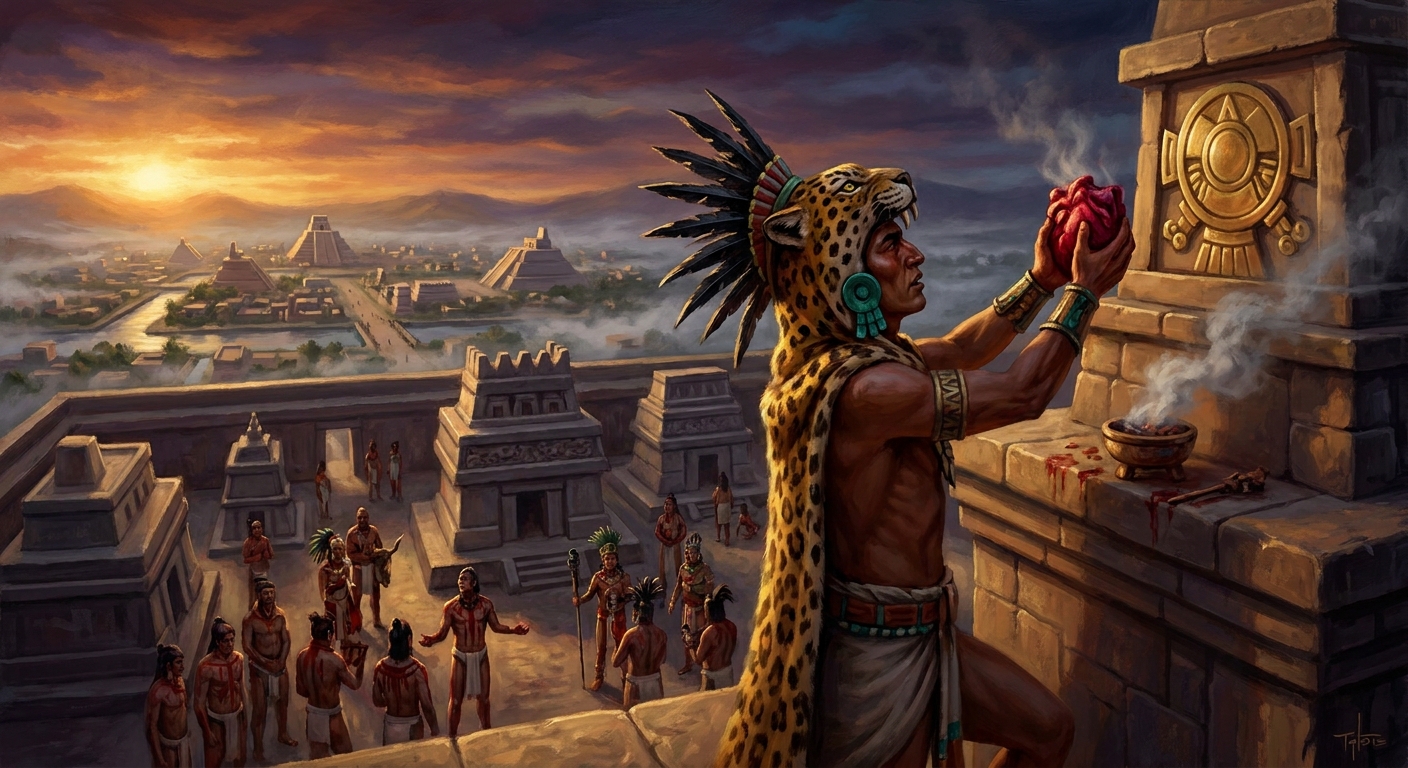
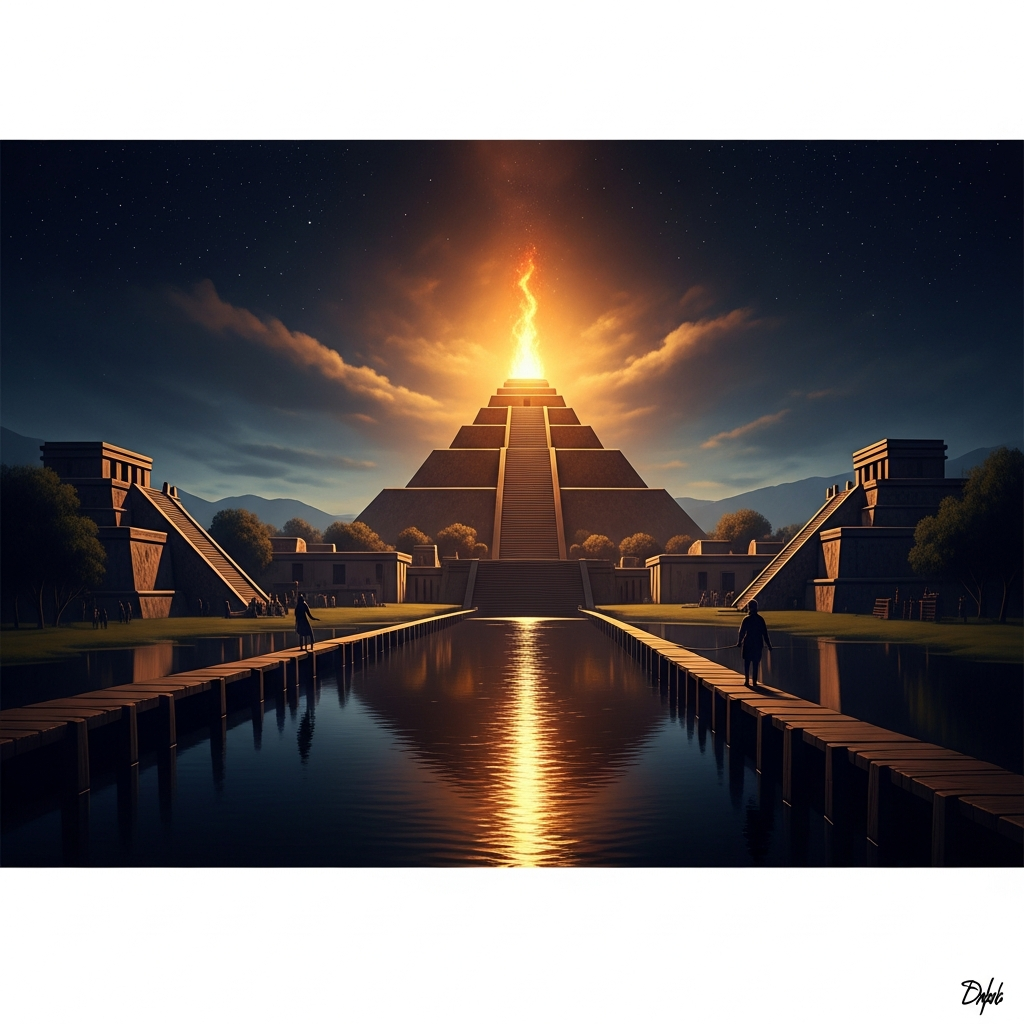
 Tenochtitlan at night: the canals reflecting the stars, the causeways running to the mainland, the great double pyramid of the Templo Mayor lit by the eternal fire at its summit
 Generating art…
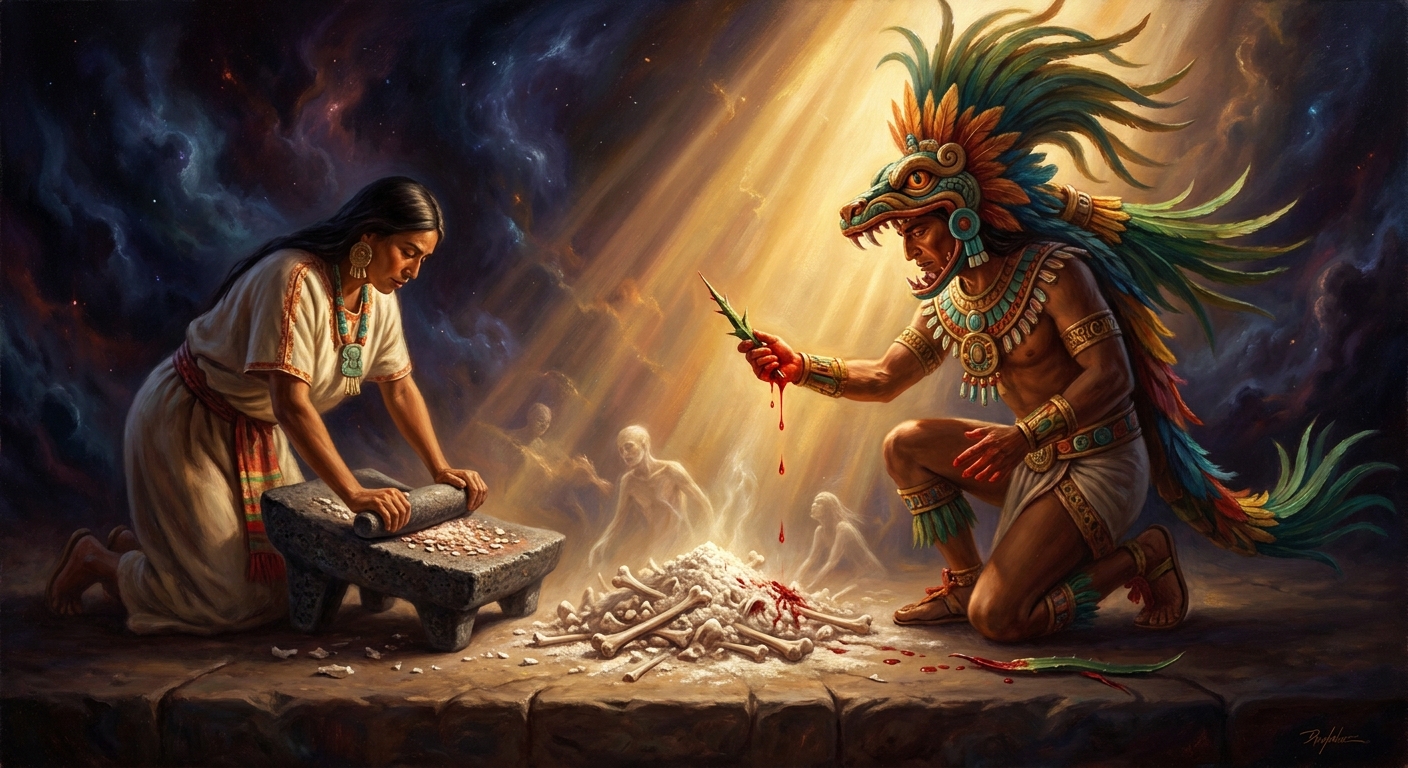
 Cihuacoatl as midwife — the original face of the goddess, present at every birth, speaking the words of welcome to the newborn warrior or the newborn captive
 Generating art…
 Echoes Across Traditions
Entities
- Cihuacoatl
- Moctezuma II
Sources
- *Florentine Codex*, Book 12 — Bernardino de Sahagún (~1580)
- Diego Durán, *History of the Indies of New Spain* (~1579)
- *Anales de Tlatelolco* (c. 1528)
- Fernando Alvarado Tezozomoc, *Crónica Mexicana* (c. 1598)
- Alfredo López Austin, *The Human Body and Ideology* (1988)
- Louise Burkhart, 'The Cult of the Virgin of Guadalupe in Mexico,' in *South and Meso-American Native Spirituality* (1993)