The Wounds of La Verna
September 14, 1224 — Feast of the Exaltation of the Cross · Mount La Verna, Tuscan Apennines, Italy
Contents
Francis of Assisi, forty-two, nearly blind, fasting alone on a Tuscan mountain, sees a six-winged seraph descending — crucified. The vision wounds him with love so intense it leaves physical marks. He carries the stigmata for two years, hides them until his death, and asks to die naked on bare earth. He calls it Sister Death.
- When
- September 14, 1224 — Feast of the Exaltation of the Cross
- Where
- Mount La Verna, Tuscan Apennines, Italy
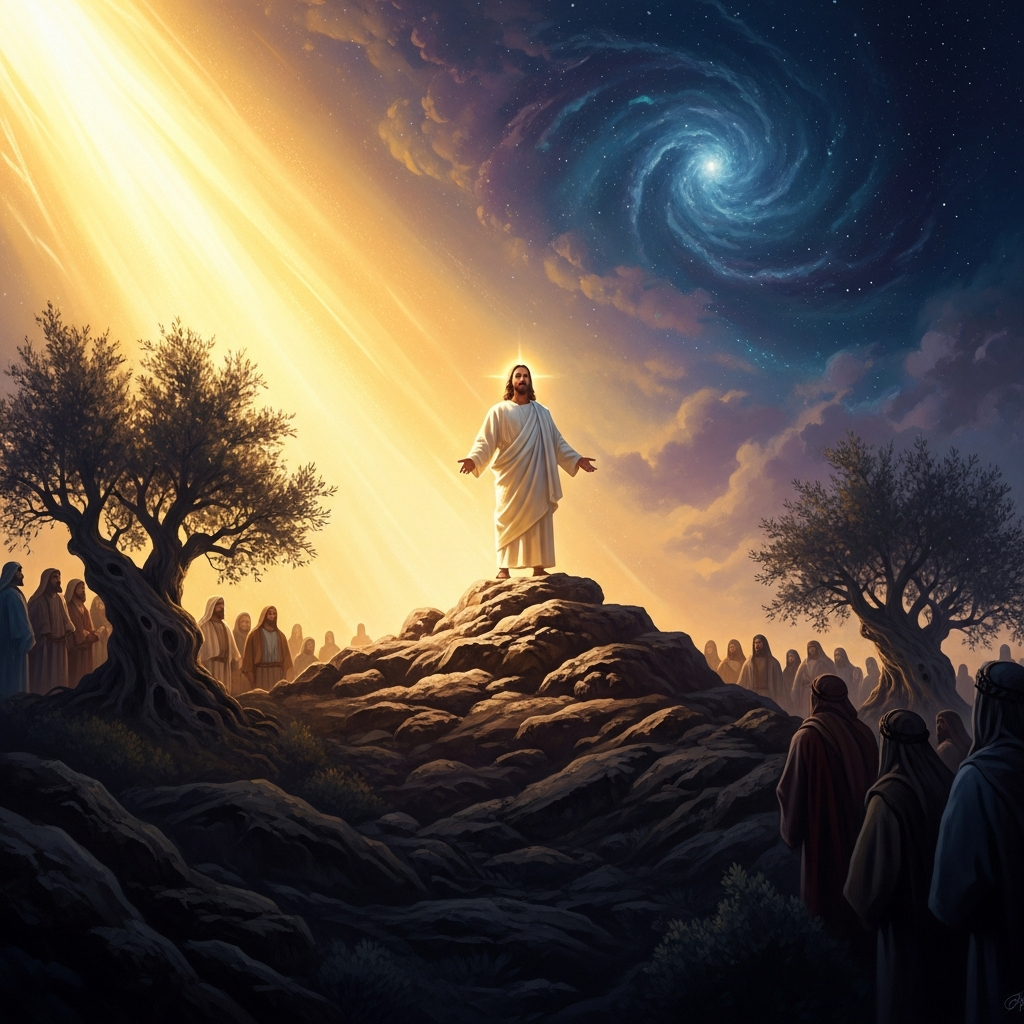
He climbs the mountain in August with nothing he has not always had.
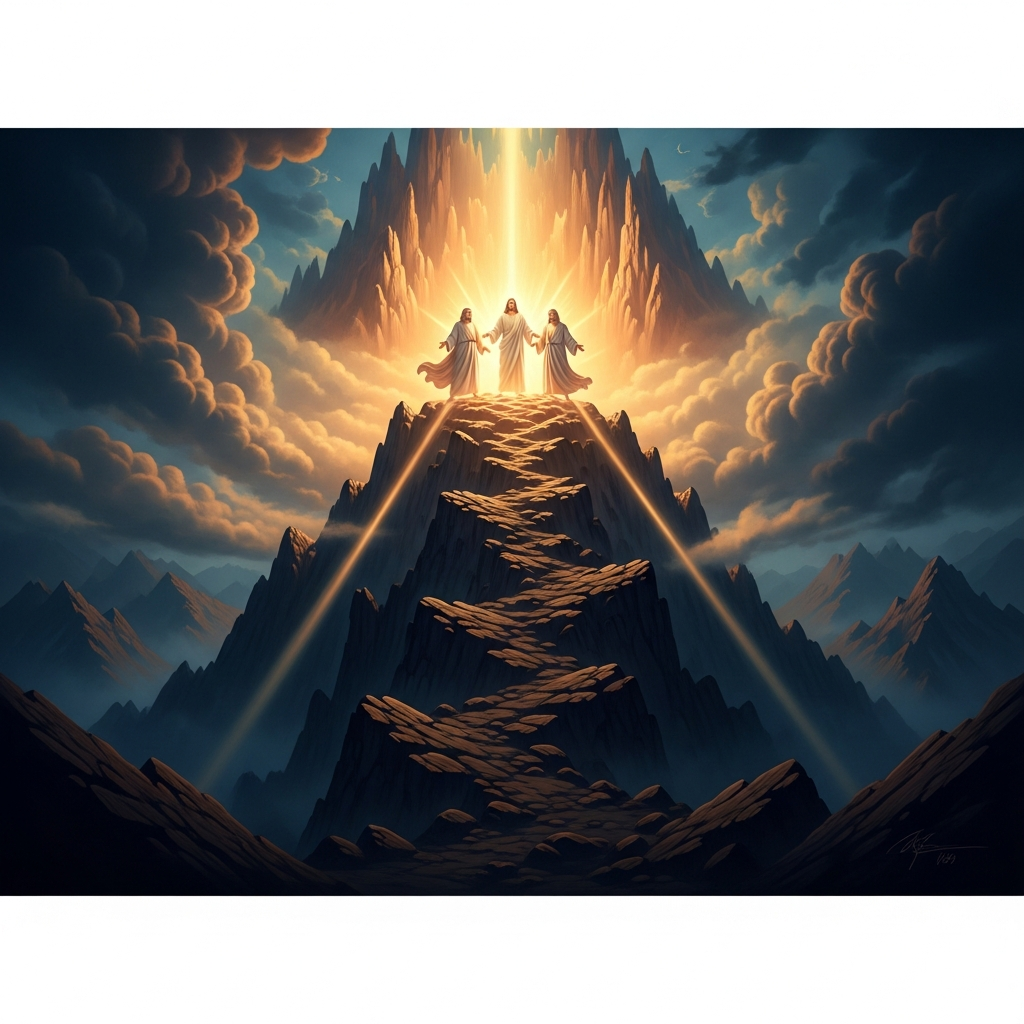
The count who gave him La Verna meant it as a gift. The rocky platform above the chestnut forests of the Casentino, with its cliffs dropping into nothing and its caves that hold cold even in August heat, is the most inhospitable land on the count’s estate. Francis understood immediately. He came in 1213 with a few brothers and stood on the edge of the cliff and looked down and said: this is exactly the kind of place God would be.
Now he returns alone, with Brother Leo assigned to bring him bread and water from a distance he is not allowed to cross. Francis has given him a note — the most personal document that survives in Francis’s handwriting — that Leo is to come when he calls and bring food and go. Not to watch. Not to intercede. Francis has come to La Verna to keep the Lent of St. Michael, forty days of fasting from the Assumption to Michaelmas, and he has come to do it in the kind of solitude that does not perform itself for witnesses.
He is forty-two. His order has been taken from him by administrators more practical than he is. His eyes are failing from a disease he contracted in Egypt, where he went to convert the Sultan and the Sultan received him kindly and sent him home. He walks on feet ruined by twenty years of barefoot roads. He is not coming to La Verna to recover. He is coming to finish something.
For thirty-nine days: nothing visible.
He prays the Office on the cliff in the dark and prays it again in the early light. He fasts until the bread Leo brings tastes like communion and the water tastes like wine. He weeps at the small window of his rock-cell, weeping for the wounds of Christ, for the lepers he has loved and left, for the brothers who no longer understand what he meant. He prays with a specificity he has been building toward for twenty years: not for peace, not for union, not for the consolations that people call mystical experience. He prays for the pain. He prays to feel what Christ felt. He prays to feel the love that drove Christ to endure what Christ endured.
He is kneeling at the cliff edge when he speaks this prayer aloud for the final time. He does not know it is the most dangerous prayer he has ever spoken.
The morning of September 14, 1224 — the Feast of the Exaltation of the Holy Cross, the annual liturgical stare at the instrument of execution — the sky above La Verna goes wrong.
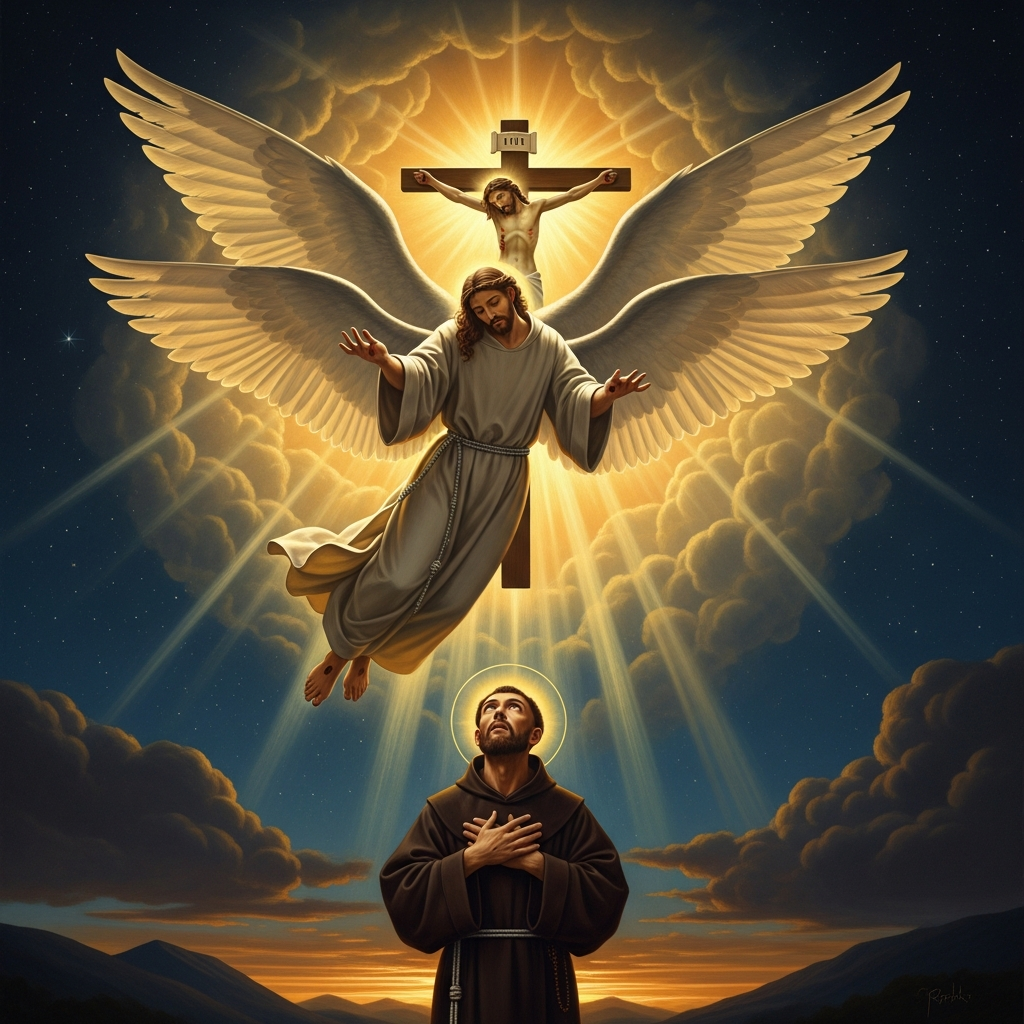
Brother Leo, in the lower hermitage, looks up through the trees and sees a light that is not the sun — or rather, is the sun’s intensity without the sun’s location, a concentrated brilliance that has a shape inside it, a shape that resolves as he watches into something he will never be able to describe adequately no matter how many times, in the years after Francis’s death, the brothers beg him to try. He will say only what Francis permits him to say: six wings, and between the wings a human figure, and the figure nailed to a cross, and the cross burning.
The seraph descends toward Francis’s cell.
The vision lasts a span of seconds and a span of years simultaneously, which Francis will try to describe to Leo afterward and fail.
The seraph hangs in the air three paces from him, six wings extended in the exact configuration Isaiah described in the Temple vision: two covering its face, two covering its feet, two for flight. Between the wings, the body of the Crucified — alive and dying at once, not the historical dying of 33 CE but the eternal dying, the moment held outside time in the way a flame holds its shape even while its fuel burns through — looks at Francis.
The expression in those eyes is not one expression. Francis will call it pity, and call it reproach, and call it welcome, and always add that he cannot separate these because in those eyes they are a single thing. He understands, in the silence of that look, that his prayer has been heard.
He understands, too late to retract it, that the prayer was for the pain.
The seraph’s eyes do not close. Francis falls to his knees, and as he falls, the wounds open.
In both hands. In both feet. In the right side.
Not holes. Thomas of Celano, who interviews the brothers who washed the body, is careful about this: not punctures but nails — excrescences of dark flesh growing through the wounds, the heads visible on one side of each hand and each foot, the points bent over on the other. The side wound is a gash, long, and it seeps. The wounds bleed continuously. They do not heal. They will bleed for the remaining twenty-one months of Francis’s life.
The seraph withdraws into the sky, taking its light. La Verna returns to ordinary morning. Francis is alone on the cliff, leaking into the stone.
He hides them.
He wraps his hands in cloth and keeps them wrapped. He wears stockings on his feet and habit long enough to cover them. He refuses the examination that the brothers beg for. He swears Leo to silence. He returns to Umbria and preaches with covered hands, walks on wrapped feet, eats less and less as the side wound makes eating painful.
In the winter and spring after La Verna he dictates the Canticle of the Sun from a small dark cell at San Damiano, nearly blind, the wound seeping, his voice cracked with illness. He sings it in Umbrian dialect — not Latin, not the language of the Church, but the vernacular of his childhood city. Laudato si’ mi Signore — praised be you, my Lord. Brother Sun, Sister Moon, Brother Fire, Sister Water, Sister Bodily Death. He adds the verse about Sister Death near the end, after he knows what is coming. He does not call her the enemy. He calls her our sister whom no living man can flee, and he invites her to the praise.
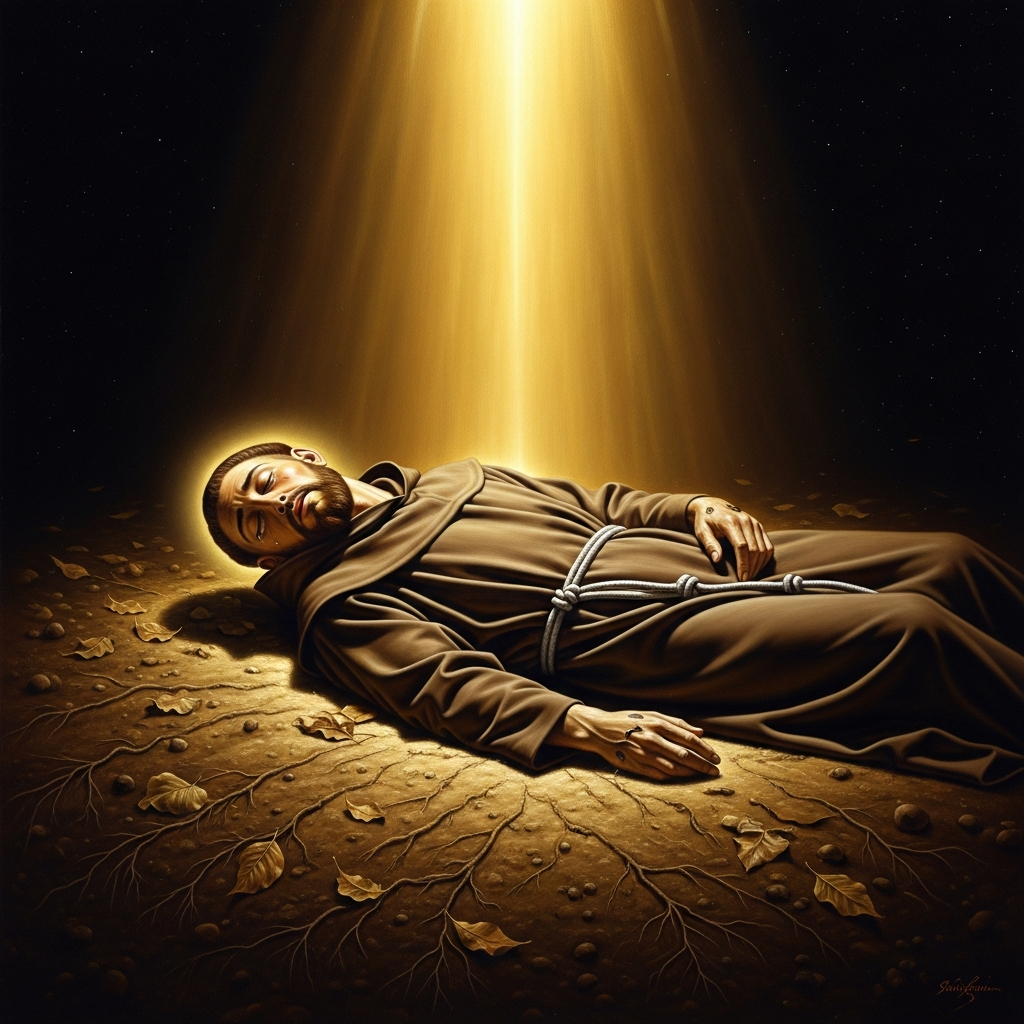
He dies on October 3, 1226, at the Portiuncula, the tiny chapel in the plain below Assisi that was his first church and where he has asked to be returned. He asks the brothers to lay him on the bare earth. Not on a pallet. Not on straw. On the earth. He lies there naked — stripped of the habit at his request, returned to the earth the way his poverty logic always required — and he dies with his eyes open, looking at the Portiuncula’s stones.
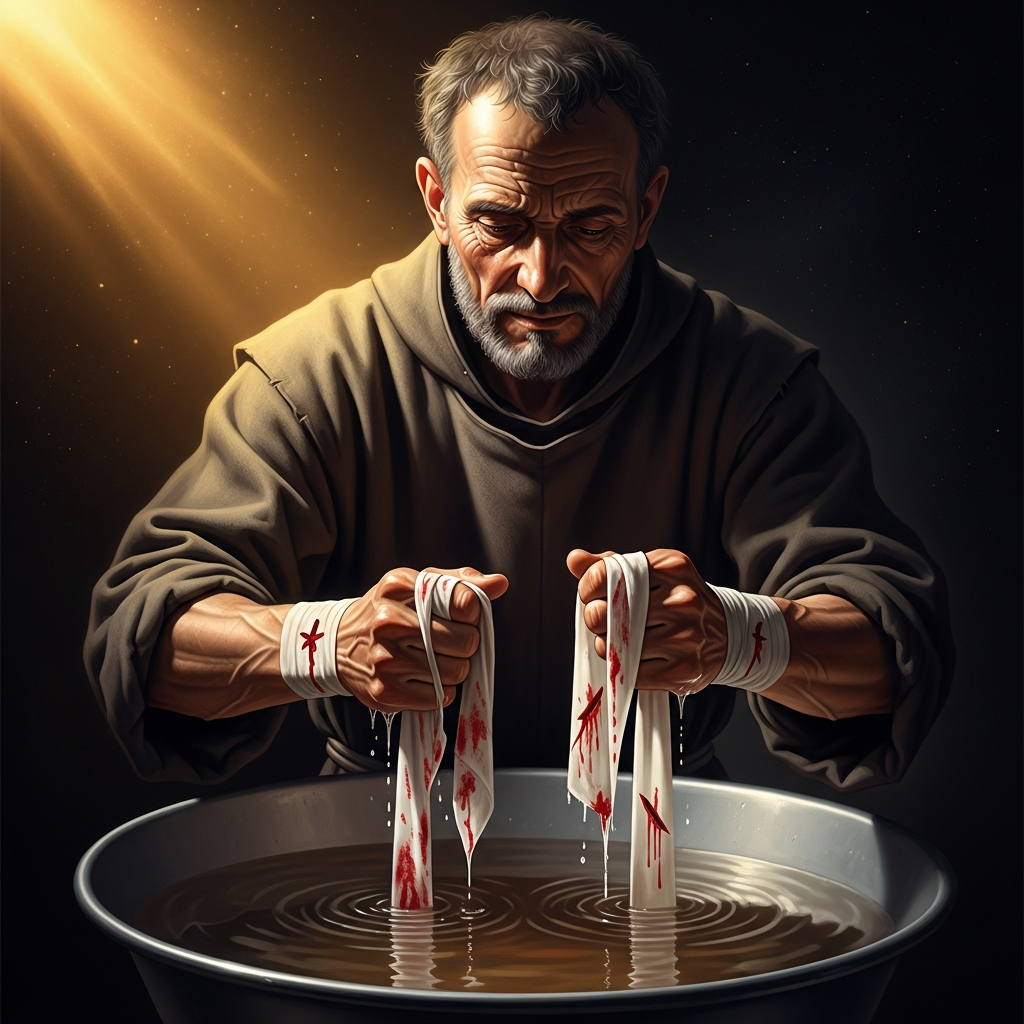
When the brothers wash the body, they see what Leo has been washing and re-wrapping for twenty-one months.
Pope Gregory IX canonizes him in 1228 — two years, the fastest canonization in Church history to that point. The bull mentions the stigmata explicitly: the first time the Roman church puts its institutional weight behind such a claim. Bonaventure will spend the next forty years building the theology around it. Giotto will paint the moment on the walls of the Upper Church at Assisi, the seraph above and Francis kneeling and lines of gold connecting wound to wound across the luminous air.
Francis asked for the body of his Beloved and received it in his own body. The Catholic tradition has never quite recovered from the literalism of the answer. After La Verna, the metaphor of following Christ is no longer only a metaphor — the flesh is permeable, the boundary between imitator and imitated can dissolve completely, and the man who spent his life practicing poverty discovered that the last thing you give up is your own unwoundedness.
Scenes
The seraph descends above La Verna at dawn — six wings, the Crucified between them, looking at Francis with an expression that is all three of pity, reproach, and welcome at once
Generating art… Brother Leo washes the bandages each morning — the wounds in the hands, the feet, the side — and keeps the silence his brother has sworn him to
 Generating art…
 Francis asks to be laid naked on bare earth when the end comes — meeting Sister Death the way he met everything, without anything in between
 Generating art…
 Echoes Across Traditions
Entities
- Francis of Assisi
- Brother Leo
- the Seraph
- Christ Crucified

Sources
- Thomas of Celano, *Vita Prima* (1228) and *Vita Secunda* (1247)
- Bonaventure, *Legenda Major* (1263)
- *The Little Flowers of St. Francis* (*Fioretti*, 14th c.)
- G.K. Chesterton, *St. Francis of Assisi* (1923)
- Augustine Thompson, *Francis of Assisi: A New Biography* (Cornell University Press, 2012)
- Raoul Manselli, *St. Francis of Assisi* (Franciscan Herald Press, 1988)