The First Ones: Giants, Titans, and the Pre-Divine Order
Titans in Hesiod's Theogony c. 700 BCE; Jotnar in the Norse Eddas compiled c. 1220 CE; Nephilim in Genesis 6 (compiled c. 6th century BCE from older material); Fomorians in Irish mythological cycle, written down c. 11th-12th century CE from older oral tradition · Tartarus (imprisoned Titans), Jotunheim (Norse giants), the antediluvian earth (Nephilim), Tír na nÓg and the deep places of the earth (Fomorians), the primordial ocean (Asuras)
Contents
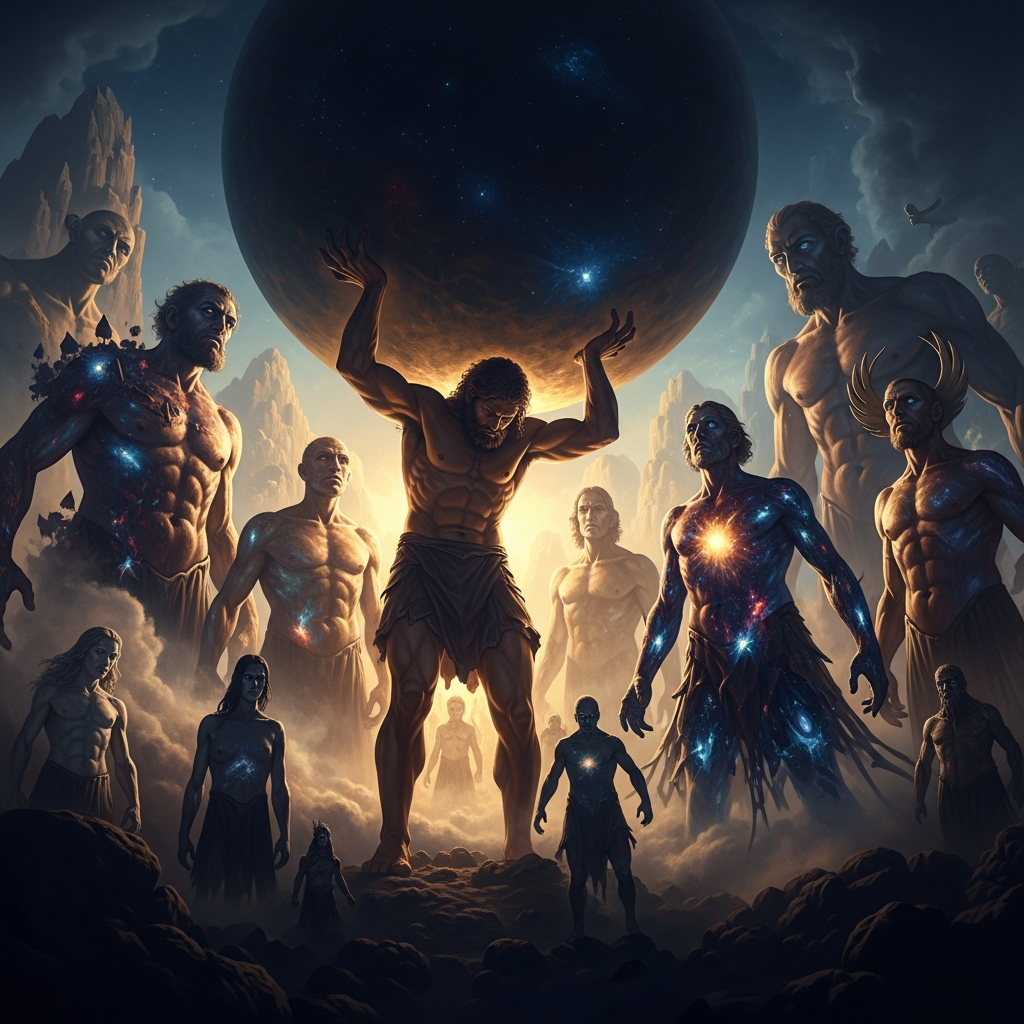
Titans, Jotnar, Nephilim, Asuras, Fomorians — giants are the beings who were here before the gods. They must be defeated, but they can never quite be destroyed.
- When
- Titans in Hesiod's Theogony c. 700 BCE; Jotnar in the Norse Eddas compiled c. 1220 CE; Nephilim in Genesis 6 (compiled c. 6th century BCE from older material); Fomorians in Irish mythological cycle, written down c. 11th-12th century CE from older oral tradition
- Where
- Tartarus (imprisoned Titans), Jotunheim (Norse giants), the antediluvian earth (Nephilim), Tír na nÓg and the deep places of the earth (Fomorians), the primordial ocean (Asuras)
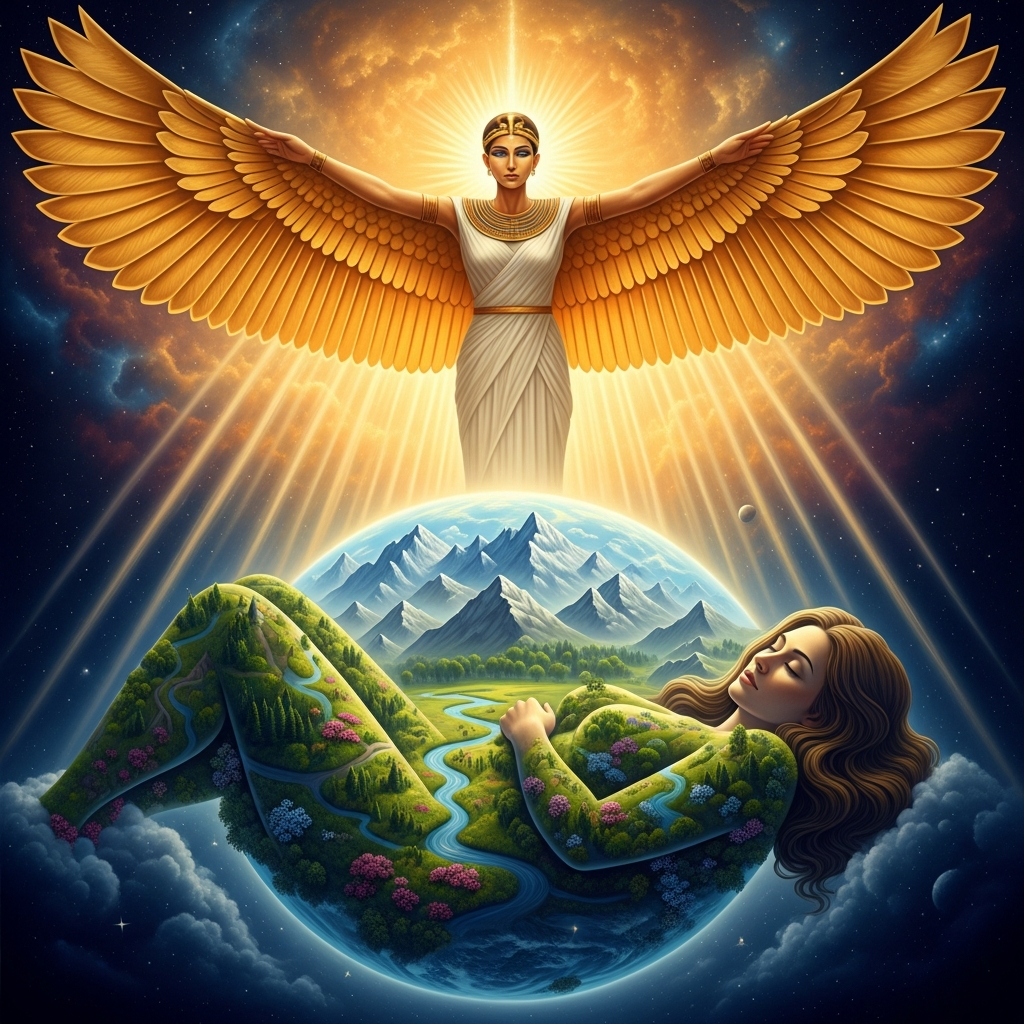
When the three sons of Odin — Odin, Vili, and Ve — killed the frost-giant Ymir, the blood that poured from his wounds was so much that all the other frost-giants drowned in it, except for Bergelmir and his wife, who escaped on a boat made from a hollowed tree trunk. From Ymir’s body the gods made the world: flesh for earth, blood for sea, bones for mountains, teeth for pebbles, skull for sky, brains for clouds.
This means that the world is made of giant.
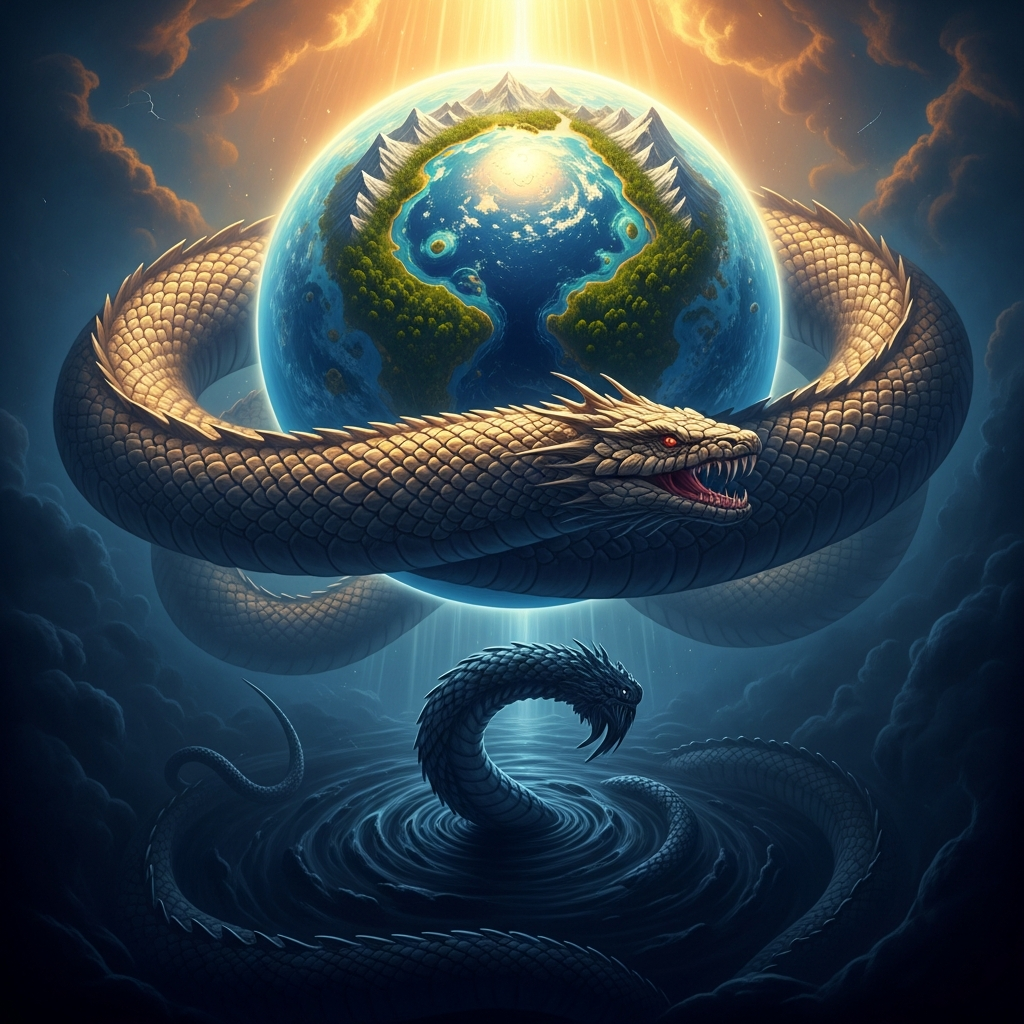
The ocean that surrounds the world in Norse cosmology — the sea in which the Midgard Serpent lies coiled around the disc of earth — is the blood of the first giant. The mountains are his bones. The sky you look at is the dome of his skull. The gods did not create the world ex nihilo; they repurposed a being who was already there. The world is the aftermath of a murder.
This is the Norse version of a pattern so consistent across traditions that it demands an explanation.
The Before-Gods
In virtually every cosmological tradition, there is a category of being that existed before the gods who currently run the universe. These beings are characterized by size (literal or metaphorical), age (they are older), and raw power (unorganized, excessive, cosmologically dangerous). The gods’ victory over them is the precondition for the ordered cosmos. The giants are the stuff that order was made from and imposed upon.
The Titans in Greek mythology are not simply pre-Olympian gods. They are a different kind of being — older, wilder, more elemental. Cronus castrating his father Uranus to prevent further offspring, then swallowing his own children to prevent his own overthrow, represents a world in which power is entirely about cosmic cannibalism: the stronger generation consuming the weaker, every parent devouring every child, in an endless cycle of primordial violence. Zeus breaks this cycle not by being stronger in the simple sense but by substituting a different kind of relationship — alliance, oath, gift-exchange — for pure predation.
The Olympian world is not simply bigger than the Titan world. It is organized differently. The Titans are what happens when cosmic power has no structure except domination. The Olympians are what happens when cosmic power is organized around law, contract, and (partial, contested, frequently violated) reciprocity.
Ymir and the Making of the World
The Norse account of Ymir’s death and repurposing as the cosmos is worth sitting with in its full strangeness. The gods kill the being who provided the very milk that nourished the first beings (Ymir’s own armpits dripped a man and woman; a cow licked ice and produced Buri, from whom Odin is descended). They are killing their own prehistory. The world they make from him is both the monument to their victory and permanently constituted by the thing they destroyed.
This creates a cosmological ambiguity that runs through the entire Norse mythos. The Jotnar are not simply enemies. They are relatives. Odin’s mother was the giantess Bestla. Thor’s mother was the earth-giantess Jord. The god Loki is himself a Jotunn. When Odin seeks wisdom, he goes to the giant Mimir. When he seeks a wife, he seeks among the giantesses (Frigg, Jord, Skadi’s father is a giant). The gods need what the giants have.
The Jotunheim giants and the Asgard gods are not two species. They are two orientations within a single family — the chaos-orientation and the order-orientation of powers that are, at root, the same material. Ragnarok is not the victory of chaos over order; it is the dissolution of the tension between them, which also destroys the framework in which either could exist.
The Nephilim: What Happened Before the Flood
The four verses in Genesis 6:1-4 describing the Nephilim are among the most discussed passages in biblical studies, precisely because they appear to be a fragment of something much larger — a mythology of divine-human hybridization and giant offspring that the canonical text does not fully develop.
The Second Temple Jewish text known as 1 Enoch (c. 300-100 BCE) fills in the story elaborately: the “sons of God” (called the Watchers) are 200 angels who choose to descend to earth, take human wives, and teach humanity forbidden knowledge — metalworking, cosmetics, astrology, sorcery. Their offspring, the Nephilim, are giants who consume all available food and then begin consuming humans. The flood is partly God’s response to this situation.
The Book of Enoch was widely read in Second Temple Judaism and quoted directly in the Letter of Jude and the Second Letter of Peter in the New Testament. It represents the fullest elaboration of the giant-mythology within the Abrahamic tradition, and its marginalization in the later canonical tradition is itself significant: the tradition that eventually became both rabbinic Judaism and Christianity wanted to suppress a myth in which angels could choose to rebel, mate with humans, and produce a race of predatory giants. The theology was too messy. The giants were edited down to four verses.
Geological Memory and Mythological Transformation
The classicist Adrienne Mayor has argued that many ancient giant-myths may encode genuine encounters with large animal fossils. The bones of Pleistocene megafauna — mammoths, mastodons, giant ground sloths, cave bears — regularly emerged from eroding hillsides and riverbanks in the ancient world. To people without paleontological frameworks, these were the bones of giants — the enormous beings who lived before the current order of the world.
The Arimaspians who fought griffins in Scythia were probably connected with fossil lion skulls and eagle-beaked griffin fossils found in the gold-bearing regions of Central Asia. The giant bones that ancient Greeks regularly “discovered” at hero’s shrines — and that towns competed to possess as civic relics — were probably Pleistocene mammal fossils. The mythological giants and the geological giants were being seen simultaneously.
This does not make the giant-myths merely a primitive paleontology. The myths do much more than record bone-finds. But it suggests that the raw material of the giant-mythology included real encounters with material evidence of a world that was different before — that there really had been enormous living things, and that their remains were still visible in the ground.
The myth interprets the evidence and makes it narratively usable: those were the Titans, the Nephilim, the Jotnar, the Fomorians. They were here before us. They are gone now except for the bones. We are living in the aftermath of their world.
Why the Giants Keep Returning
The consistent mythological feature of the giant-myths is that the defeat of the giants is never final. The Titans are imprisoned in Tartarus — not destroyed. At Ragnarok, the Jotnar march to their final battle — they were always there, always organizing. The Nephilim appear “and also afterward” (Genesis 6:4) — before and after the flood. The Fomorians withdraw but do not cease to exist. Typhon, the last and most terrible giant Zeus faces after the Titanomachy, is imprisoned under Mount Etna — whose volcanic eruptions are his continued activity.
The giant is never fully eliminated. It is only contained.
This is the deepest truth the giant-myths tell: the raw power that exists before order is not destroyed when order is established. It is incorporated, redirected, buried. The world is made of giant because it cannot be made of anything else. The cosmos is the product of organized primordial violence — and the primordial violence is still there, in the ground, in the sea, in the erupting mountain.
The gods who keep that violence at bay are doing important work. But they are working with the very material they are containing.
Echoes Across Traditions
Entities
- Cronus
- Rhea
- Zeus
- Ymir
- Odin
- Goliath
- Bres
- Balor

Sources
- Hesiod, *Theogony* 629-735 (Titanomachy) and 820-880 (Typhon)
- Hesiod, *Works and Days* 109-200 (Five Ages, including race of heroes/giants)
- Genesis 6:1-4, Numbers 13:33, Deuteronomy 3:11 (Nephilim and Og of Bashan)
- *Book of Enoch* I (Second Temple text on the Watchers, c. 300-100 BCE)
- Snorri Sturluson, *Prose Edda*, 'Gylfaginning' 5-8 (Ymir and creation)
- *Cath Maige Tuired* (Battle of Mag Tuired, Old Irish, c. 9th century CE)
- Wendy Doniger, *The Origins of Evil in Hindu Mythology* (1976)
- John Colarusso, *Nart Sagas from the Caucasus* (2002)
- Adrienne Mayor, *The First Fossil Hunters: Dinosaurs, Mammoths, and Myth in Greek and Roman Times* (2000)