Guru Amar Das and the Meal Before the Meeting
Guru Amar Das's guruship 1552–1574 CE; Akbar's visit to Goindval recorded c. 1567 CE · Goindval Sahib, on the banks of the Beas river, Punjab, India
Contents
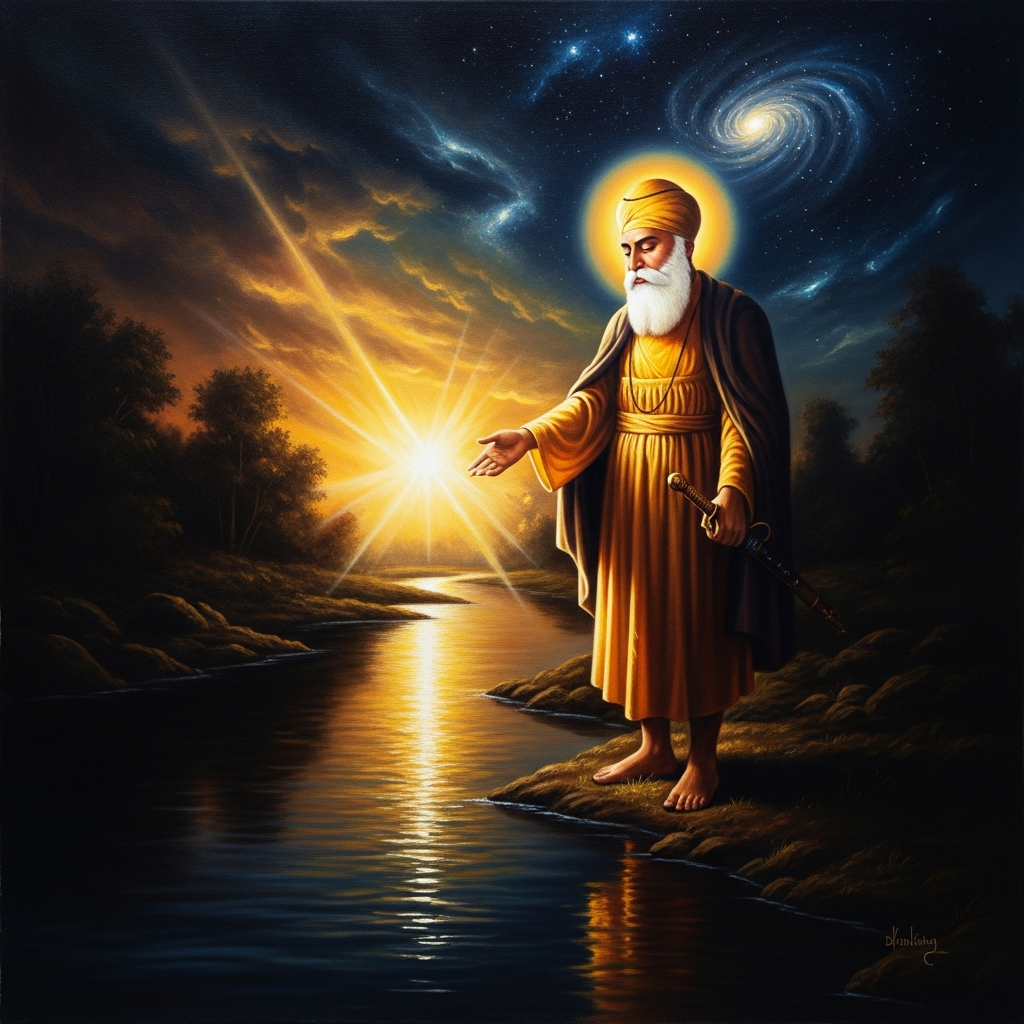
Guru Amar Das, the third Sikh Guru, made a rule: before anyone could meet with him — king, emperor, merchant, or peasant — they had to sit in the langar and eat together. The Mughal Emperor Akbar's envoys sat on the floor and ate dal with farmers. When Akbar himself visited, he sat with commoners before the audience. The langar — the Sikh community kitchen that feeds anyone, of any religion, for free — is this rule enacted in iron pots every single day, in every gurdwara, everywhere in the world.
- When
- Guru Amar Das's guruship 1552–1574 CE; Akbar's visit to Goindval recorded c. 1567 CE
- Where
- Goindval Sahib, on the banks of the Beas river, Punjab, India
He was seventy-three years old when Guru Angad named him successor, which surprised everyone including Amar Das himself.
He had come to Sikhism late — in his sixties, after a life of devout Vaishnavite practice, after decades of pilgrimages to Hardwar and other sacred rivers, after the kind of earnest religious searching that produces humility rather than certainty. He had heard Bibi Amro, Guru Angad’s daughter, singing her father’s hymns, and the hymns had done what good music does to an honest seeker: rearranged the furniture of his interior life. He had served Guru Angad for twelve years with the intensity of someone trying to make up for lost time.
When Angad named him the third Guru, he tried to refuse on the grounds that there were worthier men. Angad said, in the phrase the tradition remembers: Amar Das, you are the Guru. You have not been chosen for honor. You have been chosen for work.
The work Amar Das chose to do was social surgery.
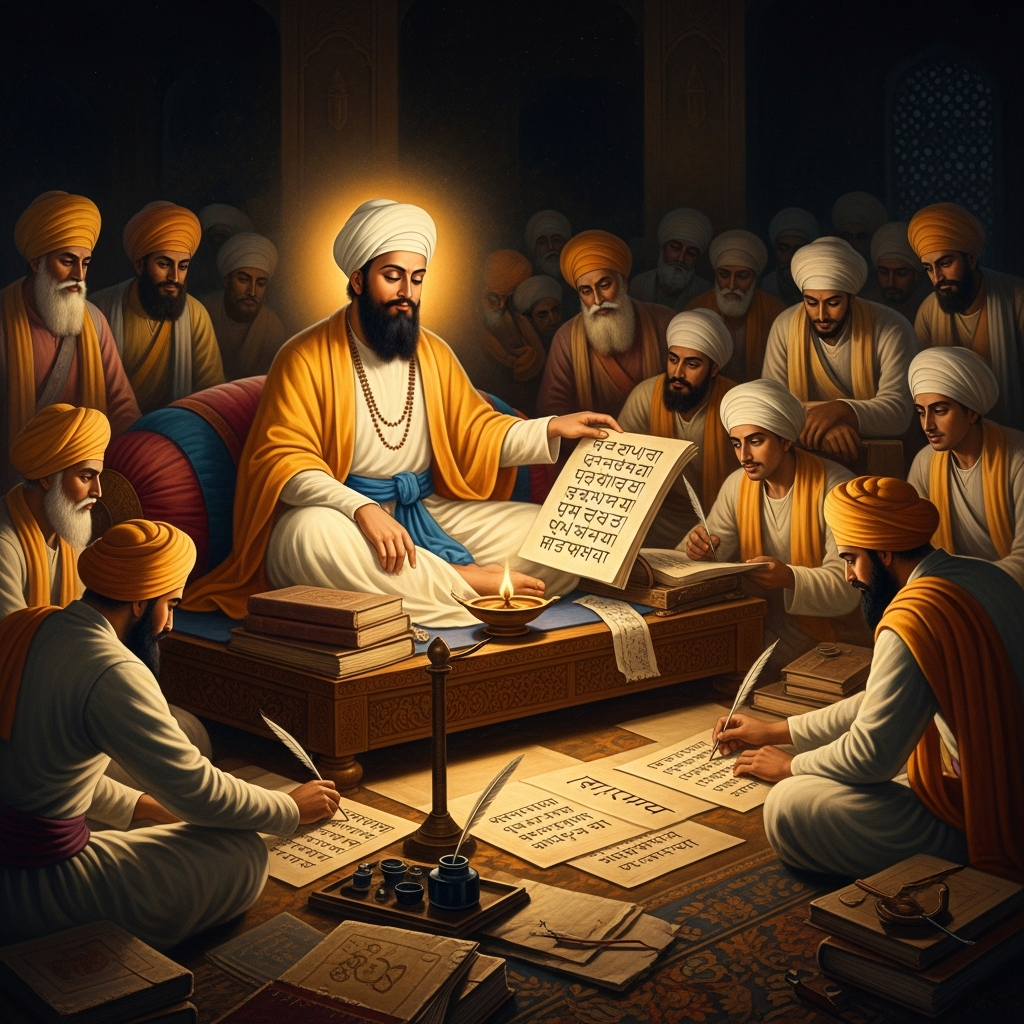
He outlawed sati — the practice by which a widow was expected or required to immolate herself on her husband’s funeral pyre. He outlawed purdah — the system by which women were segregated and veiled in ways that prevented their participation in community life. He established twenty-two manjis — administrative districts — and appointed both men and women as manjidars, district administrators. This last point is not incidental: in a sixteenth-century Punjab governed by a combination of Mughal administration and Brahminical custom, appointing women to positions of religious and administrative authority was not a reform. It was a provocation.
But the most durable work — the work still running in every gurdwara in every city in the world — was not the outlawing or the appointing. It was the rule he made about the meal.
Pehle pangat, phir sangat.
First the community meal. Then the audience.
The logic of the rule is the logic of the floor.
In the langar, everyone sits on the same floor. Not at the same table — there are no tables — but on the same mat, on the ground, in rows (pangat, which is also the word for the meal itself). High caste, low caste, no caste. Muslim, Hindu, Sikh, traveler. Emperor, farmer, untouchable. The floor does not make distinctions. The food is the same food. The serving is the same serving. For the duration of the meal, the social architecture of the world outside the langar does not apply, and when Guru Amar Das said that anyone who wished to see him must eat in the langar first, he was not merely making a practical point about hospitality. He was making a structural point about what kind of meeting was possible between people who had not yet shared a floor.
You cannot look at someone correctly if you have not sat at the same level.
The most famous application of the rule is Emperor Akbar’s visit, recorded in Mughal sources as well as Sikh ones, which makes it unusual in the annals of the tradition.
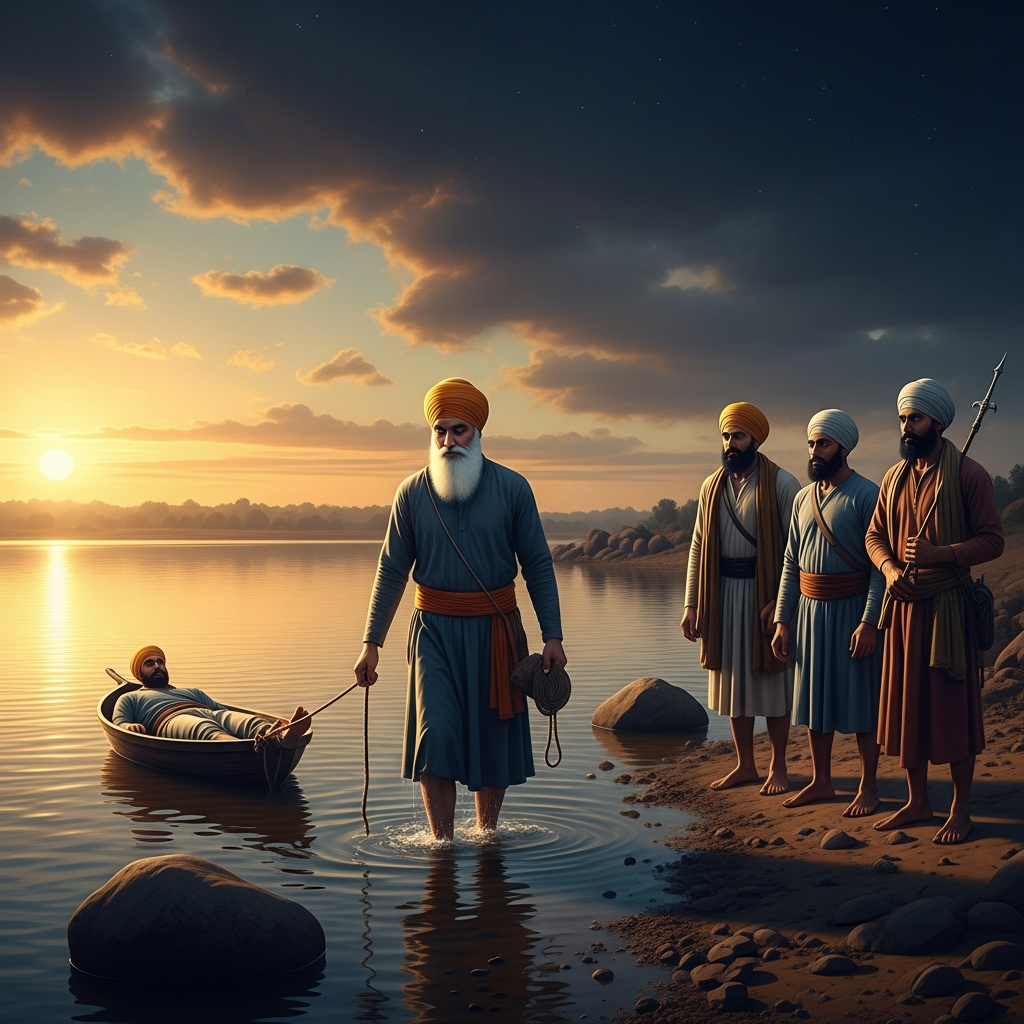
Akbar — at this point the most powerful ruler in the subcontinent, presiding over an empire that ran from Kabul to Bengal — sent word that he wished to visit the Guru at Goindval Sahib, on the Beas river. He arrived with his court entourage: nobles, soldiers, secretaries, the administrative machinery of empire that always traveled with the Mughal emperor.
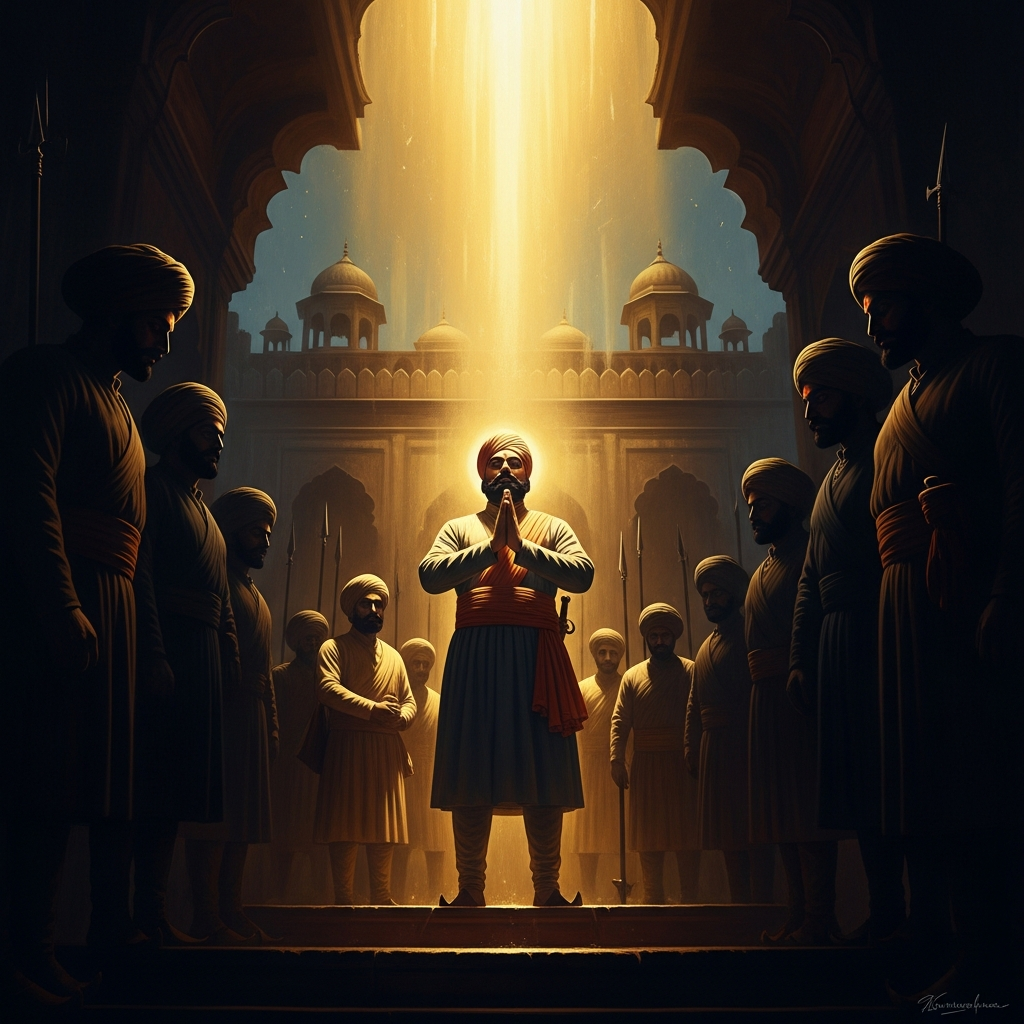
Guru Amar Das’s representatives met them outside the gates.
The message was simple: the Emperor and his court were welcome. Before the audience with the Guru, however, the Emperor and his court would sit in the langar with whoever else was there and eat.
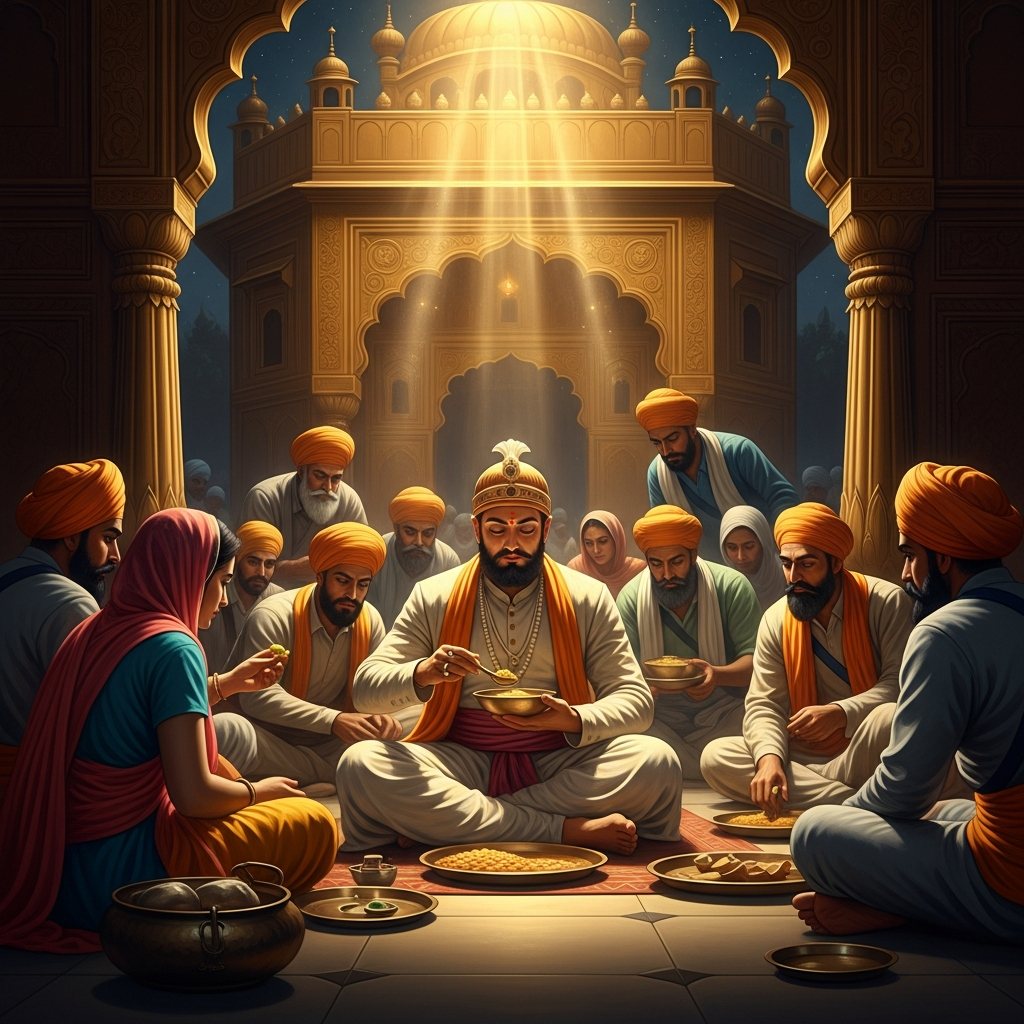
The Emperor sat on the floor. His nobles sat on the floor. His secretaries sat on the floor. A Mughal emperor who commanded armies and administered taxes and whose word was law across two million square kilometers of the subcontinent ate dal from an iron vessel on a mat in a community kitchen in a village in the Punjab, surrounded by farmers and merchants and pilgrims who had also stopped for a meal.
After the meal, he went to meet the Guru.
What Akbar and Amar Das talked about has been reported in various ways. The Mughal sources are diplomatic; the Sikh hagiographies are theological; the historians are cautious. What is agreed upon is this: Akbar exempted the Sikh community at Goindval from taxes, at the Guru’s request or on his own initiative depending on the source. He left with a favorable impression of the community’s organization. He observed the langar and understood, with the pragmatic intelligence that made him one of the most effective rulers in Indian history, that an institution capable of feeding thousands without a treasury and without a bureaucracy was not nothing.
He also, according to the tradition, remarked that no one in his empire had worked out the equality problem this well.
The equality problem: how do you serve the welfare of subjects who are born into conditions so different — of caste, of religion, of wealth, of gender — that their interests appear to be in permanent structural conflict? Akbar’s own answer was his sulh-i-kul policy — peace with all, religious toleration at the administrative level. Amar Das’s answer was the floor. Not toleration, which is the policy of a ruler who might change his mind, but the daily practice of eating together, which is something the body learns and the body does not easily unlearn.
Amar Das also supervised the completion of the Baoli — the sacred step-well at Goindval — which became the first major Sikh pilgrimage site. The step-well is the architectural companion to the langar: the well that gives water to all who descend, the kitchen that gives food to all who sit. Eighty-four steps descend to the water, and the tradition is to recite the Japji — Nanak’s morning prayer — at each step, which means the well is not merely a civic amenity but a meditation. You go down praying and come up washed and the descent and the ascent are the same practice.
Amar Das died at Goindval in 1574, at the age of ninety-five. He had been Guru for twenty-two years. He named his son-in-law Ram Das as his successor — the man who would dig the pool at Amritsar and begin the city that the Golden Temple would eventually consecrate.
His daughter Bibi Bhani, Ram Das’s wife, remained at Goindval. The tradition records that she held a cracked brick on a post with her hand during the Guru’s morning ablutions for years, so that he would not slip on the loose step, and that he noticed and granted her a boon. The boon she asked was that the guruship remain in her family. The tradition records that it did: Ram Das, Arjan, Hargobind, Har Rai, Har Krishan, Tegh Bahadur, Gobind Singh — six generations, all descended from Bibi Bhani, the woman who held a brick in place in the dark before dawn so that the morning prayers would not be interrupted by a fall.
The langar is the most successful experiment in daily equality that any religion has ever managed to maintain across centuries.
Not occasional equality: the Sikh principle is nit — daily, constant, without exception. Not equality for Sikhs: the langar is open to anyone who arrives, of any religion, any caste, any nationality. Not equality in theory: the floor and the mat and the iron vessel and the dal are the theory made physical, made repeatable, made unchallengeable by abstract argument because there is nothing abstract about it.
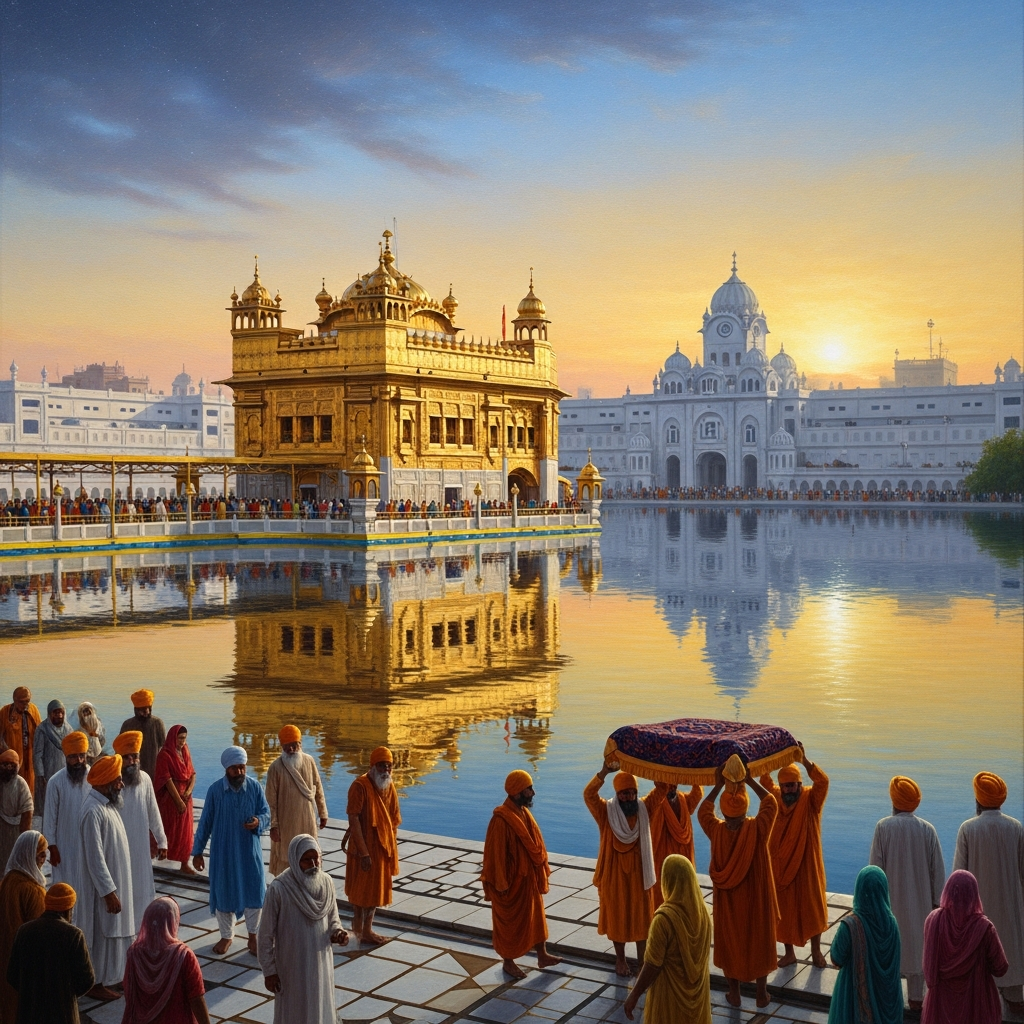
The Golden Temple at Amritsar — the most visited pilgrimage site in the world — feeds between fifty thousand and a hundred thousand people per day in its langar. The same floor. The same dal. The same serving. The Emperor’s seat and the farmer’s seat and the untouchable’s seat are the same.
Guru Amar Das made a rule about a meal and the rule has not stopped running since 1552.
Echoes Across Traditions
Entities
- Guru Amar Das
- Emperor Akbar
- Bibi Bhani (Guru Amar Das's daughter)
- Ram Das (Guru Amar Das's son-in-law, the fourth Guru)
- the langar (community kitchen)
Sources
- *Guru Granth Sahib*, *Mahalla 3* — the 907 hymns of Guru Amar Das
- Abul Fazl, *Ain-i-Akbari* (c. 1590) — Mughal court history recording Akbar's policies toward religious communities
- W. H. McLeod, *Guru Nanak and the Sikh Religion* (Oxford, 1968)
- Pashaura Singh & Louis Fenech (eds.), *The Oxford Handbook of Sikh Studies* (Oxford, 2014)
- Khushwant Singh, *A History of the Sikhs, Vol. I: 1469-1839* (Princeton, 1963), ch. 3
- J. S. Grewal, *The Sikhs of the Punjab* (Cambridge New History of India, 1990)