The 365-Day Year and the Five Unlucky Days
Classic Maya period; calendar system predating 500 BCE; in use through Spanish conquest · Throughout the Maya world; ceremonial centers where the New Year rites were performed
Contents
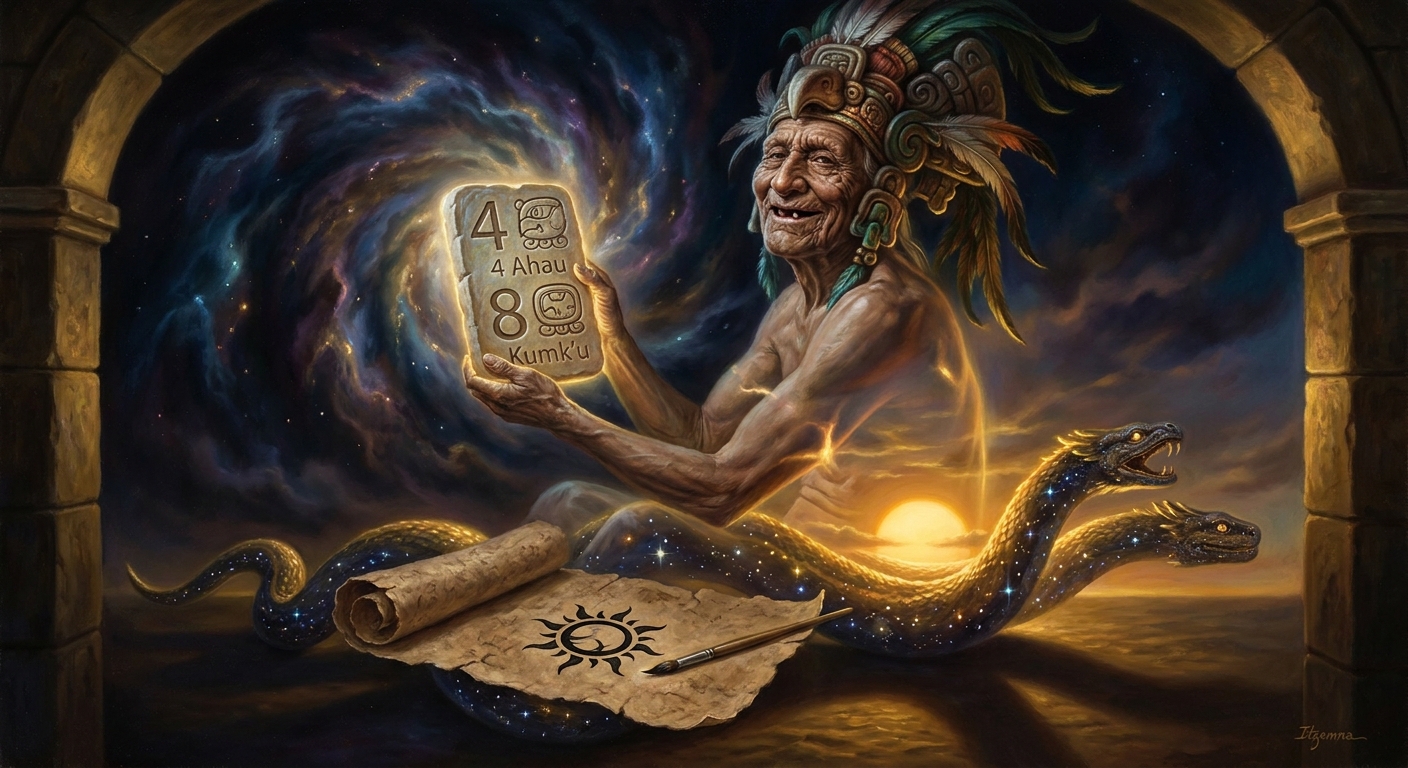
The Maya haab solar year contains eighteen months of twenty days each, plus five days at the end called the Uayeb — days with no patron deity, no protection, when the world sits in dangerous suspension between one year and the next.
- When
- Classic Maya period; calendar system predating 500 BCE; in use through Spanish conquest
- Where
- Throughout the Maya world; ceremonial centers where the New Year rites were performed
The year has eighteen months and then five more days that do not belong to any month.
The haab is the Maya solar year — 365 days, the same period the Gregorian calendar measures with its months and leap-year adjustments. The Maya structured it differently: eighteen months of twenty days each, named and each with a patron deity, each with particular characteristics and appropriate activities. Eighteen times twenty is three hundred and sixty. The year is three hundred and sixty-five.
The five remaining days are the Uayeb.
Wayeb’ in the more recent orthography — the word’s root means to sleep, or to be without, or perhaps simply the unlucky ones. These five days sit at the end of the year before the new one begins, five days that belong to no month, that have no patron deity, that are outside the structure. They are the year’s remainder, the mathematical leftover, the days the calendar does not quite contain.
Nothing good should be started during the Uayeb.
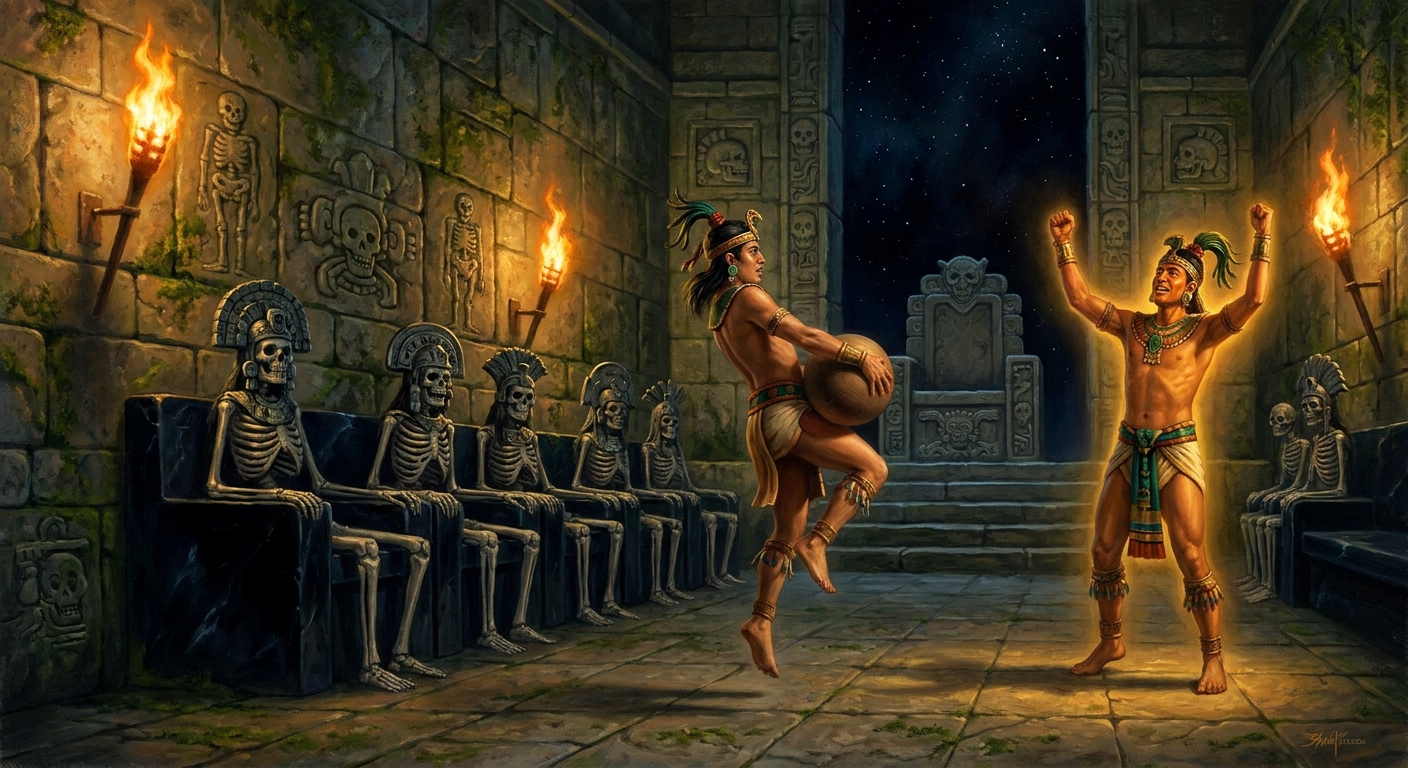
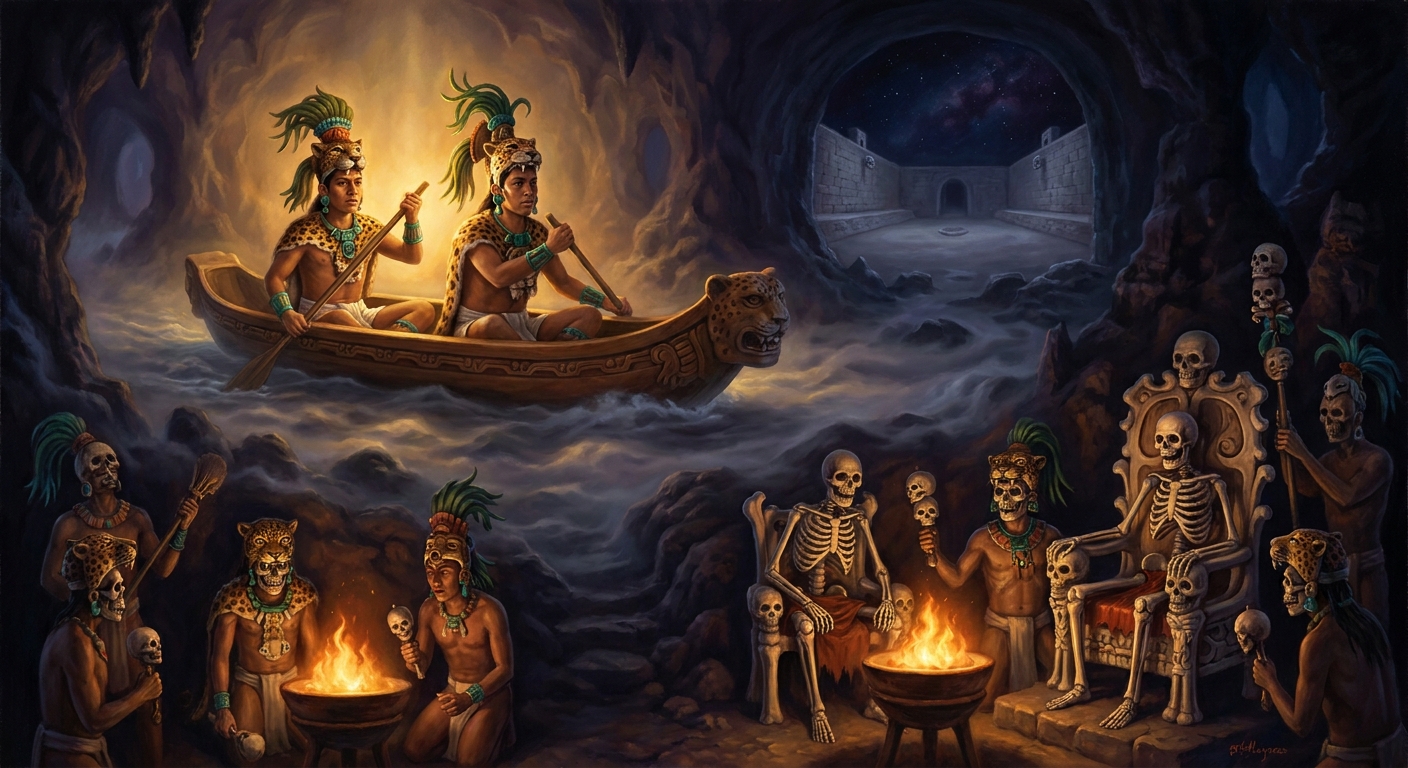
No new houses built, no new fields cleared, no journeys begun. No children should be born if it can be helped; a child born during the Uayeb has no month patron to protect them and grows up to be, the sources say, unfortunate and miserable. The markets go quiet. People stay home. The lords of Xibalbá have more access to the surface during these five days than at any other point in the year because the structure that normally holds the boundary in place is absent.
The New Year ceremonies are the most elaborate in the Maya ritual calendar.
Diego de Landa, writing in the sixteenth century from conversations with Maya people whose civilization he was actively helping to destroy, recorded the New Year ceremonies in detail that feels slightly bewildered by what he witnessed. Depending on which of the four Year Bearer days started the new year, the ceremonies had different emphases, different patron deities, different ritual actions required.
Each year is led in by a different Bacab and ends with the transition to the next one.
The image of the year-bearer was carried into the village or city from the east — the direction of beginnings — during the Uayeb period itself, as a way of importing the coming year’s energy before the old year fully ended. The image was set up temporarily, received offerings, and then permanently installed when the new year began.
The ceremonies included what Landa records as animal sacrifice and, in some contexts, human sacrifice — specifics contested by scholars — and the burning of copal in quantities he describes as enormous, the smoke rising from every major ceremonial center to mark the hinge of time.
The five Uayeb days are the Maya version of a recurring human question: what about the time that cannot be organized?
Every system of measurement generates a remainder. The solar year does not divide evenly into months, and the months do not divide evenly into weeks, and the orbit of the Earth around the Sun does not quite correspond to the orbit of the Moon around the Earth. Every culture that pays attention to time long enough discovers that time itself is slightly irregular, that it exceeds every container you build for it.
The Maya did not pretend otherwise.
They named the remainder. They gave it a character — dangerous, unprotected, suspended — and they designed ceremonies to navigate the suspension. The world sits unanchored for five days, and the world’s people perform the rites that re-anchor it: carrying in the new year’s image, making the offerings, burning the incense, acknowledging that the world does not continue automatically but must be renewed.
On the sixth day the new year begins.
The Bacab of the new year has taken up his position at his corner of the sky. The eighteen named months stretch out ahead, each with its patron and its character, the count resuming. The five days of danger are behind.
Until next year.
Echoes Across Traditions
Entities
- the Bacabs
- Itzamna
- the Uayeb

Sources
- Diego de Landa, *Relación de las Cosas de Yucatán* (c. 1566, translated by Alfred Tozzer, 1941)
- Anthony F. Aveni, *Skywatchers of Ancient Mexico* (University of Texas Press, 1980)
- Michael D. Coe, *The Maya* (Thames & Hudson, 8th ed., 2011)