The Hwarang: Flower Boys of Silla
Hwarang institution established c. 576 CE under King Jinheung; *Samguk Yusa* records · Silla kingdom (southeastern Korean peninsula)
Contents
The Hwarang were young men of noble birth in the Silla kingdom — beautiful, trained in martial arts and poetry, devoted to Maitreya the future Buddha. They traveled in groups, composing verse and training for war. General Kim Yu-shin was once a Hwarang. They unified the Korean peninsula. Their code — loyalty, filial piety, faithfulness, courage, and the refusal to take life needlessly — sounds like chivalry, sounds like bushido, sounds like something that was always waiting to be invented.
- When
- Hwarang institution established c. 576 CE under King Jinheung; *Samguk Yusa* records
- Where
- Silla kingdom (southeastern Korean peninsula)
King Jinheung of Silla had a problem that every kingdom eventually confronts: how to make warriors who are also citizens, soldiers who understand what they are fighting for and not merely how to fight.
The Goguryeo kingdom to the north had its cavalry. The Baekje kingdom to the west had its alliance networks. Silla, the southeastern kingdom on the peninsula, had mountains at its back and competitors on three sides and the sea beyond them, and the king needed something more than an army. He needed a tradition.
In 576 CE, according to the Samguk Yusa, he established the Hwarang.
The institution began, remarkably, with women.
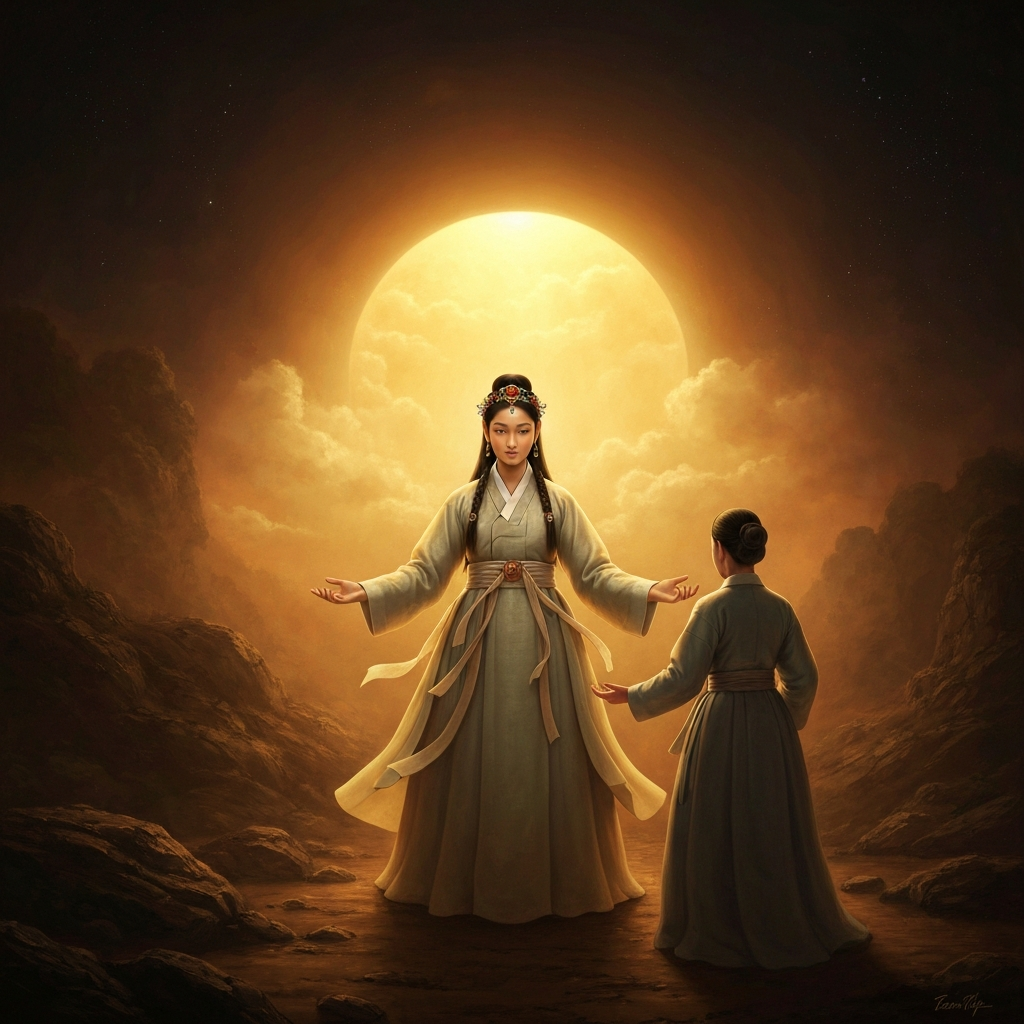
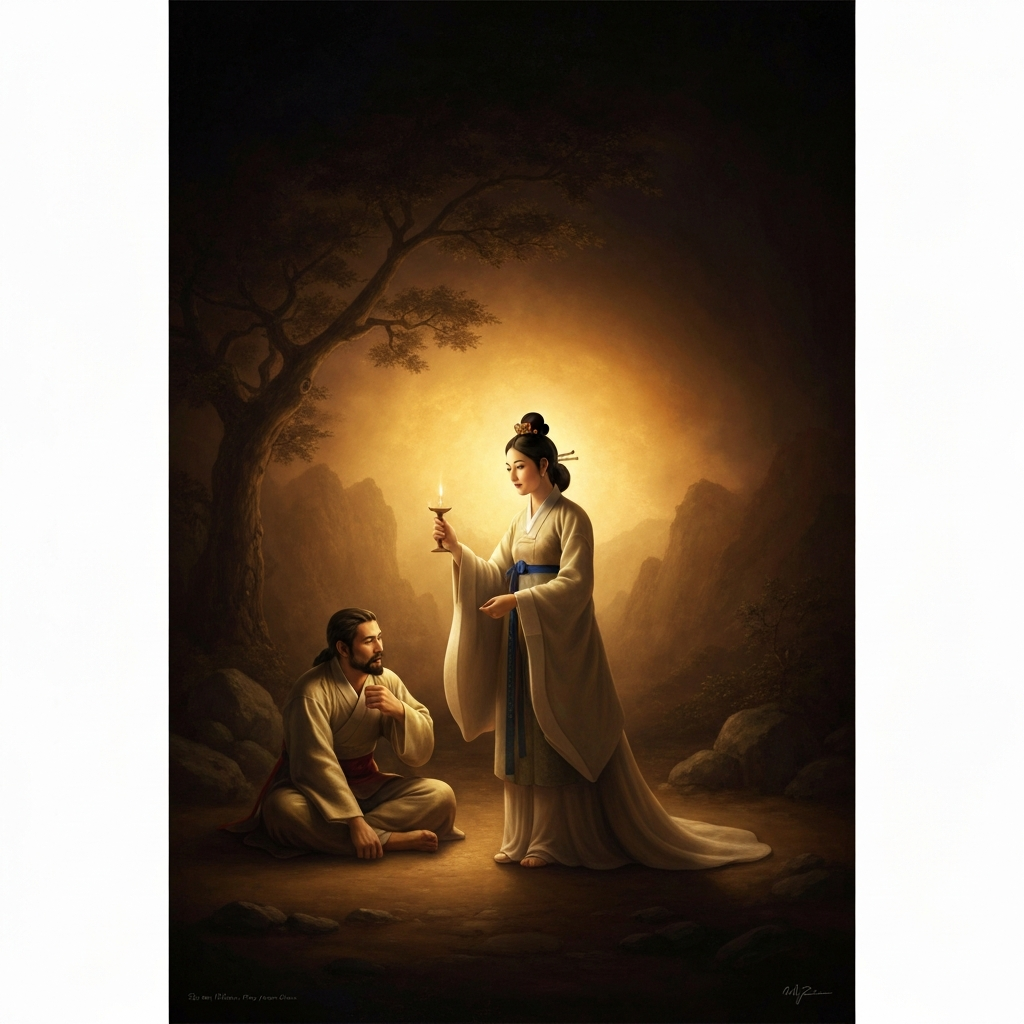
The first leaders of the new order were two young women — Nammo and Junjeong — who were selected for their beauty and intelligence and called Wonhwa, the Original Flowers. They gathered groups of young noblewomen and led them in the studies that would become the Hwarang curriculum: music, poetry, ethical texts, the practice of hwabaek, the council-based consensus decision-making that was Silla’s distinctive political method.
This lasted until Junjeong killed Nammo.
She did it at a banquet, with wine and jealousy as the instruments. The Samguk Yusa is matter-of-fact about it: the first experiment in female leadership of the order ended in murder, and the king dissolved the Wonhwa and started again, this time with young men. The story is strange and the sources leave it there, unexplained, as if the murder were simply a fact about beauty: that it generates competition, and competition generates violence, and the original institution was trying to do something with human nature that human nature resisted.
The male Hwarang were the second attempt.
A Hwarang group was a band of young noblemen who traveled together.
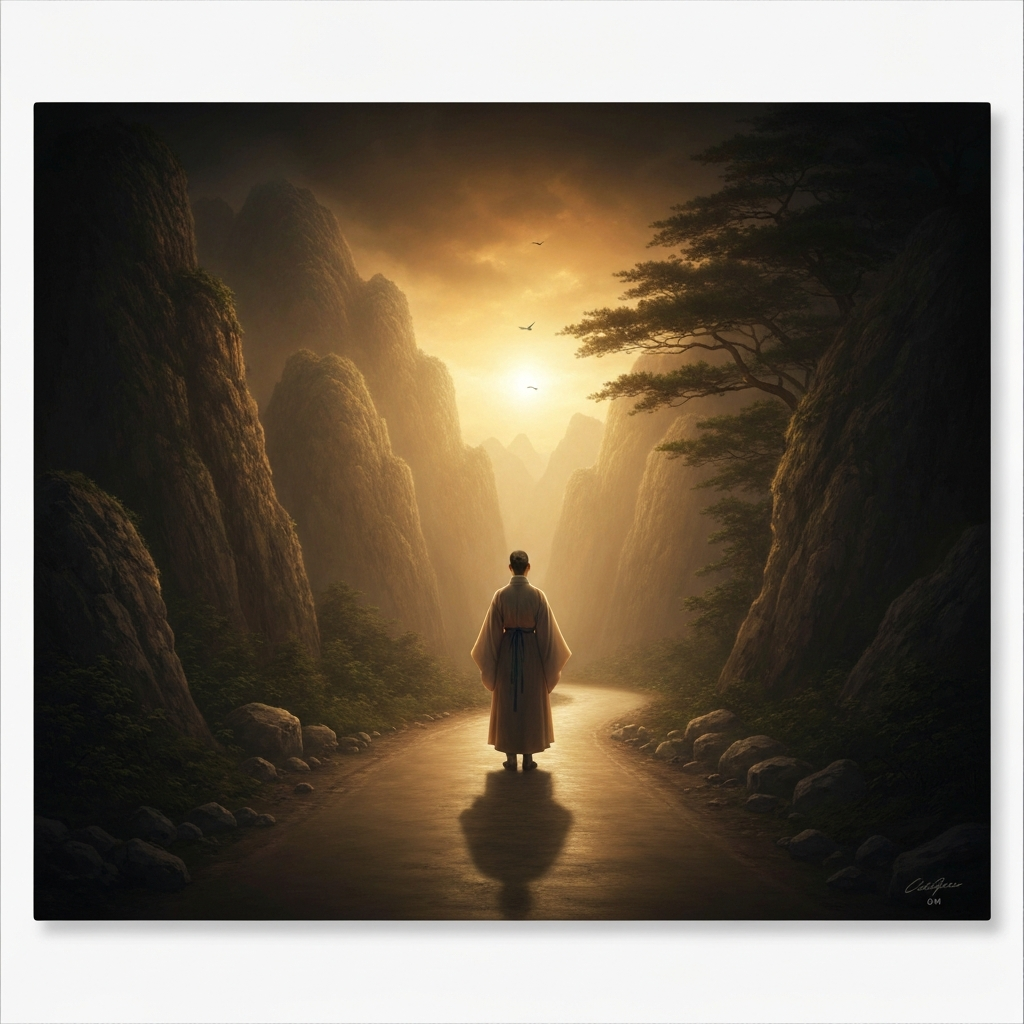
They traveled through Silla’s mountain country — the passes of the Taebaek range, the coastal valleys, the rivers that ran between peaks — and they composed poems about what they saw. They also trained: archery, horsemanship, swordsmanship, the tactical studies that converted the history of past battles into preparation for future ones. The training was not separate from the traveling. Both were the curriculum.
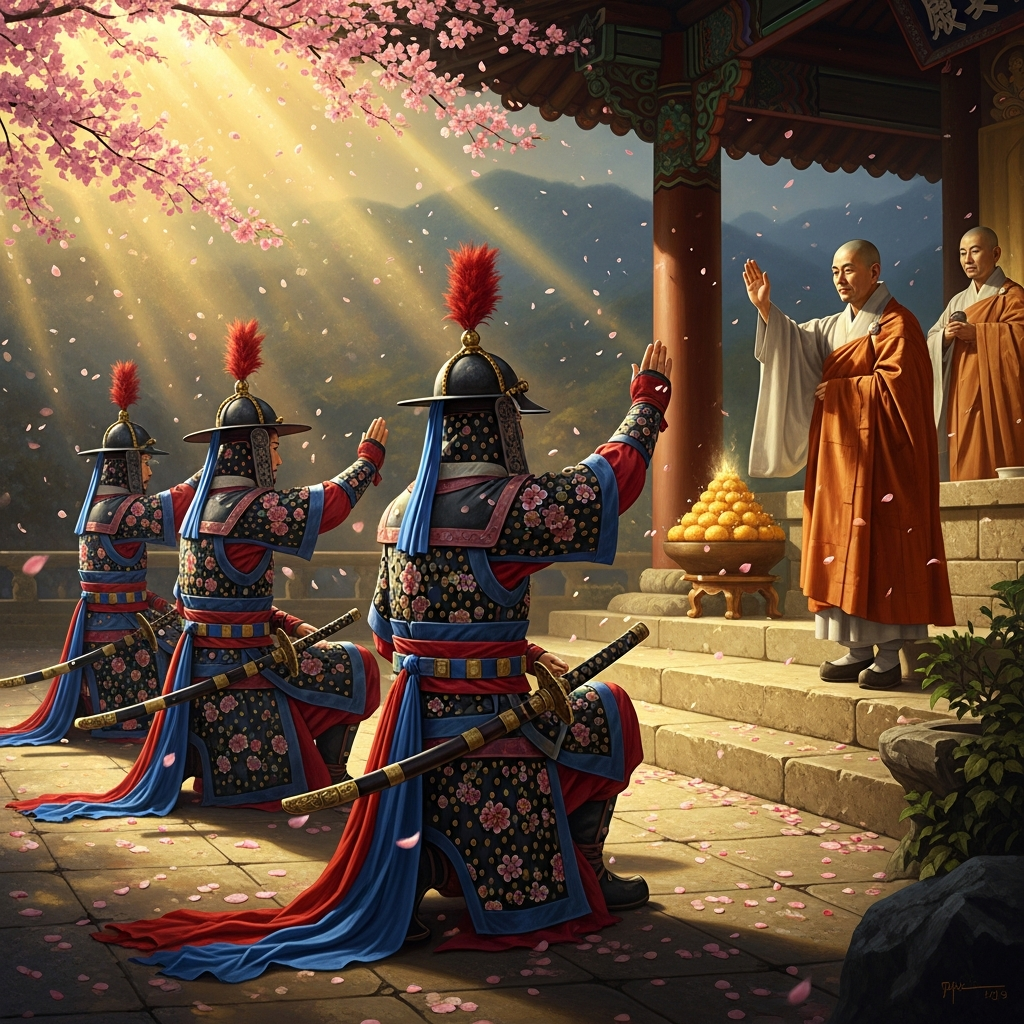
At the center of the curriculum were five rules, attributed to the Buddhist monk Wonkwang, who gave them to two young Hwarang who came to him asking how to live rightly:
Serve the king with loyalty. Serve your parents with filial piety. Be faithful to your friends. Never retreat from battle. Do not take life needlessly.
The five rules are the Hwarang code. They are also, if you look at them long enough, the entire ethical project of the Joseon-era Confucian tradition and the Buddhist monastic code and the warrior codes of Japan and medieval Europe, compressed into five lines that a young man could memorize on horseback. The last rule is the one that surprises: do not take life needlessly is not what you expect from a military code. It means: be the kind of soldier who knows the difference between war and slaughter, and refuses the second when only the first is required.
The Hwarang were devoted to Maitreya.
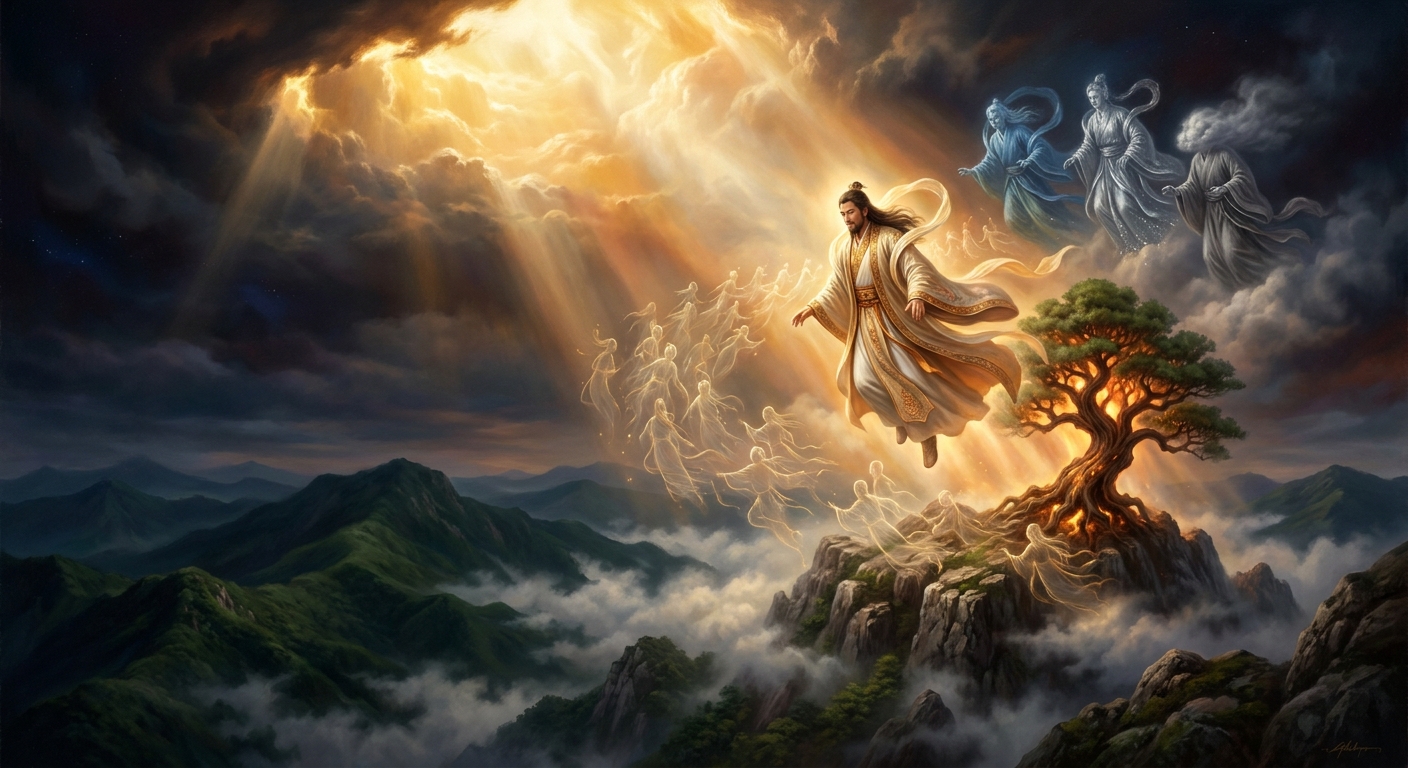
Maitreya is the Buddha-yet-to-come: the future teacher who will appear at the end of this age, when the dharma has been forgotten, and restore the world to its proper orientation. In Korean Buddhist thought of the Silla period, Maitreya’s coming was not simply a cosmological event — it was something to be prepared for, something you could hasten by creating the conditions in which a future Buddha could appear.
The Hwarang believed that beautiful young men were vessels for Maitreya’s spirit, or possible sites of his arrival, or at minimum the kind of human material the future Buddha would choose to inhabit. To train a Hwarang was therefore to polish a vessel. The beauty — the aesthetic cultivation, the poetry, the attention to one’s bearing and appearance — was not vanity. It was temple maintenance. The body was a site of the sacred, and beauty was the form sanctity took when it was expressed in flesh.
This theological dimension distinguished the Hwarang from purely martial institutions. They were not being trained to kill. They were being trained to be worthy of what might be asked of them.
Kim Yu-shin was a Hwarang.
He is the most famous general in Korean history — the man who unified the peninsula, who allied with Tang Dynasty China to defeat Goguryeo and Baekje, who made Silla the dominant kingdom in a process that took decades of campaigning and produced a unified Korean state in 676 CE. He is also, in the records, a man with a specific Hwarang story attached to him.
As a young Hwarang, Kim Yu-shin fell in love with a gisaeng — a woman of the pleasure quarters — and visited her frequently, to the distress of his mother, who expected him to be studying and training. One night his horse, following its habitual route, carried him to her house without his directing it. Kim Yu-shin dismounted, drew his sword, and cut off the horse’s head.
The story is told to illustrate discipline: a Hwarang who could not control his own habits could not control a battle. The horse’s head is the measure of what he was willing to sacrifice to become what he needed to become.
Whether he actually did this, the sources do not say. What the story says is what the Hwarang thought virtue cost.
The Hwarang produced the generals who fought the wars of unification.
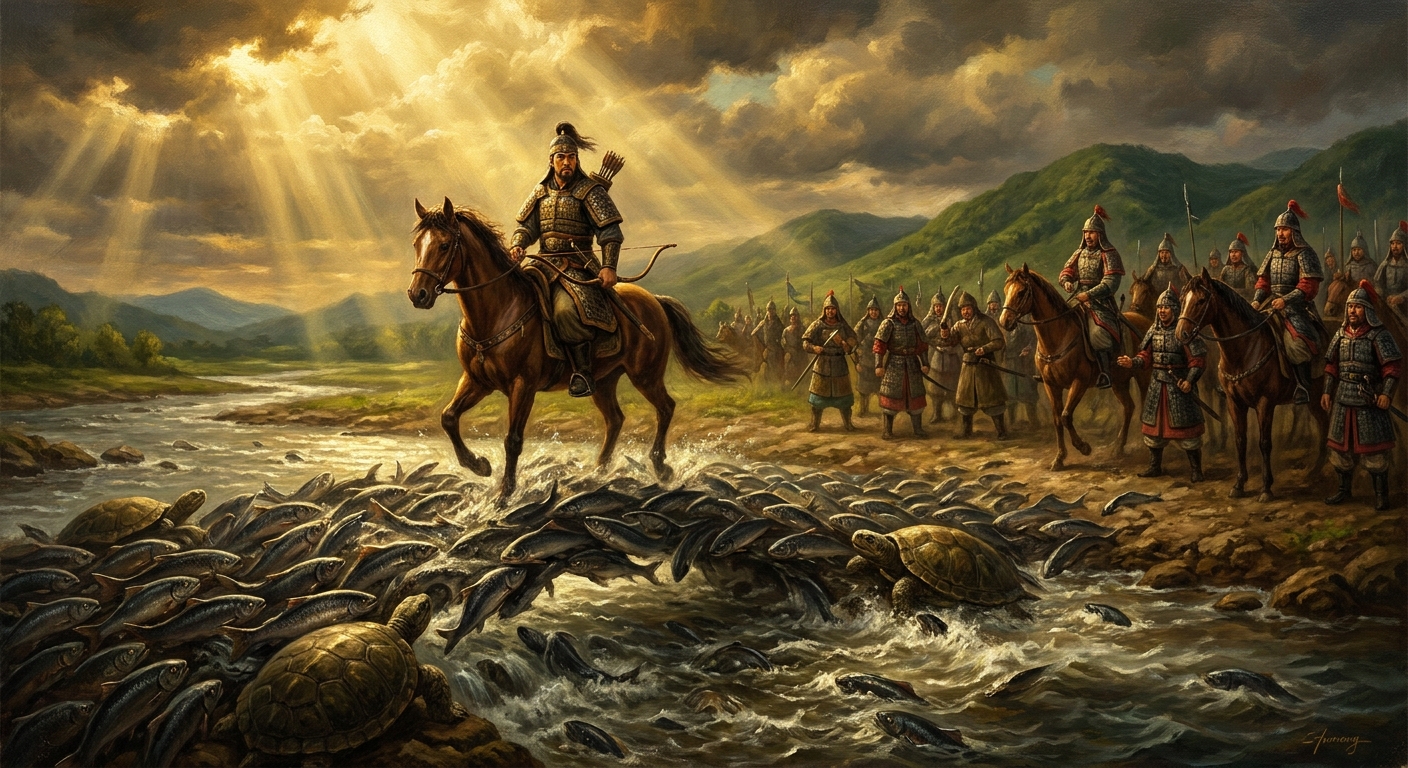
The campaigns were brutal — the conquest of Baekje in 660 CE, the long struggle against Goguryeo that concluded in 668 CE, the subsequent war against Tang China that expelled Chinese forces from the peninsula — and the Hwarang who led them were men of the same generation who had traveled mountain roads composing verses about the color of autumn leaves and the sound of rivers.
This is the paradox the institution was built to contain: the same person who wept at the beauty of the landscape was the person you wanted in command of the cavalry charge, because both responses came from the same place — a quality of full attention, a refusal to be casual about what was in front of you, an insistence that this moment, this ridge, this enemy, this poem deserved the entirety of what you had.
The institution declined after unification.
When the peninsula was consolidated, the urgency that had created the Hwarang dissolved. The order persisted in attenuated forms — there are records from the late Silla period, and some scholars trace Hwarang influence into the later Goryeo dynasty — but the training grounds were no longer producing the same kind of graduate. The emergency that makes such institutions necessary was over.
What remained was the memory of what they had been: the flower boys, beautiful and violent and devoted to a future Buddha who had not yet arrived, traveling through mountains composing poems about things that were about to end.
Every culture, at some point, invents the same institution: the young people who are taught that excellence of character and excellence of combat are the same discipline. The Spartans. The samurai. The knights of Christendom. The Hwarang. They all arrive at the same curriculum through different routes: beauty, loyalty, the refusal to take life needlessly.
What none of them fully solve is what to do with these people when the war ends. Kim Yu-shin’s kingdom was unified. The Hwarang had made themselves for a crisis, and the crisis was over. The institutions that produce extraordinary people have no instructions for what those people are supposed to do in peace.
The future Buddha did not come during the Silla period. He is still coming.
Echoes Across Traditions
Entities
- Hwarang
- Kim Yu-shin
- Maitreya (Future Buddha)
- Wonhwa (the original female leaders)
- King Jinheung
Sources
- Iryeon, *Samguk Yusa* (Memorabilia of the Three Kingdoms), 13th century CE — primary source for the founding of the Hwarang and the Wonhwa
- Kim Busik, *Samguk Sagi* (History of the Three Kingdoms), 1145 CE — accounts of Hwarang generals including Kim Yu-shin
- Richard Rutt, 'The Flower Boys of Silla,' *Transactions of the Korea Branch of the Royal Asiatic Society* 38 (1961) — foundational scholarly study
- Lee Ki-baik, *A New History of Korea*, trans. Edward W. Wagner (Harvard, 1984)
- Robert E. Buswell and Donald S. Lopez (eds.), *The Princeton Dictionary of Buddhism* (Princeton, 2014) — on Maitreya worship in Korea