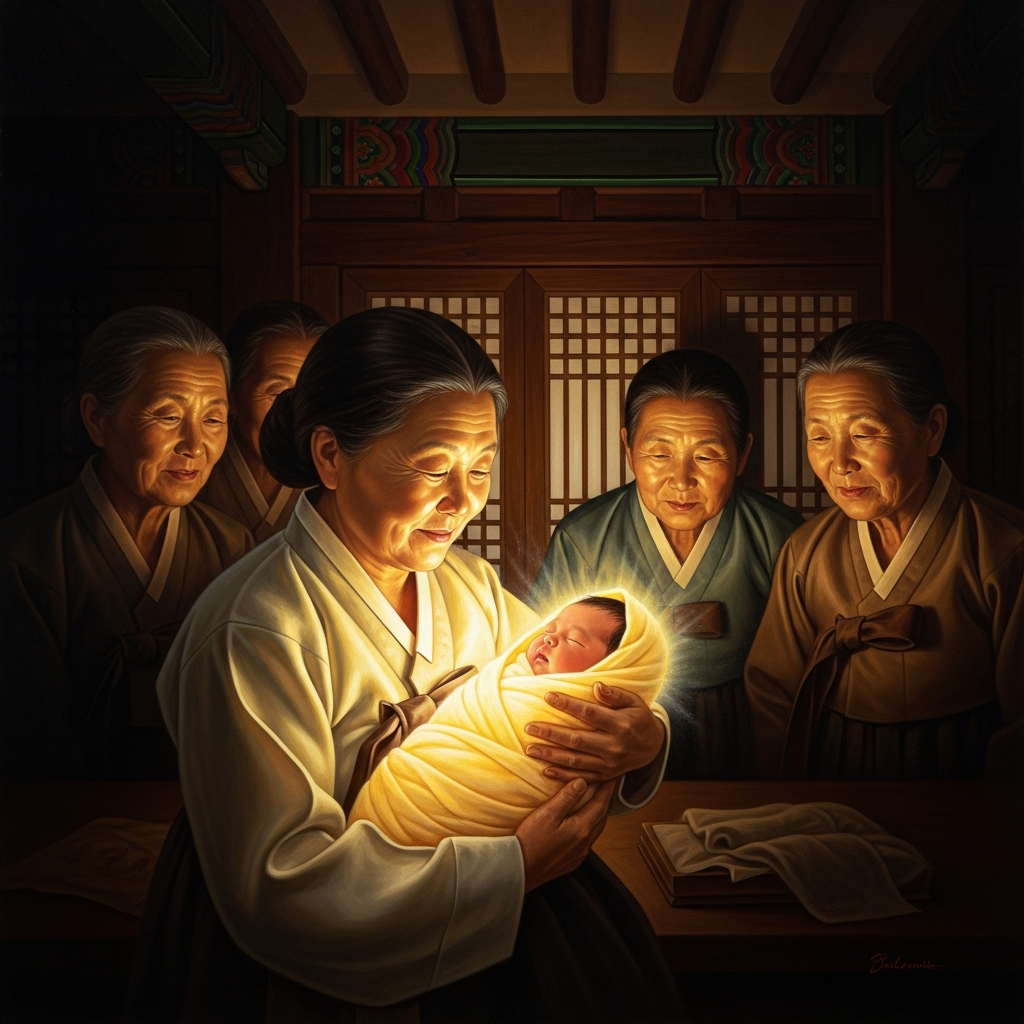
Ondal the Fool
Goguryeo kingdom, recorded in *Samguk Sagi* (1145 CE); story set c. 6th century CE · Pyongyang, capital of Goguryeo (modern North Korea/China border region)
Contents
Ondal is a poor young man so simple that the children of Pyongyang mock him. The princess Pyeonggang, daughter of King Pyeonggang of Goguryeo, is given away in marriage to Ondal as a punishment — her father dismisses her tears over a minor nobleman by saying 'fine, marry Ondal the Fool.' She takes this seriously. She finds Ondal, teaches him to read, trains him to ride and fight, and watches him become the finest general in the kingdom.
- When
- Goguryeo kingdom, recorded in *Samguk Sagi* (1145 CE); story set c. 6th century CE
- Where
- Pyongyang, capital of Goguryeo (modern North Korea/China border region)
The princess cried a great deal as a child.
This is how the Samguk Sagi introduces her — not with her name but with her habit of weeping, the kind of persistent emotional expressiveness that her father King Pyeonggang found exhausting. He had a solution he used repeatedly: Stop crying, he would say, or I’ll marry you to Ondal the Fool.
Ondal the Fool was a real person. He was a young man who lived in the poorer quarter of Pyongyang with his blind mother, who went begging for food, whose clothing was patched past the point of dignity, and whose simplicity was so complete and his poverty so visible that the children of the city followed him in the streets shouting his name. He was not dangerous, not violent, not cruel — just poor and slow and fully exposed to the kind of ridicule that attaches itself to such combinations. He was the king’s joke. He was the thing you threatened to give away what you didn’t value.
The princess grew up hearing his name as a synonym for disgrace.
When she came of age, her father announced that she would marry a nobleman of suitable rank.
She refused. She said she had been promised to Ondal.
The king laughed. The court laughed. Her father explained, with the patience of a man who expects to be obeyed, that the remarks about Ondal had been jokes — disciplinary jokes, threats made to a crying child, not promises — and that the nobleman selected for her was entirely appropriate and the matter was decided.
She left the palace.
She walked out of the court wearing her jewelry and carrying what she could carry, and she went into the streets of Pyongyang and asked where Ondal the Fool lived. They pointed. She went.
Ondal’s house was at the edge of the city.
It was a small structure — more hut than house — where Ondal lived with his blind mother. He came to the door when he heard a knock and found a young woman in what were clearly court clothes, now travel-dusty, standing at his threshold. He asked who she was. She told him. He stepped back from the door.
This is a trick, he said. Good people don’t come to places like this. You’re a ghost. Or a demon. You’re testing me in some way that won’t end well for me.
She explained that she was neither ghost nor demon. She explained that she was the king’s daughter, that her father had promised her to him when she was young, that she had taken the promise at its word, and that she was here to be his wife.
Ondal’s mother, blind in the back room, heard all of this.
Son, she said, I can smell her clothes. Those are court clothes. I don’t know what game is being played but we cannot afford to play it. Send her away.
The princess stayed anyway.
What she saw when she looked at Ondal was not what the city saw.
She saw a man who had never been taught anything. She saw a man who had been told, his entire life, that he was a fool, and had believed it because there was no evidence available to him that suggested otherwise. The city had decided he was what his circumstances made him and had never checked whether there was anything underneath the circumstances.
She began to check.
She had brought money — gold jewelry, which she sold. She bought a horse. A good horse, a military horse, with good lines. She gave it to Ondal and told him to ride it. He fell off. She told him to get back on. He fell off again. She told him the names for the parts of the horse, the names for the gaits, the way you hold the reins when you want to turn, the way you sit when you want speed.
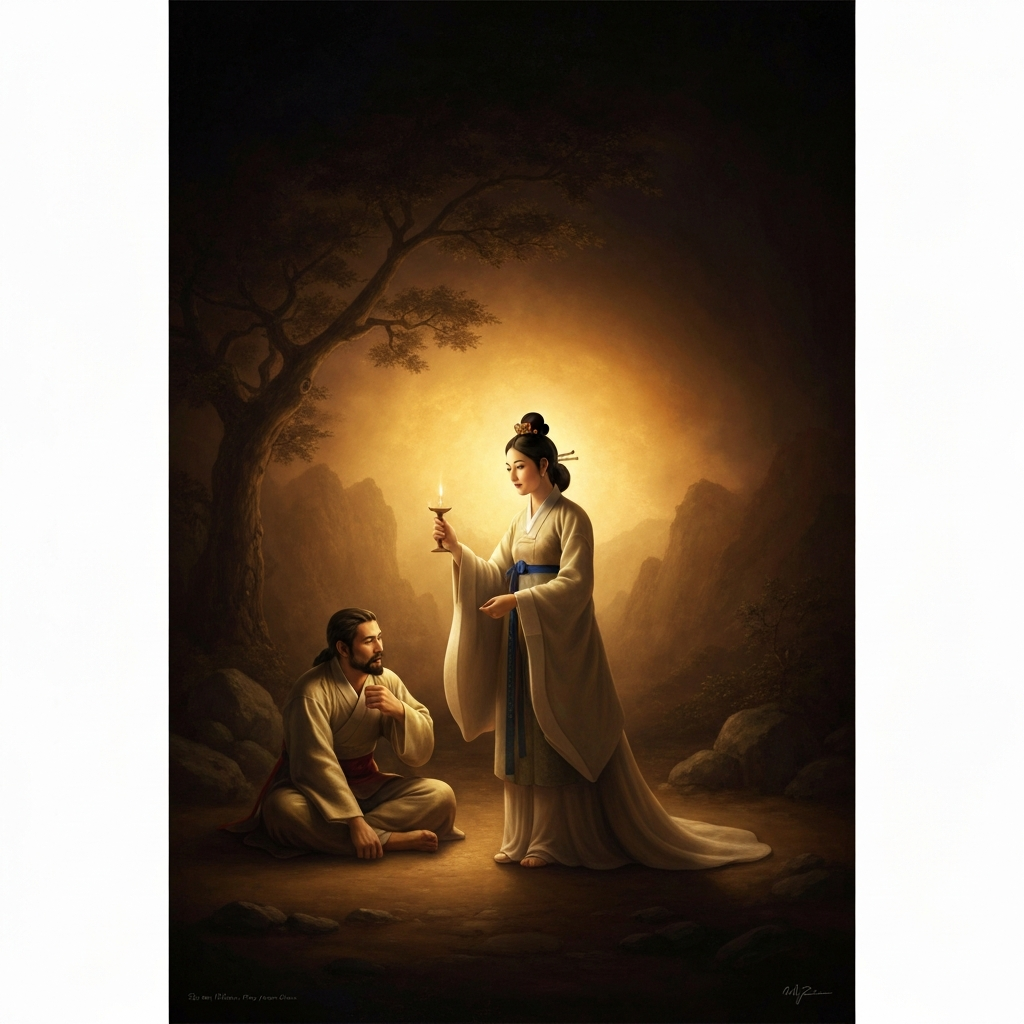
She taught him to read. She taught him history — the campaigns of the kingdom, the tactics of the generals who had won and lost the great battles of Goguryeo. She taught him the classical texts that the court scholars studied, working through them in the evenings when the horse-riding was done, the two of them bent over the scrolls in the light of a lamp she had also bought.
She was teaching him what she had grown up knowing, and discovering that the teaching moved faster than she had expected. He was not slow. He had simply never been given anything to be fast with.
Goguryeo held military competitions in the spring.
The competitions were the formal mechanism by which the kingdom identified talent for its cavalry — young men from every rank could enter, and skill on horseback translated directly into military rank. The competitions were watched by the king and the court.
Ondal entered.
He had been riding for years by this point. He had been reading the cavalry manuals and the tactical histories. He had been doing what the princess told him to do with the seriousness of a man who understands that he is running out of time to become what he needs to become.
He won.
Not by a narrow margin — he was simply better than the other riders, more controlled, more tactical, sitting in the saddle with the ease of someone for whom the horse has become an extension of his own body. The king, watching from the reviewing stand, asked who the young man was. He was told: Ondal the Fool.
The king had no category for this information.
He invited Ondal to court. He gave him a military commission. He watched him in subsequent years as the commissions grew: patrol commander, then cavalry officer, then general. The man the city had followed in the streets jeering at his patched clothes was now on the northern frontier fighting the kingdoms that pressed against Goguryeo’s borders.
The princess went back to the palace.
This is the part the Samguk Sagi handles quickly, with the economy of a court history that is not interested in emotional detail. She had been gone for years. Her father was older. The court had adjusted to her absence the way courts adjust to anything that happens and cannot be undone — by pretending it had always been fine.
She had made good on her father’s joke.
The man he had used as a symbol of worthlessness had become the finest general in his kingdom. The daughter he had threatened with disgrace had been, in the intervening years, the architect of something the court did not have a word for yet: an education project, a deliberate transformation, a decision that the circumstances a person is born into are not the measure of what they are.
Ondal died on campaign, in a battle near the Arakcheon River.
He had been fighting to reclaim territories that Goguryeo had lost to Silla. He died in the fighting, which is how generals die when they are actually in the battle and not behind it. The Samguk Sagi records that the funeral cart, carrying his body home, would not move until the princess came and put her hand on the coffin. Then it moved.
This is the ending the chronicler chose to preserve: the cart that waited for her touch. The body that recognized, even in death, the hand that had made it something worth mourning.
The Ondal story is the only Korean foundation narrative that is really about education. The bear in the cave is about patience. Dangun is about descent. Ondal is about what happens when someone who has been told they are nothing is given a horse and a book and a person who refuses to agree with the city’s assessment.
The fool was never the fool. He just lived in a place where all the things that would have proved otherwise had been given to someone else.
Echoes Across Traditions
Entities
- Princess Pyeonggang
- Ondal
- King Pyeonggang of Goguryeo
Sources
- Kim Busik, *Samguk Sagi* (History of the Three Kingdoms), vol. 45, Biographies (*Yeoljeon*), compiled 1145 CE — the canonical source for the Ondal narrative
- Peter Lee (ed.), *Sourcebook of Korean Civilization*, vol. 1 (Columbia, 1993)
- James Huntley Grayson, *Myths and Legends from Korea* (Curzon, 2001)
- Lee Ki-baik, *A New History of Korea*, trans. Edward W. Wagner (Harvard, 1984) — historical context for Goguryeo