The Holy Churn: The Sacred Marriage of Inanna and Dumuzi
c. 2000 BCE · Uruk and Nippur, southern Mesopotamia
Contents
The oldest love poetry in human history records the night before Inanna's wedding to the shepherd-king Dumuzi — her preparation, her desire, the cedar bed, the honey at the threshold. The crops will grow. And she has already chosen the man she will one day surrender to the underworld.
- When
- c. 2000 BCE
- Where
- Uruk and Nippur, southern Mesopotamia
She stands at the edge of the sacred river and bathes herself.
This is not described in the tablets as a ritual act, though it is one. It is described the way a woman describes it to herself in the moment — the cold of the water, the specific quality of the morning light on the surface, the cedar oil she has brought in a stoppered jar. Inanna is the Queen of Heaven. She is the morning star and the evening star, the goddess of love and of war, the one who holds the me — the divine laws governing civilization — and distributes them among the cities. She is all of these things, and she is also, the Sumerian poets insist without embarrassment, a young woman at the river preparing herself for a man she wants.
The tablets are specific about what she does. This specificity is their gift. They do not allegorize. They record.
She bathes. She anoints her skin with cedar oil, the oil pressed from the sacred trees of the mountain. She arranges the lapis lazuli necklace at her throat — five strands of the blue stone from the mountains east of Mesopotamia, the color of heaven at its deepest. She combs her hair. She drapes the holy robe, the robe that is also authority, also sky, also the garment that says: I am Inanna and I am coming to meet you in all of this.
Her mother Ningal watches. Her mother’s face says what a mother’s face says when a daughter is finally ready.
Dumuzi waits in the courtyard.
He is the shepherd-king of Uruk — or perhaps the king has taken the role of the shepherd-god for the purposes of this night, the ritual blurring the line the way the sacred always blurs lines. The tablets are not interested in this distinction. They present him as both: the divine shepherd who brings the abundance of the flocks, the king whose marriage to Inanna secures the city’s life for another year.
He is also, the tablets do not fail to note, beautiful. The poets describe him with the same specificity they use for Inanna — his long hair like a cedar tree, his face like the honey-comb, his hands shaped for the holy rites. The Sumerian poets understood something later traditions will struggle to hold: desire is not the enemy of the sacred. Desire is how the sacred moves through the world.
He has been waiting since the sun went down. He waits with the patience of a man who understands the difference between the urgent and the important. The city waits behind him. The crops wait in the fields. The harvest is not yet assured. The fertility of the land hangs on what happens tonight in the cedar-draped room, and Dumuzi, standing in the courtyard with his shepherd’s staff and his king’s authority, is aware of the weight but not crushed by it. He is, the tablets suggest, simply glad.
He hears her footstep. He looks up.
The hymns record what they say to each other.
They are not private words, these words — they were sung in the temples at Nippur and Uruk, performed by priests and priestesses, enacted as the theology of abundance. And yet they carry the specific weight of actual speech, the kind of language people use when they are not performing for anyone but the person in front of them.
My vulva, the horn, the Boat of Heaven, Inanna sings, who will plow it for me?
The tablets never flinch from this. The scholars of the early twentieth century who first translated them flinched on their behalf, substituting euphemisms, burying the frank language in footnotes. But the Sumerian priests who composed these hymns and the Sumerian worshippers who heard them understood that there is no agricultural metaphor here that is merely a metaphor. The fertility of the land and the desire of the goddess are the same thing. Separating them would be like separating water from its wetness.
I will plow your holy vulva, Dumuzi answers. He means it theologically. He means it carnally. He means both at once, because in Sumer there is no difference.
She brings him to the cedar room.
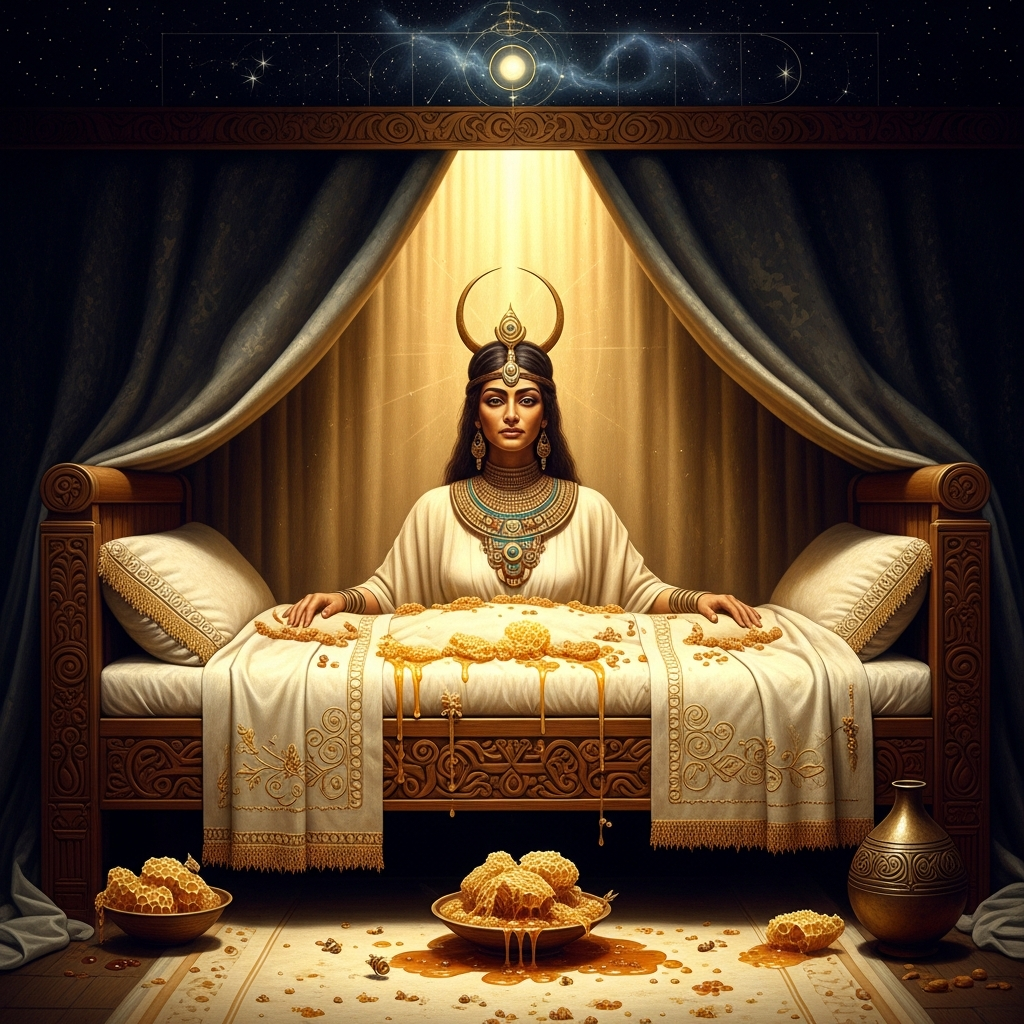
The cedar bed is described in the hymns with the concentration of someone who has been thinking about this room for a long time. Cedar planks, because cedar is the most precious wood and its scent is the scent of the divine mountain. Linen sheets, white and pressed. Honey at the threshold — a jar of it, the honey-comb intact, the sweetness that the tablets use over and over as their central image of what this night means: sweet is the sleep, sweeter the sleep hand-in-hand.
The holy churn. This is the tablets’ phrase for Inanna’s desire — the churn that makes butter from milk, that transforms the raw material of the pastoral world into something sustaining and refined. The churn that produces the good cream of the cattle. Sacred language and agricultural reality holding each other up.
They are in the cedar room. The tablets do not follow them inside. What the hymns record instead is the outside world’s response: the grain in the field begins to grow. The date palms put out new growth. The sheep in the fold multiply. The city of Uruk, lying around the temple in the warm southern night, is already receiving what the sacred marriage is producing — not symbolically, not through some future ceremony, but now, while the cedar oil is still warm on the goddess’s skin.
Theology made literal. The world works this way. The Sumerian priests are certain of it.
Morning.
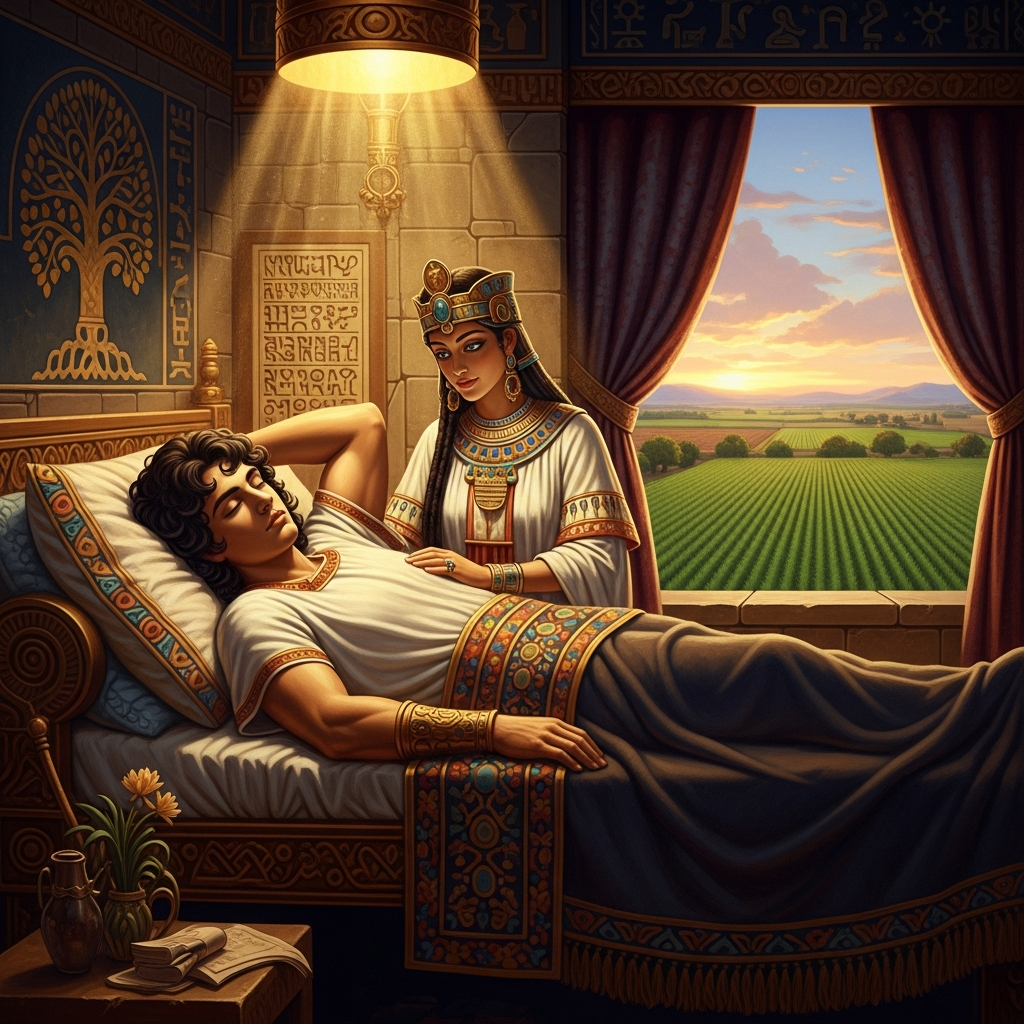
The tablets record the morning with the same unhurried specificity as the preparations. Dumuzi sleeps. Inanna is awake. The city sounds begin — the groan of the river, the first voices at the market, a child, a dog, something being loaded onto a boat. These sounds mean the night was successful. These sounds are the answer to the question the farmers have been asking for a month.
There is a shadow in the morning that the hymns admit at the edge.
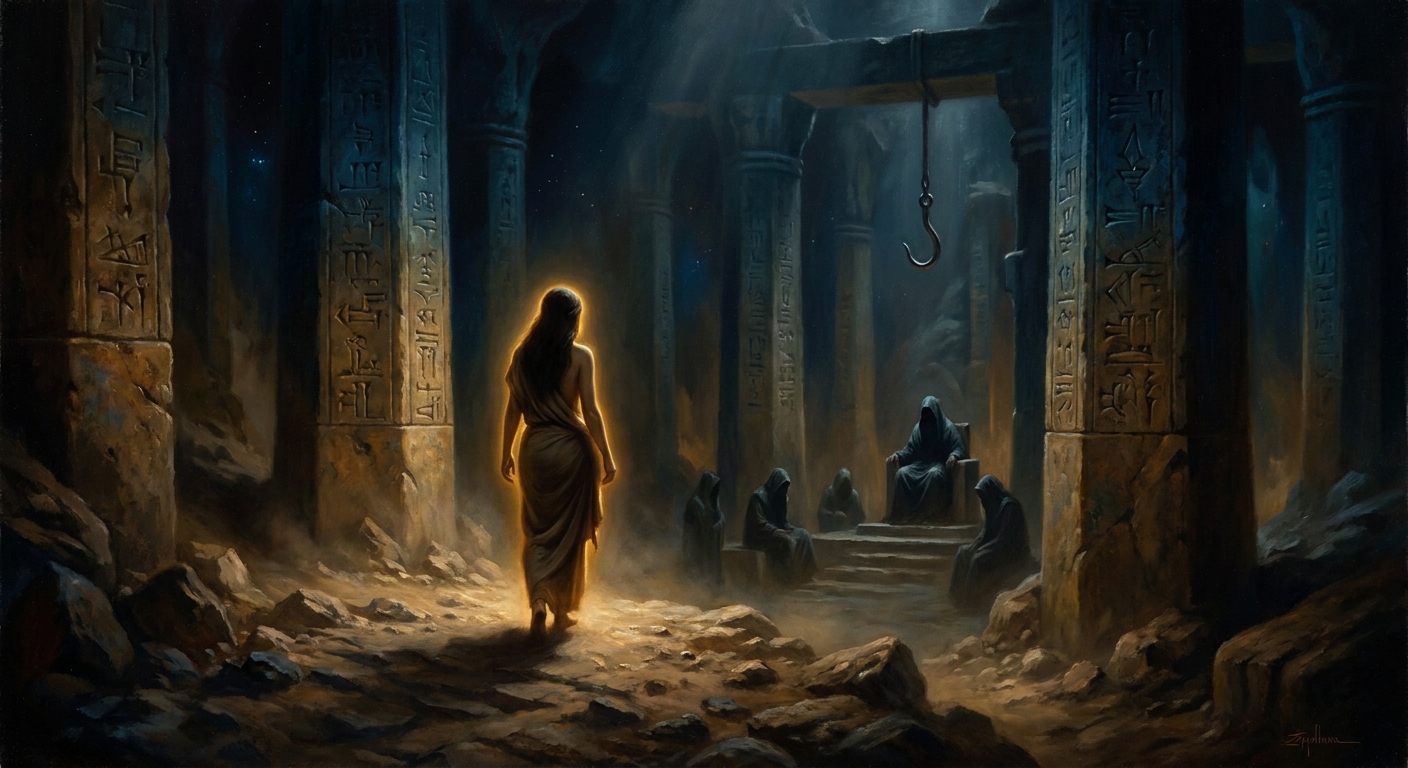
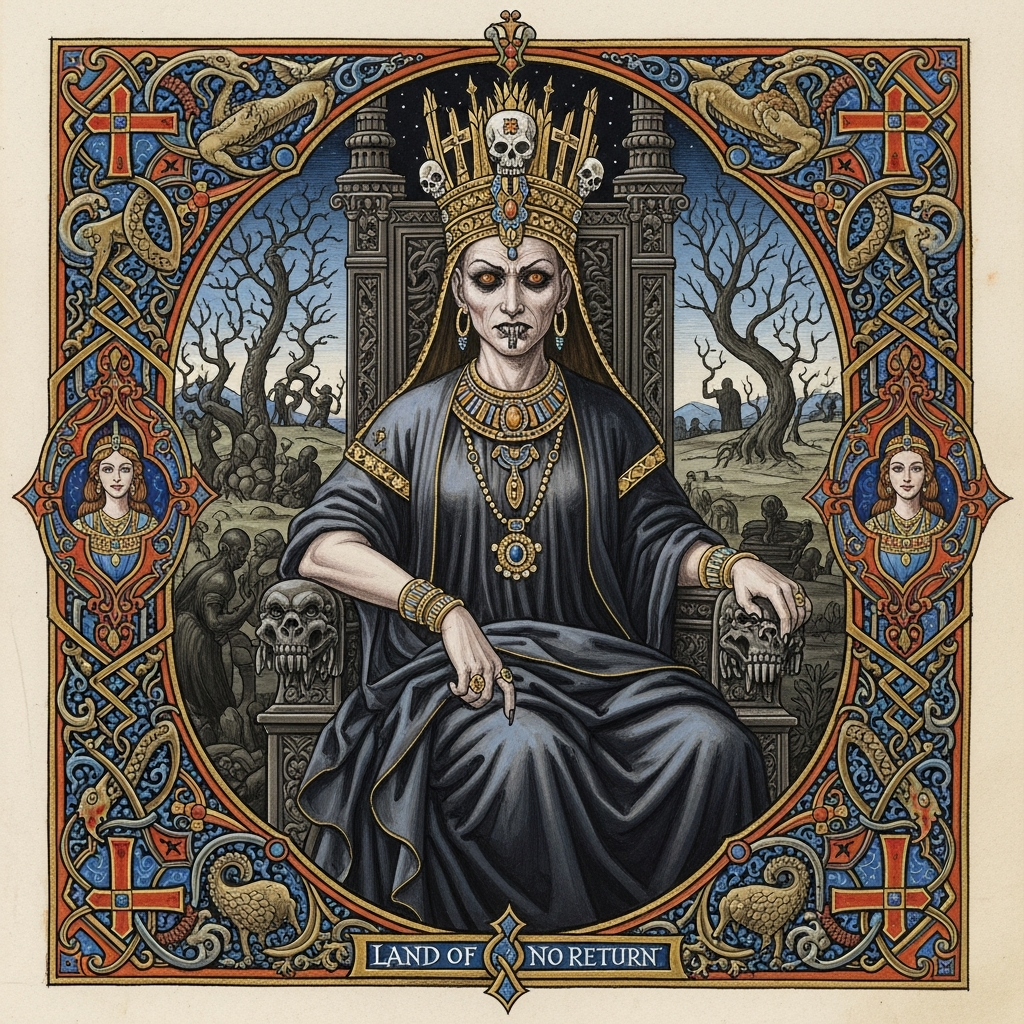
The fate of Inanna is the fate of Dumuzi. The scribes who preserved these love poems also preserved the descent, the underworld, the moment when Inanna — hung for three days on the hook of Ereshkigal’s judgment — must provide a substitute to ascend from the Great Below. The tablets know that Dumuzi will be the one she sends. They know this when they record his face at the courtyard gate. They know it when they write his hands.
The sacred marriage is inseparable from the sacrifice. The shepherd who guarantees the harvest will descend to guarantee the spring. Every year the crops grow because every year Dumuzi returns from the underworld for the half-year of his season, and every year the crops die because every year Dumuzi goes back down.
The theology of abundance is also the theology of loss. The night in the cedar room is real and its joy is real and its end is already written in the same clay.
The Sumerian love poets wrote without apology about sacred desire, and the world they described — where the goddess’s pleasure and the field’s abundance were the same event — was suppressed, buried, and then dug out of the desert after three thousand years. What emerged from the clay was not what the Victorians who excavated it expected. It was explicit and exact and completely confident.
The hieros gamos offends every tradition that divides spirit from body, heaven from earth, the sacred from the carnal. It was meant to. The Sumerian priests built their theology on the insistence that desire is not the enemy of the divine — it is the mechanism. The king marries the goddess and the city lives.
Dumuzi will go down. He always goes down. But first there was the cedar room and the lapis lazuli and the holy churn and the honey at the threshold, and the grain outside was already growing before dawn came, because the Queen of Heaven had prepared herself at the river and chosen her shepherd and the world had responded the way the world always responds to what the divine body asks.
Sweet is the sleep. Sweeter the sleep hand-in-hand.
Scenes
Inanna prepares herself by the sacred river — lapis lazuli at her throat, cedar oil on her skin, the ritual bath before the king arrives
 Generating art…
 The cedar bed of Inanna, draped with linen and honey-comb, where the hieros gamos is consummated and the city's fertility is sealed
 Generating art…
 Dawn after the sacred marriage — Dumuzi sleeps and the fields outside Uruk have already begun to green
 Generating art…
 Echoes Across Traditions
Entities
- Inanna
- Dumuzi
- Ningal
- Ninsun
Sources
- Samuel Noah Kramer, *The Sacred Marriage Rite* (Indiana University Press, 1969)
- Diane Wolkstein and Samuel Noah Kramer, *Inanna: Queen of Heaven and Earth* (Harper & Row, 1983)
- Thorkild Jacobsen, *The Harps that Once...: Sumerian Poetry in Translation* (Yale University Press, 1987)
- Betty De Shong Meador, *Inanna, Lady of Largest Heart* (University of Texas Press, 2009)