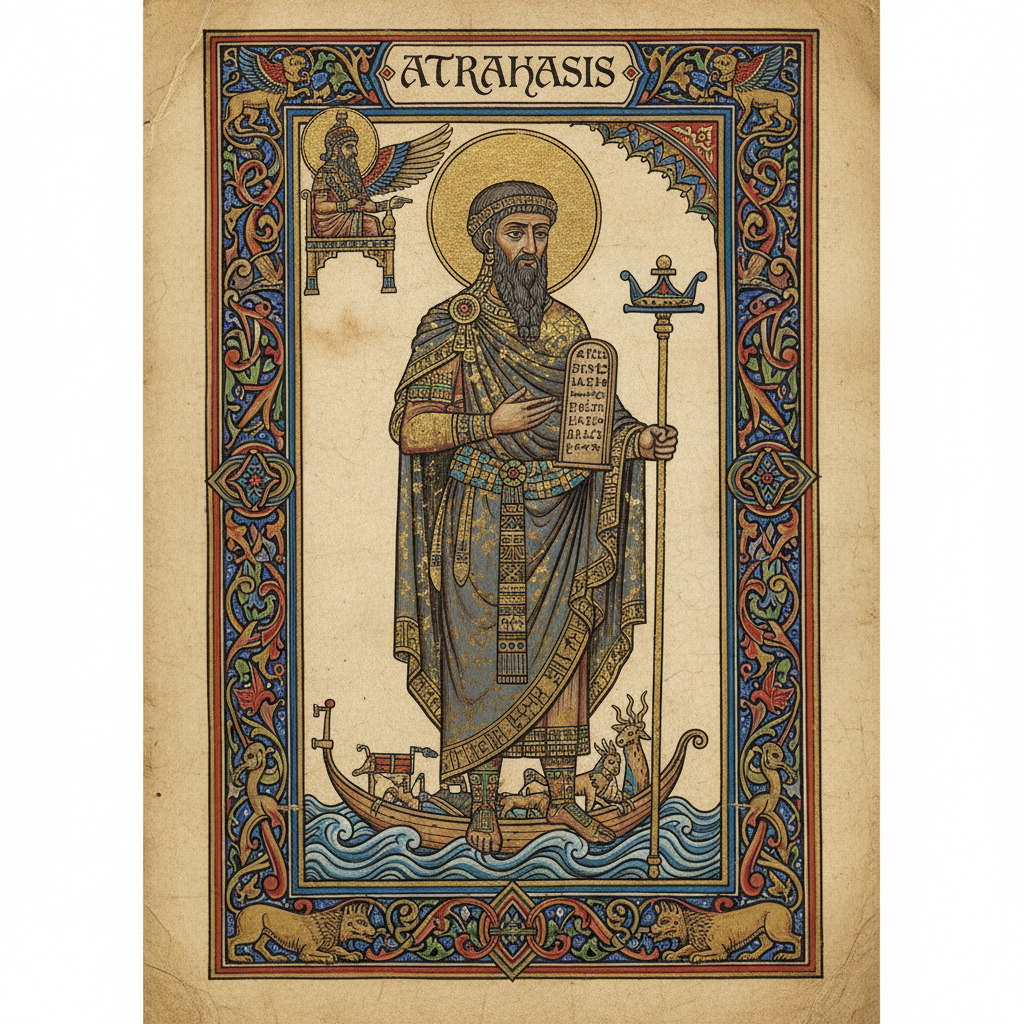
The Noise Below Heaven: The Flood of Atrahasis
c. 1700 BCE · Mesopotamia (modern Iraq)
Contents
The oldest complete flood narrative predates Noah by centuries. The gods create humanity as slave labor, regret the noise, send plague and drought and finally the deluge — and then discover that the world doesn't work without the people they just drowned.
- When
- c. 1700 BCE
- Where
- Mesopotamia (modern Iraq)
The lesser gods go on strike first.
They have been digging the canals for three thousand years — the Igigi, the young gods of heaven, ordered by Enlil to excavate the riverbeds that will carry water from the mountains to the sea. The work is real. It blisters divine hands. It breaks divine backs. For three thousand years they lift the mattock, they haul the basket, they sleep in the dust and wake to dig again, and one morning — seven hundred years before the flood, the clay tablets will say — they look at each other across the ditch and set down their tools.
We have carried the load, their leader says. The work is heavy. The distress is much.
They march to Enlil’s door. They burn their tools outside it. They sit and wait.
Enlil, king of the gods, lord of air and earth, is frightened in a way he has not been frightened before. The Igigi outnumber the Anunnaki, the senior gods, three to one. He cannot force them back into the canal. He calls a council in the dark before dawn — Anu the sky-father, Enki the god of water and cunning — and together they face a problem that is also an opportunity.
Let us make a substitute, Enki says. Something that can dig what the Igigi will not dig. Something we can shape and direct.
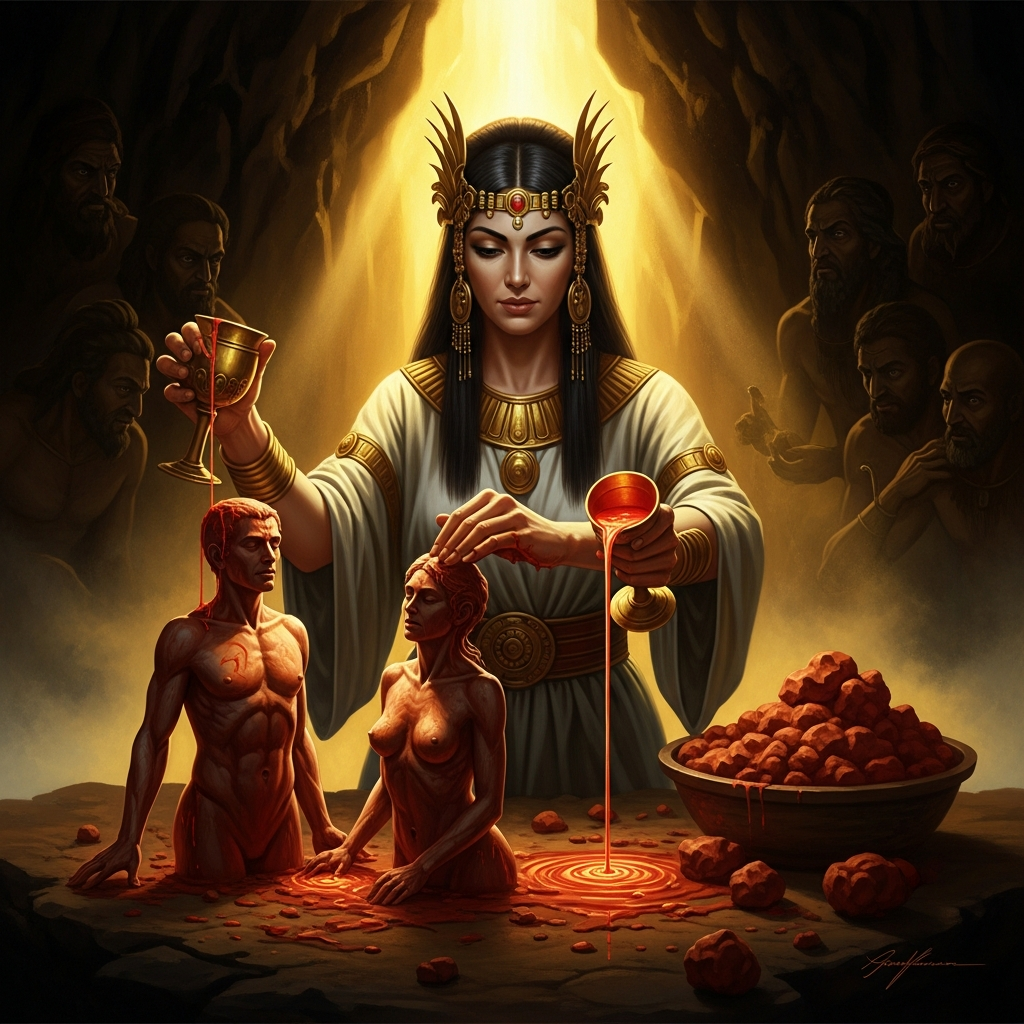
Ninhursag, the birth-goddess, the mother of all living things, is summoned. She is given clay and blood — the blood of a god they have slaughtered for the purpose, one of the Igigi who led the strike, whose intelligence they will press into the clay like a thumbprint — and she begins to work. She pinches and shapes fourteen figures, seven male and seven female, and breathes into them. They open their eyes. They look at the sky.
They pick up the mattocks the Igigi put down.
This is the creation of humanity. Not a gift. Not love. A labor solution.
The arrangement works. The gods rest. The people dig. The canals run. The offerings multiply. Centuries pass. The humans discover what gods had already discovered: that bodies make more bodies. They multiply with an efficiency the gods did not anticipate and cannot stop. The cities fill. The fields spread across the plain. The prayers and the sacrifices and the singing and the grinding of grain and the birth-cries and the funeral laments — all of it rising, day and night, a sound that does not stop.
Enlil cannot sleep.
He lies in his great house and the noise comes through the walls. Not wickedness. Not war. Just the irreducible noise of too many lives being lived too close to heaven. He calls another council. The noise of humanity is too great, he says. I am disturbed in my sleep.
The solution they reach is elegant and terrible: plague. They send Namtar, the demon of disease, down among the people. The cities empty. The fields go unworked. The prayers diminish. The noise drops.
But Enki, who has never entirely forgotten that these people came from his design, speaks to a man he has noticed. A man named Atrahasis — exceedingly wise — who serves as the representative of his city before the gods. Enki cannot speak to a mortal directly. The protocol of heaven forbids it. But the god of water is the god of cunning, and he speaks to the wall of a reed hut, knowing that Atrahasis sits on the other side.
Wall, hear me. Reed hut, attend.
And through the wall, Enki tells the wise man: concentrate all the prayers on Namtar. Offer to him. Flatter him. Make him ashamed to destroy the people who honor him.
Atrahasis organizes the cities. They fast for a month, then sacrifice everything they have saved to Namtar alone. The demon of disease, faced with such concentrated devotion, relents. He lifts the plague.
The noise resumes.
Enlil sends drought next. Then famine. Each time, Enki warns Atrahasis through the wall. Each time, Atrahasis organizes the humans into focused, unified prayer that shames or satisfies the particular disaster. He is not a great warrior. He is a political genius. He understands that the gods can be managed the way a city can be managed — by concentrating attention where pressure is greatest.
The gods sit in their council and Enlil is furious. He knows, though he cannot prove it, that something is protecting these people. The disasters are not taking. He demands a solution that cannot be circumvented.
The flood, he says.
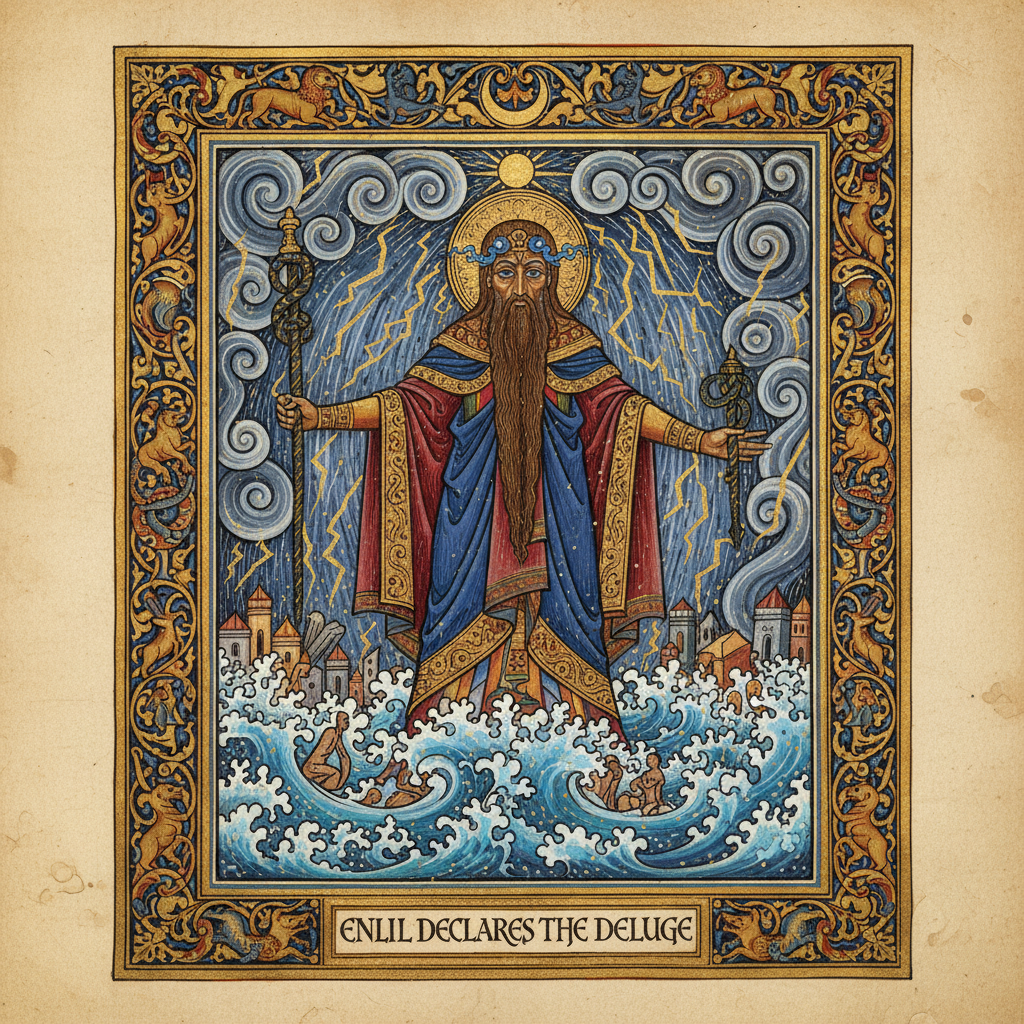
The Anunnaki vote. The decision is unanimous. They swear Enki to secrecy — he must not warn the mortals. A seven-day flood, enough to drown everything. When it is over, no more noise. No more sleepless nights.
Enki swears the oath. Then he walks to the wall of a reed hut.
Wall, hear me. Reed hut, attend. The gods have decided. I cannot tell you what they have decided. But: tear down your house. Build a boat. Make it roofed above and below. Let no light enter. Bring aboard all living things. Seal it with pitch.
Atrahasis understands the message that is not a message. He begins to build.
The flood comes on the appointed day.
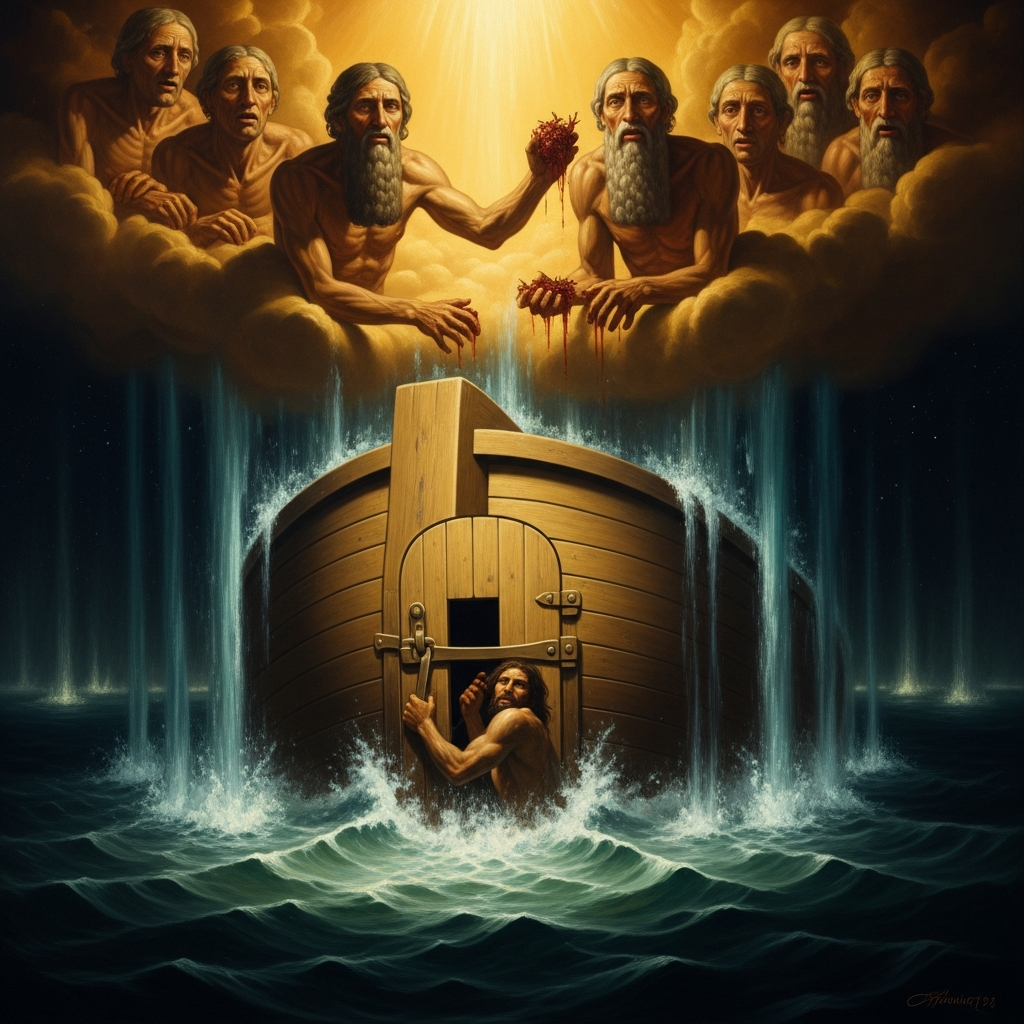
The descriptions in the clay tablets break here — not out of mercy, but because the tablets themselves are damaged. What survives: the storm-god Adad releases the rain. The levees that hold back the rivers are cut. The whole horizon turns white with water. Atrahasis is inside the boat, the hatch sealed over him. He cannot see what is happening. He can hear it.
The texts record what the gods hear: nothing. Or rather — the silence, for the first time in memory, of the earth below. The noise that kept Enlil awake is gone. He has what he asked for. It should feel like victory.
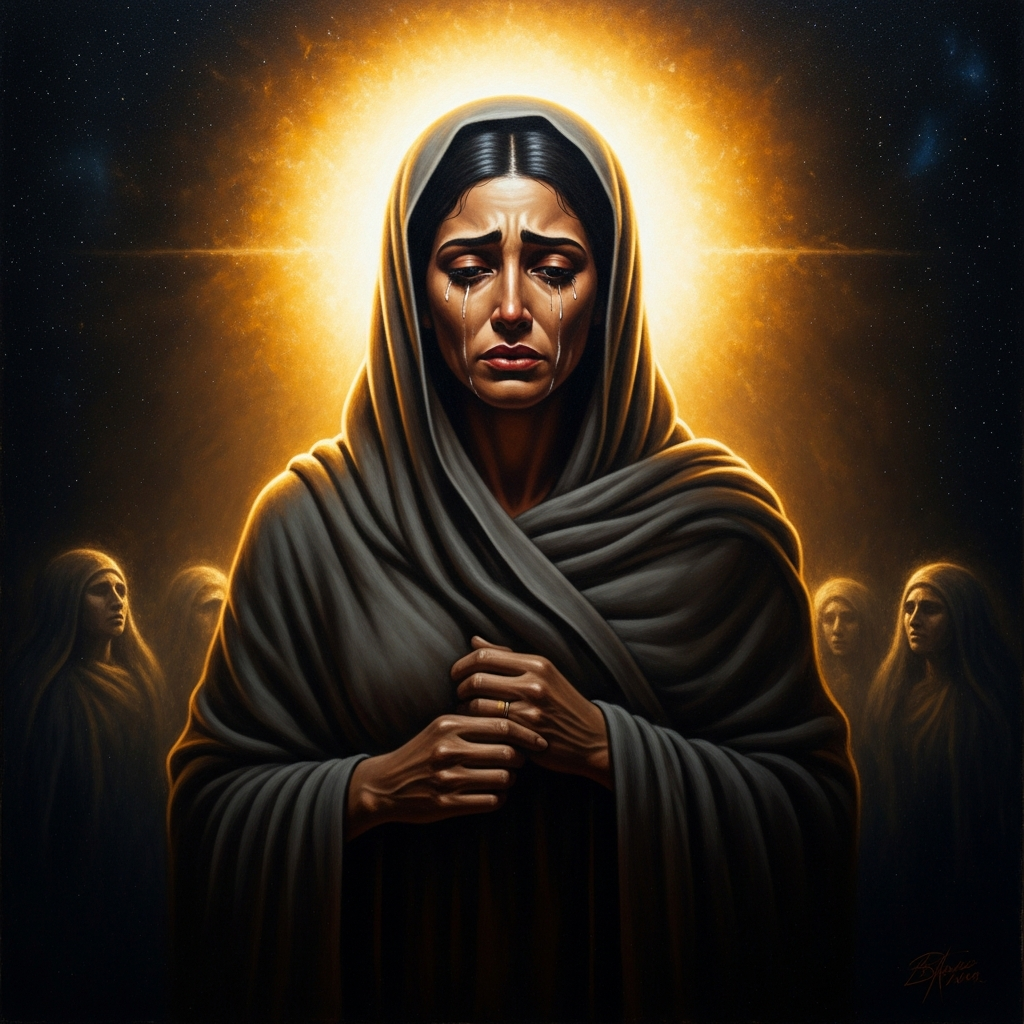
Ninhursag is weeping.
She, who shaped those fourteen bodies from clay and blood, who breathed into them. She wails like a woman in labor, the tablets say, when the going is difficult. Her children are drowning. The children she made to solve a problem that was never really theirs. She cries out in the assembly of gods: I cried out in the assembly of the gods — I, who gave birth, my people have become like flies. I looked at them and wept.
For seven days and seven nights the flood does not stop.
On the eighth day, it stops.
The water recedes. Atrahasis opens the hatch. The sky is white and clean and absolutely empty in every direction. He makes an offering on the mountaintop where his boat has come to rest — meat roasting, incense burning, the smell rising into the new air.
In heaven, the gods crowd around the smell like flies.
They are starving. There have been no offerings for seven days because there have been no people to make them. They press forward, desperate for the smoke that sustains them, and they understand only now — only after — what they have destroyed. They are not self-sufficient. They never were. The labor problem that drove them to create humanity in the first place runs deeper than the canals: the gods need the offerings. They need the prayers. They need the noise.
Enlil arrives and finds Atrahasis alive and the gods feasting on his smoke. He is enraged. What god allowed this? Who warned a mortal? He knows the answer before he finishes the question.
Enki does not apologize. He offers instead a new arrangement: not universal destruction but managed mortality. Barrenness. Infant mortality. The pashittu demon to take some children early. A class of women consecrated to the gods who will bear no children. Death built into the system, so the noise never again becomes unbearable.
Enlil accepts this. The surviving humans accept it, because they have no choice. And in the new world, humanity multiplies again, but under different terms — life is given, and life is taken, and the taking is now structured into the gift.
The Atrahasis Epic is 3,700 years old and it has not stopped being true about something. Not about floods. About the fundamental structure of being made for a purpose you did not choose, by powers that find you inconvenient, by a mother who wept when they destroyed you and a trickster who found a loophole in the oath they swore to stop him.
Atrahasis is wise not because he fights the gods but because he learns to manage them. He understands that the disasters are not random — they are divine insomnia, redirected. He gives each catastrophe what it wants. He concentrates the prayers like a lens concentrates light. He survives not by being righteous but by being perceptive.
The flood is not a punishment. It is the limit of a god who needed sleep. And Enki, who could not break his oath, found a wall to speak through anyway — because the law that said he couldn’t warn a mortal said nothing about warning a reed hut.
Every loophole in heaven was found by someone who loved a human more than they feared Enlil.
Scenes
Ninhursag molds the first humans from clay and divine blood — labor-substitutes for the gods who refused to dig
 Generating art…
 The flood descends on the seventh day
 Generating art…
 Ninhursag, the birth-goddess, weeps over what Enlil has done to the children she shaped
 Generating art…
 Echoes Across Traditions
Entities


Sources
- Stephanie Dalley (trans.), *Myths from Mesopotamia* (Oxford University Press, 1989)
- W.G. Lambert and A.R. Millard, *Atra-Hasis: The Babylonian Story of the Flood* (Oxford, 1969)
- Thorkild Jacobsen, *The Treasures of Darkness* (Yale University Press, 1976)
- Andrew George, *The Epic of Gilgamesh* (Penguin Classics, 2003)