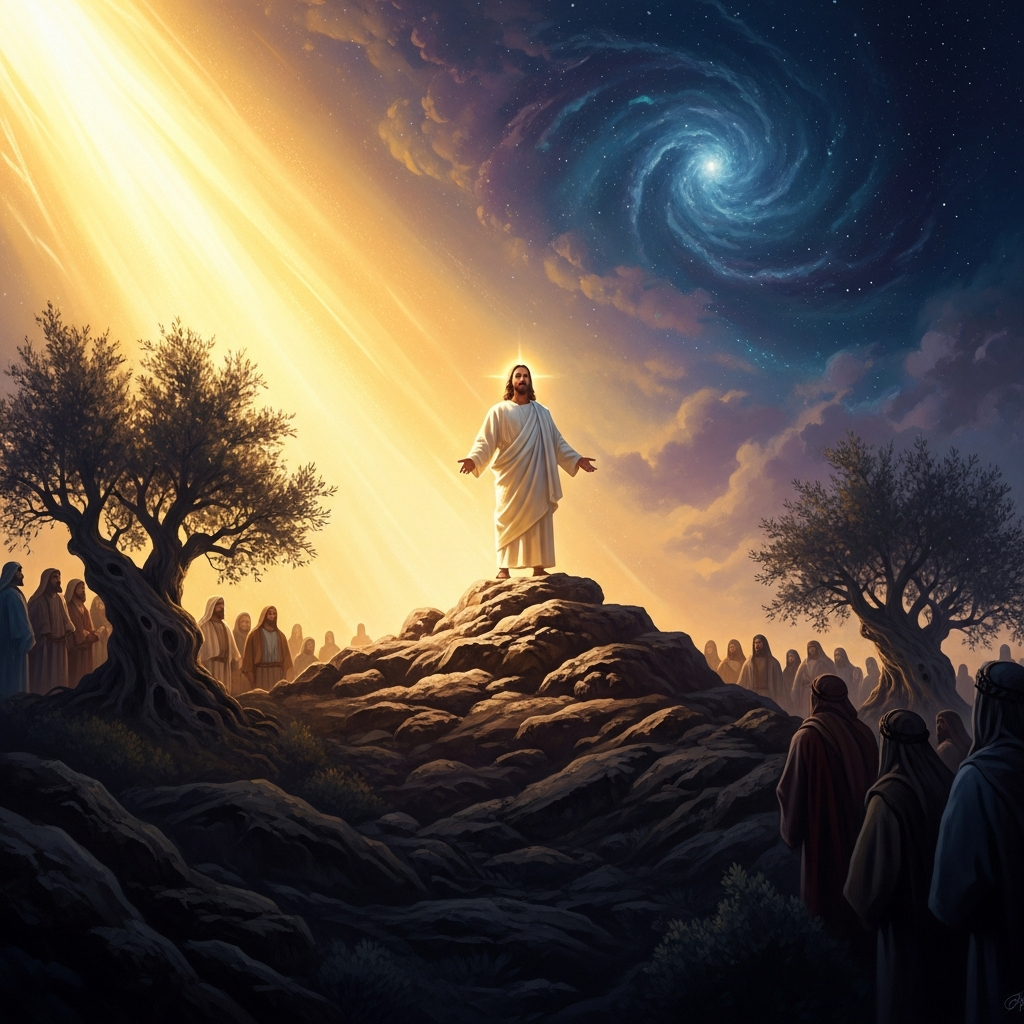
Contents
April 18, 1521: Martin Luther stands before the Holy Roman Emperor Charles V and a hall full of princes, bishops, and papal legates. The books are on the table. The demand is simple: recant. Luther asks for a day to think. He returns the next evening and gives the speech that breaks the medieval church in half.
- When
- April 18, 1521
- Where
- Worms, Holy Roman Empire
The books are already on the table when he enters.
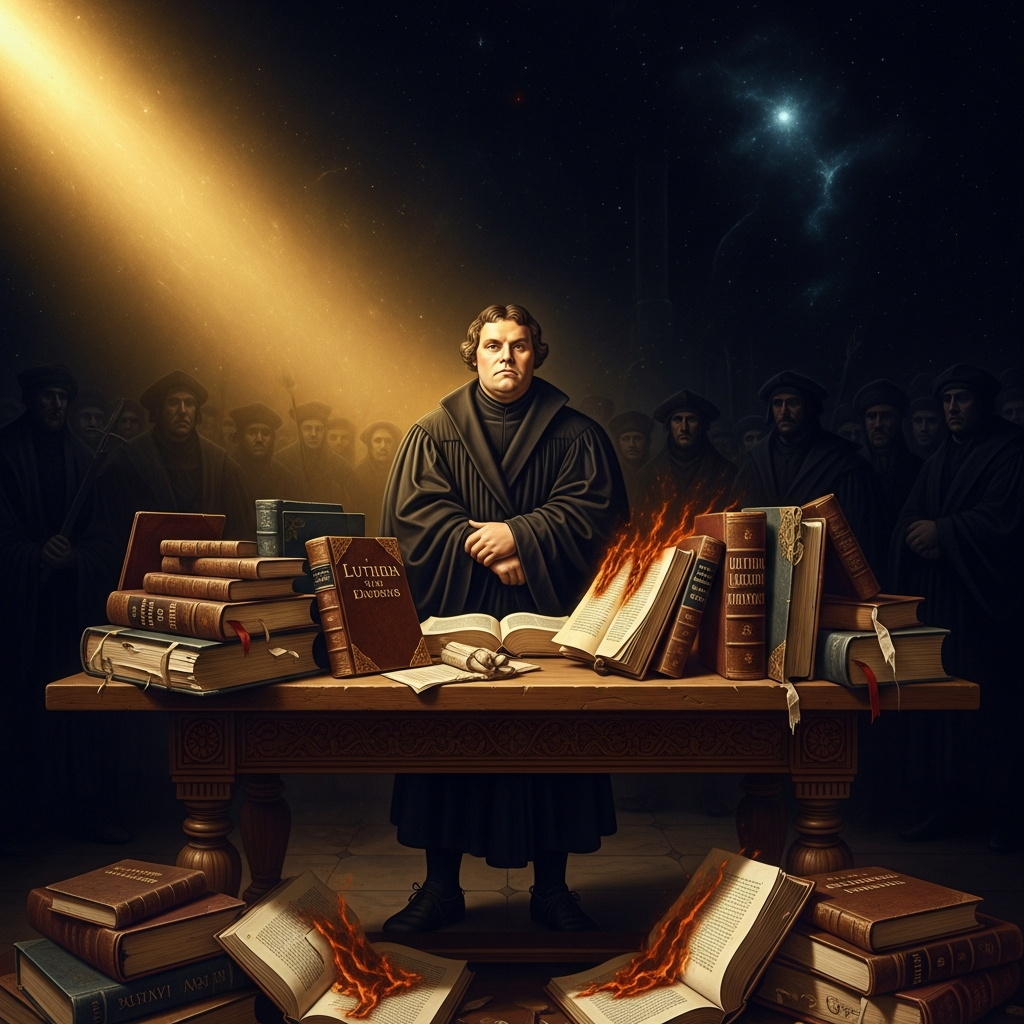
This is deliberate. Johann Eck — theologian, papal legate, the man who has been planning this confrontation for two years — has arranged them in three stacks corresponding to the taxonomy of Luther’s offense. The first stack contains the devotional writings, the meditations on the Psalms and the Lord’s Prayer, works so pious that even Luther’s enemies have admitted they cannot attack them directly. The second contains the polemics against the papacy — The Babylonian Captivity of the Church, The Address to the Christian Nobility of the German Nation — books that have spread across Germany in tens of thousands of copies and made Luther famous. The third contains the attacks on specific individuals, the books that Luther himself has acknowledged are written with too much heat.
The three stacks are a trap. Eck is going to ask Luther whether he wrote them. Luther will say yes. Then Eck is going to ask whether he recants them. If Luther says yes to everything, the Reformation ends here. If he says no to everything, he has confirmed his heresy and Charles V has the legal grounds to do what his grandfather Ferdinand did to Jan Hus a century ago: burn the man.
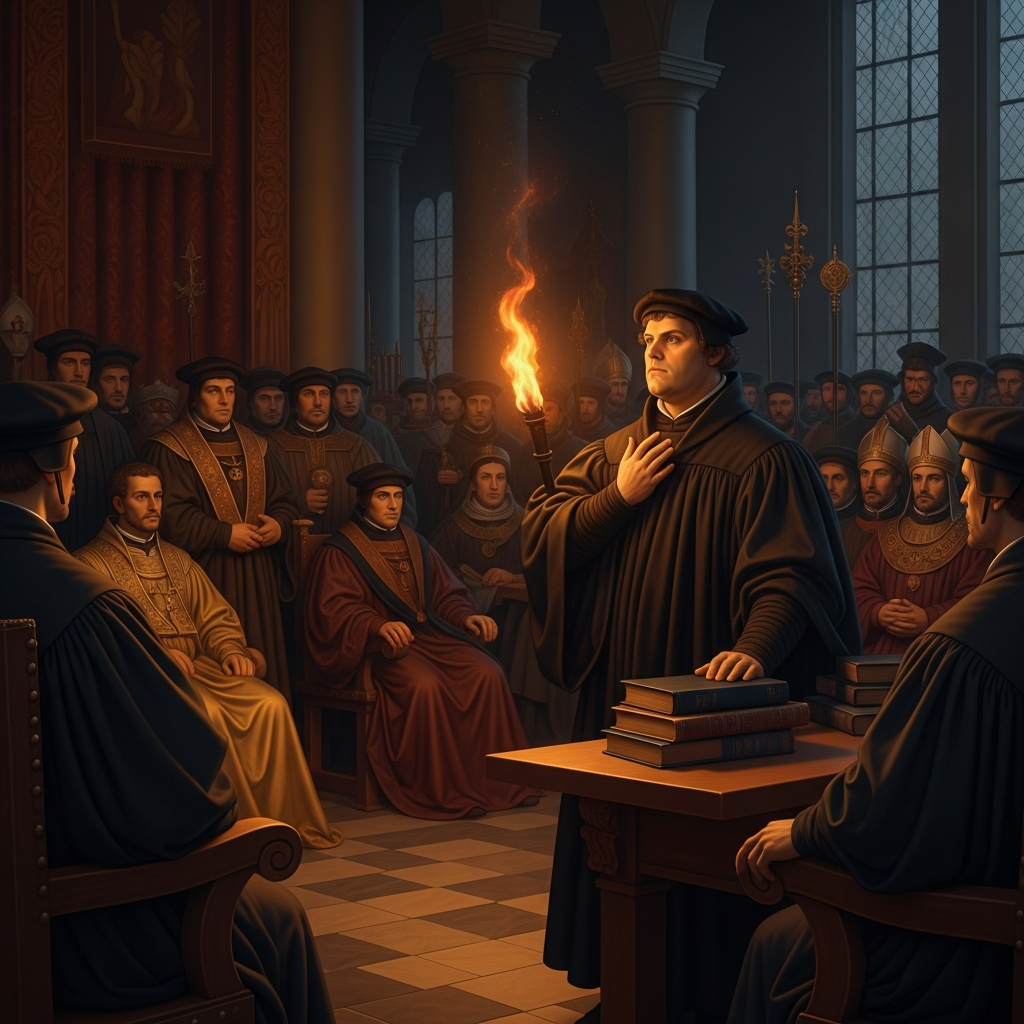
The hall is full of princes and bishops and dukes and papal representatives who have traveled from across the Holy Roman Empire for this moment. It is April 17, 1521, late afternoon, torches along the walls, the smell of a German spring coming in through the high windows. Luther is thirty-seven years old. He is an Augustinian friar from Saxony whose father was a copper miner. He has never been in a room like this in his life.
Eck asks the question.
Luther’s voice is barely audible.
He confirms he wrote the books. He asks for time — one day, one night — to consider his answer carefully, because the question touches the salvation of souls and the word of God, and he does not want to affirm more than the truth or retract more than the truth requires.
This is not the behavior of a revolutionary. It is the behavior of a man who is genuinely frightened and genuinely uncertain whether he is right. The sources that are hostile to Luther — the papal party’s accounts, Charles V’s own later recollections — confirm the impression of a man who was small in that room, uncertain, speaking too quietly to be heard in the back rows. His supporters in the hall lean forward. Eck grants the day.
Luther spends the night doing what he always does under pressure: he prays, writes, revises, and argues with himself in the margins of his own thinking. He is not, at this point, certain that he is right about everything. He is certain about one thing only: that he cannot affirm a proposition he does not believe, and that his conscience — which has been trained on scripture, the church fathers, and reason — will not let him call things true that it judges to be false.
He is also, because he is Luther, afraid. The safe-conduct that Charles V has granted him is the same kind of safe-conduct the Council of Constance granted to Jan Hus in 1415, and Hus was burned anyway. Frederick the Wise, his protector, has arranged for horses to be ready outside the city walls. The night is long.
He returns to the hall on April 18.
The room is more crowded than the day before — word has gotten out that something decisive is about to happen, and people have come from the city and from the surrounding inns to pack the back of the hall and the galleries above. It is hot. Torches again. Eck again, impatient, asking the same question in the same words: does he recant?
This time Luther speaks for nearly twenty minutes.
He begins by distinguishing between the three categories of books, arguing that they require three different answers. The devotional writings he will not recant, because even his enemies have found nothing heretical in them. The polemics against the papacy he will not recant, because they are grounded in scripture and reason, and he would be feeding tyranny if he recanted them without cause. The personal attacks he acknowledges were written with excessive heat, but he cannot recant the substance of them, only moderate the tone.
Then comes the passage that will be quoted for five centuries. Eck demands a simple answer — yes or no. Luther gives it:
Unless I am convinced by the testimony of the scriptures or by clear reason — for I do not trust the pope or councils alone, since it is well known that they have often erred and contradicted themselves — I am bound by the scriptures I have quoted and my conscience is captive to the word of God. I cannot and will not retract anything, since it is neither safe nor right to go against conscience.
He adds, in German, a few words that the crowd can hear above Eck’s response. The words vary in the sources. The most famous version — Here I stand; I cannot do otherwise, God help me, Amen — is almost certainly an addition by the printers who published the speech. Luther probably did not say it. What he said was sufficient.
Charles V is twenty-one years old.
He is the most powerful man in the Western world — Holy Roman Emperor, King of Spain, ruler of the Low Countries, heir to a domain larger than any since Charlemagne’s — and he is sitting in the front row watching a monk from Saxony tell him that councils can err. He understands exactly what is at stake. He has grown up in the tradition that the unity of Christendom and the unity of political order are the same thing, that the church is the structure that holds Europe together, and that allowing one man to set his private conscience against that structure is the beginning of something that will not stop at one man.
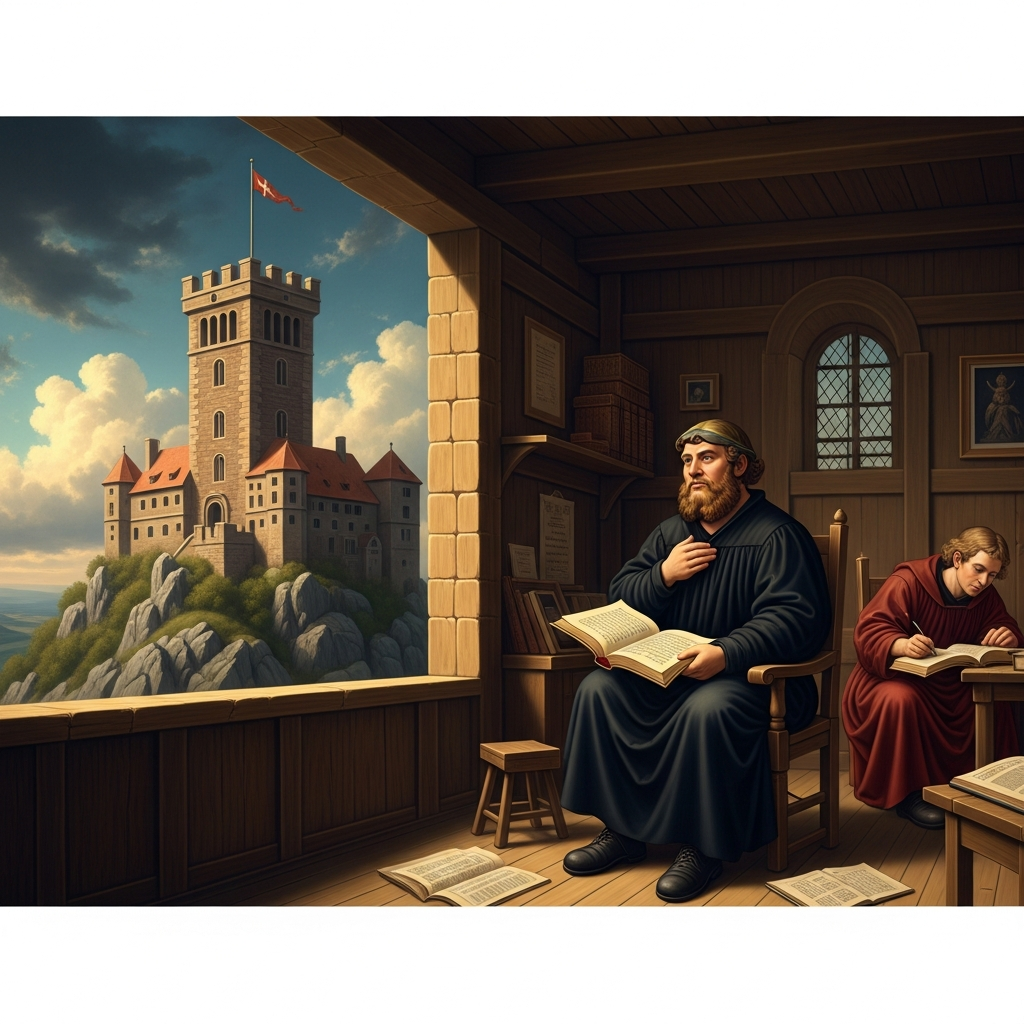
He is correct. He is also helpless. Luther has been granted safe-conduct, and Charles is enough of a prince to honor it even when he would prefer not to. He lets Luther leave Worms. He then issues the Edict of Worms declaring Luther an outlaw — any person in the empire may kill him without legal penalty — but Frederick the Wise has already arranged the abduction that will save Luther’s life. The men who intercept Luther’s wagon on the road to Wittenberg are Frederick’s men. They take him to the Wartburg Castle, where he grows a beard, calls himself Junker Georg, and translates the New Testament into German in eleven weeks.
The edict makes Luther an outlaw. The translation makes him permanent.
The words “Here I stand” travel faster than any edict.
Within weeks, printed accounts of the speech are circulating across Germany, then across Europe. The printers — who have been the structural enablers of everything Luther has done since 1517, when the Ninety-Five Theses spread from Wittenberg to every German city in two weeks — do their work again. The speech is translated into Latin for the international scholarly audience. The sentence, real or improved, becomes the founding formula of a new kind of religious authority: the authority of a formed conscience standing against institutional demand.
What Luther does at Worms is not new in its content — theologians had been arguing about papal authority, indulgences, and the nature of grace for a century before him. What is new is the survival. Jan Hus said similar things and was burned. John Wycliffe’s bones were exhumed and burned. Luther walks out of Worms alive, reaches the Wartburg, and keeps writing. The combination of the printing press, Frederick the Wise’s political protection, and Charles V’s need to keep German princes on his side against the Ottomans creates a space that Hus never had.
In that space, a tradition grows. Within a generation there are Lutheran state churches from Saxony to Sweden. Within a century there are Reformed churches, Anglican churches, Anabaptist communities, and eventually the radical sects who will carry the logic of conscience-against-institution all the way to the edge of recognizable Christianity.
Luther did not intend any of this. He intended to reform the church he was in, not to found the church that replaced it. He is not, at Worms, a modern man asserting individual autonomy against collective authority. He is a medieval man asserting that his conscience is bound to something more authoritative than the institution — bound to scripture, to God, to the weight of what he has come to believe is true.
The modern uses of his speech came later, made by people who needed a founding moment.
He gave them one.
The phrase “Here I stand” probably comes from the printers who prepared the pamphlet versions of the speech for sale in the weeks after Worms. Luther did not include it in his own account of the proceedings. Whether he said it in German and it was missed by the Latin transcribers, or whether a printer added it because it was the right sentence for the moment, is a question the sources cannot resolve.
What the sources agree on is the gesture: Luther pressed his hand to his chest and spoke in a voice that was suddenly louder than it had been. The people in the back of the hall, who had not heard the first three sentences, heard those.
Scenes
Luther stands before Emperor Charles V in the great hall at Worms, torchlight on his face, one hand pressed to his chest, the stack of his books on the table before him
 Generating art…
 The table of condemned books at Worms — Luther's three sets of writings arranged in a deliberate taxonomy: the pious works even his enemies praised, the polemics against the papacy, the attacks on specific individuals
 Generating art…
 The Wartburg Castle on its ridge above Eisenach — the tower room where Luther sits disguised as Junker Georg, growing a beard, translating the New Testament into German, and describing the Devil as something he can throw his inkwell at
 Generating art…
 Echoes Across Traditions
Entities
- Martin Luther
- Charles V
- Johann Eck
- Frederick the Wise
Sources
- Heiko Oberman, *Luther: Man Between God and the Devil* (Yale University Press, 1989)
- Diarmaid MacCulloch, *The Reformation: A History* (Viking, 2003)
- Lyndal Roper, *Martin Luther: Renegade and Prophet* (Random House, 2016)
- Richard Marius, *Martin Luther: The Christian Between God and Death* (Harvard University Press, 1999)
- Roland Bainton, *Here I Stand: A Life of Martin Luther* (Abingdon-Cokesbury, 1950)