I've Been to the Mountaintop
April 3, 1968 · the night before the assassination · Mason Temple, Memphis, Tennessee — the Church of God in Christ headquarters
Contents
On a stormy April night in Memphis, Martin Luther King Jr. preaches the funeral sermon for himself, climbs Pisgah in the cadence of a Black Baptist pulpit, and looks across into a country he will not enter.
- When
- April 3, 1968 · the night before the assassination
- Where
- Mason Temple, Memphis, Tennessee — the Church of God in Christ headquarters
The storm starts before he arrives.
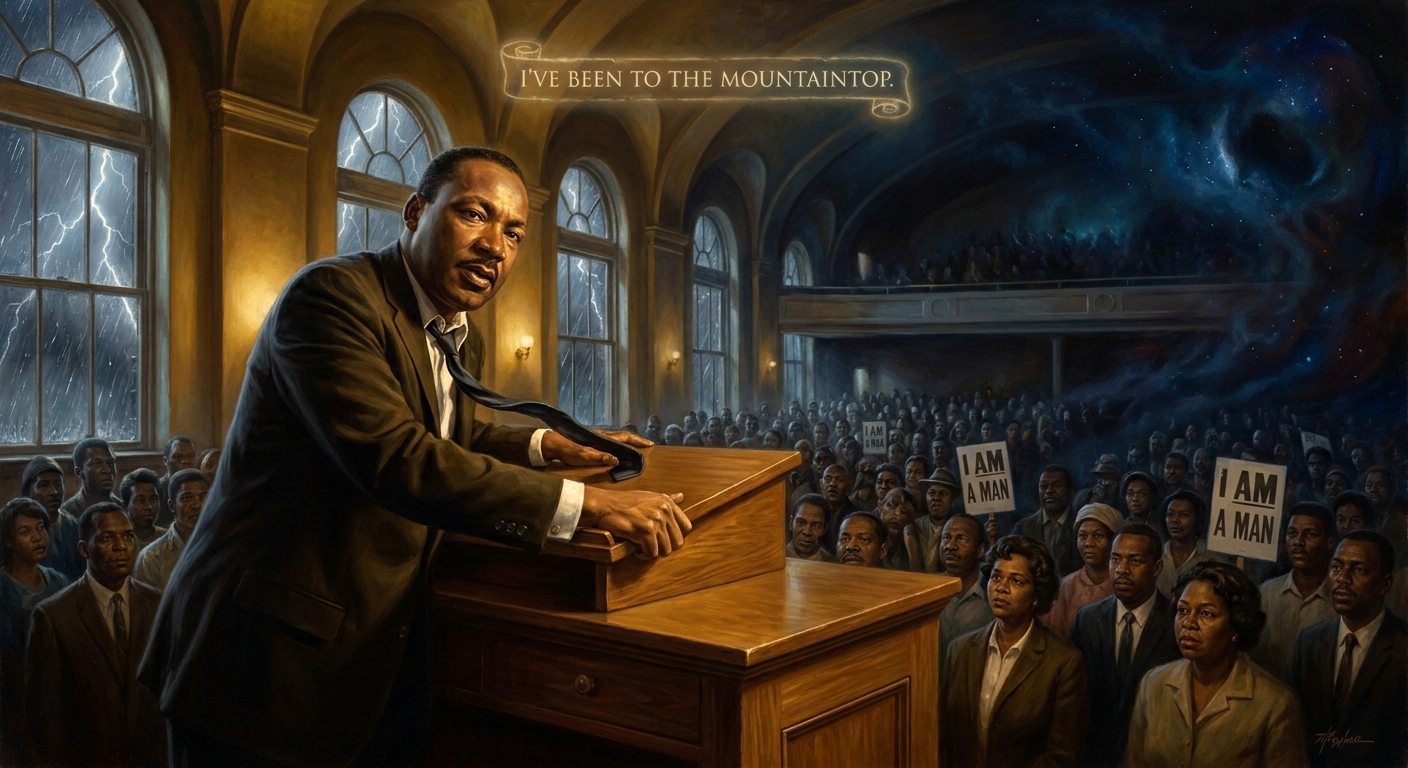
Memphis is a thunderhead. Lightning forks down over the Mississippi and the windows of Mason Temple shake like loose teeth. King has a sore throat. He has tried to hand the sermon off to Ralph Abernathy. Abernathy gets to the church, sees the crowd waiting, calls the Lorraine Motel and tells him: Martin, they want you. King comes in his suit, no notes, exhausted.
The sanitation workers are in the front rows. They have been on strike since February twelfth, since the garbage truck crushed Echol Cole and Robert Walker to death. They wear placards that read I AM A MAN. They are why he is in Memphis. They are why he will not leave Memphis alive.
He preaches without paper.
He walks the congregation backward through history — Egypt, Greece, the Roman Empire, the Reformation, the Emancipation Proclamation — asking the Almighty in which age he would choose to live. Strangely enough, he says, I would turn to the Almighty and say, “If you allow me to live just a few years in the second half of the twentieth century, I will be happy.” The crowd answers him. The thunder answers him. He tells them the world is in trouble and the trouble is the only honest place to be.
He has buried friends. He has been stabbed in Harlem by a woman with a letter opener. He has been arrested twenty-nine times.
Then he names the death.
We’ve got some difficult days ahead, he says. But it really doesn’t matter with me now. The cadence shifts. The room knows the cadence. Every Black Baptist congregation in America knows what is happening to the verbs.
Because I’ve been to the mountaintop.
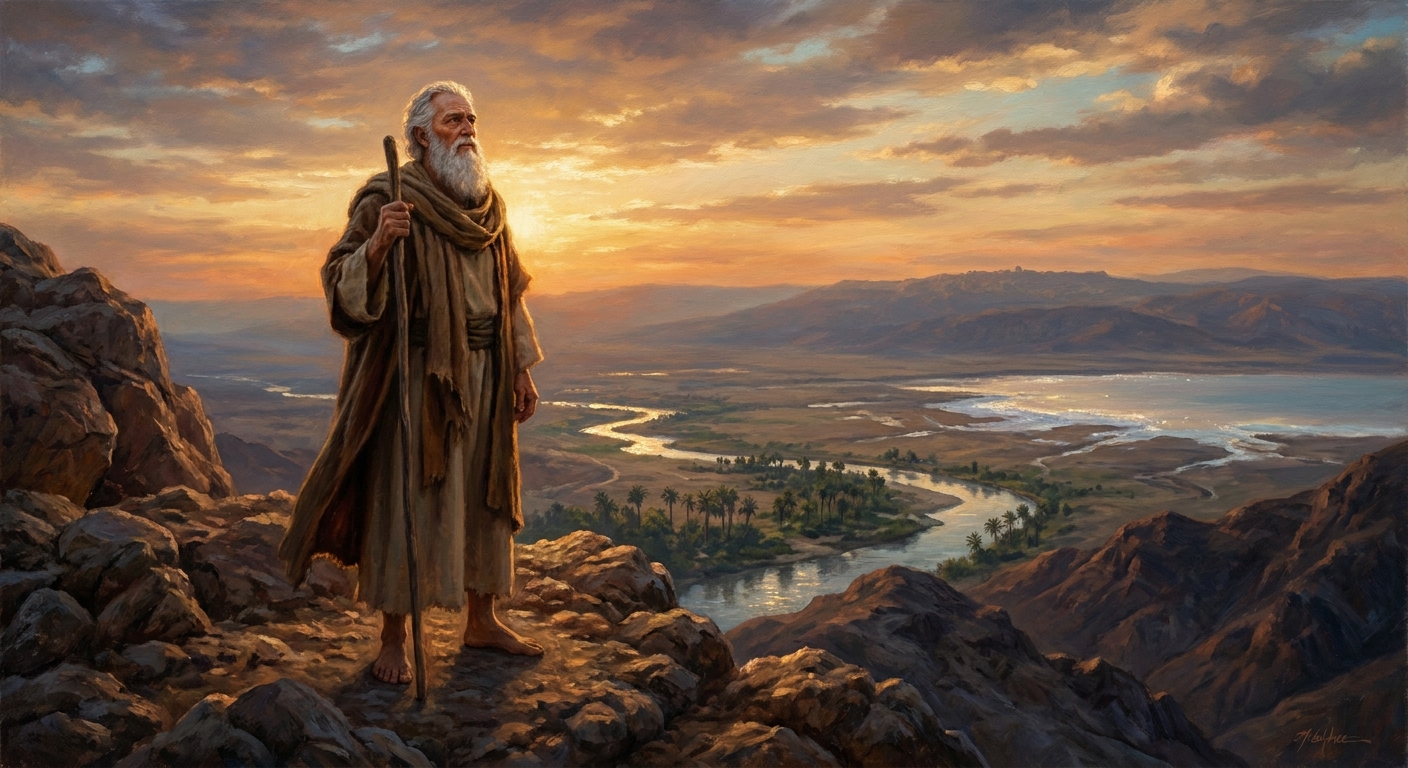
The pulpit is Mount Pisgah. The microphone is the rod. Memphis is the wilderness, and across the Jordan is a country King will name and not enter. He has read the chapter aloud to his children. He has preached it from a hundred pulpits. Tonight he is inside it.
Like anybody, I would like to live a long life. Longevity has its place.
He pauses. The storm pauses with him.
But I’m not concerned about that now. I just want to do God’s will. And He’s allowed me to go up to the mountain. And I’ve looked over. And I’ve seen the promised land. I may not get there with you. But I want you to know tonight, that we, as a people, will get to the promised land.
The room comes apart. Abernathy is weeping. Mahalia Jackson is not in Memphis, but the line travels to her by morning, the way prophecy travels in churches — by phone, by friend, by the dark beneath the door.
So I’m happy tonight, he says. I’m not worried about anything. I’m not fearing any man.
He turns from the microphone and stumbles. Abernathy catches him. The applause does not so much rise as collapse around him — the crowd is on its feet but it is not cheering, it is making the noise people make at a wake before they know it is a wake.
He goes back to the Lorraine. Room 306. Plays cards. Argues about dinner. Sleeps badly.
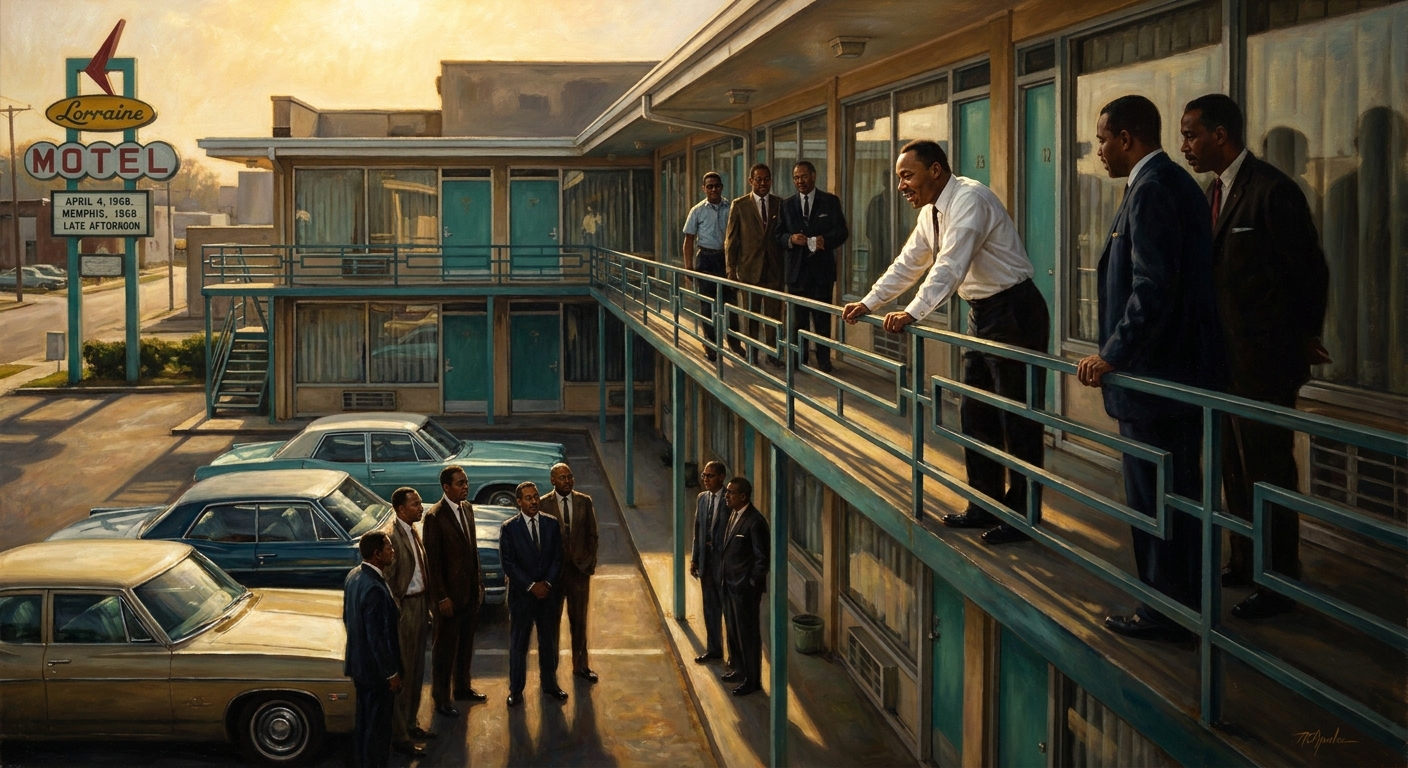
The next evening at six-oh-one, he steps onto the balcony to call down to the courtyard — the trumpet player, the menu, play “Take My Hand, Precious Lord” — and a Remington model 760 fires once from the boarding house bathroom across the street.
The bullet enters his right cheek. Severs his spinal cord. He is thirty-nine years old. He has been to the mountaintop, and he told them, and the tape exists, and the country has not yet crossed.
The Mosaic frame was not metaphor for King. It was the operative grammar of African-American Christianity reaching back through the spirituals — Go Down, Moses; Wade in the Water; Steal Away — through Frederick Douglass and Sojourner Truth, through every preacher who ever read Deuteronomy 34 to a congregation that knew exactly which Pharaoh was meant.
A prophet who sees the promised land from across the river is not a tragedy. He is the type. The job description includes the river.
The promised land in his sentence is not Canaan. It is a republic that has not arrived. The night he named it was the last full night of his life.
Scenes
King at the Mason Temple pulpit, April 3, 1968 — the storm hammering the windows behind him
Generating art… The balcony of the Lorraine Motel, room 306 — where the next evening will end
 Generating art…
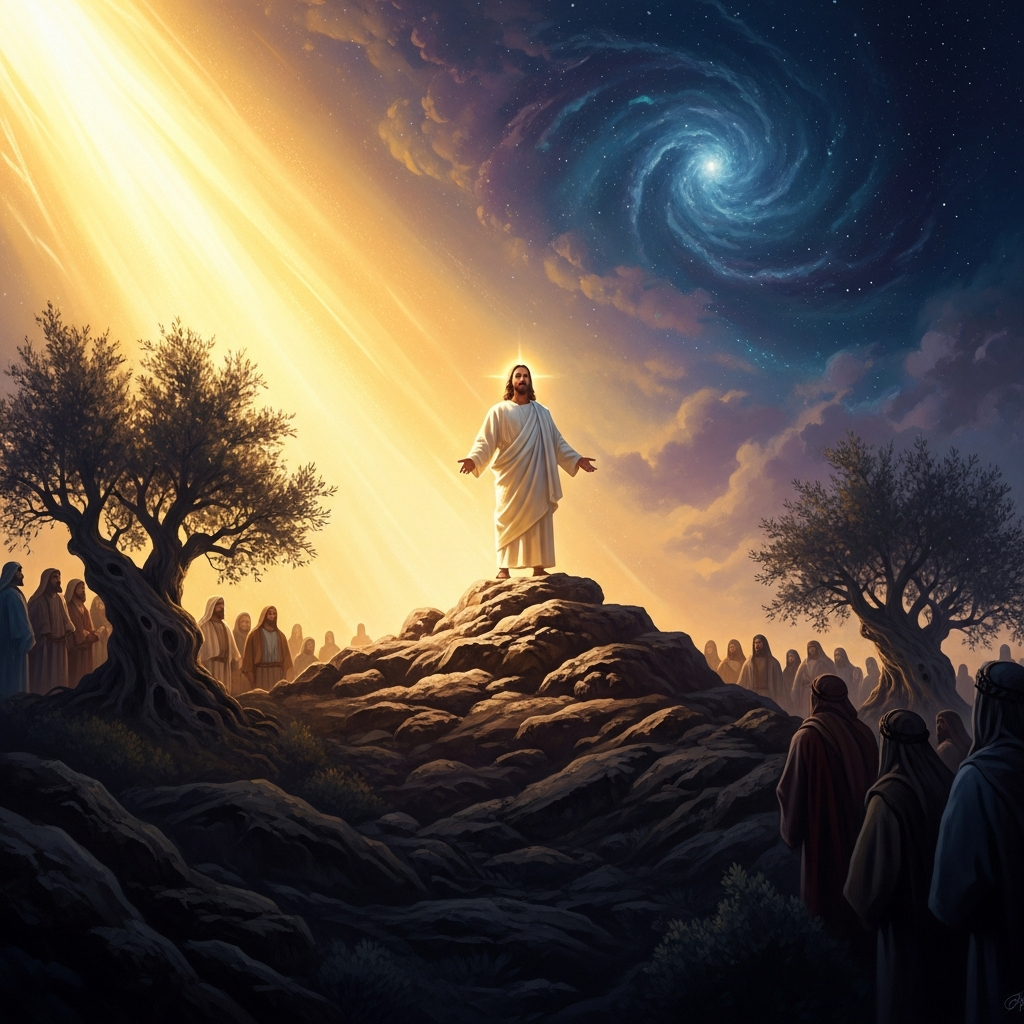
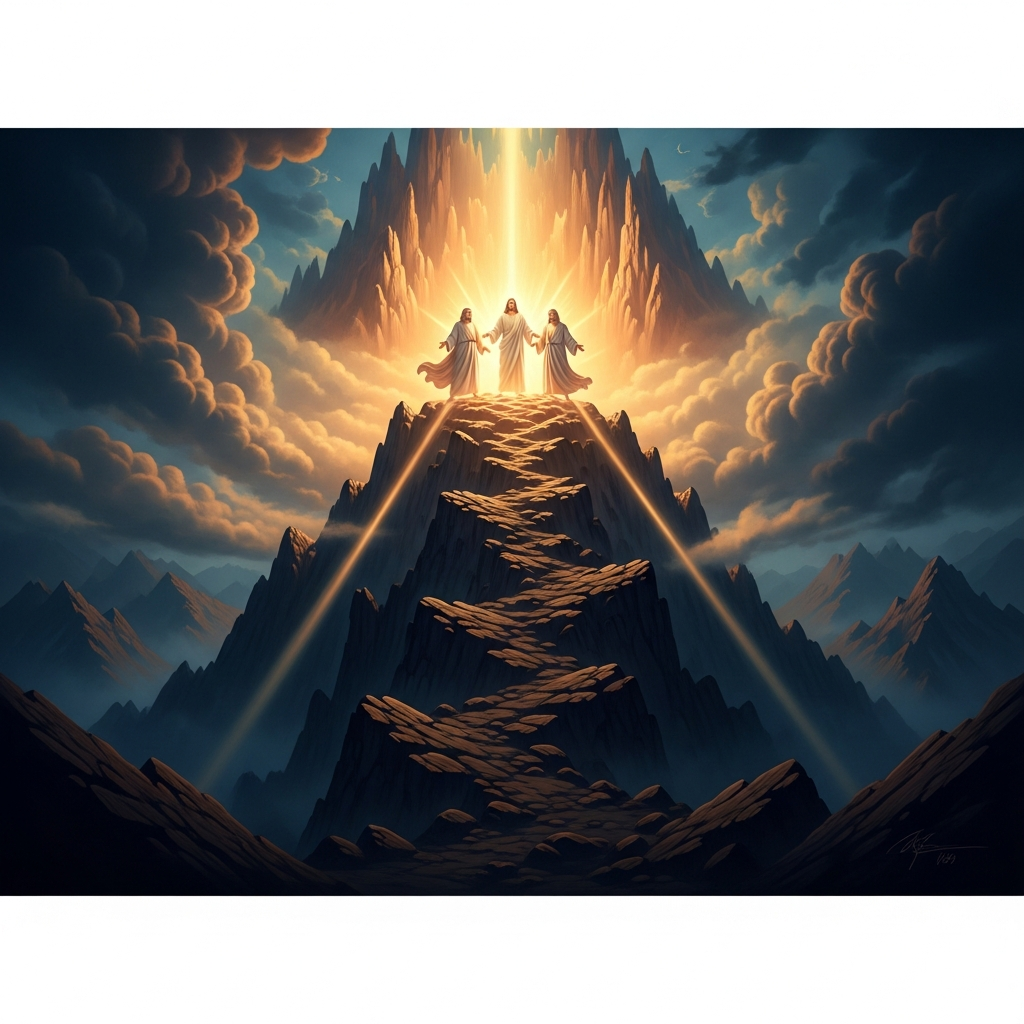
 Moses on Pisgah, looking across at Canaan — the typology King steps into deliberately
 Generating art…
 Echoes Across Traditions
Entities
- Martin Luther King Jr.
- Moses
- Ralph Abernathy
- the Memphis sanitation workers

Sources
- Taylor Branch, *At Canaan's Edge: America in the King Years 1965-68* (2006)
- David Garrow, *Bearing the Cross: Martin Luther King, Jr., and the Southern Christian Leadership Conference* (1986)
- Martin Luther King Jr., 'I've Been to the Mountaintop,' Mason Temple, April 3, 1968 (recorded transcript)
- Martin Luther King Jr., *Strength to Love* (1963)
- Michael K. Honey, *Going Down Jericho Road: The Memphis Strike, Martin Luther King's Last Campaign* (2007)