The Lunar Cycle: Selene, Thoth, Chandra, Tsukuyomi, and Ix Chel
Ancient, across all periods — Mesopotamian Bronze Age through Maya Classic period · Athens, Hermopolis, the Vedic plains, the Yamato court, the Maya lowlands
Contents
The moon measures time, governs tides, and dies and is reborn every month. Five cultures built entirely different theologies around the same object — and disagreed completely on its gender.
- When
- Ancient, across all periods — Mesopotamian Bronze Age through Maya Classic period
- Where
- Athens, Hermopolis, the Vedic plains, the Yamato court, the Maya lowlands
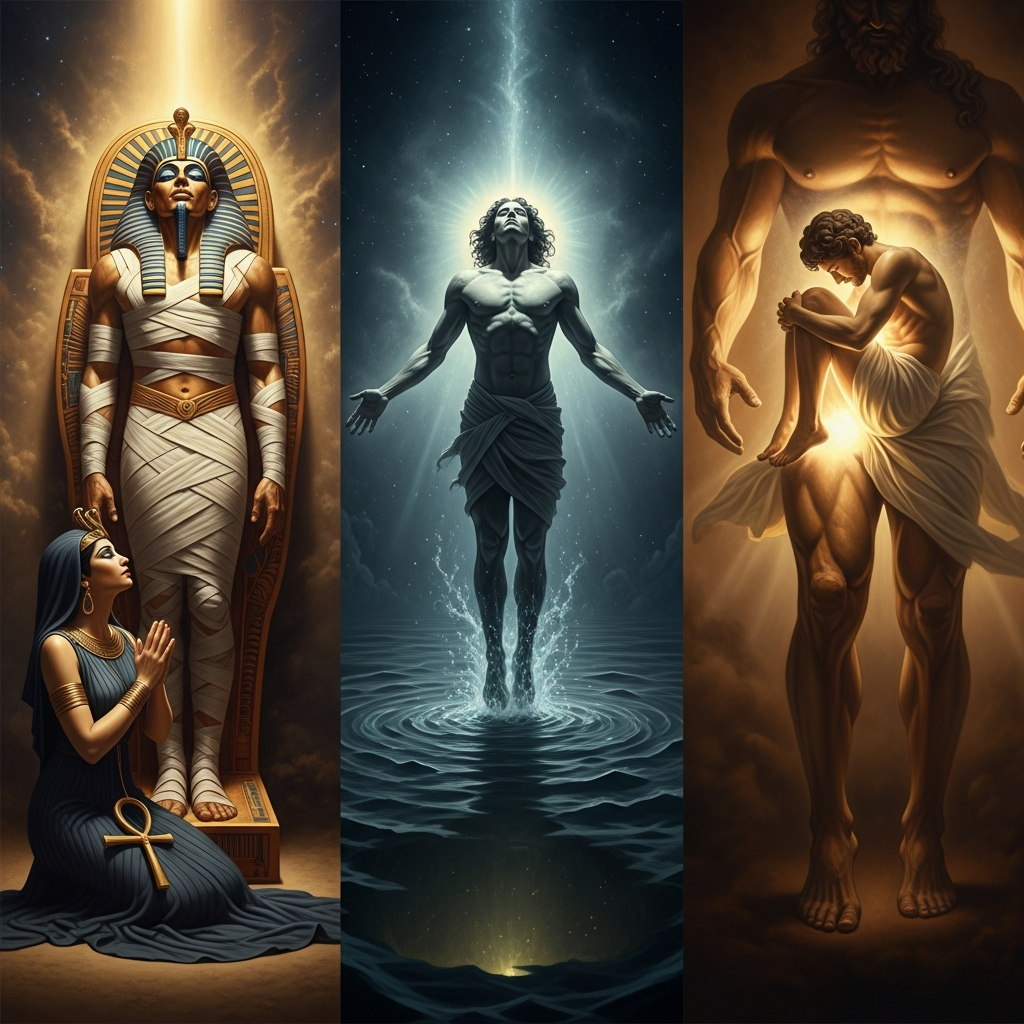
The moon does something no other object in the ancient sky does: it shows you its own mortality.
Every twenty-nine and a half days, the moon dies. It shrinks from full to a crescent, from a crescent to nothing, and then — on the third day, in the phrase that resonates across an enormous number of traditions — it returns. The new moon is resurrection performed on a monthly schedule, visible to every human being who has ever looked up at night, in every culture, on every continent.
The theological question is not whether to make the moon divine. That is nearly universal. The question is what the moon’s death and rebirth means, who it is, and what it governs beyond the night sky. The five traditions gathered here disagreed on all of it — starting with whether the moon is male or female.
Selene: The Moon as Lover and Presence
The Greeks gave the moon three faces. Selene was the middle one.
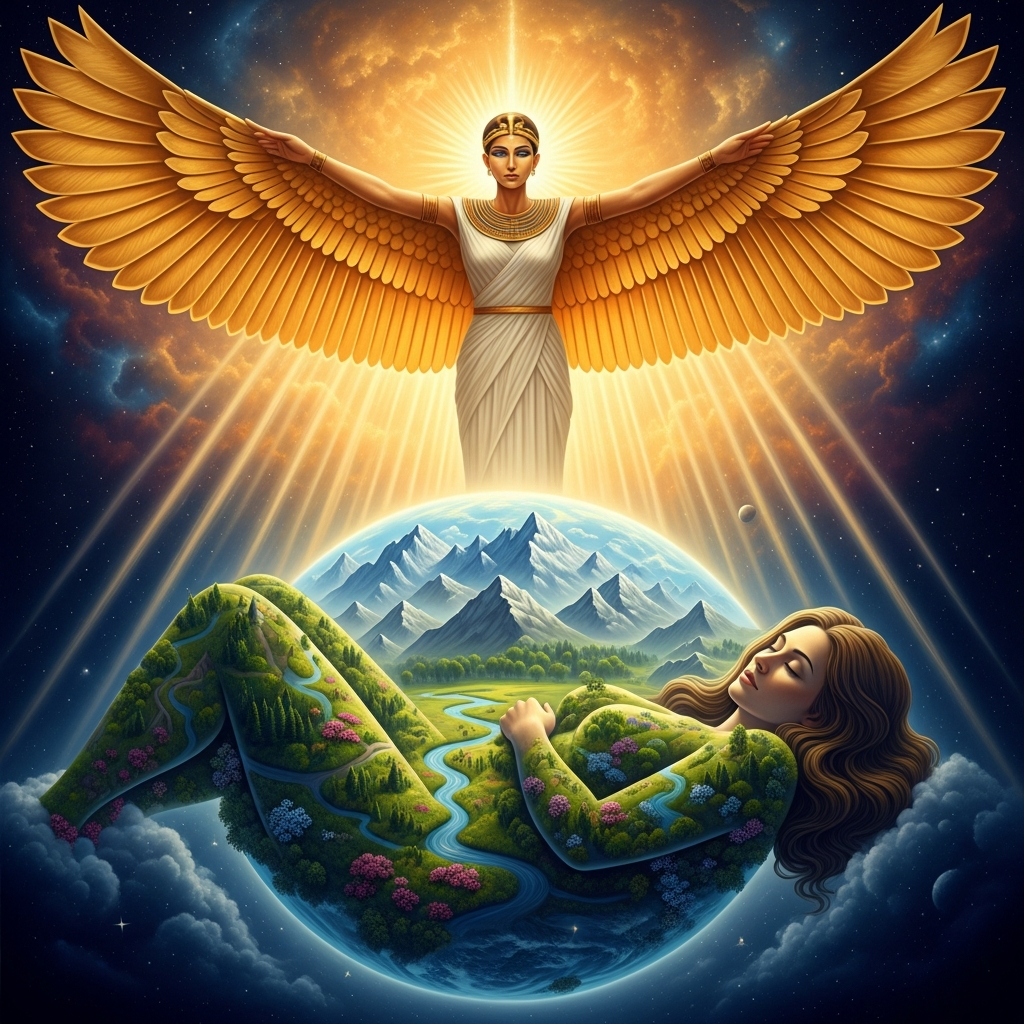
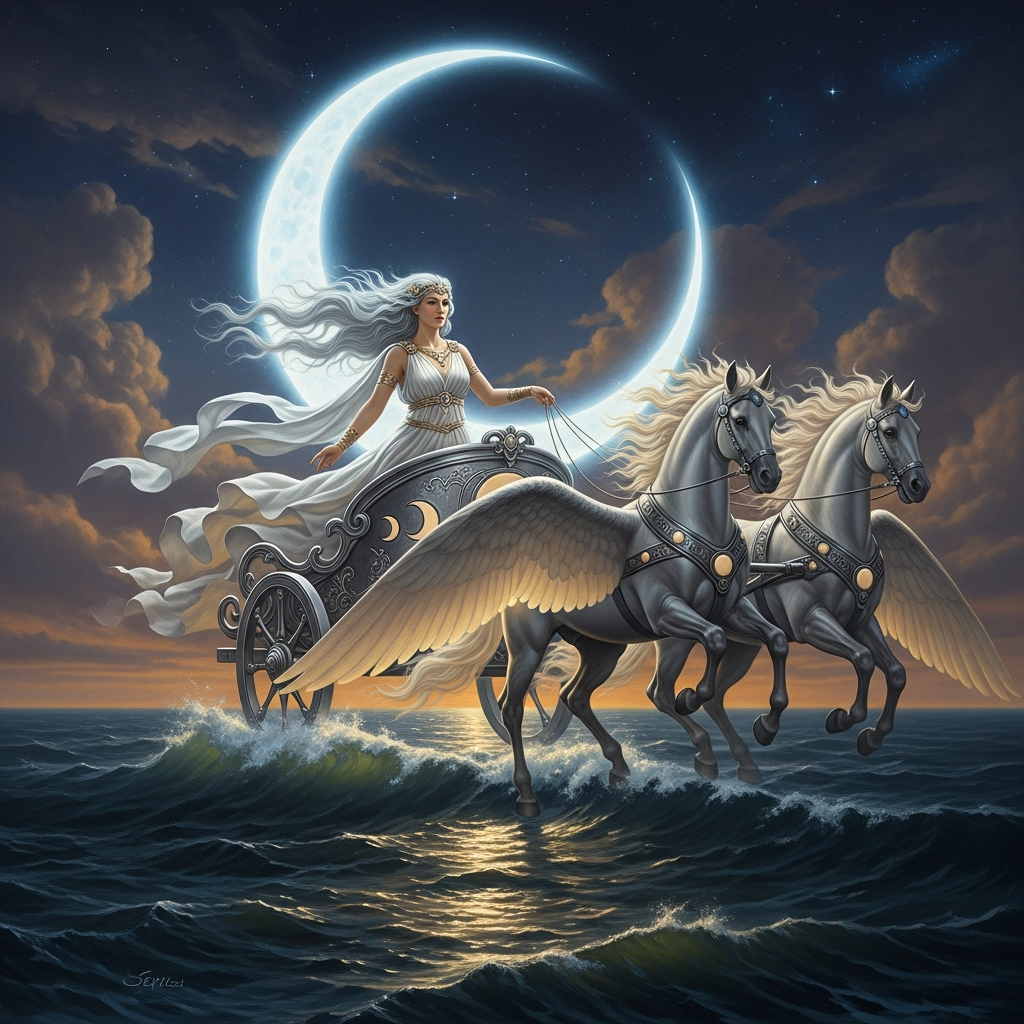
Selene is the moon as pure luminosity — the divine charioteer who drives her silver vehicle across the night sky, the moon in its full and present aspect. She is not a huntress like Artemis, not a chthonic force like Hecate. She is simply the moon shining, and her primary myth involves not war or wisdom but desire: her love for the sleeping shepherd Endymion, whom Zeus granted eternal sleep at Selene’s request so she could visit him forever.
The myth is notable for what it does not resolve. Endymion never wakes. Selene visits him perpetually, perpetually in love with a man who cannot respond. It is a myth of unrequited presence — the moon illuminating the sleeping world, the light falling on something that cannot fully receive it.
The tripling of lunar function onto three goddesses (Artemis the virgin huntress as the waxing moon, Selene as the full, Hecate as the waning) reflects a Greek instinct to divide complex divine personalities into distinct figures rather than holding the contradiction inside one deity. The moon is innocent and lethal, bright and dark, creative and destructive. The Greeks preferred not to contain that in a single body.
Thoth: The Moon as the Mind of God
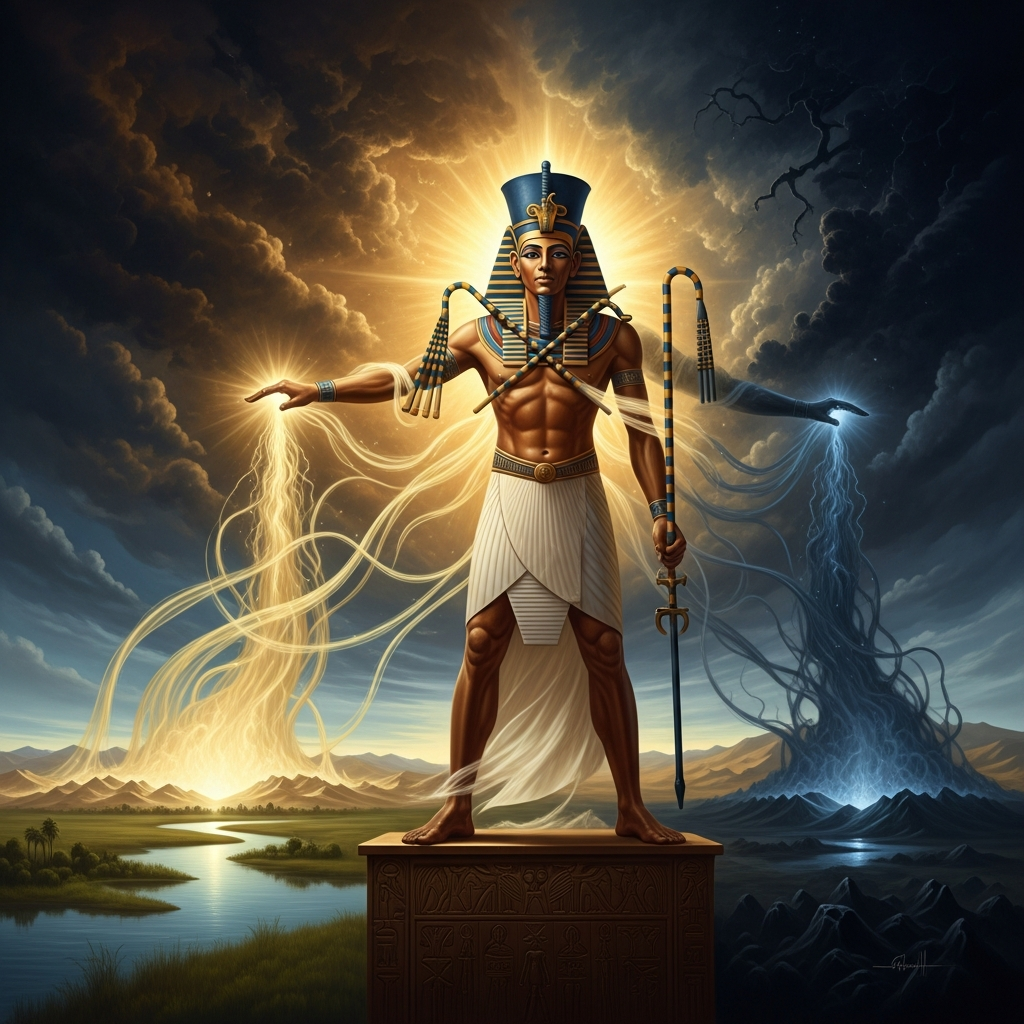
In Egypt, the moon was not primarily a goddess or a lover. It was the divine mathematician.
Thoth — ibis-headed, scroll in hand, standing at the scales of judgment — was associated with the moon not because he was beautiful or romantic but because the moon measures time. The lunar cycle was Egypt’s original calendar. The waxing and waning of the moon governed the agricultural schedule, the religious calendar, and the administrative year. Whoever owned time owned everything.
Thoth therefore became the god of writing, mathematics, science, medicine, and the arbiter of the judgment of the dead. When Osiris weighs the heart of the deceased against the feather of Ma’at, it is Thoth who records the result. He is the secretary of cosmic justice, and his authority derives from the moon’s function as the measure of all things.
This is the most unexpected of the solar/lunar reversals in Egyptian theology: the sun god Ra gets the drama, the battle, the heroic daily journey. The moon god Thoth gets the books. What persists is what is recorded. The moon, which returns faithfully every cycle and can be used to predict and plan, became the metaphor for knowledge as an orderly, cumulative enterprise. In Egypt, the night sky’s careful measurer outranked the day sky’s warrior in the hierarchy of what civilization actually required.
Chandra and Soma: The Moon You Drink
Hindu lunar theology arrives at a conclusion that no other tradition quite reaches: the moon is also a drink.
Chandra is the lunar deity proper — beautiful, silver, riding a chariot pulled by ten white horses or, in other accounts, an antelope. He is associated with the mind (the Sanskrit word for mind, manas, shares its root with the lunar cycle). He governs growth, moisture, and the rhythms of plant life.
But Chandra overlaps almost completely with Soma, the deity who is also the sacred ritual drink pressed from the Soma plant in Vedic sacrifice. The logic is astronomical: the moon is full when the gods have not yet consumed the Soma offered to them. As the ritual cycle proceeds and the gods drink the offerings, the moon depletes. When it goes dark, the Soma is gone — the divine substance has been consumed. Then it is renewed, and the cycle recommences.
This identification of the moon’s waning with ritual consumption and the moon’s waxing with the replenishment of divine substance creates a theology in which astronomy and liturgy are the same system. The moon is not merely observed — it is consumed, replenished, and consumed again. The human act of sacrifice is cosmologically visible. Every full moon is proof that the ritual is working.
Tsukuyomi: The Moon Estranged
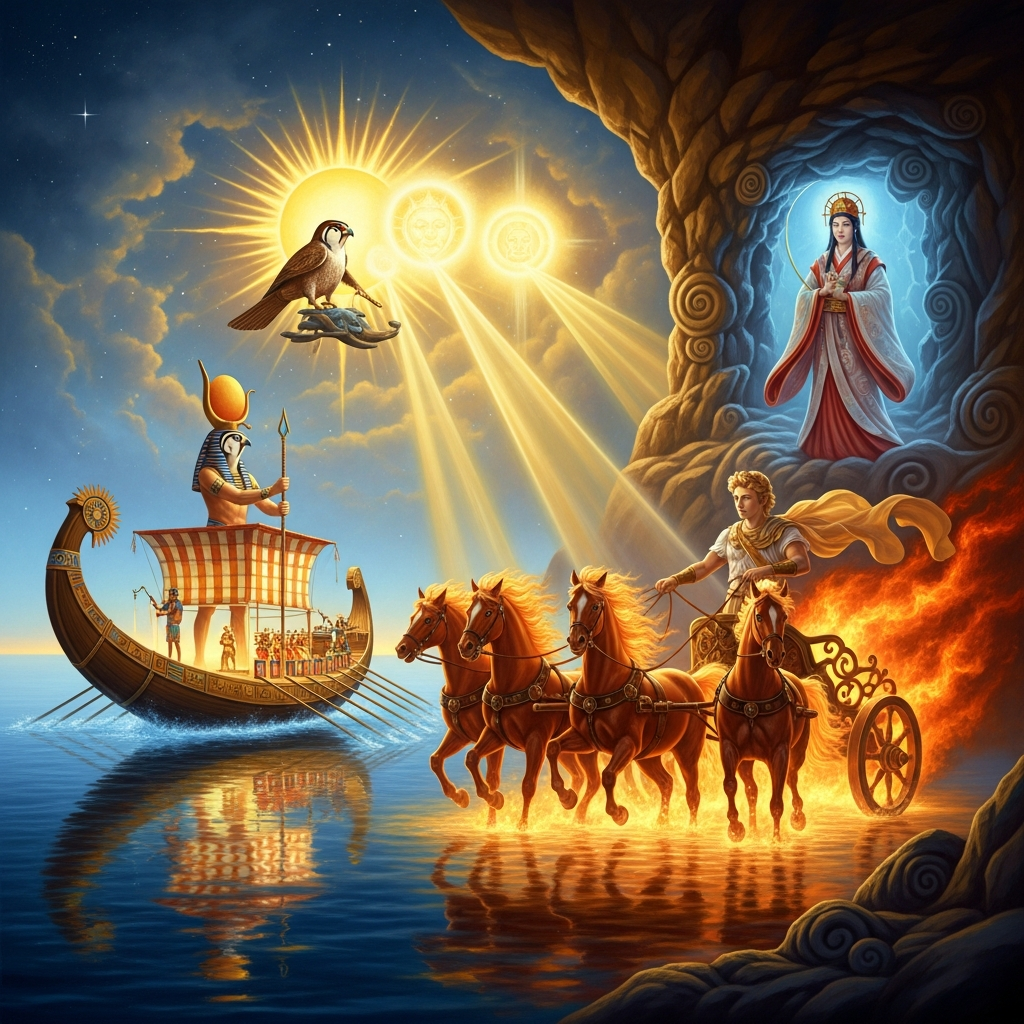
Among the Japanese lunar deities, the dominant myth is not about the moon’s beauty or its wisdom or its ritual function. It is about why the sun and moon never share the sky.
Tsukuyomi is born when Izanagi wipes his right eye after the traumatic return from the underworld — his left eye produces Amaterasu, the sun, and Tsukuyomi emerges from the right. He is sent to rule the night as his sister rules the day. The two divine lights, day and night, govern the world in concert.
Then Tsukuyomi attends a feast hosted by Ukemochi, the food goddess, and is revolted. She produces food from her own body — fish from her mouth, rice from her nose, game from her rear — and Tsukuyomi kills her in disgust. When Amaterasu learns of the murder, she declares that she will never look at Tsukuyomi again. From that day forward, the sun and moon do not share the sky.
The myth accomplishes something theologically strange: it makes the separation of night and day the consequence of a crime. The daylit world and the night world are not merely opposite cycles but the outcome of an estrangement, a refusal, a divine family broken by an act of violence that could not be forgiven. The moon’s isolation — its beautiful, unreachable presence visible only when the sun is gone — is, in Shinto reading, a punishment.
Ix Chel: The Moon That Destroys
The Maya moon goddess Ix Chel governs the things the moon was observed to govern: water, tides, the female body, the cycles of growth and death. She is a goddess of medicine, of weaving, of childbirth. She is also a goddess of floods and catastrophe.
This double function — healer and destroyer, the moon that brings rain and the moon that brings flood — reflects the Maya observation that the moon’s power over water is not gentle. The same force that regulates the tides and the rains, if amplified, drowns the world. Ix Chel’s aged aspect, shown as an old woman pouring water from an inverted jar, is a vision not of renewal but of undifferentiated destruction.
The Maya were exceptionally precise astronomers. Their lunar calendars tracked cycles that took generations to complete. Ix Chel’s mythology is inseparable from this observational tradition: she is not a figure imported from intuition but a deity whose character was built from careful, intergenerational watching of what the moon actually did to the world below.
The Moon as Measure
The disagreement between these five traditions on the moon’s gender, character, and function conceals a shared insight: the moon is the most useful thing in the ancient night sky precisely because it changes.
The stars are fixed — they circle but do not visibly transform. The sun rises and sets but looks the same. The moon shows its own phases. It can be used to count, to plan, to predict. It makes time visible in a way nothing else in the ancient sky does.
The theologians who looked at that measuring function diverged on what the measure was for. For Thoth, it was record-keeping — knowledge as cumulative and precise. For the Vedic tradition, it was ritual — the cosmic accounting between human sacrifice and divine sustenance. For the Maya, it was astronomical science fused with agricultural planning. For Tsukuyomi, it was a warning about the cost of moral failure. For Selene, it was simply the presence of love in the dark.
The moon measures time. Each culture decided what time was for.
Echoes Across Traditions
Entities


Sources
- David Leeming, *The Oxford Companion to World Mythology* (2005)
- Richard Wilkinson, *The Complete Gods and Goddesses of Ancient Egypt* (2003)
- Wendy Doniger, *The Hindus: An Alternative History* (2009)
- Karl Taube, *Aztec and Maya Myths* (1993)