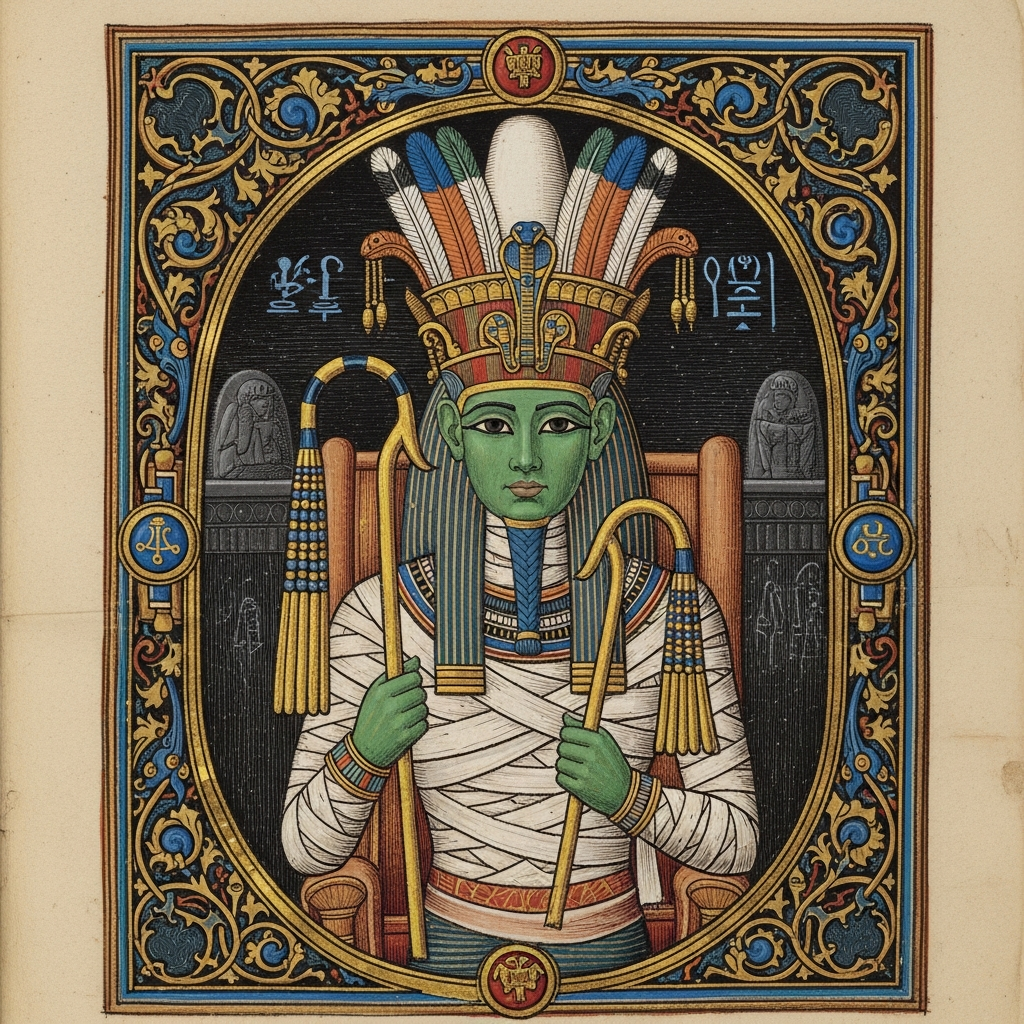
The Twelve Hours of Night
Mythic Time · Amduat and Book of Gates, New Kingdom, ~1550-1069 BCE · The Duat — the Egyptian underworld, the realm beneath the earth through which the sun travels each night
Contents
Every night, Ra descends into the Duat in his solar barque and fights the serpent Apophis through twelve hours of darkness. If Apophis wins, the sun does not rise. The crew has never failed. But in the twelfth hour, the defender who saves the sun is Set — the god of chaos, the murderer of Osiris, the necessary weapon in the darkness.
- When
- Mythic Time · Amduat and Book of Gates, New Kingdom, ~1550-1069 BCE
- Where
- The Duat — the Egyptian underworld, the realm beneath the earth through which the sun travels each night
The sun sets in the west and does not stop moving.
This is what Egypt knows that later traditions sometimes forget: the sun at sunset is not resting. It is beginning its most dangerous work. The western horizon is not an ending — it is the entrance to the Duat, the underworld, the realm beneath the flat disk of the earth through which the barque must travel for twelve hours before the eastern gate opens and the scarab beetle appears, pushing the disc back up into the sky above the living world.
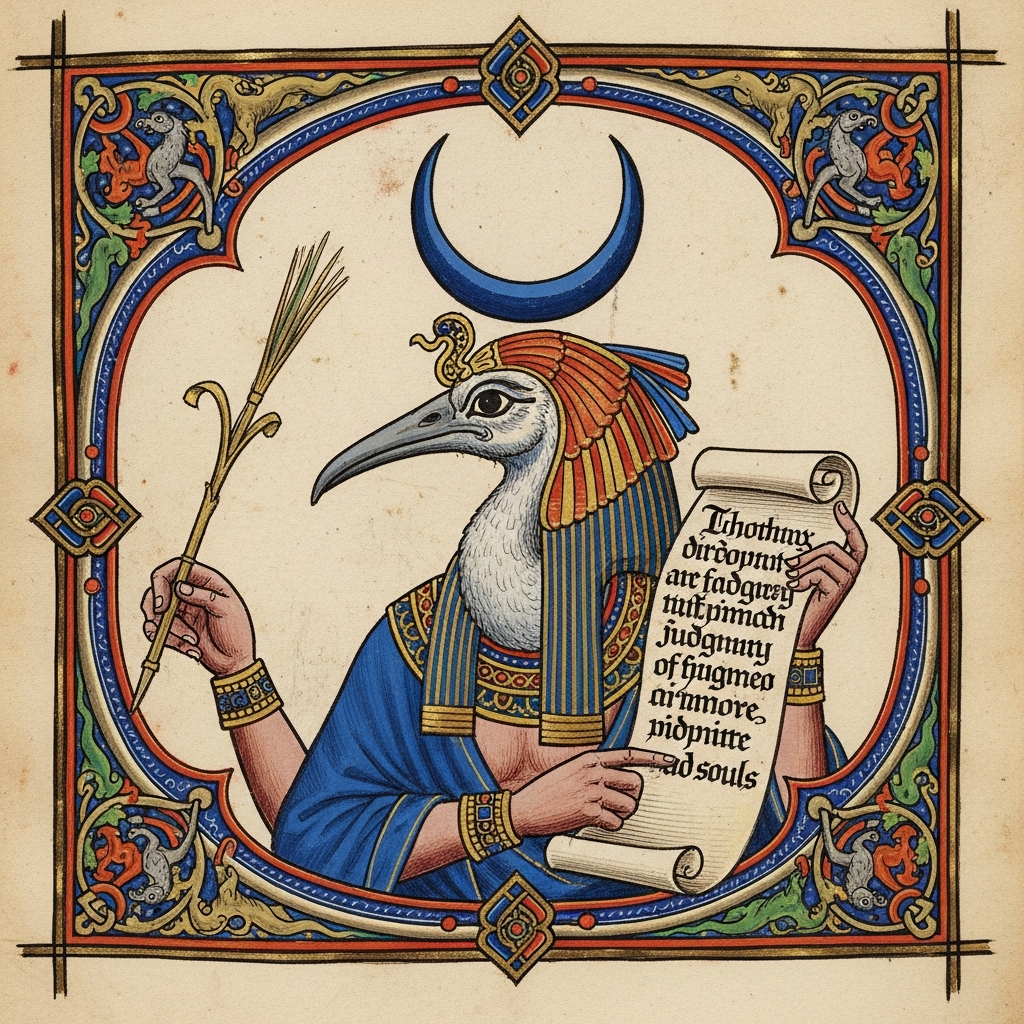
Twelve hours. Twelve gates. Each hour its own chamber, its own population of the dead, its own challenge. The barque carries Ra, aging now — the texts describe him as ram-headed in the underworld, the face of the sun when it is not shining — and his crew: Sia (perception), Hu (authority), Thoth with his stylus, and others whose names the ordinary dead must learn before they can travel this road themselves.
The first gate opens. The barque enters. The darkness is complete.
The first hour: the Field of the Setting Sun. The dead who live here are the newly dead — souls still oriented toward the world they came from, still carrying the smell of their last room, the sound of the last voice they heard. They line the banks of the underground river as the barque passes, and Ra speaks to them. He names each one. He illuminates them — his passage lights the hour, and in the light they are briefly themselves again, briefly not just the dead but the specific individuals they were. Then the barque moves on. The light moves with it. The first hour returns to darkness.
The Egyptians understood something that required the night journey to explain: the dead need the sun as much as the living do. The Duat is not simply a place of punishment or transition; it is a kingdom that Ra rules as surely as he rules the sky, and his passage through it each night is governance, not merely survival. He administers the underworld by moving through it. Every hour he illuminates, he sustains.
The second hour: the Field of the Grain. Fields of wheat in the underworld, worked by the blessed dead. The barque’s passage waters them — divine water, the light of the sun even at its most diminished, falling on the stalks. The grain grows. This is why, Egypt believes, the Nile floods each year: Ra’s underground irrigation, his night-gifts to the earth, finding their way up through soil and stone to emerge as the annual miracle of flood and fertility.
The third hour. The fourth. Each one its own register of the dead — the justified and the condemned, the protected souls in their caverns, the enemies of Ra bound in configurations of rope and shadow, the dangerous forces that the underworld contains precisely because they have been put here, because this is where the things that cannot be allowed in the living world are stored.
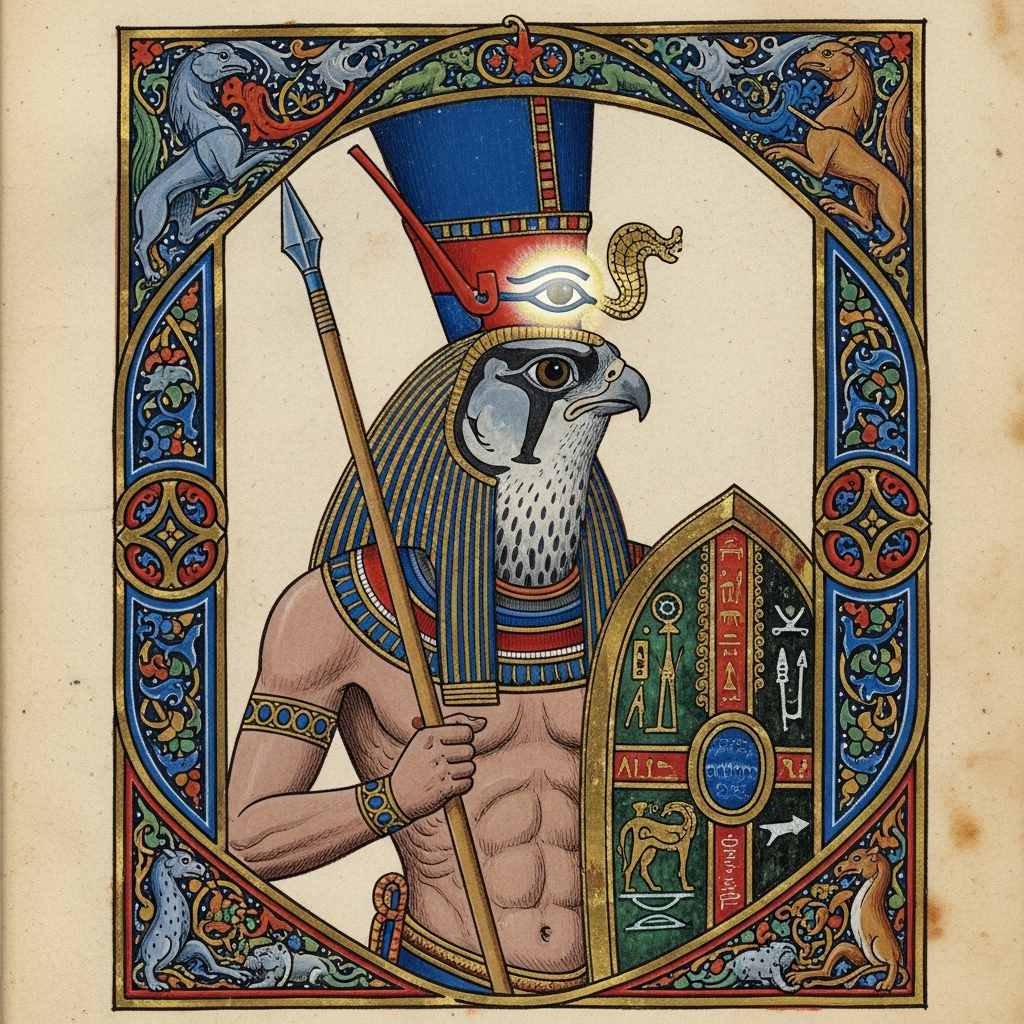
In the fifth hour, the barque passes over the secret body of Sokar — the hawk-headed deity of the necropolis, who holds the primordial ground from which all life emerges. Sokar is not active. He rests in an egg-shaped form beneath the desert, in the deepest geography of the Egyptian earth. Ra passes over him and the egg pulses with light. This is the closest the sun comes to the earth’s core. This is the deepest point of the descent.
The sixth hour is the critical one.
This is where Osiris is. Not the Osiris of the Hall of Two Truths — that is later, that is the administrative function. This is the secret theological claim of the Amduat: that Ra and Osiris, in the sixth hour of every night, merge. The sun-god and the death-god overlap, become briefly a single entity, Ra in Osiris, Osiris in Ra. The solar disc is also the dead body. The dead body is also the sun.
Every morning is a resurrection that grows from this union.
The texts visualize this moment as a single figure with two heads — a ram-head and a man-head — in a darkness absolute as pre-creation, surrounded by the serpent coils of the Duat. In the sixth hour, the barque is as far from any gate as it will ever be. The light that Ra carries is at its weakest. The world above is in its deepest sleep.
And Apophis is here.
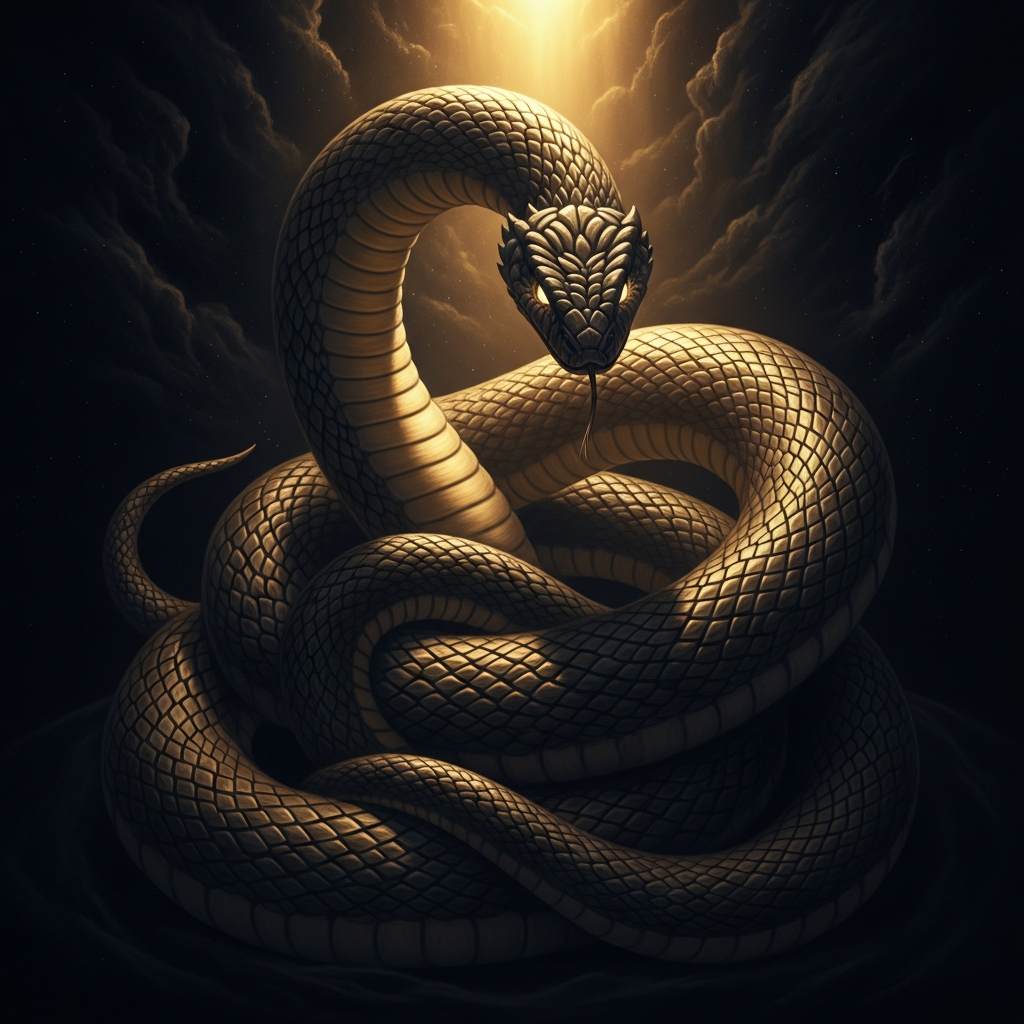
The great serpent is not a monster who lives in the underworld. He is what the underworld exists to contain. He is chaos before creation — the roiling, formless, lightless condition of the world before Ra first spoke the divine word and established order. Apophis is what the world would return to if the sun failed. He is not evil exactly, for the same reason that a flood is not evil: he is simply the natural condition of things without the organizing force of light and order.
He wants to swallow the barque. Every night. He is not trying anything new. He is not adapting his strategy or evolving his approach. He is chaos, and chaos does not develop tactics; it simply presses forward when it can.
Each night, the crew of the barque fights him.
The weapons of the crew — Sia’s perception, Hu’s authority, Thoth’s spells — are effective against many things. Against Apophis, in the depths of the sixth hour, they are not sufficient. Apophis is too large, too old, too fundamental. He has been fighting this battle since before the first sunrise, and he has never been permanently destroyed, because you cannot permanently destroy the precondition of the world’s existence. You can only hold him off long enough for the dawn.
The defender who holds him off is Set.
This is the part of the theology that human audiences have always found difficult to hold simultaneously: the god who murdered Osiris, who is the force of chaos and disruption in the living world, who is the desert and the storm and the red land — Set is also the sun’s champion in the dark. He stands at the prow of the barque with a spear, and he drives it into the writhing body of Apophis, and Apophis shrinks back for another night.
Set kills with spear what the others could not hold with spell and word. Because it takes chaos to fight chaos. It takes the force that operates outside of order to repel the force that would unmake order entirely. Ra cannot destroy Apophis without Set. The sun cannot rise without the god who, in the story everyone knows, pushed it toward darkness in the first place.
The seventh hour. The eighth. The barque moves toward the eastern gate, each hour a new chamber, each chamber its own population and its own light and its own return to dark when the barque has passed. The dead line the banks and watch Ra go. They receive their portion of light for another night. They survive another cycle.
In the eleventh hour, the serpent Mehen coils around the barque — not attacking but protecting, his body a moving wall against the last dangers before the gate. The crew speaks the words that name the gatekeepers of the twelfth hour. Every name must be correct. A name spoken incorrectly is a name that does not open a gate, and the barque does not move forward, and the sun does not rise.
The texts that record these names are not merely narrative. They are operating manuals. The scribes who painted the Amduat on the walls of royal tombs understood that the pharaoh, traveling the same night road, would need the same names — that dead kings navigated by Ra’s example, that the royal tomb was a navigation chart for a journey that Ra made every night and kings made once.
The twelfth hour: the gate at the eastern edge of the world, the chamber where the night ends.
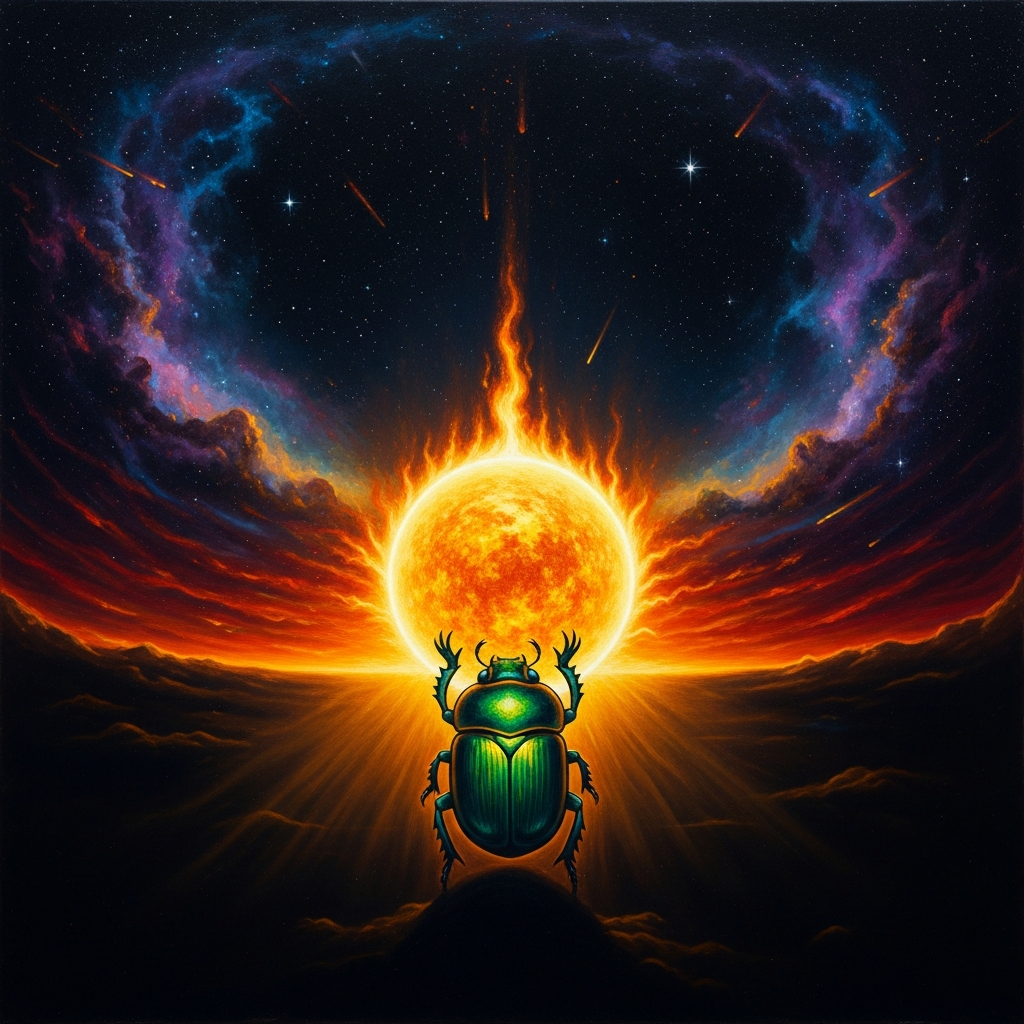
The scarab beetle Khepri — whose name means he who comes into being, whose act of rolling a ball of dung across the ground was understood as the image of the divine act of rolling the sun across the sky — enters the barque. He receives the solar disc from the ram-headed figure that Ra has been through the night hours. He takes it in his front legs. He pushes.
The gate opens. The eastern horizon brightens in the red-gold that is always the sun’s first announcement. The barque emerges into the sky above the living world, and the disc is aloft again, and the day begins.
Below, in the Duat, the light withdraws. Apophis reconstitutes himself from the darkness, whole again, ready for tonight.
Set takes up his position at the prow.
The Egyptians who lived in the Nile valley understood dawn differently from people who have always had artificial light and reliable astronomy that removes the uncertainty from sunrise. They understood it as the outcome of a contest that could have gone otherwise. They understood that the light appearing over the eastern horizon was a victory, specifically and recently won, that would have to be won again tomorrow night.
This is why the morning hymns to Ra — sung at temples across Egypt from Memphis to Thebes, from the delta to the first cataract, at the specific moment of first light — are victory songs. Not praise in the abstract. Salutations to a warrior returning from battle. Hail to thee, O Ra, at thy rising. Thou who art glorious in thy rising, who hast risen, who art Ra.
The priests who sang this every morning understood that they were participating in the victory. The ritual recitations of the Amduat — performed by priests throughout the night — were understood to strengthen Ra’s passage, to aid the spells, to add their voices to Thoth’s against Apophis. The worshipper was not a passive observer of the cosmic drama. She was a member of the crew.
This is the deepest claim of the night journey: that the cosmos is collaborative. That the sun’s survival depends on the participation of everyone who benefits from it. That existence is not something that happens to you but something that you, in your rituals and your correct behavior and your recitation of the true names, help produce each day from the raw material of each night.
The Amduat was painted first in the tomb of Thutmose III around 1479 BCE, in a style so spare it looks almost diagrammatic — hours in registers, figures labeled, the route clearly marked. Later royal tombs expanded it into full color. The Book of Gates added narrative detail. The Book of Caverns added theological complexity.
All of them agree on the structure: twelve hours, one gate each, the serpent at the center, Set at the prow, the scarab at the end.
Every temple in Egypt was oriented to receive the first light of dawn through its main axis — the long corridor, the pylons, the sanctuaries arranged in diminishing darkness, so that the rising sun, on specific mornings, penetrated to the innermost room where the god’s statue stood. The architecture was built to participate in the sunrise. The stone was part of the crew.
The barque enters the darkness every night. Set stands at the prow. Apophis coils in the sixth hour. The scarab pushes.
The sun rises. It has always risen. So far.
Scenes
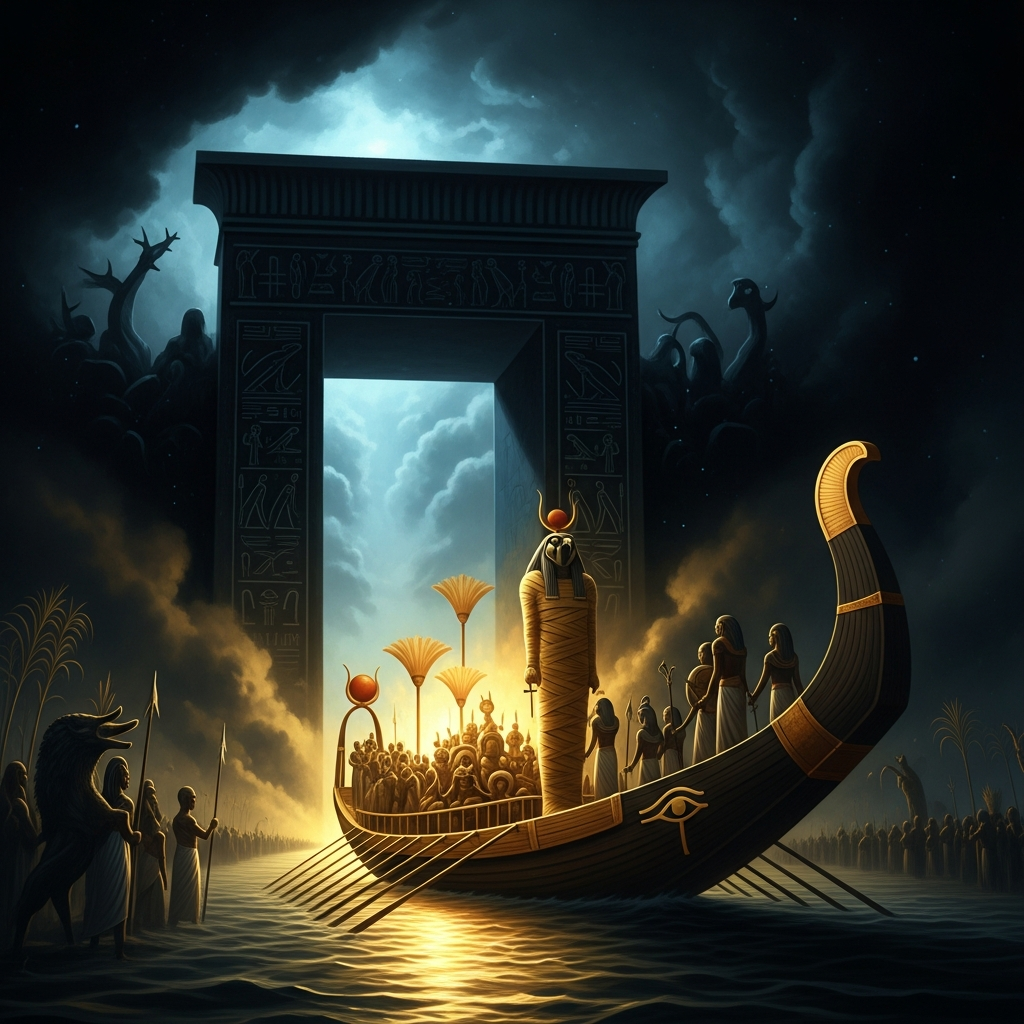
The solar barque enters the western horizon — the gate of darkness, the beginning of the twelve hours, the nightly death of the sun
 Generating art…
 The great serpent Apophis coiled in the sixth hour, the deepest dark, the moment when the barque is farthest from either sunrise or sunset
 Generating art…
 Khepri the scarab beetle pushes the sun disc up the eastern sky — the resurrection that nobody sees, the daily miracle of the first light
 Generating art…
 Echoes Across Traditions
Entities
- Ra
- Apophis
- Set
- Osiris
- Khepri

Sources
- *Amduat* (What Is in the Underworld), New Kingdom (~1500 BCE, tomb of Thutmose III)
- *Book of Gates* (New Kingdom, tomb of Sety I, ~1290 BCE)
- *Book of Caverns* (Ramesside period)
- Erik Hornung, *The Ancient Egyptian Books of the Afterlife* (Cornell, 1999)
- John Coleman Darnell, *The Enigmatic Netherworld Books of the Solar-Osirian Unity* (Vandenhoeck & Ruprecht, 2004)