The Eighty-Year Lawsuit
The mythological age after the death of Osiris — the interregnum of divine kingship · The court of the Ennead — the divine tribunal of Heliopolis; the Nile; the Island in the Middle
Contents
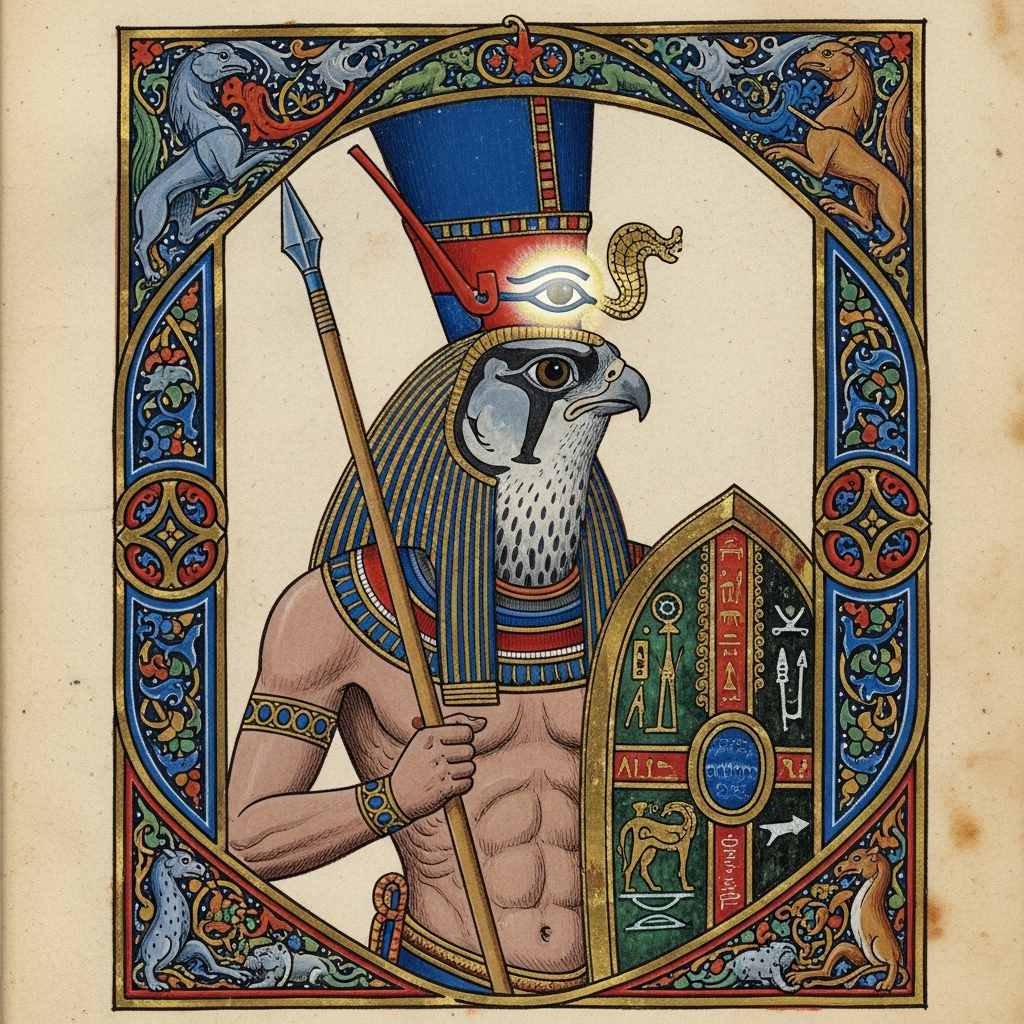
After Seth murders Osiris and seizes the throne of Egypt, Osiris's son Horus brings a legal claim before the divine tribunal of the Ennead: the throne belongs to him, as the legitimate heir. Seth contests the claim. The gods argue. The case drags on for eighty years of divine litigation — perhaps the most extended legal proceeding in any mythological tradition. The specific events of the trial include moments of extraordinary comedy and equally extraordinary horror, including Seth's attempted rape of Horus, a battle of stone hippopotami, a boat race, and the letter from Osiris in the underworld that finally tips the verdict.
- When
- The mythological age after the death of Osiris — the interregnum of divine kingship
- Where
- The court of the Ennead — the divine tribunal of Heliopolis; the Nile; the Island in the Middle
The case is simple. Everything that follows is not.
Osiris was king. Seth, his brother, killed him — trapped him in a coffin, threw the coffin in the Nile, and when Isis retrieved the body, Seth found it again and cut it into fourteen pieces and scattered them across Egypt. Isis reassembled the pieces, performed the first mummification, and conceived the posthumous child who is Horus. Horus grew up in hiding in the Delta marshes, raised by Isis, trained for the contest that was always coming.
Now Horus is grown, and he appears before the divine tribunal — the Ennead, the council of the great gods — and states his case. He is the son of Osiris. The throne of Egypt belongs by right of succession to the heir of its last legitimate ruler. He is that heir.
Seth contests the claim. He is more powerful than Horus, he says. He is the one who stands at the prow of Ra’s solar barque each night and drives off the serpent Apophis with his spear. Without Seth, the sun does not rise. Does the council really want to give Egypt to a child when there is a competent and proven divine warrior available?
The tribunal divides. The case begins.
Ra-Atum presides, but he has already shown his preference: he thinks Seth should win. He finds Horus’s claim technically valid and personally irritating. He is the chief god, and the chief god’s inclination toward a verdict ought to settle the matter. It does not. The other members of the Ennead — Thoth, Shu, Tefnut, various assessors — disagree with him, loudly, and because this is a divine tribunal with procedural rules that Ra-Atum himself established, he cannot simply overrule them.
This is the first comedy: Ra, the supreme deity, cannot close a legal case that he wants to close because the legal system he built has checks that prevent him from doing so.
The god Banebdjed, the great ram of Mendes, suggests they write a letter to Neith the war goddess at Sais and ask her opinion. The tribunal agrees. Neith writes back promptly: give the throne to Horus. Also, compensate Seth with additional lands and two foreign goddesses as wives, Anat and Astarte. This is a reasonable verdict. The tribunal is impressed. Ra-Atum is annoyed.
He calls Horus and Seth children and says they disgust him. This is not a procedural objection. It is Ra expressing his feelings, which is not the same thing as a ruling. Horus, who has been quiet up to this point, points out that calling him a child does not address the legal question of who the legitimate heir is.
The case continues.
Seth proposes a series of contests. If Horus cannot best him, then perhaps the procedural argument about inheritance should yield to the physical reality of who is capable of holding the throne. The tribunal agrees to the contests because it cannot agree on anything else and because something must happen.
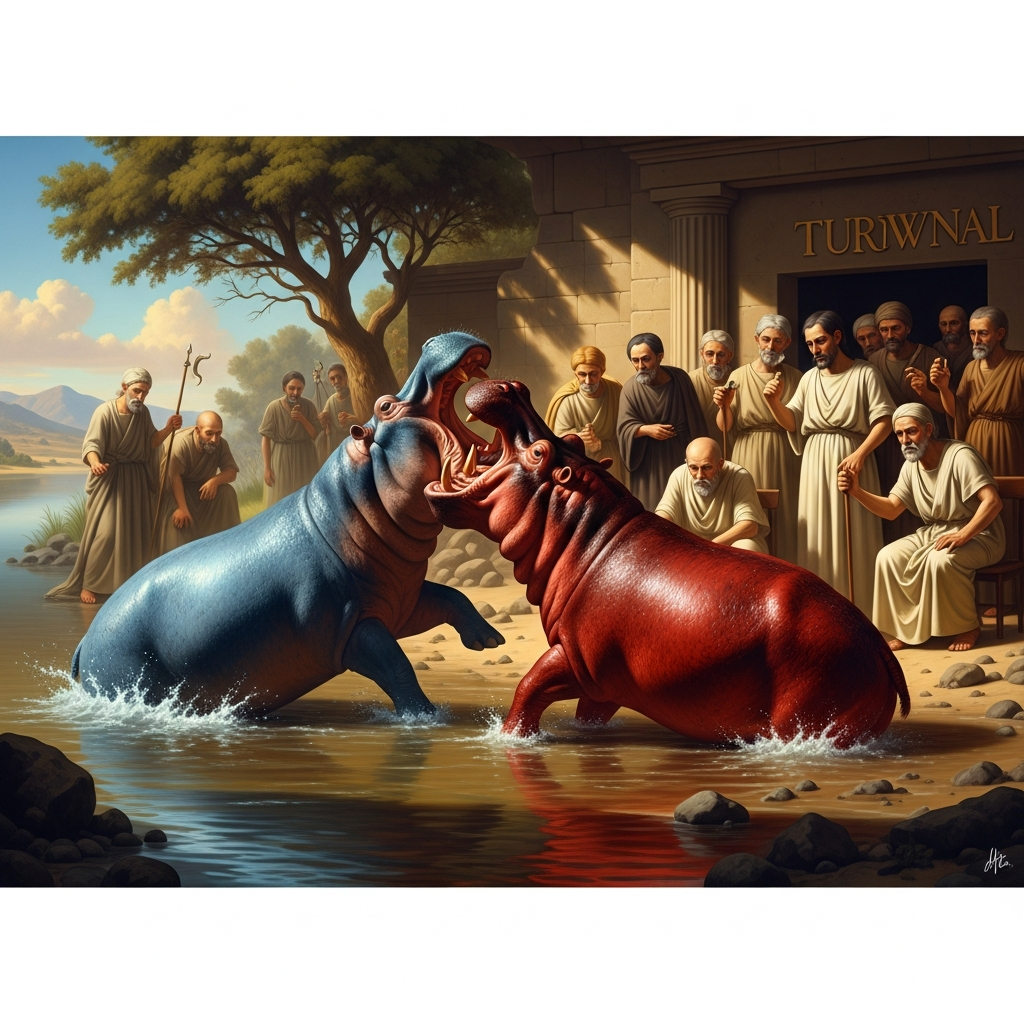
The first notable contest is the hippopotamus battle. Both Horus and Seth transform into hippopotami and fight in the river, with the rule that whoever can remain submerged for three months wins. Isis, watching from the bank, throws a harpoon at Seth to help her son. She hits Horus by mistake. She throws again and hits Seth. Seth begs her, invoking their kinship — they are siblings — and she releases the harpoon. Horus is so enraged by his mother’s mercy that he cuts off her head. The tribunal condemns him for this. Thoth gives Isis a new head in the form of a cow. The hippopotamus contest resolves nothing.
The contests continue without resolution.
Then Seth commits the act that the Contendings describes in clinical detail and that has made Egyptologists somewhat uncomfortable for a century: he attempts to rape Horus while they are sleeping in the same house.
He does not succeed. Horus catches Seth’s semen in his hands and brings it to his mother Isis, who cuts off his contaminated hands — they are buried in the marsh — and makes new ones, then takes semen from Horus and applies it to Seth’s favorite food, which is lettuce. Seth eats the lettuce. He believes he has achieved a decisive legal advantage: in Egyptian legal thinking, the one who receives another’s semen is subordinate, and he expects that the semen found in Horus’s body will demonstrate Horus’s subordination.
The tribunal summons both parties. Seth announces his claim. Thoth calls the semen of both gods to testify about their location. Seth’s semen answers from the marsh. Horus’s semen answers from within Seth.
Seth has, in his own legal strategy, demonstrated his subordination.
The tribunal bursts into laughter. This is specifically recorded: the gods laugh. The text says Seth’s face turns green. The case does not end, but Seth’s position has been significantly altered.
The boat race is the next contest. The rules: build a boat of stone, race across the water, the winner takes the verdict. Seth builds a mountain of stone and cuts it into a boat shape. The stone sinks immediately. Horus has built a wooden boat covered in plaster and painted to look like stone. He wins the race. Seth transforms his wooden boat into a hippopotamus and attacks Horus. The other gods prevent the attack. The boat race resolves nothing.
Eighty years. The texts specify this number. Eighty years of divine litigation, of failed contests, of increasingly baroque procedural moves, of a tribunal that cannot reach consensus.
The tribunal finally sends a letter to Osiris himself, in the underworld, asking for his opinion. They are asking the murdered king to weigh in on whether his murder should be rewarded with the throne his murderer seized.
Osiris writes back. His letter is not gentle. He asks the gods whether they have forgotten what they eat — the grain and the cattle, all of it comes from the earth, and he is the earth. He notes that he could send his messengers, who are more fearsome than anyone the council has dealt with, to bring every god before him. He notes that his condition — murdered, in the underworld — is the direct result of Seth’s actions. He asks, with a precision that suggests he has been waiting a long time to say this, whether justice has completely ceased to function in the realm of the living.
The tribunal reconvenes.
Ra-Atum is silent. The gods confer. Horus is brought forward, and the white crown of Upper Egypt is placed on his head, and Seth is given lands and titles as compensation, and the eighty-year lawsuit ends.
Seth accepts. He is not destroyed, not imprisoned, not stripped of his divine nature. He is still the one who fights Apophis on the solar barque each night. He is still necessary. The Egyptian theological imagination, which tolerates complexity the way the Nile tolerates all the things that enter it, finds room for the murderer as well as the murdered — puts them both to work, keeps them both necessary, concludes the legal proceeding with a settlement rather than an annihilation.
Horus takes the throne of Egypt. Every pharaoh is Horus from this point forward. When they die, they become Osiris. The divine kingship is not a metaphor; it is the institutional form of the legal verdict handed down by the Ennead after eighty years of argument.
What the Contendings of Horus and Seth reveals — and what makes it unlike almost any other religious text from the ancient world — is that the Egyptians were capable of writing about their gods with something close to satire. Ra-Atum is petty and biased and temporarily cowed by a letter from a dead god. The divine tribunal is confused, slow, subject to emotional appeals and interpersonal politics. The contests designed to produce clear winners produce only more complications.
This is not a failure of theological imagination. It is a different kind of theological claim: the universe is governed by forces that are enormously powerful and not quite omniscient, that care about justice and also about their own preferences, that eventually get things right but not without eighty years of getting things wrong.
Horus wins. It takes eighty years. Justice is real and it is slow, and it sometimes requires a letter from the murdered god in the underworld to remind the living that the dead are still watching.
Scenes
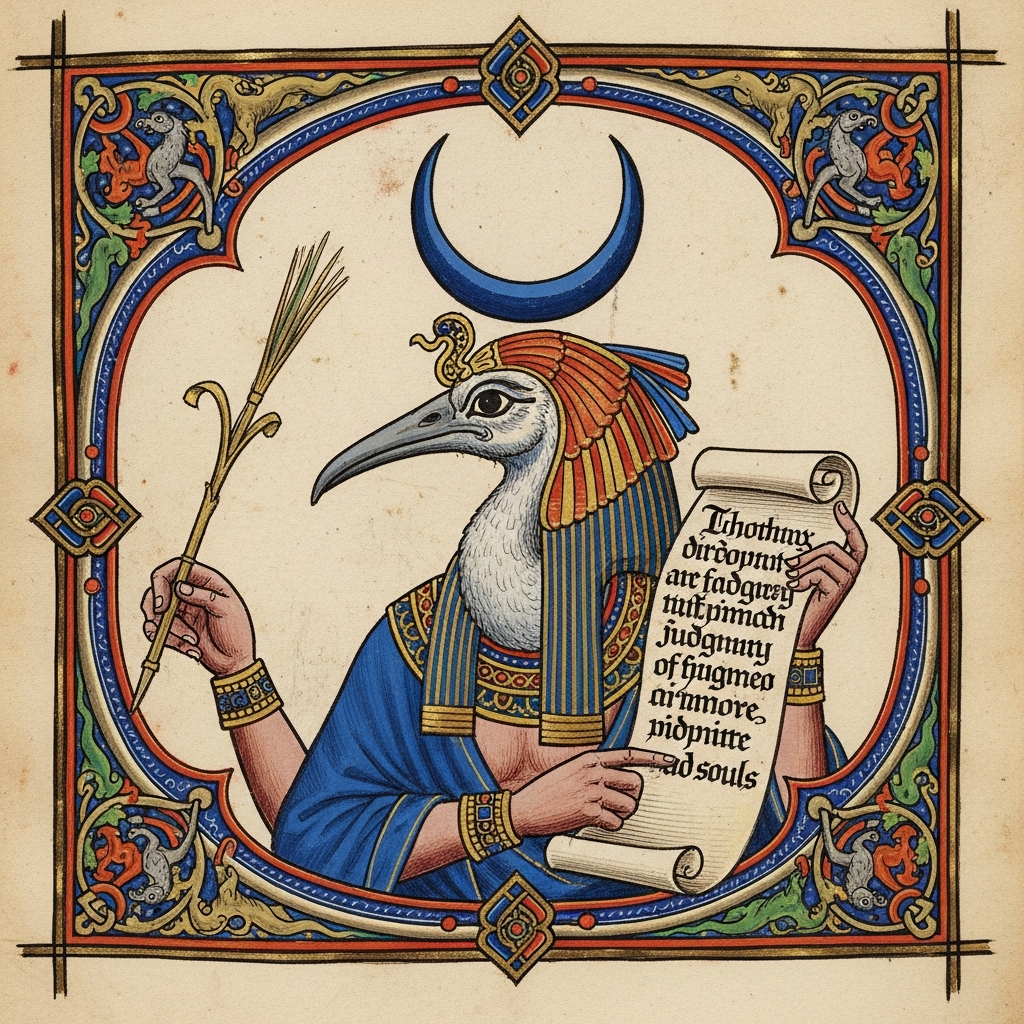
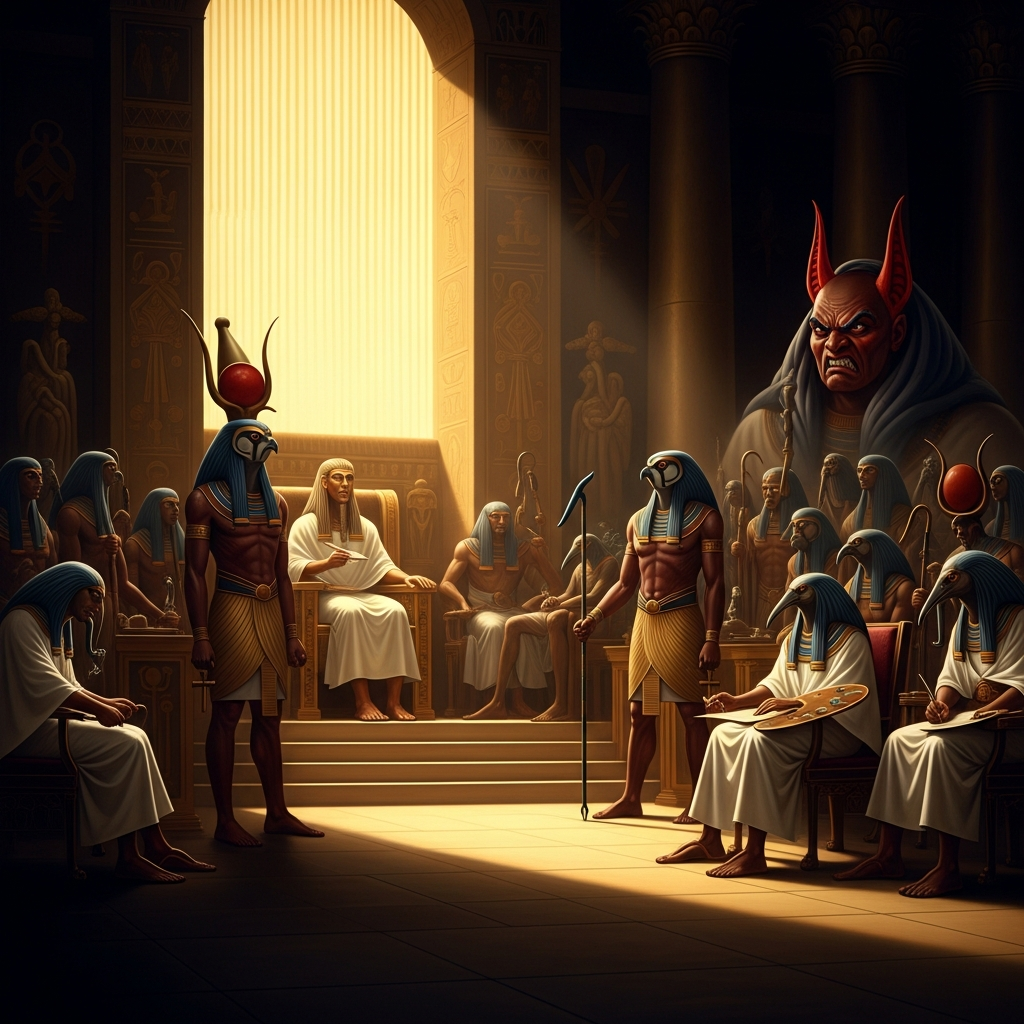
The tribunal of the Ennead in session: Ra-Atum presiding on a high throne, the gods arranged on either side, Horus standing with his falcon head and the crook and flail of kingship, Seth enormous and red-eared and furious, Thoth with his palette recording every word
 Generating art…
 Seth's garden at dawn, the tall lettuce plants catching the horizontal light
 Generating art…
 The river at midday, two hippopotami fighting in the shallows — one the color of the sky, one red as desert clay
 Generating art…
 Echoes Across Traditions
Entities


Sources
- John Wilson, trans., *The Contendings of Horus and Seth*, in James Pritchard (ed.), *Ancient Near Eastern Texts Relating to the Old Testament* (Princeton University Press, 1969)
- Miriam Lichtheim, *Ancient Egyptian Literature, Volume II: The New Kingdom* (University of California Press, 1976)
- Erik Hornung, *Conceptions of God in Ancient Egypt: The One and the Many* (Cornell University Press, 1982)
- Richard H. Wilkinson, *The Complete Gods and Goddesses of Ancient Egypt* (Thames and Hudson, 2003)
- Jan Assmann, *Death and Salvation in Ancient Egypt* (Cornell University Press, 2005)