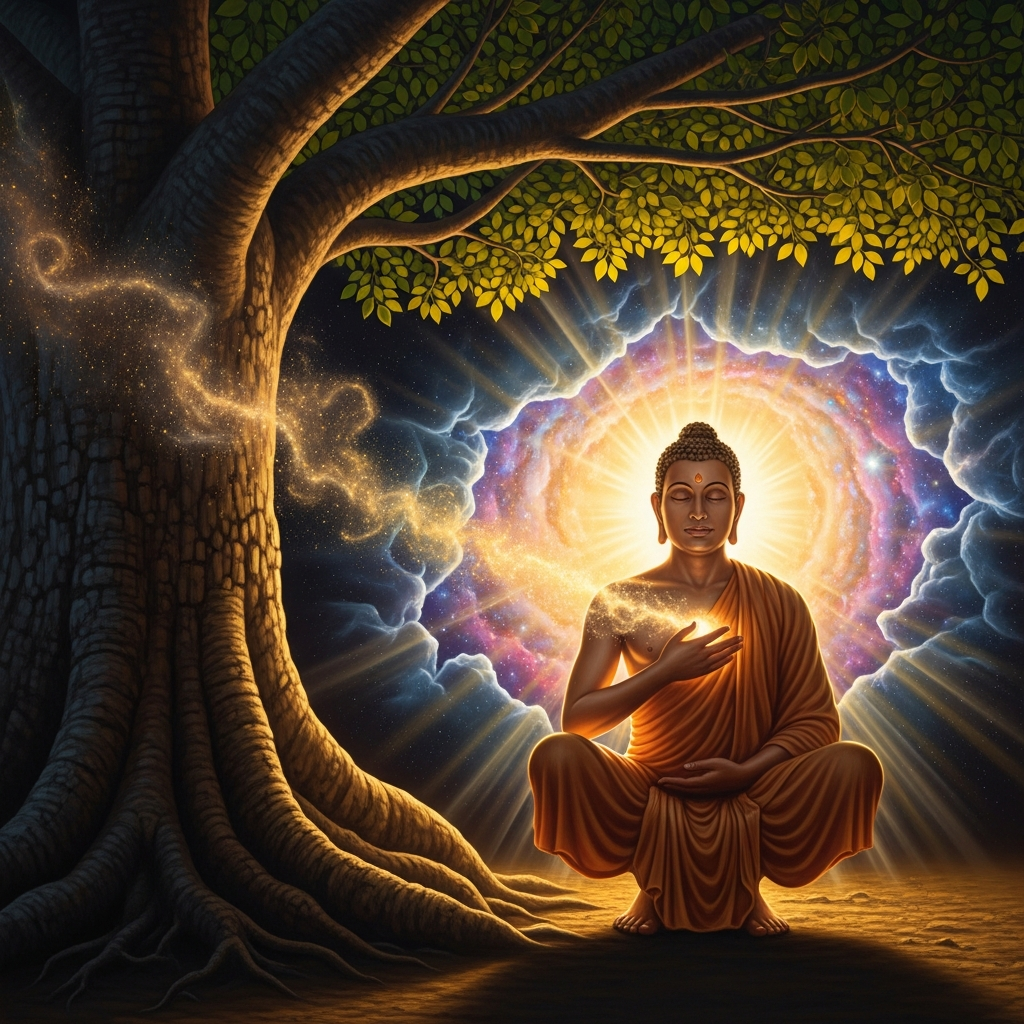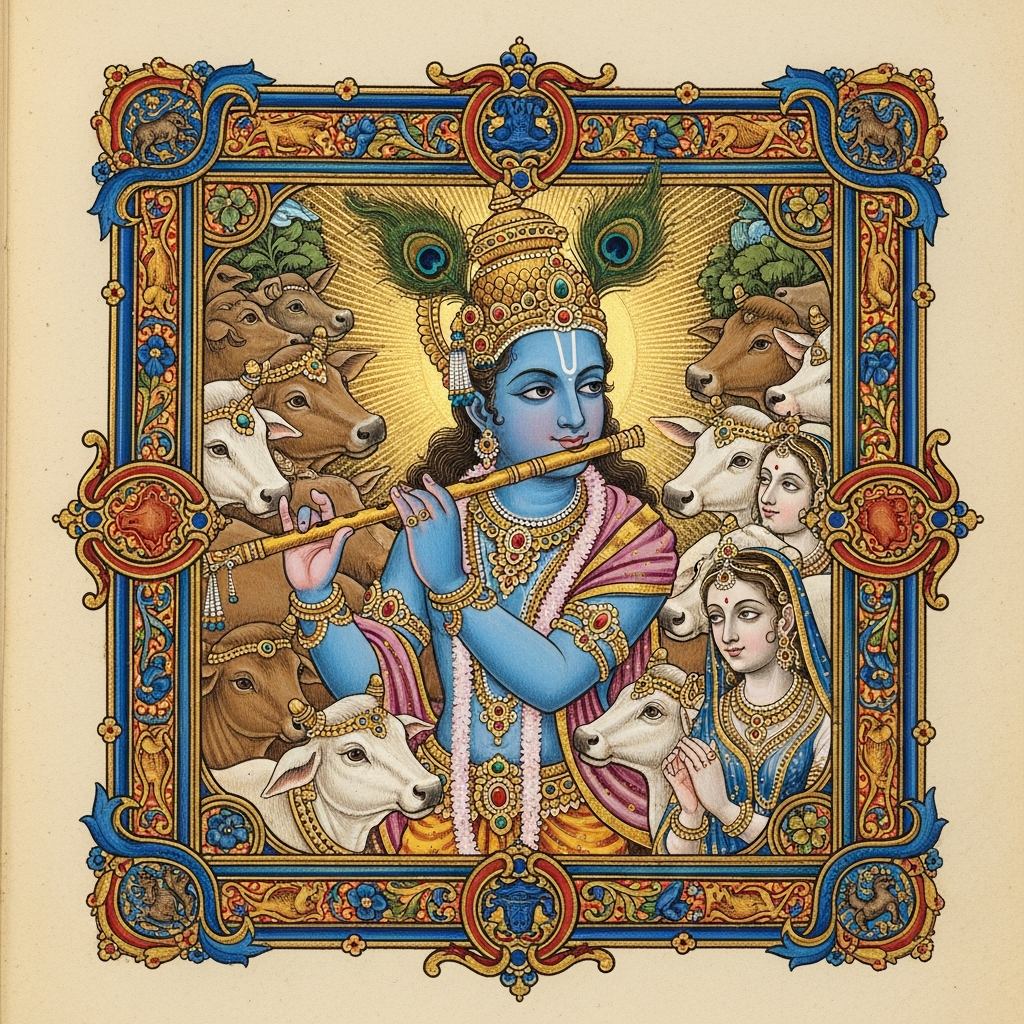
The Wedding That Became a Double Renunciation
Traditional epoch: c. 3000 BCE (legendary); the Jain cosmological timeline places Neminatha before Parshvanatha and Mahavira · Dvaraka (the mythological city, on the coast of Gujarat); Mount Girnar
Contents
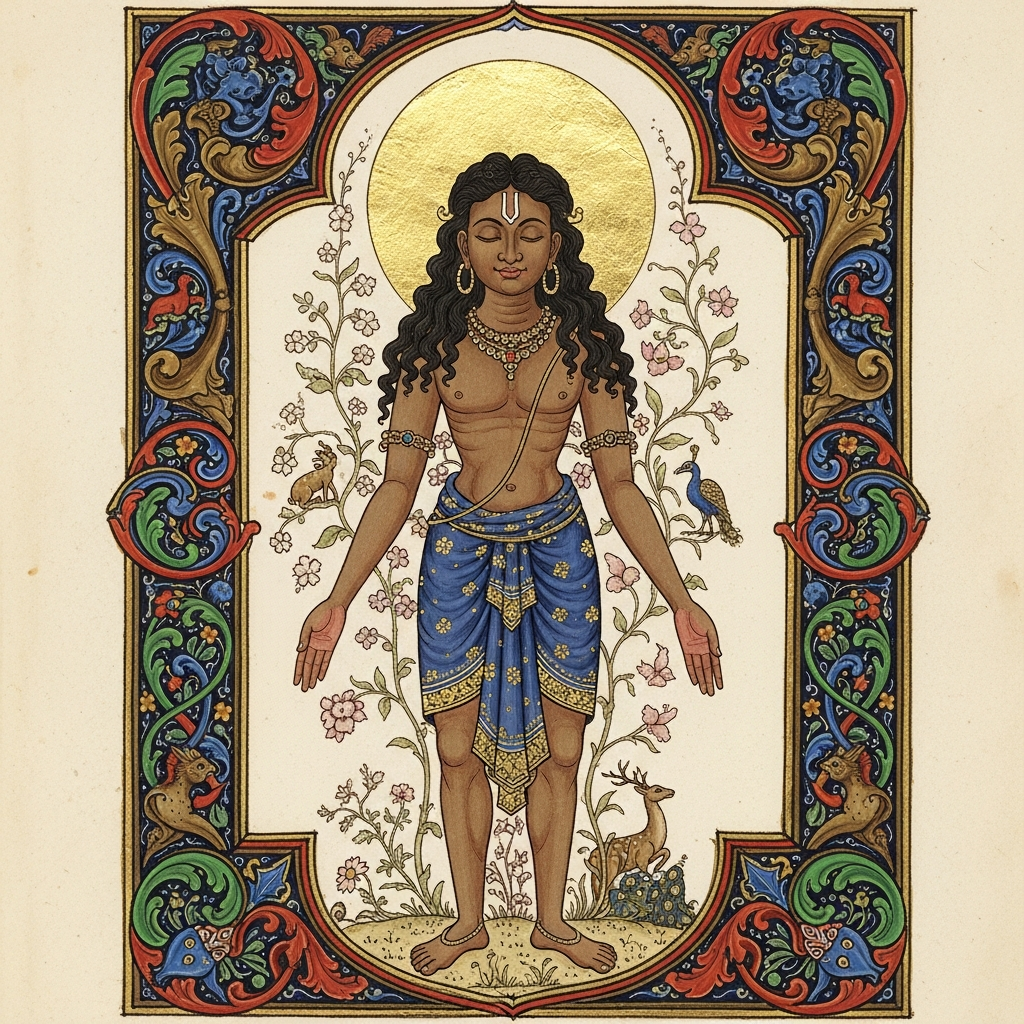
Neminatha, the twenty-second Tirthankara and cousin of Krishna, is riding in his wedding procession when he hears the animals crying in their pens outside the feast-hall. He stops. He looks at them. He cannot proceed. He turns the procession around, returns his betrothed to her father, and renounces the world that afternoon. His bride, Princess Rajimati, eventually renounces too.
- When
- Traditional epoch: c. 3000 BCE (legendary); the Jain cosmological timeline places Neminatha before Parshvanatha and Mahavira
- Where
- Dvaraka (the mythological city, on the coast of Gujarat); Mount Girnar
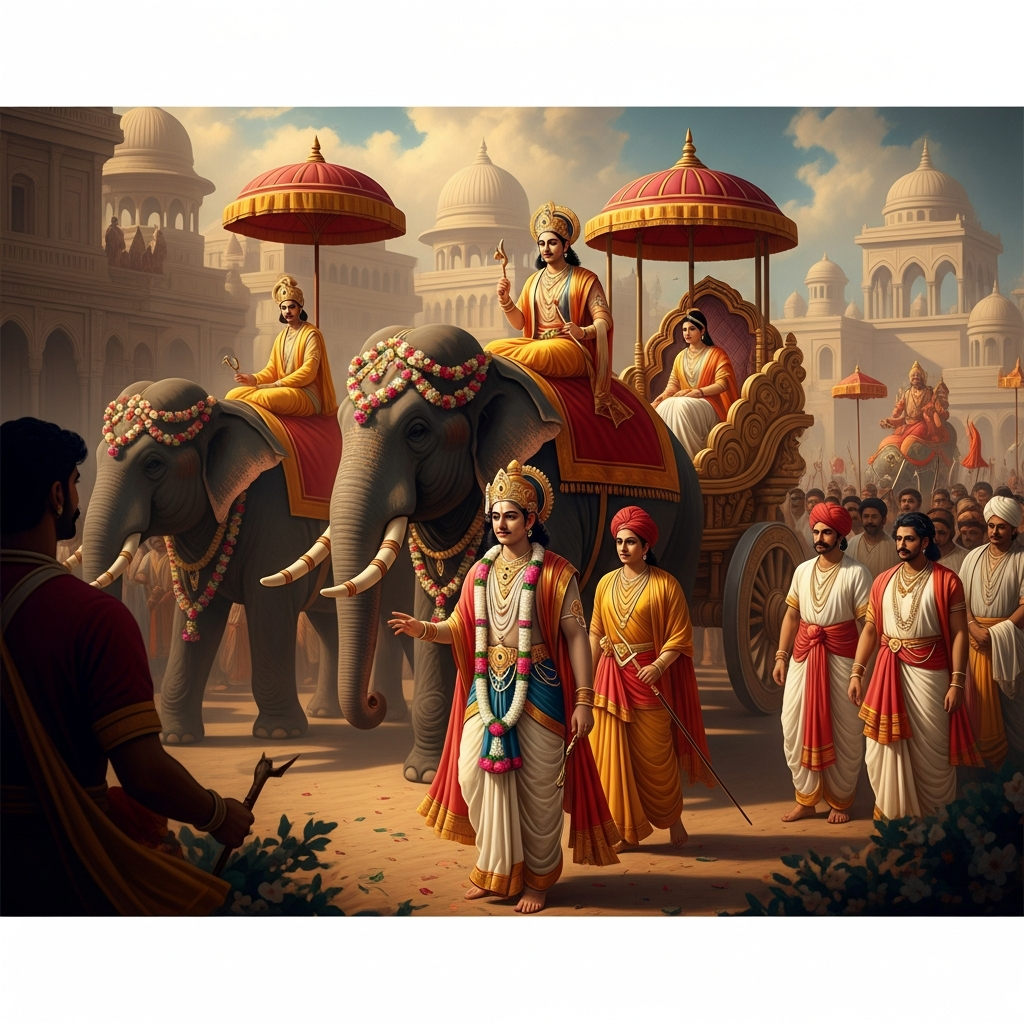
The chariot is garlanded with marigolds. The musicians have been playing for three hours and have not yet tired. The elephants are draped in gold cloth and their foreheads are painted with white lotus patterns in sandalwood paste. Dvaraka has turned out in its entirety to watch the procession: the twenty-second Tirthankara of this cosmic age is being married, and the city intends to be present for it.
Neminatha sits in the chariot wearing the bridegroom’s crown. He is young and the crown suits him and everyone agrees on this. His cousin Krishna rides nearby — a different tradition’s account of the same event, where the Vaishnava texts would say this is a cousin of the avatar and the Jain texts would say this is the avatar attending the Tirthankara, and both cannot be right and both insist. Princess Rajimati is waiting at her father Ugrasena’s palace. The ceremony will begin when the procession arrives.
He hears the sound first.
It is not dramatic. It is the ordinary sound of penned animals: a goat’s complaint, a buffalo shifting weight, the wet breath of creatures in a confined space on a hot afternoon. He has heard this sound before — markets, festivals, kitchens. He has never, before this moment, stopped to trace it to its source.
He signals the chariot to stop.
This takes time. A procession with elephants does not stop quickly. The musicians play on for several more measures before they register the halt. The crowd behind the procession closes in, curious. The crowd ahead of the procession keeps moving for a moment, then realizes the chariot is not following.
He steps down.
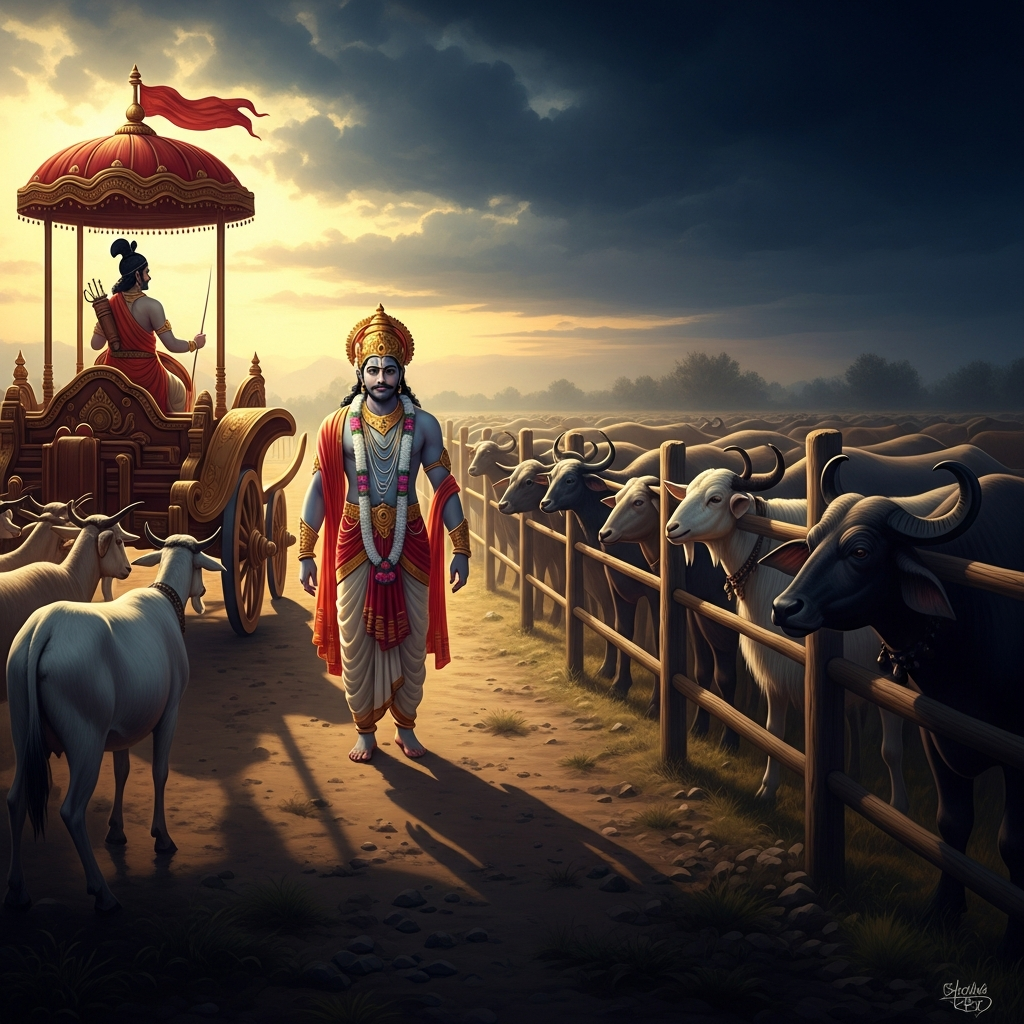
He walks to the fence where the animals are penned. Goats, buffalo, sheep — hundreds of them, brought from farms across the territory to feed the thousands of guests celebrating his happiness. They are not suffering in any dramatic sense. They are penned, which animals in pens always find irritating, and some of them are thin from the journey, and all of them will be dead by this time tomorrow. He stands at the fence and looks at them and they look back with the flat, horizontal patience of animals that have no context for what is about to happen to them.
He understands what the feast requires. He has simply not, until this moment, stood at the fence and let himself understand it.
The texts say he weeps. This is notable because Tirthankaras, at the moment of their decisive realization, do not typically weep — they typically achieve the serene cognitive shift of the person who has finally seen what was already there. But Neminatha, in this account, weeps at the fence before he is transformed by it. The weeping comes first. This is the body registering what the soul already knows.
His attendants come to him. His advisers come to him. His cousin Krishna, the man who has spent his own life threading the impossible needle of duty and action and non-attachment, rides up and speaks to him. The texts give Krishna various things to say — arguments about the feast, about the tradition, about the hundreds of guests who have traveled from distant kingdoms, about Rajimati waiting in her wedding garments. The arguments are well-made. They do not work.
They do not work because Neminatha is not weighing arguments against arguments. He is standing at a fence looking at animals that will die for his celebration, and he cannot find inside himself a position from which that is acceptable. He is not constructing a philosophical position. He is reporting a fact about himself: he cannot proceed.
He turns the procession around.
The return is slower than the departure.
He removes the bridegroom’s crown in the chariot on the way back and holds it in his hands, looking at it — the gold work, the jewels, the craftsmanship that is itself a kind of celebration. He places it on the seat beside him. He removes the garlands. He removes the rings. By the time the chariot returns to the point where it began, he has already begun.
He sends a message to Ugrasena’s palace. The message is brief. He does not try to explain. The animals in the pen will not survive his explanation. Rajimati will hear what happened and will have to understand it without having stood at the fence herself.
He walks out of Dvaraka and up the slopes of Mount Girnar.
The texts say his cousin Rathanemi — sometimes identified as his brother — follows him, but not immediately. Rathanemi watches him go and does not follow that day and later regrets it, later follows, later has his own renunciation. This is how traditions propagate: the first person who leaves makes it possible for the next person to imagine leaving, and the next person’s imagination is also a kind of courage.
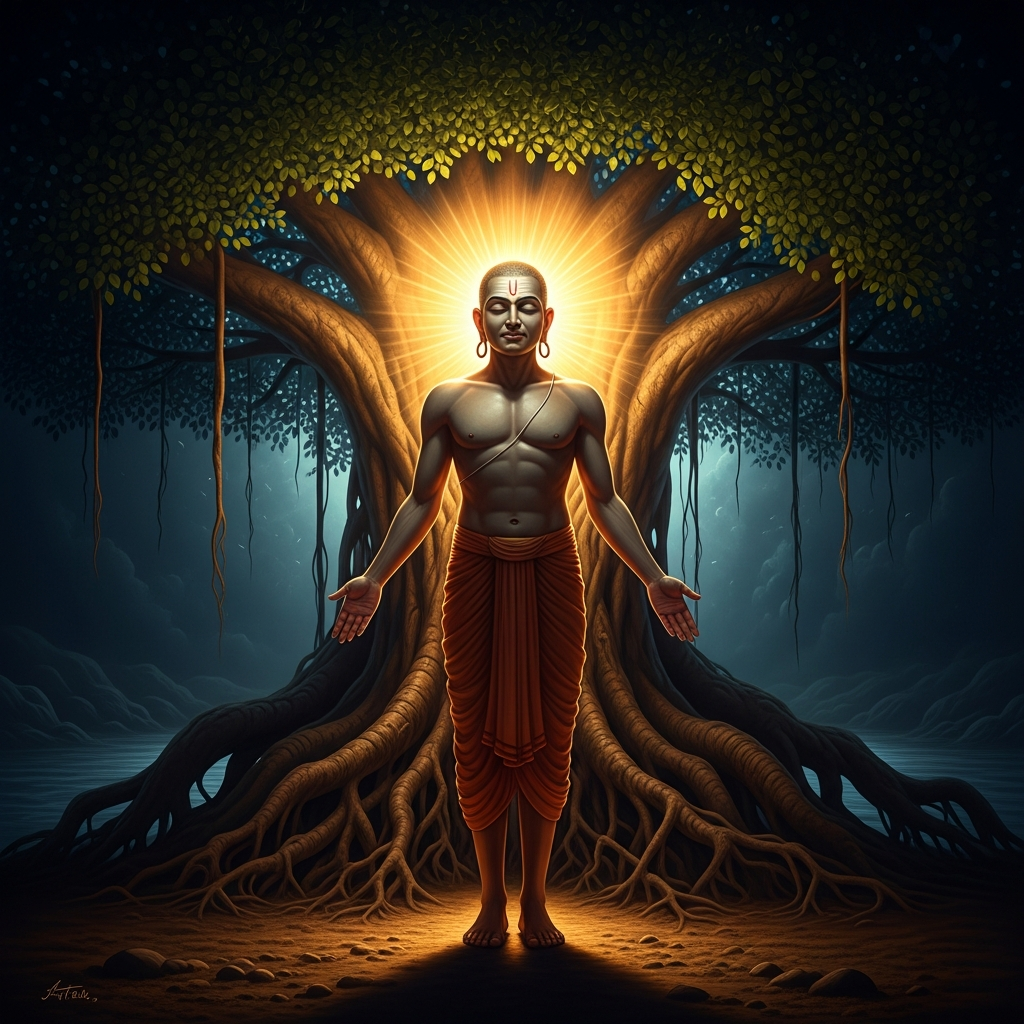
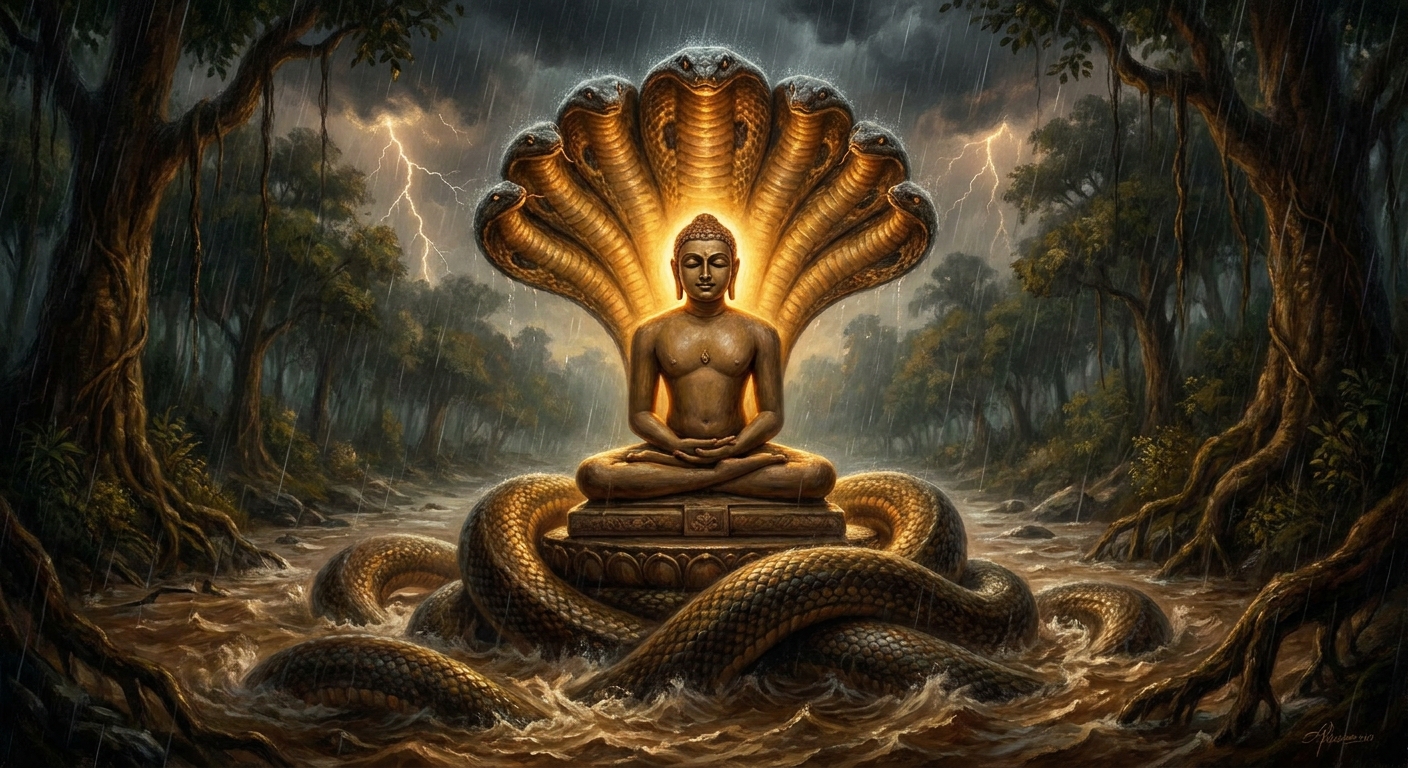
Neminatha practices asceticism on the slopes of Girnar for fifty-four days. He achieves kevala-jnana — omniscience — under a vetasa tree. He gathers a sangha. He teaches for seven hundred years in the cosmic calendar of the Jain timeline. He achieves liberation on the same mountain where he practiced: Mount Girnar, which is today a Jain pilgrimage site of the first order, the summit marked with a temple cluster that pilgrims climb in the early morning dark, barefoot on steps worn smooth by two millennia of feet.
He is gone from the cycle. But the other half of the story is not finished.
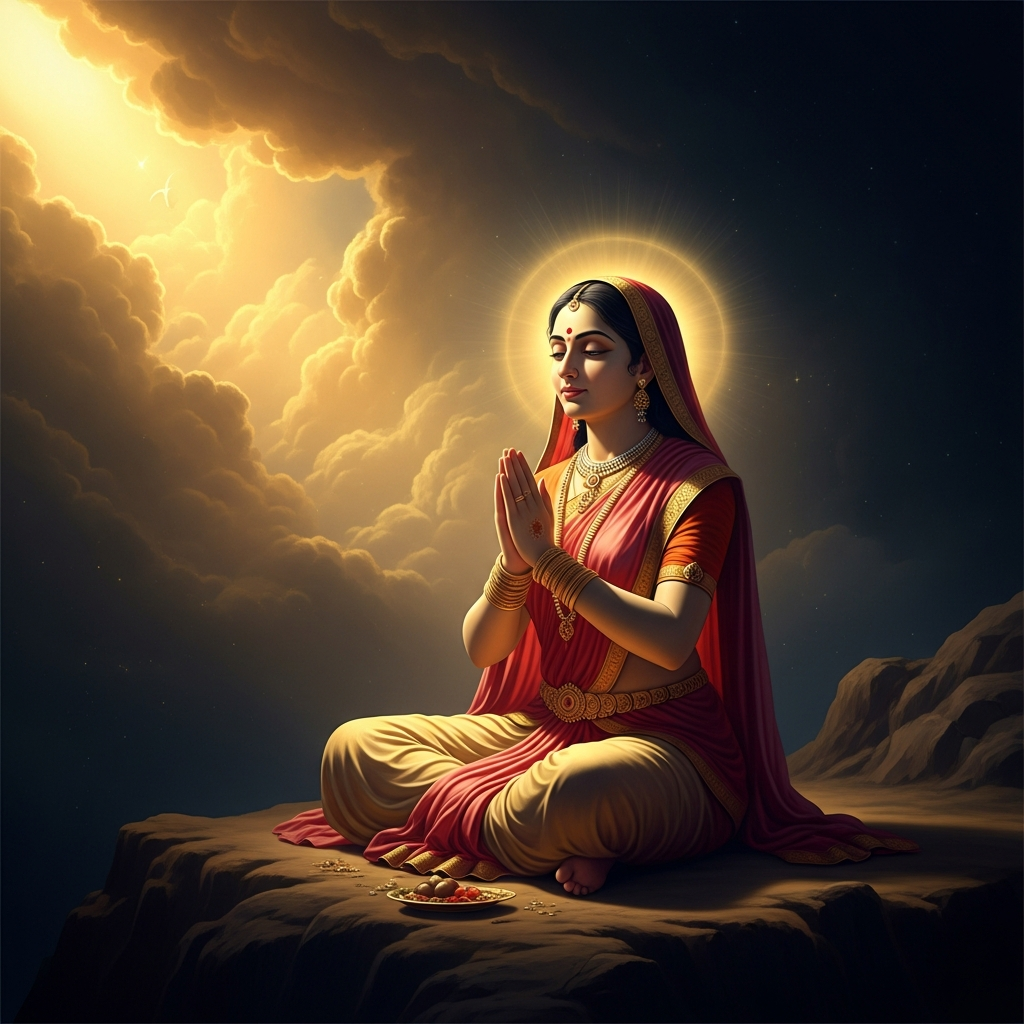
Princess Rajimati receives the message. She waits. She waits longer. She eventually learns the full account — the procession, the fence, the animals, the crown removed in the returning chariot. She sits with this.
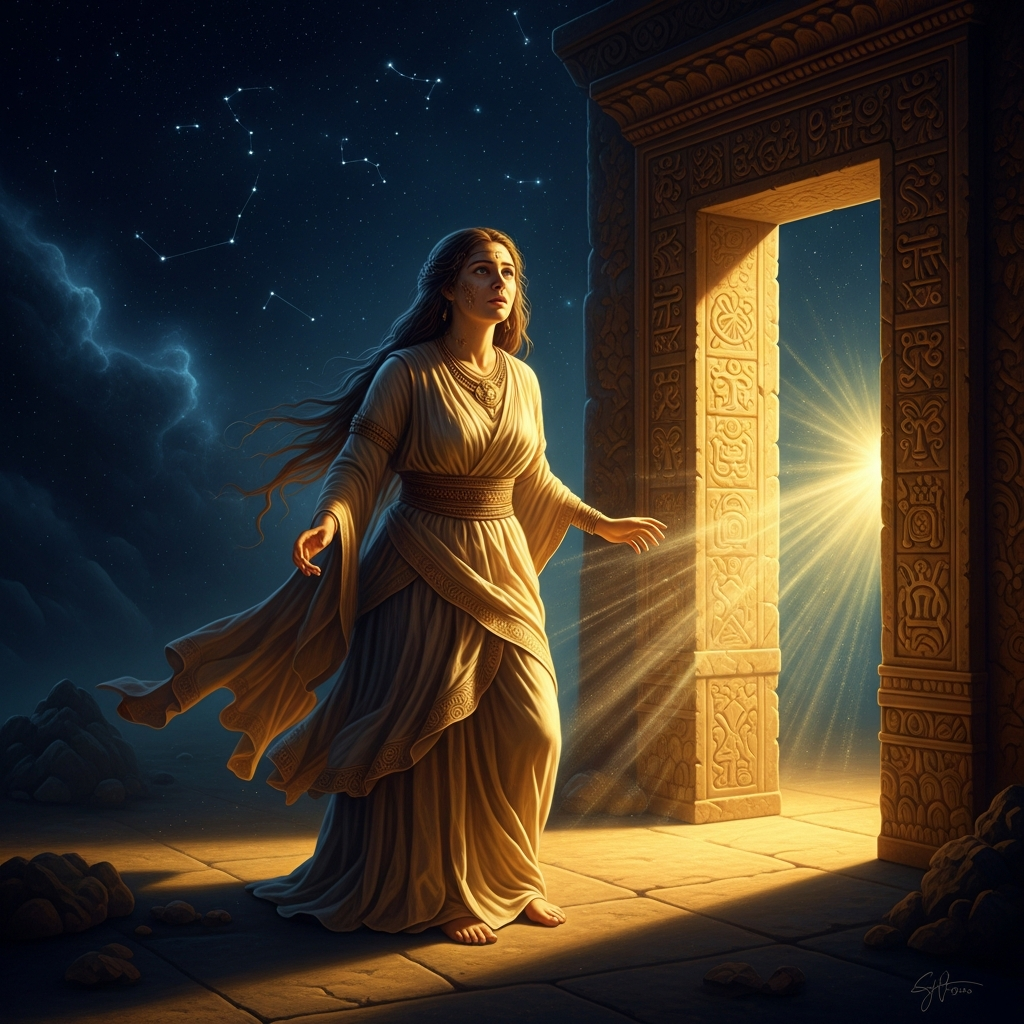
The texts do not give her a simple grief. They give her something harder to name: the recognition that the man she was going to marry went, on the afternoon of their wedding, to the only place she might someday go herself. She had her own kingdom, her own comfortable life, her own father who would arrange another marriage if she permitted it. She permits nothing. She waits, instead, until the waiting itself teaches her what the fence taught him: that the life on offer and the life available are not the same thing.
She takes the vows of a Jain nun. She practices on the same mountain. She achieves liberation.
The wedding that became a double renunciation. The feast that fed no one and liberated two.
The animals in the pen at Dvaraka were killed the next morning when the feast-preparations proceeded without the feast. Their meat went to the servants because the guests never arrived. The pen was dismantled and the site built over. Nothing in Dvaraka marks the fence where the twenty-second Tirthankara stopped his wedding procession and heard the world he could no longer enter. Mount Girnar still stands. The pilgrims still climb it before dawn.
Scenes
The procession moves through Dvaraka in full ceremony — elephants, musicians, garlands
 Generating art…
 He hears the animals before he sees them
 Generating art…
 Princess Rajimati, her wedding abandoned, eventually takes the vows herself on Mount Girnar
 Generating art…
 Echoes Across Traditions
Entities
- Neminatha
- Rajimati
- Krishna
- Ugrasena
- Rathanemi

Sources
- *Trishashti Shalaka Purusha Caritra* (Hemacandra, 12th century CE), vol. 8 — the Neminatha life narrative
- *Uttaradhyayana Sutra* (early references to Neminatha's lineage)
- Paul Dundas, *The Jains* (Routledge, 2nd ed. 2002)
- Padmanabh S. Jaini, *The Jaina Path of Purification* (University of California Press, 1979)
- N. Shanta, *The Unknown Pilgrims: History, Spirituality, Life of the Jaina Nuns* (Sri Satguru, 1997)