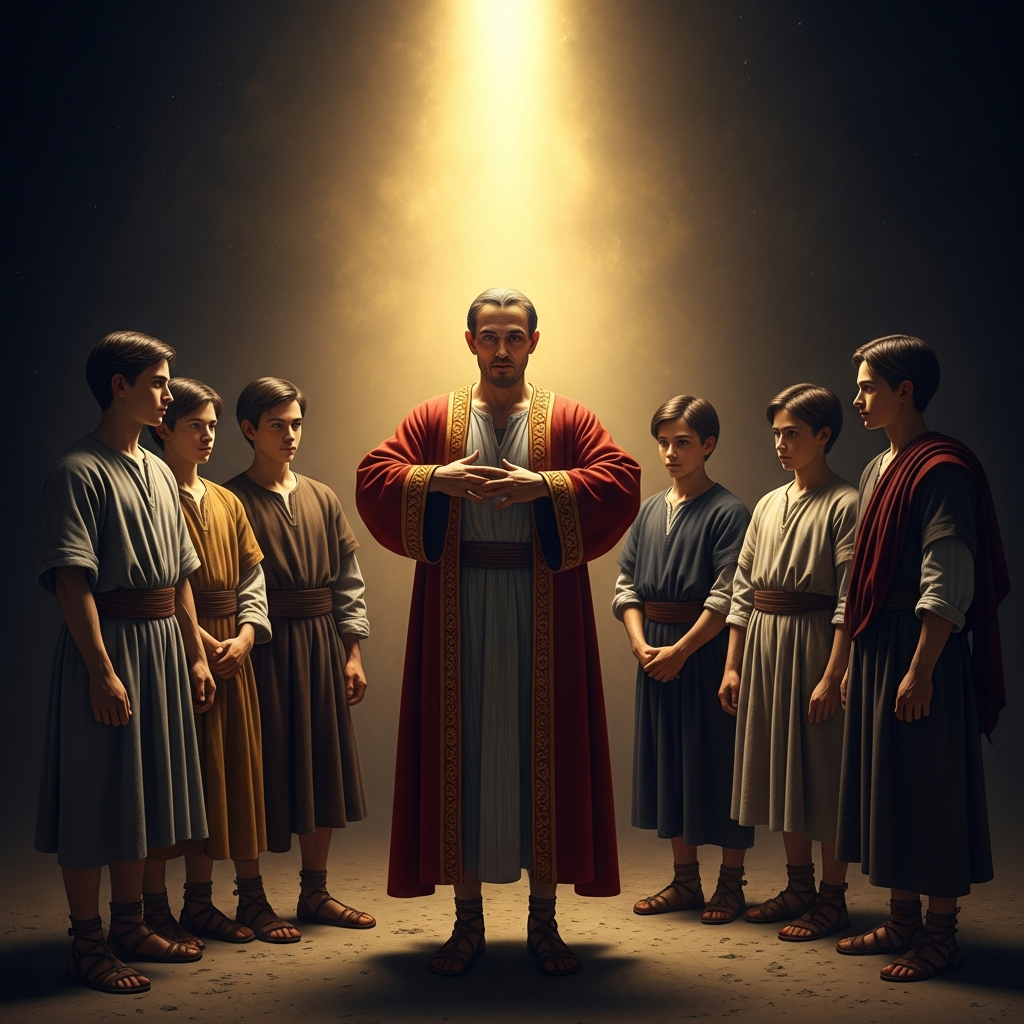
Rachel Weeping for Her Children
c. 586 BCE (the Babylonian exile); Jeremiah 31 and its Midrashic elaboration, 1st-5th century CE · Ramah, Benjamin (present-day West Bank); Babylon (present-day Iraq)
Contents
In Jeremiah 31:15, Rachel weeps at her tomb in Ramah as the exiles pass on their way to Babylon — not as metaphor but as reality. The Midrash extends the scene: Rachel pleads with God on behalf of her captive children, and where Abraham, Isaac, Jacob, and Moses have failed, she succeeds. The theology of maternal intercession: the one who cannot be refused.
- When
- c. 586 BCE (the Babylonian exile); Jeremiah 31 and its Midrashic elaboration, 1st-5th century CE
- Where
- Ramah, Benjamin (present-day West Bank); Babylon (present-day Iraq)
The tomb is at Ramah, which is just north of Jerusalem, which means it is directly on the road to Babylon.
This is not accidental. Nothing in the biblical text is accidental, and the Midrashic tradition’s entire method is the close reading of accidents until they reveal themselves as intentions. Jeremiah places Rachel’s tomb on the road to exile because the exile must pass the tomb. The exiles — the remnant of the kingdom of Judah, the people who were not killed in the siege, the people Nebuchadnezzar is moving north and then east to the rivers of Babylon — walk past the place where Rachel is buried.
And Rachel, according to Jeremiah, hears them.
A voice is heard in Ramah, lamentation and bitter weeping. Rachel is weeping for her children; she refuses to be comforted for her children, because they are no more. The verse is in the present tense, which in Hebrew can mean what it says: this is happening now. The voice is heard now. The weeping is current. Rachel, who has been dead for centuries — who died on this road, in childbirth, giving birth to Benjamin, and was buried here by Jacob in the one burial that happened on the road rather than in the family tomb at Machpelah — is awake in her tomb. She hears the feet on the road. She knows who they are.
She weeps for them because they are hers. The children of Israel are her children, and the children of her co-wife Leah, and the children of the servants, and the theology of the Hebrew family is sufficiently flexible to make all of them hers. She does not weep for any theological reason. She weeps because they are going into captivity and she is in the ground and she cannot stop it.
The Midrash, in Lamentations Rabbah and Pesikta de-Rav Kahana, extends the scene into the heavenly court.
At the moment of the Temple’s destruction, God’s anger has been resolved into something that looks like silence: God has turned the divine face away from Israel. The angel of God says: the Temple is burning, the people are in chains, where are the advocates? Where are the patriarchs? Where are the servants of God who have argued with him before?
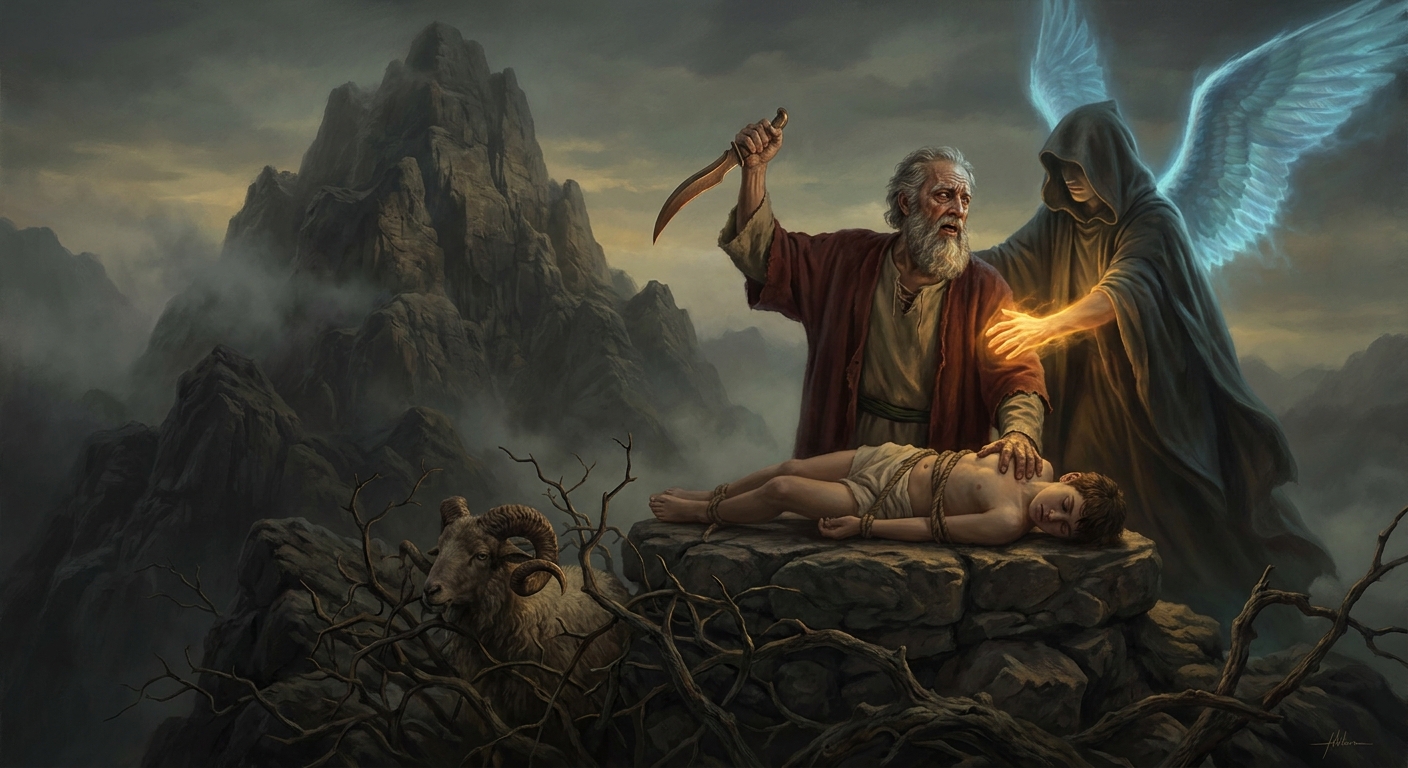
Abraham comes before God and argues. He recalls the Akedah — the binding of Isaac on Moriah, the willingness to sacrifice his son at God’s command. He says: I did not refuse you that day. Surely you owe my children something for that. God does not answer.
Isaac comes before God and argues. He recalls that he was the one bound, the one laid on the altar, the one who did not resist. He says: my children suffer in your name. God does not answer.
Jacob comes before God and argues. He recalls his seventy years of service, the years with Laban, the years of loss and exile and return, the years of learning that the covenant does not mean protection from harm. He says: have I not earned something? God does not answer.
Moses comes before God. Moses, who argued with God at Sinai, who said blot me out of your book if God would destroy Israel, who interceded at the golden calf and prevailed. Moses says: God of the universe, have you forgotten your Torah? Have you forgotten what you wrote through me? God does not answer.
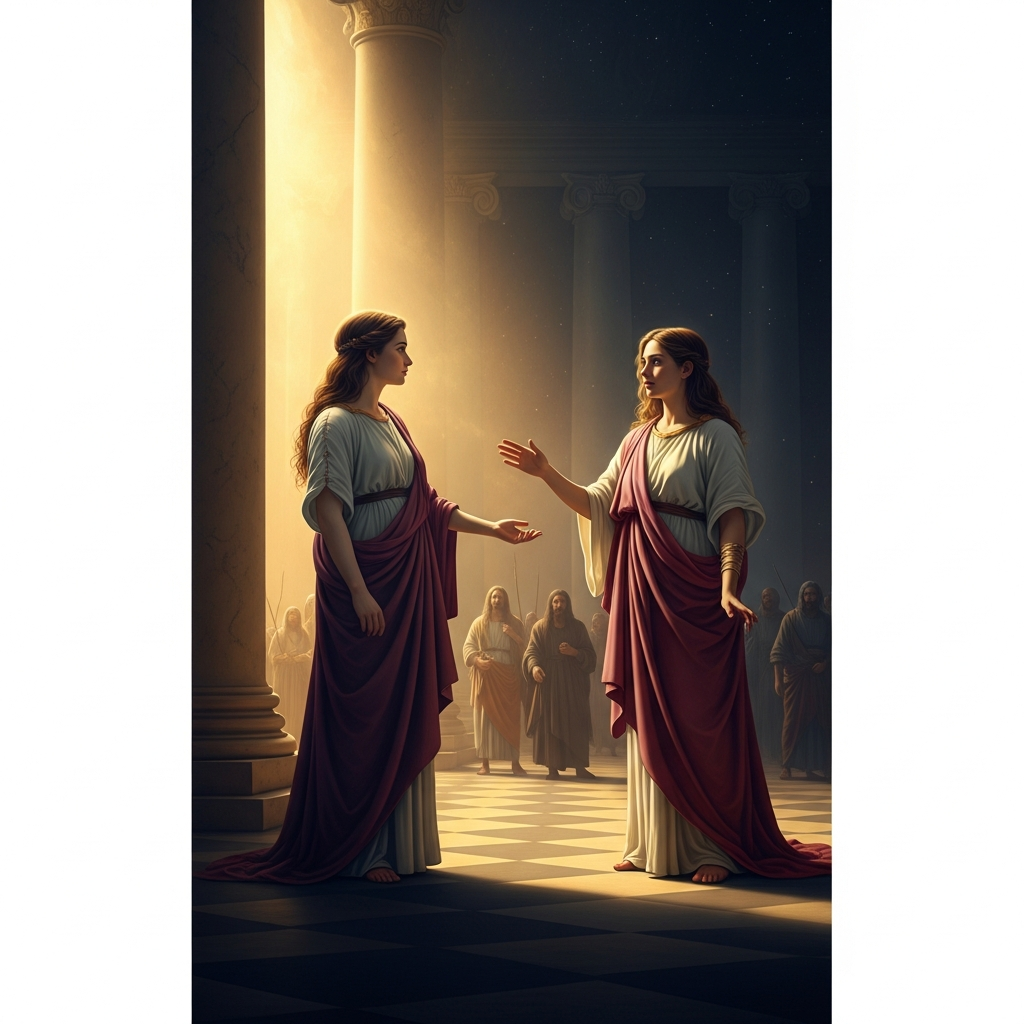
Rachel comes before God.
She does not argue from merit. She does not enumerate her suffering, though her suffering is substantial — the years of barrenness while her sister bore children, the humiliation of the wedding night when Jacob discovered he had married Leah and not her, the death in the road giving birth to Benjamin. She does not argue from service. She does not argue from the logic of covenant.
She argues from the logic of rivalry.
She says: I knew that Jacob loved me and not my sister. My father deceived Jacob into marrying Leah first, and I saw it, and I could have shamed my sister in front of Jacob on the wedding night — I could have called out, I could have told him — and I did not. I gave my sister the signs that Jacob and I had made between us. I hid under the bed and spoke to Jacob in my own voice so that he would not know the difference. I swallowed my grief and I protected my rival. I did not let jealousy overcome me.
She says: if I, flesh and blood, could control my jealousy for the sake of my sister who was my rival — surely you, God, who are not flesh and blood, who are not subject to the passions of the body, can control your jealousy for the sake of your children who worship other gods only because the nations lead them astray. Can you not do for them what I did for my sister?
The Midrash says: God answers immediately.
Thus says the Lord: Keep your voice from weeping and your eyes from tears, for there is a reward for your work and they shall come back from the land of the enemy. The promise of return in Jeremiah 31:16 — the verse immediately following the weeping verse — is God’s answer to Rachel. Not to Abraham’s logic of sacrifice. Not to Isaac’s logic of suffering. Not to Jacob’s logic of service. Not to Moses’s logic of Torah. To Rachel’s logic of love for a rival.
The Midrash’s point is not that the patriarchs and Moses argued badly. They argued correctly, from within the framework of merit and covenant and law. The point is that Rachel argues from outside that framework. She argues from the logic of the one who has nothing to gain — who swallowed her grief not to preserve the covenant but because her sister was standing there in the dark, and she loved her sister enough to not humiliate her, and this act had nothing to do with God and everything to do with what Rachel is.
And God, the Midrash says, cannot resist this. Cannot resist the person who did the right thing when there was no audience and no reward and no framework requiring it. Cannot resist the one who protected a rival in the dark.
The theology that emerges from the Rachel pericope is not the theology of the study house.
It is not the theology of merit earned through Torah observance, or of covenant made through circumcision, or of sacrifice performed correctly, or of law applied rigorously. It is the theology of the one who loved when love was not required, who showed mercy to a rival when rivalry would have been justified, who wept not in argument but in simple grief — and whose grief became, without her intending it, the most persuasive legal argument in the history of divine-human relations.
The exiles on the road pass the tomb. They do not know, most of them, that she is awake in there. They do not know that her weeping is being heard, that the hearing is becoming a response, that the response will take decades to arrive — that the return from Babylon under Cyrus is still seventy years away. They walk north in their chains and their shame and their grief, and they do not look at the cairn of stones by the road.
But she is there. She is there in 586 BCE and she is there in every subsequent exile and she is there in Lamentations Rabbah’s imagination of the heavenly court and she is there in Matthew’s Gospel, which quotes the Jeremiah verse when Herod kills the children of Bethlehem: Rachel weeping for her children, refusing to be comforted, because they are no more. She is the one who will not be comforted, which means she is the one who keeps asking. She keeps asking until God answers, not because she has earned an answer but because she cannot stop asking, and the asking is not strategy but love, and love, in this tradition, is the one thing that moves the unmovable.
The tomb at Ramah — or the tomb near Bethlehem, the location is disputed in the text itself — has been a site of pilgrimage for centuries. Women pray there, particularly for fertility and for children. The continuity with Rachel’s own story is obvious and deliberate: the woman who begged Jacob, give me children or I shall die, is the address for prayers about children.
The Midrash gives her the most powerful voice in Jewish tradition. She persuades God when no one else can. And she does it not through argument about rights or merit or covenant but through the account of a single act of love for a rival, in the dark, when no one was watching.
What the Midrash is saying, among other things, is that God notices those moments. That the act performed without audience — without the synagogue, without the community, without the Torah justification — is the one that registers most clearly in the divine attention. Rachel did not help her sister in order to persuade God. She helped her sister because her sister was there.
That is why God answers her.
Scenes
The road past Ramah at dawn, the long column of Judahite exiles moving northward into captivity, 586 BCE
 Generating art…
 Rachel standing before the divine presence in the celestial court, her posture neither supplication nor demand but the particular stance of a mother who has run out of patience with abstractions
 Generating art…
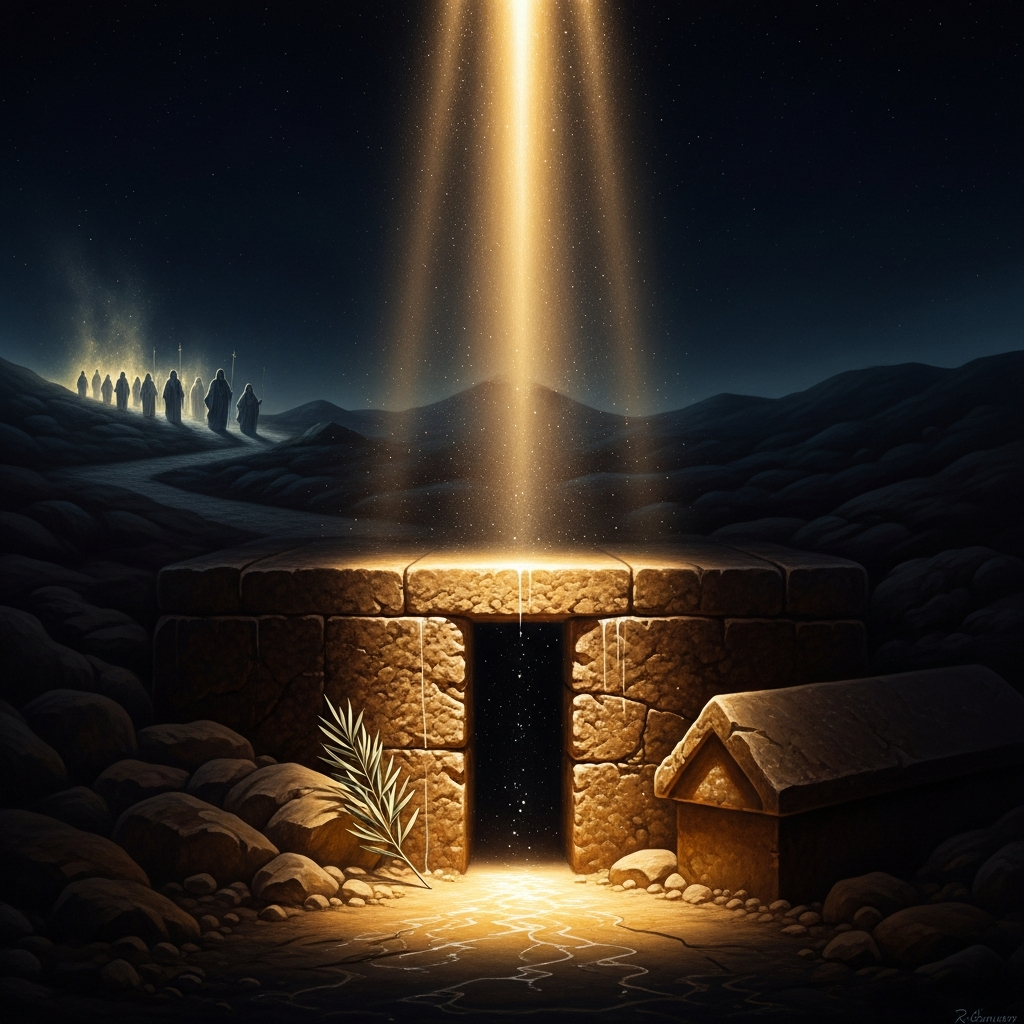
 The moment of divine response — light breaking across the tomb at Ramah, the promise of return, the weeping that has become the vessel of a covenant
 Generating art…
 Echoes Across Traditions
Entities
- Rachel
- Jeremiah
- the Exiles of Babylon
- Abraham
- Moses
Sources
- Elie Wiesel, *Messengers of God: Biblical Portraits and Legends* (Random House, 1976)
- Avivah Gottlieb Zornberg, *The Murmuring Deep: Reflections on the Biblical Unconscious* (Schocken Books, 2009)
- Tikva Frymer-Kensky, *In the Wake of the Goddesses: Women, Culture and the Biblical Transformation of Pagan Myth* (Free Press, 1992)
- Nehama Leibowitz, *Studies in Bereshit (Genesis)* (World Zionist Organisation, 1981)
- Phyllis Trible, *Texts of Terror: Literary-Feminist Readings of Biblical Narratives* (Fortress Press, 1984)