Rostam's Seven Labors Across the Wilderness
The reign of Kāvus Shah — the second great heroic cycle of the Shahnameh · The seven regions between Iran and Māzandarān — a mythic wilderness of monsters and sorcery
Contents
To rescue King Kāvus from the White Div, Rostam must cross seven deadly regions on his miraculous horse Rakhsh — surviving thirst, a lion, a dragon, a sorceress, and demons before facing the White Div in his mountain stronghold.
- When
- The reign of Kāvus Shah — the second great heroic cycle of the Shahnameh
- Where
- The seven regions between Iran and Māzandarān — a mythic wilderness of monsters and sorcery
King Kāvus has done it again.
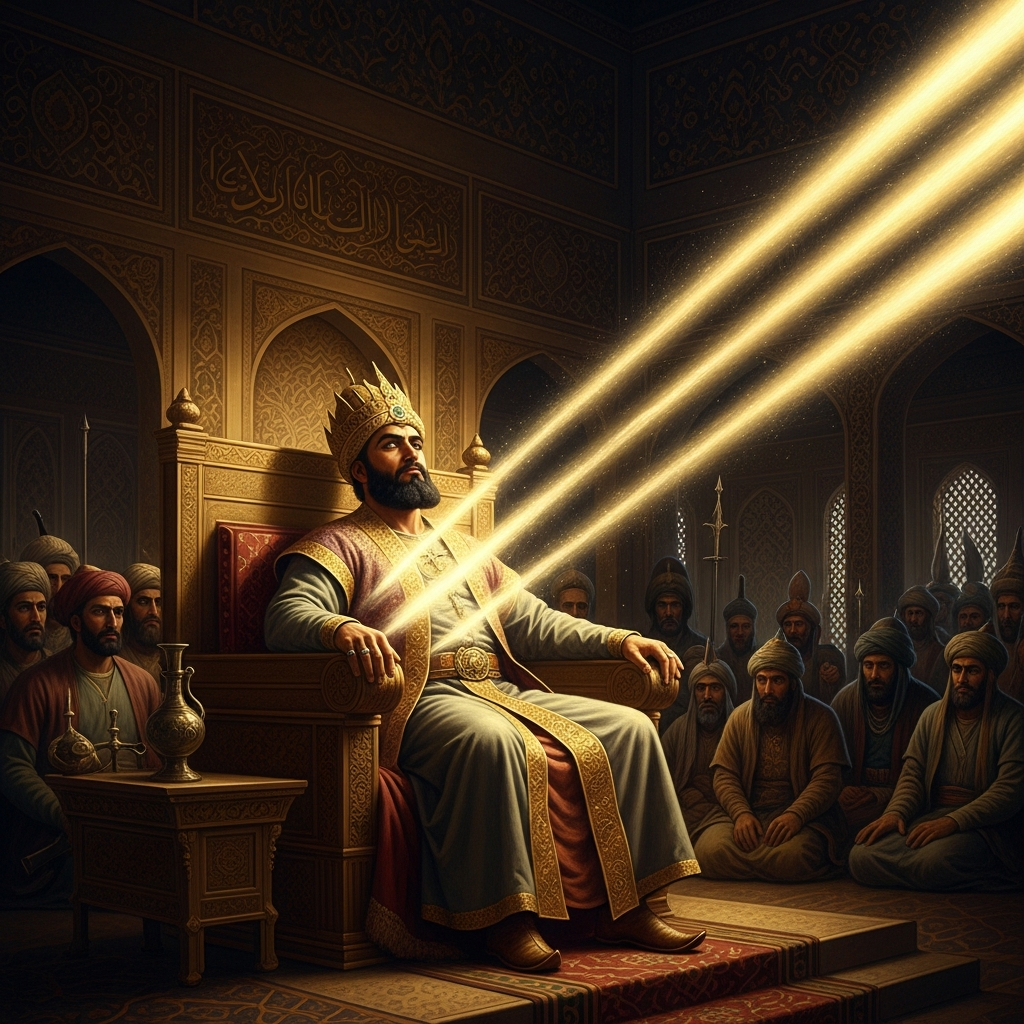
Kāvus Shah is not a bad king, exactly — the Shahnameh is careful about this — but he is a king who requires rescue with a frequency that tests even the loyalty of Iran’s greatest hero. He has been tricked by a demon disguised as a minstrel into invading Māzandarān, the kingdom of the White Div, in the north beyond the mountains. The White Div has blinded the king and his army with a magical darkness and taken them prisoner. The cure for the blindness — only the blood of the White Div’s liver can restore the sight of those he has blinded — is available only from the same being who applied the affliction.
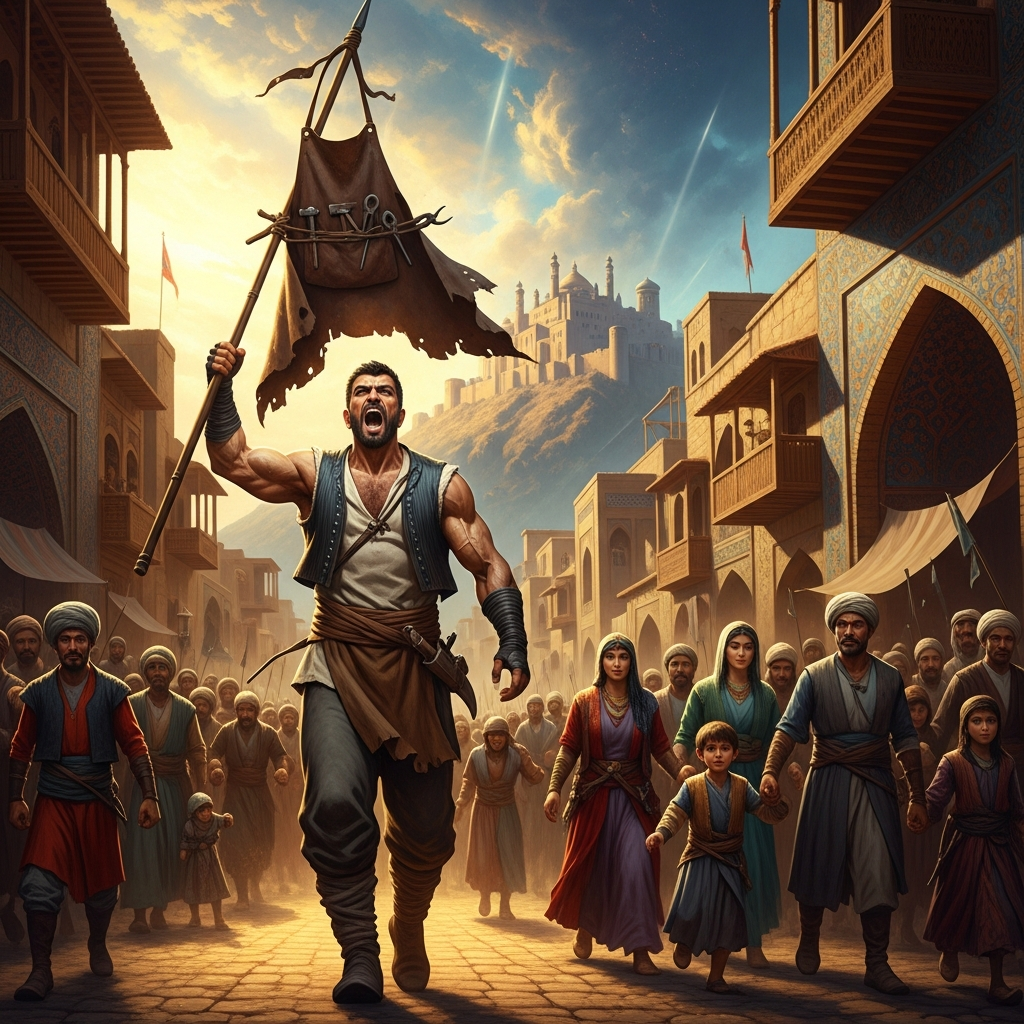
Someone must go to Māzandarān.
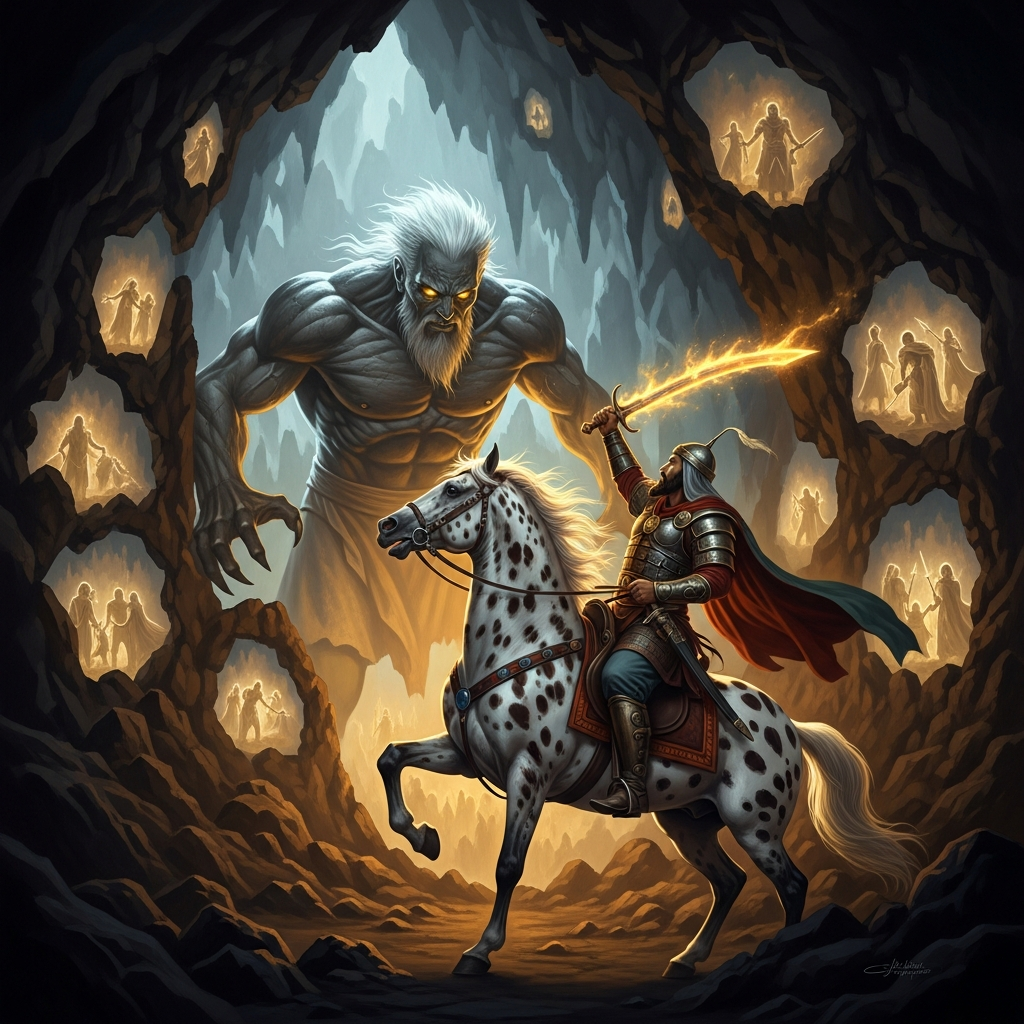
Rostam chooses the shorter road, which is also the more dangerous road. It passes through seven regions, each of which has its own nature and its own trial. He mounts Rakhsh — the great spotted horse who has been his companion since he caught the horse as a colt by overpowering its entire herd — and rides north.
The first station is thirst. The road passes through a waterless waste and Rostam is dying when a ram leads him to a spring. The second station is a lion that comes in the night while Rostam sleeps. Rakhsh kills it — stamping it to death with his iron hooves — and Rostam wakes to a dead lion and a faithful horse and reprimands Rakhsh for fighting without him. The third station is another night: a dragon appears in the dark, but vanishes each time Rostam wakes. Twice it vanishes. The third time, Rakhsh wakes him again, and this time Rostam sees it and takes it apart.
The fourth station is heat. The sun burns the plain white and Rostam falls from exhaustion. He finds water and food; he revives.
The fifth station is a sorceress who presents herself as a beautiful woman with a feast. She gives him wine and in the wine she has put a spell — but when he speaks the name of God and the Wise Lord, she is revealed in her true shape, hideous and malicious, and he kills her quickly.
The sixth station is Aulad, a regional lord who challenges him. Rostam defeats him and takes him captive, and Aulad — in the tradition of defeated opponents who become guides — agrees to show him the road to the White Div’s fortress.
The seventh station is the fortress itself.
The White Div is enormous, even by div standards — large enough that his cave is a mountain, his hair is white and matted like iron wool, and the ground around him smells of sulfur. Rostam enters at noon, which is the single hour of the day when divs sleep, and he fights the monster in a darkness that is physical: the White Div bleeds black, not red.
He takes the liver.
He rides back through the seven regions faster than he came, because he has Aulad’s guidance and the trials have already been cleared. He brings the liver to the physician who is waiting outside the prison, and the physician squeezes it and applies the blood to the blinded eyes of Kāvus and his army.
The eyes open. The men see.
Kāvus sits in the darkness of his prison and becomes a king again in the time it takes a drop of blood to fall from a cupped hand to a blinded eye. He embraces Rostam. He is embarrassed, but not permanently embarrassed — the Shahnameh suggests he has the kind of kingly resilience that does not require consistent good judgment to function effectively.
Rostam says nothing critical. He is not built for criticism; he is built for the road north and the seven trials and the moment when the lion comes in the dark and the horse is already fighting.
Rakhsh, for his part, eats a great deal and sleeps for a day.
Seven stations, and they are all cleared now, and the road back to Iran is open.
Echoes Across Traditions
Entities


Sources
- Ferdowsi, *Shahnameh*, 'The Seven Labors of Rostam,' translated by Dick Davis
- Olga Davidson, *Poet and Hero in the Persian Book of Kings* (Cornell, 1994)
- Jerome Clinton, 'Ростам's Seven Labors,' *Edebiyât* 7 (1983)
- Dick Davis, 'Rostam,' *Encyclopædia Iranica* (2009)