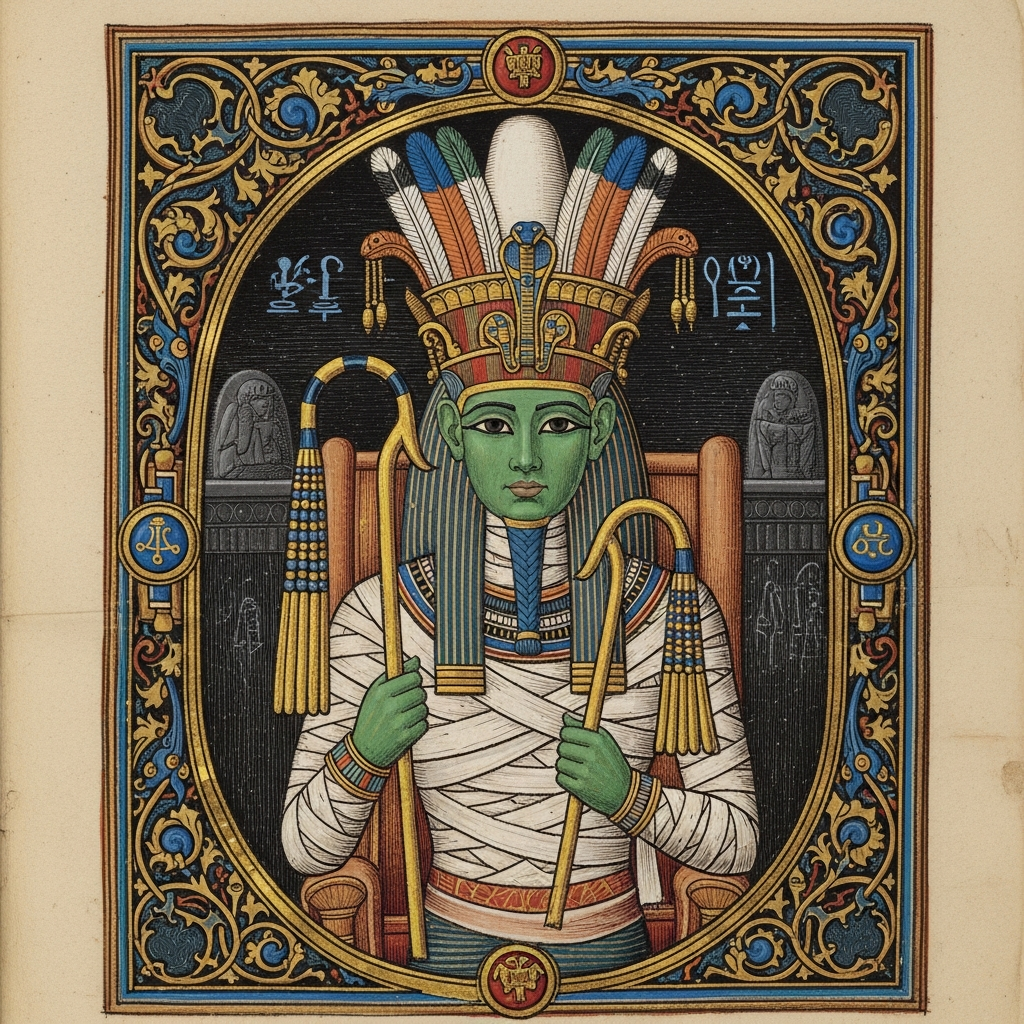
The Coffin Built for One
Mythic Time · sources from Pyramid Texts ~2350 BCE, Plutarch ~100 CE · Egypt — the banquet hall of Set, the banks of the Nile
Contents
Set does not act from hatred. He acts from mathematics. He has measured his brother's body while Osiris slept, and the cedar chest he carries into the banquet hall is the most beautiful object in Egypt — because it has to be. Chaos is not the enemy of order. It is order's twin, watching from the other chair at the table.
- When
- Mythic Time · sources from Pyramid Texts ~2350 BCE, Plutarch ~100 CE
- Where
- Egypt — the banquet hall of Set, the banks of the Nile
He has been measuring his brother for months.
Not with a cord — Set is subtler than that. He watches. He watches the length of Osiris’s shadow at noon, the span of Osiris’s arm when he reaches for a cup, the distance between the base of Osiris’s skull and the heel of his foot when his brother lies back in the garden and closes his eyes against the sun. Set is the god of calculation, of desert distances, of the precise eye that reads a horizon. He knows how to translate what he sees into dimensions. He knows how to translate dimensions into wood.
The cedar comes from the mountains in the north. The lapis lazuli is ground fine and mixed with Egyptian blue in the inlay. He does not rush. A box built wrong — a box that fits too loosely, too tightly — defeats the entire purpose. The purpose is that it fits exactly. It must seem miraculous. The miracle is the trap.
He commissions seventy-two conspirators. He swears each of them separately, in rooms with no windows, with the careful bureaucratic precision that chaos, when it moves toward a specific goal, always deploys. He sets the date. He sends the invitations.
The banquet of Set is a famous occasion. Osiris comes.
The hall is lit with lamps burning cedar oil — the same wood as the chest, and the smell fills the room with something Osiris cannot quite name: sweetness with an edge, the scent of mountains he has never visited, of trees that do not grow in the valley. The seventy-two are already seated. They are laughing, eating, performing the casual warmth of men who have no agenda for the evening.
Set waits until the second hour of the feast.
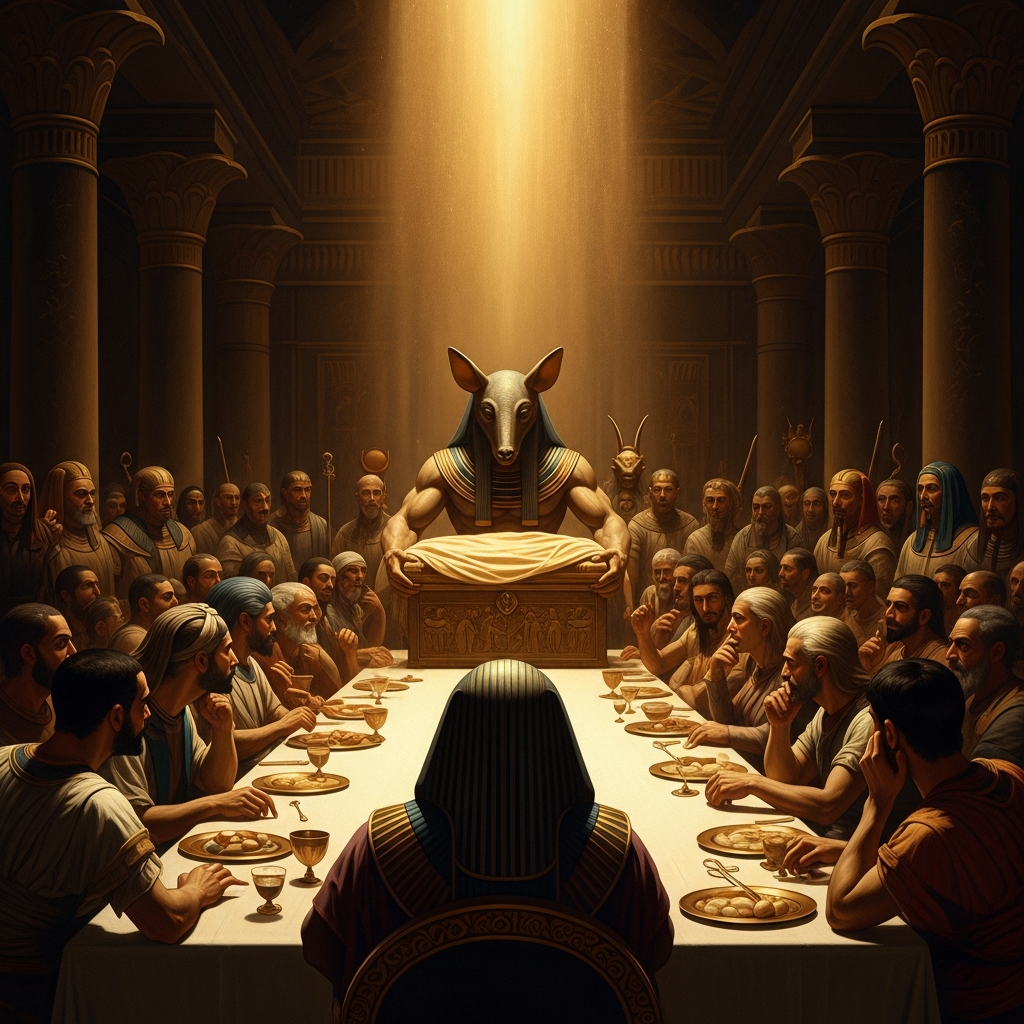
Then he rises, and his servants carry the chest into the center of the hall, and the room goes quiet the way a room goes quiet when something too beautiful has entered it. The cedar is dark and aromatic, the joints so fine they are nearly invisible, the inlay catching the lamplight and throwing it back gold and blue — the colors of divinity, of heaven’s vault, of the kingship that belongs to the man who sits across the table.
Osiris looks at it. He is a god. He knows beautiful things, has commissioned beautiful things, has ruled over a kingdom whose craftsmen are the best the world has produced. This, he recognizes immediately, is extraordinary.
Whoever fits inside it keeps it, Set announces.
The laughter begins again. The guests line up with the comfortable humor of men who expect to lose — too broad, too short, absurdly mismatched. A fat official folds himself in and cannot close the lid. A thin priest slides around inside like a stick in a jar. The coffin does not accommodate these bodies. It is particular about its occupant.
Osiris watches from his seat.
He is not suspicious. This is important: he is not suspicious. Osiris is the god of order, of green growing things, of the cycle that produces grain from seed and flood from drought. He is not the god of calculation. He trusts that the world reveals itself honestly, the way the Nile reveals itself each year at the same time, in the same places, predictably, generously, without hidden agenda. He does not think in terms of hidden agendas.
He walks to the chest. His brother watches him — Set watches him with an expression that has been rehearsed so thoroughly it has become genuine, the way any mask worn long enough grows onto the face beneath it.
Osiris lies down. He settles his shoulders. He closes his eyes, just for a moment, adjusting. The cedar smells of mountains. The darkness inside is warm. He has not slept well lately; the green kingdom is always demanding. He has not let himself simply rest in a long time.
He fits.
The lid comes down without ceremony. One moment the hall, the lamps, the smell of food and cedar and conspiracy; the next, darkness total as the Duat before creation — the dark inside the dark, the specific quiet of a sealed space, the way sound changes when it can no longer travel anywhere useful.
Osiris understands. He understands immediately, the way the mind catches up to what the body already knows. He is a god; he does not waste time on denial.
The hammers begin. The seams hiss as the molten lead is poured — he can hear it, can feel the temperature rising through the wood, can feel the box becoming something final, something beyond furniture. It is becoming a definition. This is where Osiris ends. This is the dimension of his death.
He does not struggle. The texts, which record everything, do not record struggle. He breathes what air remains. He breathes it slowly, the way a man in the desert paces his water. He is not afraid of death — he is a god, and gods do not die in any way a mortal would recognize. He is afraid of something more precise: the plan behind this. The measurement. The fact that his brother knew exactly how long to build the box.
That means his brother has been studying him for a long time. That means the affection at every dinner, every council, every childhood morning at their mother Nut’s side was not entirely false — because it was real enough to produce exact knowledge. You cannot measure a stranger. You can only measure someone you have been close enough to observe.
Set loved him. Set loves him. And Set built the box anyway.
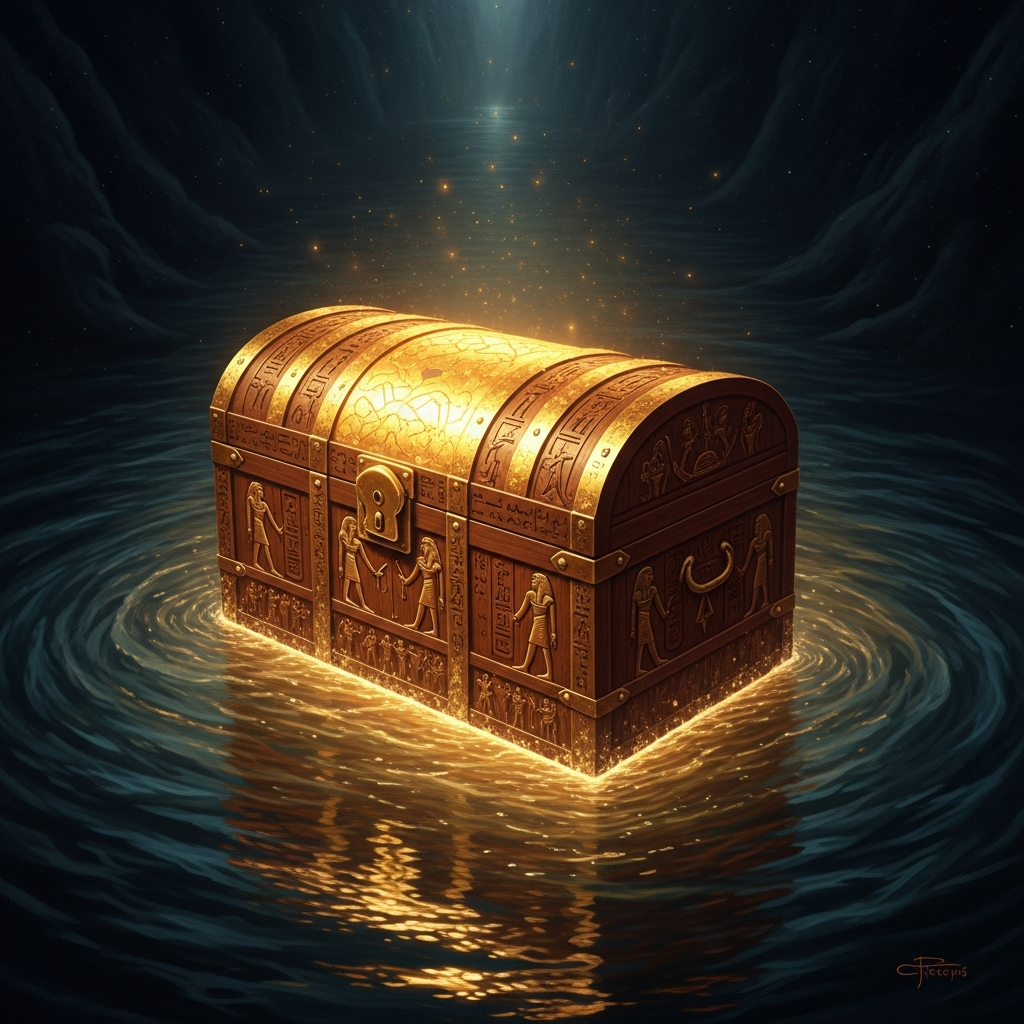
They carry it to the Nile before sunrise, in the hour when the river is the color of lead itself, when the sky is not yet committed to either darkness or light. Set watches the chest go into the water. He watches it catch the current, which is patient and does not hurry, which has been moving north since before any god named it and will continue north long after the last temple falls.
His co-conspirators are relieved. The thing is done. They move back toward the warmth of the hall and the remaining food. They are men, not gods; they do not fully understand what they have participated in.
Set stays. He watches the chest until it rounds the bend in the river and he cannot see it anymore. The Nile at this hour makes almost no sound. The palm trees stand without moving.
He is the god of the desert, of the red land, of storms that come from the west with sand in their teeth and nothing gentle about them. He is the arm of Ra in the underworld — the spear that holds back the serpent Apophis each night so the sun can be reborn. He is not evil in the way a man is evil, with cruelty and small satisfactions and the pleasure taken in another’s pain. He is something more uncomfortable than that.
He is what happens when order requires a force that order itself cannot be.
The box is gone now. The river is still. The sky begins, very slowly, its daily argument with darkness, which darkness will lose again, as it always loses, as the mathematics of a revolving world demands.
Set turns back toward his hall. He does not look for long at the horizon where the sun will rise. He does not look because Osiris, when he reigned, always rose to greet the morning. The horizon is a habit Set does not want to have.
What no myth records, because myths do not report what gods feel in the moments between their actions, is what Set does in the hour after. The texts are consistent on the exterior: Set hunts, Set celebrates, Set consolidates. The divine bureaucracy of Egypt closes around the vacancy Osiris has left in it, and Set fills it, and the kingdom continues.
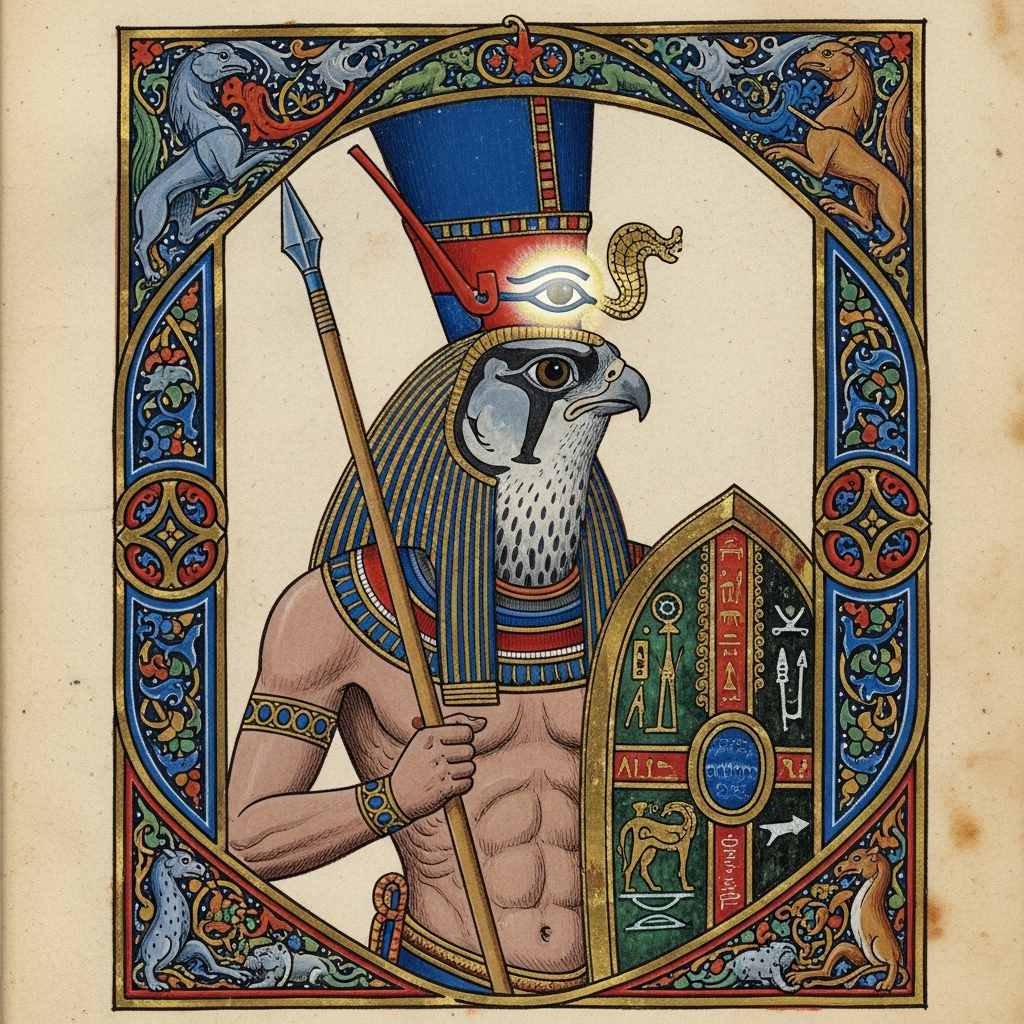
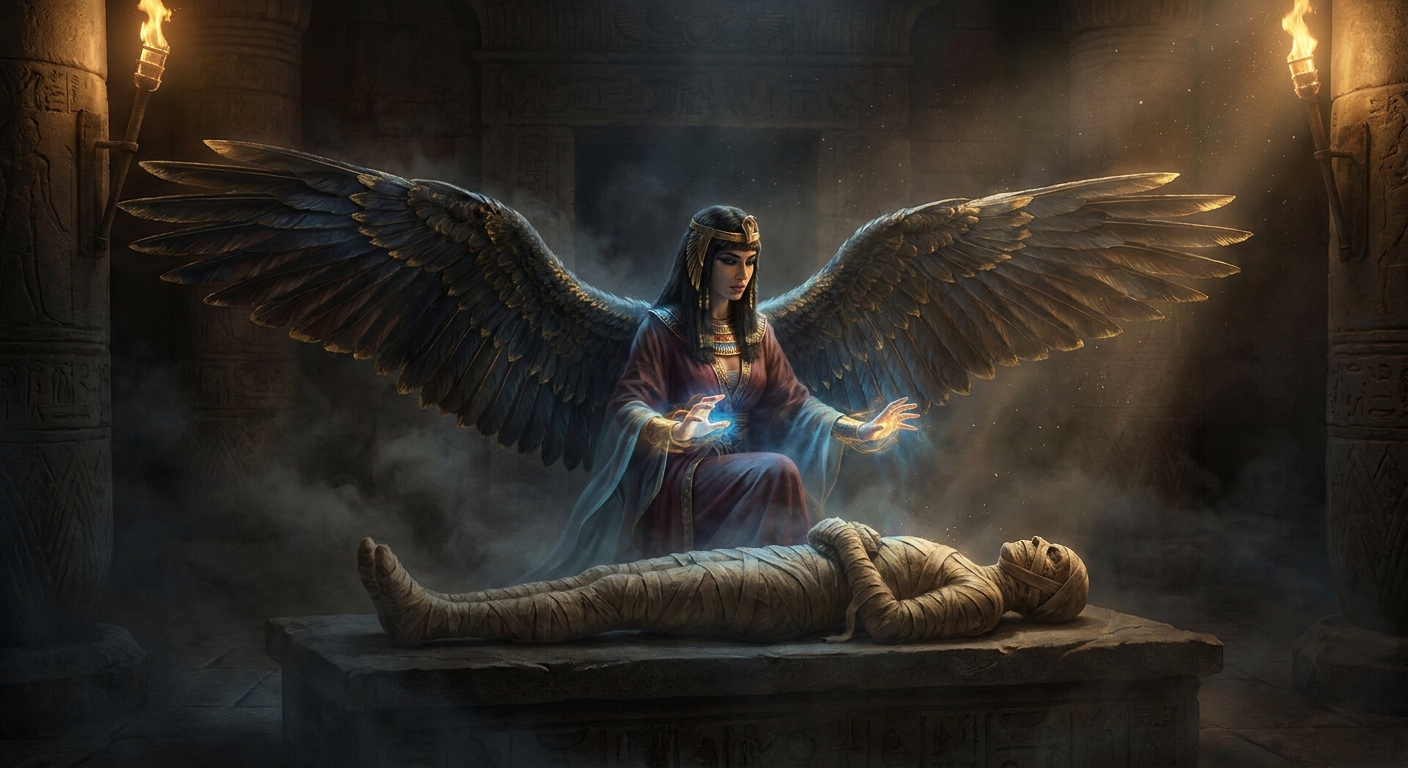
But the cedar is on the river. His brother is in the cedar. And Set knows, in the way a god knows things — not as knowledge but as structure, as the shape of what will happen — that this is not the end. Isis will look. Isis always looks; she is relentless, she is love made into a searching force. She will find the chest. She will work her spells. The child she will raise — the falcon-headed avenger — will one day stand before the divine council and reclaim everything Set has taken.
He knows this. He proceeds anyway.
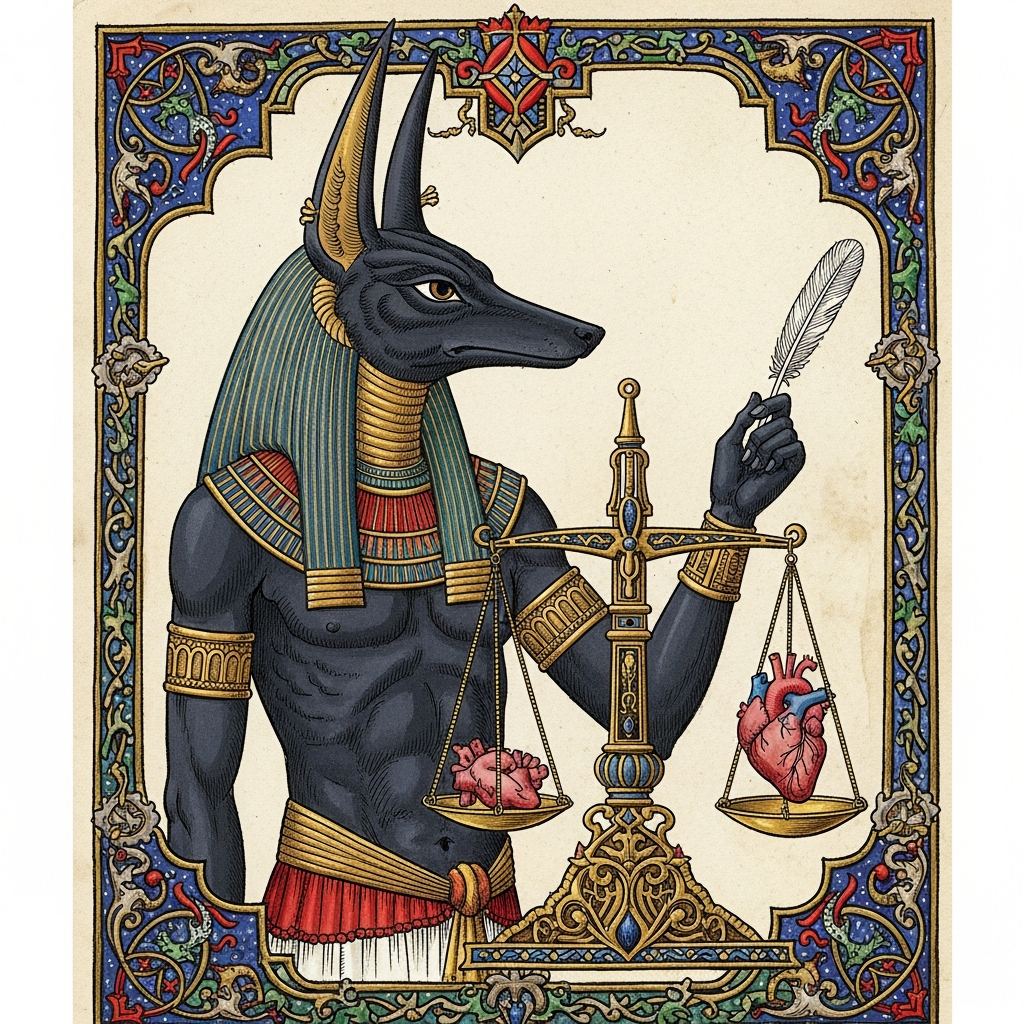
This is the part that human audiences find hardest to hold: that Set is not acting in ignorance. He is not a fool who thinks he can steal permanently from a god. He is an actor in a structure larger than any individual choice, playing the role the cosmos has assigned him, because someone must be the force that makes resurrection necessary. If Osiris is never killed, he is never restored. If he is never restored, there is no king of the dead. If there is no king of the dead, every human soul that passes through the gate finds no one on the throne, no judgment, no feather on the scale.
Set builds the coffin. Osiris fills it. Isis finds it. The cycle begins.
The desert wind that Set commands blows north across the Nile valley every year at the season called khamsin — hot, sand-laden, abrasive, the wind that scours the air clean even as it makes it briefly unbreathable. Farmers have always hated it. Farmers have always needed it. Without the khamsin, the air in the valley grows thick and fevered. With it, the season turns.
Set does not choose to be the wind. He is the wind. The box on the river is not a crime; it is weather. The green country of Osiris requires the red desert of Set to define itself, to know where it ends, to know what it is not.
This does not make it easier to watch the cedar chest go dark on the water. It makes it harder.
The theology insists that both things are true simultaneously: it was necessary, and it was a betrayal. Egypt did not resolve this tension. Egypt built temples to both brothers, performed rites for both, and let the contradiction stand — because a cosmos that explains itself too cleanly has already stopped being real.
Scenes
Set unveils the cedar chest at the banquet of seventy-two guests — each one a conspirator, each one already sworn
 Generating art…
 The lid slams
 Generating art…
 The cedar chest rides the current north — the most beautiful object in Egypt disappearing into the dark water
 Generating art…
 Echoes Across Traditions
Entities


Sources
- Plutarch, *De Iside et Osiride* (~100 CE)
- *Pyramid Texts* — Utterances 219, 252 (~2350 BCE)
- Jan Assmann, *Death and Salvation in Ancient Egypt* (Cornell, 2005)
- Herman te Velde, *Seth, God of Confusion* (Brill, 1967)
- Richard H. Wilkinson, *The Complete Gods and Goddesses of Ancient Egypt* (Thames & Hudson, 2003)