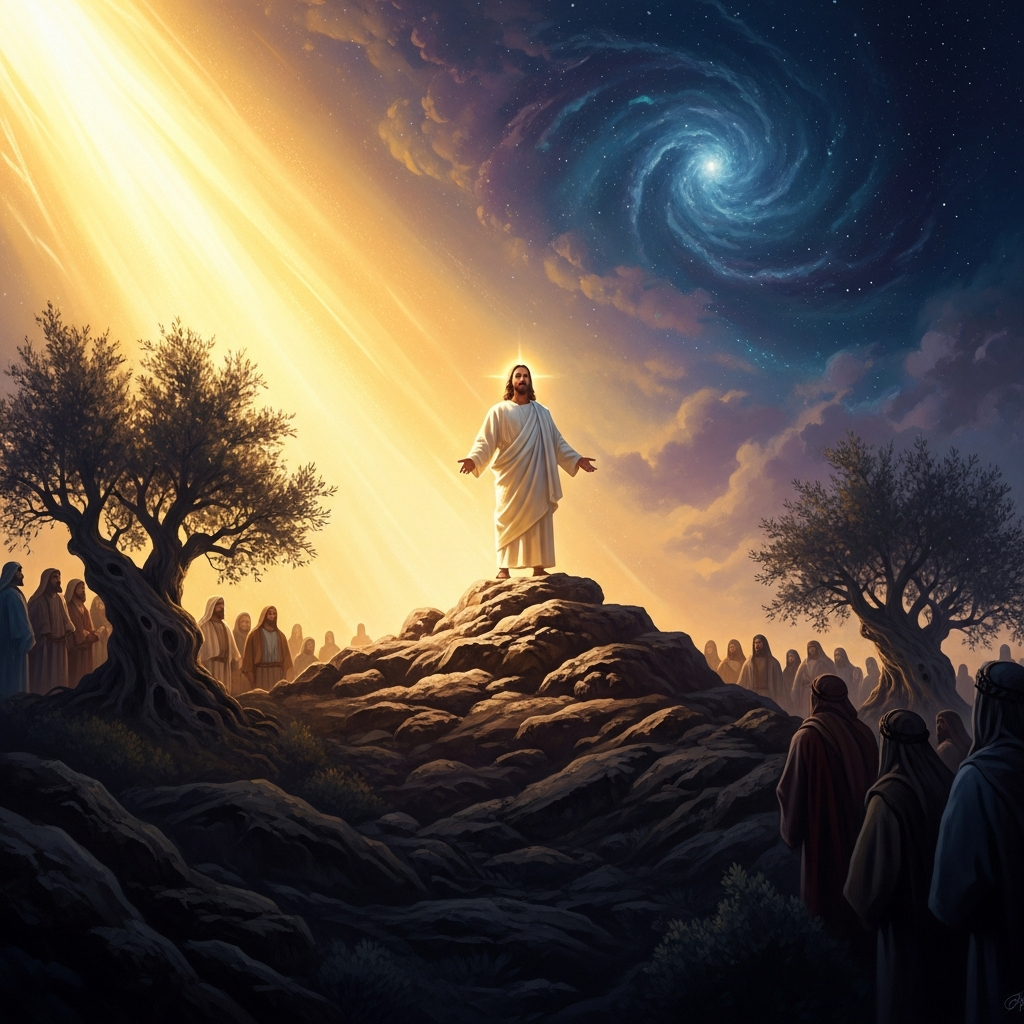
Vladimir Chooses a God
Kiev and Constantinople · 980-988 CE · Kievan Rus and the Byzantine Empire
Contents
A pagan prince with eight hundred concubines and six bloodied idols on his hill sends ten men to inspect the religions of the world. They come back from Constantinople and tell him they did not know whether they were in heaven or on earth. He drags Perun behind a horse to the river, and the river fills with people.
- When
- Kiev and Constantinople · 980-988 CE
- Where
- Kievan Rus and the Byzantine Empire
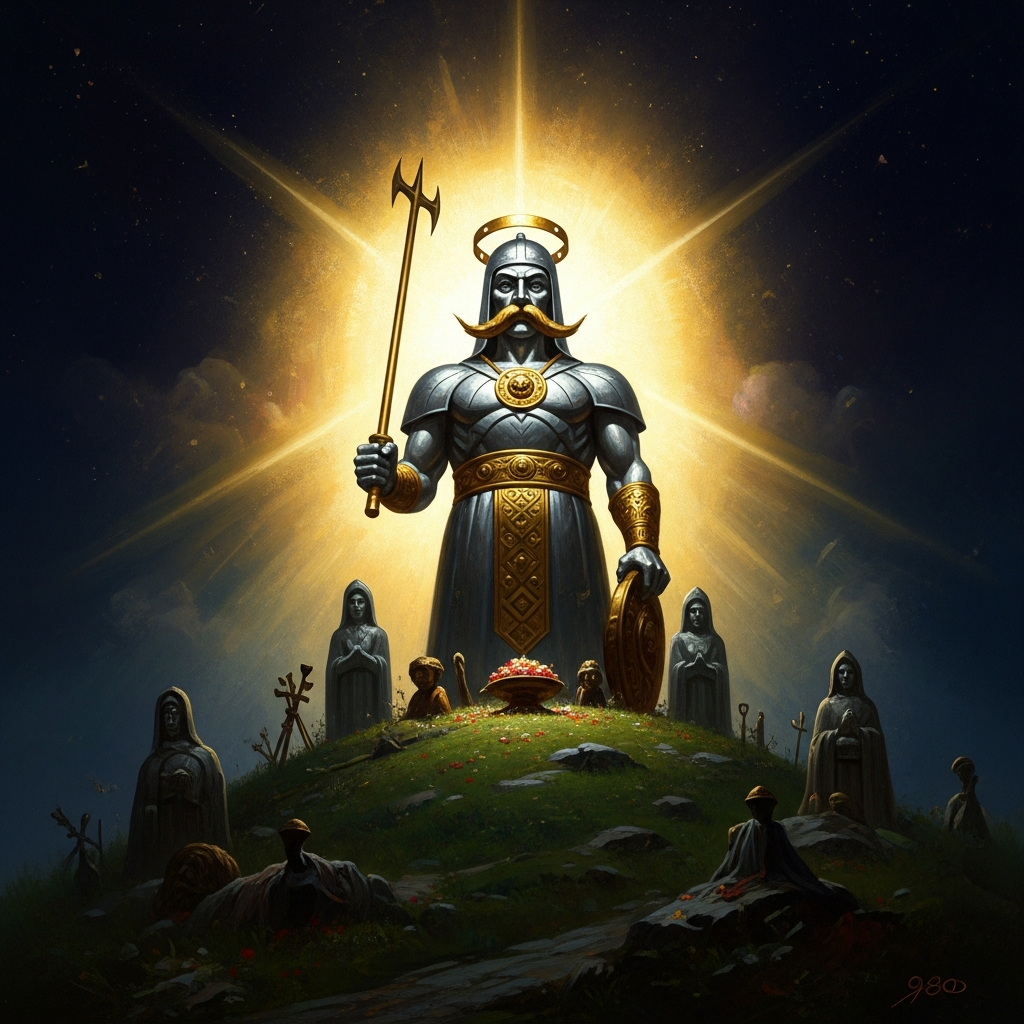
The hill above the palace at Kiev is called Starokievska. Six idols stand on it. The largest is Perun — wood, taller than two men, with a silver head and a golden moustache. Around him: Khors the sun, Dazhbog the giver, Stribog of the wind, Simargl the winged dog, Mokosh the moist mother. The bases of the idols are dark with old blood.
In 980, Vladimir, having killed his half-brother Yaropolk and seized the throne of all the Russes, has them carved and erected. He is the most pagan prince Kiev has ever had. He sacrifices to Perun publicly, with cattle and, on great occasions, with men chosen by lot. He has, the chronicler will write, three hundred concubines at Vyshgorod, three hundred at Belgorod, and two hundred at Berestovo.
He is, by every measure, a successful king. He has just turned forty. Something is wrong.
In 986 the embassies begin to arrive. The chronicler is later vague about whether Vladimir summoned them or whether they came on their own. Probably both — a great pagan throne is news.
The Volga Bulgars come first. They are Muslim. They describe Allah, the prophet, the prohibition on pork, the prohibition on wine. Vladimir stops them at the wine. Drinking, he says, is the joy of the Russians; we cannot exist without it. He sends them home with gifts.
The Khazars come. They are Jewish — the Khazar khanate having converted in the eighth century. They speak of Moses and the Law. Vladimir asks where their land is. They explain that God scattered them for their sins. And you would have us scattered also? he says. He sends them home.
The Germans come from the Pope. Their liturgy strikes him as plain. Our fathers, he says, half-quoting his grandmother Olga who had been to Constantinople, accepted nothing from you.
He sends, finally, his own ten men.
They are good men, wise men, men of judgment, the chronicle says. Boyars. He gives them gold for the journey and a single instruction: go and look.
They go. They sit through services in mosques and synagogues. They visit Latin churches in the German lands. They sail down to Constantinople.
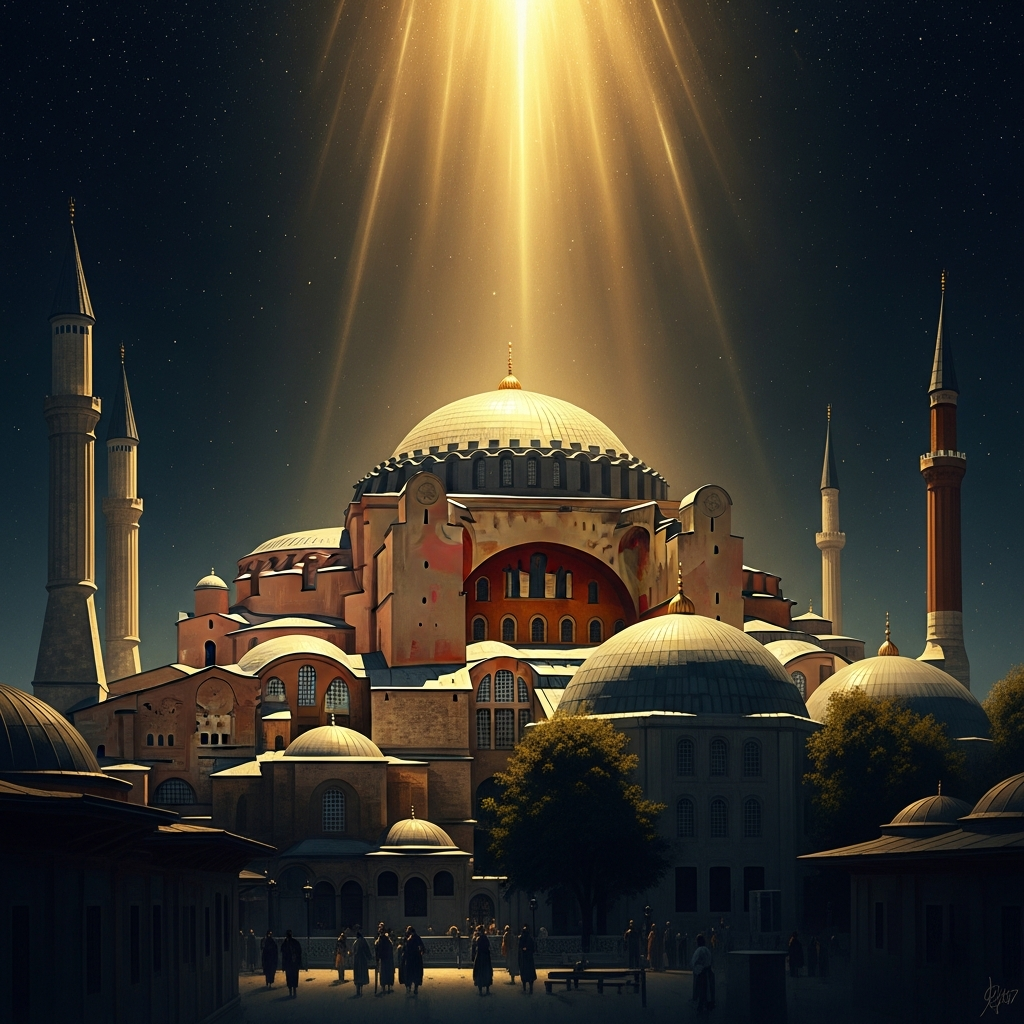
The Patriarch knows what they are coming for. He has been told by the emperor. He prepares the Divine Liturgy at Hagia Sophia for them — the full one, with every deacon and every choir. The dome is a hundred and eighty feet above the floor. The mosaics are gold leaf. The candles number in the thousands. The chant rises and the censers swing and the morning sun comes through the high windows in shafts a man could climb.
The boyars stand in the nave for hours. They do not move. When the liturgy ends they walk out into the city without speaking, and they do not speak for the rest of the day.
In Kiev, months later, Vladimir asks his question.
And what did you find?
The senior boyar answers for them. The chronicle records the sentence with the care of a man writing scripture:
We knew not whether we were in heaven or on earth. For surely there is no such splendor or beauty anywhere upon earth. We cannot describe it to you; only this we know, that God dwells there among men, and their service is fairer than the ceremonies of other nations. We cannot forget that beauty.
The boyar looks up. He adds, in a voice the chronicler hears from old men who heard it from old men: Your grandmother Olga, the wisest of mortals, accepted this faith. She would not have done so if it were evil.
Vladimir is quiet for a long time. Then he says: Where shall we be baptized?
There is a war first. There is always a war.
The emperor Basil II in Constantinople is in trouble — a usurper named Bardas Phokas is marching on the capital. Basil sends a desperate message north: I will give you my sister Anna in marriage if you bring six thousand of your warriors and convert.
A purple-born princess of Byzantium, married to a Slavic prince, is unprecedented. The empire does not give its daughters to barbarians. Anna weeps when told. She says she will go to Kiev as into captivity. Basil tells her she will save the empire and an entire people. She goes.
Vladimir takes Cherson on the Black Sea — partly as leverage, partly as bride-price — and is baptized there in 988. He emerges from the water (the chronicler insists on this) cured of an eye affliction that had darkened his vision for years. Now I know the true God, he says. He marries Anna in Cherson cathedral.
He returns to Kiev with a Christian wife, Greek priests, Greek liturgical books, Greek architects, and the conviction of a man who has made up his mind.
He goes first to the hill above the palace. To Perun.
He gives the order. The idol is pulled down with ropes. They tie it to the tail of a horse. Twelve men with sticks beat it the entire way down the hill, through the streets, past the marketplace, through the lower town, to the bank of the Dnieper. Some of the older Kievans weep openly as the silver-headed god goes by. The chronicle does not mock them. It records their grief.
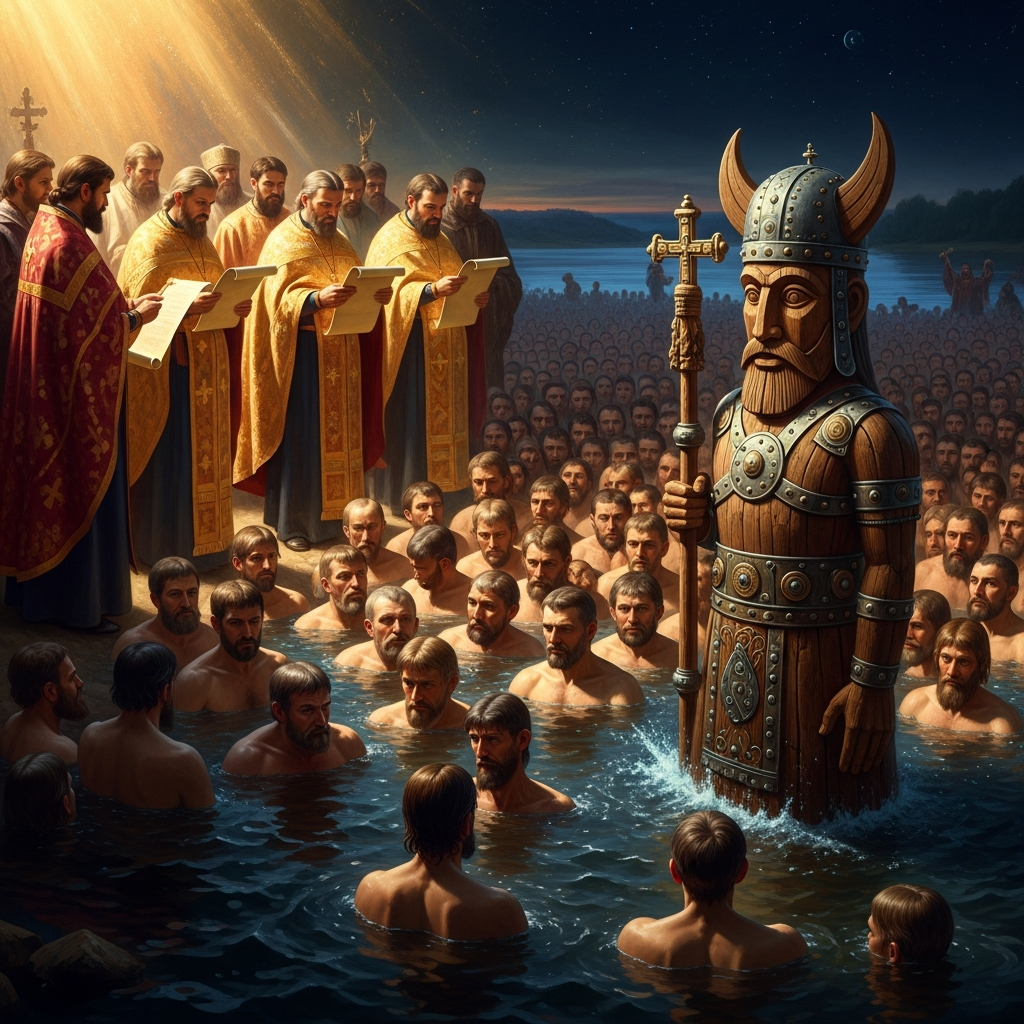
They throw the idol into the river. Vladimir has stationed soldiers along the bank with poles. If it tries to come ashore, he tells them, push it back. For three days the idol drifts down the Dnieper, soldiers shoving it off every shoal and every reed-bank, until it passes the rapids and disappears into the southern current toward the sea.
The other five idols are burned. Their ashes are scattered.
Then he issues the decree.
If anyone, rich or poor, beggar or slave, does not come tomorrow to the river, he shall be considered my enemy.
The next morning the entire population of Kiev — thousands, the chronicler says, uncountable — walks down to the Dnieper. The day is summer. The water is warm. Greek priests stand on the bank in vestments and read the baptismal prayers. The people wade in. The chronicle is precise: some stood in the water up to their necks, others up to their breasts, the younger ones near the bank; some held babes in their arms.
The priests read. The people repeated the renunciations of Satan. They were named, three times each, in the names of Father and Son and Holy Spirit. The river held them.
Vladimir stood on the shore, looked up at the sky, and said — the chronicler records this last sentence with particular care — O God, who hast made heaven and earth, look down upon these new people. Let them know thee, the true God, as the Christian lands have known thee. Confirm in them a true and unfailing faith, and grant me, thy servant, help against the adversary, that I may overcome his wiles.
He went home that evening to a Christian palace. The concubines were gone — sent away with dowries, the chronicle says, before the baptism. The idols were ashes. Anna was waiting.
He lived another twenty-seven years. He built churches. He founded the first Russian schools. He was canonized after his death — Equal-to-the-Apostles, the same title given to Constantine. The Orthodox Church, on July 28th every year, sings his troparion.
His sons would be princes. His grandsons would be princes. His great-great-granddaughter Anna would marry the king of France and bring her Slavic Bible to Reims, where French kings would later be crowned with their hands on it without knowing what language they were touching.
The Dnieper, that summer afternoon in 988, had carried away one god and washed in another. The river is still there. The country it watered is still there. The choice is still there, fourteen hundred years on, the way the choice is still in the boyars’ sentence:
We knew not whether we were in heaven or on earth.
Vladimir’s choice was political and spiritual at once, and the chronicle does not pretend otherwise. He needed an alliance. He needed a religion that scaled. He needed something to replace the bloody hill above his palace. Constantinople could provide all three.
The Latin Church never forgave the loss. The schism of 1054 — sixty-six years after Vladimir’s baptism — would harden the line forever. Russia stayed on the Byzantine side. When Constantinople fell to the Turks in 1453, Moscow began to call itself the Third Rome. The line runs unbroken from Vladimir’s hand on Anna’s hand to the patriarch in Moscow today.
Whether the boyars really said the sentence in those exact words, no one will know. But Hagia Sophia is still there. The dome is still gold. The light still falls through the windows in the same shafts. Anyone who has stood beneath it knows why ten Slavic warriors went home and could not describe what they had seen.
Scenes
The hill of Kiev, 980 — Perun's wooden idol with silver head and golden moustache, crowned by the other five gods, blood at the base from a recent sacrifice, Vladimir at forty in fur and gold standing before them
 Generating art…
 Hagia Sophia, Constantinople, 987 — the ten boyars in Slavic dress standing motionless under the great dome during the Divine Liturgy, smoke rising in shafts of sun, the Patriarch in full vestments before the altar
 Generating art…
 The Dnieper River, Kiev, summer 988 — thousands of Kievans in the river up to their chests, priests on the bank reading prayers, Perun's idol bobbing downstream past the rapids, never to return
 Generating art…
 Echoes Across Traditions
Entities
- Vladimir the Great
- Princess Anna of Byzantium
- the ten boyar emissaries
- Perun (the discarded god)
Sources
- *The Russian Primary Chronicle*, trans. Samuel Cross & Olgerd Sherbowitz-Wetzor (1953), entries for 986-988
- Simon Franklin & Jonathan Shepard, *The Emergence of Rus 750-1200* (1996)
- Andrzej Poppe, 'The Political Background to the Baptism of Rus' (*Dumbarton Oaks Papers* 30, 1976)
- John Meyendorff, *Byzantium and the Rise of Russia* (1981)
- Timothy Ware, *The Orthodox Church* (1964), ch. on the conversion of Russia