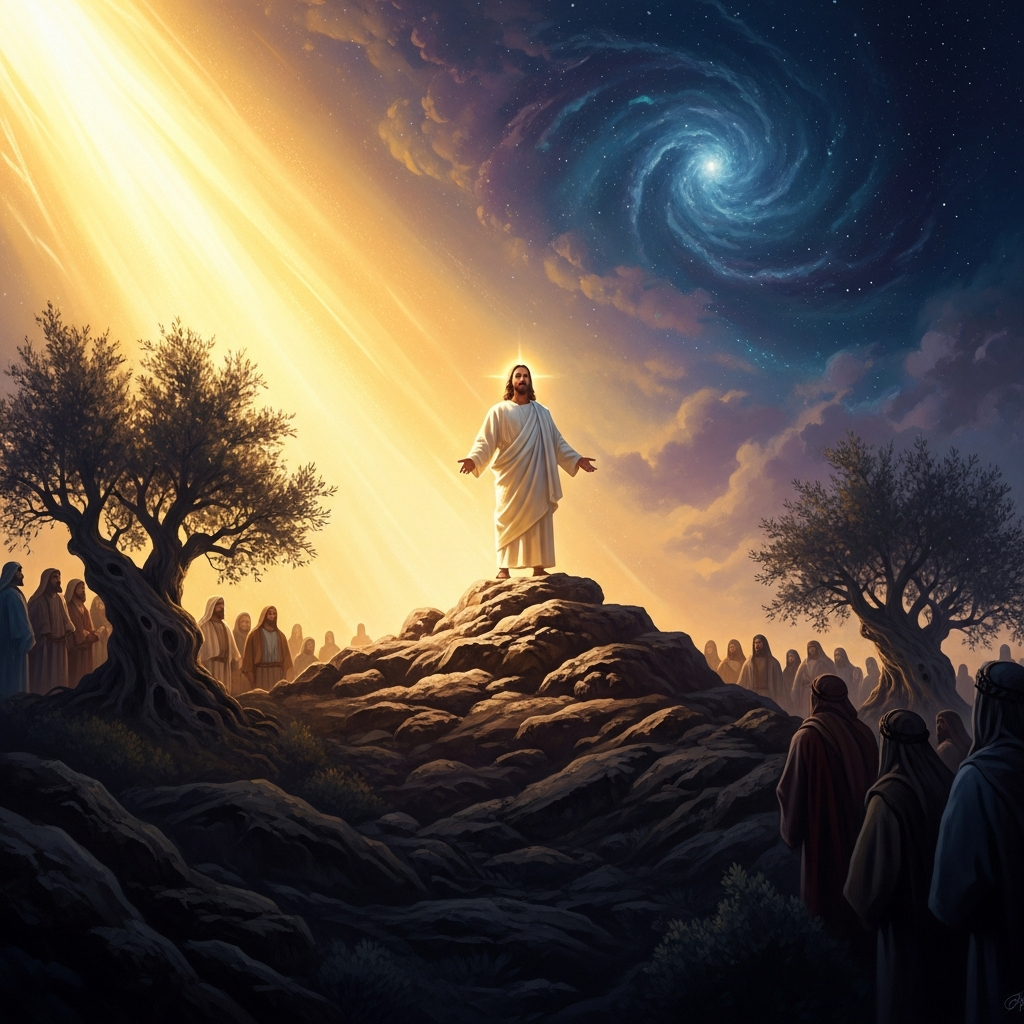
My Heart Strangely Warmed
Evening of May 24, 1738 · Aldersgate Street, London · A small Moravian society room on Aldersgate Street in the City of London — number 28, near St. Botolph's church
Contents
John Wesley, an Oxford-educated Anglican priest in spiritual collapse after a failed mission to Georgia, walks unwillingly into a Moravian society meeting on Aldersgate Street and hears Luther's preface to Romans being read — and feels the assurance of salvation he has chased for fifteen years arrive at a quarter to nine.
- When
- Evening of May 24, 1738 · Aldersgate Street, London
- Where
- A small Moravian society room on Aldersgate Street in the City of London — number 28, near St. Botolph's church
He does not want to go.
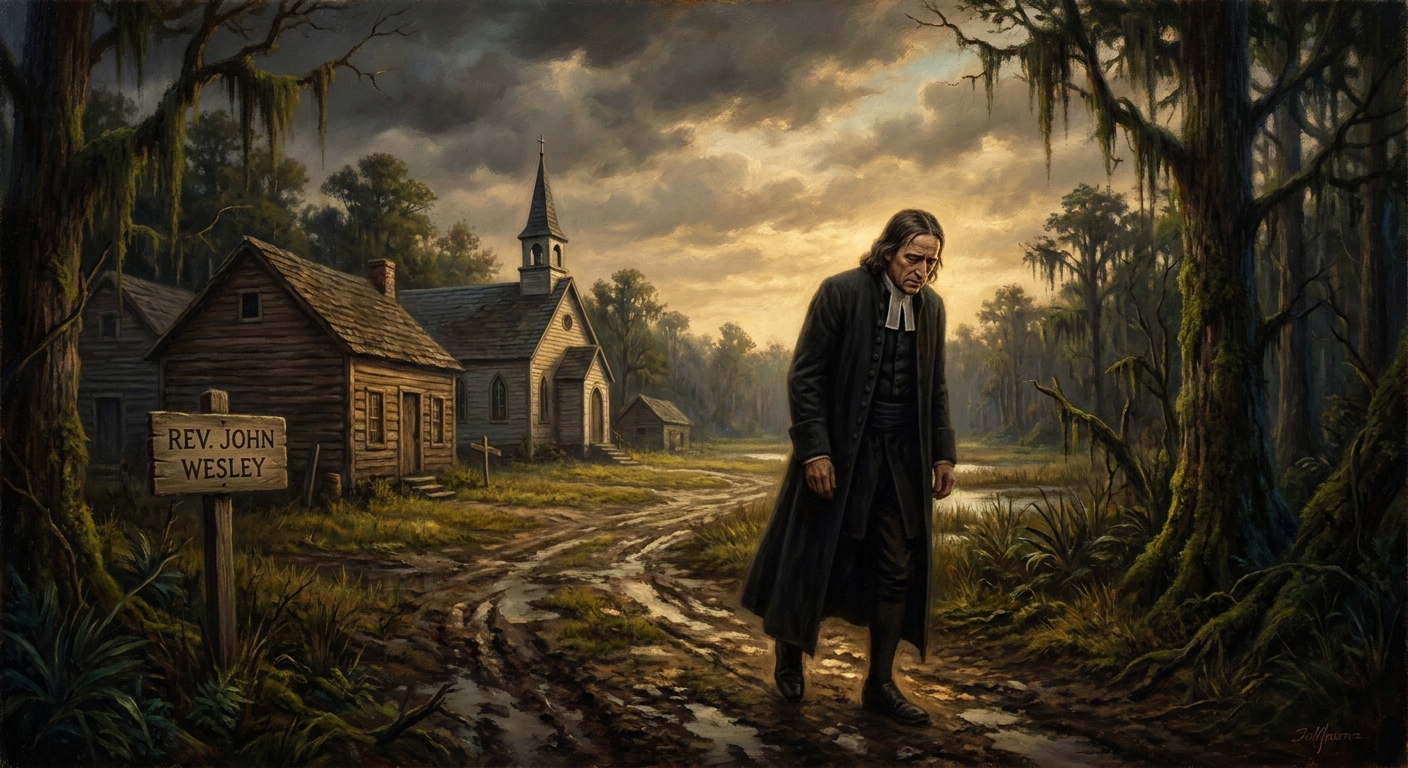
It is the evening of Wednesday, May 24, 1738. He has spent the day in his rooms reading scripture and trying to pray. The morning text has stayed with him: Thou art not far from the kingdom of God. He has felt nothing. He has been feeling nothing for months — since Georgia, since the storm, since the failed engagement, since the indictment, since the long Atlantic crossing during which Moravian passengers sang hymns while he held the rail and discovered, with horror, that he himself was not ready to die.
Peter Böhler, the young Moravian missionary who has been instructing him in London since February, has insisted he attend a society meeting tonight. Aldersgate Street. Number twenty-eight. Half-past eight.
He goes because he has nowhere else to go.
He is thirty-five years old. He has been an Anglican priest for ten years and a fellow of Lincoln College for fifteen. He has fasted twice a week, taken the sacrament weekly, distributed alms, visited prisoners, founded the Holy Club at Oxford with his brother Charles, sailed to Georgia to convert the Indians and been converted by no one. He has, by every measure available to a serious Christian of his century, tried.
Nothing has worked. The terror has not lifted.
The room on Aldersgate is small. A dozen people, maybe fifteen, sitting on benches.
There is no preacher. The Moravian society meets without clergy. They sing. They read a passage of scripture. They read aloud, often, from a book or a printed sermon, and they discuss what they have heard. Tonight the reader has chosen Martin Luther’s Preface to the Epistle to the Romans, written for the German Bible of 1522 and translated into English a century later.
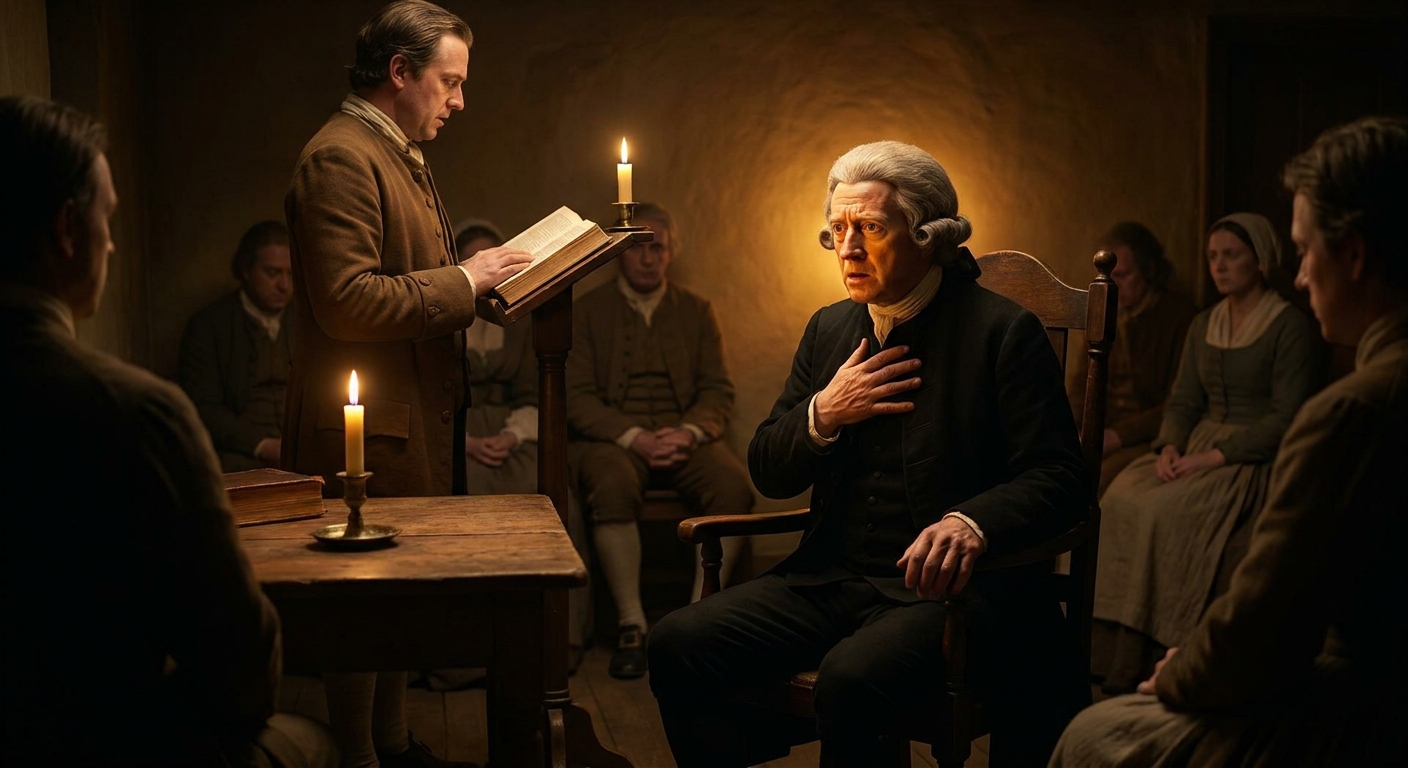
Wesley sits on a bench at the back. He has the demeanor of a man who is doing his duty. The reader’s voice is steady. The passage moves slowly through Luther’s argument — that faith is not a human work, not an intellectual assent, not a moral effort, but the change God works in the heart, by which the believer trusts Christ alone for salvation, and by which the believer, trusting, is justified.
The reader reaches the section on the change which God works in the heart through faith in Christ.
The clock on the wall reads, when Wesley remembers it later, about a quarter before nine.
What happens next he will spend the rest of his life trying to describe and never quite finding the right word.
The closest word in his vocabulary is warmed. The closest qualifier his honesty will admit is strangely. He is suspicious of religious feeling — he has been raised at Epworth by Susanna Wesley, who distrusted enthusiasm, and trained at Oxford by tutors who distrusted it more — and he will never use the word ecstasy and almost never use the word experience without hedges.
But it is happening. In his chest. Under the breastbone. A warmth that is not metaphor, not exactly, and not literal heat, not exactly either. He feels — for the first time in fifteen years of striving — that he trusts in Christ. Christ alone. For salvation. And an assurance was given me that he had taken away my sins, even mine, and saved me from the law of sin and death.
He sits very still. The reader continues. The other Moravians, with their quiet German politeness, do not notice that anything in particular has happened to the Anglican priest in the back row.
He walks home through London after the meeting.
The streets are loud — coach wheels on cobbles, costermongers, the smoke from sea-coal fires drifting along the Thames. He notices it all and notices that he does not need it to be otherwise. The terror that has shadowed him for fifteen years — the question of whether his soul is in the right relation to God, whether his striving has been enough, whether his works will count — is, for the first time, not the loudest thing in his head.
He stops at his brother’s lodgings. Charles, sick in bed, has had his own quiet conversion three days earlier reading the same Luther preface. The brothers — who have been a single working unit since Oxford — pray together. Charles will write And Can It Be within months, the hymn that begins And can it be that I should gain / an interest in the Saviour’s blood? and asks the question of the night Wesley has just had.
The journal entry Wesley writes that night will be edited and published in 1740. The phrase strangely warmed will outlive him by three centuries. Methodist hymnals will print it. Aldersgate Street will be marked. May 24 will become a feast day in some Methodist calendars.
But on the night itself, the brothers simply pray and Wesley walks back to his rooms in the dark.
By the next year, he is preaching to colliers in the open fields outside Bristol.
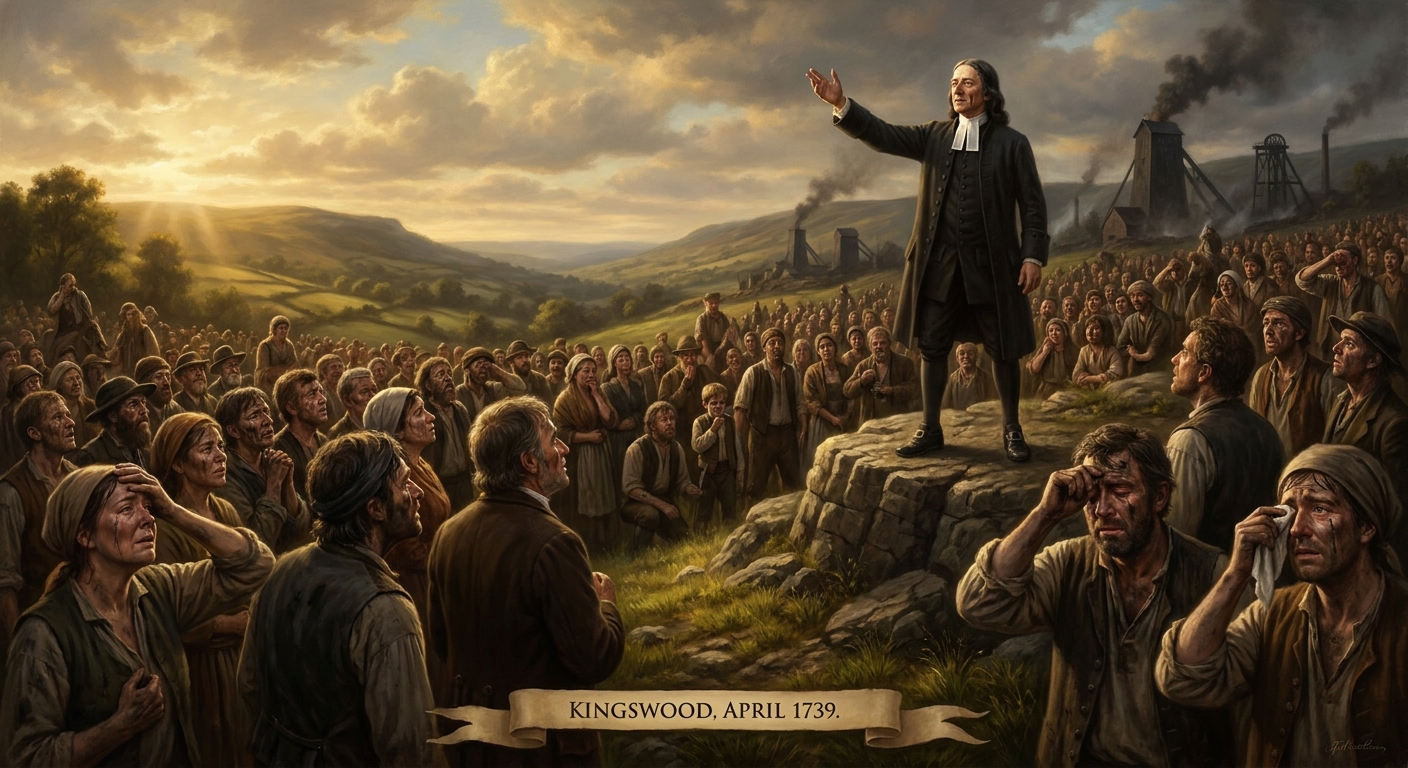
The Anglican pulpits are closing to him. His enthusiasm — the very word the Moravians had used to bring him to Aldersgate — is, in the eyes of the Bishop of London, a category error: a clergyman is not supposed to feel his heart warmed, and is certainly not supposed to write about it. George Whitefield, his old Holy Club companion, has begun preaching outdoors in Kingswood. He invites Wesley to follow.
Wesley is, by temperament, a man of order. The thought of preaching outside a church — without a stone pulpit, without a surplice, without a parish boundary — appalls him. He goes anyway.
The sermon is on a hillside above the colliers’ village. Three thousand miners, faces still black from the morning shift, stand in the grass. He preaches the gospel of free grace — Aldersgate translated into Bristol English — and watches grown men cry, and discovers that the warmth in his chest is contagious.
He will ride a horse, by his own count, two hundred and fifty thousand miles over the next fifty years. He will preach forty thousand sermons. He will found societies, classes, and bands across England, Wales, Ireland, and eventually North America. By the time he dies in 1791, the Methodist movement will be on three continents and on its way to becoming, within fifty more years, the largest Protestant denomination in the United States.
All of it grows out of a quarter-hour on a bench on Aldersgate Street, listening to a German reformer’s preface being read by an English voice in a Moravian society room.
Aldersgate is not, strictly, a conversion. Wesley is already converted by every external measure. He is already a priest, already a missionary, already disciplined to the point of neurosis. What changes is the relation. The striving subsides. The trusting begins. The warmth in his chest is, in his own theology, the witness of the Spirit with his spirit that he is a child of God — Romans 8:16, the verse that became Methodism’s fingerprint.
The shape is ancient. Augustine in the Milan garden in 386, opening Romans at a child’s voice. Pascal in his coat-lining on the night of November 23, 1654: ‘FIRE. God of Abraham, God of Isaac, God of Jacob.’ The conversion already-Christian, the warmth already-believing, the trust the heart could not previously make.
Wesley wrote it down because he was an Englishman of his century and Englishmen of his century kept journals. The journal kept Aldersgate alive. The phrase kept Methodism honest. There is no Methodism without the heart strangely warmed, and no warmth that does not come, in the end, through the same dark winter the warming was meant to relieve.
Scenes
February 1738
 Generating art…
 About a quarter before nine, May 24, 1738
 Generating art…
 1739 onward
 Generating art…
 Echoes Across Traditions
Entities
- John Wesley
- Charles Wesley
- Peter Böhler
- Martin Luther
- the Moravian Brethren
Sources
- John Wesley, *The Journal of John Wesley*, entry for May 24, 1738
- Henry D. Rack, *Reasonable Enthusiast: John Wesley and the Rise of Methodism* (1989, rev. 2002)
- Richard P. Heitzenrater, *Wesley and the People Called Methodists* (1995)
- Martin Luther, *Preface to the Epistle to the Romans* (1522, German)