Djang: When the Ancestors Still Walk as Animals
Dreaming time — continuous with the present · Northeast Arnhem Land, Northern Territory — the Yolngu homelands on the Gove Peninsula and the Wessel Islands
Contents
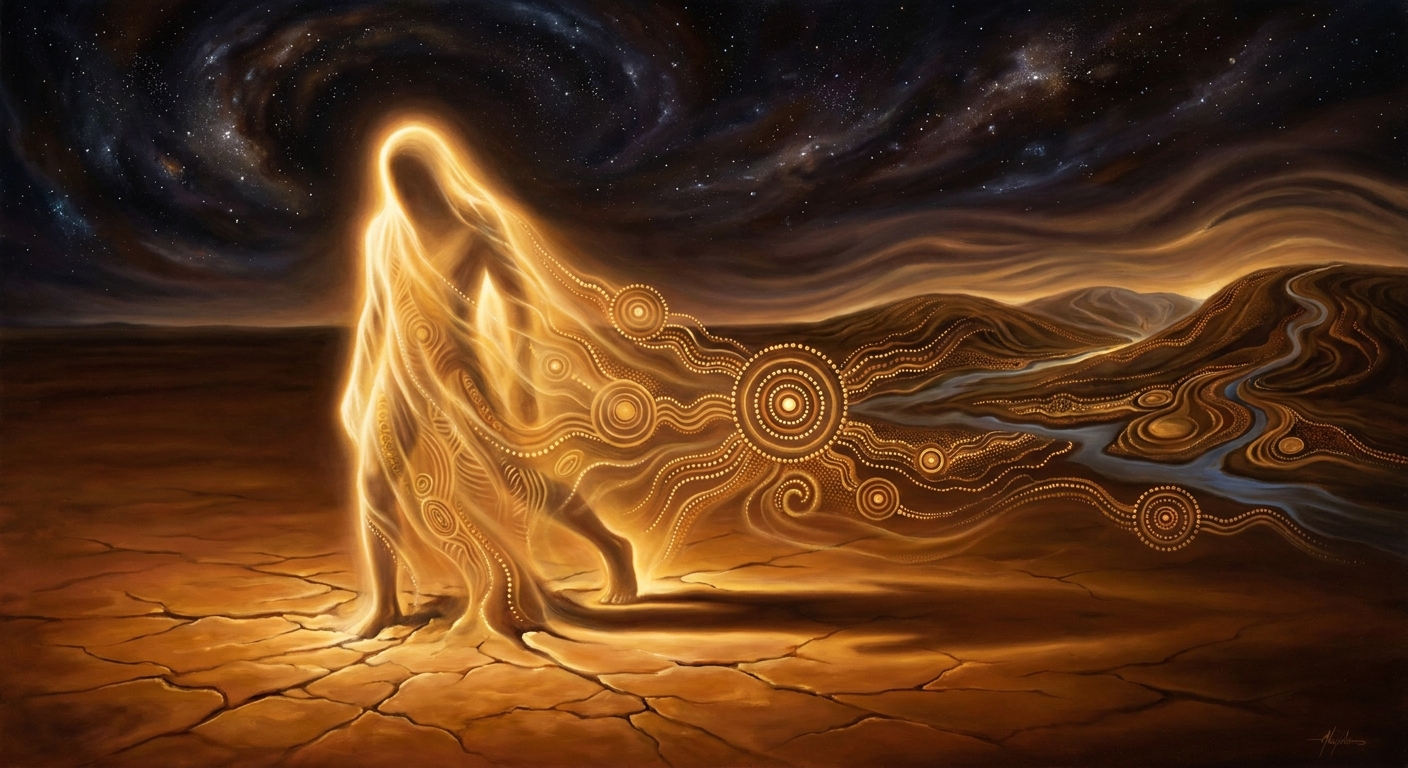
The Yolngu people of northeast Arnhem Land describe djang — the sacred power of ancestral beings who transformed into the animals and features of the landscape — as the continuing spiritual energy present in every creature and place that maintains connection to the original creation.
- When
- Dreaming time — continuous with the present
- Where
- Northeast Arnhem Land, Northern Territory — the Yolngu homelands on the Gove Peninsula and the Wessel Islands
The hawk is more than a hawk.
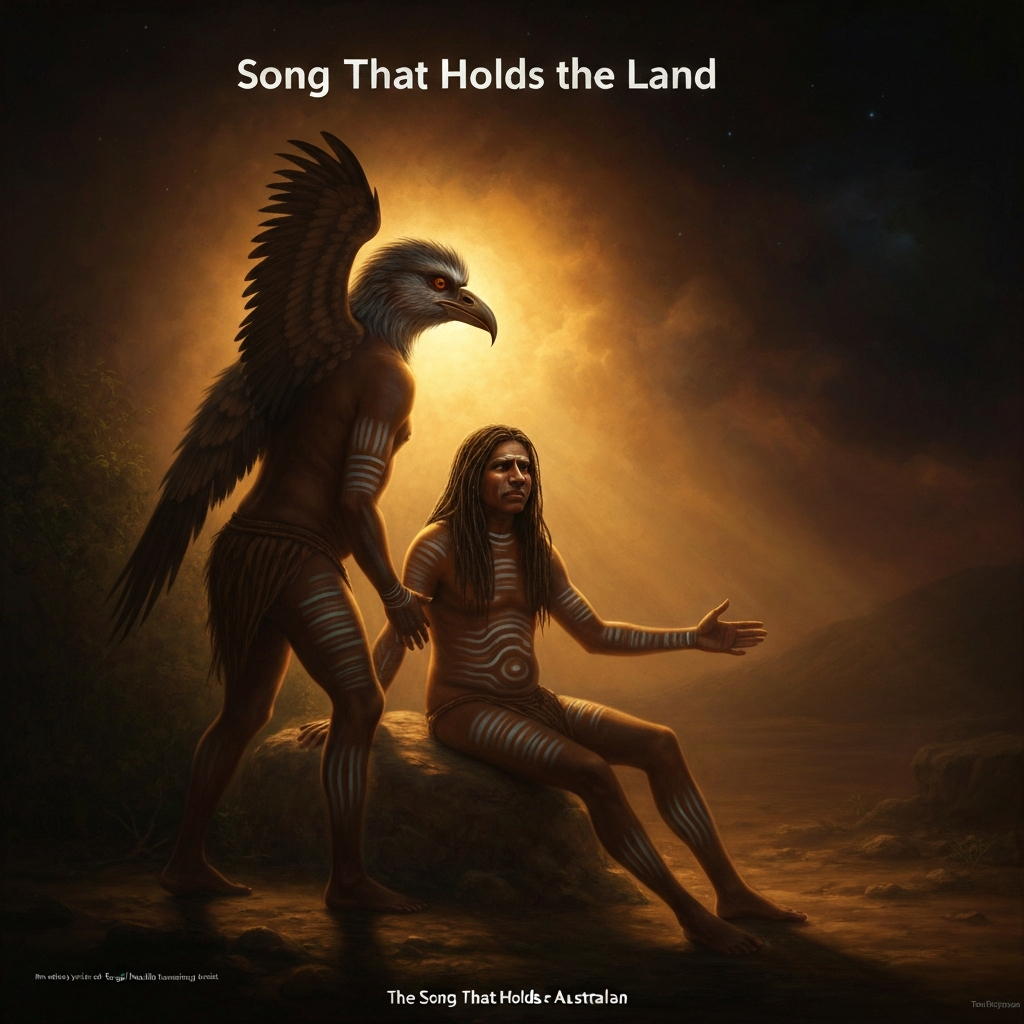
This is the beginning of Yolngu religious understanding that takes a lifetime to fully absorb: the animals of northeast Arnhem Land are not simply what they appear to be. Each species carries djang — the sacred power, the ancestral life-force, the condensed presence of the being who created the landscape feature and then transformed into the animal as the Dreaming settled into the current world.
The hawk circling over the paperbark forest carries the djang of the ancestor who circled over the landscape in the Dreaming, following the watercourse, naming the places below. When the hawk banks in the thermal updraft, it is doing what its ancestor-being did. The movement is not merely physical but spiritual — a repetition of the original act, a maintenance of the original creation.
The animal does not know it carries djang.
This is the nuance: the animals are not worshipped as conscious spiritual beings in the way spirits are addressed in ceremony. They carry the sacred power the way a sacred object carries power — not with agency but with presence. The djang is in them because they are the physical continuation of their ancestor’s transformational act.
The sacred designs are where the djang is most accessible.
The miny’tji — the clan-owned geometric patterns that appear on bark paintings, ceremonial objects, and the bodies of dancers — are the visual form of djang. Each clan owns specific designs that are the visual signature of their ancestral beings, and the designs are not decorative. They are the condensed form of the ancestral presence: when the correct design is painted on a ceremonial object, the djang of that ancestor is in the object.
This means that bark painting is not art in the Western sense — it is ritual. The artist who paints a sacred design is bringing djang into physical form. The completion of the painting is a sacred act, governed by rules about who can paint what, under what circumstances, with what permissions. The paintings held in Western art collections carry djang regardless of the collector’s awareness of this fact.
The most senior Yolngu men and women hold the knowledge of the most powerful designs — knowledge that took decades to acquire, tested through ceremony, accumulated through the careful transmission from elder to younger. The young person who receives the first level of djang knowledge in ceremony is receiving something with real consequences: it changes their relationship to the landscape, to the animals they encounter, to the designs they see. They are given the capacity to see the world’s sacred dimension more fully.
The ceremony at the end of the wet season connects the living community to the djang that runs through their country.
The dancing bodies painted with the clan designs are bringing the ancestor-beings back into the human world — not as disembodied presences but as the living people who carry the designs and move in the pattern the ancestors first moved in. The ceremony is the world maintaining itself, the djang circulating through the community the way blood circulates through the body.
An elder who is dying performs her part in the ceremony knowing that when she dies, the djang she carries will return to the country she has been custodian of. It is not lost. It returns to the waterhole where her ancestor emerged, to the trees on the ridge that her ancestor named. The country receives it back.
The bark painting she has made, the ceremonies she has danced, the designs she has transmitted to the younger people — these are her contribution to the maintenance of the djang in her clan’s section of the world.
The hawk banks over the paperbark.
The djang moves through it.
The world holds together for another season.
Echoes Across Traditions
Entities
- the ancestral beings (Wangarr)
- the animals that carry djang
- the sacred clan-owned designs (miny'tji)
- the Yolngu elders who hold djang knowledge
- the ceremony that connects the living to djang
Sources
- Morphy, Howard, *Ancestral Connections: Art and an Aboriginal System of Knowledge* (Chicago, 1991)
- Berndt, Ronald M., *Djanggawul: An Aboriginal Religious Cult of North-Eastern Arnhem Land* (Routledge, 1952)
- Warner, W. Lloyd, *A Black Civilization* (Harper, 1937)